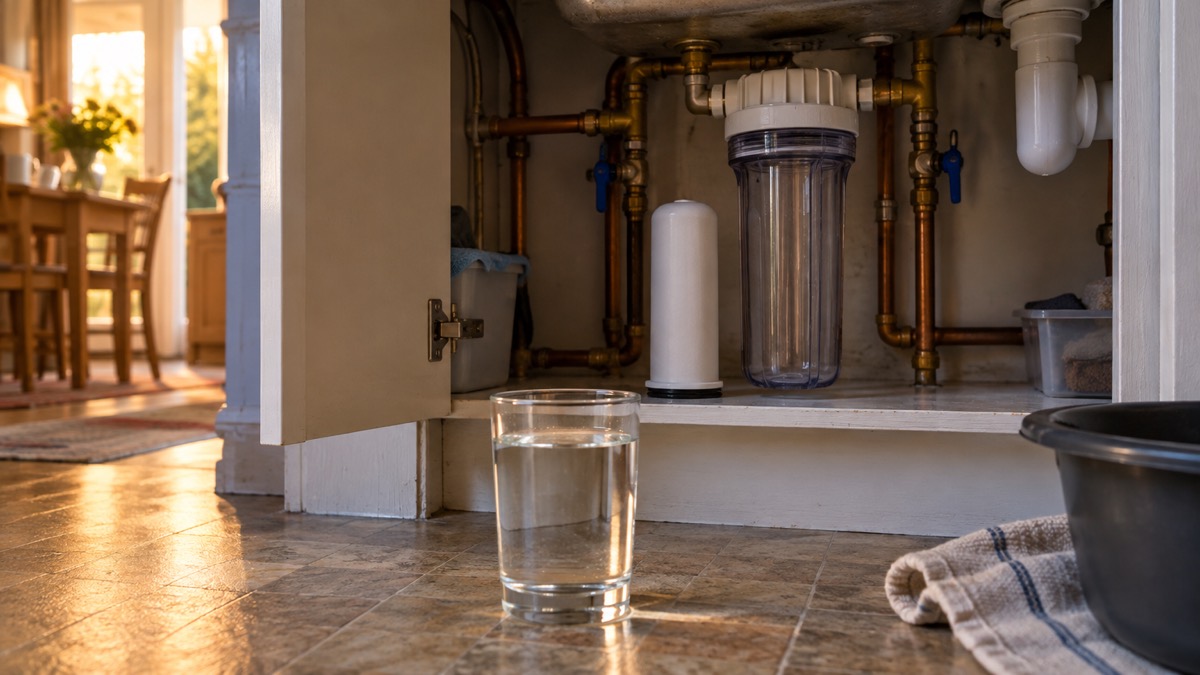
The Doulton Ultracarb is a ceramic and carbon replacement cartridge for an under-sink water filter housing. It fits a 1/4" BSP threaded housing, reduces chlorine, bacteria, cysts, sediment and heavy metals such as lead, and Doulton states a 99.9% reduction of microplastics1. The maker recommends replacing it every 6 months, or sooner if the flow drops or the taste changes1.
It is a cartridge, not a system. You buy it to go into a housing you already have, and the box contains one filter and nothing else1. That makes the two questions that matter before you order simple: does my housing take a 1/4" BSP thread, and is my system on Doulton's compatible list? The maker asks you to email filtersales@doulton.com if you are unsure1.
For a household, the Ultracarb is the maintenance part of a plumbed-in filter: it keeps working quietly under the sink, needs a clean when silt slows it, and needs changing twice a year. This page sets out what it does, what it fits, how to look after it and where to get help from Doulton.
What the Ultracarb is and what it does to your water
The Ultracarb (9501) is a ceramic undercounter water filter cartridge. Doulton describes it as harnessing activated carbon to reduce chlorine, with a ceramic candle that forms a physical barrier for pathogens, trapping bacteria on the surface of the ceramic while allowing clear, mineral-rich water through1. Inside the ceramic sits an activated carbon block containing lead removal media, which is how the cartridge reduces metals as well as taste and odour1.
Doulton's general explanation of how its filters work is worth knowing, because it explains why the cartridge is shaped as it is: the natural ceramic acts almost like a sieve to reduce common contaminants, while the internal activated carbon core acts like a sponge to further reduce their effects6. The ceramic is not a thin membrane. Doulton points out that the wall thickness of the ceramic is 1000 to 2000 times greater than the pore size of the filter, which is the basis of its claim to trap particles reliably rather than just screen them4.
What it reduces, in Doulton's own list for the 9501: chlorine, bacteria, cysts, sediment and heavy metals such as lead1. It also enhances taste and odour2, and Doulton states a 99.9% reduction of microplastics2. Doulton's wider filter range is described as reducing up to 99.99% of common contaminants including microplastics, chlorine and monochloramine, bacteria and cysts, insecticides and herbicides, and heavy metals such as lead, cadmium and mercury6. That is a range-wide statement, not a figure for the Ultracarb alone, so treat the 9501's own list as the specification for this cartridge.
What the ceramic does, and what it does not
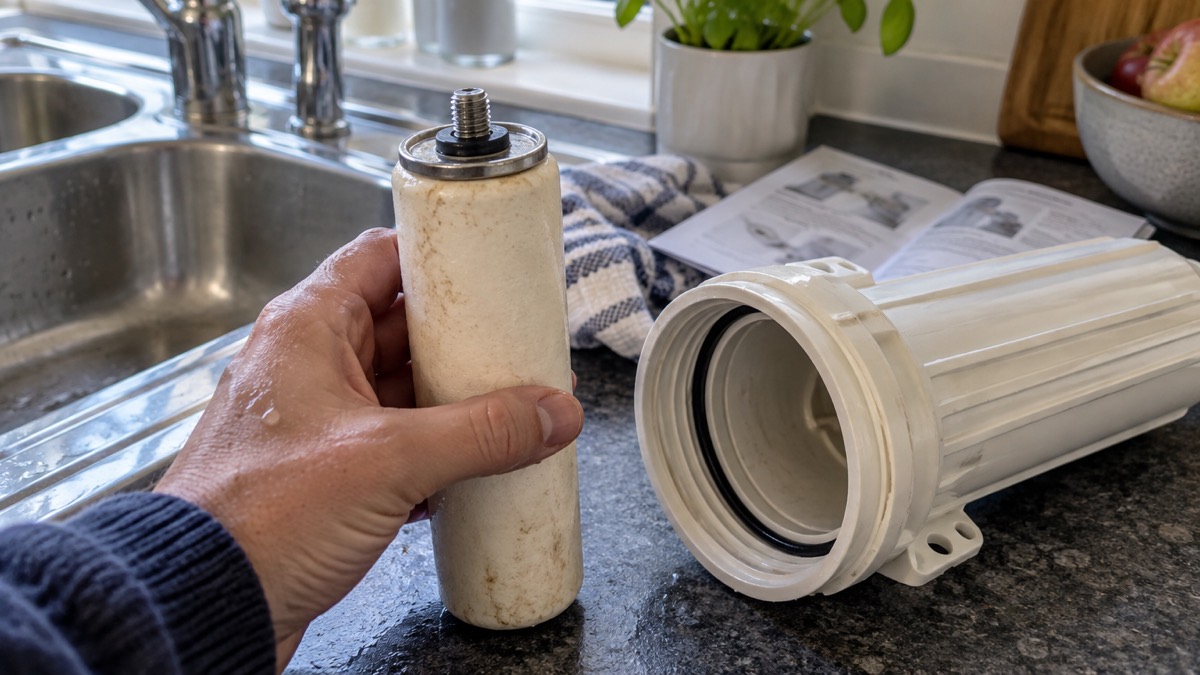
The ceramic's job is mechanical. Doulton says the filter forms a physical barrier for pathogens, trapping the bacteria in your water on the surface of the ceramic1. That is why cleaning the outside of the candle restores flow: the material it catches stays on the surface rather than inside the wall.
Doulton's test data puts the sizes in context. It gives viruses at 0.02 to 0.5 microns, bacteria at 0.2 to 10 microns (0.2 to 1 micron wide and 1 to 10 microns long), and protozoan cysts at 2 to 50 microns, referencing WQA Technical Guidance4. It also defines its ratings: 1 micron absolute filtration is defined as more than 99.99%, and 0.5 to 0.8 micron nominal filtration is defined as 99.9%4.
| Particle | Size given by Doulton | What that means for a ceramic barrier |
|---|---|---|
| Viruses | 0.02 to 0.5 microns | Smaller than the pores; not what the ceramic is claimed to remove1 |
| Bacteria | 0.2 to 10 microns | Larger than the pores, so held back by the ceramic1 |
| Protozoan cysts | 2 to 50 microns | Well within the barrier's range1 |
Doulton does not claim virus removal for the Ultracarb, and this page does not either. If your supply is of uncertain quality, a household filter is one layer, not a guarantee: follow the official treatment advice in our guide to making water safe to drink and to what each filter type removes.
Certifications: what NSF and WRAS actually cover
Doulton lists the Ultracarb (9501) under NSF/ANSI 42, the standard for aesthetic effects such as taste, odour and chlorine, and states that part of its performance is tested and certified by NSF to NSF/ANSI Std 401, which covers emerging contaminants3. Doulton's datasheet for the Ultracarb range lists quality approval from WRAS and NSF4.
The company's wider certification position is set out plainly: Doulton ceramic water filters undergo continuous, rigorous testing via external certification bodies such as NSF and WRAS, alongside in-house testing and product development4. Its under-sink systems are made under BS EN ISO 9001 quality standards, and Doulton says it holds NSF and WRAS certification7.
For a household, the practical point is that the claims on the box are backed by an external body, not only by the maker. If you want to understand what an NSF claim does and does not tell you, our guide to filter claims and certification explains the standards and log reduction in plain terms.
Which systems it fits, and which it does not
The Ultracarb fits a 1/4" BSP threaded housing1. Doulton lists it as compatible with a set of systems, several of which the maker now describes as discontinued: Ecofast/QT with Ultracarb, HIP Duo Undercounter with Ultracarb, HCP Duo Countertop with Ultracarb, HCP Single Countertop with Ultracarb, HCS Stainless Steel Countertop with Ultracarb, and HIS Stainless Steel PushFit Undercounter with Ultracarb1.
The incompatibilities matter more, because they are where people waste money:
- The latest EcoFast system that comes with the Biotect Ultra or Biotect Ultra SI filter included is not compatible with the Ultracarb1.
- The Doulton HIS system is listed as not compatible with the Ultracarb8.
- The Doulton Countertop Water Filter System with Biotect Ultra is listed as not compatible with the Ultracarb and the Ultracarb SI9.
The M15 version of the Ultracarb has its own, longer list: Doulton states it is not compatible with Doulton EcoFast, Doulton DUO, Doulton TRIO, Doulton HIS push fit, Doulton Tap-Mounted Countertop or British Berkefeld Systems10. If you have one of those, the Ultracarb is the wrong cartridge whatever the thread looks like.
If your system is not on any list, Doulton asks you to email filtersales@doulton.com with the make, model, filter housing dimensions and any other relevant specifications4. That is the quickest way to a definite answer.
Ultracarb, Ultracarb SI and M15: which one you have
Doulton sells more than one cartridge under the Ultracarb name, and they are not interchangeable across every system. The table sets out what the maker says about each.
| Ultracarb (9501) | Ultracarb SI (9505) | Ultracarb M15 (5594) | |
|---|---|---|---|
| Type | Ceramic undercounter cartridge1 | Ceramic undercounter cartridge11 | Ceramic drinking water filter candle, undercounter replacement10 |
| Fitting | 1/4" BSP threaded housing1 | 1/4" BSP threaded housing12 | Check with Doulton before ordering10 |
| Life | 6 months1 | 6 months11 | Follow the maker's guidance for your system |
| Reduces | Chlorine, bacteria, cysts, sediment, heavy metals such as lead1 | Chlorine, organics, bacteria, cysts, sediment, heavy metals such as lead; prevents scale from temporary hardness11 | Chlorine, bacteria, cysts, sediment, heavy metals such as lead10 |
| Made in | Britain, EPA-registered premises2 | Britain, EPA-registered premises12 | Not stated on the page reviewed |
| In the box | 1 x Ultracarb (9501) Filter1 | 1 x Ultracarb SI (9505) Filter13 | 1 x Ultracarb M15 (5594) Filter10 |
The SI is the one to choose if scale from temporary hardness is your problem as well as taste and sediment: Doulton's listing for the 9505 adds prevention of scale deposition from temporary water hardness to the same core list11. Both the 9501 and the 9505 are described as alternatives to the now discontinued Supercarb filter1.
Replacing it: every 6 months, or when the flow tells you
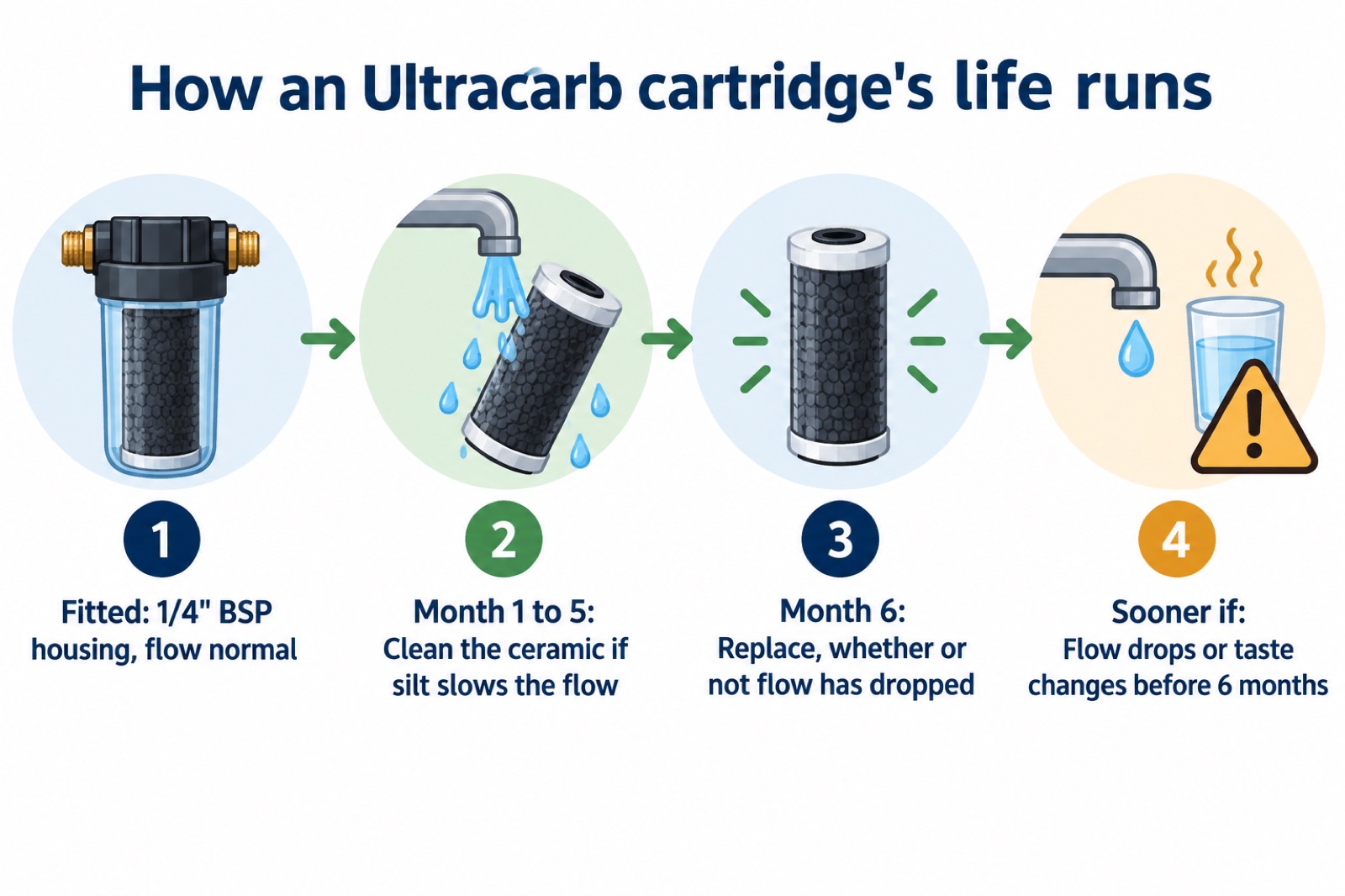
Doulton recommends replacing the filter every 6 months, and says that if you notice a drop in water flow or a change in taste, it may be time to replace it1. The datasheet is firmer still: always replace after 6 months' use to keep your water fresh4. The two statements are not in conflict so much as two triggers for the same action, and the maker's own pages put them slightly differently: some say a drop in flow or change in taste may mean it is time to replace, others say change it if flow lessens before 6 months1. Either way, the calendar and the flow both count.
A filter subscription is one way to keep to the schedule. Doulton offers a subscription service that it says makes filter replacement easier, with automatic replenishment and hassle-free deliveries14. The maker also runs a subscribe and save service with automatic replenishment of filters15. Neither is required, but if you know you will forget a twice-yearly date, it removes the guesswork.
Cleaning the ceramic when silty water slows it down
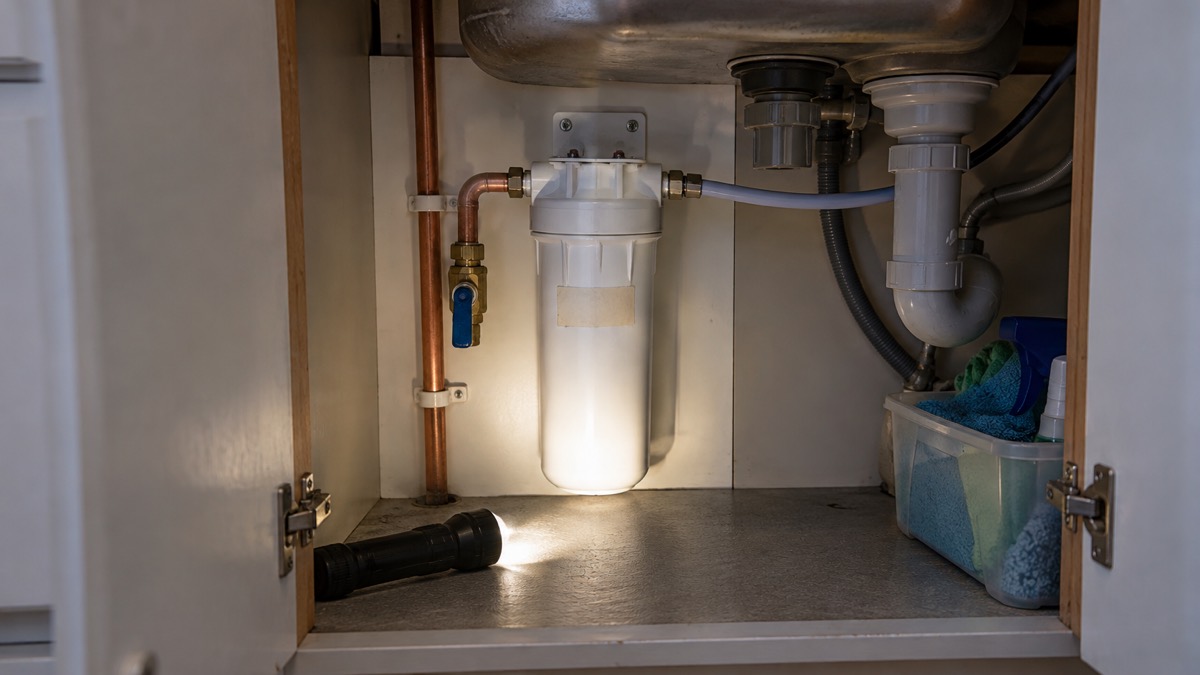
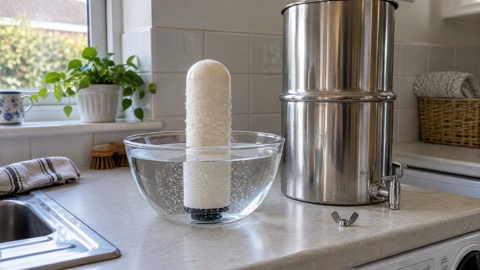
When the ceramic sees a reduction in flow while filtering water with high levels of sediment and turbidity, Doulton says the filter can be removed and the surface gently cleaned to restore the flow rate4. That is the maker's instruction for its own product, and it is the first thing to try when the tap slows.
Doulton's support guidance sets the order of checks: if water flow is slow or stops, clean the ceramic filter candle first; if cleaning does not restore the flow, replace the filter; and make sure all connections are secure with no blockages16. The maker also advises cleaning the filter regularly and replacing it when you notice a decline in performance or after the recommended period11.
If your water is heavily silted after a mains disturbance, our guides to brown or discoloured tap water and to looking after a filter cover what to do before and after the cartridge goes back in.
Support, returns and checking compatibility
Doulton's UK customer service can be reached by email at filtersales@doulton.com or by phone on 0333 340 360017. The same sales address is the one the maker gives for compatibility checks1, and for systems that are not on its lists it asks for the make, model, filter housing dimensions and any other relevant specifications4. Have those ready before you write.
Returns are 14 days on the Ultracarb18 and on the SI13. That is the maker's stated window, so if a cartridge arrives and does not fit, raise it promptly rather than putting it in a cupboard.
- Before ordering: confirm your housing is 1/4" BSP and your system is on the compatible list1.
- If unsure: email filtersales@doulton.com with your system details4.
- If it does not fit: use the 14 day returns window18.
- For scheduled changes: ask about the subscription service14.
If you are weighing an under-sink cartridge against a freestanding gravity filter for emergency use, our comparison of gravity and under-sink filters sets out what each suits, and the water section covers the wider question of keeping a supply going when the mains is off.
Sources (18)
- Ultracarb (9501), Doulton, 2026-10-28
- Ultracarb (9501), US site, Doulton, 2026-10-28
- Doulton and British Berkefeld NSF certification, Doulton, 2026-10-28
- Test data, Doulton, 2026-10-28
- Ultracarb (9501), Canada site, Doulton, 2026-10-28
- FAQs, Doulton, 2026-10-28
- Undercounter systems, Doulton, 2026-10-29
- HIS push-fit undersink filter with Biotect Ultra, Doulton, 2026-10-28
- Countertop water filter system with Biotect Ultra, Doulton, 2026-10-28
- Ultracarb M15 filter, Doulton, 2026-10-28
- Ultracarb SI (9505), Doulton, 2026-10-28
- Ultracarb SI (9505), US site, Doulton, 2026-10-28
- Ultracarb SI (9505), Poland site, Doulton, 2026-10-28
- Portable water filters, Doulton, 2026-10-28
- Biotect Ultra SI 2505, Doulton, 2026-10-28
- FAQs, France site, Doulton, 2026-10-28
- HIP DUO with Biotect Ultra, Doulton, 2026-10-28
- Ultracarb (9501), Poland site, Doulton, 2026-10-28
 British Berkefeld Ultra Sterasyl
 British Berkefeld Ultra Fluoride