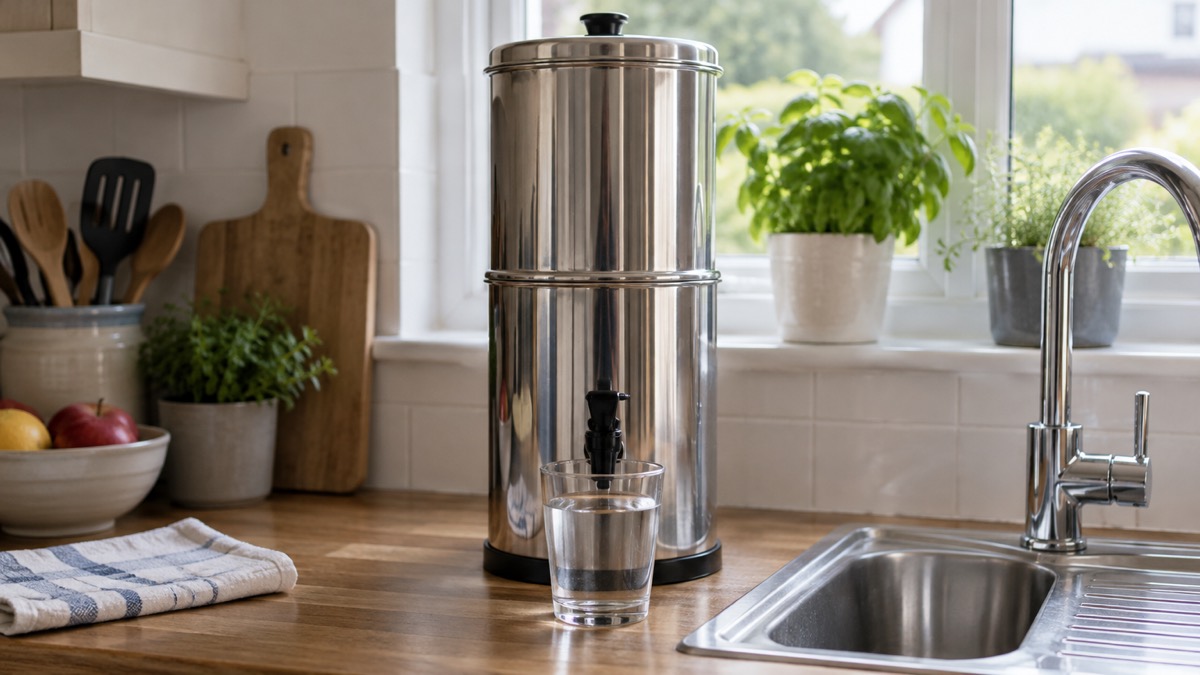
The British Berkefeld 1 litre gravity system is the smallest in the maker's range: a stainless steel countertop filter that needs no plumbing, takes one Ultra Sterasyl filter, and gives you about 750ml of filtered water per fill1. You fill the upper chamber with municipally treated tap water and gravity pulls it through the ceramic filter into the lower chamber. The maker lists it for taste and contaminants, for one to two people using it individually at home or in an office3.
If you are thinking of buying one, the practical points are these. It suits a single person or a couple, or anyone who wants filtered water from a compact unit that can be moved around. It is not a bulk store: the maker's larger systems run to 8.5 and 12 litres with four filters, and this one is the entry point to the range4. The filter is changed every six months, or sooner if the flow slows or the taste changes5. The housing itself is not replaced, only the ceramic filter inside it1.
This page sets out what the system is, its specifications, how to prime the filter before first use, when and why to change it, and how to get support from the maker. It is a description of one named product in the maker's own terms, not a comparison with other filters. If you are weighing up filter types for an emergency supply more broadly, the guide to emergency filters sets gravity, pump, bottle and straw types side by side.
What the British Berkefeld 1 litre system is
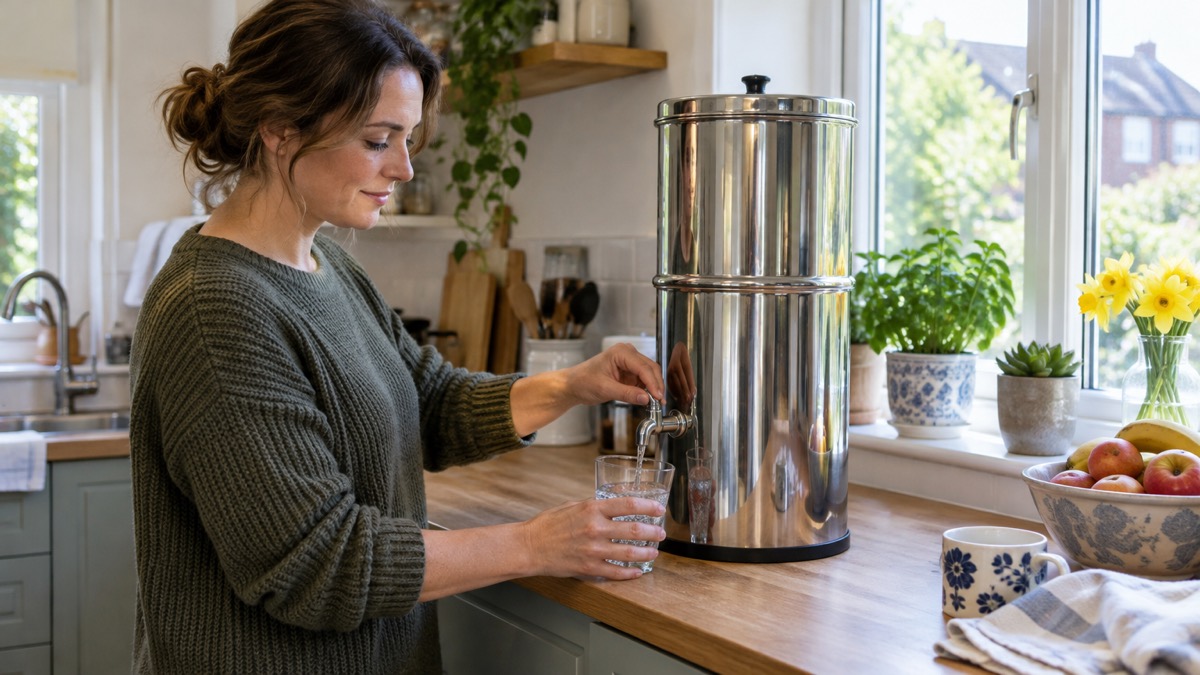
British Berkefeld is a gravity fed water filter brand sold by Doulton. The maker traces the brand back to the 1800s, when a German engineer, Wilhelm Berkefeld, developed the original version of these gravity filter systems to help tackle disease at the time8. The systems work without electricity or plumbing: you pour water into the upper chamber and it passes through a ceramic filter element under its own weight into the lower chamber, where you draw it off5.
The 1 litre model is the smallest of the range. The maker describes it as a great, plastic-free alternative to a classic filter jug, offering the same benefits as the larger British Berkefeld systems in a more compact form9. It is stainless steel, it sits on a worktop, and it is simple to operate with no plumbing required6. The maker also states that the one-litre system provides the same levels of contaminant reduction as the larger systems when fitted with the Ultra Sterasyl filter3.
What it is for matters as much as what it is. The maker lists the 1 litre system under taste and contaminants, for one to two people using it individually for home or office use3. It is intended for municipally treated water: you fill the upper chamber with tap water, and the filter reduces common contaminants, chlorine, organics and lead from it6. It is not presented as a way to make raw or stored water safe, and the maker's own instructions assume a treated supply going in.
The range it belongs to runs to four sizes, from this smallest system up to 6, 8.5 and 12 litre systems, with one Ultra Sterasyl filter in the 1 litre system through to four filters in the larger 8.5 and 12 litre systems4. If you want to understand how gravity and ceramic candle filters work in general, the guide to gravity filters and ceramic candles explains the principle; this page stays with the 1 litre model.
Specifications: 1 litre, stainless steel, one Ultra Sterasyl filter
The maker's product listing gives the core specification plainly. The system has a 1 litre capacity for on-the-go or compact at home filtration, is made of stainless steel, and includes one Ultra Sterasyl filter6. It is a portable gravity filter system with a six-month filter replacement cycle6. The maker states it is only compatible with Ultra Sterasyl filters6.
| Specification | Detail |
|---|---|
| Type | Portable gravity filter system6 |
| Capacity | 1 litre6 |
| Filtered water per fill | 750ml1 |
| Material | Stainless steel6 |
| Filter included | 1 Ultra Sterasyl filter6 |
| Compatible filters | Ultra Sterasyl only6 |
| Filter replacement cycle | 6 months6 |
| Dimensions | Width 100 mm, depth 355 mm, height 100 mm6 |
| Plumbing required | None6 |
| Origin | Made in Britain6 |
| Returns | 14 day returns6 |
The dimensions are worth a moment. The maker lists width 100 mm, depth 355 mm and height 100 mm6. That is a long, low unit rather than a tall one, so check the space on your worktop before it arrives, particularly the depth. It is not a unit that tucks into a corner cupboard.
The Ultra Sterasyl filter is the same element used across many of the maker's systems10. The maker's test data states that a British Berkefeld ceramic candle will reduce up to 99% of chlorine, significantly improving taste and odour, and that these filter elements also reduce common contaminants, including heavy metals and bacteria11. Those are the maker's own figures; for how filter claims and certification work more generally, see filter claims and certification.
Priming the filter before first use
A new ceramic filter needs wetting before it will pass water properly. The maker's instruction is direct: you will need to run water through the filters to wet and prime them before use5. Do this before you fill the system for drinking, so that the first water you draw is water you are happy to use.
The sequence the maker sets out is straightforward:
- Assemble the system with the Ultra Sterasyl filter fitted in place6.
- Run water through the filter to wet and prime it before use5.
- Once primed, fill the upper chamber with municipally treated water6.
- Let gravity draw the water through into the lower chamber, then draw it off.
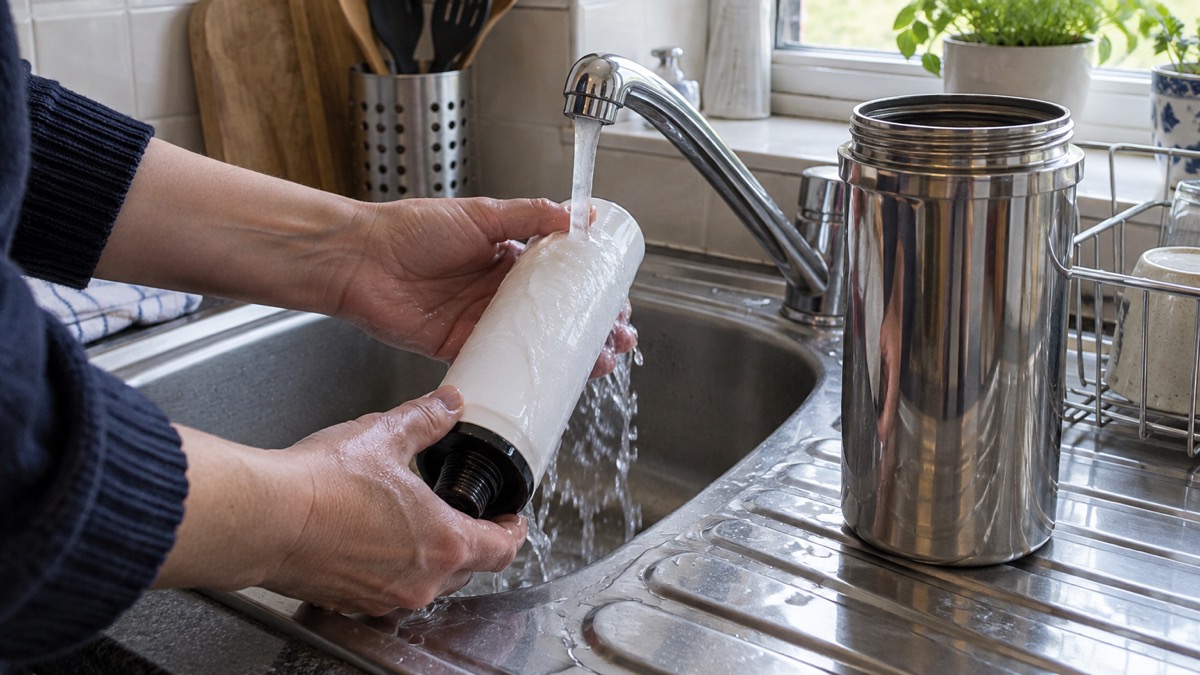
Priming is not a one-off ritual you repeat every day, but it is the step people skip when they are keen to use a new filter. Skipping it means the first flow can be slow or uneven, and you may think the filter is faulty when it simply is not wet through. If you want the wider picture on priming, cleaning and frost protection for any filter, the guide to looking after a filter covers it.
The maker also gives cleaning advice for the stainless steel body. When not in use, give the inside a light wipe with kitchen roll or a dry cloth to keep it dry for storage, and use an anti-static cloth or dry kitchen roll on the exterior5. Keeping the inside dry between uses is the maker's own storage advice, and it matters if the system is going to sit unused for a while, for example in a holiday let or an office.
Change the filter every 6 months, sooner if flow slows
The maker's replacement rule is consistent across its guidance: change the water filter every 6 months5. The product listing describes the same six-month filter replacement cycle6. The maker adds that the frequency also depends on the amount of water you filter through and how often you use it13.
There are two triggers for changing sooner. The first is a change in taste: if you notice a change in the taste of your water, or a slower flow rate, follow the cleaning instructions first, and replace the filter if cleaning does not help5. The second is flow alone: the maker states that if your water flow lessens before 6 months, it recommends that you change your filter14. Regular cleaning of the ceramic filter element will help maintain a consistent flow rate even with frequent use1.
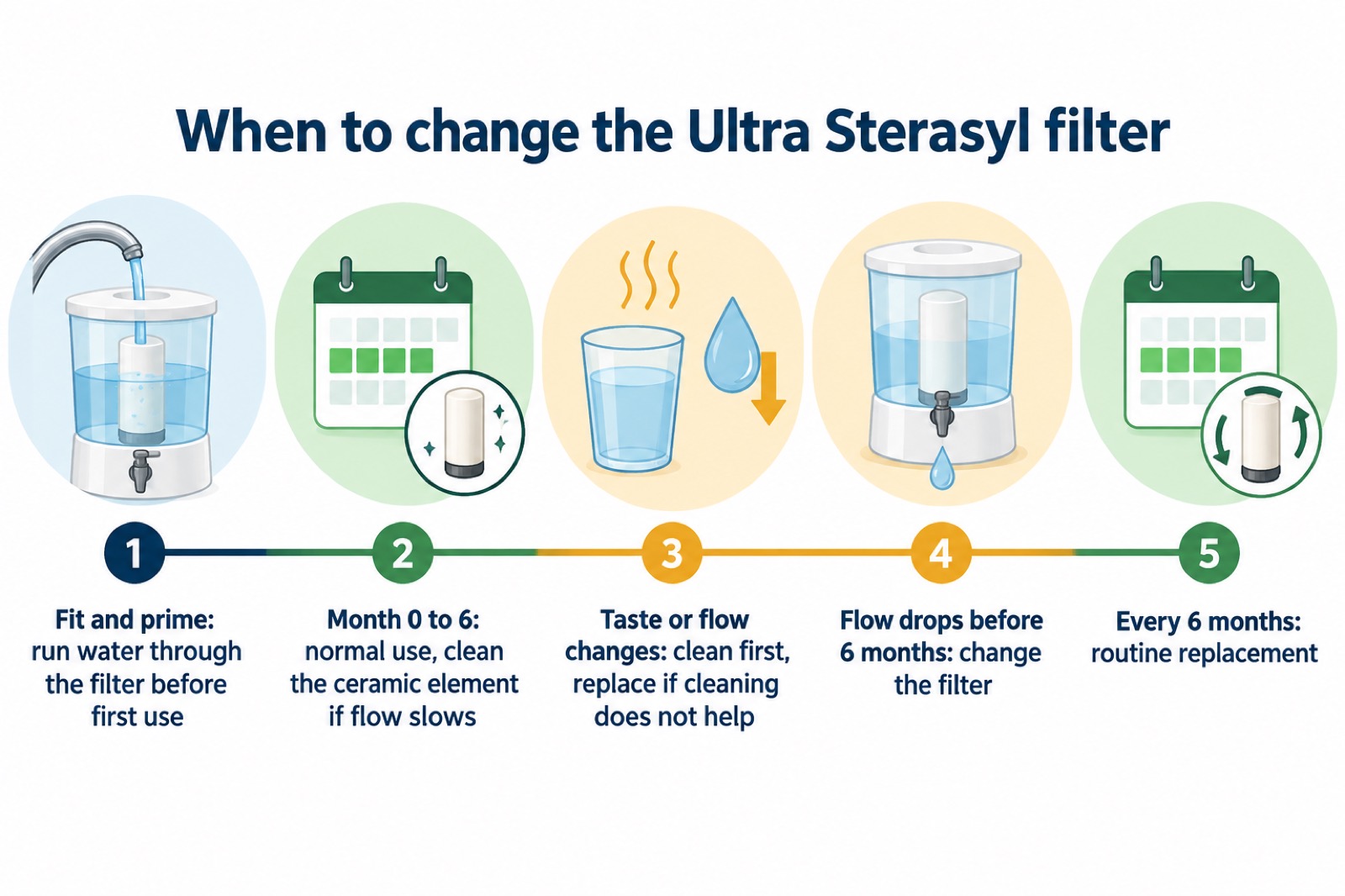
The housing is a separate matter. The maker states that you will not need to change the filter housing: all you need to change is the ceramic filter inside the housing1. That is worth knowing because it changes what you keep in the cupboard. You are not replacing the stainless steel body on a cycle; you are replacing the ceramic element inside it, and cleaning the body.
On daily volume, the maker states there is no strict limit to how much water you can filter in a day with a British Berkefeld system, but the flow rate may decrease if the filter becomes clogged due to heavy usage1. In practice the limit is patience rather than a rule: a 1 litre system giving 750ml per fill means frequent refills if several people are drinking from it, and the flow slows as the ceramic loads up. Cleaning the element restores flow; if it does not, the filter is due for replacement.
Who it suits, and where it fits in a household
The maker's own positioning is clear: one to two people using it individually for home or office use, for taste and contaminants3. That is the honest frame for this model. It is a personal or couple-sized filter, not a household workhorse. The range runs up to 8.5 and 12 litre systems with four filters for larger demand4.
Set against the alternatives by circumstance rather than by brand:
- One or two people, kitchen or desk: the 1 litre system, refilled as you go, with 750ml per fill1.
- A larger household drinking through the day: the maker's larger gravity systems, which take up to four filters4.
- Someone wanting a plastic-free jug replacement: the maker describes this model as a plastic-free alternative to a classic filter jug9.
- Someone wanting filtered water away from home: the maker describes the smallest system as designed to take with you5.
If you are choosing between a gravity filter and a plumbed-in under-sink unit, the comparison of gravity and under-sink filters sets out the trade-offs. If you are building an emergency water supply rather than everyday filtered water, start with how much drinking water to store per person and the supply interruption checklist; a 1 litre countertop filter is a taste and quality measure, not a store of water.
Support, returns and the maker's details
British Berkefeld is sold by Doulton, and the maker gives a single route for help: a UK based customer service team at filtersales@doulton.com7. The same address is given for technical questions about filter fit. If your filtration system model is not listed, the maker asks you to email with the make, model, filter housing dimensions and any other relevant specifications11. That is useful if you have inherited a system or bought one secondhand without paperwork.
The product listing states 14 day returns6. Keep your order details and packaging until you have primed the system, run water through it and are satisfied, so that a return inside that window is simple. The maker also states that next working day delivery is available for orders placed by 11:00, Monday to Friday, subject to the destination and courier availability6; that is a delivery note, not a reason to rush a decision.
On the brand question people often ask: the maker states that British Berkefeld and Berkey are two separate brands5. They are not the same product under two names, and filters and parts are not interchangeable between them. Buy the Ultra Sterasyl filter the maker specifies for this model6.
The maker describes the brand as pioneers of filtration since 18266, and elsewhere as carrying over 200 years of innovation and expertise16. Those are the maker's own heritage claims. What matters for the household is narrower: a stainless steel body that is cleaned rather than replaced, a ceramic filter changed every six months or sooner if flow slows, and an email address for support when something does not fit or does not work as expected.
Sources (16)
- British Berkefeld 1 Litre Stainless Steel Gravity System, Doulton, 2026
- British Berkefeld 1 Litre Stainless Steel Gravity System, Doulton, 2026
- Countertop Water Filter Systems, Doulton, 2026
- Portable Water Filters, Doulton, 2026
- Ultimate Guide to British Berkefeld, Doulton, 2026
- British Berkefeld 1 Litre Stainless Steel Gravity System and Ultra Sterasyl, Doulton, 2026
- British Berkefeld, Doulton, 2026
- Portable Water Filters Collection, Doulton, 2026
- Portable Water Filters Collection, Doulton, 2026
- British Berkefeld, Doulton, 2026
- Test Data, Doulton, 2026
- Countertop Water Filter Systems, Doulton, 2026
- Ultra Fluoride for British Berkefeld Stainless Steel Gravity System, Doulton, 2026
- Test Data, Doulton, 2026
- FAQs, Doulton, 2026
- British Berkefeld Stainless Steel Gravity System Ultra Sterasyl, Doulton, 2026
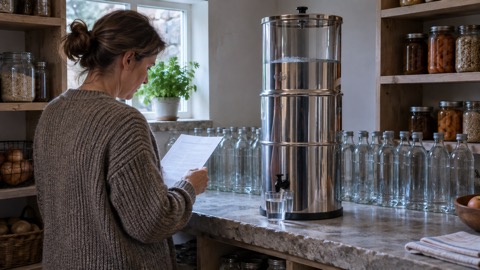 Katadyn Drip Ceradyn
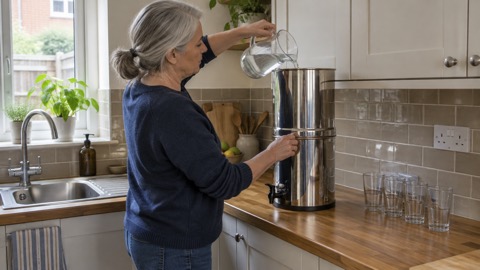 British Berkefeld SS2 8.5L