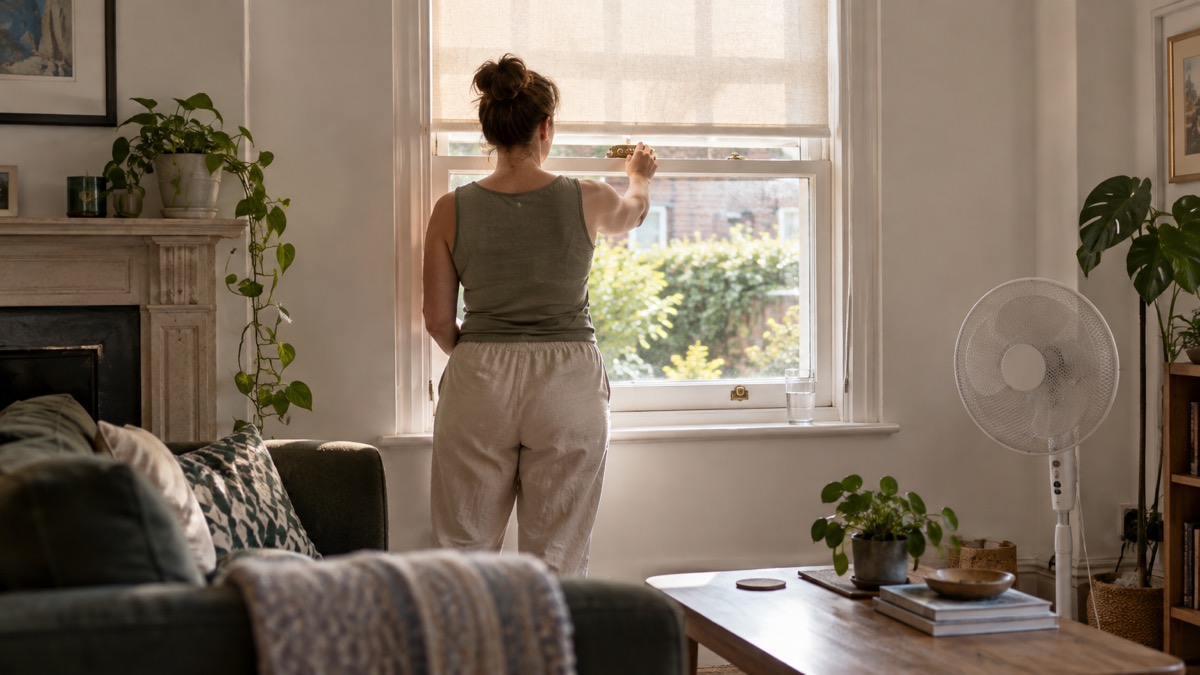
On a hot day the instinct is to throw every window open. The official heat advice is more careful than that: open windows when it is cooler outside, such as in the evening or at night, "if it is safe to do so", and keep them closed while it is hotter outside than in1. That phrase, "if it is safe to do so", is where home security comes in. The police service for Northern Ireland warns that open or unlocked doors and windows are used to gain quick access, and that a good many burglaries are committed by opportunistic criminals2.
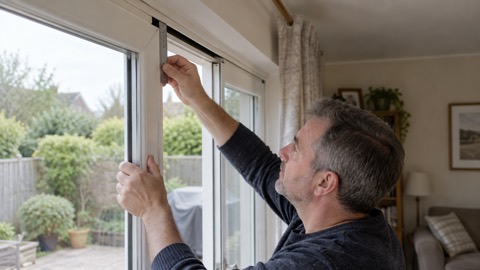
So the practical answer is a routine, not a choice between cooling and security. Open early in the morning before temperatures rise, and again in the evening once the air outside has cooled below the temperature indoors, and keep windows and doors closed while it is hotter outside than in3. Where a window can be reached from the ground, fit a restrictor or grille so it can stay open a little without becoming a way in4. Shade the glass on sunny sides of the house, and check that any replacement window is certified to BS7950, the standard cited in official guidance for windows that resist break-ins5.
Open windows when it is cooler outside, close them while it is hotter
The core of keeping a house cool is timing, and the guidance from health bodies across the UK is consistent. Open windows early in the morning before temperatures rise, and again in the evening once the air outside has cooled below the temperature indoors; keep windows and doors closed while it is hotter outside than in3. Lancashire County Council puts it in one line: keep windows that are exposed to the sun closed during the day, and open windows at night when the temperature has dropped6. The UK Health Security Agency's own checklist says to open windows, when it is safe to do so, when the air feels cooler outside, for example at night, and to try to get air flowing through the home1.
Northern Ireland's guidance adds a sensible exception: keep windows closed when it is hotter outside than inside, but open them if the room gets too hot9. Derbyshire County Council frames the same rule as shutting windows and pulling down blinds when it is hotter outside, and opening windows for ventilation when it is cooler10. The Met Office's advice for older people is blunter still: closing doors and windows in the heat of the day can keep it cooler inside11.
What this means for security is that the safe window for ventilation is also the one burglars are most likely to use, because it is dark. The answer is not to keep everything shut and swelter, but to decide in advance which windows can be opened safely and which cannot.
Keep curtains and blinds shut on sunny windows during the day
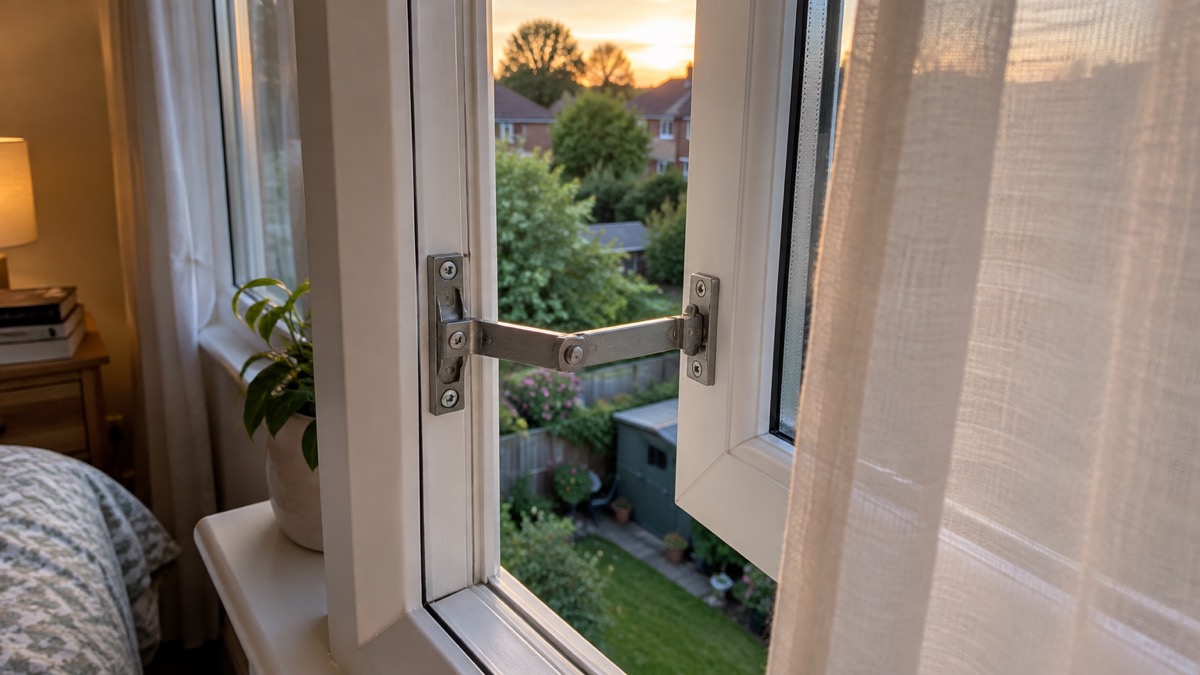
Closing the window is only half of it. The other half is stopping the sun from reaching the glass in the first place. The UK Health Security Agency advises keeping your home cool by closing windows and curtains in rooms that face the sun12. The Met Office says the same: close curtains in rooms that face the sun to keep indoor spaces cooler11. Other official guidance puts it simply: close blinds and curtains to keep out the sun13.
There is a material point that catches people out. Metal blinds and dark curtains absorb heat, so take care with them and consider replacing them, or putting reflective material in between them and the window9. Where shading outside the window is not possible, use light-coloured curtains and keep them closed, because metallic blinds and dark curtains can make the room hotter14. The UK Health Security Agency suggests considering internal blinds or curtains, and notes that external shutters, roller blinds or awnings are also very effective1.
| Shading method | What it does | Where it suits |
|---|---|---|
| Light-coloured curtains, kept closed | Blocks sun without absorbing much heat14 | Any sunny room; the simplest option |
| External shutters, awnings or roller blinds | Stops sun before it reaches the glass1 | South and west-facing windows |
| Reflective material between curtain and glass | Reflects heat back out9 | Where dark curtains are already fitted |
| Solar shading or reflective window blinds | Cuts glare and heat, especially on south-facing windows15 | Rooms that overheat every summer |
Window films and reflective coatings to keep heat out
For a window that takes direct sun all afternoon, film is the do-it-yourself answer. Official guidance sets out two routes: stick up simple, removable window films or whitewash paint yourself, or hire someone to install permanent reflective solar films on the glass4. The same guidance pairs this with blinds: use stick-up or removable blinds, or hang thermal curtains yourself, or install mounted external shutters, awnings or fixed blinds4.
The choice between removable and permanent comes down to your circumstances rather than to which is better.
- Removable film or whitewash paint suits a rented home, a window you want clear again in winter, or a quick fix before a hot spell. You apply it yourself4.
- Permanent reflective solar film gives a neater, longer-lasting finish and is installed on the glass by someone else4.
- External shading (shutters, awnings, fixed blinds) is the most effective at stopping heat before it reaches the glass, but is a bigger job1.
Whichever you choose, film and paint change how the window looks and how much light comes in. They do not change how the window opens, so they are no substitute for a lock or restrictor on a window that can be reached.
BS7950: the standard for windows that resist break-ins
If you are replacing a window, or buying a home with new ones, the standard to ask about is BS7950. Official guidance on securing doors and windows names BS7950 for windows5. It is the benchmark for a window built to resist a break-in attempt, rather than simply to keep out the weather.
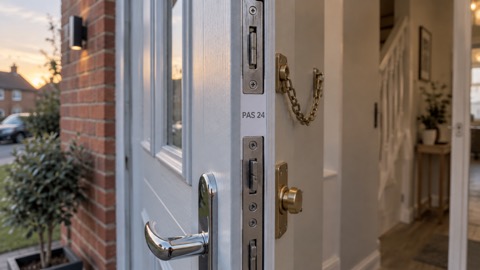
For new doors and windows, Police Scotland go further and point to PAS24, saying you should look for "PAS24" doors and windows because they are harder to break7. The two standards sit alongside each other: BS7950 is the one named for windows in the doors and windows guidance, and PAS24 is the one Police Scotland name for new products. If you are choosing between products, ask the supplier for written confirmation of which standard applies and keep the certificate.
There are related standards worth knowing when you are specifying glazing or hardware:
- Safety glass at a low level, such as in doors and windows, shatters less easily than normal glass; look for the British Standards (BS) kitemark8.
- Door hardware such as the handle and escutcheons can be changed to ones that meet the Domestic Buildings Gold standard, which are harder to break7.
- Window locks or safety catches that restrict the opening to less than 6.5cm (2.5 inches) stop babies climbing out, and double as a security measure on reachable windows8.
Where an open window puts your home at risk
Not every window carries the same risk. The police service for Northern Ireland is clear that open or unlocked doors and windows are used to gain quick access, and that a good many burglaries are committed by opportunistic criminals2. An opportunist does not plan; they try a handle and see. An open window on a warm night is the easiest handle of all.
The windows that matter most are the ones a person can reach: ground floor windows, and any window reachable from a flat roof, bin store, low wall, extension roof or drainpipe. If you live in a flat above a shared entrance, the communal door and the windows onto any shared walkway deserve the same thought. Our guides to windows, locks and glazing and to flats and shared entrances go through this in more detail.
There is a second risk that has nothing to do with burglary. If there are young children in the house, the NHS advises that if it is a hot day and your windows are open, you make sure they are not accessible to younger children18. A window restrictor solves both problems at once: it lets air in, keeps a child from climbing out, and stops an adult climbing in.
Some homes are more exposed than others. Official guidance lists the homes that overheat most: top-floor flats because heat rises; homes with opening windows on just one side; homes with little shading; large east, west or south-facing windows without shade; homes in densely built-up areas with little green space; some highly insulated homes; homes with low-efficiency appliances that release heat; and homes with restricted opening of windows, for example if there is a safety catch installed20. That last point is the tension in one line: the restrictor that keeps you secure also keeps the heat in. The answer is to ventilate hard in the cool hours, through the windows you can secure, and to shade the rest.
Opening windows at night without leaving the house open
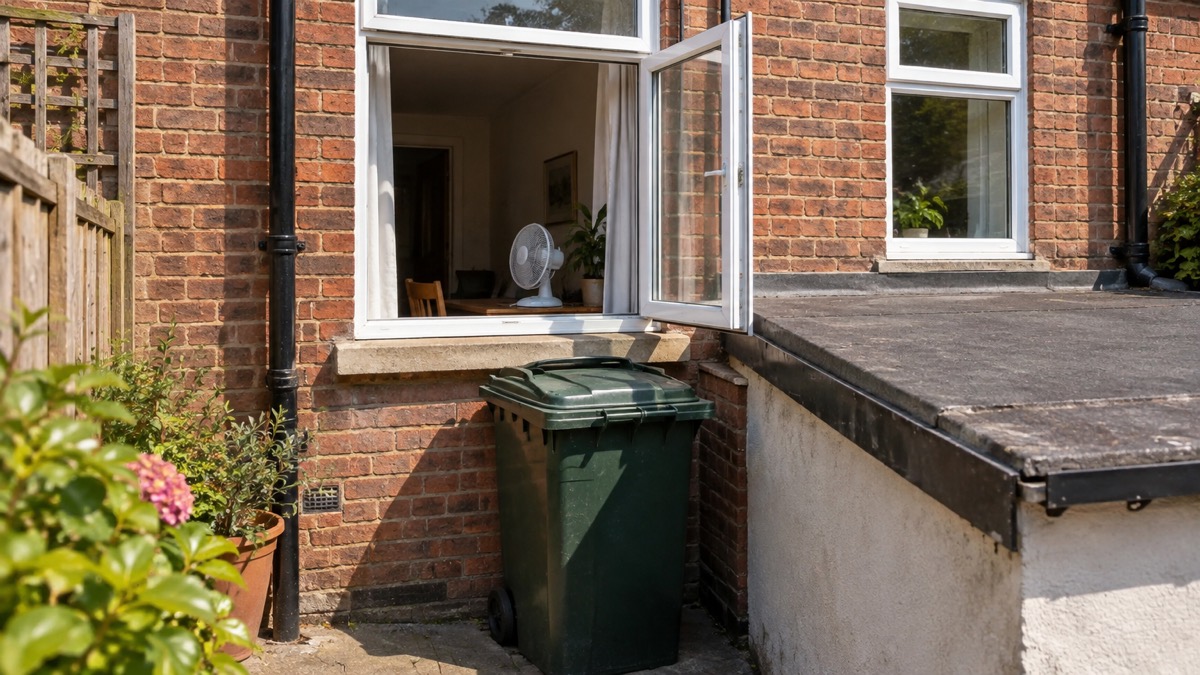
Night is when the guidance and the risk pull hardest against each other. Lancashire County Council says to open windows at night when the temperature has dropped6. The UK Health Security Agency says to open windows when the air feels cooler outside, for example at night, when it is safe to do so1. Somerset's heat health alert advice says the same: open windows in the evening once the air outside has cooled below the temperature indoors3.
The phrase "if it is safe to do so" is doing real work. Official guidance for care settings spells out the check: where you can, open windows in the cooler overnight hours to let stored heat escape, but check your insurance conditions and security arrangements before doing so20. That is good advice for a household too. Before you leave a window open overnight, ask three questions:
- Can the window be reached from outside, from the ground or from anything a person could climb?
- Is it fitted with a lock or a restrictor that limits how far it opens?
- Does your home insurance set any condition about windows being left open when the house is unoccupied or overnight?
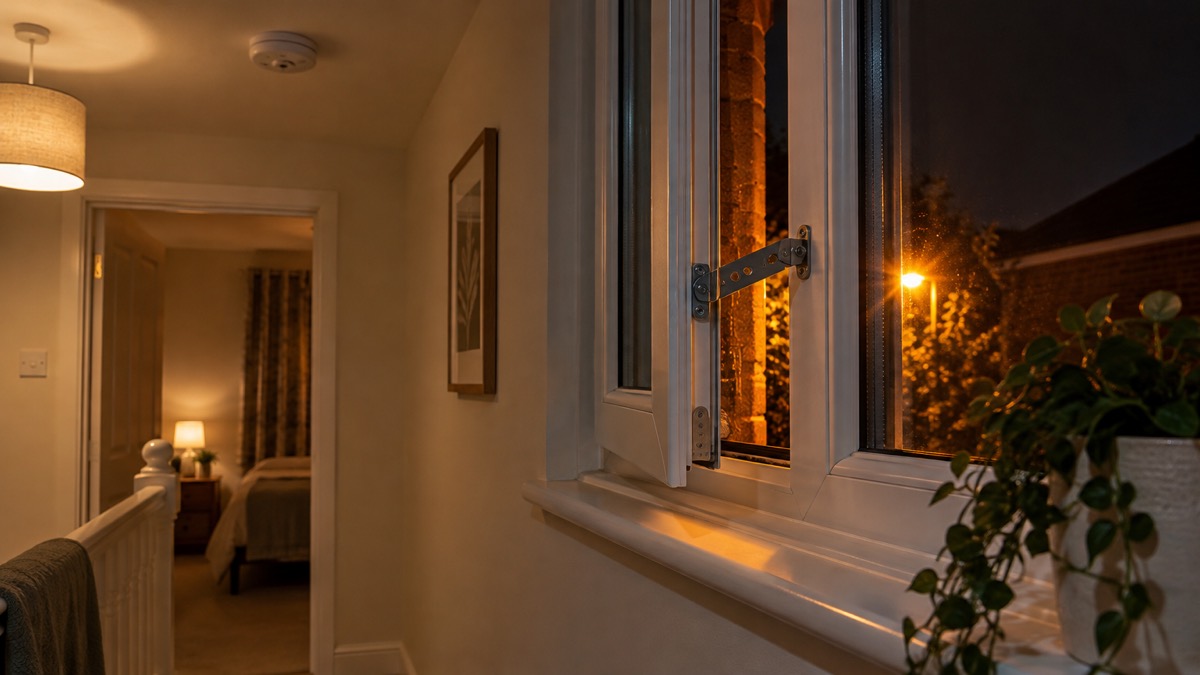
If the answer to the first is yes and the second is no, fit a restrictor or grille so the window can stay open safely at night, as official heat guidance recommends4. If you cannot secure it, ventilate through a different window and use a fan to move the air.
Rooms that get direct sun, and the rest of the house
The rooms that overheat first are the ones the sun hits. Official guidance names large east, west or south-facing windows without shade as a common cause of overheating, and recommends solar shading or reflective window blinds, particularly on south-facing windows15. Close curtains in those rooms while the sun is on them11. If the room still gets too hot, Northern Ireland's guidance allows opening the window even when it is hotter outside, because a room that is too hot is its own risk9.
The rest of the house can be kept cooler with small habits that cost nothing:
- Keep doors between hot and cool rooms shut, and close doors and windows in the heat of the day11.
- Move to the coolest room in the house during the hottest hours.
- Check on anyone who lives in a top-floor flat, is homeless, or works outside, as official guidance names these groups as most at risk in hot weather21.
- Keep an eye on the weather warnings for your area before a hot spell, so you can shade and secure windows in advance.
For the wider picture on heat, including how to recognise heat exhaustion and who is most vulnerable, see our guide to heatwaves and drought. For the security side in more depth, start with home security: a household guide, and for the specific job of making windows harder to open from outside, see windows: locks, glazing and ground-floor risks.
Sources (21)
- Beat the Heat: keep cool at home checklist, GOV.UK, 2026
- House security, Police Service of Northern Ireland, 2026
- Stay cool and safe in hot weather, Somerset Council, 2026
- Beat the Heat, Oxfordshire County Council, 2026
- Securing doors and windows, nidirect, 2024
- How to keep cool this summer, Lancashire County Council, 2026
- Break-in and housebreaking, Police Scotland, 2026
- Baby and toddler safety, NHS, 2026
- Hot weather advice, nidirect, 2026
- Keeping cool, Derbyshire County Council, 2026
- Tips for keeping older people cool, Met Office, 2026
- Beat the Heat: staying safe in hot weather, GOV.UK, 2026
- Adverse weather events, Llangattock Community Council, 2026
- Severe weather, West Yorkshire Prepared, 2026
- Climate adaptation, Birmingham Women's and Children's NHS Foundation Trust, 2026
- Countryside safety, Cheshire Fire and Rescue Service, 2026
- Fire safety checklist, Devon and Somerset Fire and Rescue Service, 2026
- Staying safe over the summer, Healthier Together, 2026
- Caravans and mobile homes, Devon and Somerset Fire and Rescue Service, 2026
- Red heat health alert briefing for care settings, Somerset Council, 2026
- Weather and health, Public Health Wales, 2026
 Moving Home Locks Checklist
 After a Break-In Checklist
 Holiday Security Checklist
 Fitting an Anti-Snap Cylinder
 British Standard Door Locks
 Double Locking a uPVC Door
 Garage to House Door Safety
 Police Preferred Key Safes
 Where to Fit a Key Safe
 Letterbox Guards
 Measuring a Euro Cylinder
 PAS 24 Doors and Windows
 Securing Patio Doors
 Smart Lock Battery Life
 Smart Locks in a Power Cut