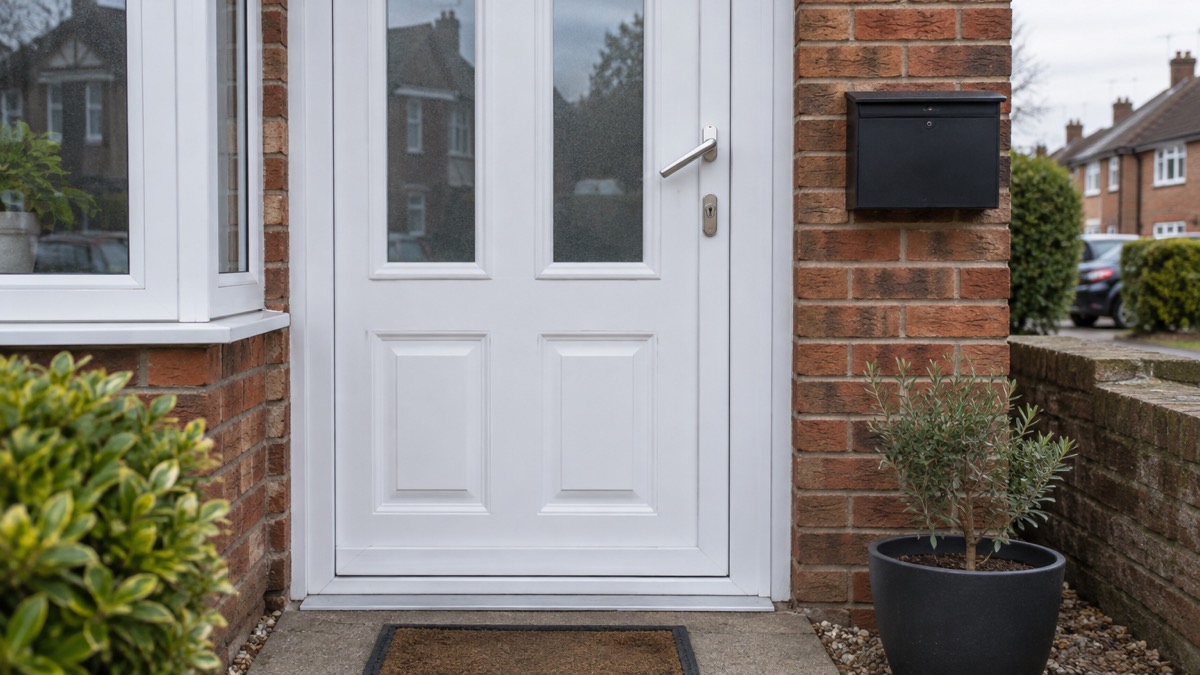
Most uPVC front and back doors do not lock when you pull them shut. They lock when you lift the handle and then turn the key. Lifting the handle lines up the hooks and latches inside the door; turning the key drives them into the frame. Police guidance puts the whole routine in four words: lift, lock and remove1. Do it every single time you leave the house, because simply shutting the door will not prevent burglaries1.
If you take one thing from this page, take the order. Handle up first, then the key, then take the key out and put it somewhere safe. If you turn the key before the handle is up, the mechanism will not engage properly and the door may look shut while being held by very little.
The rest of this page covers doing it from inside and outside, how to check the door is genuinely secure before you walk away, what to try when the handle or key fights you, and how to keep a way out if there is a fire. It also says who to call when the lock itself is at fault.
Lift the handle, then turn the key
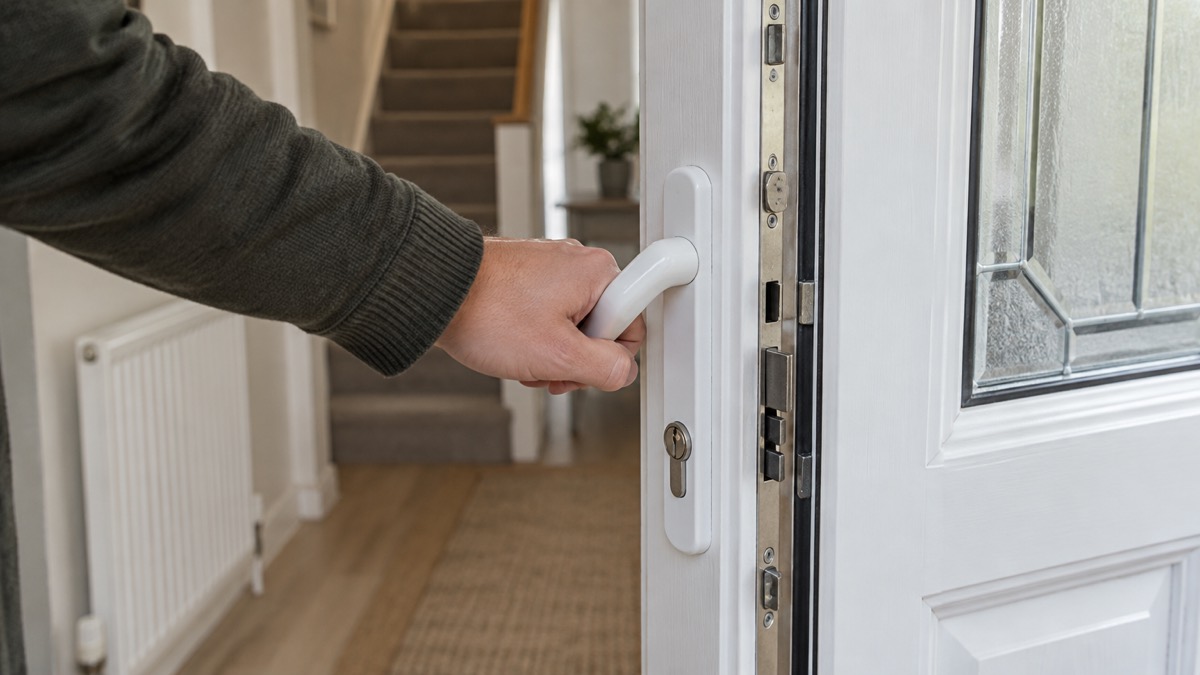
The handle on a uPVC door is not just a handle. It is the lever that operates the multipoint lock, the mechanism that throws several locking points into the frame at once rather than a single bolt. Police guidance for Avon and Somerset is explicit: double lock uPVC and multi-point locking doors by lifting up the handle and then turning and removing the key2.
The order matters because of what each action does. Lifting the handle moves the hooks and latches into position. Turning the key then secures them. If you turn the key with the handle down, you are locking a mechanism that has not been presented to the frame, and the door can be pushed open despite the key having turned.
This is also why a uPVC door can feel locked when it is not. The handle springs back, the door is shut, and everything looks normal from the inside. The test is not how the door feels but whether you completed the sequence. If you are in any doubt, open the door, close it again and start from the handle.
Smart locks fitted to this kind of door have to work with the same mechanism. The maker of the Ultion Nuki states that all its unlocking features work with doors where the handle must be lifted to lock, and that you lift the handle as normal when passing through5. In other words, automation does not remove the lift; it sits on top of it.
Step by step, from inside and from outside
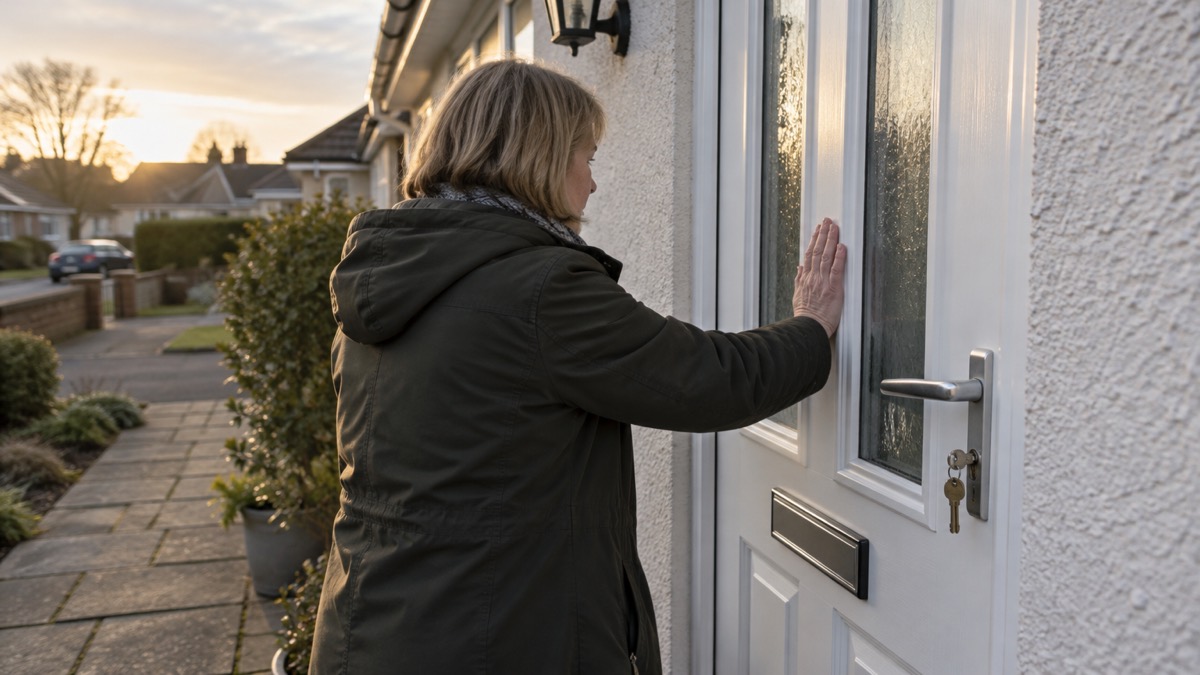
From outside, the sequence is the one you will do most often. Pull the door firmly shut. Lift the handle fully until it stops. Turn the key to throw the locking points. Remove the key, and do not leave a key in the lock or on a string. Do not rely on the door being shut as enough.
From inside, the same order applies, with one difference: you may be locking up for the night rather than leaving. Lift the handle, turn the key, and then decide where the key lives overnight. It needs to be somewhere a burglar cannot reach through the letterbox or a broken pane, and somewhere you can find it in the dark. Those two requirements pull against each other, and the next sections deal with how to balance them.
A short routine, done the same way every time, is what makes this reliable:
- Pull the door shut.
- Lift the handle fully2.
- Turn the key to engage the locks1.
- Remove the key2.
- Try the door to confirm it is secure.
- Put the key in its usual safe place6.
If you have a thumb turn lock, the inside half of the routine changes. A thumb turn lock uses a key on the exterior side of the door and a thumb turn on the interior side, so you can lock and unlock it from inside without a key7. You still lift the handle first; the thumb turn replaces the key turn, not the lift. Some cylinders have their own sequence: the maker of the Avocet ABS thumbturn states that you push to engage the thumbturn and turn it 360 degrees, and that the thumbturn must pop back out to the "Click Secure" position before you close the door8. Follow the maker's instructions for the lock you actually have.
Check the door is fully locked before you leave
The last thing you do before leaving is the thing most often skipped. Police in Northern Ireland advise going into each room and making sure all the windows are tightly shut and locked, and that all doors leading into the home are secure and locked3. That is a two-minute walk round the house, and it catches the window left on the latch and the back door pushed to but not locked.
Avon and Somerset Police put the same point in their pre-holiday routine: lock all doors and windows and put the keys in a safe place when you leave the house6. The order in that sentence is deliberate. Lock first, then deal with the keys, so that the keys are not left in a door you have just secured.
For a flat, the check is slightly different. Fire guidance for flats says to inspect the door from both sides and make sure it closes on its own and there is no damage9. A communal front door that does not self-close is a fire risk as well as a security one, and it should be reported to the management agent or landlord so it can be repaired quickly10.
When the handle will not lift or the key will not turn
A handle that will not lift, or a key that turns but does not seem to lock anything, usually means the door and frame are out of line. A uPVC door that has dropped slightly will not let the hooks and latches meet their keeps, so the mechanism fights you. Do not force it. Forcing a misaligned multipoint lock can bend the mechanism and leave you with a door you cannot secure at all.
The first check is whether the door closes on its own and shows no damage9. If it does not, the problem is alignment, not lubrication, and it needs a locksmith or door specialist. If the door closes cleanly and the handle is merely stiff, the mechanism may need lubricating. Apply a product made for locks as the maker directs rather than flooding the lock with household oil.
A key that will not turn at all can also mean the wrong key, a worn key, or a cylinder that has failed. If the door is open and the lock will not operate, do not leave the house unsecured while you work it out; deal with it before you go out, or arrange for someone to stay.
There is a second layer worth knowing about. A door can have an excellent multipoint lock and still be defeated through the cylinder. The maker of Ultion states that a door may look great, feel solid and have a great multi-point lock, but it can be disabled in a few seconds via an inadequate cylinder lock11. That is why the cylinder, the part the key goes into, matters as much as the handle. A 3-star TS007 euro cylinder is made to protect against lock snapping, drilling and bumping1. Some go further: Ultion states that if someone attempts to snap the cylinder, the lock seizes solid rather than breaking and exposing the mechanism11. The Avocet ABS thumbturn is described by its maker as unable to be bypassed with a wire or easily opened after a snapping attack, unlike most locks with a floating cam8.
If you are replacing a cylinder, the fitting orientation matters, and the maker's instructions should be followed exactly. For the wider picture on cylinders and standards, see Doors and Locks: Standards, Cylinders and Making Entry Harder and Which Way Round to Fit a 3 Star Anti-Snap Cylinder.
Keeping a way out: keys, fire escape and emergencies
A door that is hard to break into must still be easy to get out of. Fire services are consistent on this. Surrey Fire and Rescue advise keeping door and window keys where everyone you live with can find them, such as on hooks behind curtains or in boxes on window sills4. The same guidance says to practise your escape plan regularly4. Warwickshire Fire and Rescue advise identifying two escape routes from each room, such as doors and windows12.
The balance is this: keys need to be findable by you and not reachable by someone outside. A hook behind a curtain or a box on a window sill satisfies both, because neither can be fished through the letterbox. A key left in the lock does not.
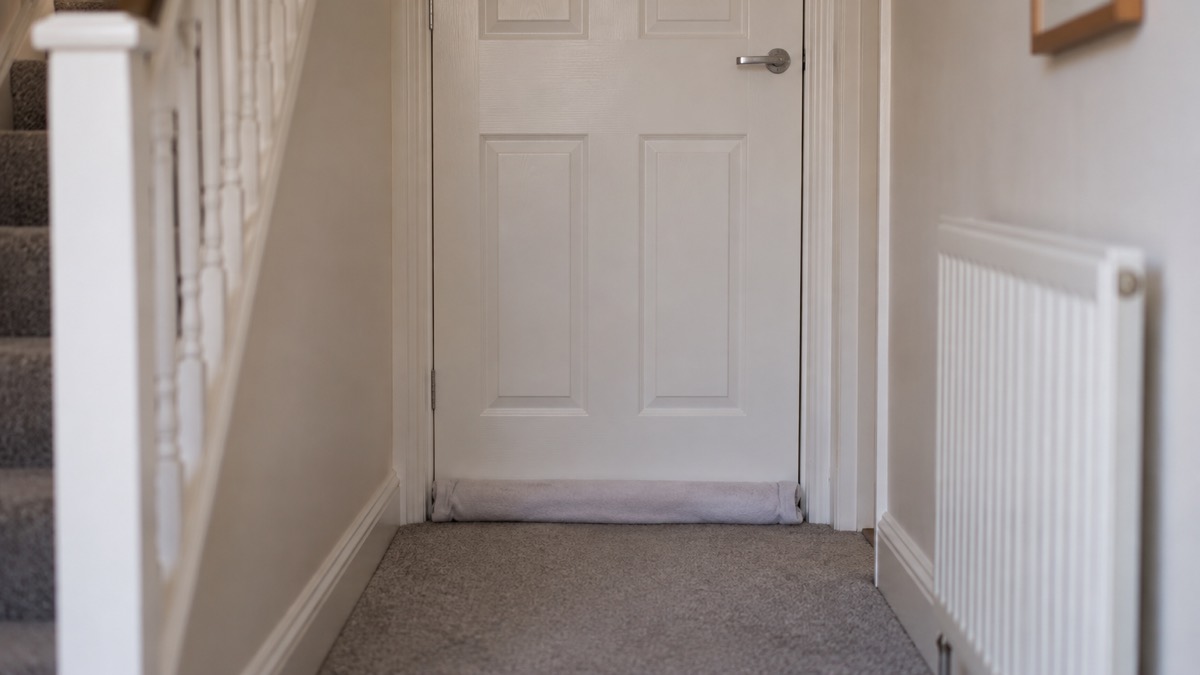
If a fire does trap you, the advice is to get everyone into one room, close the door and put bedding or towels along the bottom to seal the gap13. Stay by an open window, shout for help and call 999 if you have a phone14. If you are on an upper floor, do not jump; wait for rescue14. The Fire and Rescue Service in Northern Ireland summarises the same plan as having an escape plan, keeping access routes clear, closing all doors at night and having your keys at the ready15.
There are other times when a locked door needs to open quickly. The North West Ambulance Service advises unlocking front and back doors so that crews can get in quickly when an ambulance is expected16. If you have a thumb turn, that is the moment it earns its place. If you have a key lock, unlock it and stay near the door.
For households in Scotland and Northern Ireland, the fire safety message is the same, though the service giving it differs. Wherever you live, keep door and window keys where everyone you live with can find them, such as on hooks behind curtains or boxes on window sills, and have your keys at the ready as part of a planned escape15.
Where to get help with a stuck or faulty lock
If the lock is faulty, the right person to call depends on where you live and what is broken. In a flat with a communal door, report a faulty lock to your management agent or landlord so it can be repaired quickly10. If you spot damage to a fire door, report it to your housing provider or managing agent9. If you see a fire door wedged open, close it9.
For a private house, a locksmith is the usual route. Choose one carefully: ask for a written quote before work starts, confirm the firm's address and registration, and be wary of anyone who turns up unrequested after a break-in. Our guide to Locked Out of Your Home: What to Do and Choosing a Locksmith sets out how to check a locksmith is genuine.
If the door has dropped or the mechanism is misaligned, a locksmith or door specialist can realign it. This is not a job for force. A door that will not lock is a security problem, but a door whose mechanism has been bent by forcing is a worse one.
For the wider context on door standards, cylinders and making entry harder, see Doors and Locks: Standards, Cylinders and Making Entry Harder. For the security of the rest of the house, see Home Security: A Household Guide. If you are renting, Smart Locks in Rented and Shared Homes explains what you can and cannot change without your landlord's agreement.
Sources (16)
- Door and window lock advice, Sussex Police
- Door security, Avon and Somerset Police
- House security, Police Service of Northern Ireland
- Home fire action plan, Surrey County Council, 2026
- Ultion Nuki, Ultion, 2026
- Pre-holiday routine, Avon and Somerset Police
- Do I need a smart door lock, Which?, 2026
- ABS Break Secure Euro Cylinder datasheet, Avocet Hardware, 2020
- Fire doors and why they are important, Greater Manchester Fire and Rescue Service
- How safe is your flat, Sussex Police
- Ultion locks, Ultion
- Fire escape plan, Warwickshire County Council
- Escape plan, Devon and Somerset Fire and Rescue Service
- Fire escape, Fire Kills
- Avoiding accidental fires at home, nidirect
- Preparing for an ambulance arrival, North West Ambulance Service, 2026
 Moving Home Locks Checklist
 After a Break-In Checklist
 Holiday Security Checklist
 Fitting an Anti-Snap Cylinder
 British Standard Door Locks
 Garage to House Door Safety
 Police Preferred Key Safes
 Where to Fit a Key Safe
 Letterbox Guards
 Measuring a Euro Cylinder
 PAS 24 Doors and Windows
 Securing Patio Doors
 Smart Lock Battery Life
 Smart Locks in a Power Cut
 Smart Locks in Rented Homes