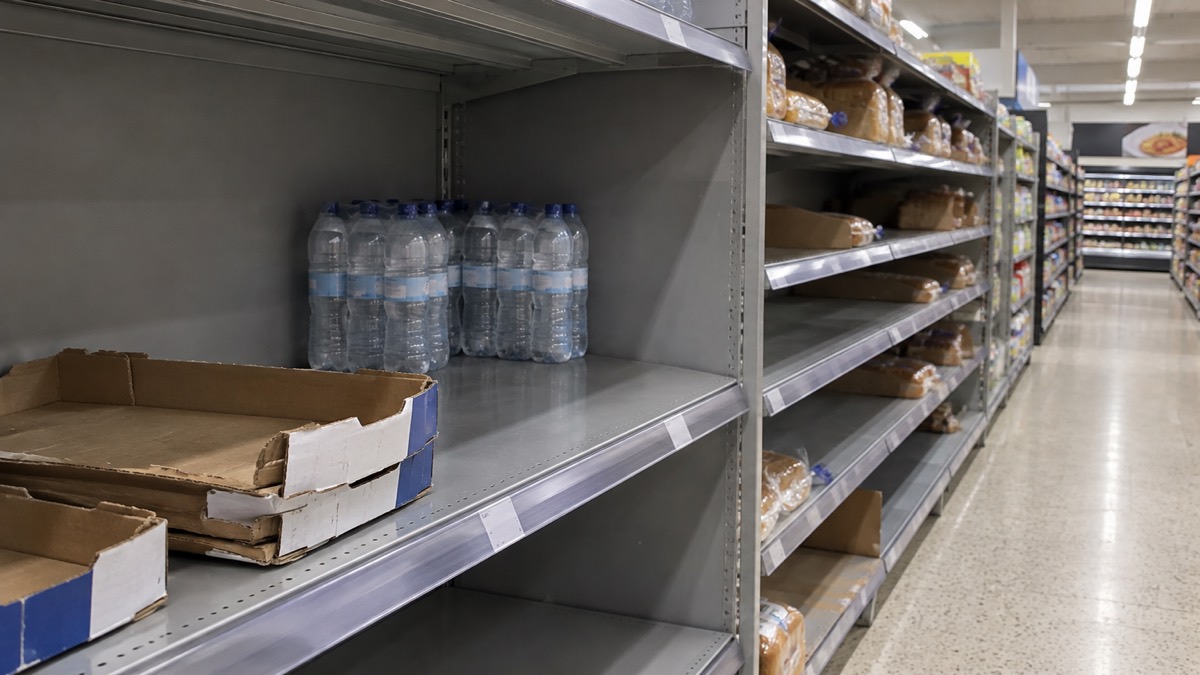
When a storm, flood or power cut is forecast, the shops fill up before the weather arrives. The pattern is fairly predictable: bottled water and ready-to-eat food go first, then torches, batteries and candles, then fuel at the pumps, and baby supplies and toilet paper disappear alongside them. The answer is not to join the rush but to keep a modest store at home so a disrupted week never leaves you short.
Official guidance is clear that loss of supply can happen without warning, so it is always useful to have an emergency pack ready in advance1. Councils advise keeping three days' supply of bottled water and ready-to-eat food that will not spoil, plus some emergency cash accessible2. For water specifically, one council suggests 2.5 litres of bottled water per person for each day3.
The reason shelves empty is not usually a shortage of goods but a surge in demand. Councils say plainly that fuel shortages are caused when people buy fuel they do not need1, and the same applies to food and household goods. A household that already has a few days of supplies does not need to queue, and by staying out of the rush it leaves stock on the shelves for neighbours who cannot stock up in advance.
Food and water go first, so keep a supply at home before you need it
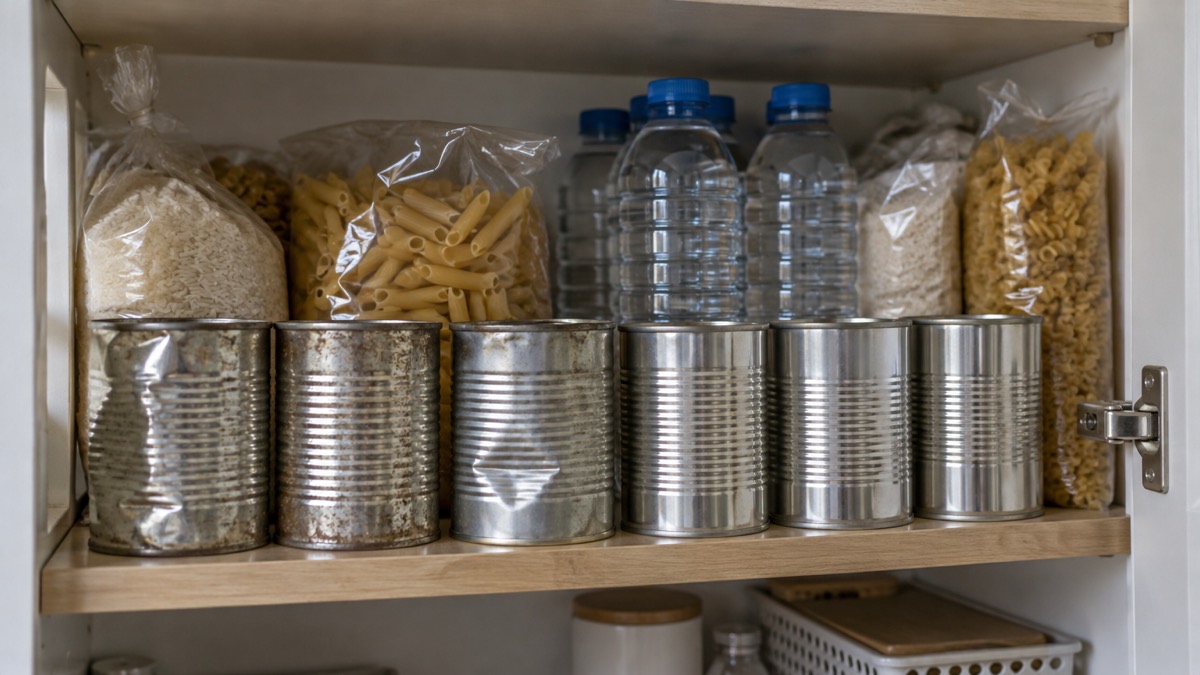
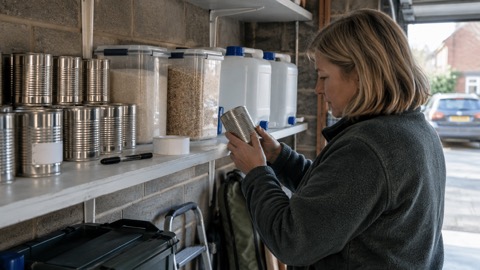
Bottled water and ready-to-eat food are the first things to leave the shelves, because they are what every household needs immediately when power or water is disrupted. The Met Office advises making sure you have basic supplies in case you have to leave home quickly, or your power and water are disrupted6. Councils repeat the point: keep bottled water and ready-to-eat food that will not go off at home in the event of an emergency7.
The quantity to aim for is modest. Birmingham City Council advises keeping three days' supply of bottled water and ready-to-eat food that will not spoil2. For water, Dumfries and Galloway Council suggests 2.5 litres of bottled water per person for each day3. Water is also needed for drinking and sanitation, so store a little more than you expect to drink5.
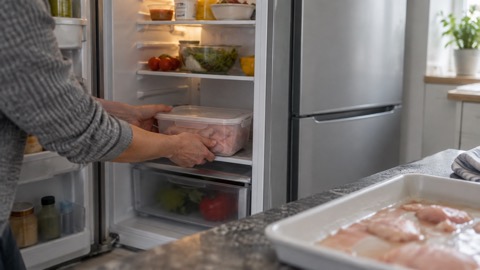
If the power does go off, the order in which you use food matters. Food Standards Scotland advises using up chilled foods first, because they go off quickest, then defrosted frozen food that does not need cooking, then room-temperature perishable food such as bread, and finally room-temperature tinned, bottled and dried food8. That order stretches your store and reduces waste.
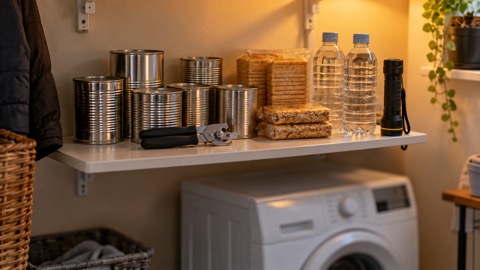
What you keep matters as much as how much. Choose things you already eat that need no cooking and keep well: tinned goods, dried staples, long-life milk, cereal bars. Our guide to what to keep in an emergency store cupboard sets out a sensible starting list, and how much emergency food to store per person helps you size it to your household. If you are starting from nothing, starting a store cupboard supply step by step walks through it without a big outlay.
Torches, batteries and candles: light runs out quickly in a power cut
When the power goes, light is the first thing people reach for, and the shops empty of torches and batteries within hours. Fire and rescue services advise keeping torches and batteries in an easy to find place1. The Met Office lists the essentials that could help you cope with a power cut as battery candles, torches and batteries, and a mobile phone power pack4.
A few practical points decide whether your lighting works when you need it:
- Keep some torches and spare batteries to hand in case the power cut happens when it is dark outside, and make sure everyone in your home knows where they are kept9.
- Use the torch on your mobile only in emergencies for short periods, because it drains the battery heavily10.
- Prepare battery candles, torches and batteries, and a mobile phone power pack in advance4.
- Keep candles and matches or lighters, torches and batteries, and a mobile phone power pack among your snow and winter supplies11.
Our emergency lighting guide covers torches, lanterns and candles in more detail, and the power cuts guide explains what to do when the supply fails.
Petrol queues: why fuel goes early and what it means for your plans
Fuel goes early for the same reason as everything else: demand surges. Central Bedfordshire Council warns that a lack of fuel could occur at any time13. Darlington Borough Council notes that disruption could see further depletion through increased consumer demand, or buying fuel that is not needed14. Lancashire Prepared puts it directly: do not buy fuel you do not need, because fuel shortages are caused when people buy fuel they do not need1.
The knock-on effects reach further than the forecourt. Dorset Prepared lists what fuel disruption can bring: a rush on forecourts because people are worried about being able to travel; disruption to communities, businesses and schools; reduced ability for lorries and vans to deliver goods to shops; people demonstrating against shortages; and criminals taking the opportunity to try to steal fuel from homes or businesses15.
For your household, the practical response is to keep the car fuelled in normal times rather than waiting for a warning, and to plan journeys so you are not caught out. Do not store petrol at home: it is dangerous and tightly controlled, and this guide does not recommend it. If you rely on your vehicle for work or care, fill up when you are passing a station rather than joining a queue in a crisis.
Baby supplies and toilet paper
Baby supplies and toilet paper vanish quickly because they are bought in bulk by households who suddenly realise they are short. The fix is to keep a small reserve of the things your household uses every week, not to clear a shelf.
Official emergency kit lists are consistent on what to include:
| Item | What official guidance says | Source |
|---|---|---|
| Infant formula and nappies | Include infant formula milk and disposable nappies and nappy sacks if required | 5 |
| Baby and child supplies | Formula and drink, change of clothing, nappies, toys, books and activities | 16 |
| Toiletries and toilet paper | Toiletries, baby supplies such as formula and nappies, toys, books and activities, anti-bacterial hand wipes or gel, sunscreen, toilet paper, rubbish bags and pet supplies | 17 |
| Personal first aid | Toiletries and a personal first aid kit | 18 |
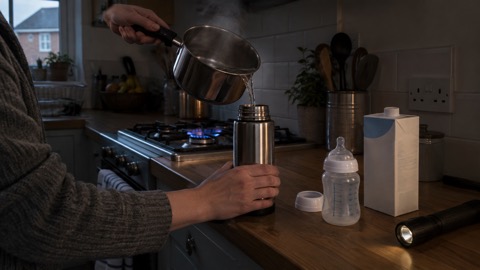
Store formula according to the instructions on the tin, keep it dry and away from heat, and rotate it so nothing passes its date. Never dilute formula to stretch it. Our guide to babies, young children and medical diets in an emergency covers the wider picture, and how to make up baby formula in a power cut deals with the specific problem of heating water when the power is off.
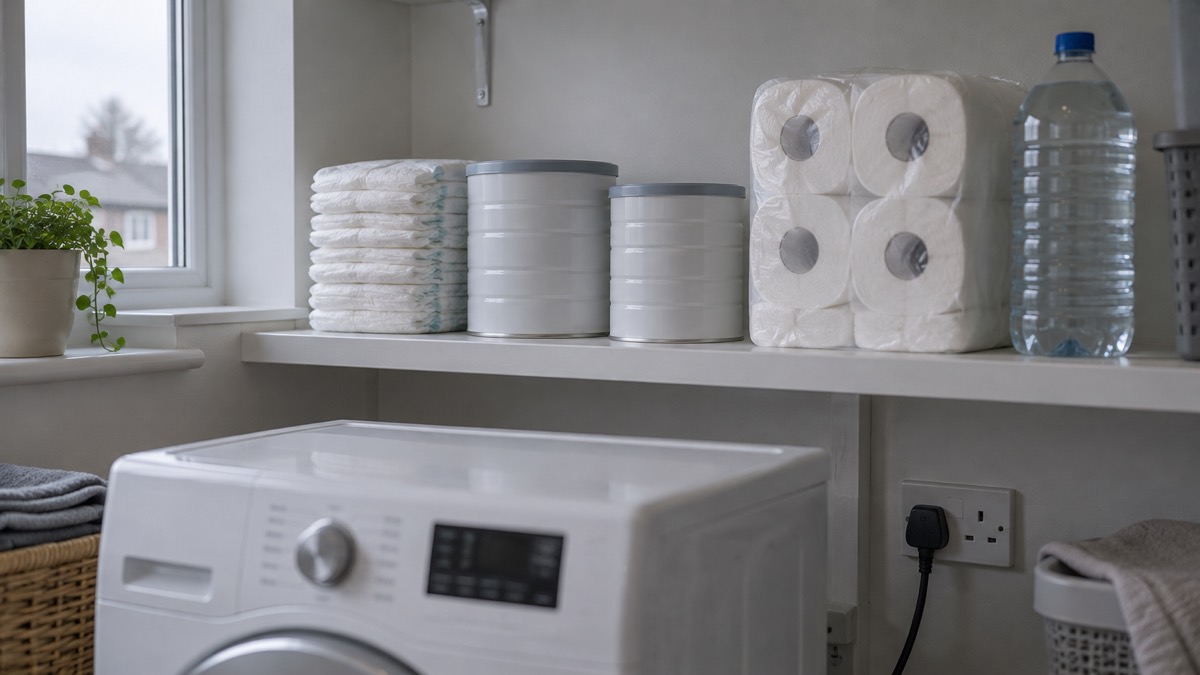
Toilet paper and toiletries are worth a small reserve because they are cheap, keep indefinitely and are among the first things to go. Official emergency pack guidance also lists rubbish bags and pet supplies alongside them, so add those to the same shelf if your household needs them19.
Alcohol and cigarettes also sell out quickly
Alcohol and cigarettes sell out quickly in a crisis, partly because people buy them for comfort and partly because they are bought in bulk. The practical point for a household is not to rely on them but to recognise the pattern and plan around it.
There is a safety dimension too. Fire and rescue services warn that fires spread much faster where there are flammable items such as newspapers or cardboard20. Hoarded materials can easily catch alight if they come into contact with heat sources such as overloaded extension leads, the kitchen hob or naked flames like candles or cigarettes21. If you keep a store, keep it tidy and away from heat.
If anyone in your household smokes, put cigarettes out completely22. Keep lighters and matches away from children, and never leave a lit cigarette near bedding or soft furnishings. The same care applies to any stock of alcohol you keep: store it away from heat and out of reach of children.
Building your store gradually, and where to get help
The best time to buy supplies is before a warning is issued, and the best way is a little at a time. Councils advise having an emergency pack ready in advance because loss of supply can happen without warning1. A grab bag helps if you have to leave home quickly in an emergency, or your power or water are disrupted23.
Build your store in this order:
- Water first. Aim for 2.5 litres per person per day3, building up over several shops.
- Ready-to-eat food that will not spoil. Three days' supply is the official benchmark2.
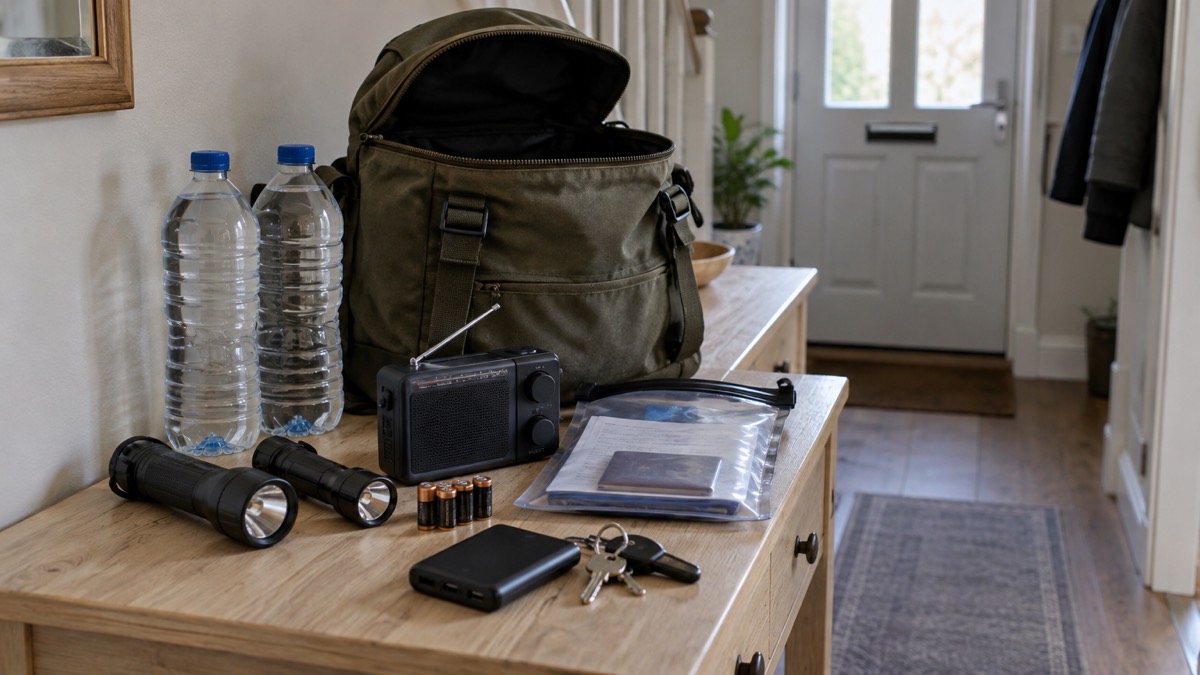
- Light and power. Torches, batteries and a mobile phone power pack4.
- Baby and personal supplies. Formula, nappies, toiletries and a personal first aid kit if needed5.
- Documents and medication. A grab bag with any medication you need, a first aid kit and important documents, plus a torch, bottled water, warm waterproof clothing and baby care items17.
Each time you use something from the store, replace it on the next shop. This keeps the stock rotating and spreads the cost. Our emergency kit guide and getting started guide set out the full household picture.
Some households need help sooner. The Priority Services Register gives priority help in an emergency, and energy suppliers use it to identify who needs support19. If you or someone you care for would struggle without power or water, ask your supplier to add you to the register. Charities and councils can also help with food; our guide to getting emergency food help explains the routes.
Sources (23)
- Loss of essential services, Lancashire Prepared, 2026-10-29
- Loss of utilities, Birmingham City Council, 2026-10-29
- Prepare for emergencies, Dumfries and Galloway Council, 2026
- Stay safe in a thunderstorm, Met Office, 2026-10-25
- Get help and advice in an emergency, Lincolnshire County Council, 2026-10-29
- Top tips to be WeatherReady, Met Office, 2026-10-25
- Emergency kit checklist, Neath Port Talbot Council, 2026-10-29
- Power cuts, Food Standards Scotland, 2026-10-25
- 12 tips to prepare for a power cut, Horsted Keynes Parish Council, 2026
- How to prepare for the loss of electricity, Wiltshire and Swindon Prepared, 2026-10-25
- Stay safe in snow, Met Office, 2026-10-25
- Fire safety booklet, London Fire Brigade, 2026
- Fuel disruption risk and plan, Central Bedfordshire Council, 2026
- Fuel shortage, Darlington Borough Council, 2026-10-29
- Disruption to fuel supplies, Dorset Prepared, 2024-04-16
- Preparing your family, Essex Prepared, 2026-10-29
- Emergency pack, Lancashire Prepared, 2026-10-29
- Planning for an emergency kit, Wiltshire Council, 2026-10-29
- Priority Services Register, Surrey County Council, 2026-10-28
- Hoarding disorder, London Fire Brigade, 2026-10-25
- Hoarding, Cheshire Fire and Rescue Service, 2026
- Hot and sunny weather: how to stay safe, Cumberland Council, 2026
- 10 things you should do now to prepare for summer, Met Office, 2026-10-25
 Long-Term Storage Kit Checklist
 Store Cupboard Checklist
 30-Day Household Checklist
 Baby Formula in a Power Cut
 Refreezing Defrosted Meat
 Leftovers in the Fridge
 Reducing Botulism Risk
 Sterilising Jars
 Spotting Spoiled Preserved Food
 Boiling Water in Glass Jars
 Mylar Bag Food Shelf Life
 Mylar Bag Sizes
 Are Mylar Bags Food Safe
 Oxygen Absorber Activation
 Silica Gel With Stored Food