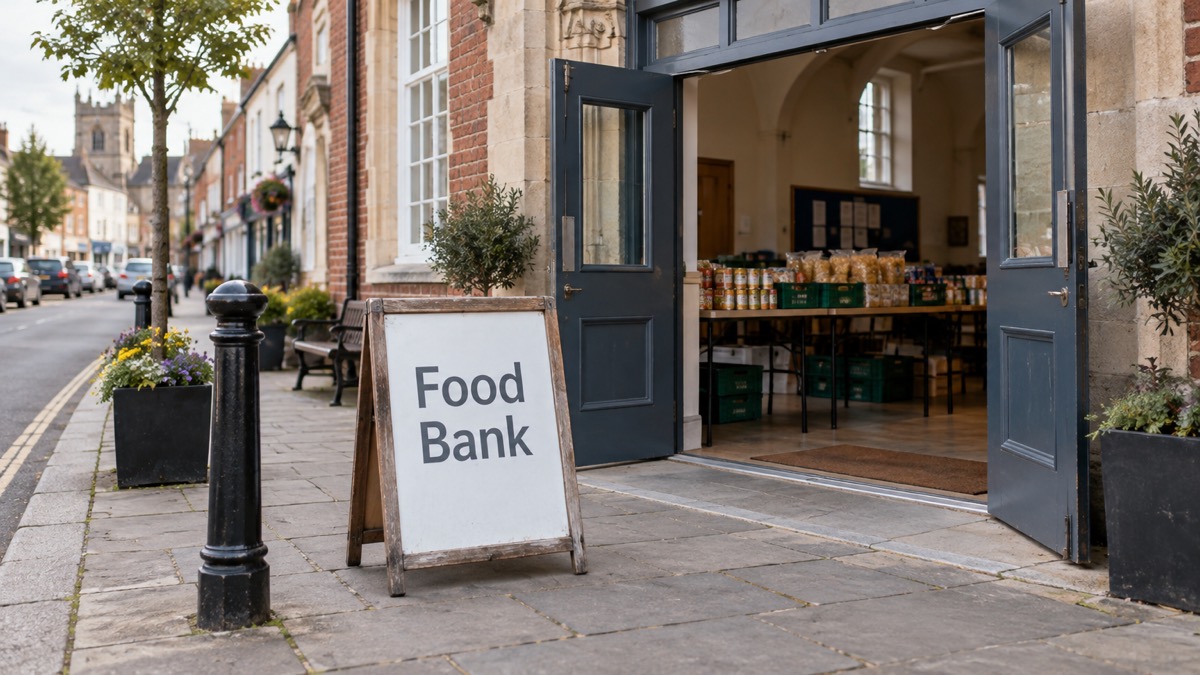
If you need a food parcel and you have never asked for one before, the first thing to know is that most food banks do not hand out food to anyone who walks in. You need to be referred with a voucher1. The voucher comes from a referral agency: an organisation that talks to you about your situation, decides that a food parcel is the right help, and issues the paperwork the food bank accepts.
The good news is that referral agencies are easy to reach. Your GP, your housing association or Citizens Advice can assess you for a food voucher and signpost you towards help with the crisis behind it1. A local advice organisation, your doctor or health visitor, social services or your housing officer can all issue a voucher you swap for food at the food bank2. Many assessments happen in a single phone call or appointment.
This page sets out who can refer you, what the assessment involves, what to take on the day, and what to do if you cannot get to a food bank at all. It also covers the help that sits alongside the voucher, because a food parcel solves this week's problem, not the reason you needed it.
Most food banks ask for a voucher, and why
The voucher is not a test of whether you deserve help. It is a way for the food bank to know how much food to give you, for how many people, and to make sure the parcel matches your household. It also connects you to an organisation that can look at the wider problem, whether that is a delayed payment, a sudden loss of income or a housing difficulty.
The system is not identical everywhere. Some food banks require you to obtain a voucher before you receive a food parcel, so check with them before you visit3. Others may accept a referral in another form or work slightly differently, which is why the check matters before you make a journey.
It helps to know what the voucher is not. It is not a guarantee of a particular parcel, and it does not commit you to anything. It is simply the route in.
Who can refer you
The list of referral agencies is wider than most people expect. The main routes are set out below.
| Referral route | What they do | Best for |
|---|---|---|
| GP surgery | Assess you for a food voucher and signpost help towards your crisis1 | Households already known to a doctor, or where illness is part of the problem |
| Citizens Advice | Assess you for a food voucher and signpost help towards your crisis1; help with money, benefits, housing, employment, legal, debt, family and consumer problems4 | Households whose difficulty is financial or administrative |
| Housing association or housing officer | Assess you for a food voucher and signpost help1; a housing officer can issue a voucher you swap for food2 | Renters, and anyone whose housing situation is part of the crisis |
| Local advice organisation | Can issue a voucher you swap for food at the food bank2 | Anyone who wants a single local point of contact |
| Doctor or health visitor | Can issue a voucher you swap for food at the food bank2 | Families with young children, and people with health needs |
| Social services | Can issue a voucher you swap for food at the food bank2 | Households already working with a social worker |
Citizens Advice is often the quickest single call, because the same conversation can deal with the food voucher and the underlying money problem. The organisation gives help with concerns around money, benefits, housing, employment, legal, debt, family and consumer problems4, and in England it also gives general advice on housing rights5.
If you are supporting someone else, perhaps an older relative or a neighbour, you can help them make the approach. The assessment is about their household, but there is no reason you cannot sit with them or make the first call together, with their agreement.
How the referral assessment works
The assessment is a conversation, not an interrogation. The agency needs to understand your household and your immediate situation so that the food bank can prepare the right parcel and so that the agency can point you to the right longer-term help.
Expect to be asked how many people are in your household, whether there are children or anyone with dietary needs, what has changed recently, and whether you have enough food for the next few days. The referral agency will then decide whether a voucher is the right response and issue it.
The principle behind referral is the same one used across public services: a short assessment decides what happens next. Fire and rescue services describe their own referral process in almost identical terms, saying the referral process will assess if the occupant is eligible for a home visit6. Food bank referrals work the same way: someone looks at your circumstances and decides what help fits.
Two practical points make the assessment go smoothly. First, be straightforward about your situation, including any income, benefits or debts, because the agency can only signpost help it knows you need. Second, ask what happens next and when. If the agency cannot issue a voucher itself, ask which organisation can.
Getting a voucher quickly
Speed usually depends on reaching the right organisation at the right time, not on how urgent your need is. A few things help.
- Call rather than visit where you can. Many advice organisations assess by phone, and a phone assessment can be quicker than waiting for a drop-in slot.
- Say clearly that you have no food for today. Urgency is relevant information, not something to play down.
- Have your details ready: household size, any children, any dietary needs, and your address.
- Check the food bank's opening hours before the voucher is issued, so you can collect while it is open.
- Ask the referral agency to confirm where the voucher can be used, in case the nearest food bank is not the one that issued it.
To find out where to get food vouchers and your nearest food banks, use the Trussell emergency food page2. It is the starting point the guidance points people to, and it saves ringing round.
If you have already been referred once and need help again, say so. Repeat need is information the agency can use, and it may change what they suggest, for example a benefits check or a debt referral alongside the parcel.
What to bring, and what to expect on the day
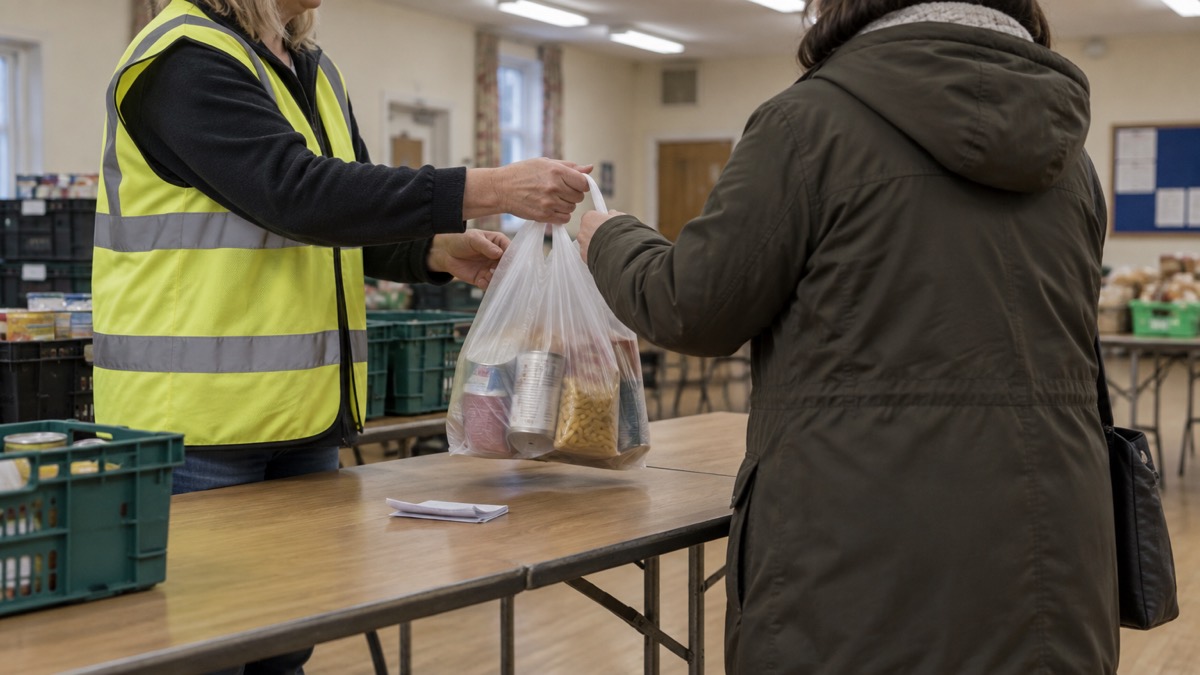
Take the voucher, and take a bag strong enough for a parcel. Beyond that, the food bank's own instructions govern, so check them before you travel.
If you are putting together a bag for an emergency of any kind, official household grab bag lists give a sense of what is useful to have with you: documents such as a passport, driving licence and insurance documents in a waterproof wallet, a phone and charger or power bank, a torch with spare batteries, emergency cash and bank cards, spare glasses or hearing aid batteries, spare keys, prescribed medication and repeat prescriptions, a first aid kit, warm waterproof clothing, sturdy footwear, toiletries, and water and snacks7. A separate council list adds a written list of key contacts and information, spare clothes, blankets, baby formula, nappies and nappy wipes, children's entertainment, and a wind-up or battery radio8. A third includes prescribed medication and medical aids, copies of important documents in a waterproof wallet, pet food, house and car keys, and ready-to-eat food with a bottle or tin opener9.
You do not need all of that to collect a food parcel. The relevant parts are the voucher, identification if you have it, any medication you might need while out, and a bag.
If you cannot travel, or cannot get out at all
Not being able to get to a food bank does not close the door. Tell the referral agency when you are assessed that travel is a problem, and ask what local arrangements exist. Some food banks and community groups organise delivery or collection by a volunteer, and a neighbour or family member may be able to collect with your voucher, so ask the food bank directly whether that is allowed.
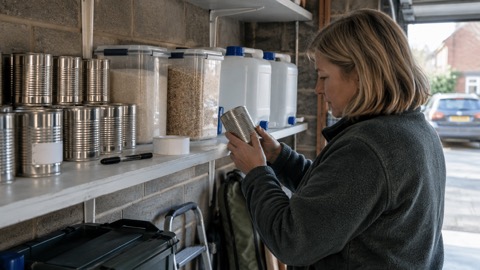
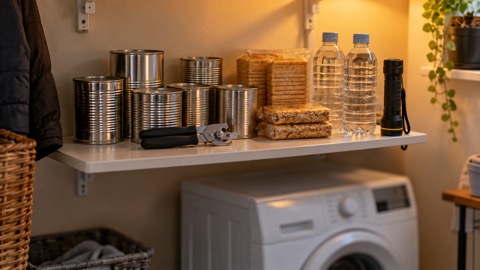
It also helps to have a small reserve at home so that a missed collection or a closed food bank is not an immediate crisis. Official household plans suggest keeping non-perishable foods, including baby food and pet food, among your emergency grab bag essentials10. A council grab bag list includes bottled water and ready-to-eat food with a bottle or tin opener9, and another includes bottled water, non-perishable food and snacks, and spare pet supplies8. None of this replaces a food bank parcel, but a day's food in the cupboard buys time to arrange one.
If you are housebound through illness or disability, ask the referral agency about local services that help with shopping and prescriptions, and about any council support for people who cannot get out. The same conversation that produces the voucher can produce those signposts.
Help beyond the voucher
A food parcel is a stopgap. The referral agency exists to look past it, and the assessment is the moment to ask for that help.
Citizens Advice covers money, benefits, housing, employment, legal, debt, family and consumer problems4, and in England gives general advice on housing rights5. If your difficulty is a delayed benefit, a rent problem or a debt, say so at the assessment and ask to be referred for advice on it.
Community support matters too. Official guidance on supporting people affected by an incident says to signpost them to NHS support services or local groups in the community that have been set up11. The same principle applies to a household crisis: the local groups that exist for one purpose often know who can help with another.
If you are looking out for someone else, the guidance is to pick up extra food, water, toiletries or any medications they need12. That is practical help you can give today, alongside helping them make the referral.
Where the arrangements differ across the UK
The voucher model is broadly the same across England, Scotland, Wales and Northern Ireland, because it is run by food banks and advice organisations rather than by government. What differs is the surrounding support.
In England, Citizens Advice gives general advice on housing rights5, which is often the issue sitting behind a food referral. Council cost of living pages, such as Cumberland's emergency food and essential items support, set out local routes to food and other help1.
In Wales and Scotland, the same referral agencies operate, and the devolved governments run their own support schemes alongside. One example of a devolved scheme with a hard limit is the Welsh Government Fuel Voucher Scheme, which allows a maximum of three vouchers per household in a six-month period, with some discretion in special cases14. That is a fuel scheme, not a food one, but it illustrates that devolved support has its own rules, so check the scheme you are applying for rather than assuming the English position.
In Northern Ireland, the advice sector and councils publish their own local guidance, and the Trussell route finder covers the whole of the UK2. Wherever you are, the first call is the same: an advice organisation, a GP or a housing officer.
Sources (14)
- Emergency food, essential items and support, Cumberland Council, 2026
- NI your home energy checklist, National Energy Action, 2026
- Winter Wellness 2025-26 leaflet, Barking and Dagenham, North East London Integrated Care Board, 2025
- Coronavirus (COVID-19) community support, Suffolk County Council, 2026
- Check if your building has fire safety issues, GOV.UK, 2026
- Request a Safe Well Check, Lincolnshire County Council, 2026
- Resident grab bags, Harborough District Council, 2026
- Emergency, Basingstoke and Deane Borough Council, 2026
- Are You Ready booklet, Culham Parish Council, 2025
- Emergency home emergency plan, Royal Borough of Windsor and Maidenhead, 2026
- Prepare your community, Greater Manchester Combined Authority, 2026
- Hot weather, Ready Scotland, 2026
- Farmfoods recalls packs of burgers because of safety concerns, Food Standards Scotland, 2026
- Energy domestic consumer advice, England and Wales, Ofgem, 2023
 Long-Term Storage Kit Checklist
 Store Cupboard Checklist
 30-Day Household Checklist
 Baby Formula in a Power Cut
 Refreezing Defrosted Meat
 Leftovers in the Fridge
 Reducing Botulism Risk
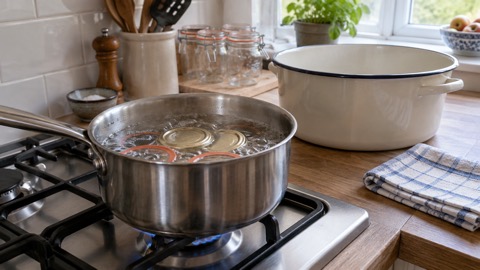 Sterilising Jars
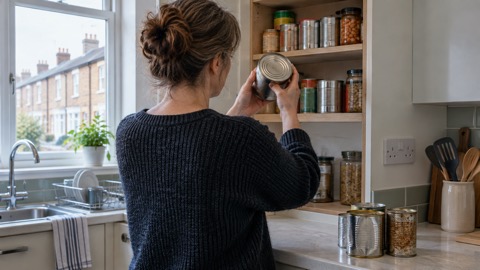 Spotting Spoiled Preserved Food
 Boiling Water in Glass Jars
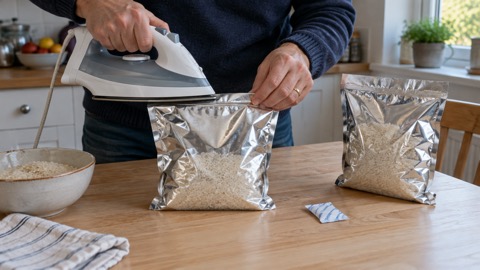 Mylar Bag Food Shelf Life
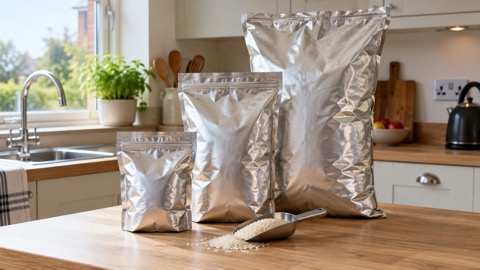 Mylar Bag Sizes
 Are Mylar Bags Food Safe
 Oxygen Absorber Activation
 Silica Gel With Stored Food