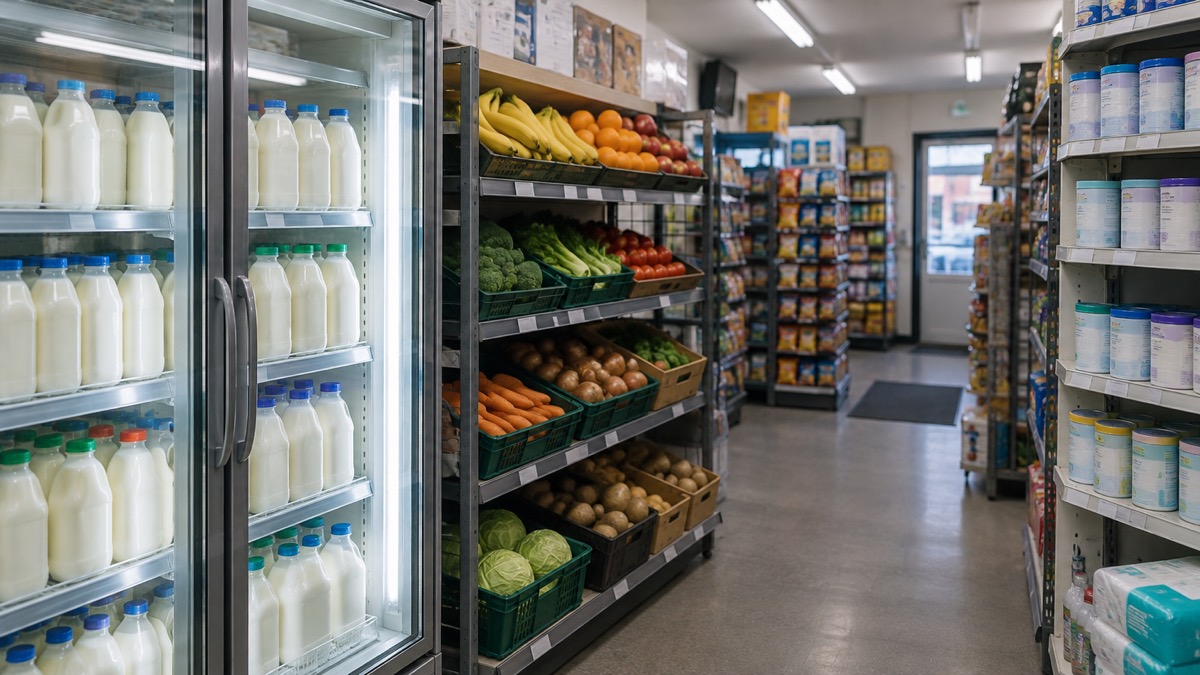
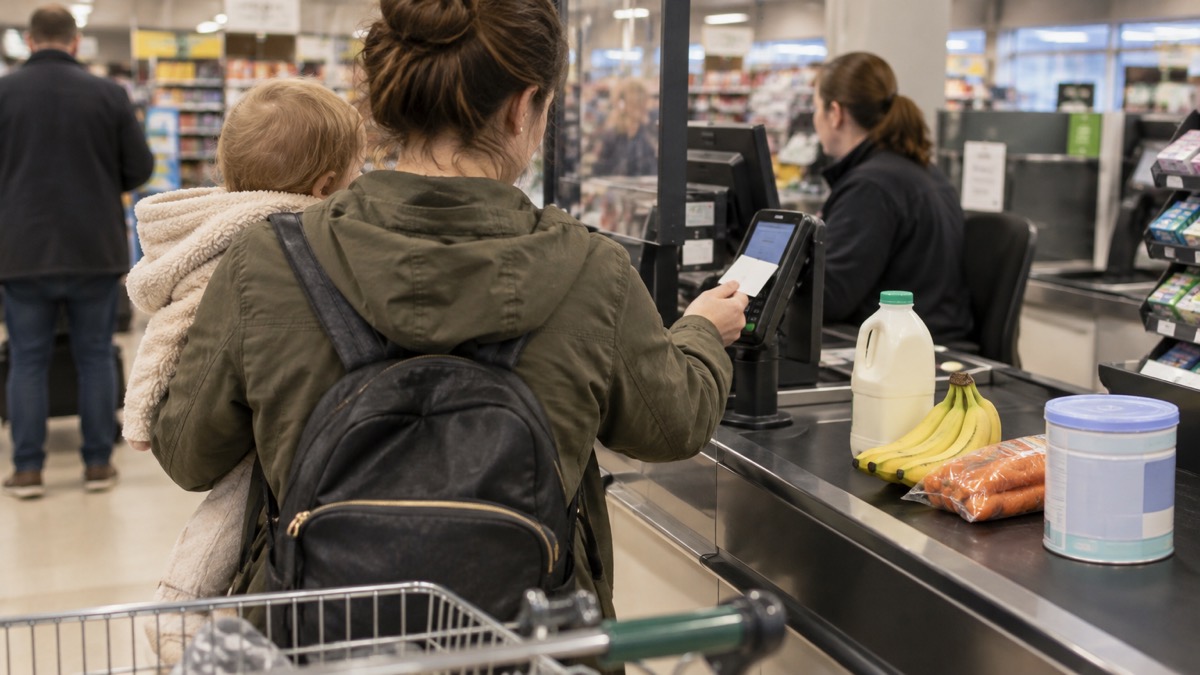
The Healthy Start scheme gives eligible households a prepaid card which is reloaded with money every four weeks, to spend on milk, plain fresh and frozen fruit and vegetables, and infant formula milk1. Unlike a one-off voucher, the card arrives on a regular cycle, so it can be built into your weekly food shop rather than treated as a single windfall.
Because the card is reloaded every four weeks, it works well as part of a steady household food routine: a portion of your milk, fruit, vegetable and formula spending arrives covered, and what you save there can go towards building a small emergency store cupboard or keeping the freezer stocked. This page sets out what the card covers, how frozen and tinned fruit and vegetables fit into both the scheme and a household food store, what other support exists for families with babies and young children, and where households in Scotland should look instead.
What the scheme gives you: a card topped up every four weeks
The core of the scheme is the prepaid card. It is reloaded with money every four weeks, and you spend it directly at the till rather than exchanging vouchers1. That regular four-weekly cycle is the practical detail worth planning around: if you time your main shop shortly after a top-up, the balance is at its highest exactly when you are buying the bulk of the week's milk, fruit and vegetables.
A prepaid card also carries over. If you do not spend the full balance in one four-week period, what is left stays on the card for the next. That makes it useful for slightly larger purchases that do not fit a weekly rhythm, such as a bigger bag of frozen vegetables, or stocking up on infant formula ahead of a spell of cold weather when you would rather not go out.
The card is one strand of support, not a replacement for your whole food budget. It covers a defined list of items: milk, plain fresh and frozen fruit and vegetables, and infant formula milk1. Everything else in your trolley is paid for as normal. Keeping that list in mind when you shop makes the card go further, because it is easy to load the belt with items the card will not cover and then find the balance does not stretch.
Who the scheme is for
The detailed qualifying rules, including which benefits count and any rules about how far into a pregnancy you can apply, are set by the scheme itself and are subject to change, so check the current eligibility conditions through the official scheme information before you apply. Secondhand summaries go out of date, and applying on the basis of an outdated list is the most common reason for a delayed or refused claim.
Two points are worth acting on whatever the exact rules turn out to be. First, all pregnant women and people can access NHS maternity services5, so register with maternity care early and ask there if you are unsure about support you might be entitled to. Second, check that you are claiming all of the benefits that you are entitled to4. Unclaimed benefits affect more than one scheme at a time, because several forms of support, including energy and cost of living schemes, use qualifying benefits as their gateway. Your local council's support pages, and the NHS keep well advice, both make this point: there are grants, benefits and sources of advice available, and claiming everything you are entitled to before winter sets in is the recommended approach3.
If you are not sure where to start, the official Healthy Start scheme information is the place to check your eligibility and apply.
Where the scheme runs, and Scotland's alternative
Healthy Start operates in England, Wales and Northern Ireland2. Scotland makes its own arrangements for supporting families with young children, so if you live in Scotland, do not apply for the England and Wales scheme on the assumption it will carry over. Instead, start with NHS inform, which offers information on illnesses and conditions and self-help guides for a range of conditions, and signposts Scottish services6. If you are feeling overwhelmed or need support, you can call NHS 24 on 1117.
The distinction matters for two reasons. First, an application to the wrong scheme wastes weeks at exactly the point in family life when money is tightest. Second, the wider network of support differs too: the energy consumer advice that sits alongside schemes like this in England and Wales is explicit that some of its information applies to England and Wales only8, and Scottish households should use NHS inform and NHS 24 as their starting points for health-related signposting6.
What the card can be spent on
The card covers three groups of items: milk, plain fresh and frozen fruit and vegetables, and infant formula milk1. Within that, the word "plain" does a lot of work. Frozen fruit and vegetables with nothing added, and fresh produce, are covered; ready meals, prepared dishes and products with the vegetables already mixed into something else are not the intended use of the card. When in doubt, the plain ingredient is the safe choice.
Frozen and tinned fruit and vegetables count
If you are using the card partly to build up a household food store, frozen and tinned vegetables are the practical route. NHS advice is to aim for five daily portions of fruit and vegetables, and tinned and frozen vegetables count towards your five a day3. Winter health advice goes further and recommends stocking up on tinned and frozen foods so you do not have to go out too much when it is cold or icy3, and other official winter guidance echoes this, advising households to stock up on tinned food and supplies for the freezer4.
One quality note from NHS food safety guidance: extreme cold can affect the quality of foods with a high water content, such as fresh fruit and salad vegetables like cucumber and tomatoes9. That is not a safety issue, but it is a reason to favour hardier vegetables and fruit for the freezer and to eat high-water-content items fresh. The same guidance notes that if you choose to eat raw fish, it should have been frozen first, because the cold temperature kills any parasites present9.
| What the card buys | Fresh | Frozen | Tinned |
|---|---|---|---|
| Plain fruit and vegetables | Yes1 | Yes, if plain1 | Counts towards five a day, check scheme rules on coverage1 |
| Milk | Yes1 | Not applicable | Not applicable |
| Infant formula milk | Yes1 | Not applicable | Not applicable |
| Counts towards five a day | Yes3 | Yes3 | Yes3 |
Formula and baby supplies in an emergency
If you use infant formula, the card helps with the regular cost, and it is also worth keeping formula in your household emergency supplies. Official emergency preparedness guidance recommends that a grab bag includes baby supplies such as nappies and formula, alongside important documents, medication and a first aid kit, a torch and radio, bottled water, tinned foods and a tin opener, and some cash, built up over time rather than bought all at once10. A household emergency plan checklist makes the same point, listing baby items among the contents of a grab-and-go bag11.
For making up formula safely when the power is off, see our separate guide on how to make up baby formula in a power cut, and for wider planning, babies, young children and medical diets in an emergency.
How to apply and register
Applications and registration run through the official scheme. Before you apply, do three things:
- Check the current eligibility rules through the official scheme information or your council's cost of living support pages, because the qualifying conditions are set by the scheme and can change1.
- Check you are claiming all the benefits you are entitled to4, since qualifying benefits are the gateway to this and other support, including energy schemes where eligibility depends on receiving a qualifying means-tested benefit8.
- Register with maternity care if you are pregnant and have not yet done so, since all pregnant women and people can access NHS maternity services5, and maternity staff can point you towards support you may have missed.
If your application is refused or your circumstances change, go back to the official scheme information and check the current eligibility conditions before applying again. If you are struggling to afford food at any point, our guide to getting emergency food help explains how food bank referrals and local support work.
Other support worth claiming alongside the card
The Healthy Start card is one part of a wider set of support for households with babies and young children. Checking each of these takes minutes, and households that miss them are the ones that lose out.
- The Priority Services Register. Energy consumers are eligible if they are pregnant or have young children under 5 at home, among other criteria including disability, long-term medical conditions, mental health conditions, sight or hearing conditions, and having reached state pension age8. Registration is free and gets you extra support during power cuts and other supply problems.
- The Warm Home Discount. A one-off payment giving eligible older and low-income consumers £150 off their energy bill12. Eligibility depends on your circumstances, including receiving a qualifying means-tested benefit8, which is another reason to check your benefit entitlement4.
- Health visitors. They work with you through your pregnancy up until your child is ready to start school13, so they are a consistent source of signposting across the whole period the card covers.
- Funded pre-school places. Funded places are available for working parents with children aged nine months to four years at local nurseries, childminders or pre-schools14.
- Family hubs and early help. These support parents of children from 0 to 19, and up to 25 for young people with special educational needs and disabilities15.
Building the card into a household food plan
Because the card arrives every four weeks, it pairs naturally with a simple food plan: use it for the fresh and frozen basics each week, and use the headroom it creates to build a small store for disruptions. Winter health advice recommends exactly this pattern, stocking up on tinned and frozen foods so you do not have to go out too much when it is cold or icy3, and emergency guidance recommends building supplies up over time rather than buying everything at once10.
If you are starting a store, our step-by-step guide to starting a store cupboard supply covers the basics, how much emergency food to store per person helps you size it, and rotating your store keeps nothing going to waste. For cold snaps specifically, meals without power sets out what you can cook, or not cook, when the supply fails.
Sources (15)
- Cost of living support: emergency food and essential items, Cumberland Council, 2026
- Financial help when you have a lung condition | Asthma + Lung UK
- Keep well, keep warm, Stonehill Medical Centre, 2022-11-01
- Keeping warm in winter, Derbyshire County Council, 2026-10-29
- Advice if you are due to give birth, London Ambulance Service, 2026-09-30
- Your Health Guide Winter 2025-26, NHS Western Isles Health Board, 2025-12
- When should you call 999?, Scottish Ambulance Service, 2026-10-29
- England and Wales energy domestic consumer advice, Ofgem, 2024-11
- Preparing and cooking food safely, NHS inform, 2025-02-21
- Preparing for an emergency: be ready, stay safe, act now, Sussex Resilience Forum, 2025-10
- Household emergency plan, London Borough of Hillingdon, 2025-08
- Keeping your home warm in winter, Met Office, 2026-10-26
- Poisoning and accidental swallowing, ABB Healthier Together, 2026-10-29
- Winter in Lancashire: find support, Lancashire County Council, 2026-10-29
- Winter Wellness 2025-26 leaflet, NHS North East London, 2025-11