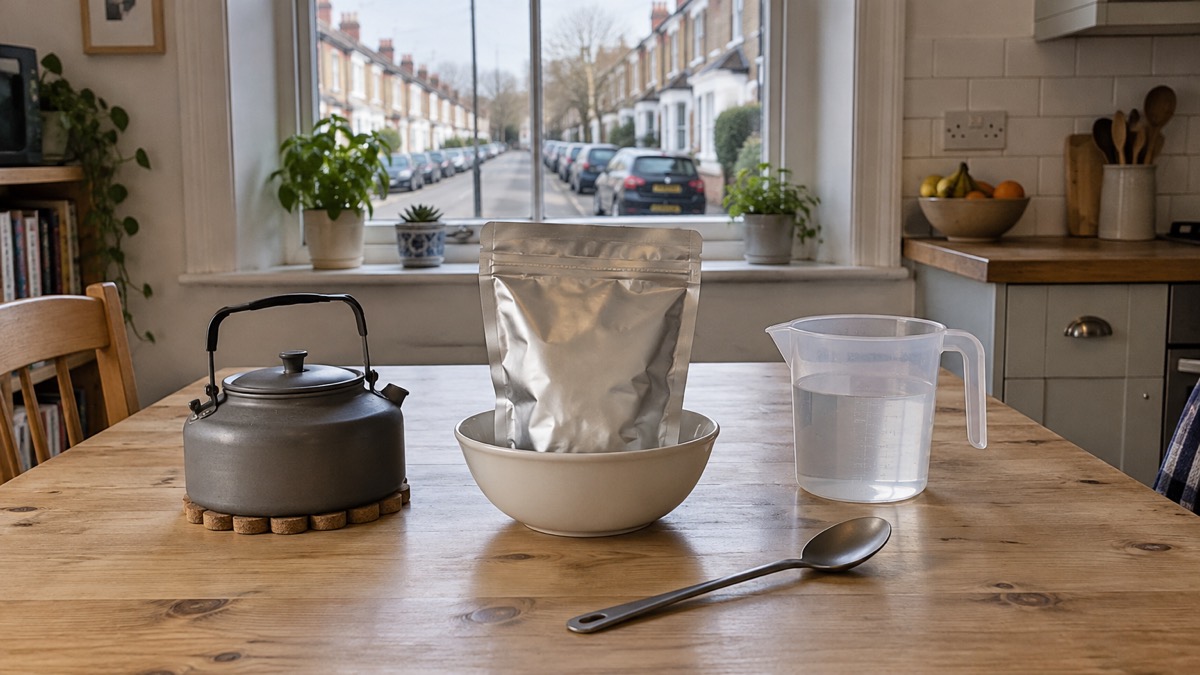
A freeze-dried meal is dry food with the water taken out, so preparing it is mostly a matter of putting water back and giving it time. Add hot water, stir, and leave it the time the pouch states. The pouch is the authority on the exact quantity and the exact wait, because those differ from meal to meal. What you control is the water you use, how evenly you stir, and whether you give it the full standing time before you eat.
The water matters as much as the method. The Be Ready checklist advises storing bottled water for 3 days at 3 litres per person per day for drinking, and notes that more would be needed for other tasks such as cooking and washing1. A freeze-dried meal is one of those other tasks, so plan your stored water with meals in mind, not just drinks.
If the power is off, you can still make a meal. Cold water rehydrates freeze-dried food perfectly well; it simply takes longer and the meal is cold. The Food Standards Scotland advice for a power cut is to use up foods in a set order, starting with chilled fridge foods and defrosted frozen food that does not need cooking, then room-temperature perishable food such as bread, then room-temperature tinned, bottled and dried food2. A freeze-dried pouch sits comfortably in that last group.
Add hot water, stir and wait
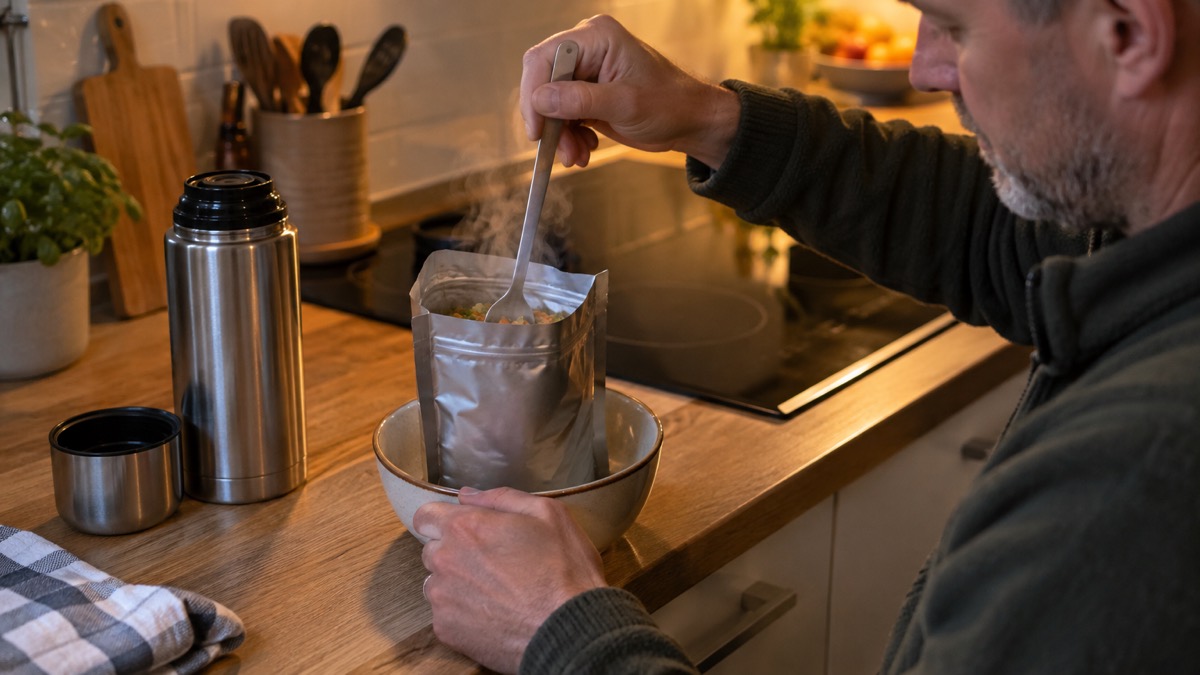
The basic method has three steps and one rule. Heat the water, pour in the quantity the pouch states, stir thoroughly so no dry pockets are left at the bottom, reseal or cover, and wait. The rule is that you wait the full time. A meal that looks ready after half the time usually has a hard centre.
Stirring is where most meals go wrong. Dry food clumps, and a clump at the bottom of the pouch stays dry while the top looks perfect. Stir from the bottom up, then stir again after a minute or two once the water has been absorbed and the mixture has thickened.
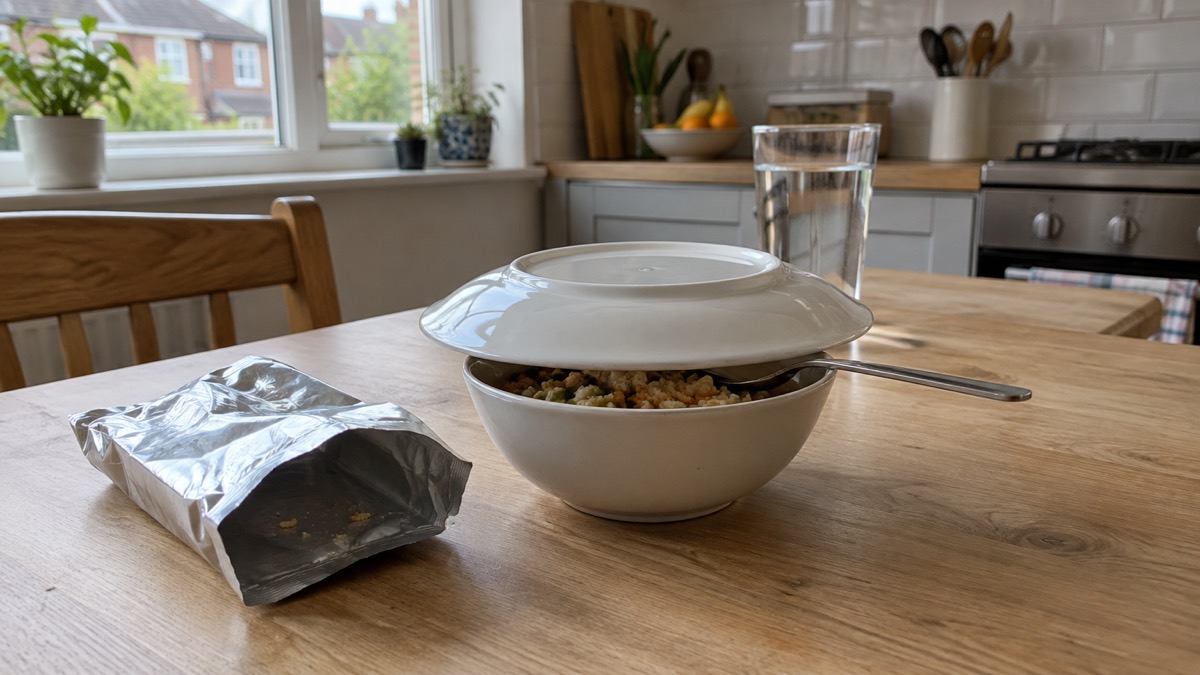
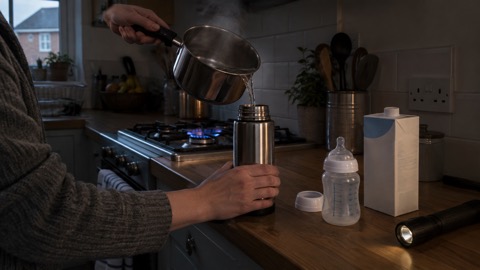
Covering the pouch or bowl while it stands holds the heat in, which speeds rehydration. A food flask does the same job for a meal you want to carry: it keeps the contents hot while the food softens, which suits a day out or a cold room. If you are making the meal at home with no power, boil some water and keep it in a thermos flask, so you can use it to make hot drinks or fill a hot water bottle if it gets cold4.
"You might want to boil some water and keep it in a thermos flask, as you can use it to make hot drinks or fill a hot water bottle if it gets cold."
How much water to add and how long to leave it
The quantity of water and the standing time are printed on the pouch, and they are not the same for every meal. A rice-based dish absorbs more than a soup, and a meal with large pieces of meat or vegetable needs longer than a fine grain. Follow the pouch rather than a general rule, and if you are making two different meals at once, treat them separately.
| What the pouch tells you | Why it matters | What to do |
|---|---|---|
| Water quantity | Too little leaves hard food; too much makes soup | Measure it, do not guess |
| Standing time | The food needs time to absorb water | Wait the full time before eating |
| Serving size | Tells you whether to make the whole pouch | Make only what you will eat |
If you have lost the pouch or the printing has rubbed off, add water a little at a time and stir, stopping when the mixture is thick but not swimming. Then leave it, stir again, and check the centre before eating. It is easier to add a splash more water than to rescue a meal that has been flooded.
Water quality matters here because the water goes straight into food you are about to eat. If you are using stored water, use water you stored for drinking. If you have boiled water to make it safe, let it cool covered before use, because uncovered water could become contaminated and make you ill5. For most households with a mains supply, tap water is fine.
Cold water rehydration: when there is no way to heat water
A power cut, a broken kettle or a day out with no stove does not stop you making a freeze-dried meal. Cold water rehydrates the food; it just does it more slowly, and the result is a cold dish. That is a reasonable meal in warm weather and a poor one in a cold room, so plan around it.
The method is the same, with two changes. Add the water the pouch states, stir very thoroughly, and then leave it much longer than the hot-water time, stirring again partway through. Check a piece from the middle before you eat. If it is still hard, add a little more water and wait again.
Cold rehydration suits the kind of disruption where heat is the first thing to go. The advice for a power cut is to make sure there is something available to eat that does not require electricity or heat preparation4. A freeze-dried meal made with cold water fits that description exactly, and so does the wider approach of choosing foods that need no refrigeration, preparation or cooking and little or no water6.
Using drinking water you have stored
Stored water is the difference between a meal and a dry pouch. The Be Ready checklist figure is 3 litres per person per day for drinking, with more needed for cooking and washing1. A household emergency plan should include food and bottled water for 3 days, and should not rely on the fridge or freezer for food7.
Keep the water you intend for meals separate in your mind from the water for drinks, and rotate it. Store it in sealed containers, in a cool place, and check it as part of your routine. If you have boiled water to make it safe, store it covered in the fridge for up to 48 hours8. Water that has been left uncovered while cooling can pick up contamination, so cover it while it cools and keep it covered5.
- Store 3 litres per person per day for drinking, plus extra for meals1
- Boil the water and let it cool before using, and keep it in a container with a cover or a lid while it is cooling, because uncovered water could become contaminated and make you ill9
- Boiled water keeps covered in the fridge for up to 48 hours8
- Do not rely on the fridge or freezer for food in an emergency7
If your supply is a private water supply rather than mains, the arrangements are different and you should follow the advice for private supplies in your area8. In Scotland, the drinking water quality regulator publishes guidance on taste and quality, including the simple step of placing a covered jug of water in the fridge before drinking to let the chlorine disperse10.
What can go wrong: crunchy, watery or salty meals
Most problems with a freeze-dried meal come down to water, time or stirring, and all three are fixable.
Crunchy in the middle. The meal was not stirred thoroughly, or it did not get the full standing time, or the water was cold and the wait was too short. Add a little hot water, stir from the bottom, cover, and wait again. Check a piece from the centre before serving.
Watery. Too much water went in, often because the pouch was topped up to make it go further. There is no way to take water out, so serve it as a thick soup rather than a stew, and add less next time. Measure the water rather than pouring freely.
Salty. Some meals are seasoned strongly, and adding less water concentrates the salt. Make the meal to the stated quantity, and serve it with plain food such as bread or rice if you have it. If you want to make something to go with it, prepare cold food, such as a sandwich11.
Where freeze-dried meals fit in your store
A freeze-dried meal is one option among several, and it earns its place for a particular reason: it is light, it keeps, and it needs only water. The Bradford flood pack advice is to select foods that require no refrigeration, preparation or cooking, and little or no water, and that are compact and lightweight6. A freeze-dried pouch is compact and light, but it does need water, so it is not the lowest-water option.
| Type of meal | What it needs | Where it suits |
|---|---|---|
| Freeze-dried pouch | Water, hot or cold | Power cuts, days out, small stores |
| Tinned food | Can opener, no water | Home stores with space |
| Cold foods | Nothing | Hot weather, no power |
| Ration packs | Nothing or little | Grab bags, short trips |
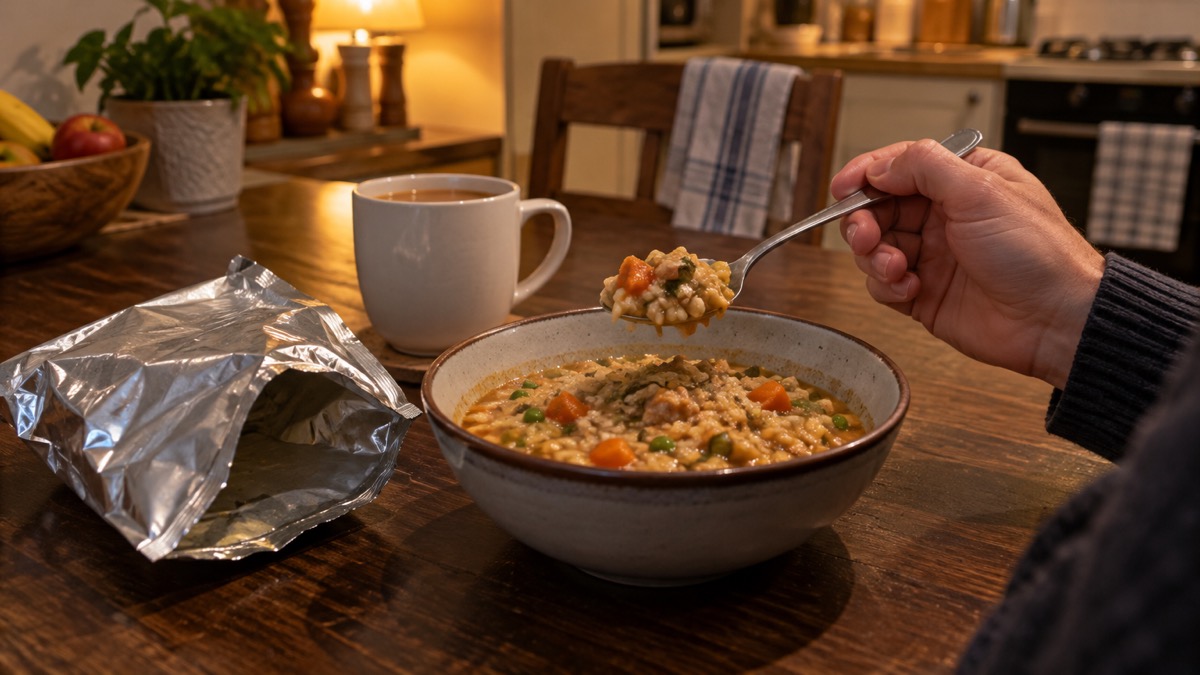
For hot weather, official advice is to eat cold foods, particularly salads and fruit with high water content12. Heat illness guidance makes the same point13. A cold-rehydrated meal is a reasonable substitute when fresh food is not available, but it is not a substitute for drinking water.
Keep your store in sealed bags or containers, which helps to keep food fresh and stops anything falling into the food by accident9. Check dates: best-before dates appear on a wide range of foods, including frozen, dried and tinned foods14. For the wider picture on what to keep and how much, see Emergency Food: A Household Guide to Stores, Safety and Meals Without Power and How Much Emergency Food to Store per Person.
Sources (14)
- Be Ready for Emergencies, UK Government
- Food Safety in the Kitchen: Power Cuts, Food Standards Scotland
- Chilling, Food Standards Scotland
- 12 Tips to Prepare for a Power Cut, Horsted Keynes Parish Council
- Bottled Water for Baby Feed Preparation, Public Health Wales
- Create a Flood Pack, Bradford Council
- Household Emergency Plan, West Yorkshire Prepared
- Private Water Supplies, Argyll and Bute Council
- Food Storage, Food Standards Scotland
- Drinking Water Quality FAQs: Chlorine, Drinking Water Quality Regulator for Scotland
- Advice for Vulnerable People, NHS Norfolk and Suffolk
- How to Keep Cool This Summer, Lancashire County Council
- Heatstroke and Heat Illness, NHS Inform
- Use By and Best Before Dates, Food Standards Scotland
 Long-Term Storage Kit Checklist
 Store Cupboard Checklist
 30-Day Household Checklist
 Baby Formula in a Power Cut
 Refreezing Defrosted Meat
 Leftovers in the Fridge
 Reducing Botulism Risk
 Sterilising Jars
 Spotting Spoiled Preserved Food
 Boiling Water in Glass Jars
 Mylar Bag Food Shelf Life
 Mylar Bag Sizes
 Are Mylar Bags Food Safe
 Oxygen Absorber Activation
 Silica Gel With Stored Food