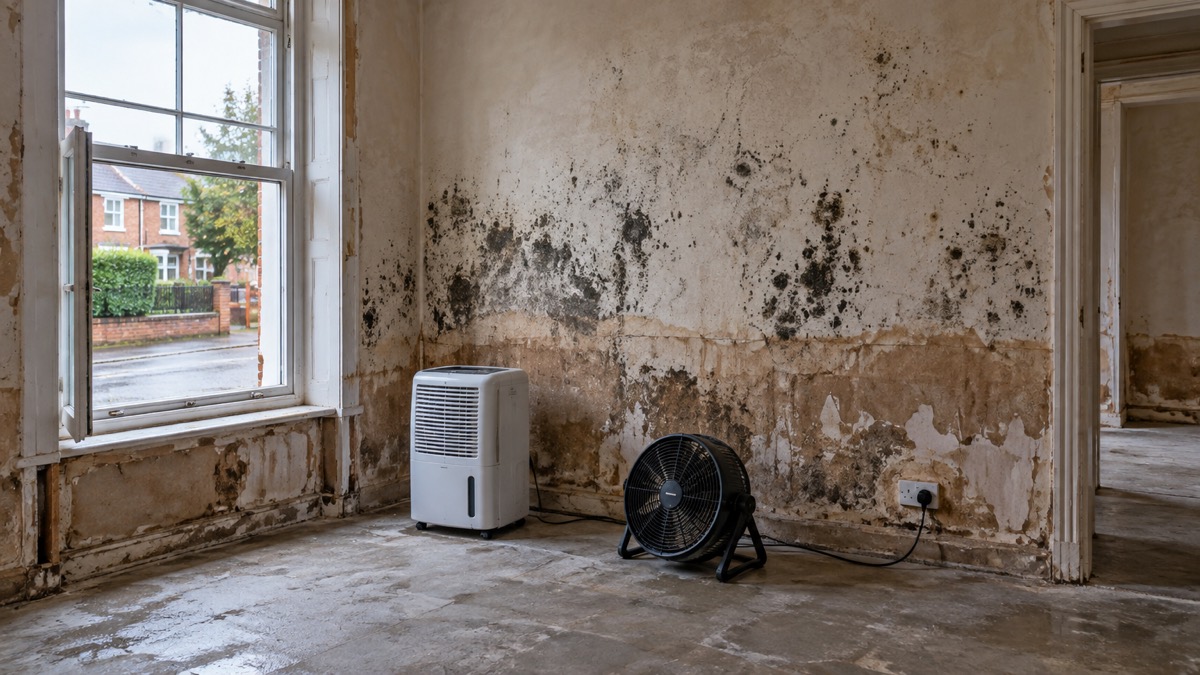
Floodwater in a home is a race against damp. Mould needs moisture, and a flooded house is full of it, so the sooner you get the building dry, the less chance mould has to take hold. Drying out a flooded home can take weeks or months, depending on how serious the flooding was and the type and thickness of the building materials1. That is the timescale you are working to, and it is why the first two days matter so much.
The good news is that the official advice is consistent and simple. Keep the building well ventilated by opening as many windows and doors as possible and using a fan2. Heating, dehumidifiers and good ventilation can help to dry out your home1. As your home continues to dry out, the mould should disappear; if it persists, contact a specialist cleaner1. Getting your home dry after a flood is important because there are long term impacts from damp and mould3.
What follows is the order to do things in: the first two days, how to dry the house out, what to throw away and what can be cleaned, and how to protect your health while you clear up. It also covers what to do if you rent, and what your insurer needs from you before anything leaves the house.
What to do in the first two days after floodwater gets in
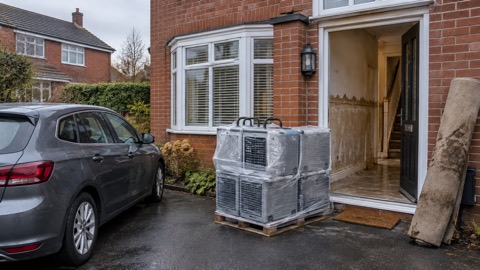
The first job is not cleaning, it is recording. Take photos of the damage before cleaning, contact your insurers and keep records4. Contact your insurer as soon as possible, and try not to move damaged items, because your insurer may need to inspect them6. Do not throw anything away until you are told to, except ruined food7. Speak to your insurance company about what you can move and throw away before you start clearing up8.
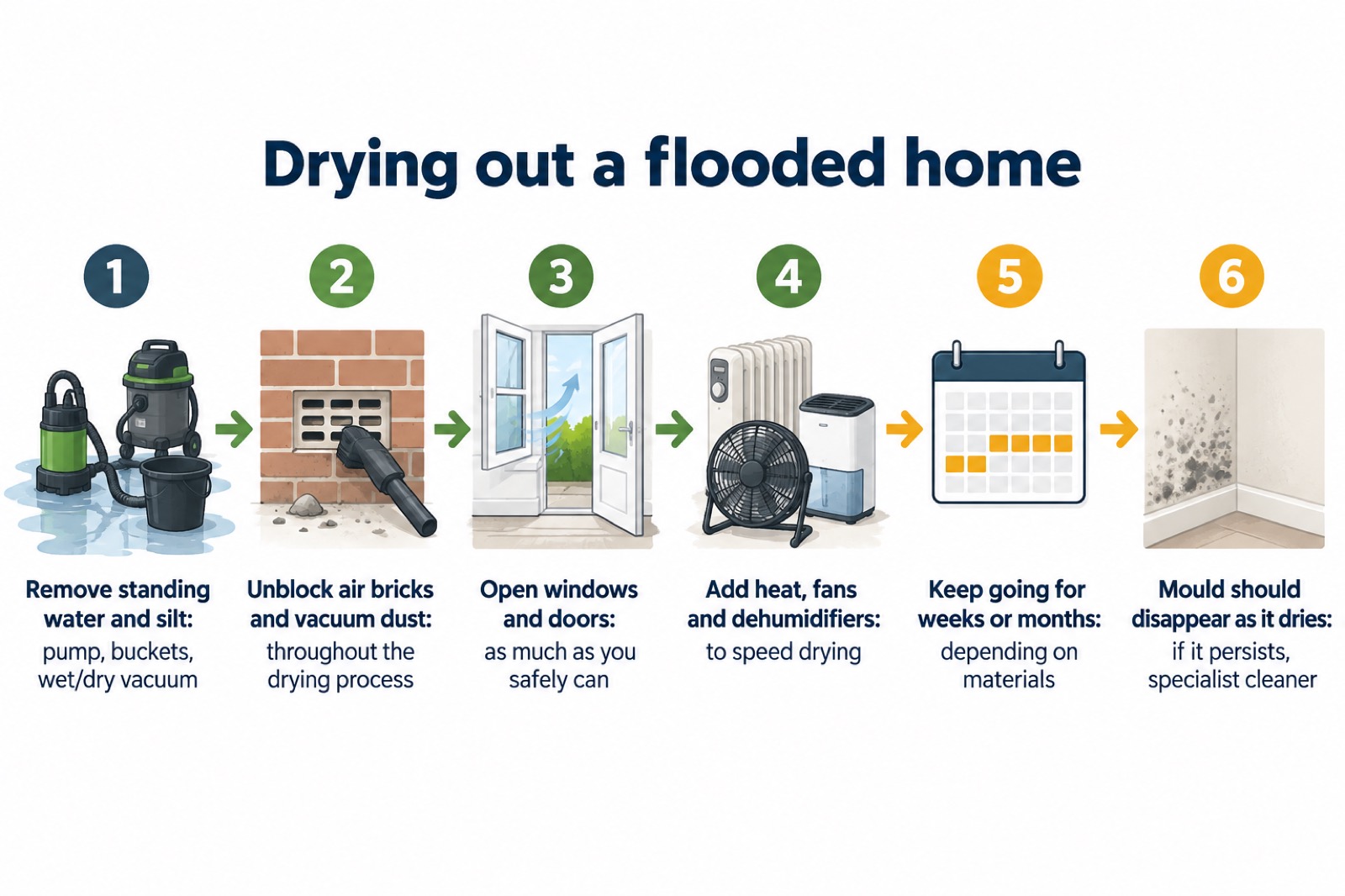
Then get the water out. Before you can properly move into your home you need to make sure all standing water has been removed, particularly from the under floor area; use a pump or buckets followed by a wet/dry vacuum, then shovel out mud and hose out or use a garden sprayer9. Remove dirty water and silt from your property; with wooden floors this may be below the floor and will need pumping out1. Air bricks may need unblocking, and loose material and dust will need vacuuming up regularly throughout the drying out process1.
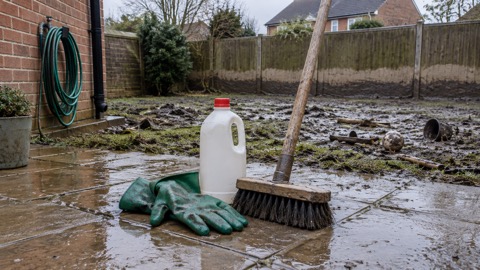
While you work, wear rubber boots, waterproof gloves and an apron10. Flood water can contain harmful bacteria, so wear protective clothing if you need to clean up11. It can take time to recover after a flood, so take regular breaks and seek help from others where possible1.
Drying out your home: air, heat and ventilation
Drying is the single most effective thing you can do against mould, and it is mostly about moving air. Open your windows and doors, as much as you safely can, to ventilate your home; you can also speed the drying process with commercial air movers, dehumidifiers and heaters12. Heating and good ventilation will help with the drying process: leave doors and windows open whenever possible and safe, and use fans, air conditioning units and dehumidifiers13. Items can also be left to dry out naturally in open areas during dry weather, and sunlight is effective at killing micro-organisms14.
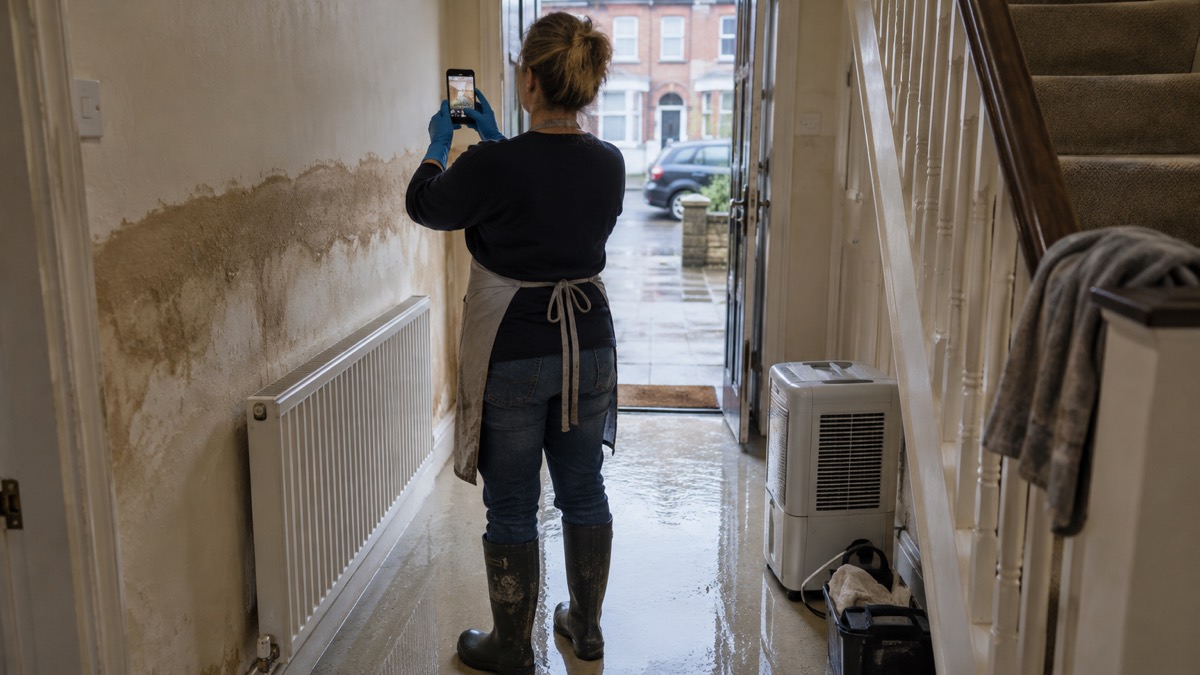
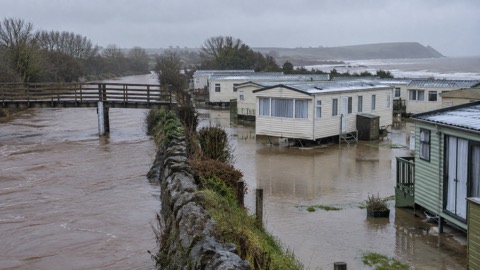
Expect this to take time. It is normal for the drying out process to take weeks or months12. Water levels may rise and fall for several weeks depending on drainage and any further rainfall, so drying may be interrupted15. Groundwater flooding in particular can remain for weeks after the rain has stopped16, which is one reason a flooded cellar or low-lying ground floor can stay damp long after the visible water has gone.
Ventilation matters even without a flood. If homes do not have good ventilation or air flow, moisture can become trapped and lead to damp and mould; moisture is easily trapped from everyday activities like showering, cooking and air-drying clothes17. Cold weather can increase the likelihood of condensation forming inside your home, which left untreated can lead to damp and mould, and exposure to damp and mould can be harmful18. In winter, balance ventilation against heat: open windows for short bursts rather than leaving a room cold and damp.
What to throw away and what can be cleaned
The rule that protects your claim is simple: do not throw anything away until you are told to, except ruined food7. Speak to your insurance company about what you can move and throw away before you start clearing up6. Your local council can help with the collection, retention and disposal of damaged household contents, and with arrangements to clean up your home and garden19.
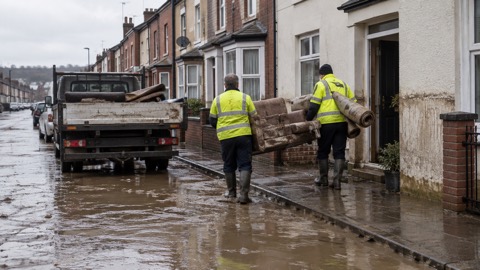
When you do clear, remove all debris, soaked and dirty material including wet insulation, residual mud, furniture, appliances, clothing and bedding20. Add small amounts of chlorine bleach to standing water, then remove it20. Soft furnishings, bedding and clothing that have been soaked are the items most likely to hold moisture and develop mildew, so they belong in the removal pile once your insurer has seen them.
Some things can be cleaned rather than discarded. Hard surfaces, floors and walls can be washed and dried, and mould growth can be addressed with a fungicidal solution while ensuring good ventilation21. Bleach should be left on surfaces for the contact time stated on the manufacturer's instructions, should not be mixed with other cleaning products as this could result in the release of harmful fumes, and should be used in ventilated spaces22. If you are unsure whether an item can be saved, ask your insurer before it goes out of the door.
| Item | What to do | Why |
|---|---|---|
| Ruined food | Throw away | The one exception to the keep-everything rule7 |
| Soaked bedding, clothing, insulation | Remove during clean-up | Holds moisture and develops mildew20 |
| Furniture and appliances | Keep until insurer has inspected | Insurer may need to inspect6 |
| Hard floors and walls | Wash, then dry thoroughly | Can be cleaned and dried21 |
| Visible mould on surfaces | Fungicidal solution, good ventilation | Official cleaning advice21 |
Protecting your health while you clear up mould
Mould can be a health hazard for babies, people with allergies, asthmatics and the elderly, and they should stay away during the clean up5. Breathing problems from exposure to mould and damp are a recognised health impact of flooding23. If anyone in the household has a respiratory condition, plan the clean-up so they are out of the house while the worst of it is done.
Wear the right protection. Use rubber boots, waterproof gloves and an apron10, and use rubber gloves when cleaning up24. Flood water can contain harmful bacteria, so wear protective clothing if you need to clean up11. Keep the space ventilated while you work, especially if you are using bleach or fungicidal solutions22.
Outdoors, keep children and pets off flooded grass and paved areas until they have been cleaned. After the grass has grown and been cut once there should be no further risk, as sunlight and soil will usually destroy harmful bacteria within a week5. Treat the grass as off limits until it has grown and been cut.
If mould keeps coming back, or you rent
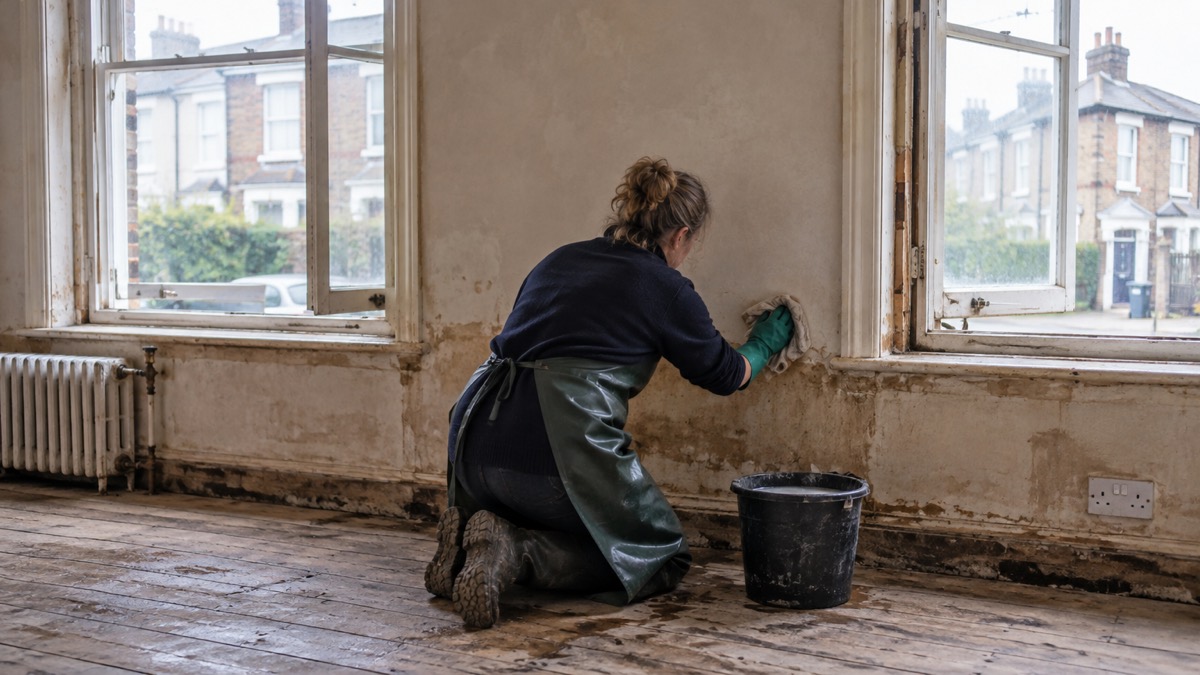
Mould that returns after cleaning usually means the building is still damp. Any mould that has appeared since the flooding should begin to disappear as the home dries; if it persists, contact a specialist cleaner25. The same advice appears across official guidance: as your home continues to dry out, the mould should disappear, and if it persists you should contact a specialist cleaner1. Do not keep painting over or scrubbing a patch that keeps returning; find the moisture first.
If you rent, tell your landlord as soon as possible if your home has flooded and needs repairs; they must complete repairs within a reasonable time26. The landlord will deal with the structure of your home; for contents claims, contact your own insurer24. If your home is not habitable, your council's housing team can advise on housing help after a flood27.
For more on the wider clean-up, see Cleaning Up Safely After Floodwater and After a Flood: Returning Home Safely. If drying out is your main concern, Drying Out a House with Dehumidifiers goes into more detail, and Can You Use Bleach to Clean Up? covers the chemicals. For health questions beyond mould, Floodwater and Your Health is the place to start, and Making an Insurance Claim After a Flood explains what your insurer will want to see.
Sources (27)
- After a flood: clearing, nidirect, 2026-05-06
- Flooding and health: advice for the public, GOV.UK, 2024-03-13
- Flood Recovery Information, Devon County Council, 2026-01-29
- Resident grab bags, Harborough District Council, 2026-10-29
- Staying safe in a flood, Herefordshire Council, 2026-10-29
- Further support after a flood, Nottinghamshire County Council, 2026-10-29
- What to do after a flood, Natural Resources Wales, 2026-10-29
- After a flood, GOV.UK, 2026-10-25
- After a flood, Surrey County Council, 2026-09-23
- Flood advice, City of York Council, 2026-10-29
- Flooding, Ready Scotland, 2026-03-24
- Flooding advice: after a flood, London Fire Brigade, 2026-10-25
- Flooding and health, Public Health Wales, 2026-07-31
- Cleaning up and returning home after flooding, Derbyshire County Council, 2026-10-29
- Flooding, Prepare campaign, 2026-10-12
- Flooding, South Staffs Water, 2026-10-28
- House dust mites, pet dander and mould, NHS inform, 2026-08-05
- How to stay safe in cold weather, NHS inform, 2026-09-21
- What to do if a flood happens | nidirect, nidirect (Northern Ireland government)
- Be prepared: flood recovery, Lancaster City Council, 2026-10-26
- Clearing up after a flood, Oxford City Council, 2026-10-29
- How to recover from flooding, GOV.UK, 2023-12-19
- How to protect your health when flooding occurs, NHS inform, 2025-11-07
- Thunderstorms: weather warning advice and information, nidirect, 2026-08-30
- Flood recovery leaflet, Nottinghamshire Local Resilience Forum, 2025
- Housing help if your home is flooded, Somerset Council, 2026-06-04
- Flooding aftercare, Runnymede Borough Council, 2026-10-26
 Flood Warning Checklist
 First Steps After a Flood
 Insurance Claim Records
 Signing Up for Flood Warnings
 Flood Warnings Without Email
 Who to Report Flooding To
 Reporting a Blocked Gully
 Garden Safety After Sewage
 Council Sandbag Duties
 Filling and Laying Sandbags
 Makeshift Sandbags
 Disposing of Used Sandbags
 Turning Off Utilities
 Walking or Driving in Floodwater
 Turning Electricity Back On