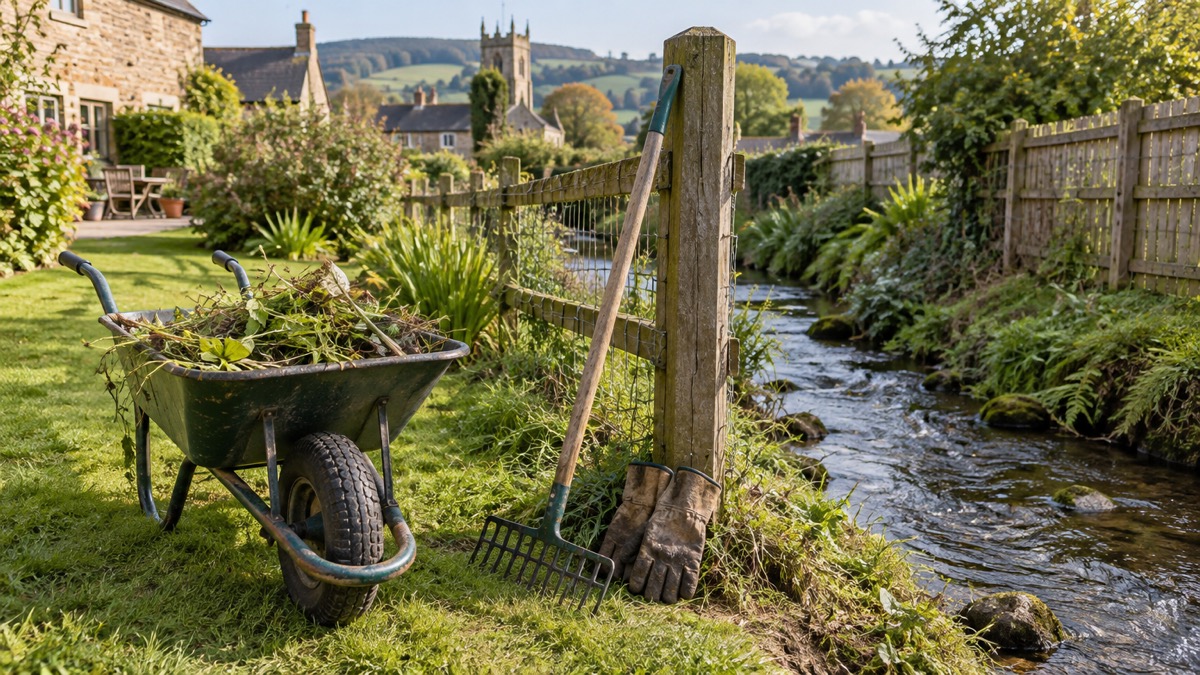
If a river, stream, brook, culvert or ditch runs beside, through or along the boundary of your property, the law treats you as a "riparian owner". You are a riparian owner if your property or land is on, or very near, a watercourse1. That status is defined in the Land Drainage Act 19911, and it comes with real duties: you must maintain the bed and banks of the watercourse, allow water to flow through without obstruction, keep pollution out of the water, and protect the wildlife that lives there2.
In practice, this means keeping your stretch clear of anything that could block the flow and raise flood risk, both for your own property and for everyone downstream3. It does not mean you are on your own: councils and the Environment Agency can advise on maintenance, and some watercourses are managed by other bodies entirely. This page sets out what the duty means, who manages which watercourse, how to get warnings if you live beside a river, and what to ask for after a flood.
Who counts as a riparian owner
The test is simple and it catches many people who have never heard the term. Derbyshire County Council's guidance puts it plainly: "You are a riparian owner if your property or land is on, or very near, a watercourse"1. The watercourse does not have to be a river. A stream, brook, culvert (a watercourse piped through or under land), ditch or mill stream all count, and GOV.UK's own flooding guidance uses exactly that list of examples when describing who must meet the responsibilities2.
Nor do you have to own the bank itself. If the watercourse runs along the edge of your garden, or the deeds show your boundary running down the middle of a ditch, you are likely a riparian owner for at least part of that watercourse. Where a watercourse forms the boundary between two properties, the usual arrangement is that each owner is responsible for the stretch on their side, though the exact split depends on what the deeds say. If you are unsure, your local authority's flood risk team can help you establish who owns what before a problem arises.
Two things are worth checking early. First, not every watercourse is the owner's responsibility: watercourses could be the responsibility of the adjacent land owner or owners, an Internal Drainage Board or the Environment Agency8. Internal Drainage Boards exist in some low-lying parts of the country, mainly in the east of England, and where they operate they may manage the larger channels. Second, riparian ownership is separate from the drains inside your property. Roof water drains that only drain one property are the responsibility of the property owner8, and as a homeowner you have a duty to clear the drains within your property boundary; if you rent, speak to your landlord or housing association9.
The scale of this shared responsibility is larger than most people expect. The Environment Agency's flood and coastal risk management report for April 2024 to March 2025 records around 165,500 third party assets maintained by riparian owners who own the land next to the river, of which 95,000 sit in high consequence systems10. In other words, much of the country's flood infrastructure is looked after by ordinary households and landowners, not by public bodies.
Your legal duty: keep the watercourse clear
The duty at the heart of riparian ownership is about flow. Riparian owners have a duty to keep the watercourse clear of any obstruction to flow4. Nottinghamshire's guidance spells out what that covers: maintaining the bed and banks of the watercourse and allowing the flow of water to pass without obstruction, so as to help prevent flooding11. Lancashire County Council puts the same duty in the most direct terms: "If you own property next to a water course, for example a river, culvert, brook or mill stream, it's your responsibility to keep the bed and banks clear of anything that could cause an obstruction and increase flood risk"3.
What that means day to day depends on the watercourse, but the common thread is removing things that block or could block the channel:
- Silt and sediment building up in the bed, which reduces how much water the channel can carry
- Rubbish and debris, including plastic, garden waste and fallen branches, lodged in the channel or against culvert entrances
- Overgrown vegetation on the banks that restricts the channel
- Anything on your land that could be washed away by a high flow of water and cause an obstruction further downstream5
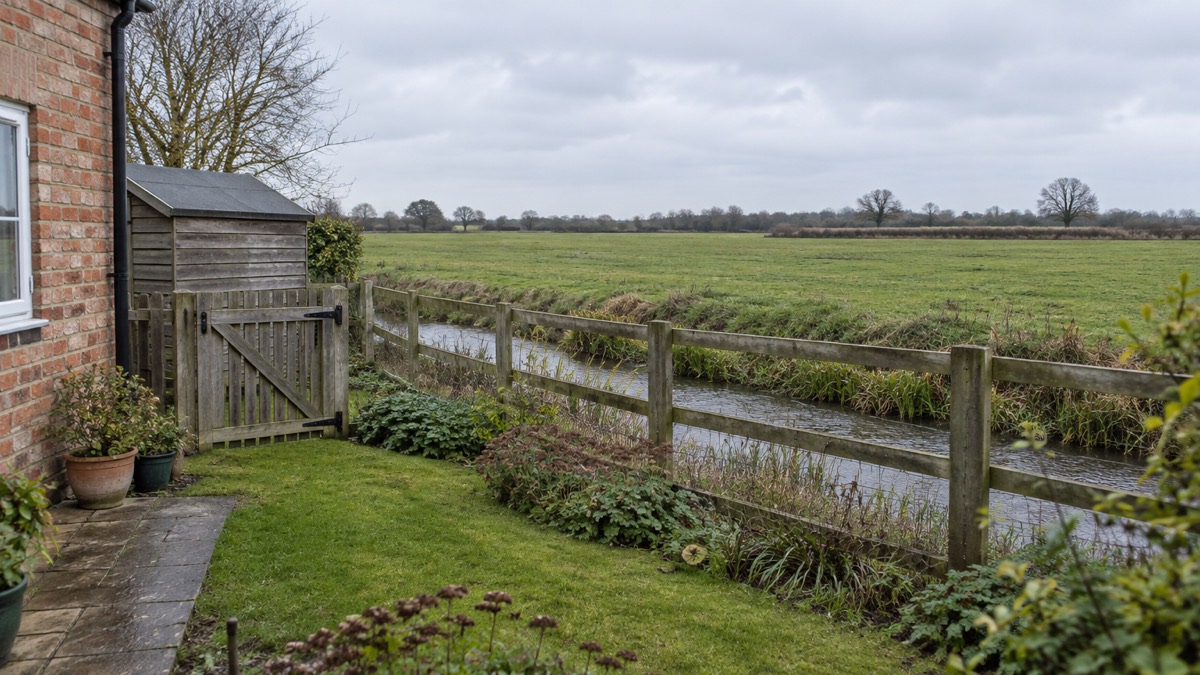
That last point is Derbyshire County Council's advice, and it widens the duty beyond the channel itself. Garden furniture, stored materials, loose timber and unsecured equipment near a watercourse can all become blockages somewhere else in a flood. Checking your land before and after storms is part of the responsibility.
In Scotland the duty rests on the same footing. Argyll and Bute Council's guidance states that riparian owners must allow the unrestricted flow of water through their property and must maintain and keep watercourses clear of obstructions liable to pose a risk of flooding12. Scottish property owners are also advised to be aware of potential flood risks to their property, maintain private drainage within the curtilage of their property, prepare for flooding with a flood plan and sandbags, and hold insurance with adequate flood cover12.
Permission before you do works
Clearing routine obstructions is part of your duty, but larger works are different. If you want to carry out work that affects the flow of water or flood risk from an ordinary watercourse, you need to get permission first13. Devon's guidance adds that property owners must agree with the Environment Agency about maintenance and construction of flood defences, particularly on main rivers14. So before building anything near the bank, piping a ditch, installing a culvert or altering the channel, contact the relevant authority: your council's flood team for an ordinary watercourse, or the Environment Agency for a main river. Doing works without permission can create exactly the flood risk your duty exists to prevent.
Keeping pollution out of the watercourse
The duty is not only about flow. If you own property next to a watercourse, GOV.UK's flooding guidance lists four things you must do: maintain the river bed and banks, not obstruct the water flow, not pollute the water, and protect wildlife2. Devon County Council summarises the same responsibilities as maintaining the river bed and banks within your section of the watercourse, minimising pollution and preventing obstruction to the water flow14.
For an ordinary household, the pollution risks come from everyday things:
- Oils, fuels and chemicals stored near the bank, which can spill or be washed in during heavy rain
- Washing water and detergents directed into the channel
- Garden chemicals and fertilisers applied close to the water
- Soil and manure from gardens or animal keeping, which can wash in and smother the bed
If you see pollution in a river or stream, report it. The Environment Agency's incident hotline is 0800 80 70 60, a 24-hour service for reports of environmental pollution7. For concerns about river or stream water quality, or for flooding information, you can contact your local Environment Agency office on 03708 50650616.
Blue-green algae
One water quality problem riparian owners increasingly meet is blue-green algae (cyanobacteria). It is naturally occurring, and councils are clear about the limits of their role: Argyll and Bute Council's environmental health service states that the council cannot control or mitigate the occurrence of blue green algae in watercourses and lochs, as it is naturally occurring; its aim is to raise awareness of the risk17. The Environment Agency's response to a bloom is to collect and test samples, confirm the presence of blue-green algae, notify landowners and statutory bodies, and arrange for warning signs to be displayed18.
There are practical steps that reduce the risk. Cumberland Council advises regularly emptying holding tanks on boats, reducing detergent use by choosing phosphate-free products, and limiting fertiliser use on gardens, lawns and farmland18. Farmers should ensure that their animals do not have access to contaminated water, which may require fencing around suspect waters17. If you keep pets or livestock near a watercourse, keep them away from any water that looks cloudy, scummy or discoloured, and report suspected blooms so signs can go up for everyone's protection.
Who manages which watercourse: main rivers and ordinary watercourses
Not all watercourses are managed the same way, and knowing which type yours is tells you who to call. The split is between main rivers and ordinary watercourses.
Main rivers are the responsibility of the Environment Agency1. These are the larger rivers and streams designated as main rivers, and the Agency's duties there include flood risk from the sea and main rivers, strategic oversight, flood defences, flood forecasting and warnings, flood risk maps, and advising on waste disposal practices14. If you are concerned about flooding from a main river, one council contact list gives the Environment Agency's telephone number as 0845 933 31111.
Ordinary watercourses, meaning most ditches, streams, brooks and culverts that are not main rivers, are different. They are the responsibility of the owners of their banks, the riparian owners19. Above that, your local council as Lead Local Flood Authority co-ordinates the management of flood risk from local sources such as ordinary watercourses, surface water and groundwater5. The Flood and Water Management Act 2010 created this role and placed statutory duties on councils in it, including a duty to develop, maintain, apply and monitor a strategy for local flood risk, a duty to investigate flooding where necessary, a duty to maintain a register of structures and features likely to affect flood risk, and responsibility for consenting works on ordinary watercourses20.
| Type of watercourse | Who manages it | Who to contact |
|---|---|---|
| Main river | Environment Agency1 | Environment Agency1 |
| Ordinary watercourse | Riparian owner for the stretch; council as Lead Local Flood Authority co-ordinates risk19 | Your council's flood risk team |
| Surface water on roads | Local council21 | Council highways team |
| Clean water, sewerage and pipes | Water company21 | Your water company |
| Reservoirs | Environment Agency regulates and enforces the Reservoirs Act 197522 | Environment Agency |
The Environment Agency officially has the strategic overview responsibility for all types of flood risk and works closely with Lead Local Flood Authorities, who are responsible for surface water and other risk management authorities9. Northumberland's local resilience forum summarises the everyday version of the same split: your local council manages surface water on the roads as well as smaller, ordinary watercourses; the water company manages clean water, sewerage and pipes; and the Environment Agency takes care of rivers, coasts and reservoirs21.
To find out whether your watercourse is a main river, ask the Environment Agency or your council's flood risk team. The distinction matters most when you want to do works: ordinary watercourse consents come from the Lead Local Flood Authority (or an Internal Drainage Board where one operates), while anything affecting a main river or a flood defence on it needs agreement with the Environment Agency14. Arrangements in Wales follow the same broad structure, with Natural Resources Wales in place of the Environment Agency; you can read more on our Wales flooding page. For a fuller picture of every body involved, see who manages flood risk.
Flood warnings for riverside homes
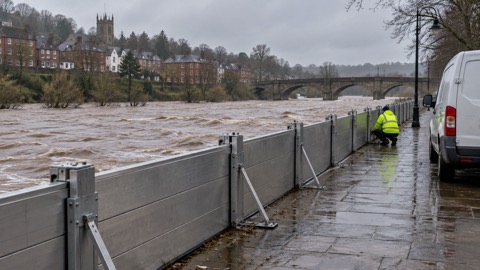
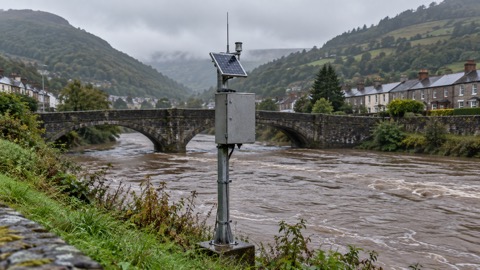
Living beside a watercourse makes flood warnings directly useful, because the water that could reach you is close and visible. The Environment Agency is responsible for issuing flood warnings throughout England and Wales23, and its service includes three types of warning: Flood Alert, Flood Warning and Severe Flood Warning23.
| Warning | What it means | What to do |
|---|---|---|
| Flood Alert | Flooding is possible | Be prepared, stay aware23 |
| Flood Warning | "FLOODING IS EXPECTED, IMMEDIATE ACTION REQUIRED"24 | Act on your flood plan now |
| Severe Flood Warning | Severe flooding, danger to life | Follow emergency instructions23 |
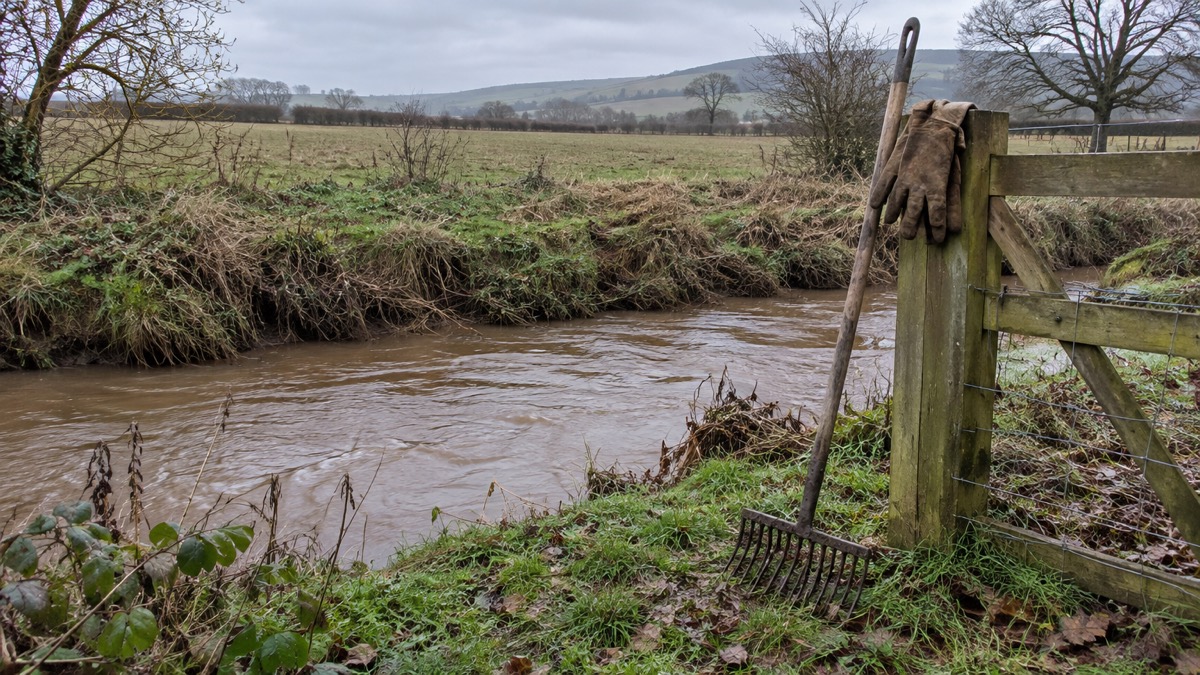
The Flood Warning wording is worth taking literally. A local resilience forum flood recovery leaflet prints it in capitals: "FLOODING IS EXPECTED, IMMEDIATE ACTION REQUIRED"24. By the time a Flood Warning is issued for your area, you should already know what you will move, where you will go and how you will turn off gas, electricity and water. Our pages on making a household flood plan and what to do during a flood set that out step by step, and our checklist for when a warning is issued covers the immediate actions.
Sign up for warnings in advance, and keep the numbers to hand. Floodline is 0345 988 1188 for flood alerts and warnings6, and the same number is given in Scottish guidance6. Some older council leaflets list an 0845 988 1188 number for the Environment Agency25; the current Floodline number to use is 0345 988 118825. Our guide to signing up for free flood warnings explains registration, and Floodline numbers for England, Scotland and Wales collects them in one place.
Beyond live warnings, the Environment Agency produces a five-day flood forecast, which you can see on the GOV.UK website26. The forecast gives the overall flood risk for the coming days; one statement issued on 8 February 2026 rated the overall flood risk for the next five days as MEDIUM27. Checking it during wet weather gives you early notice that your stretch of watercourse may soon be under pressure. See our pages on flood alerts, warnings and severe warnings and the five-day forecast for more detail.
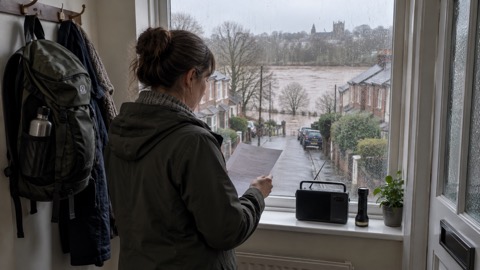
*A flood warning arriving by phone: sign up before the water rises, not after.
After a flood: asking for a flood investigation
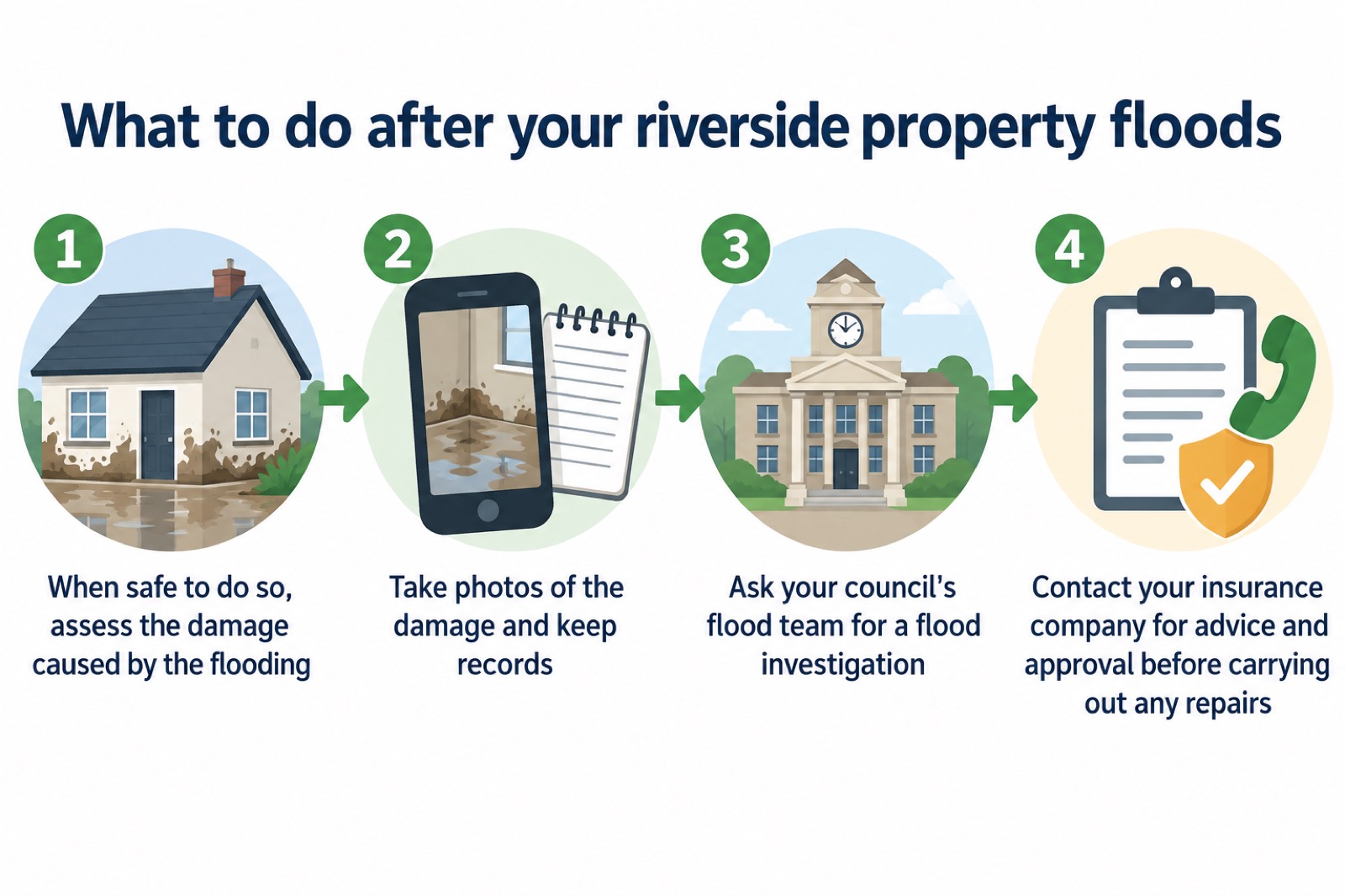
If your home or your community floods, the aftermath is when to ask the formal question: why did this happen, and can the risk be reduced? Your Lead Local Flood Authority may be able to carry out a flood investigation to identify why your property or community has flooded, and if the risk could be reduced in the future24. Councils in this role have a duty to investigate flooding within their area insofar as they consider it necessary or appropriate20, so a request from affected owners carries weight, especially where several properties flooded.
Contact your county or unitary council's flood risk team as soon as you can after the event, while the evidence is still visible: water marks, blocked culverts, overtopped banks and the exact path the water took. An investigation can establish whether an obstruction in an ordinary watercourse contributed, whether highway drainage failed, or whether the flooding came from a main river, which points the follow-up towards the Environment Agency instead.
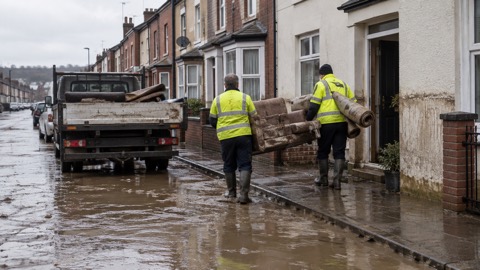
The investigation is one part of a longer recovery. Property owners are responsible for looking after their homes, including protecting them from flooding and dealing with drainage issues within their property boundary9, and if you are a homeowner it is your responsibility to protect your property from flooding11. Rising groundwater flooding is likewise the property owner's responsibility, though the council can provide advice19. Our pages on returning home safely, cleaning up safely, making an insurance claim and repairing so your home recovers faster cover the rest of the sequence, and recovery grants and help if you are not insured sets out what exists beyond insurance.
Where to get help and advice
Riparian ownership is a duty, but not a solitary one. Local authorities and the Environment Agency can be contacted for support or advice about watercourse maintenance14. Your council's flood risk team is the usual first stop: it can tell you whether your watercourse is a main river, who holds responsibility for it, and whether any works you are planning need consent8. The Environment Agency's local offices can be reached on 03708 506506 for concerns about river or stream water quality or flooding information16.
For an ordinary household, the practical order is this: establish what you own, keep your stretch clear, ask before you build, sign up for warnings, and after any flood ask for the investigation. Keep the Floodline number for flood alerts and warnings6 and your council's flood risk team's contact details to hand. If you want to go further, our flooding guide covers checking your flood risk by postcode, the types of flooding, and protecting your home with resistance and resilience measures.
Sources (27)
- Flooding and drainage responsibilities, Derbyshire County Council, Derbyshire County Council
- Prepare for flooding, GOV.UK, GOV.UK
- Flooding support, Lancashire County Council, Lancashire County Council
- Flooding, drainage and gullies, Derbyshire County Council, Derbyshire County Council
- Flood risk responsibilities, Derbyshire County Council, Derbyshire County Council
- Rain and flooding, Ready Scotland, Ready Scotland, 2026-03-24
- Community Resilience Plan, Wiltshire and Swindon Prepared, Wiltshire and Swindon Prepared, 2025
- Report blocked drains, highways flooding, Lincolnshire County Council, Lincolnshire County Council
- How to prepare for flash flooding, Greater London Authority, Greater London Authority, 2026-10-25
- Flood and coastal erosion risk management report, April 2024 to March 2025, GOV.UK, Environment Agency, 2025-03-31
- Preparing for a flood, Nottinghamshire County Council, Nottinghamshire County Council
- Flood advice, Argyll and Bute Council, Argyll and Bute Council, 2026
- Preparing for a flood, Nottinghamshire County Council, Nottinghamshire County Council
- Who is responsible for local flood risk management, Devon County Council, Devon County Council, 2019-02
- Flood wardens, Cheltenham Borough Council, Cheltenham Borough Council, 2026-10-29
- Private water supplies, Cornwall Council, Cornwall Council, 2026-10-29
- Blue-green algae, Argyll and Bute Council, Argyll and Bute Council, 2026
- Blue-green algae (cyanobacteria), Cumberland Council, Cumberland Council, 2026
- Further support after a flood, Nottinghamshire County Council, Nottinghamshire County Council, 2026-10-29
- Flood risk in Anglesey: be prepared, Isle of Anglesey County Council, Isle of Anglesey County Council, 2013-07
- Northumbria Local Resilience Forum, Northumberland County Council, Northumberland County Council, 2026-10-28
- Reservoir flood risk, Derbyshire County Council, Derbyshire County Council, 2026-10-29
- Flood warnings leaflet, Nottinghamshire County Council, Environment Agency, 2010-11
- Flood recovery leaflet, Nottinghamshire County Council, Nottinghamshire Local Resilience Forum, 2025
- Further support | Nottinghamshire County Council, Nottinghamshire County Council
- Flooding: preparing for a flood, easy read, Nottinghamshire County Council, Nottinghamshire County Council, 2025-11-02
- Flood Guidance Statement, 8 February 2026, Environment Agency, Environment Agency, 2026-02-08
 Flood Warning Checklist
 First Steps After a Flood
 Insurance Claim Records
 Checking Flood Risk by Postcode
 Types of Flooding
 Flood Alerts and Flood Warnings
 Flood Guidance Statement
 Wales Flood Warnings and Maps
 Making a Household Flood Plan
 Protecting Your Home
 Door Flood Barriers
 Sandbags and Alternatives
 Flood Doors and Windows
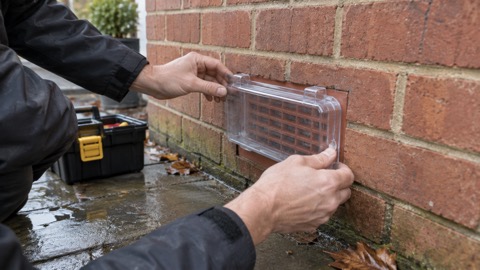 Airbrick Covers
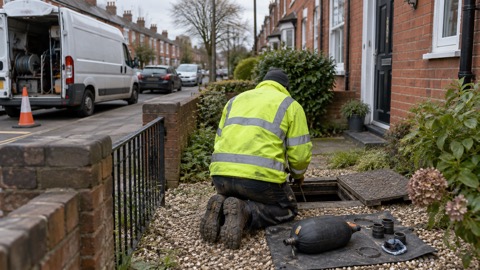 Non-Return Valves and Bungs