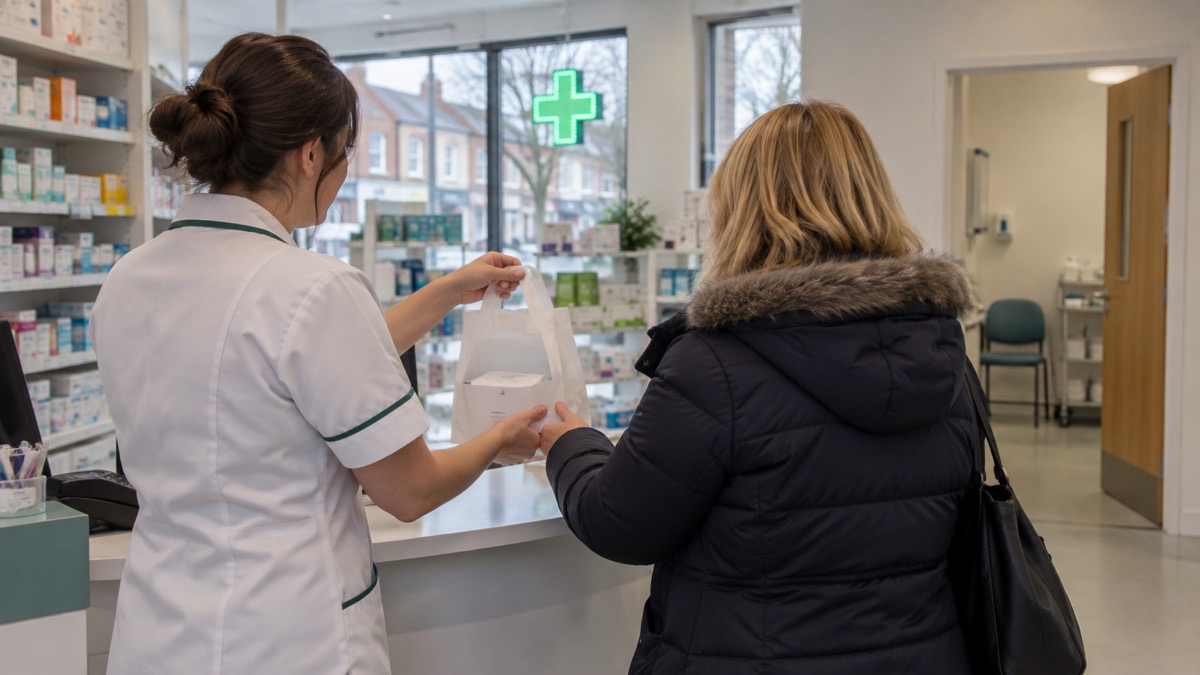
Pharmacy First is an NHS service in England that lets a pharmacist assess and treat seven common conditions without you needing to see a GP or get a prescription from your GP first1. The pharmacist can supply some prescription medicines where they are clinically appropriate, as well as over-the-counter treatments, and you do not need an appointment1. You can walk into a participating pharmacy or contact it virtually, and GP receptionists, NHS 111 and emergency care providers can all direct you to a pharmacy that offers the service3.
The seven conditions are sinusitis, sore throat, earache, infected insect bite, impetigo, shingles and uncomplicated urinary tract infections, and each has its own age range1. If your problem is not one of the seven, a pharmacist can still give expert advice and over-the-counter medicines for everyday complaints such as coughs, colds, headaches, tummy trouble and aches and pains, without an appointment3.
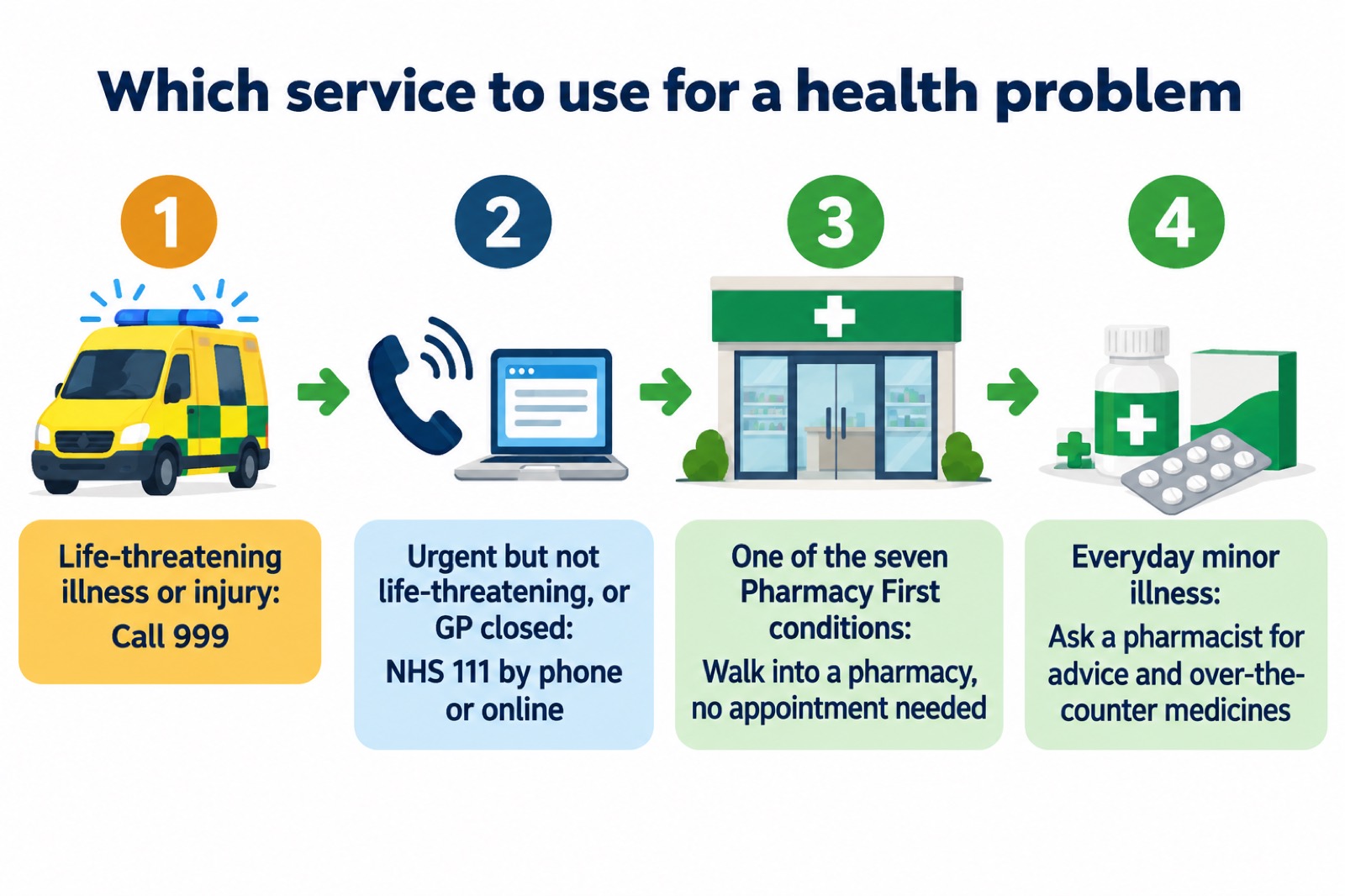
The service is for problems you would otherwise take to a GP that day. It is not for emergencies: for a life-threatening illness or injury, call 999, and for urgent but non-life-threatening advice, especially when your GP surgery is closed, use NHS 1115.
The seven conditions, and the age limits for each
Pharmacy First covers a fixed list of seven conditions, and the pharmacist can offer some prescription medicines for them where needed, as well as over-the-counter treatments1. The age limits matter, because a pharmacist can only treat you under the scheme if you fall within the range for your condition. Outside it, they will point you to the right service instead.
| Condition | Age range covered |
|---|---|
| Sinusitis | 12 years and over1 |
| Sore throat | 5 years and over1 |
| Earache | 1 to 17 years old1 |
| Infected insect bite | 1 year and over1 |
| Impetigo | 1 year and over1 |
| Shingles | Over 18 years old1 |
| Uncomplicated urinary tract infection | Women aged 16 to 641 |
The scheme is not limited to those seven. Pharmacists are trained healthcare professionals who can advise on the use of medicines and on managing minor illnesses, and you can see one for a consultation without booking2. They can help when you need advice and treatment that day for coughs, colds, sore throats, tummy trouble, aches, sprains and other pains4. They can also help with asthma, eczema, hay fever and period pain, and with coughs, colds, indigestion, diarrhoea or constipation9.
Coverage is broad across England: all community pharmacies in areas such as Warrington and Halton have signed up, and most community pharmacies in Birmingham and Solihull provide the service1. If you are unsure whether your local pharmacy offers it, phone ahead or ask at the counter.
How to use Pharmacy First: walk in, phone or get referred
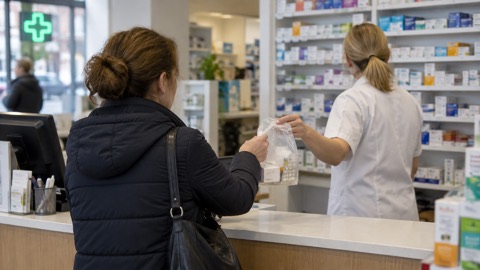
There is no booking step. You can get treatment by walking into the pharmacy or contacting it virtually, and patients do not need an appointment1. Many pharmacies have private consultation areas, which makes them a good first port of call, including for a child who is ill but does not need to see a GP7.
You can also be sent there by someone else. GP receptionists, NHS 111 and emergency care providers can direct patients to pharmacies offering the service3. That matters when you ring your surgery and the problem fits one of the seven conditions: the receptionist may point you to a pharmacy rather than a GP slot.
A simple order of steps:
- Check the pharmacy is open and offers Pharmacy First, particularly at weekends and on public holidays11.
- Walk in or contact the pharmacy virtually; no appointment is needed1.
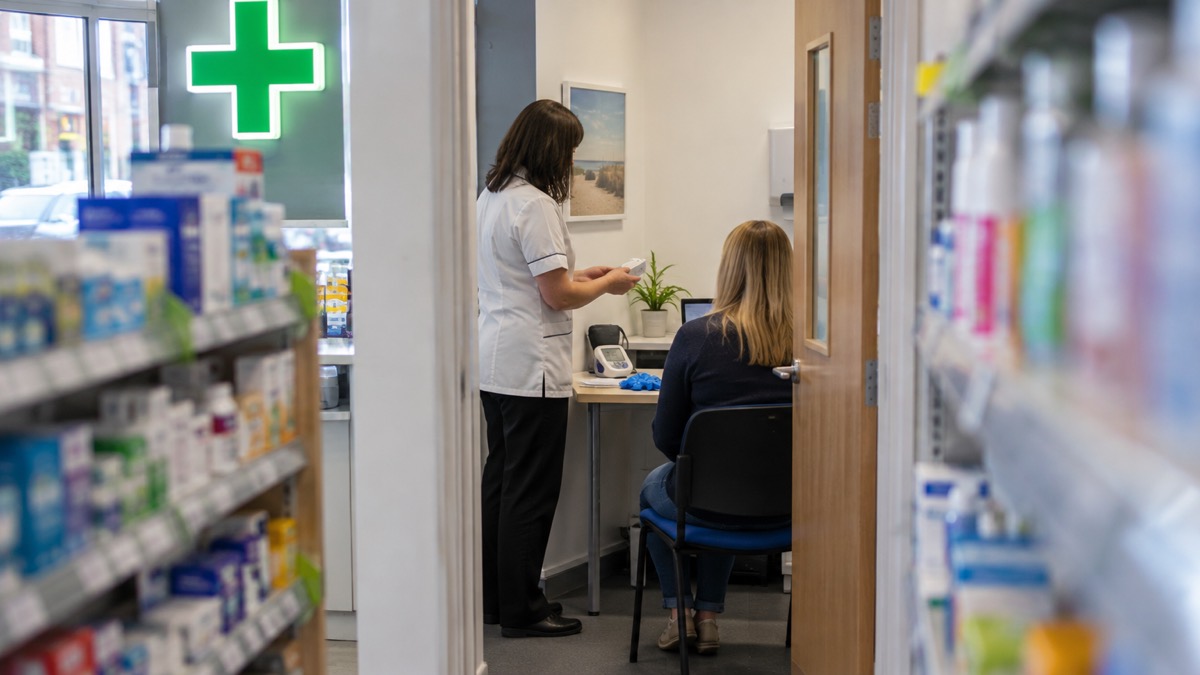
- Describe your symptoms to the pharmacist, in private if the pharmacy has a consultation room1.
- Take the treatment the pharmacist recommends, or their advice on where to go next.
Opening hours vary, so it pays to know them. Some pharmacies are open until midnight or later, even on public holidays, and if you already have a prescription and urgently need the medicine you can get it from any pharmacy that has it in stock1. Around public holidays, check your GP practice and pharmacy opening times so you can order and collect repeat prescriptions in plenty of time11.
If you run out of a regular medicine, the pharmacy is also the place to start. You can contact NHS 111 by phone or online, or contact a community pharmacy directly, to request an emergency supply12. See Running Out of Prescribed Medicine: Emergency Supplies From a Pharmacy for the full process.
What the pharmacist will ask, and when they send you elsewhere
A Pharmacy First consultation is a proper clinical assessment, not a shop transaction. The pharmacist will ask about your symptoms and your history, and where a medicine is involved they will check whether you need it immediately, who previously prescribed it, and what medicine and dose the prescriber asked you to take12. In Wales, the equivalent assessment covers whether you need the medicine immediately, who previously prescribed it, and what dose would be appropriate, and the pharmacist keeps a record of your details, the medicine provided and the nature of the emergency13.
Expect questions about how long the problem has lasted, what you have already tried, allergies and other medicines. Answer them plainly; the pharmacist uses them to decide whether the condition is suitable for treatment at the pharmacy or needs another service.
There are several reasons a pharmacist will send you elsewhere:
- The condition is outside the scheme. Your age or the problem itself may not fit the seven conditions, in which case the pharmacist will advise where to go1.
- The problem needs a GP or urgent care. Your GP surgery should usually be the first place you contact if you have a particular concern about your health, and the pharmacist will say so if that is the right route4.
- It is an emergency. A pharmacist will direct you to 999 or A&E if your symptoms suggest something serious14.
- Your medicine looks wrong. If your medicine changes colour, smells different or looks different, ask your pharmacist for advice15.
- There is a shortage. During a medicines shortage, talk to your pharmacist in the first instance, and as early as possible15.
If you have a query about a medicine you have been prescribed, contact your GP or pharmacist10. For eye problems, contact your local optician rather than the pharmacy10.
When to call NHS 111 or 999 instead
Pharmacy First suits a problem you would otherwise take to a GP that day. It is not a substitute for urgent or emergency care, and using the right service matters most when the NHS is under pressure.
Use NHS 111 when you need urgent but not life-threatening health advice, or when your GP surgery is closed and you cannot get help elsewhere5. Go online to 111.nhs.uk or call 111 if you cannot get online16. NHS 111 should be used by all patients who have an urgent medical need, rather than calling 999 or going to A&E2. Depending on what you need, NHS 111 may advise you to see a pharmacist for a minor illness, contact your own GP, book a callback from a nurse, go to an urgent treatment centre, or, in an emergency, call 999 or go to A&E14.
Call 999 only for a life-threatening illness or injury6. When you call, the emergency medical dispatcher will first ask whether the patient is breathing and then whether they are awake, so that the call can be prioritised17. If you can, have the patient's GP details and a list of their current medication ready18.
For medicine specifically, there is a distinction worth knowing. If you need medicine urgently and also have symptoms, call 111 and speak to an adviser rather than using the online emergency prescription service19. If the medicine is supplied through NHS 111, you will be charged the relevant prescription charge unless you are eligible for free prescriptions12.
Prescription charges, records and other practical questions
Charges. Most community pharmacies can provide advice and treatment for the seven conditions free for people who are exempt from prescription charges8. Where a medicine is supplied through NHS 111, the relevant prescription charge applies unless you are eligible for free prescriptions12. If you hold a prescription written in Wales and present it at a pharmacy in England, it is subject to the prescription charges and rules in force in England20.
Your records. Pharmacy First is an NHS service delivered by trained healthcare professionals, and pharmacists keep records of the consultations and medicines they provide2. If you want to know how your GP surgery will be informed, ask during the consultation. Your GP surgery should usually remain the first place you contact for an ongoing concern about your health4.
Privacy. Patients do not need an appointment, and private consultation rooms are available1. Many pharmacies have private consultation areas, so you can discuss symptoms away from other customers7.
Contraception and blood pressure. Pharmacists can offer advice on a wide range of long-term conditions and common illnesses7. Free blood pressure testing is available at your pharmacy, at your GP, or during a Safe and Well visit, and you can also use a home monitor21. Ask your pharmacy what else it offers.
Children. A pharmacy is a good first port of call if your child is ill but does not need to see a GP7. Note that it is illegal for under 16-year-olds to be sold painkillers such as paracetamol and ibuprofen, so a pharmacist will advise on appropriate treatment rather than simply selling them22.
Planning ahead. Keep your medicine cabinet stocked so a minor illness does not become a crisis; our Medicine Cabinet Checklist sets out what to keep. If a medicine is in short supply, see Medicine Shortages: Why They Happen and What to Do. For the wider picture on using NHS services well, start with Health Emergencies: A Household Guide to Outbreaks, Pandemics and Medicine Supplies.
Sources (22)
- When you need urgent healthcare, NHS North Cheshire and Mersey, 2026-08-11
- Alternatives to 999, Scottish Ambulance Service, 2026-10-29
- In an emergency, Medway NHS Foundation Trust, 2026-10-29
- Urgent care, NHS North East London, 2026-04-14
- NHS 111, Yorkshire Ambulance Service NHS Trust, 2026-10-29
- When to call 999, South Western Ambulance Service NHS Foundation Trust, 2026-10-29
- Poisoning and accidental swallowing, Aneurin Bevan University Health Board, 2026-10-29
- Keep winter well, Birmingham Community Healthcare NHS Foundation Trust, 2026-10-28
- What should you have in your medicines box, Leicester, Leicestershire and Rutland ICB, 2025-09
- Your Health Guide Winter 2025-6, NHS Western Isles, 2025-12
- Health advice for public holidays, NHS Inform Scotland, 2026-09-15
- Emergency supply of medication, NHS Nottingham and Nottinghamshire ICB, 2026-10-29
- Out of hours, NHS 111 Wales, 2021
- NHS 111 online, NHS Digital, 2026-10-29
- Advice for patients during a medicines shortage, NHS Specialist Pharmacy Service, 2025-11
- Keeping safe and well in colder weather, London Ambulance Service NHS Trust, 2026-09-30
- What happens when you call, Northern Ireland Ambulance Service, 2026-10-29
- What to do before help arrives, Northern Ireland Ambulance Service, 2026-10-29
- Emergency prescriptions, NHS 111, 2026-10-29
- Pharmacy FAQ, NHS 111 Wales, 2021
- Safe and Well booklet, Cheshire Fire and Rescue Service, 2026-04
- Medication safety, Worcestershire County Council, 2026-10-29
 Medicine Cabinet Checklist
 Sick at Home Supplies Kit
 Caring for Someone Ill at Home
 How Long to Stay Home With COVID
 Time Off After Sickness
 Stopping Flu Spreading at Home
 How Long to Wash Your Hands
 When to Call 111 or 999
 When Your GP Is Closed
 Disposing of Unused Medicines
 Medicines in a Heatwave
 Taking Someone Else's Medicine
 Ordering Repeat Prescriptions
 Treating Dehydration at Home
 Cold-Health Alerts Explained