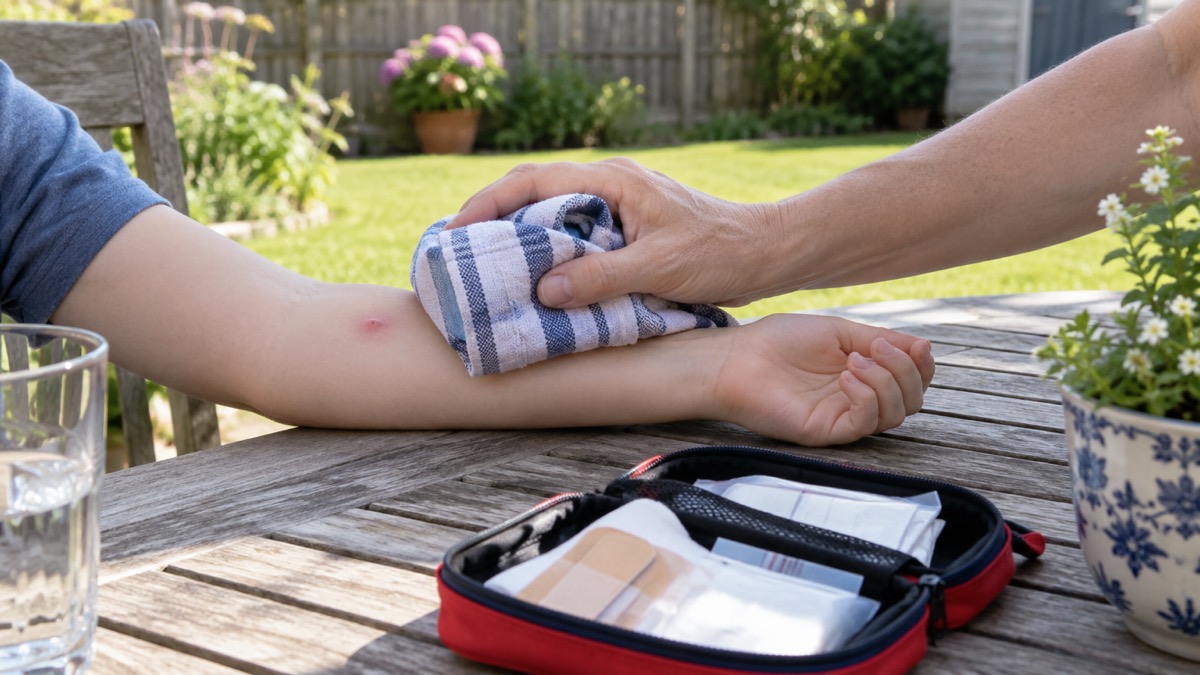
Most bites and stings are not serious and get better on their own within a few hours or days1. The danger is the small minority that trigger anaphylaxis, a severe allergic reaction that affects the whole body, which can develop within seconds or minutes of contact with a trigger and can be fatal2. Wasp and bee stings are among the common triggers listed in official first aid guidance2.
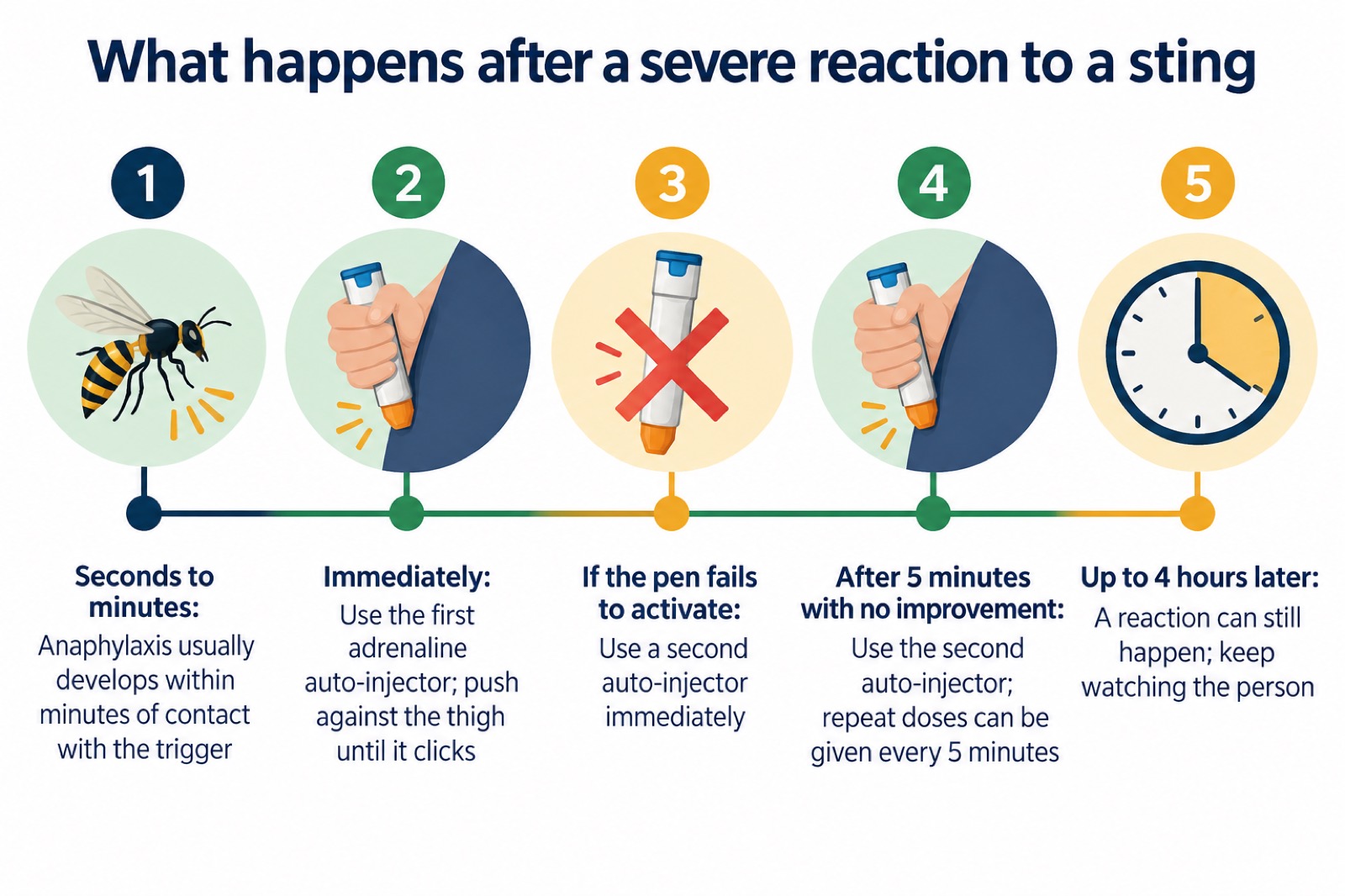
So the first thing to know is simple: if a bite or sting causes swelling of the mouth, tongue or throat, or any problem with breathing, call 999 immediately3. If the person carries an adrenaline auto-injector, use it: push the tip firmly against the thigh until it clicks, hold it in place for 3 seconds or as instructed, then massage the site for 10 seconds2. A second dose can be given after 5 minutes if there is no improvement4.
Everything else on this page, treating mild swelling and itching, caring for tick and dog bites, and knowing what to keep at home, comes after that.
When to call 999 straight away
The emergency signs to act on are the ones that affect the airway, breathing or circulation. NHS inform lists the most serious symptoms of anaphylaxis as swelling of the throat or tongue; breathing problems like wheezing or shortness of breath; feeling faint, dizzy or lightheaded; collapse or loss of consciousness; and blue, grey or pale skin, lips or tongue2.
For children, NHS guidance gives a wider list of reasons to call 999 after any accident, several of which apply directly to bites and stings: the child stops breathing, is struggling to breathe, is choking, is unconscious, is limp and floppy, has a swollen mouth, lips, throat or tongue, has blue, grey, pale or blotchy skin, lips or tongue, seems suddenly confused or distressed, has been severely injured, or is bleeding heavily6. A child who has been bitten by a dog and has a severe wound or heavy bleeding falls squarely within this list.
During an anaphylactic reaction the blood vessels widen, causing blood pressure to fall, and the air passages narrow, leading to breathing difficulties; the tongue and throat can swell, obstructing the airway, and the oxygen reaching organs can fall2. This is why the reaction is treated as an emergency even when the person initially seems to be coping: the situation can worsen quickly.
If you suspect anaphylaxis, the medicines regulator's advice to patients and carers is to administer an adrenaline auto-injector device without delay, even if there is doubt whether it is anaphylaxis7. It is far safer to give adrenaline that turns out not to be needed than to wait for the reaction to prove itself.
Anaphylaxis: the signs that matter
Not every rash after a sting is an emergency. NHS inform separates the symptoms into two groups, and the distinction decides what you do2.
| Most serious symptoms, call 9992 | Other symptoms, usually not anaphylaxis on their own2 |
|---|---|
| Swelling of the throat or tongue | A skin rash which can be itchy |
| Wheezing or shortness of breath | Swelling of the face, lips or eyes |
| Feeling faint, dizzy or lightheaded | Abdominal pain, nausea or vomiting |
| Collapse or loss of consciousness | |
| Blue, grey or pale skin, lips or tongue |
The other symptoms in the right-hand column are unlikely to be a sign of anaphylaxis on their own2. A child who develops a rash, itchiness or swelling on their hands, feet or face, whose breathing may slow down, and who may also vomit or have diarrhoea, is showing signs of a severe allergic reaction that needs attention, but the deciding factor is always the airway and breathing8. If in doubt, call 999 and describe exactly what you can see.
Timing matters too. Anaphylaxis usually develops within minutes of contact with an allergen, and may develop within seconds or minutes and can be fatal2. But official guidance also notes that sometimes the reaction can happen up to 4 hours later2. Someone who seems fine after a sting should still be watched for hours, not minutes, and any late-appearing symptoms should be treated exactly as seriously as early ones.
How to use an adrenaline auto-injector
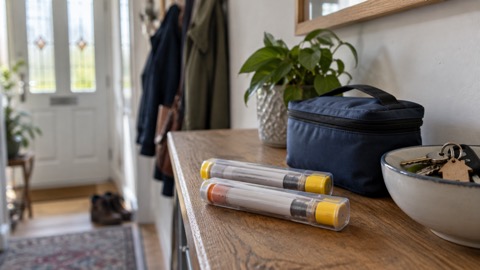
If the person having the reaction carries an adrenaline auto-injector and can use it themselves, help them to use it. If they cannot use it and you have been trained, you can do it for them2. NHS inform gives the following steps2:
- Hold the auto-injector in your fist.
- Pull off the safety cap.
- Push the tip firmly against the thigh until it clicks.
- Hold it in place for 3 seconds, or as instructed on the device.
- Remove it and massage the site for about 10 seconds.
The click matters. Following reports of device failures, the Medicines and Healthcare products Regulatory Agency issued a national patient safety alert advising that patients should use a second adrenaline auto-injector immediately if the first pen fails to activate despite pressing firmly against the thigh9. The same advice is repeated in the formal recall notice for affected devices7. This is the practical reason everyone at risk of anaphylaxis should carry two auto-injectors, not one.
If symptoms have not improved after 5 minutes, use the second auto-injector4. NHS inform puts it more broadly still: repeated doses of adrenaline can be given every 5 minutes if the person does not show any signs of improvement, or if symptoms return2.
Tell the emergency services if you do not have access to an auto-injector2. Do not delay the 999 call in order to search for one: make the call, then use the device if it is to hand.
Our page on adrenaline auto-injectors covers carrying, using and storing them in more detail, including what to do with an expired injector.
Positioning the person and waiting for the ambulance
While the adrenaline is given and the ambulance is on its way, position the person to help their breathing. NHS instructs you to help the casualty to sit in the position that makes breathing easier; if they become pale with a weak pulse, lie them down and raise their legs to treat them for shock2. Raised legs keep blood returning towards the heart and brain when blood pressure is falling.
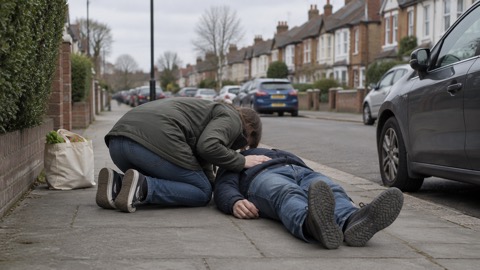
Keep monitoring the casualty until help arrives2. If the person becomes unresponsive, check their breathing and be prepared to start CPR2. If they are breathing normally but unresponsive, they should be placed in the recovery position to keep the airway open. Our pages on how to check if someone is breathing and how to do CPR give the steps in full.
Do not let the person get up and move around once they say they feel better. The guidance to monitor the casualty until help arrives exists because symptoms can return, and a reaction can appear up to 4 hours later2. Someone who stands and walks away after an apparent recovery can collapse if the reaction resumes. Keep them still, keep them with you, and let the ambulance crew make the assessment.
Mild reactions: rash, itching and swelling on their own
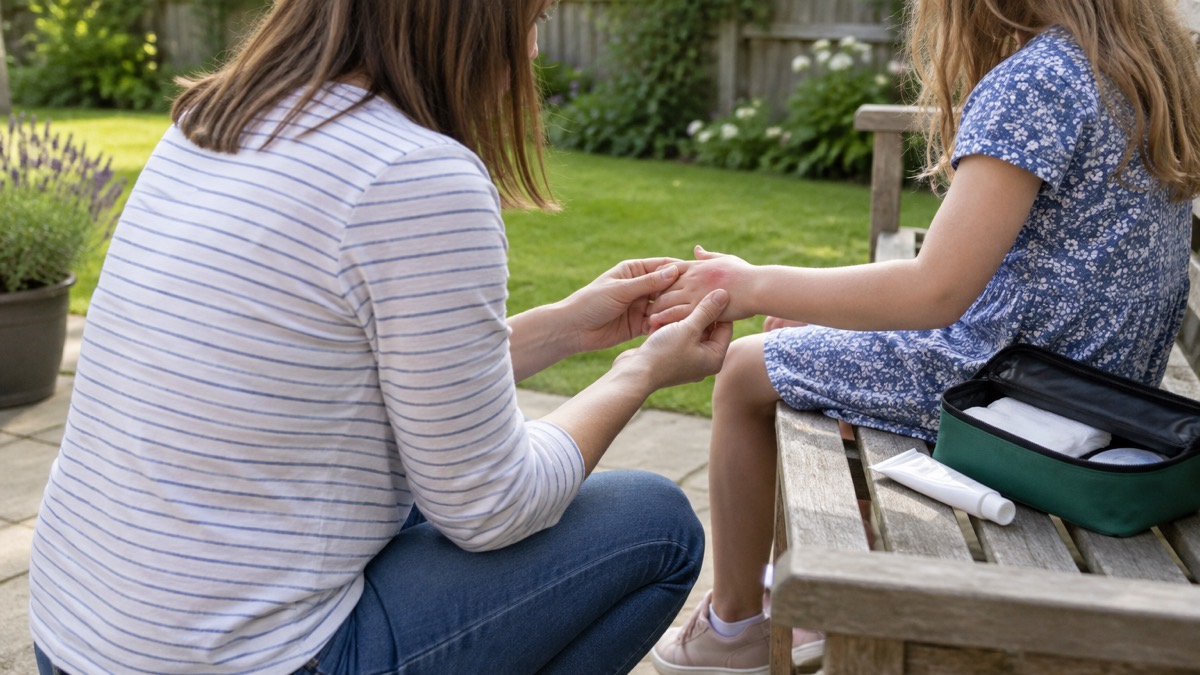
Most bites and stings are not serious and will get better within a few hours or days10. An insect bite or sting will usually cause a red, swollen lump to develop on the skin, which may be painful and in some cases can be very itchy1. That lump, on its own, is a normal reaction and not a sign of anaphylaxis.
For a simple sting, the NHS advice for children is practical and easy to follow at any age3:
- Clean the area with soap and water.
- Apply an ice pack wrapped in a cloth, or a wet cloth, for a few minutes.
- Use an age-appropriate antihistamine.
- Apply calamine lotion to soothe the skin.
Note the point about wasps: wasps do not leave their stinger, which means they can sting again3. Move the person away from the wasp, and check the area around a sting for a visible stinger before deciding what you are dealing with.
Avoid traditional home remedies. The North West Ambulance Service advises avoiding traditional home remedies, such as vinegar and bicarbonate of soda, as they are unlikely to help1. Soap and water, a wrapped ice pack and a pharmacy antihistamine do everything the old folk remedies claim to do, with evidence behind them.
You can buy creams for itching and antihistamines from your pharmacy to have at home10. Antihistamine tablets and creams are useful medicines used to relieve symptoms of allergies, including reactions to insect bites or stings5. Antihistamine creams are applied to the skin to soothe insect stings and bites, rashes and itching from stinging nettles, and can reduce swelling5. Most antihistamines can be bought from pharmacies and shops, but some are only available on prescription12.
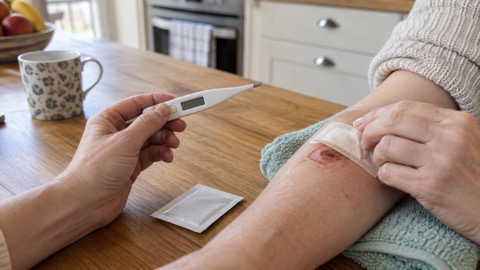
Watch the bite over the following days rather than forgetting it. If a bite becomes hot, swollen, redder or darker, smells unpleasant, leaks pus, or the person develops a temperature, the wound may have become infected and you should seek medical assistance or contact 11113.
Ticks: check after being outdoors
Ticks are a bite to treat differently, because the danger is not the bite itself but what can follow it. Forestry and Land Scotland advises checking yourself and children for ticks after spending time outdoors, and its warning signs to act on are a spreading circular "bullseye" rash, or feeling unwell with flu-like symptoms14. A small, itchy spot at the site is a normal reaction and not, by itself, a cause for alarm14.
If either of those warning signs appears, tell your doctor you have been bitten by a tick14. Do not wait to see whether the rash spreads further on its own; mention the tick bite explicitly when you contact the surgery, because it changes what the doctor looks for.
Dog and other animal bites
Dog bites, and bites from other animals, are treated as wounds first and allergy risks second. NHS guidance is to clean the wound and seek medical advice13. Contact NHS 111 if you are concerned about the injury, and seek urgent medical attention for severe wounds, heavy bleeding, signs of infection, or bites to the face, hands, feet or head13.
The signs that a bite may have become infected are specific: the wound is hot, swollen, redder or darker than the surrounding skin, smells unpleasant, leaks pus, or the person has a temperature15. Go to A&E if the wound is large or deep, or you cannot stop the bleeding; call 999 or 112 if you cannot get to A&E yourself15.
For a child bitten by a dog, the same rules apply with less room for judgement. A bite to the face, hands, feet or head needs urgent medical attention13, and NHS guidance on childhood accidents says to call 999 if a child has a cut that will not stop bleeding or is gaping open, or has been severely injured6. Clean what you can safely clean, control any bleeding, and get help rather than waiting to see how the wound settles.
Adder bites, though rare, belong in this section. NHS inform lists the venom in bites or stings among the causes of poisoning, and its first aid guidance for poisoning is to phone 999 for emergency help16. Treat any snake bite in the UK as an emergency: keep the person still and call 999.
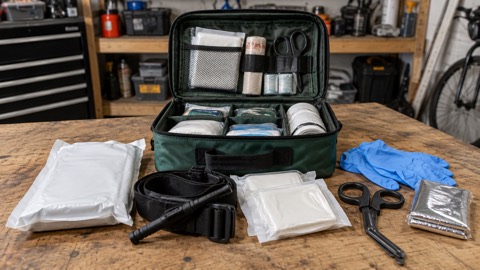
Our page on cuts, grazes and wounds covers cleaning and dressing a wound at home, and severe bleeding covers what to do when a wound will not stop bleeding.
Antihistamines: what they can and cannot do
Antihistamines have a clear place in treating bites and stings, and a clear limit. They are useful medicines used to relieve symptoms of allergies, such as hay fever, hives, allergic conjunctivitis and reactions to insect bites or stings5. Antihistamine cream can reduce swelling and soothe insect bites and stings11.
What they cannot do is treat anaphylaxis. A severe reaction needs adrenaline, given through an auto-injector, and a 999 call2. Antihistamines are for the rash, the itch and the mild swelling that follow an ordinary bite or sting, not for swelling of the throat, breathing problems or collapse. If someone is having a severe reaction, give the adrenaline first and never spend time on tablets or creams instead.
On drowsiness: official advice on stocking a family medicine chest is to use newer brands, which are less sedative17. This matters if the person who has been stung needs to drive, care for children, or stay alert to watch for a delayed reaction. A pharmacist can advise on which products are less sedating.
What to keep at home for bites and stings
A well-stocked first aid kit covers almost everything a bite or sting needs in the way of treatment. Official guidance on what to keep in your medicine cabinet includes cream or spray to relieve insect bites and stings, antihistamine cream or tablets, and children's antihistamine12. A basic first aid kit may also contain plasters in a variety of sizes, sterile gauze dressings, disposable gloves, tweezers, alcohol-free cleansing wipes, a thermometer, skin rash cream such as hydrocortisone or calendula, antiseptic cream, painkillers, and distilled water for cleaning wounds18.
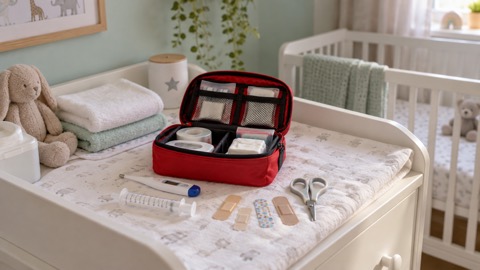
For households with children, the recommended kit adds infant paracetamol or infant ibuprofen, and a medical spoon or syringe for giving babies and children their medicines19. NHS guidance on keeping children safe over the summer also advises investing in a first aid kit including pain relief and antihistamines before the season when stings are most likely3.
- Cream or spray to relieve insect bites and stings12
- Antihistamine cream or tablets, and children's antihistamine12
- Calamine lotion3
- Painkillers, with child versions if you have children18
- Tweezers, gloves and cleansing wipes for wound care18
- A thermometer, useful if you suspect an infected bite18
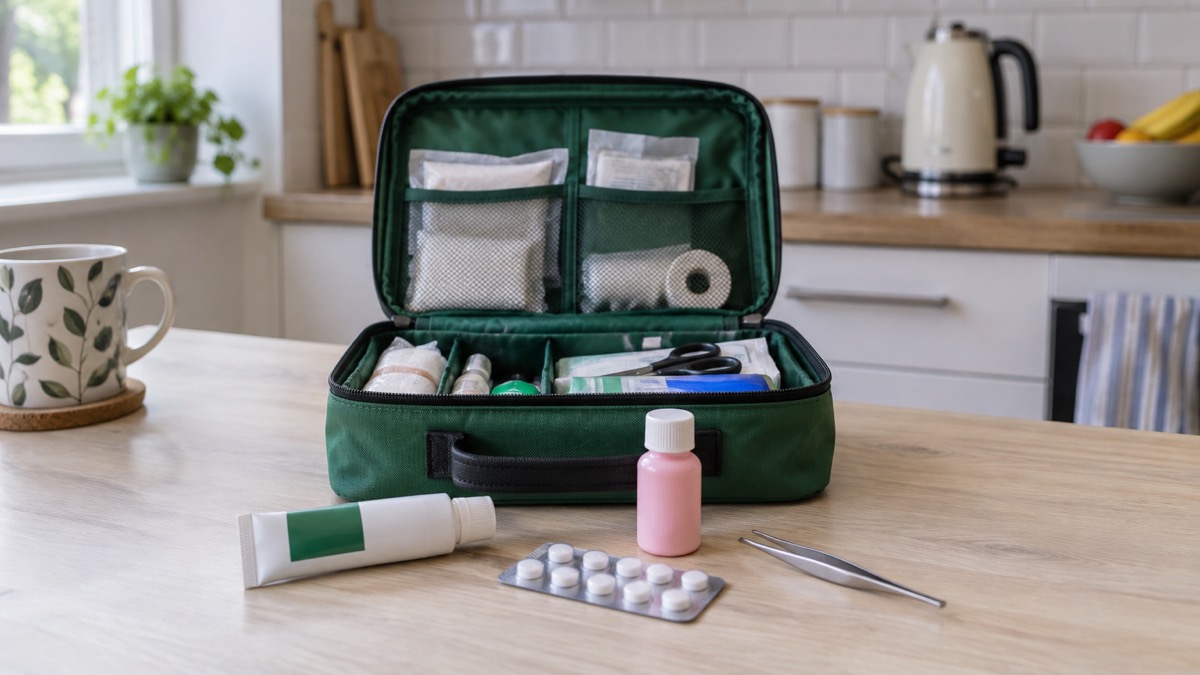
Two rules keep the kit worth having. First, medicines should be checked regularly to make sure they are within their use-by dates18. Second, replace items when stocks run low, check use-by dates of all medicines, throw away anything past its use-by date, and take out-of-date medicines to a pharmacy for safe disposal11. An expired antihistamine or a missing cream is only discovered when someone is already stung.
Our first aid kits for the home page covers contents and choosing a kit in full, and the baby and child kit checklist lists what families with small children should add.
Telling the 999 operator, and teaching children to call
When you call 999 about a bite or sting reaction, say what triggered it, what symptoms you can see, and whether an auto-injector has been used. Official first aid guidance adds one specific point: tell the emergency services if you don't have access to an auto-injector2. That information changes what the ambulance crew does when they arrive, so state it plainly rather than assuming they will ask.
Children should know how and when to call 99920. A child who is stung while playing away from adults, or who watches a parent react badly to a sting, may be the only person able to make the call. Teaching children how and when to call 999 is part of basic household preparedness20, and our page on teaching children basic life-saving skills covers it.
First aid can treat all sorts of minor bumps and scrapes, but you should see a doctor for more serious accidents19. That is the dividing line for the whole of this page: mild reactions are treated at home, and anything affecting the airway, breathing or circulation, or any wound that is deep, infected or badly placed, is a matter for 999, 111 or A&E.
Sources (20)
- Bites and stings first aid, North West Ambulance Service, 2025-03-13
- Anaphylaxis first aid, NHS inform, 2026-07-24
- Staying safe over the summer, Healthier Together, 2026-10-29
- Adrenaline auto-injector safety campaign, UK Government, 2023-10-17
- Self care advice: antihistamines, NHS Birmingham and Solihull Integrated Care Board, 2026-10-28
- What to do if your child has an accident, NHS, 2025-12-18
- National Patient Safety Alert: recall of Emerade auto-injectors, Medicines and Healthcare products Regulatory Agency, 2023-05-09
- Basic first aid for toddlers, Royal Wolverhampton NHS Trust, 2026-10-29
- MHRA attachment on adrenaline auto-injector device failure, Medicines and Healthcare products Regulatory Agency, 2023-05-09
- Hot weather advice, NHS Central East Integrated Care Board, 2026-08-04
- Newborn essentials: first aid, NHS 111 Wales, 2021-04-19
- What to keep in your medicine cabinet, Healthier Together (HWE), 2026-10-28
- Child safety, Berkshire Healthcare NHS Foundation Trust, 2026-10-29
- Checking for ticks, Forestry and Land Scotland, 2026-10-29
- Animal Bite First Aid | St John Ambulance, St John Ambulance
- Poisoning first aid, NHS inform, 2026-07-24
- The family medicine chest, Vallance Medical Centre, 2026
- What should I keep in my first aid kit, Collingwood Surgery, 2026-10-28
- First aid, nidirect (Northern Ireland government), 2025-12-04
- Be ready for emergencies, Cheshire Fire and Rescue Service, 2026-10-14
 Baby and Child Kit Checklist
 Bleeding Control Kit Checklist
 Car Kit Checklist
 Danger, Response, Airway
 CPR Steps for Adults
 2025 Resuscitation Guidelines
 Defibrillators (AEDs)
 Public Access Defibrillators
 Choosing a Defibrillator
 The Recovery Position
 Choking First Aid
 Cuts, Grazes and Wounds
 Burns and Scalds
 Adrenaline Auto-Injectors
 Sepsis Signs to Act On