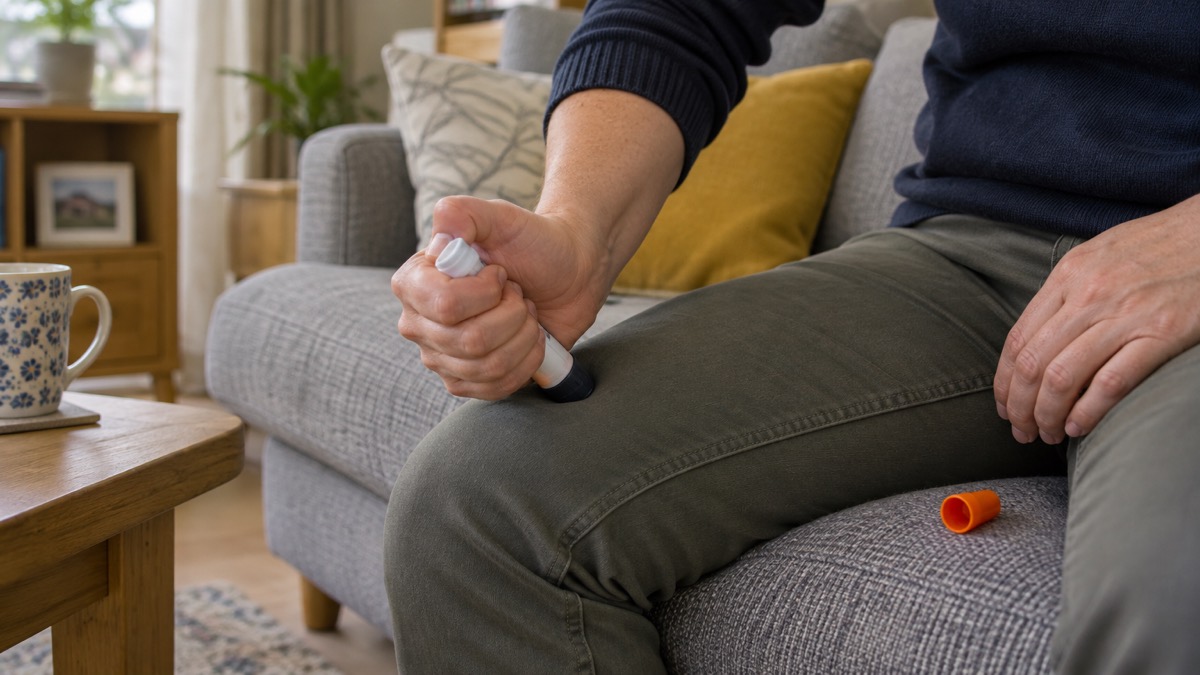
An EpiPen is a prescribed adrenaline auto-injector, one of the devices that delivers a measured dose of adrenaline into the muscle of the outer thigh when someone is having anaphylaxis, a severe allergic reaction that affects the whole body1. It does not cure the reaction. It buys time while the ambulance comes, and it is only part of the response: the injection, a 999 call, lying flat, and hospital assessment all belong together.
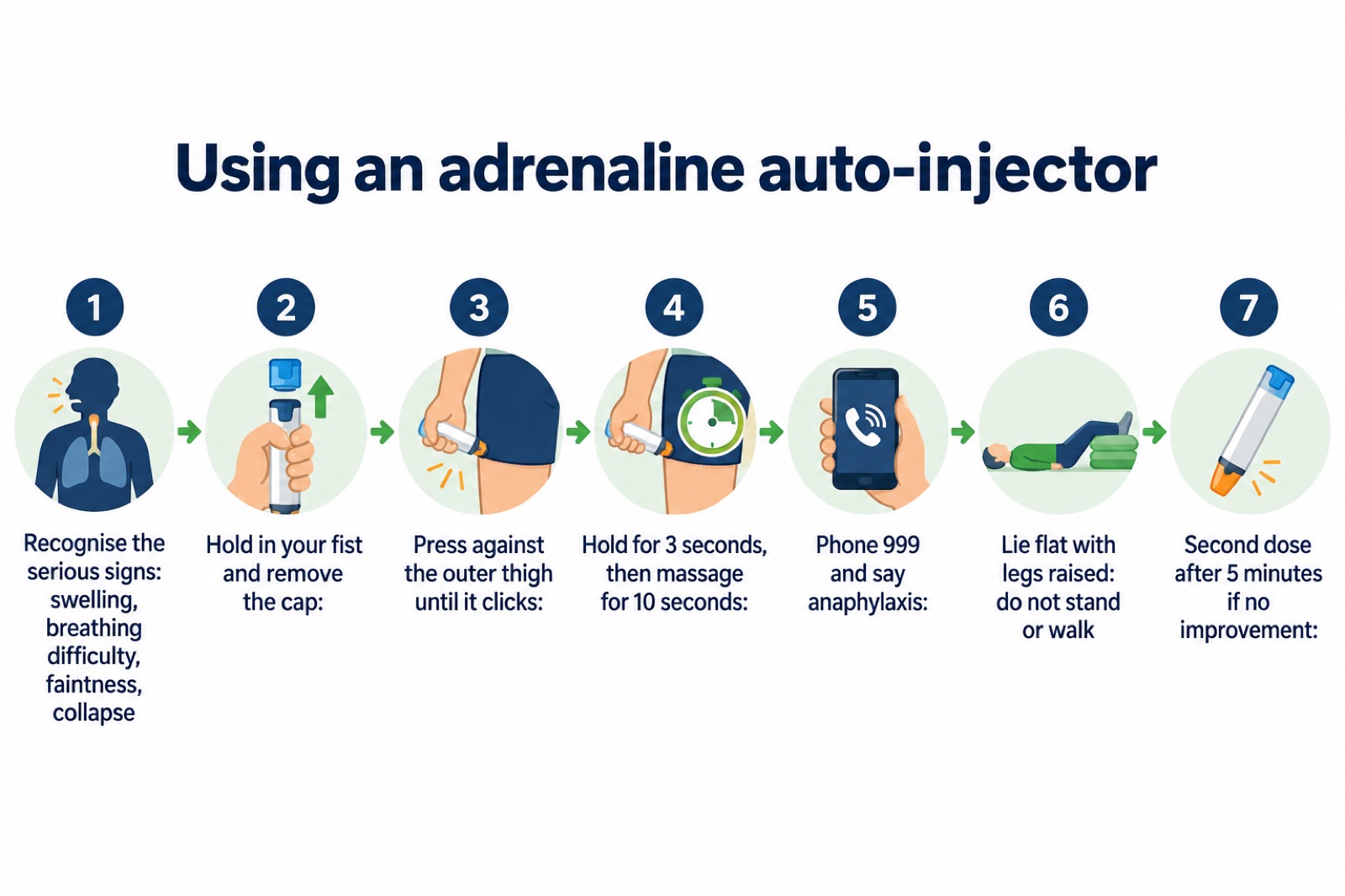
If you think someone has anaphylaxis, give their auto-injector without waiting to be sure, then phone 999 and tell the call handler you think someone has anaphylaxis2. Hold the device in your fist, pull off the safety cap, push the tip firmly against the outer thigh until it clicks, hold it in place for 3 seconds or as instructed, then remove it and massage the site for 10 seconds2. If there is no improvement, or symptoms return, a second dose can be given after 5 minutes2.
Then keep the person lying down. Official advice is blunt: do not stand or walk at any time, even if you feel better4. Everyone who has had adrenaline for anaphylaxis goes to hospital, because the reaction can return and needs watching.
Signs of anaphylaxis that mean using the EpiPen now
Anaphylaxis is a severe allergic reaction that affects the whole body2. During the reaction the blood vessels widen, so blood pressure falls, and the air passages narrow, so breathing becomes difficult; the tongue and throat can swell and block the airway, and the oxygen reaching the organs can fall2. That is why the signs to act on are the ones that touch breathing, circulation and consciousness, not the skin.
The most serious symptoms, as listed in official guidance, are swelling of the throat or tongue; breathing problems such as wheezing or shortness of breath; feeling faint, dizzy or lightheaded; collapse or loss of consciousness; and blue, grey or pale skin, lips or tongue2. A child who shows signs of anaphylaxis after a bite needs 999 immediately, with swelling of the mouth, tongue and airway treated as an emergency7.
Other symptoms can include an itchy skin rash, swelling of the face, lips or eyes, and stomach symptoms such as abdominal pain, nausea or vomiting, but these are unlikely to be a sign of anaphylaxis on their own2. Treat them as a warning, not a reason to wait: if they come with any of the serious signs above, use the injector.
Common triggers are nuts, shellfish, eggs, wasp and bee stings, latex and certain medications2. Pollen, stings and bites, latex and foods such as nuts, shellfish, eggs or dairy are also named as common causes8. Anaphylaxis usually develops within minutes of contact with the allergen, but sometimes the reaction can happen up to 4 hours later2. If you know the trigger, avoid it: check food labels carefully and tell staff at restaurants and cafes about the allergy5.
How to use an EpiPen: against the outer thigh until it clicks
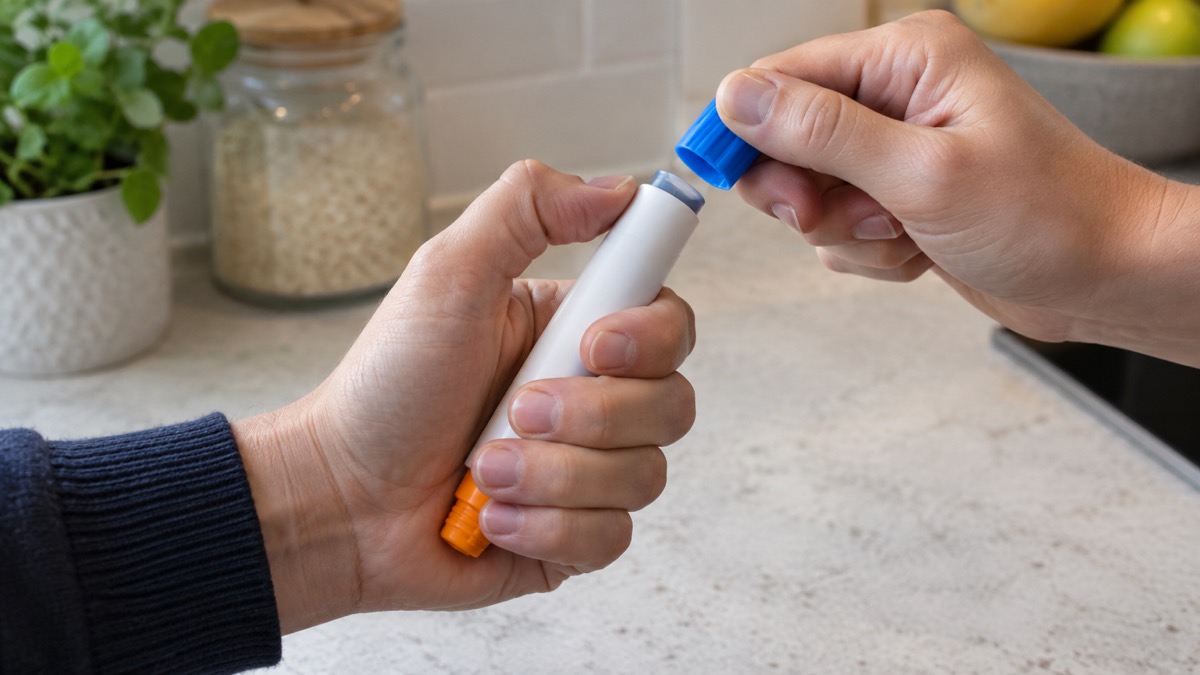
The technique is the same whichever auto-injector you hold, and it is worth rehearsing with the trainer device that comes with a prescription so that your hands know it before you need it. The steps are these2:
- Hold the injector in your fist.
- Pull off the safety cap.
- Push the tip firmly against the outer thigh until it clicks.
- Hold it in place for 3 seconds, or as instructed.
- Remove it and massage the site for 10 seconds.
If the casualty cannot use it themselves and you have been trained, you can give the injection for them9. The outer thigh is used because it is a large muscle that takes up adrenaline quickly, and it can be given through clothing if that is what the moment allows.
The device can fail or be mishandled, and the medicines regulator has said the risk of device mishandling or device failure exists with all adrenaline auto-injectors10. That is not a reason to hesitate, but it is a reason to check your device is in date, to carry two, and to know how yours works before the day you need it. If a pen does not click or seems not to have worked, treat it as a failed dose: give the second device and tell the ambulance crew what happened.
Call 999 and say "anaphylaxis"
The injection is not the end of the response. The medicines regulator's safety notice is explicit: call an ambulance on 999 immediately after giving the injection and say this is an emergency case of anaphylaxis3. Saying the word matters, because it tells the call handler what kind of emergency they are dealing with and what you need.
Do not drive yourself or the person to hospital if an ambulance is coming, and do not wait to see whether the injection works before you pick up the phone. The call and the injection happen together, in that order of priority: inject, then call, or have someone else call while you inject.
While you wait, stay with the person, keep them lying down, and be ready to give the second dose. If they become unresponsive and are not breathing normally, start CPR: place the heel of your hand on the breastbone in the centre of the chest, put the other hand on top, and pump hard and fast, at least twice per second and two inches deep, letting the chest come all the way up between pumps11. Our guide to CPR walks through the full sequence, and a defibrillator should be sent for if one is nearby.
If the person is struggling to breathe but remains conscious, do not leave them alone to fetch help. Send someone else, or put the phone on speaker.
Second dose: after five minutes if there is no improvement
One injection is not always enough. Repeated doses of adrenaline can be given every 5 minutes if the person shows no signs of improvement or their symptoms return2. The regulator's advice matches: administer a second auto-injector 5 minutes after the initial dose if no improvement is seen, or if the patient deteriorates after an initial improvement3.
This is why the standard advice is to carry two in-date auto-injectors at all times4. A single pen leaves you with nothing if the first dose is not enough or the reaction rebounds on the way to hospital. Keep both with the person, not in a cupboard at home, and check the expiry dates regularly.
| Situation after the first dose | What to do |
|---|---|
| No improvement after 5 minutes | Give the second auto-injector2 |
| Symptoms improve, then return | Give the second auto-injector2 |
| Clear improvement, symptoms stay away | Stay lying down, keep the ambulance coming, go to hospital4 |
Do not rely on someone else picking up your prescription or there being a spare device available where you are going6. If you are out with a child who has a prescription, the pens travel with the child.
Lie flat with legs raised, and do not stand or walk
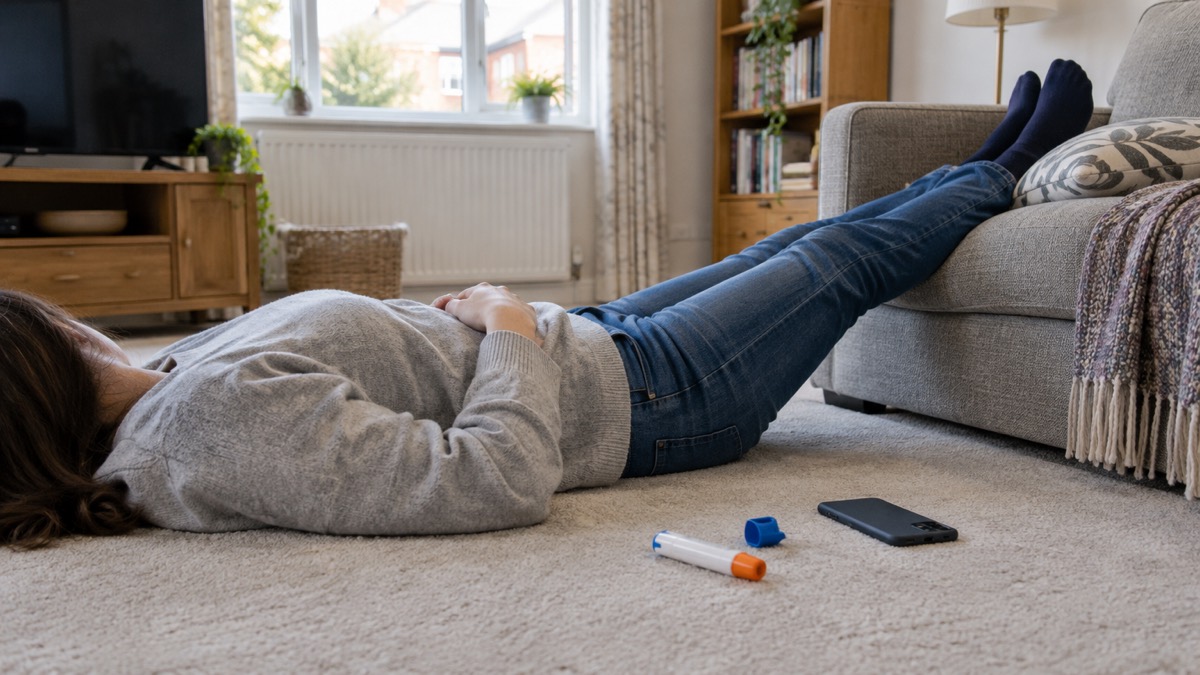
Position matters as much as the injection. Official patient advice is to lie flat with the legs raised, and not to stand or walk at any time, staying lying down even if you feel better4. Standing up can drop the blood pressure further when the circulation is already struggling.
If lying flat is not possible, sit with the head lowered between the knees, which is the same principle used for someone about to faint12. Do not rub the limbs to warm or rouse the person; that is the advice given for hypothermia and the same gentle handling applies here13. Keep them still and calm until the crew arrives.
If the person vomits, turn them onto their side to keep the airway clear, then return them to lying flat with legs raised once they are done. If they become unresponsive, check their breathing and be ready to start CPR.
Why you always go to hospital, even if you feel better
The adrenaline can wear off before the reaction does, and a second wave of symptoms is possible. That is why the response does not end when the person says they feel fine. Hospital treatment can include adrenaline given by an injection or drip into a vein, oxygen, and fluids given by a drip into a vein4. Staff can watch for a return of symptoms and act quickly if they come.
Bring any medicines you take with you when you go to hospital14. Tell the crew and the hospital team which auto-injector was used, at what time, and how many doses were given, and hand over the used device if you still have it. If you have an allergy action plan, take it with you.
If you are able to make your own way to hospital, do so, but arriving by ambulance does not mean you will be seen quicker15. For anaphylaxis the ambulance is still the right call, because the crew can treat a deterioration on the way.
Carry two in-date auto-injectors at all times
There are three types of adrenaline auto-injector available in the UK: EpiPen, Emerade and Jext6. They do the same job, and the one you are prescribed is the one to learn. What matters for a household is that the prescription is current, that two devices are in date and with the person, and that everyone who might need to help knows where they are and how they work.
| What to check | Why it matters |
|---|---|
| Two devices, both in date | A second dose may be needed after 5 minutes2 |
| Devices with the person, not at home | Do not rely on one being available where you are6 |
| Trainer device practised | The steps must be automatic under stress2 |
| Allergy action plan to hand | Tells responders and helpers what to do5 |
If you hold an Emerade pen, check it against the recalls. In November 2019 a Class 2 medicines recall was issued for all unexpired batches of Emerade 150, 300 and 500 microgram auto-injectors after a component error that can cause some pens to fail to activate and deliver adrenaline10. At that time patients were told their stock was not being recalled and that they would be given updated safety information, because there were insufficient supplies of alternative brands in the UK to replace all the Emerade pens held by patients10.
That changed in May 2023, when the MHRA recalled all batches of Emerade 500 and 300 microgram auto-injectors over the risk of activation failure, telling patients prescribed those strengths to obtain two replacement pens in an alternative brand, EpiPen or Jext, and return their Emerade pens to a pharmacy3. If you still hold an Emerade pen, contact your prescriber or pharmacist and arrange replacements rather than waiting for your next routine review.
For the wider picture on carrying, storing and using any auto-injector, see our guide to adrenaline auto-injectors, and for the written plan that goes with a prescription, allergy and asthma action plans.
Sources (15)
- Anaphylaxis: The Four As | Allergy UK incorporating Anaphylaxis UK, Allergy UK incorporating Anaphylaxis UK
- Anaphylaxis first aid, NHS Inform, 2026-07-24
- Emerade 500 and 300 microgram auto-injectors recall, MHRA, 2023-05-09
- Anaphylaxis, NHS, 2023-06-21
- Adrenaline auto-injectors safety campaign, GOV.UK, 2023-10-17
- Your quick guide to Adrenaline Auto-Injectors, East Suffolk and North Essex NHS Foundation Trust, 2022-02
- Staying safe over the summer, Healthier Together, 2026-10-29
- Basic first aid, Royal Wolverhampton NHS Trust, 2026-10-29
- Learn allergic reaction (anaphylaxis) first aid, British Red Cross
- Class 2 medicines recall: Emerade 150, 300 and 500 microgram solution for injection, GOV.UK, 2019-11-28
- Emergency heart care, London Ambulance Service, 2026-09-30
- Fainting, NHS, 2026-08-17
- Hypothermia, NHS 111 Wales, 2025-05-14
- Sepsis, NHS 111 Wales, 2026-01-12
- Alternatives to 999, South Central Ambulance Service, 2026-10-29
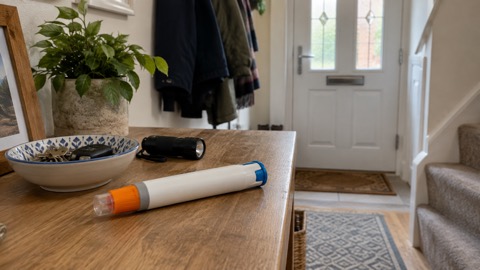 Jext Adrenaline Auto-Injector