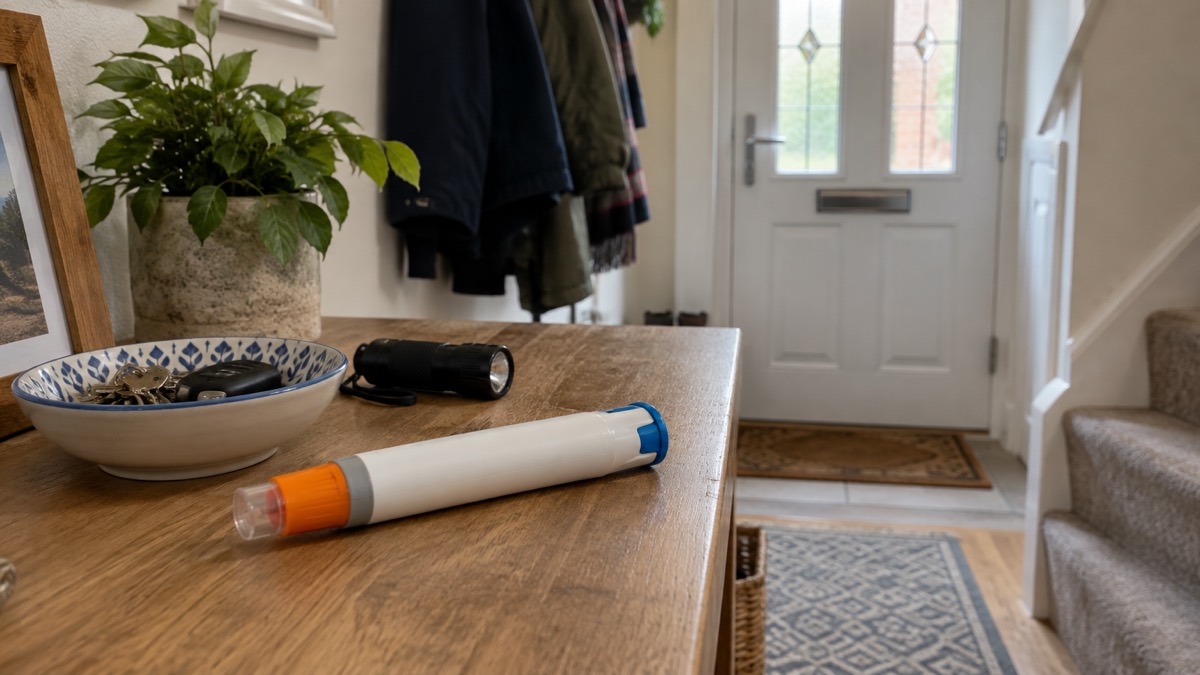
A Jext pen is an adrenaline auto-injector: a licensed medicine that delivers adrenaline through a spring-loaded device when someone is having a severe allergic reaction (anaphylaxis). It is prescribed to people with allergies who are at risk of a severe reaction, and it is one of three types available in the UK, alongside EpiPen and Emerade1. If you carry one, the important thing is to know the signs that mean using it now, how to hold it against the thigh until it clicks, and to call 999 and say anaphylaxis straight away, even if the person seems better3.
Anaphylaxis is a severe allergic reaction that affects the whole body. It may develop within seconds or minutes of contact with a trigger and can be fatal1. That speed is why the pen is carried at all times and why the first response is always the same: use the pen, then call 999. The MHRA advises calling an ambulance on 999 immediately after giving the injection and saying this is an emergency case of anaphylaxis4.
This page covers what a Jext pen is, the signs that mean using it, the steps to use it, what to do while help comes, and how to check your pen is still usable. It also covers the recall history that affects some adrenaline pens in the UK, so you know what to do if you are offered a replacement brand.
What a Jext pen is and who is prescribed one
Adrenaline auto-injectors (AAIs) are licensed medicinal products that deliver adrenaline by means of an auto-injector device6. The Jext brand is made by ALK-ABELLO UK7. It is one of three types of AAI available in the UK, the others being EpiPen and Emerade7. AAIs are prescribed to people with allergies who are at risk of having a severe allergic reaction, known as anaphylaxis7.
Anaphylaxis is more common in females3. It is a serious, life-threatening reaction that usually occurs within a few seconds or minutes of exposure to an allergic substance, involving hives, swelling, a sudden drop in blood pressure and sometimes shock3. Because it can progress so quickly, the pen is carried so that adrenaline can be given before an ambulance arrives.
Prescribed medicines should only be used by the people for whom they have been prescribed8. A Jext pen prescribed for one person is not for sharing with another household member, even if they have a similar allergy. If more than one person in the household has a prescription, each should carry their own pens.
Adrenaline auto-injectors are prescribed by a doctor for those at risk of a severe allergic reaction, based on an individual needs assessment2. The dose on your prescription is the one to follow, and any change is a decision for your prescriber. Children who have been prescribed 150mcg/0.15mg auto-injectors need to go on to the 300mcg/0.3mg dose when they weigh 25kg or over, which is likely to be somewhere between 5 and 10 years old depending on the child's growth9.
Signs of anaphylaxis that mean using the pen now
The most serious symptoms of anaphylaxis are swelling of the throat or tongue, breathing problems such as wheezing or shortness of breath, feeling faint, dizzy or lightheaded, collapse or loss of consciousness, and blue, grey or pale skin, lips or tongue2. Any of these means using the pen and calling 999.
Other symptoms, such as a skin rash that can be itchy, swelling of the face, lips or eyes, or stomach symptoms like abdominal pain, nausea or vomiting, are unlikely to be a sign of anaphylaxis on their own2. They matter as part of the picture, but the decision to use the pen rests on the serious signs.
The campaign page for adrenaline auto-injectors gives a clear list of when to call 999: if lips, mouth, throat or tongue suddenly become swollen; if someone is breathing very fast or struggling to breathe; if the throat feels tight or they are struggling to swallow; if skin, tongue or lips turn blue, grey or pale; if they suddenly become very confused, drowsy or dizzy; if someone faints and cannot be woken up; if a child is limp, floppy or not responding; or if there is a swollen, raised or itchy rash (hives)3.
"immediately dial 999 for medical help and say that you think you are having an anaphylactic ('ana-fill-axis) reaction."
During an anaphylactic reaction, blood vessels widen, causing blood pressure to fall, and air passages narrow, leading to breathing difficulties. The tongue and throat can swell, obstructing the airway, and the oxygen reaching organs can fall2. That is the mechanism behind the signs above, and it is why the response has to be fast.
How to use the pen: hold against the thigh until it clicks
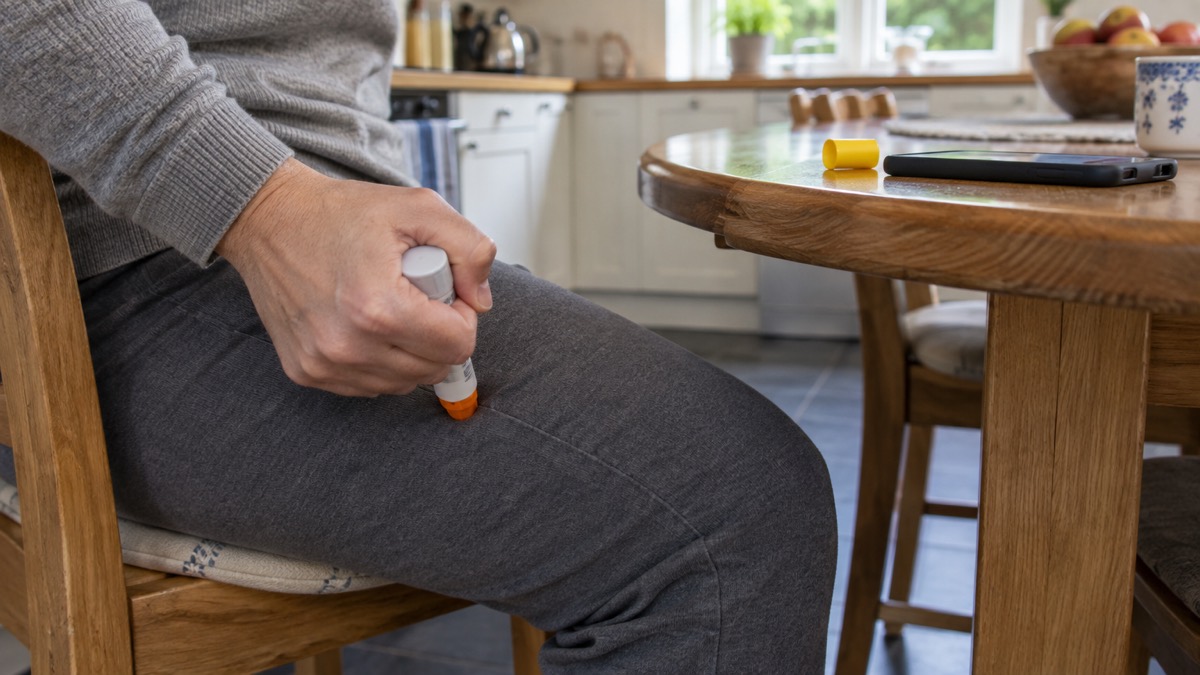
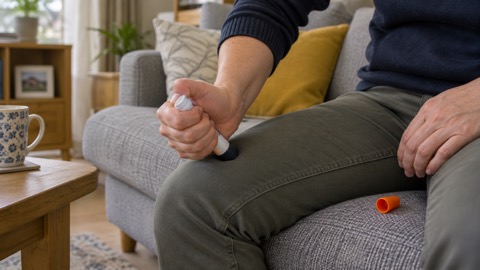
The steps for using an adrenaline auto-injector are set out in official first aid guidance. Hold the pen with your fist, pull off the safety cap, push the tip firmly against the thigh until it clicks, hold it in place for 3 seconds or as instructed, then remove it and massage the site for 10 seconds2. If the casualty cannot use it and you have been trained, you can do it for them2.
The MHRA gives a specific instruction for a pen that does not fire: use a second adrenaline auto-injector immediately if the first pen fails to activate despite pressing firmly against the thigh4. This is why carrying two pens matters, and why the guidance says not to rely on there being one available7.
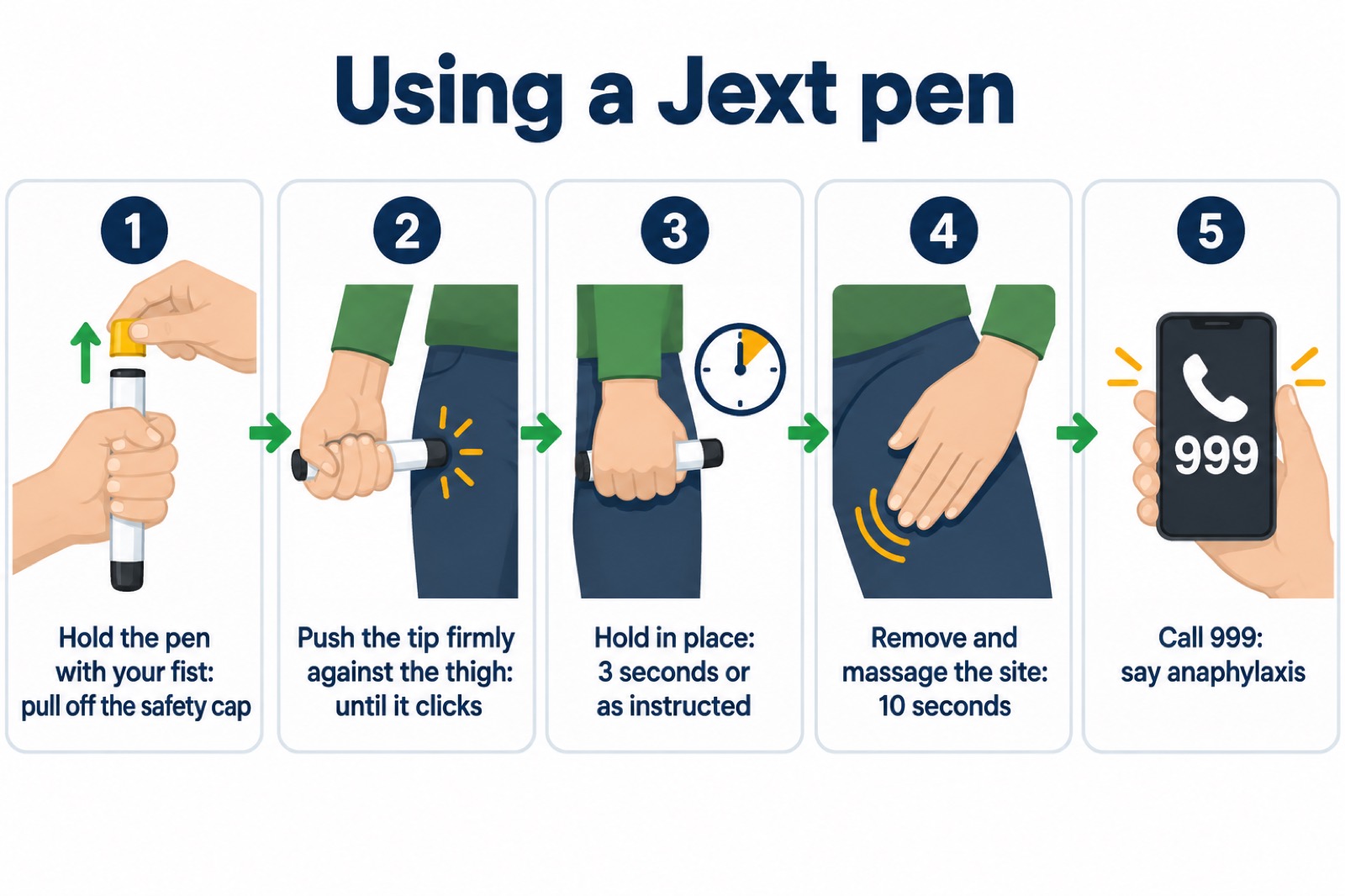
If the first pen fails to activate despite pressing firmly, use a second pen immediately4. Do not spend time trying to diagnose the device. The priority is getting adrenaline in and getting an ambulance on the way.
Call 999 and say anaphylaxis, even if the person seems better
Phone 999 and tell the call handler that you think someone has anaphylaxis2. The MHRA's instruction is to call an ambulance on 999 immediately after giving the injection and say this is an emergency case of anaphylaxis4. The campaign page uses the same wording: immediately dial 999 for medical help and say that you think you are having an anaphylactic reaction3.
Saying the word matters. Ambulance services triage calls, and a clear statement that this is anaphylaxis tells the call handler what kind of emergency they are dealing with. The same principle applies across the UK: NHS Wales lists anaphylaxis among the reasons people call 99910, and the advice to call 999 is consistent in guidance from NHS Inform in Scotland and the campaign page for England2.
Even if the person seems better after the injection, the call still goes ahead. Anaphylaxis can be fatal, and the reaction can return. Do not stand or walk at any time, even if you feel better1. Stay where you are, keep the person still, and wait for the ambulance.
While you wait, stay calm11. Keep the person comfortable and supported, and reassure them that help is on the way12. If they are struggling to breathe, help them sit in the position that makes breathing easier2.
A second dose may be needed after five minutes
Repeated doses of adrenaline can be given every 5 minutes if the person does not show any signs of improvement, or if symptoms return2. This is why two pens are carried, and why the guidance says not to rely on there being one available7.
The five minute interval is a guide for repeating the dose, not a reason to wait before calling 999. The call goes in immediately after the first injection4. The second pen is used if the first has not worked or the symptoms come back, while the ambulance is on its way.
| Situation | What to do |
|---|---|
| First pen given, no improvement | Give a second dose after 5 minutes2 |
| Symptoms return after improving | Give a second dose after 5 minutes2 |
| First pen fails to activate | Use a second pen immediately4 |
| Person seems better | Still call 999 and do not let them stand or walk1 |
If you have given both pens and help has not arrived, tell the call handler what you have given and when. Keep the used pens with you so the crew can see what was administered.
Lying down, legs raised: what to do while help comes
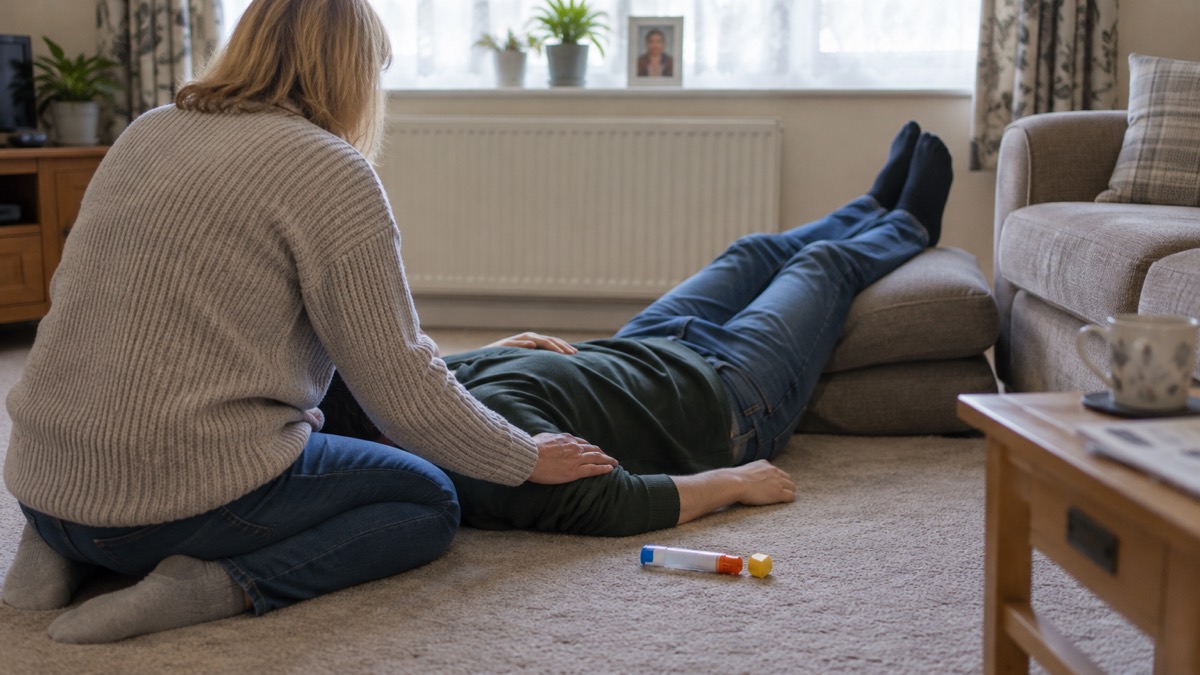
Position matters in anaphylaxis. Help the casualty to sit in the position that makes breathing easier2. If they become pale with a weak pulse, lie them down and raise their legs to treat them for shock2. This mirrors the general first aid for shock: help the casualty to lie down on a blanket or rug to protect them from the cold, and raise and support their legs above the level of their heart to improve blood supply to the vital organs13.
If someone is pregnant and needs to lie down, lean them towards their left side and place a cushion or rolled clothing under the right hip to keep it elevated2.
While you wait, keep the person warm and reassured. If they stop breathing, start CPR: place the heel of your hand on the breastbone, in the centre of the chest, right between the nipples, with the other hand on top14. If there is a defibrillator nearby, it can be used; defibrillators are safe to use on children, and paediatric pads or programmes are recommended for children between 1 and 8 years old, with an unmodified adult device used if no such system is in place15.
The general advice for when the ambulance is coming applies here too: stay calm11. Have the person's medicines, allergy information and used pens ready to show the crew.
Checking your pen: clear, colourless liquid
Check your pen before you need it. The liquid inside should be clear and colourless5. If it is discoloured or cloudy, do not use it; speak to your pharmacist or prescriber about a replacement.
Store and carry your pens as instructed by your pharmacy or medical professional8. Keep them with you rather than relying on someone else to bring them7. Check the expiry date regularly and replace pens before they expire.
The recall history matters for anyone holding an older prescription. A Class 2 medicines recall was issued for all unexpired batches of Emerade 150, 300 and 500 microgram autoinjectors after a component error that can cause some pens to fail to activate and deliver adrenaline16. At the time, there were insufficient supplies of alternative brands in the UK to replace all the Emerade pens held by patients, and patients were advised to continue using their pens as instructed until expiry, then be prescribed a different brand16. Prescribers were advised to prescribe another brand until the error was corrected and to ensure training was provided for the alternative brands16.
The MHRA's 2023 notice confirmed that the alternative pen would be either EpiPen or Jext, both of which are safe and effective in the treatment of anaphylaxis4. If you hold a Jext pen, the recall does not change how you use it. If you are switching from another brand, ask for training on the new device.
Where to get help and what happens next
Before you leave hospital after an anaphylactic reaction, you should be given two adrenaline auto-injectors, or a prescription for them, to keep in case you have another reaction1. Hospital treatment can include adrenaline given by injection or drip in your vein, oxygen, and fluids given by a drip in your vein1. Make sure you leave with your replacement pens and that you know how to use the device you have been given.
If you need advice about your prescription, speak to your GP, allergy clinic or pharmacist. Prescribed medicines should only be used by the people for whom they have been prescribed8. If you have questions about symptoms after a reaction, NHS 111 can advise; in Wales, NHS 111 Wales provides the same service17.
For more on the wider subject, see Adrenaline Auto-Injectors: Carrying, Using and Storing Them and What to Do if You Suspect Anaphylaxis. If you are building a household first aid kit, the First Aid at Home: A Household Guide sets out what to keep ready, and Allergy and Asthma Action Plans: What They Are and Who Gets One explains the written plans that sit alongside a prescribed pen.
Sources (17)
- Anaphylaxis, NHS, 2023-06-21
- Anaphylaxis first aid, NHS Inform, 2026-07-24
- Adrenaline Auto-Injectors safety campaign, GOV.UK, 2023-10-17
- MHRA recall of Emerade 500 and 300 microgram auto-injectors, MHRA, 2023-05-09
- Adrenaline Auto-Injector Expiry Dates - Allergy UK incorporating Anaphylaxis UK, Anaphylaxis UK (Allergy UK incorporating Anaphylaxis UK)
- Adrenaline auto-injectors (AAIs) safety campaign, GOV.UK, 2023-04-24
- Your quick guide to Adrenaline Auto-Injectors, East Suffolk and North Essex NHS Foundation Trust, 2022-02
- Chemical safety in the home, nidirect, 2026-04-14
- Care and medication - Allergy UK incorporating Anaphylaxis UK, Anaphylaxis UK (Allergy UK incorporating Anaphylaxis UK)
- Some of the reasons people call 999, Welsh Ambulance Service, undated
- What to do when the ambulance is coming, South Western Ambulance Service, 2026-10-29
- Stroke first aid, NHS Inform, 2026-07-24
- Shock first aid, NHS Inform, 2026-07-24
- How to do CPR, North West Ambulance Service, 2026-09-30
- PAD information pack, South Central Ambulance Service, 2026-08
- Class 2 medicines recall: Emerade 150, 300 and 500 microgram solution for injection, GOV.UK, 2019-11-28
- Sepsis, NHS 111 Wales, undated
 EpiPen Adrenaline Auto-Injector