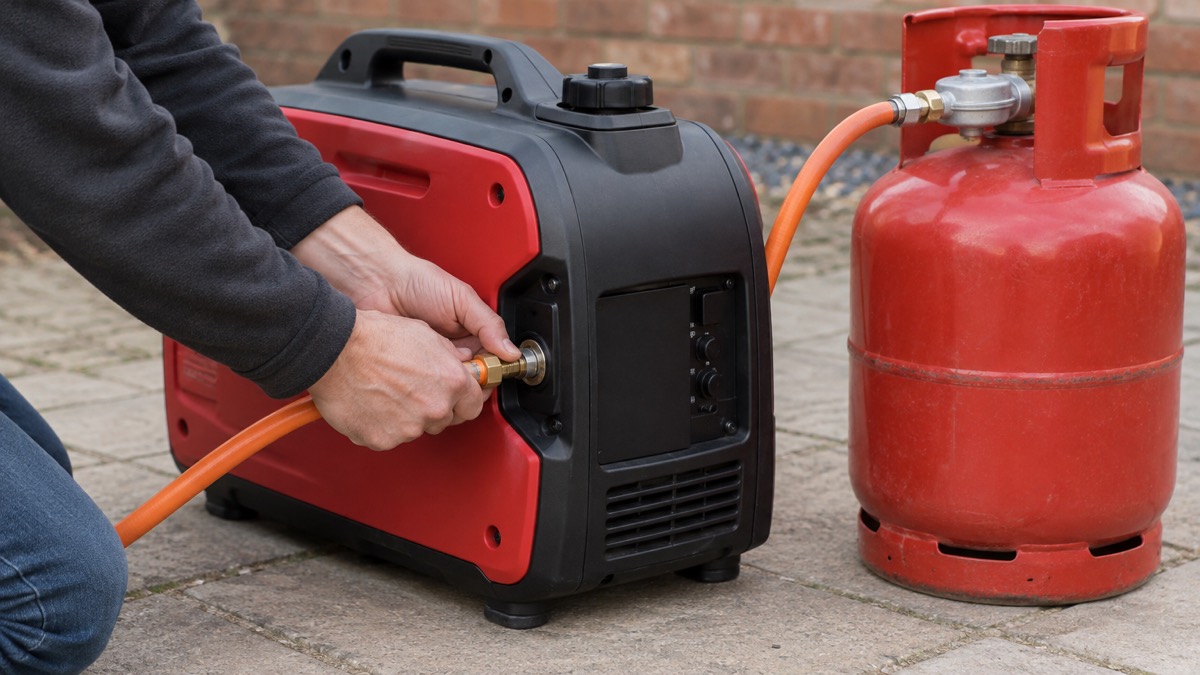
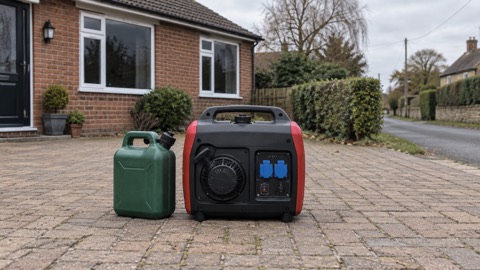
The EcoFlow Smart Generator (Dual Fuel) is a small inverter generator that runs on unleaded petrol or LPG and is designed above all to charge EcoFlow's larger power stations. On petrol it is rated at 1800W, with a peak of 1900W; on LPG it is rated at 1600W, with a peak of 1700W1. A full 4 litre petrol tank gives 3.5 hours of continuous running and about 5.4kWh of energy, while LPG gives up to 12.5 hours of runtime and, measured with a 9.07kg cylinder, around 20kWh2.
What makes it different from an ordinary generator is the connection to a battery. When paired with a DELTA Pro, DELTA Max or Power Kits, it starts itself once the battery falls to a level you choose, and shuts the engine down again once the battery is full, which avoids wasting fuel, emissions and noise1. It also has a carbon monoxide detector that shuts the unit down if levels get too high, along with oil, temperature and overload protections2.
It is not a whole-house solution and it is not a substitute for getting the safety basics right. It weighs 30.5kg, so it stays put once sited, and it must never be run indoors. This page sets out what it can do, what it needs, and how to use and store it safely.
What the Smart Generator (Dual Fuel) is and what it suits
This is an inverter generator, meaning the engine drives an alternator whose output is converted electronically to a steady 230V, 50Hz supply suitable for sensitive electronics2. It is a single cylinder, four-stroke, forced-air cooled engine of 79.7 CC2. In practical terms it is a compact unit you wheel or carry into position outdoors, start with a button, and leave to charge a battery rather than to run the house.
Its natural home is a household that already owns, or plans to own, a large EcoFlow power station. The generator is the refuelling stage of that system: the battery carries the house through the first hours of an outage quietly, and the generator tops the battery back up when it runs low. EcoFlow describes the Smart Generator as an emergency option that integrates with the DELTA Max3.
The dual-fuel design matters for a UK household because it gives you two ways to keep it running. Petrol is easy to buy but awkward to store in quantity and goes stale. LPG comes in cylinders that keep indefinitely and can be swapped at many forecourts and suppliers. The generator has a built-in pressure regulator and an LPG inlet you plug into without tools; once connected it switches between fuels automatically, so you can start it on the button within seconds1. If you are weighing the two, our guide to LPG or petrol for emergencies sets out the trade-offs, and LPG cylinders and regulators covers the cylinder side.
Output, run time and what it can actually power
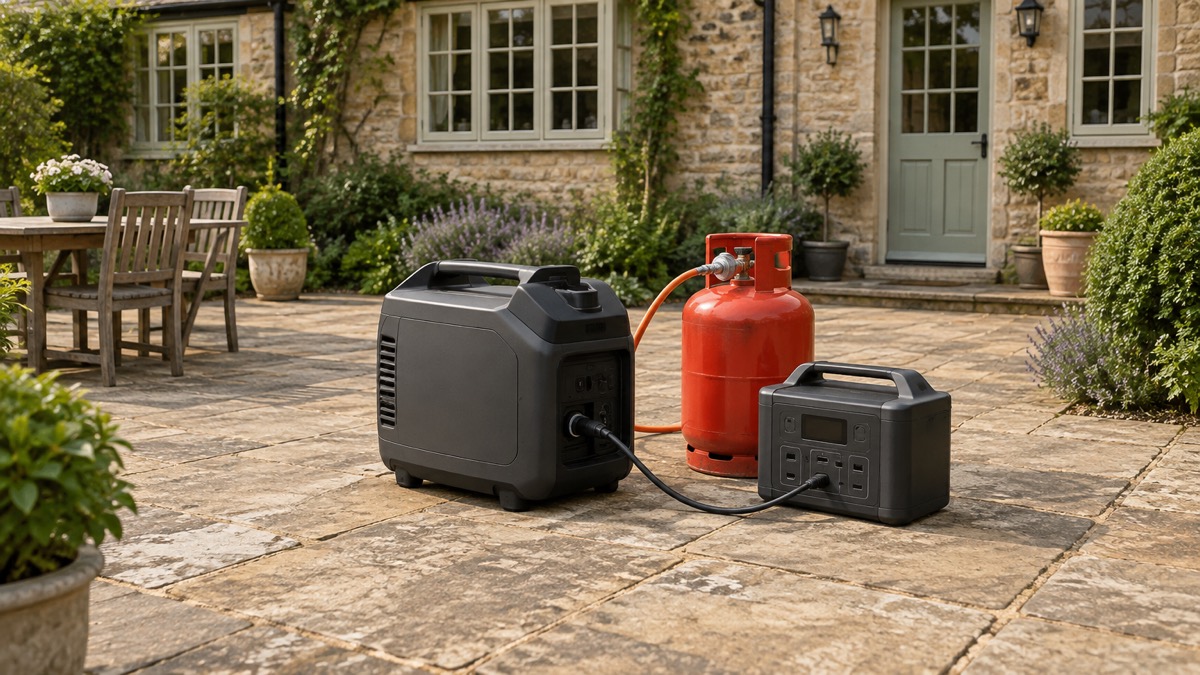
The headline figures are simple: 1800W rated on petrol and 1600W rated on LPG, with peaks of 1900W and 1700W respectively1. Those are modest outputs by generator standards. They will run a fridge, a freezer, lights, a router, phone chargers and a television, but not an electric shower, an immersion heater or an electric cooker. If you are working out what your own appliances draw, Watts, watt-hours and surge explained walks through the arithmetic, and what size generator you need helps you match a machine to a load.
Run time depends entirely on the fuel. On petrol, the 4 litre tank gives 3.5 hours of continuous working2. On LPG, EcoFlow states up to 12.5 hours of runtime, and notes that the energy available is not limited to the 20kWh measured with a 9.07kg cylinder: it depends on the size of the cylinder you connect1. A larger cylinder therefore means longer running between changes, which is the main practical reason to favour LPG for a multi-day outage.
| Specification | Petrol | LPG |
|---|---|---|
| Rated power | 1800W (1900W peak)1 | 1600W (1700W peak)1 |
| Fuel capacity | 4.0 litre tank2 | Cylinder dependent; measured with 9.07kg1 |
| Continuous run time | 3.5 hours2 | Up to 12.5 hours2 |
| Energy from a full supply | 5.4kWh1 | About 20kWh on a 9.07kg cylinder1 |
| Combined DC and AC limit | Not stated separately | 1600W total2 |
The generator can charge a power station and run appliances at the same time, outputting up to 1800W1. In LPG mode the combined output of the DC charging lead and the AC socket is capped at 1600W, and the unit prioritises the AC output when demand rises2. That is the figure to watch: if you are charging a battery and running a fridge from the same machine on LPG, the two together must stay under 1600W.
Charging an EcoFlow power station
The generator's main job is to refill a battery, and it does so over a direct DC connection rather than through a mains lead. EcoFlow states that charging the power station directly with DC gives roughly 10% greater efficiency than other generators, and that when charging a DELTA Pro, DELTA Max or Power Kits at full rated power you can save up to 40% on fuel compared with other generators and portable power stations1. The DC output runs at 42 to 58.8V and 32A2.
The charging times are quick for batteries of this size. EcoFlow states that the generator charges a DELTA Max to full in 1.5 hours, or a DELTA Pro in 2.7 hours1. That means a short, targeted run of the engine rather than leaving it chugging all evening, which is better for fuel, noise and your neighbours.
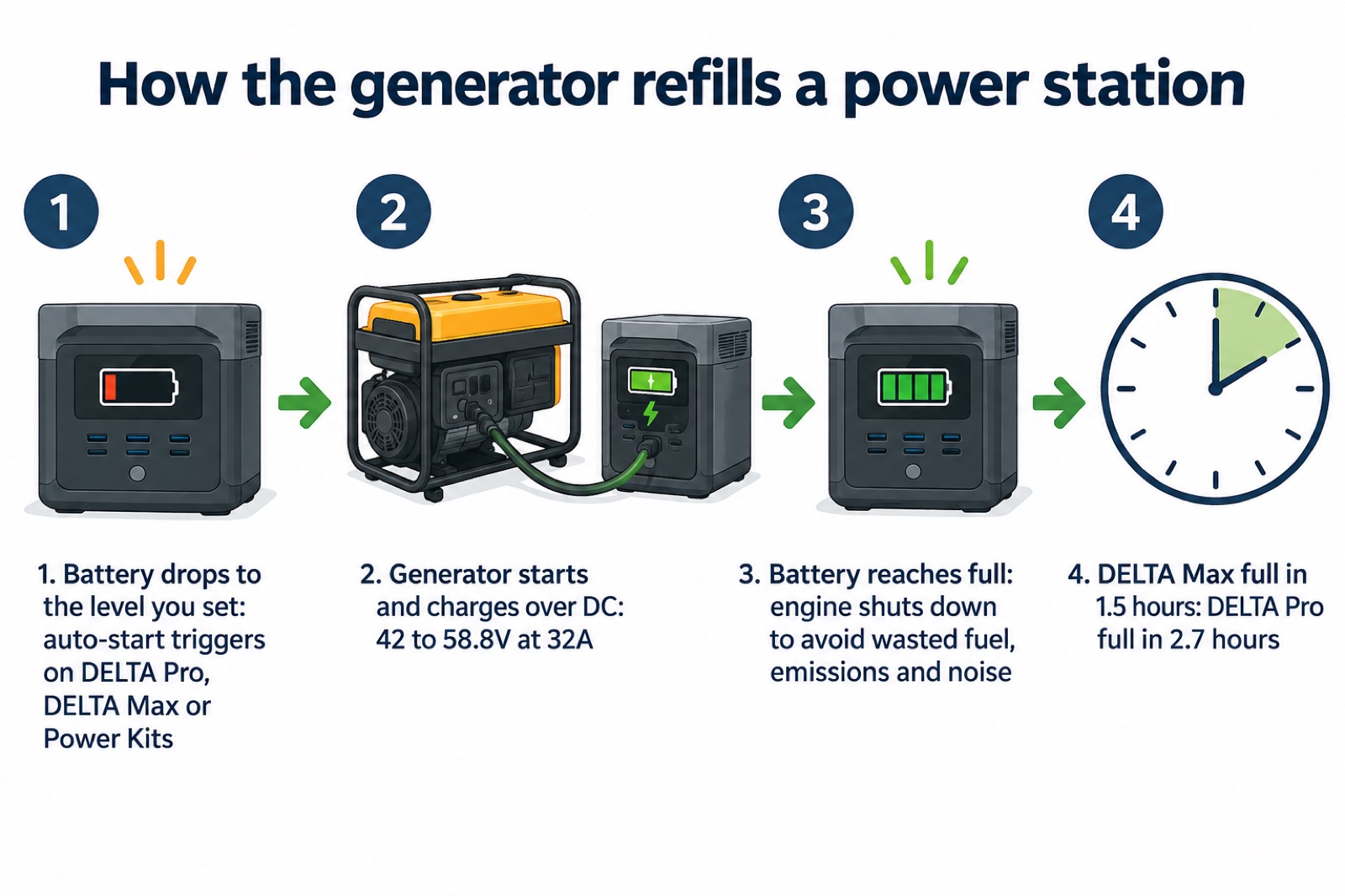
Compatibility is broad but not universal. EcoFlow lists the generator as working with the DELTA 2, DELTA 2 Max, DELTA Pro, DELTA Max and Power Kits1. The automatic start function is narrower: it requires a DELTA Pro, DELTA Max or Power Kits1. If you own a DELTA 2 or DELTA 2 Max you can still charge from the generator, but you will start and stop it yourself. Our pages on the EcoFlow DELTA Pro and the EcoFlow DELTA Max cover those batteries in more detail, and portable power stations explains how the battery side of the system works.
Automatic start when the battery runs low
The feature that sets this generator apart is that it can look after itself. When your DELTA Pro, DELTA Max or Power Kits drops to a predetermined battery level, the Smart Generator starts automatically, and the engine shuts down once the battery is full1. EcoFlow is explicit about why: shutting down when the battery is maxed out avoids extra fuel waste, emissions and noise1.
You set the trigger level in the app. Through Bluetooth or WiFi you can set the battery level for auto-start, control DC output levels, start or stop the unit remotely, switch on Eco mode, and see a full suite of monitoring and alerts including LPG consumption and maintenance reminders1. The same controls are available on the unit's own LCD screen for readings up close1. If you prefer not to use the app, there is an electric start button that EcoFlow says brings the unit to life in 2 seconds, and a manual starter grip as a fallback if the electric start fails1.
This matters most in a long outage. Set the trigger level sensibly, high enough that the battery never runs flat but low enough that the engine is not running constantly, and the system will cycle quietly through the night. The battery carries the load; the generator only intervenes to refill it. That is a very different pattern of use from a conventional generator running continuously, and it is the reason the fuel savings are quoted as they are.
Built-in protections and safe use
The generator carries a set of protections that are worth understanding before you rely on them. It has a carbon monoxide detector, a fuel alert, an engine oil alert, temperature protection and overload avoidance, all visible through indicators on the unit, and all except the fuel alert can trigger an automatic shutdown4. Specifically, it shuts down if there is too much carbon monoxide2, shuts down to prevent the battery or engine overheating and starts automatically to keep the engine warm in cool conditions2, shuts down when low on engine oil to prevent damage4, and shuts down to prevent overload4.
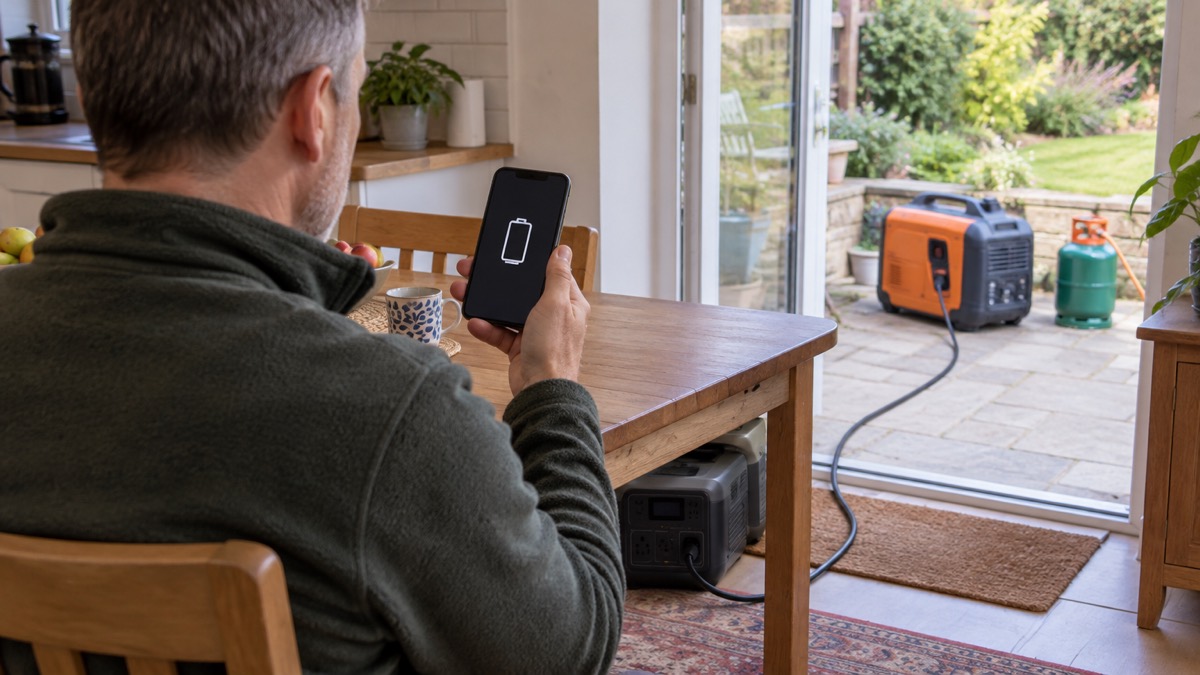
The maker's own instructions are clear that the unit is for outdoor use, and the CO shutdown is there for the case where something has gone wrong, not as a substitute for siting it properly. Our guide to generator safety covers carbon monoxide, fuel and electric shock in full, and carbon monoxide from generators explains the warning signs. If you are unsure whether a location is safe, can you run a generator indoors or in a garage answers that directly.
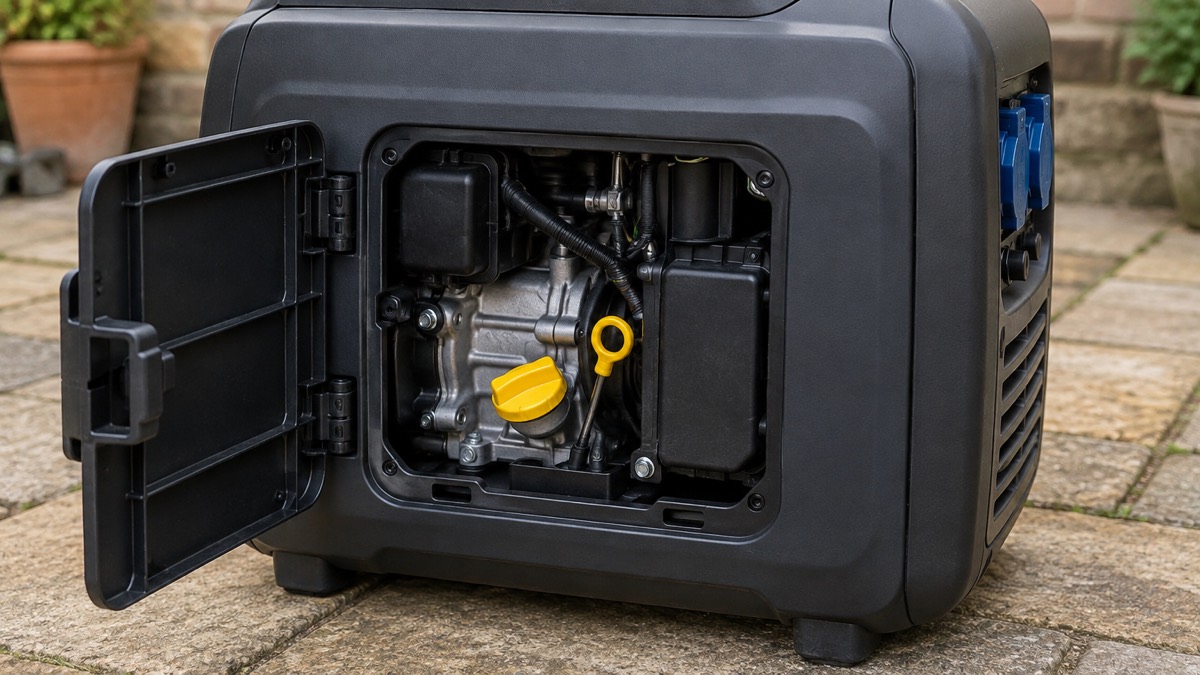
Fuel handling deserves the same care. Store petrol only in an approved container, away from the house and never indoors, and never refuel a hot engine. LPG cylinders should be kept upright and outdoors. The generator has a spacious side access maintenance door for repairs and oil changes2, and a built-in noise muffler1. Noise is quoted at 56 to 67 dB at 7 metres under full load2, which is audible but not intrusive at that distance; our page on generator noise puts that in context for neighbours.
Specifications: size, weight, engine and noise
The unit measures 597 x 300 x 475mm and weighs 30.5kg2. That is heavy enough that you will not want to move it far on your own, and light enough for two people to lift into position. Site it before winter, on firm level ground outdoors, and leave it there.
| Specification | Figure |
|---|---|
| Type | Inverter generator1 |
| Fuel | Unleaded petrol or LPG2 |
| Rated voltage and frequency | 230V, 50Hz2 |
| Engine | Single cylinder, four-stroke, forced-air cooling, overhead valve, 79.7 CC2 |
| Engine oil capacity | 0.38 L2 |
| Fuel tank | 4.0 litre2 |
| Dimensions | 597 x 300 x 475mm2 |
| Weight | 30.5kg2 |
| Noise | 56 to 67 dB at 7m, full load2 |
| DC output | 42 to 58.8V, 32A2 |
EcoFlow's page for the older Smart Generator lists slightly different figures for that model, including a weight of 29.3kg and dimensions of 59.7 x 29.6 x 47.5cm5. Those relate to the single-fuel Smart Generator, not the Dual Fuel unit described here, so use the Dual Fuel figures above when planning space and lifting.
What comes in the box, and what you still need
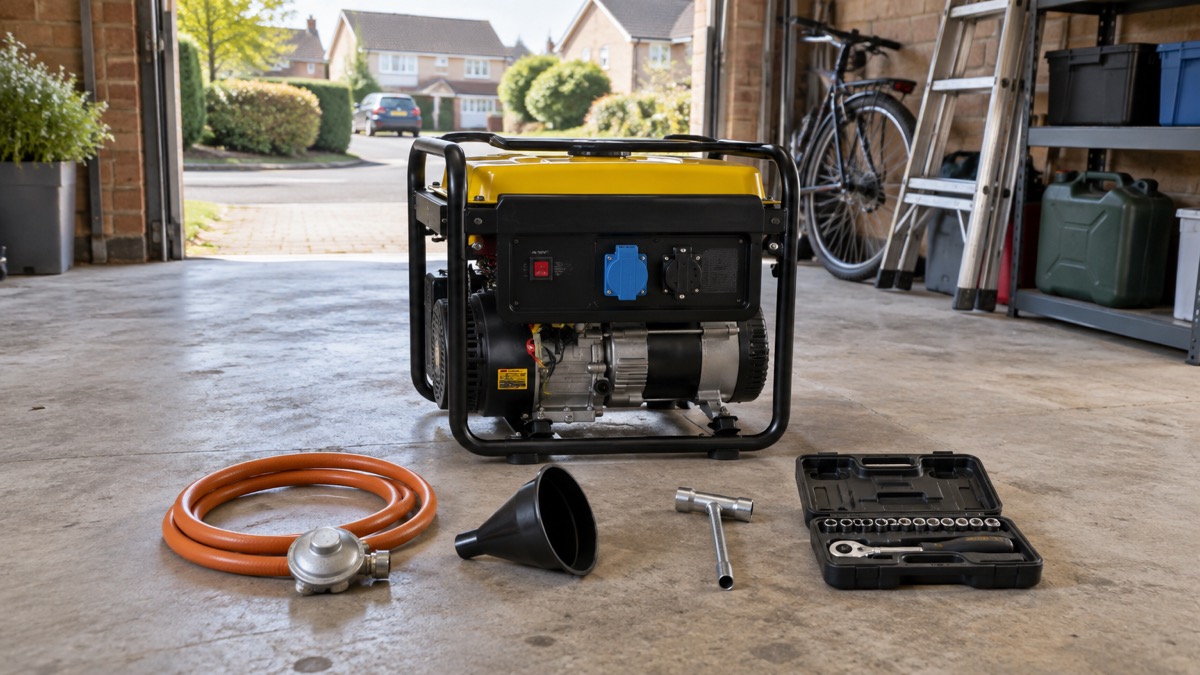
EcoFlow lists the box contents as the Smart Generator (Dual Fuel), a user manual and warranty card, an extra battery connection cable, an oil funnel, a screwdriver, a spark plug socket, a breaker bar, a double-ended spanner and an LPG hose1. The tools are there so you can carry out basic maintenance and fit the LPG hose yourself.
What is not in the box is just as important. You will need engine oil to fill it before first use, petrol or a filled LPG cylinder to run it, and a suitable outdoor location. The oil capacity is 0.38 L2; EcoFlow does not state the oil grade on the product page, so follow the grade in the user manual. The generator will warn you when oil is low and shut down to protect the engine4, but checking the level before each use is the habit that keeps it running when you need it.
Refurbished units, warranty and support
EcoFlow lists a refurbished version of the Dual Fuel generator alongside the new one2. The refurbished listing carries a rating of 4.73 stars from 921 verified reviews3. One reviewer quoted on the page said the unit looked like new, having been bought as a refurbished unit2. That is a customer's account, not a guarantee, so check the condition description and warranty terms on the listing before ordering.
On support, EcoFlow states that the generator is available from its UK store with fast and free shipping, warranty protection and lifetime support1. The exact length and terms of the warranty are set by EcoFlow, so read them on the product page or in the paperwork before you rely on them. Keep your receipt and warranty card somewhere you can find them; the card comes in the box1.
If you are comparing this machine with a battery-only approach, our guide to portable power stations and the comparison of a power station or a petrol generator for a power cut set out when each makes sense. For the wider picture of keeping a household running through an outage, start with backup power at home and using generators and power stations during an outage. EcoFlow's own range is covered on the EcoFlow brand page.
Sources (5)
- EcoFlow Smart Generator (Dual Fuel), EcoFlow, 2026-10-25
- EcoFlow Smart Generator (Dual Fuel) Refurbished, EcoFlow, 2026-10-25
- EcoFlow DELTA Max 100W Rigid Solar Panel, EcoFlow, 2026-10-25
- EcoFlow Smart Generator (Dual Fuel) Refurbished EU Version, EcoFlow, 2026-10-25
- EcoFlow Smart Generator, EcoFlow, 2026-10-25

 Honda EU70iS Generator
 Honda EU32i Generator
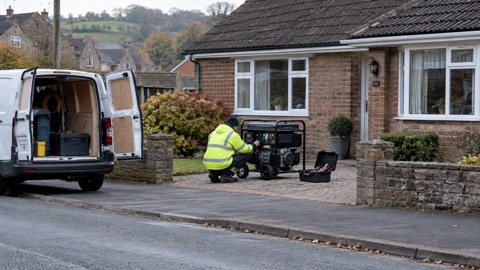 Honda EG3600 Generator
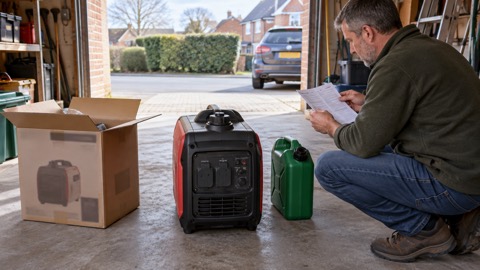 Pramac P3500i Generator
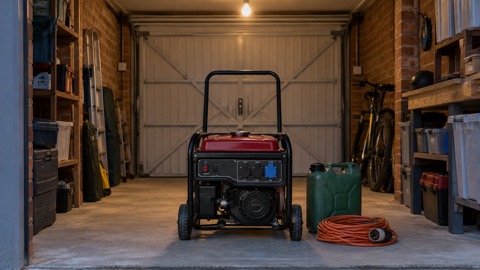 Senci SC6000-II Home Generator
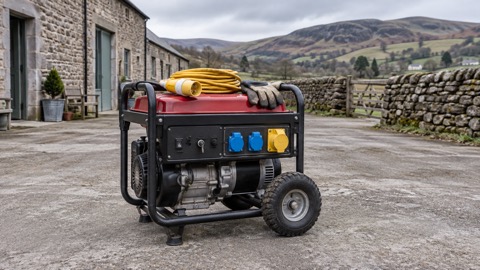 Senci SC10000-II Generator
 Senci SC6600iED Generator
 Gorilla Power GP3800iE
 Gorilla Power GP6500E-DF
 Gorilla Power GP3500i
 Hyundai HY2250Si Generator
 Hyundai HY1000Si Generator