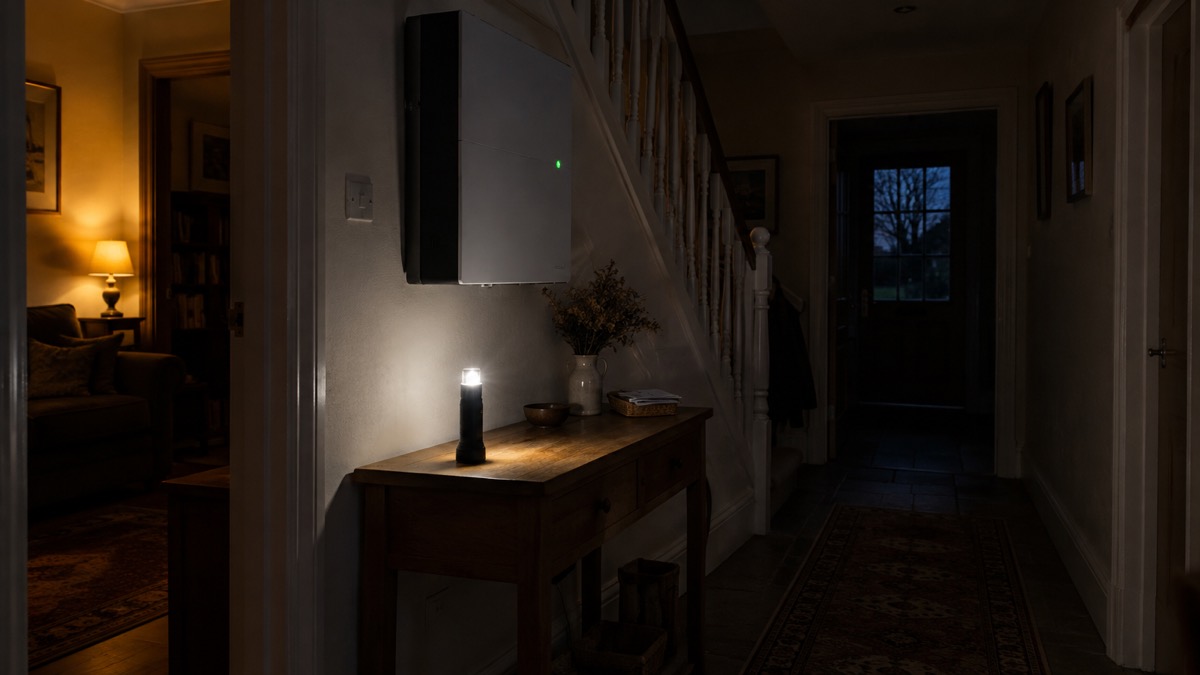
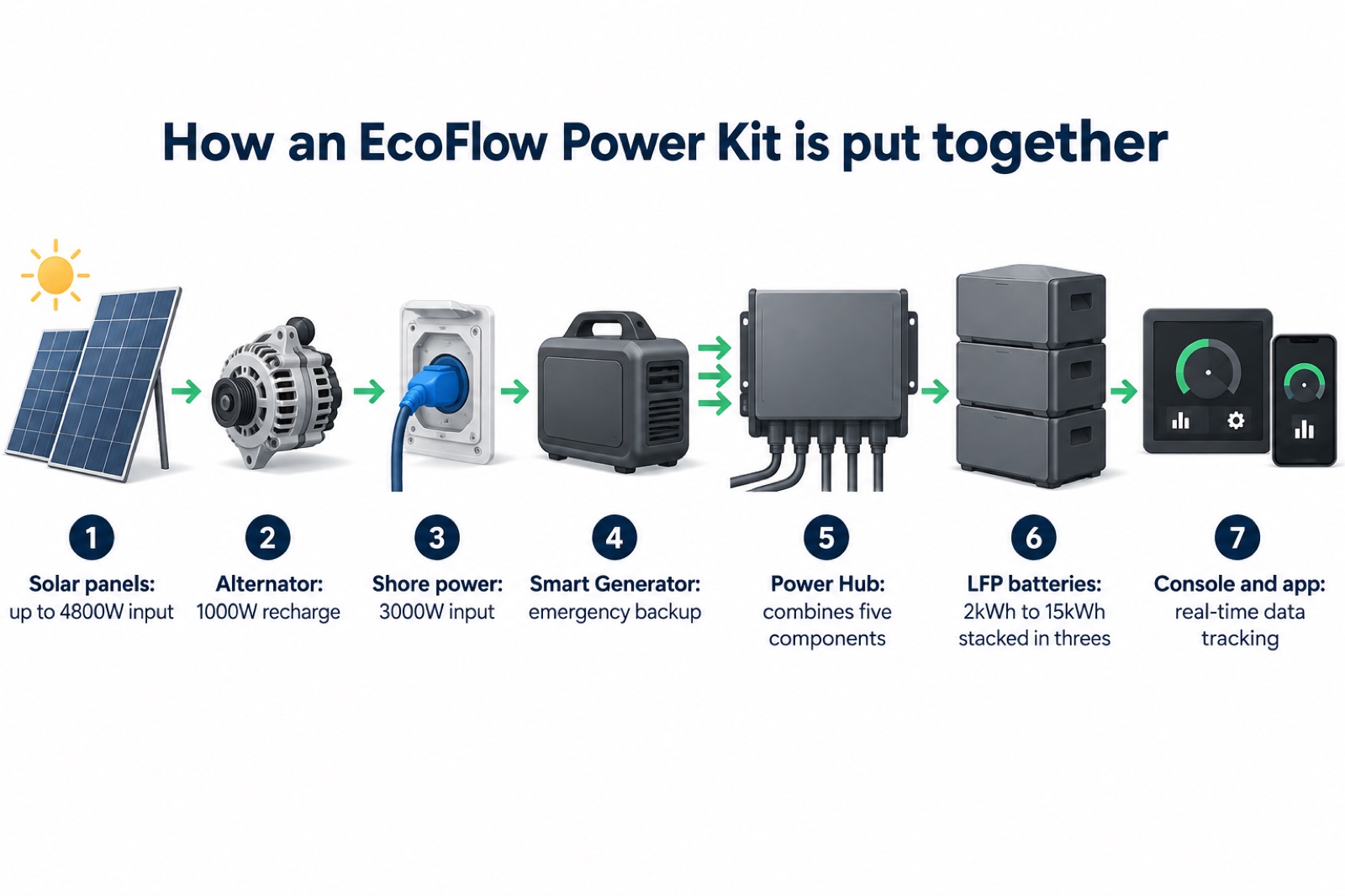
An EcoFlow Power Kit is a modular battery and power system that the maker describes as the world's first integrated, plug-and-play power solution designed especially for tiny homes and RVs1. It is not a plug-in appliance you can carry to the kitchen table. It is a 48V system built around a Power Hub that combines five components, with stacked LFP batteries that take capacity from 2kWh up to 15kWh1. For a household preparing for emergencies, that makes it a candidate for a permanent or semi-permanent backup installation rather than a grab-and-go power station.
The practical case for it is capacity and charging options. The maker lists four ways to charge: solar panels, an alternator, shore power and the Smart Generator, with solar input of up to 4800W and 3000W from shore power2. The case against rushing in is that the kit is not waterproof, must not be permanently placed outside, and in the UK was offered on pre-order with delivery limits for non-mainland regions2. This page sets out what the system does, how to keep it ready for an outage, and the safety rules that decide where it can go.
What an EcoFlow Power Kit is, and who it suits
The maker positions Power Kits as an integrated, plug-and-play power solution designed especially for tiny homes and RVs, built on a safe 48V architecture1. It also recommends them for anyone looking to live the off-grid RV life full-time, describing the modular Power Kits as a more robust solution than a portable power station, using a combination of rigid and flexible solar panels4. That framing matters for a prepping household: the system is designed to be installed and left in place, not unpacked when the lights go out.
The heart of it is the Power Hub, which the maker says combines five components into one unit that deals with all your power needs1. Around it sit the batteries, the Console and the charging inputs. Because the batteries stack in threes, capacity is a choice made at purchase and can be extended later, from a 2kWh starting point up to 15kWh1.
Who does it suit? A household that has somewhere dry, indoors and permanent to site the equipment, and that wants a larger reserve than a portable power station provides. Who does it not suit? A flat with no safe indoor location, a household that needs something it can carry between rooms, or anyone in the Scottish highlands, offshore islands or Northern Ireland who was relying on direct delivery during the pre-order period2. If you are still deciding what to keep running in an outage, work through deciding what to keep running when the mains fails before choosing a system size.
Capacity: 2kWh to 15kWh from stacked LFP batteries
Capacity is the first specification a household should pin down, because it decides how long the system can carry a load. The maker states that its 2kWh and 5kWh batteries securely stack in threes, giving an expandable capacity of up to 15kWh1. Its product catalogue puts the range as capacities from 2 to 15kWh5.
| Configuration | Capacity | What it means for a household |
|---|---|---|
| Single 2kWh battery | 2kWh | A short reserve for a few essentials |
| Single 5kWh battery | 5kWh | A longer reserve for the same essentials |
| Batteries stacked in threes | up to 15kWh | The largest reserve the maker lists for the range |
The batteries use LFP chemistry, and the maker states they are auto-heating, so you can use them in cold climates without affecting their life-span2. That is a claim about the battery, not a promise about the whole installation: the Console, Power Hub and batteries still have to be sited indoors and dry, as the next sections explain.
Two cautions on reading the capacity figure. First, it is the maker's stated capacity for the battery stack, not a guarantee of how long any particular appliance will run; work out your own loads using watts, watt-hours and surge explained. Second, the wider EcoFlow range of portable power stations quotes expandable capacity from 1kWh to 90kWh across different products6, so do not assume a Power Kit figure applies to a portable station or the other way round.
Four ways to charge, including up to 4800W of solar
The maker lists four charging methods for Power Kits: solar panels, an alternator, shore power and the Smart Generator2. Each has a different role in an emergency plan.
- Solar: the maker says a new range of rigid and flexible solar panels gives your van a solar input of up to 4800W2. Solar is the only method that keeps working through a long outage without fuel, but it depends on daylight and on the panels being sited where they get light.
- Shore power: the maker says you can take advantage of shore power for an extra 3000W2. In a domestic setting this is the mains supply, so it is useful for keeping the system topped up before an outage, and useless once the grid goes down.
- Alternator: the maker says you can use your alternator to recharge with 1000W2. This is a vehicle-based top-up, useful if you have a vehicle and a compatible charging cable.
- Smart Generator: the maker says to rely on the Smart Generator for emergency backup2. A generator brings its own fuel and carbon monoxide risks, covered below.
The maker's portable solar panels are described as compatible with a portable power station, Power Kits or even third-party PV systems7. If you are weighing solar against other charging routes, portable solar panels for charging in a power cut sets out the practical limits of UK daylight.
Where the kit must not go: not waterproof, not for permanent outdoor use
This is the section to read before buying. The maker states plainly that the batteries, Power Hub and Console are not waterproof and should not be permanently placed outside2. That rules out the shed, the garage wall, an outdoor cabinet or a lean-to as a permanent home for the core components.
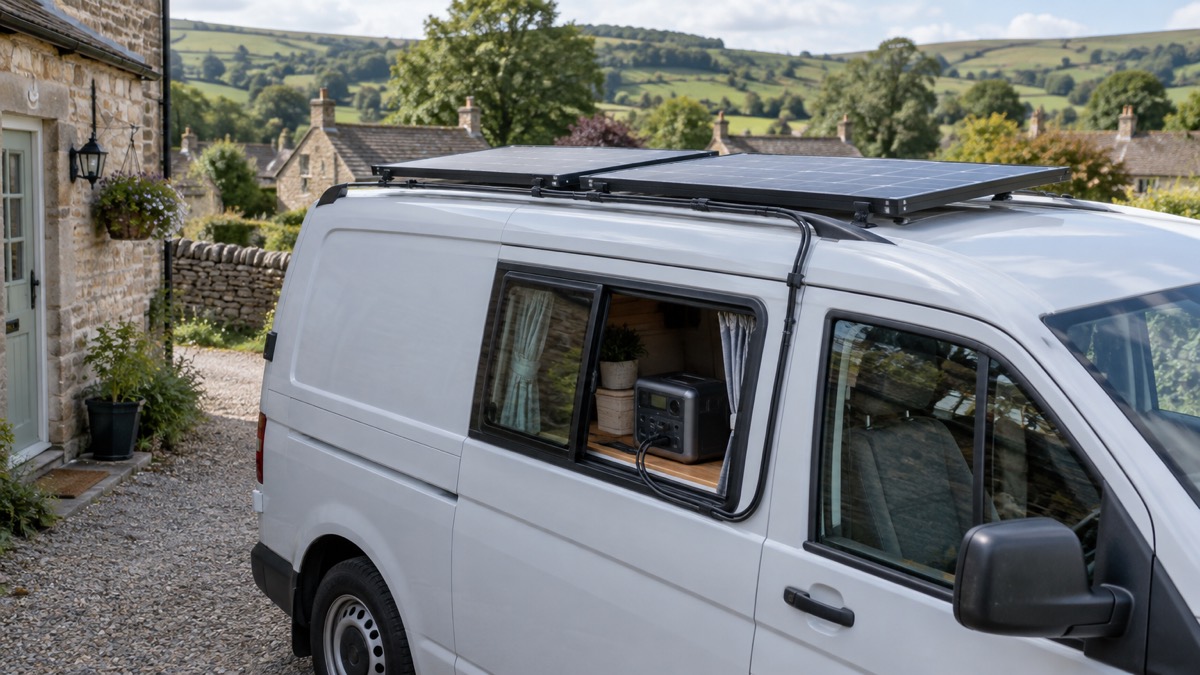
The same logic applies to anything you plug into the system. The fire and rescue service advises against using outdoor appliances such as generators, charcoal grills or camping stoves indoors or in enclosed spaces10. If a Smart Generator is part of your plan, it runs outside, well away from doors and windows, and never in the space where the Power Kit is installed.
There is a second siting question: what the system is asked to run. The fire and rescue service advises avoiding extension leads as a permanent solution and giving high-energy devices such as space heaters or air conditioners their own dedicated circuit11. A Power Kit installation should be planned around fixed circuits, not a daisy chain of leads. For the wider picture on wiring, see connecting a generator or battery to your home's wiring.
Installation, the Console and app monitoring
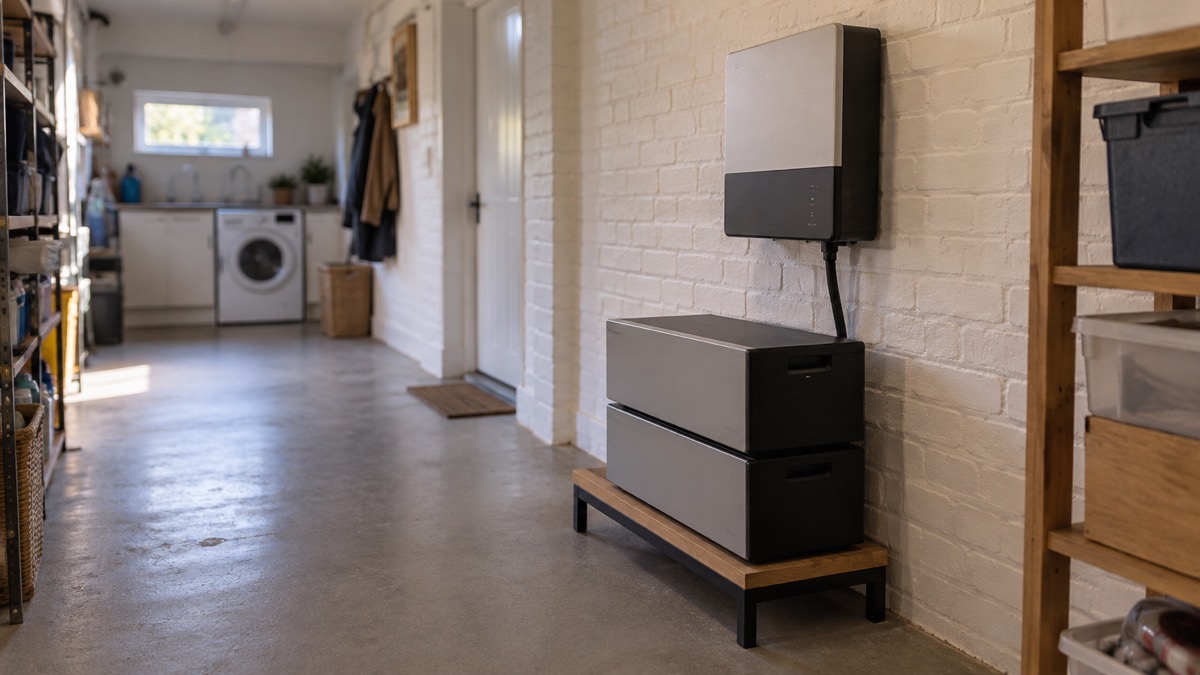
The maker says it has experts on hand to guide you through the installation process or to put you in touch with authorised and reputable installers2. For a household with no electrical background, that route is the sensible one: a 48V system with stacked batteries and multiple charging inputs is an installation job, not a plug-in.
Monitoring runs through the Console and the app. The maker says setting options and real-time data tracking are accessible from the app and the Power Kit Console2. The Console itself supports Wi-Fi and Bluetooth, according to the maker's datasheet5, and takes a 12 v DC power supply5. The maker's app guidance for its power products lists power monitoring, firmware upgrades, device management, theme switching and charging strategy settings, and states that not connecting does not affect normal charging and discharging12. In practice that means a lost Wi-Fi connection costs you remote visibility, not the ability to run the system.
The Console carries a list of certifications from the maker's datasheet: UL, FCC, CE, E-Mark, UKCA, UN38.3, RCM, PSE, TELEC, KCC, ICES and EMC Class A5. UKCA and CE are the markings a UK buyer would expect to see. For what those markings mean and how to check them, see UKCA, CE and battery safety markings explained. The maker also states that its portable power stations carry safety features such as overcharge protection and temperature control6; that is a statement about the portable range, so ask the installer to confirm the protections on a Power Kit installation specifically.
Ordering in the UK: pre-orders and delivery limits
Availability has been unusual for this range, and a household should check the current position before ordering. The maker states that pre-ordering only applied in the United Kingdom, and that shipment services to non-mainland UK regions, such as the Scottish highlands, offshore islands, Northern Ireland and the Republic of Ireland, were not supported2. If you live in one of those areas, confirm delivery before you commit.
The maker also states that kits are sent in several boxes and may not arrive at the same time, and that delivery times are first-come, first-served and subject to change2. Plan for a gap between ordering and a working system. Until every box has arrived and the installation is complete, your household's backup plan should rest on something else, such as a charged power bank and cables, which is the basic item official emergency advice suggests keeping ready13.
On returns, the maker states that after pre-ordering you can request a full refund if the item has not been shipped, and that if you return your order within 30 days of receiving purchased items without any reason, the initial transaction fee and shipping cost will be charged3. Read the terms as they stand at the time you order, because they can change between product pages and dates.
Warranty, returns and support
The warranty structure is straightforward once you separate the components. The maker states that all Power Kits components, excluding cables and accessories, include a 5-year warranty3. Cables and accessories have a 12-month warranty2. Solar panels are split by type: rigid solar panels come with a 5-year warranty and flexible solar panels with a 3-year warranty3.
| Item | Warranty period | Source |
|---|---|---|
| Power Kit components (excluding cables and accessories) | 5 years | Maker3 |
| Rigid solar panels | 5 years | Maker3 |
| Flexible solar panels | 3 years | Maker3 |
| Cables and accessories | 12 months | Maker2 |
Two details decide whether a claim succeeds. The maker states that all warranties begin when you receive the physical goods2, so keep the delivery paperwork for every box, particularly when a kit arrives in several parts at different times. And the route for a claim is the maker's Aftersales Service team at support.eu@ecoflow.com3.
The maker's wider UK store advertises warranty protection and lifetime support across its products15, and its Console page carries a customer rating of 4.73 from 921 reviews18. Treat the rating as a snapshot of buyer opinion rather than a safety or reliability measure. For a household, the warranty matters most as a promise that a fault in a system you are relying on in an emergency will be put right; keep the system within its stated siting and use conditions, because misuse sits outside any warranty.
Keeping it ready for an outage
A backup system is only worth having if it is charged, tested and reachable when the power fails. The maker's own charging routes give you the routine: keep the batteries topped up from shore power while the mains is on, and check the app or Console for the state of charge2. Because the maker says not connecting to the app does not affect normal charging and discharging12, a household that prefers not to use the app can still run the system, but should then check the Console directly.
- Before winter: confirm the batteries are charged, the Console is reporting, and any solar input is clear of shade and debris.
- Before a named storm: charge from the mains while you can, and check that the generator, if you have one, is fuelled and that you know where it will run outside.
- During an outage: run only the circuits you decided on in advance, and keep high-energy devices on their own dedicated circuit rather than on extension leads11.
- After an outage: recharge, check for damage, and log anything that behaved unexpectedly for the installer.
The maker's auto-heating LFP batteries are stated to be usable in cold climates without affecting life-span2, which matters in an unheated but dry indoor position. For the wider question of charging lithium batteries in low temperatures, see can you charge lithium batteries below freezing. And for the general principles of storing a battery system safely between emergencies, how to store a power station when not in use covers the same ground for smaller units.
Safety: what the maker and the fire service require
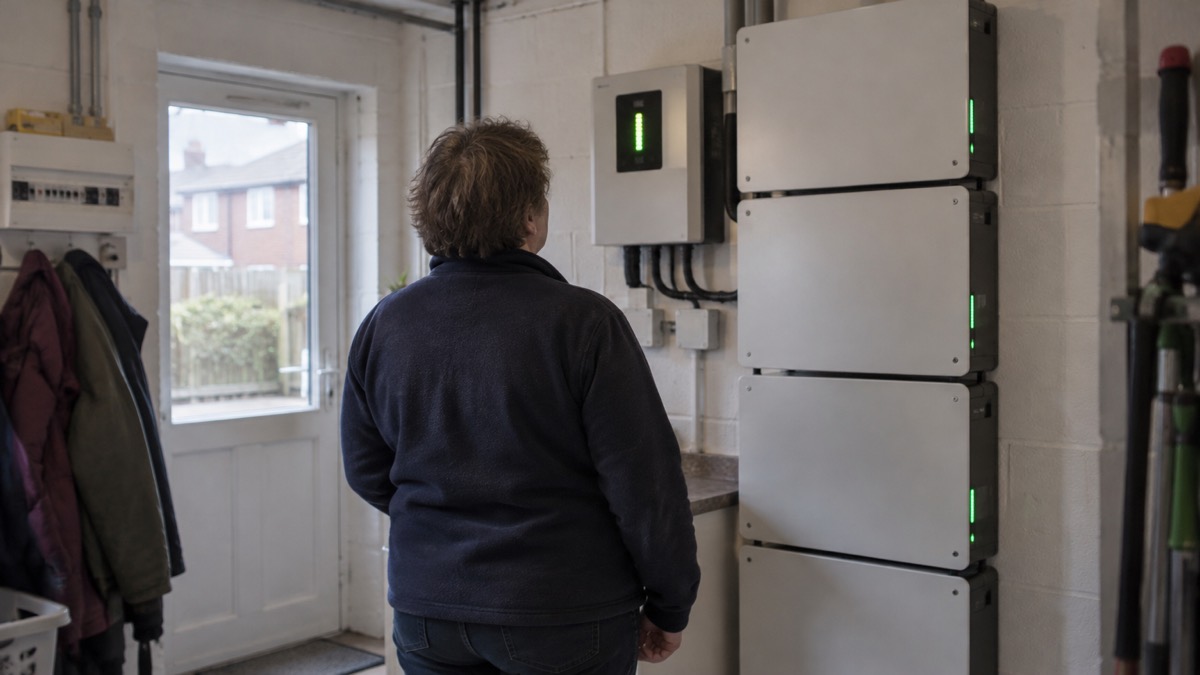
The safety rules for a Power Kit fall into three groups: where the equipment sits, what it is connected to, and what happens if something goes wrong.
On siting, the maker's rule is absolute: batteries, Power Hub and Console are not waterproof and should not be permanently placed outside2. On connections, the fire and rescue service advises against permanent extension leads and asks for dedicated circuits for high-energy devices11. On generators, the fire and rescue service says not to use outdoor appliances such as generators indoors or in enclosed spaces10. The camping safety guidance adds that when fuel-burning devices are used outdoors, the exhaust should not vent into enclosed shelters19.
For the full picture on generator placement and carbon monoxide, read generator safety: carbon monoxide, fuel and electric shock and can you run a generator indoors or in a garage. If you are weighing a generator against battery-only backup, portable power station or petrol generator for a power cut sets out the trade-offs.
Where to get help and what to check before you buy
Before ordering, work through a short checklist. Confirm you have a dry indoor location for the batteries, Power Hub and Console2. Confirm the delivery position for your postcode, given the maker's statement that non-mainland UK regions were not supported during pre-ordering2. Confirm who will install it, using the maker's installation guidance or an authorised installer2. And confirm what you actually need to keep running, using deciding what to keep running when the mains fails.
Households with medical equipment, older residents or disabled family members should ask their supplier about the Priority Services Register; extra help in an emergency explains who qualifies and how to join. For a wider plan, power cuts: a household guide and the power cut backup power checklist cover the steps that apply whatever kit you own.
EcoFlow's own brand page is at EcoFlow, and the maker's support team can be reached at support.eu@ecoflow.com for warranty and aftersales questions3. If you are still comparing system types, portable power stations: what they do and how to choose and home battery storage: does it keep the lights on put a fixed installation like a Power Kit alongside the alternatives.
Sources (19)
- 2kWh Power Kits, EcoFlow, 2022
- 5kWh Power Kits, EcoFlow, 2022
- 4kWh Power Kits, EcoFlow, 2022
- Buy Portable Power Station for Camping - EcoFlow UK, EcoFlow UK
- 2023 Product Catalogue, EcoFlow, 2023
- Portable Power Stations, EcoFlow, 2026
- Portable Solar Panels, EcoFlow, 2026
- Get Smart in the Garden, Electrical Safety First, 2026
- Public Safety Leaflet: Electricity Around the Home, SSEN, 2018
- Safe Home Heating, Warwickshire County Council, 2026
- Electrical Fire Safety, Warwickshire County Council, 2026
- Rapid Pro X Power Bank, EcoFlow, 2026
- Be Prepared for Emergencies, North Devon Council, 2026
- EcoFlow Alternator Charger Extended Fuse Cable (2m) - EcoFlow UK, EcoFlow UK
- EcoFlow UK, EcoFlow, 2026
- EcoFlow Power Trio, EcoFlow, 2026
- Glacier Plug-In Battery, EcoFlow, 2026
- Power Kits Console, EcoFlow, 2026
- Camping Safety, Cheshire Fire and Rescue Service, 2025

 BLUETTI Apex 300 Power Station
 BLUETTI Elite 100 V2
 Anker SOLIX C2000 Gen 2
 Anker SOLIX C1000 Power Station
 EcoFlow DELTA Pro
 BLUETTI Elite 400
 Anker SOLIX C300 Power Station
 EcoFlow DELTA 3
 EcoFlow DELTA 2 and DELTA 2 Max
 EcoFlow DELTA and DELTA Max
 EcoFlow RIVER 3 and RIVER 3 Plus
 EcoFlow RIVER 2 and RIVER 2 Max