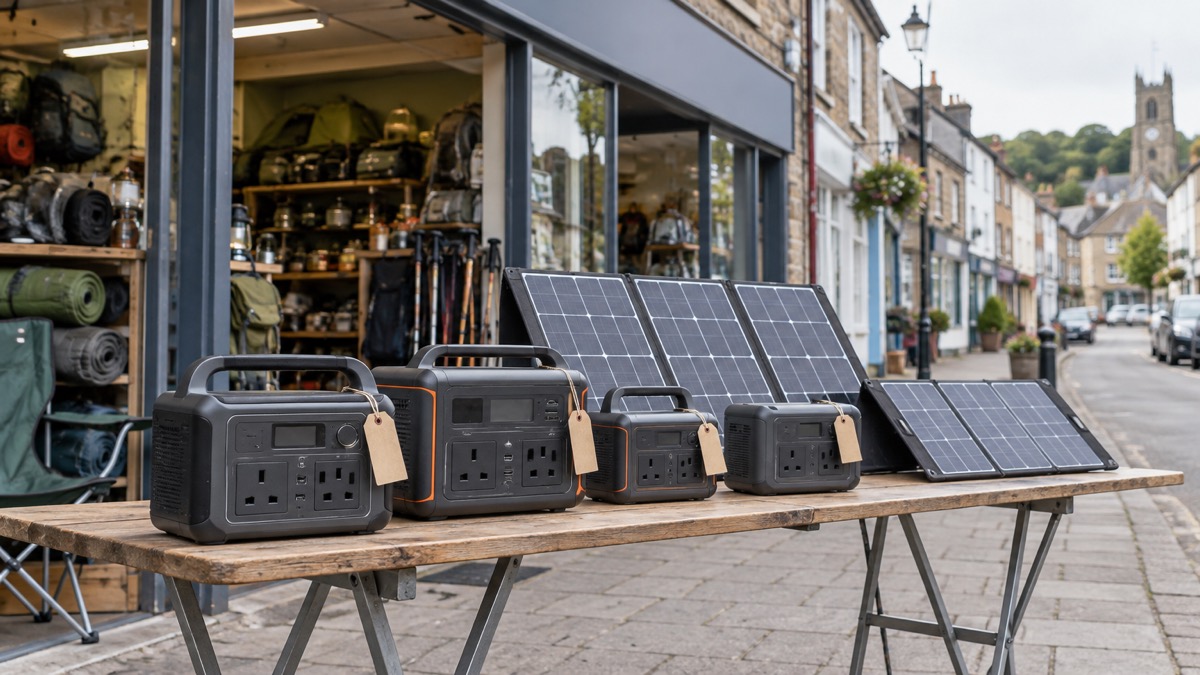
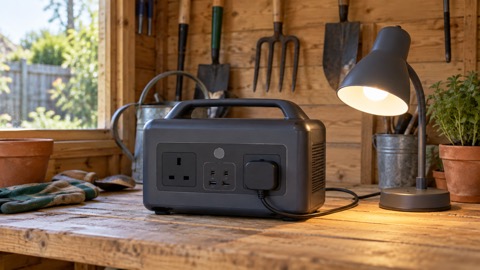
The EcoFlow RIVER is a small portable power station with a 288Wh battery, which the maker describes as "the portable EcoFlow RIVER with a 288Wh capacity"1. For a household getting ready for emergencies, that makes it a device for keeping small essentials going when the mains fails: phones, a router, lights, a laptop, a radio. It is not a whole-home backup and it will not run heating, cooking or a fridge for long.
What it does well is sit charged and ready. It pairs with two 110W solar panels2. The practical question for most people is not whether it works but whether 288Wh covers their own list of essentials, and that is a question about watts and hours rather than about the box.
This page sets out what the RIVER can realistically do in a power cut, how the versions differ, how to charge it before a storm and keep it ready between emergencies, and where it fits alongside the rest of a household plan. For the wider picture, start with Backup Power at Home: A Household Guide.
What the EcoFlow RIVER is, and what it is for
The RIVER sits in EcoFlow's range of portable power stations, which the maker describes as "offering 256 to 858Wh of energy" across the outdoor models6. At 288Wh it is towards the smaller end of that spread. In an emergency it behaves like a large, rechargeable battery with mains sockets on the front: you charge it while the power is on, then draw on it when the power is off.
That framing matters, because it decides what the unit is good for. A power station of this size is a bridge, not a substitute for the grid. It keeps communications and light going, which is what most households miss first in a cut. It does not keep a house warm or cook a meal. If you are still working out what you would want to keep running, Deciding What to Keep Running When the Mains Fails walks through the list before you buy anything.
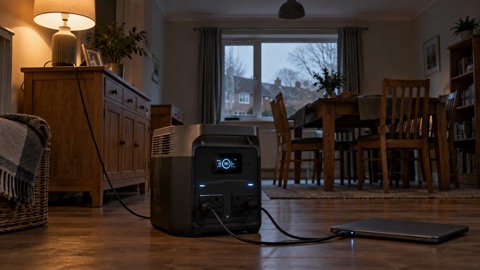
The maker positions the RIVER series as easy to move: "Whether it's the smallest model, RIVER 2, or the largest RIVER 2 Pro, they can all be held with one hand"7. That portability is genuinely useful in an emergency. You can carry it to the room you are using, run a lamp and a phone charger there, and put it away again, rather than wiring anything in. It also means it can go in the car if you have to leave, or move upstairs ahead of flood water.
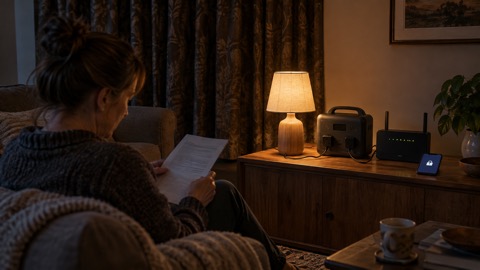
Where it fits a household plan is as the second layer. The first layer is the cheap, no-power-needed kit: torches, batteries, a battery radio, a charged power bank for each phone. The RIVER is what you reach for when the cut runs past a few hours and you want to keep the router alive or run a lamp through the evening. For the smaller end of that ladder, see Power Banks: Keeping Phones Charged in an Emergency.
What 288Wh can do in a power cut
Capacity alone does not tell you how long anything will run. You need the wattage of the device and the hours you want it for, and the arithmetic is set out in Watts, Watt-Hours and Surge Explained. What the maker's figures do tell you is the shape of the job the RIVER is built for.
The RIVER series is quoted with an 800W power output and a 1600W surge, which the maker says gives "more than enough power to use small stoves, lights" and similar loads8. Note that this is the series figure, not a figure specific to the 288Wh RIVER, and treat it as the ceiling of what the range can supply rather than a promise about this unit. The smaller RIVER mini is quoted at 300W total with a 600W surge5, which shows how much the output figure varies across the family.
For emergency planning, the useful way to think about it is by task:
- Phones and a router. The core job. Small draw, long run time, and the thing most households notice first when the power goes.
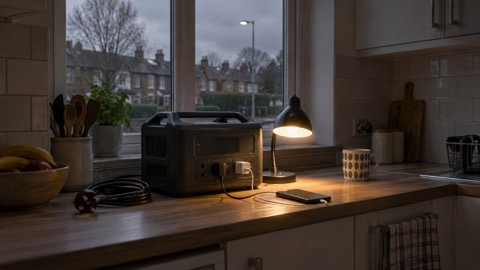
- Lighting. LED lamps and lanterns draw little and make an evening without mains bearable. See Emergency Lighting at Home: Torches, Lanterns and Candles.
- A laptop or tablet. Workable, and useful for information and entertainment during a long outage.
- Anything that heats. Kettles, heaters, irons and hairdryers draw far more than a unit this size is meant to supply. Leave them on the mains.
- A fridge or freezer. Not a realistic job for 288Wh over a long cut. If keeping food cold is your priority, that is a different piece of kit and a different budget.
Charging it: mains, car and solar
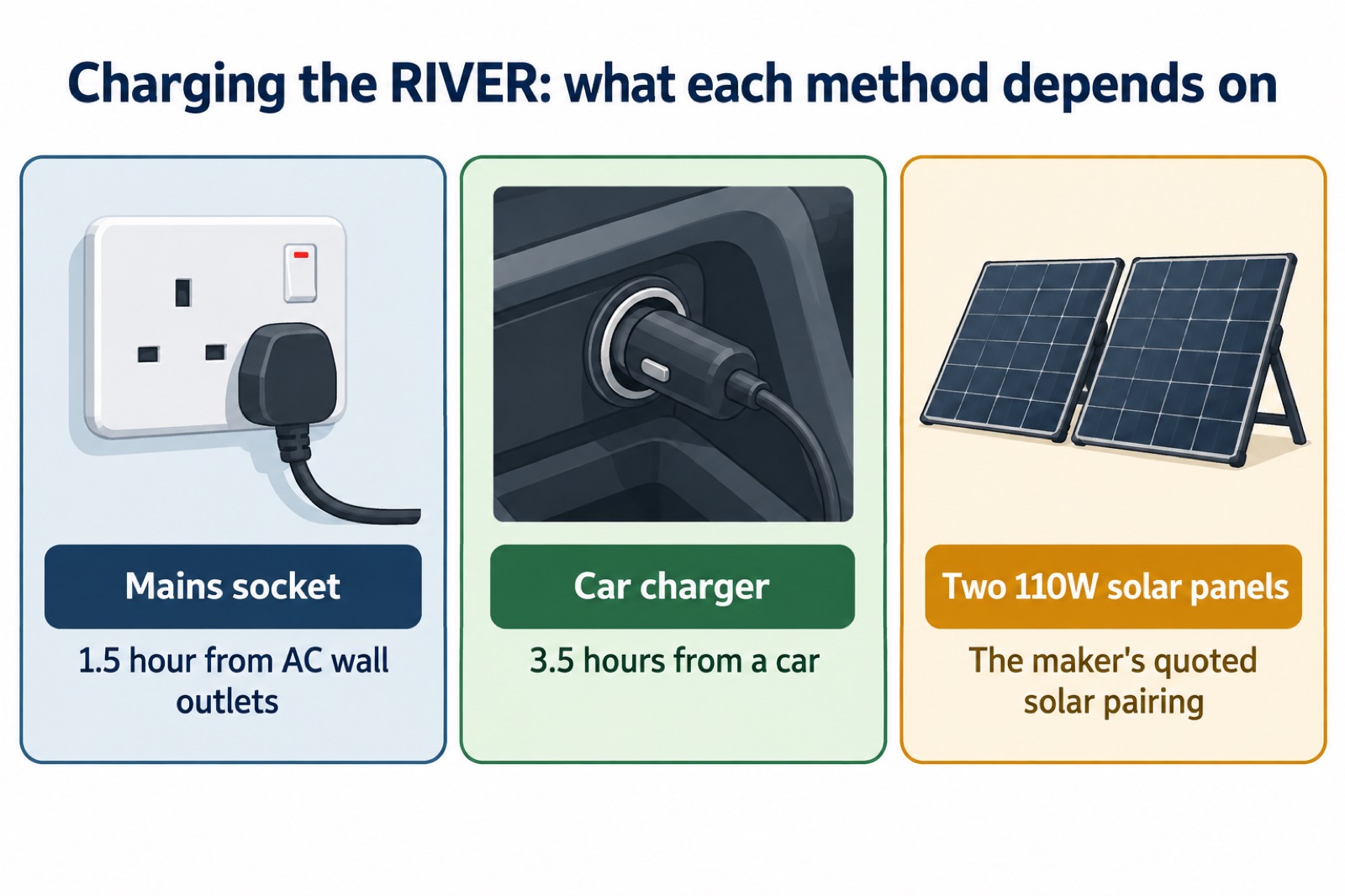
The RIVER series can be charged from an AC wall outlet, a solar panel or a car charger7. Which of those you rely on depends on whether the emergency you are planning for has taken the mains away as well.
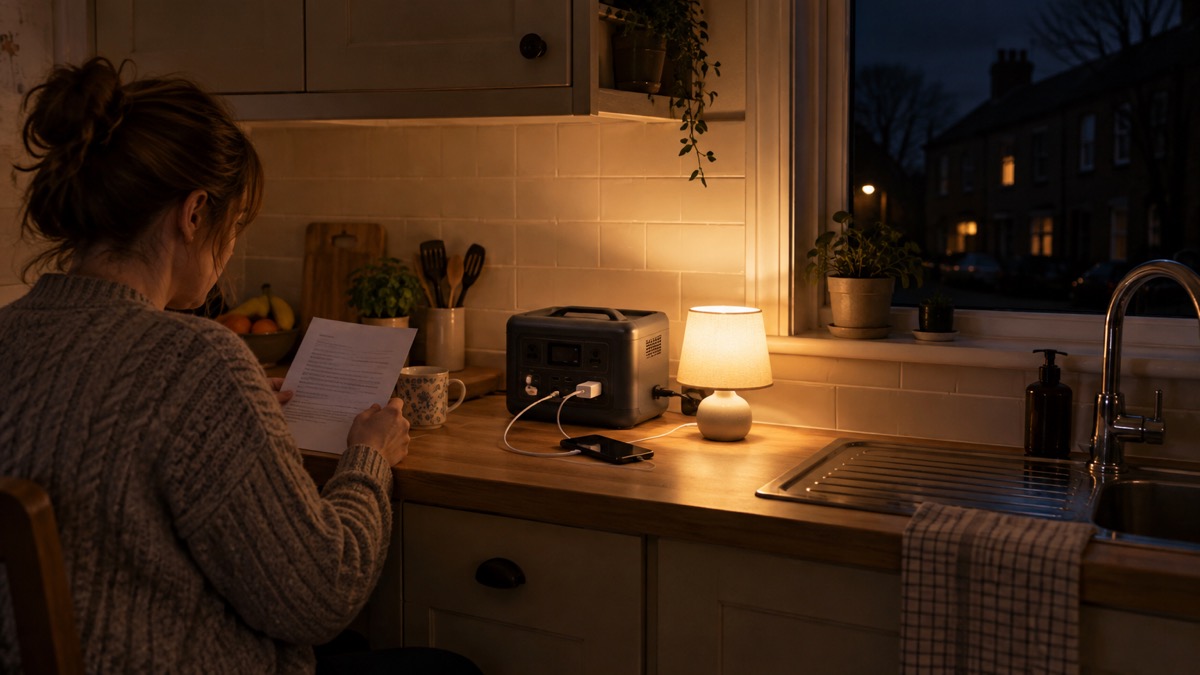
Mains charging is the one to use before an event. Charge to full while the power is on, and top up again if a warning is issued. This is the same advice the Met Office gives for phones: "Charge mobile phone devices" ahead of heavy rain3. UK Power Networks puts it plainly for storms: "Charge up your mobile phone before the weather hits, and a rechargeable mobile 'powerbank' if you have one"4. A power station is on the same footing, only larger.
Car charging is the fallback if the cut is long and you can run the engine safely outdoors. The maker quotes a full charge from a car in 3.5 hours for the RIVER mini5; the RIVER's own car charging time is not given in the same terms, so plan on it being a slow top-up rather than a quick fix. Can You Charge a Power Station from Your Car? covers the practicalities.
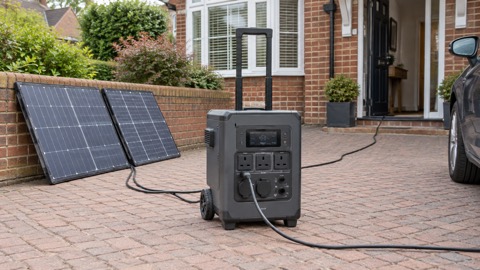
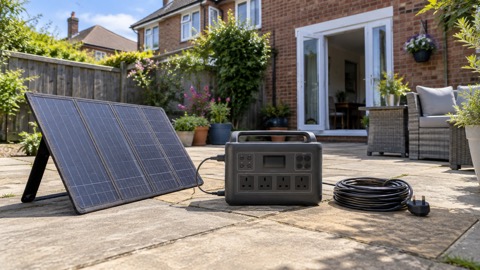
Solar charging is the option that keeps working when the grid does not. The maker quotes a 1.6-hour solar charging time for the RIVER2, and describes it as pairing with two 110W solar panels2. Those figures assume good sun. EcoFlow's own guidance for its solar products is to keep a unit topped up "by charging it during the daylight hours" when an outage runs over several days9, and its fridge documentation warns that "inconsistent sunlight" makes solar power unstable10. In a British winter, treat solar as a way to stretch a part-full battery, not as a guaranteed daily refill.
Solar panels: pairing and realistic expectations
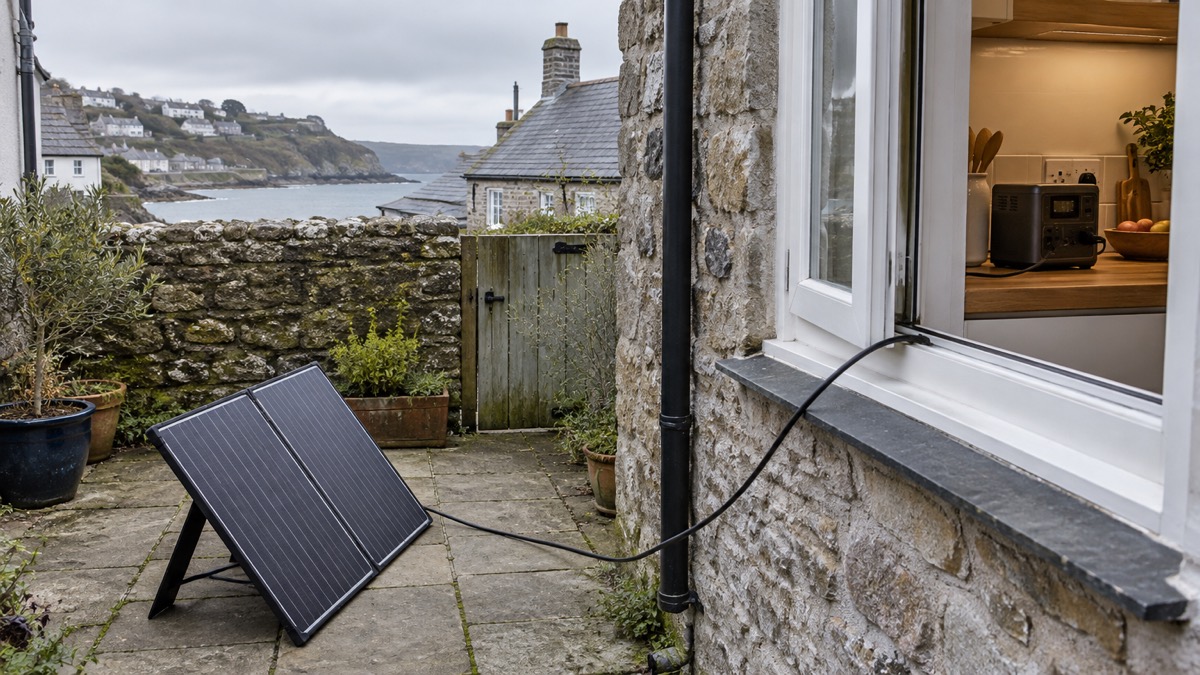
The RIVER pairs with two 110W panels2. That pairing is the configuration the maker describes, and it is the one to plan around if solar is part of your set-up. A single panel will still charge the unit, but more slowly, and the maker does not quote a time for that arrangement.
The wider RIVER series is quoted with a 300W solar input8, and the RIVER mini supports up to 100W of solar input, charging to full in 3 to 6 hours on that basis5. Those figures show how much the solar side varies by model, and why the panel count matters more than the panel brand. If you are choosing panels from scratch, What Size Solar Panel Do I Need to Charge a Power Station? works through the sums, and Portable Solar Panels for Charging in a Power Cut covers the practical side of using them in bad weather.
A word of caution on expectations. The maker's headline solar times are quoted for optimal conditions, and the series pages give a range: "In optimal conditions, they can charge up in 4 hours using solar"8, and elsewhere "in optimal sunlight they can be fully charged in 4-5 hours"8. The RIVER's own 1.6-hour figure2 is the fastest of these and should be read as a best case. On a grey January day in the UK, plan for considerably longer, and do not rely on solar alone to get you through a multi-day cut unless you have tested it in your own garden first.
RIVER and RIVER mini: how the versions differ
EcoFlow has used the RIVER name across several generations, and the two most easily confused are the RIVER and the RIVER mini. They are not the same unit, and the difference matters when you are working out what yours can run.
| EcoFlow RIVER | EcoFlow RIVER mini | |
|---|---|---|
| Battery capacity | 288Wh1 | 210Wh5 |
| AC output | Series figure quoted at 800W with 1600W surge8 | 300W total, 600W surge5 |
| Solar input | Pairs with two 110W panels2 | Up to 100W5 |
| Solar charge time | 1.6 hours quoted2 | 3 to 6 hours5 |
| AC charging | Not stated for this model | 1.5 hours from a wall socket5 |
| Car charging | Not stated for this model | 3.5 hours5 |
| Outlets | Not stated for this model | AC outlet, DC car outlet, 3 USB-A, USB-C5 |
| Chemistry | Not stated for this model | NCM5 |
| Cycle life | Not stated for this model | 80%+ capacity after 500 cycles5 |
| Shelf life | Not stated for this model | 1 year after a full charge5 |
The mini's specification sheet is the fuller of the two in the maker's published material, which is why the right-hand column has more in it. Where a figure is not stated for the RIVER itself, do not assume the mini's figure applies: check the label on your own unit.
The mini's other published details are worth knowing if that is the model you own. It is described as "a portable, powerful power source that you can pick up and take on your outdoor adventures"5, it can power "99% of your devices such as phones, laptops, lights, and fans"5, and it has a charge temperature range of 0°C to 45°C5. That last figure is the one to watch in a cold snap: charging a lithium battery outside its stated range is not advised, and Can You Charge Lithium Batteries Below Freezing? explains why.
If you are not sure which generation you have, the capacity printed on the case is the quickest check. For later models, see EcoFlow RIVER 2 (standard, Max) and EcoFlow RIVER 3 (standard, Plus).
Getting it ready before a storm or flood
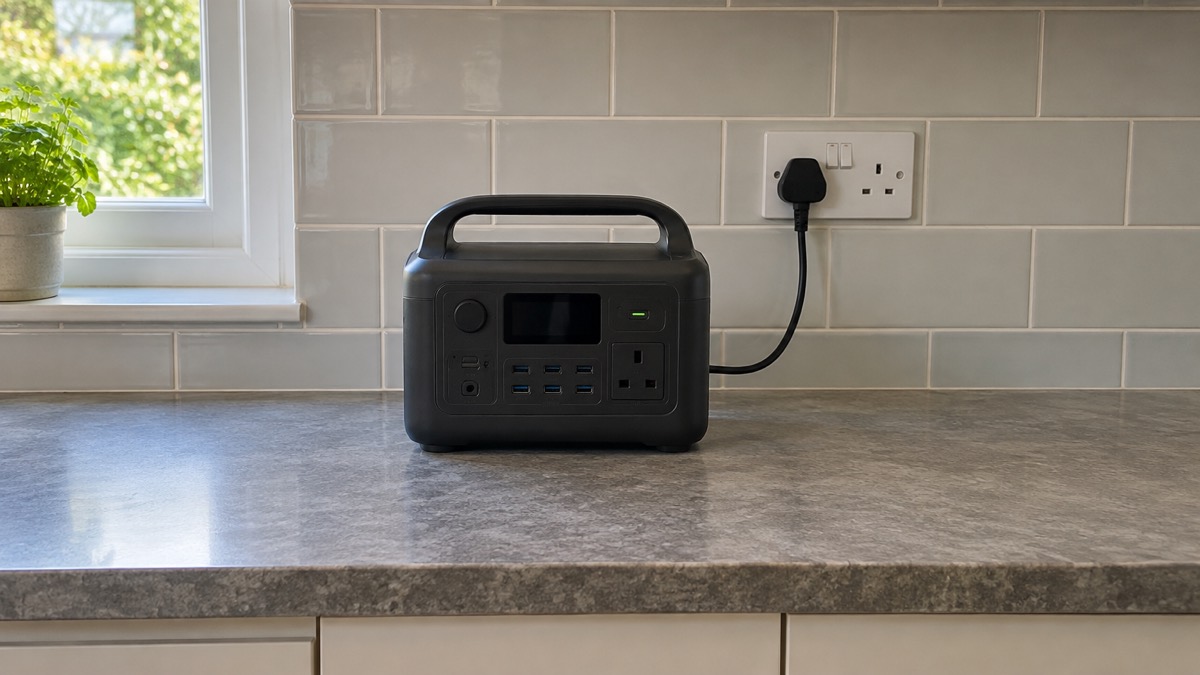
The value of a power station is decided before the emergency, not during it. A flat unit in a cupboard is no help; a full one on the kitchen worktop is.
Official and independent advice on storm and flood preparation is consistent on this point. The Met Office tells people to "Charge mobile phone devices" ahead of heavy rain3. UK Power Networks advises charging your phone and a power bank "before the weather hits"4. Ofcom's guidance is broader still: "Charge your devices before the beginning of any extreme weather event that the Met Office warns us about. A battery power bank can recharge your devices if the severe weather lasts for a long time"11. A power station is the same idea at a larger scale.
Flood guidance adds a timetable. A resident grab bag guide sets out that two days before, you should "Monitor flood warnings and weather forecasts, start your grab bag, charge phones, power banks and torches, move important items upstairs, check on neighbours or vulnerable people"12. Charging the RIVER belongs in that two-day window, alongside the phones.
A short checklist for the days before:
- Charge the unit to full from the mains while you still have power3.
- Test that the unit will run the devices you actually plan to use, before you need it.
- Know where your electricity and gas isolators are, so you can turn them off if flooding threatens: official advice is to "know where to turn off your electricity and/ or gas"13.
- Store the unit somewhere dry and above the likely flood level, not on a garage floor.
Keeping it ready, and using it safely
Between emergencies, a power station needs a little attention. The maker quotes a shelf life of 1 year after a full charge for the RIVER mini5, which tells you the battery will hold its charge for a long stretch but not indefinitely. A sensible routine is to charge it to full once or twice a year, note the date, and run a lamp from it briefly to confirm it is behaving. How to Store a Power Station When Not in Use sets out the detail.
Safety is mostly about the battery. Lithium-ion cells are safe in normal use but need treating with respect: charge on a hard, non-flammable surface, keep the unit out of direct sun and away from anything that could fall on it, and stop using it if the case swells, smells odd or gets unusually hot. Lithium-Ion Battery Safety at Home and Warning Signs a Lithium Battery Is Dangerous cover what to look for, and What to Do If a Lithium Battery Catches Fire covers the emergency itself.
Two further points for emergency use. First, keep the load within what the unit is rated to supply, and check the maker's output figure for your model before plugging anything in8. Second, if anyone in the household depends on a medical device, a 288Wh unit is unlikely to be the right answer on its own, and the planning is different: Powering CPAP, Oxygen and Other Medical Devices From a Battery sets out what to consider, and the Priority Services Register is how households with medical dependencies get extra help from their network operator during a cut.
Support, warranty and where to get help
EcoFlow's UK store lists "Lifetime Support"14 and "Warranty Protection"15 as part of what it offers customers. Keep your order confirmation, the model name and the capacity figure to hand, because that is what you will be asked for if you need to claim. If you are unsure which model you own, the capacity printed on the unit is the quickest way to identify it, as the RIVER is 288Wh1 and the RIVER mini is 210Wh5.
For the wider questions a household faces in a cut, the site's guides are the place to start rather than the product manual. Using Generators and Power Stations During an Outage covers the practical sequence, Portable Power Stations: What They Do and How to Choose explains the category, and Power Bank or Portable Power Station helps you decide which you actually need. If you are weighing a power station against a fuel generator, Portable Power Station or Petrol Generator for a Power Cut sets the two side by side.
For the household plan around the kit, see Power Cuts: A Household Guide, Storms, Snow and Ice: A Household Guide and Flooding: A Household Guide. The Power Cut Backup Power Checklist is the list to work through before winter, and Backup Power Checks Before Winter is the annual routine. EcoFlow's own product range is at EcoFlow.
Sources (15)
- Solar generators, EcoFlow, 2026-10-25
- Solar powered generators, EcoFlow, 2026-10-25
- Stay safe in heavy rain, Met Office, 2026-10-28
- Power network prepares for storms Dudley and Eunice, UK Power Networks, 2026-10-29
- RIVER mini portable power station, EcoFlow, 2026-10-25
- Portable power stations, EcoFlow, 2026-10-25
- RIVER portable power stations, EcoFlow, 2026-10-25
- RIVER solar generators, EcoFlow, 2026-10-25
- Portable solar panels, EcoFlow, 2026-10-25
- GLACIER Classic portable fridge freezer, EcoFlow, 2026-10-25
- Stay connected in severe weather, Ofcom via Mobile UK, 2026-10-23
- Resident grab bags, Harborough District Council, 2026-10-29
- Thunderstorms weather warning - advice and information | nidirect, nidirect (Northern Ireland government)
- Alternator charger extended fuse cable 2m, EcoFlow, 2026-10-25
- GLACIER plug-in battery, EcoFlow, 2026-10-25

 BLUETTI Apex 300 Power Station
 BLUETTI Elite 100 V2
 Anker SOLIX C2000 Gen 2
 Anker SOLIX C1000 Power Station
 EcoFlow DELTA Pro
 BLUETTI Elite 400
 Anker SOLIX C300 Power Station
 EcoFlow DELTA 3
 EcoFlow DELTA 2 and DELTA 2 Max
 EcoFlow DELTA and DELTA Max
 EcoFlow RIVER 3 and RIVER 3 Plus
 EcoFlow RIVER 2 and RIVER 2 Max