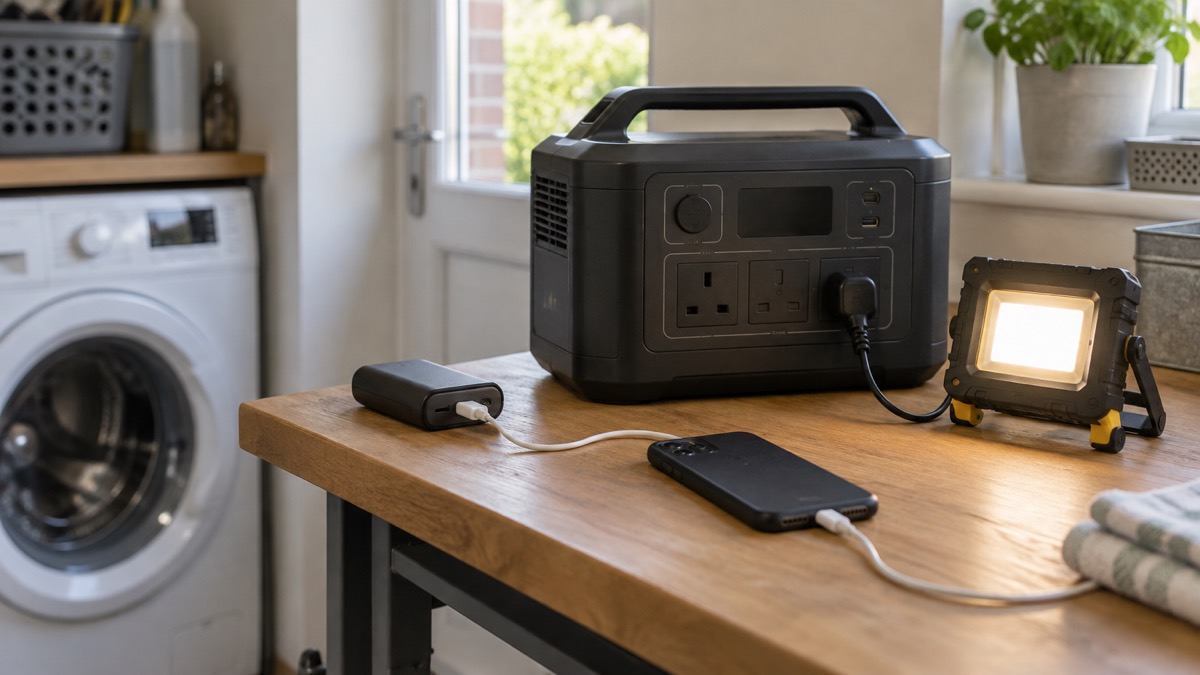
Most power cuts do not last very long, but when one does, the first thing most households reach for is a way to keep phones and small devices charged1. A power bank does that job simply and cheaply. A portable power station does more: it can run lights, laptops and small appliances from mains-style sockets, and it can be recharged from the mains, a car socket or solar panels1. The right choice depends on what you need to keep running and for how long.
For phones alone, a charged power bank is enough. Official guidance suggests keeping a fully charged power bank available so you can charge your phone, tablet or other devices2, and the government's emergency preparation advice lists a charged power bank among the items to have ready3. Wiltshire and Swindon's preparedness team puts it plainly: a charged power pack "can be very helpful in an emergency or power cut. Even if it just charges a phone" it helps you stay in contact with loved ones4.
A power station is worth considering if you want to run lights, a laptop or small appliances, but it is only really useful if your power demand is low1. Whatever you choose, the safety rules for lithium-ion batteries are the same: charge in a safe, visible place, never overnight while people are asleep, and stop using any battery that swells, overheats or smells unusual5.
What each one does in a power cut
A power bank is a battery, some circuitry and one or more charging ports, usually USB or USB-C8. It is designed to top up a phone, tablet or other small USB device. It cannot run a mains plug, a lamp or a fridge. For the narrow job of keeping a phone alive, it is the simplest and most reliable option, and Which? advises that if you just want to charge your smartphone, a portable power bank is the better choice than a generator1.
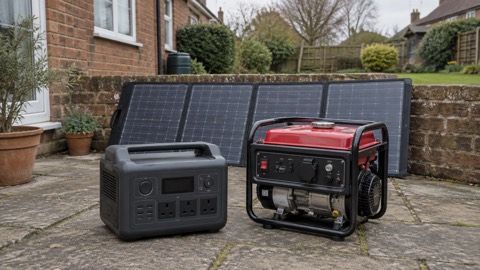
A portable power station, sometimes called a battery generator, is a larger battery with mains-style sockets and USB ports built in. Which? describes these as smaller and more portable than fuel-tank generators, but only really useful if you have low power demand, and notes that some can be charged with solar panels1. In practice that means phones, laptops, LED lights, a small fan or a radio, not a kettle, heater or power tool unless the station's output rating allows it.
The government's Be Ready campaign suggests keeping a charged power bank to charge phones or compatible medical devices3. Norfolk and Suffolk's health team recommends a charged power bank, a torch and spare batteries at home, plus important telephone numbers written down somewhere accessible9. The Red Cross emergency kit list also includes charged power banks10.
| What you want to keep running | Power bank | Small power station |
|---|---|---|
| Phone and tablet | Yes, its main job8 | Yes, via USB |
| Laptop | Only if it charges by USB-C | Yes, via mains socket |
| LED lights and a radio | No | Yes, within its output rating |
| Small medical device | Check compatibility with the maker | Check with your care team first11 |
| Kettle, heater or power tool | No | Only if within the station's AC rating |
Read the manufacturer's instructions carefully and always follow them8.
A power bank keeps phones and small USB devices charged
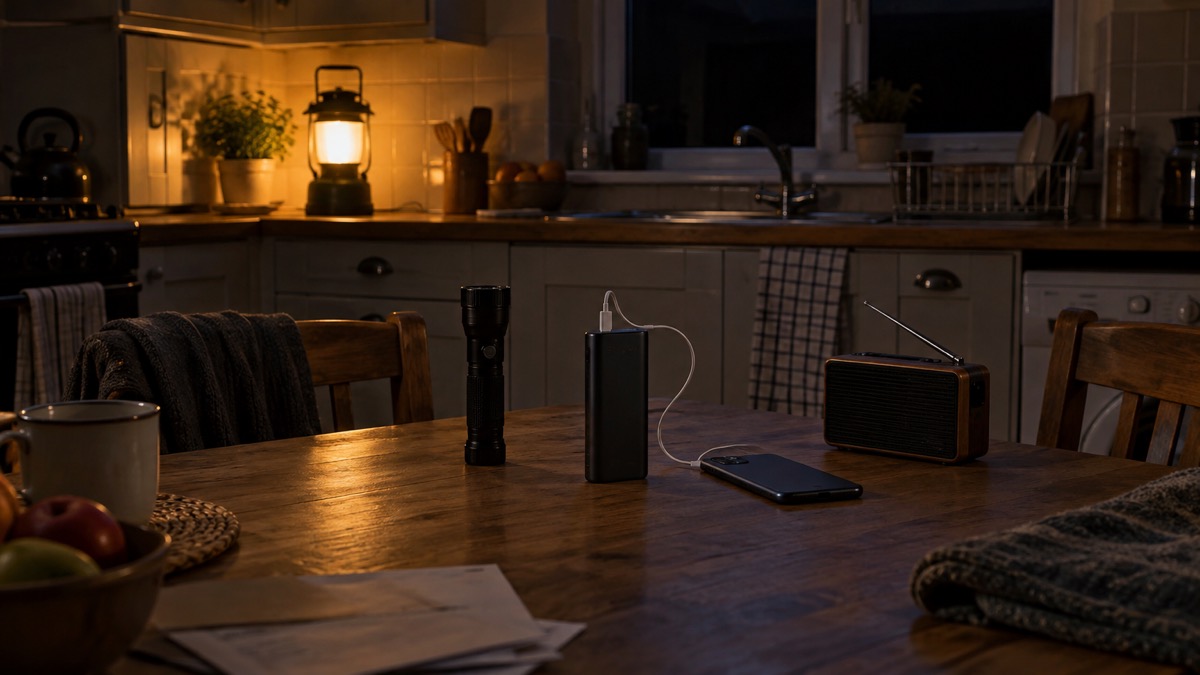
The case for a power bank is simple: it is small, it charges from any USB socket, and it keeps the one device most households rely on for news, contact and help working. Official guidance for Northern Ireland advises keeping mobile phones, laptops, tablets and power banks fully charged so you have use of battery power for a short time at least12. The same principle applies across the UK.
Most power banks use lithium-ion batteries, which naturally get warm during charge and discharge cycles8. That warmth is normal. What is not normal is a battery that becomes extremely hot, swells, hisses or smells unusual. Electrical Safety First advises reading the manufacturer's instructions carefully and always following them8.
A power bank will not run a lamp or a fan, and most portable battery packs do not support charging and discharging at the same time8. In other words, you cannot reliably use a power bank to power a device while it is itself plugged in to charge. Charge it fully before a forecast storm or a known outage, then use it.
- Keep at least one power bank fully charged at all times2
- Store it in a cool place, away from extreme heat or cold5
- Do not leave it in a parked car where it could get cold in winter or hot in summer8
- Register it with the maker so you can be contacted if there is a safety recall8
For more on choosing and using one, see Power Banks: Keeping Phones Charged in an Emergency.
Smaller power stations of 200 to 500Wh: phones, laptops and lights
A power station in the 200 to 500 watt-hour range sits between a power bank and a full home backup system. It has enough stored energy to charge a phone many times over, run a laptop and power LED lights for an evening, but not enough to run high-draw appliances. Which? notes that these battery generators are only really useful if you have low power demand1.
Lithium batteries are the lightweight, rechargeable batteries that power phones, laptops and cameras5, and the same chemistry sits inside a power station. That means the same care applies: charge in a safe, visible location, avoid charging near flammable materials or in escape routes, and store in a cool place away from extreme heat or cold5.
If you are weighing up capacity, the key question is what you want to run and for how long. A phone draws very little; a laptop draws more; a small fridge draws more again. The Watts, Watt-Hours and Surge Explained page sets out how to work this out, and What Capacity Power Station Do I Need? walks through the sizing.
Outputs: AC sockets, USB ports and DC outlets
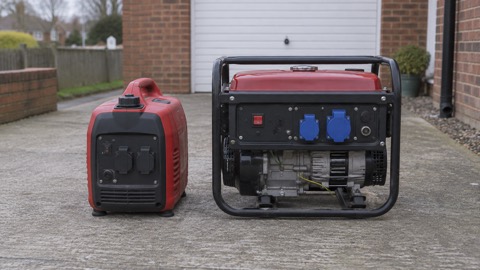
The outputs on a power station decide what you can plug in. A typical unit has mains-style AC sockets, one or more USB ports and sometimes a 12V DC outlet. Which? gives the example of a portable inverter generator with two 230V 13A sockets, a 12V DC outlet and two USB ports1; power stations follow a similar pattern, though the exact mix varies by model.
- AC sockets run mains appliances within the station's output rating: lamps, laptop chargers, small fans.
- USB ports charge phones, tablets and other USB devices directly.
- DC outlets can run 12V accessories such as a car-style charger or a small light.
The limit that matters is the total draw. Fire Scotland advises choosing a strip adaptor rather than a block adaptor, and taking care that appliances plugged into it do not use more than 13 amps or 3 kilowatts in total, checking appliance handbooks for details14. That figure applies to a household ring main, not to a power station, but the principle is the same: add up what you plug in and stay within the rating.
Charging a power station from the mains, a car socket or solar panels
How you recharge a power station matters as much as how much it holds. Which? notes that power stations can be rechargeable via AC mains, solar panels or a car socket, and that some can be charged with a solar charger1. That gives you three routes, each with a different role.
| Charging route | When it helps | What to check |
|---|---|---|
| Mains | Before a forecast outage, or whenever power is on | Charge during the day, not overnight6 |
| Car socket | When you are away from mains power | The maker's instructions for your model8 |
| Solar panels | During a long outage in daylight | Panel output and charging time; see Portable Solar Panels for Charging in a Power Cut |
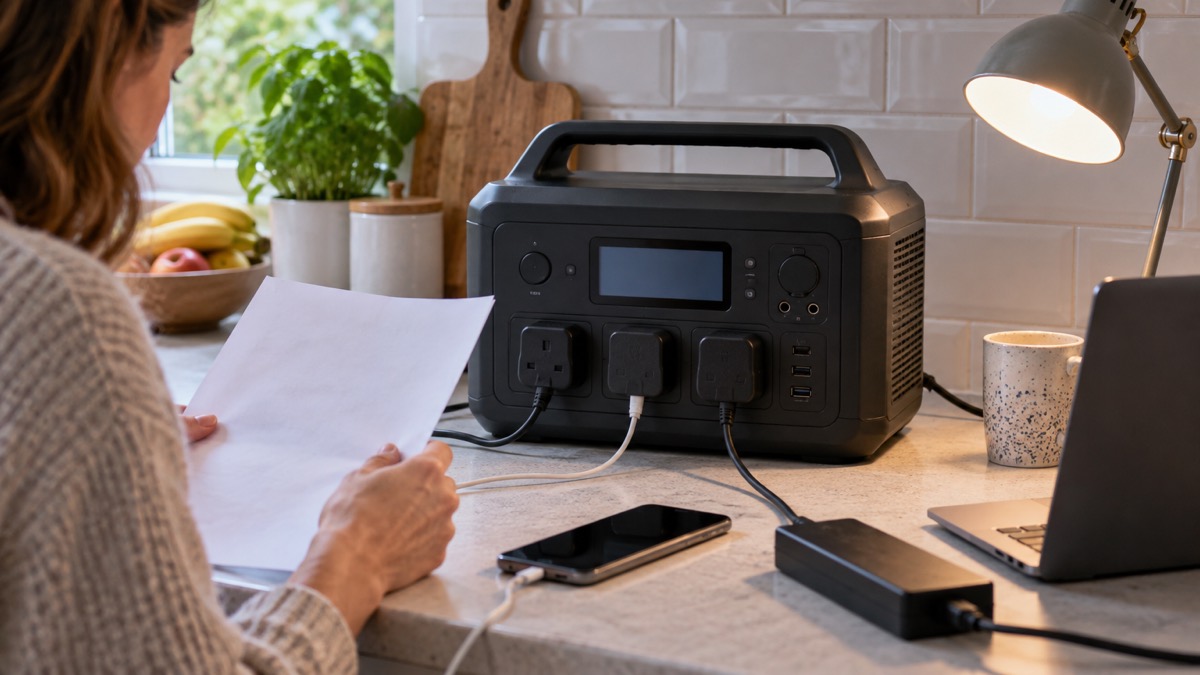
Read the manufacturer's instructions carefully and always follow them8.
Solar charging in the UK is slower and more weather-dependent than mains charging, so it is a top-up route rather than a quick fix. For the detail, see How Long Does Solar Charging Take in the UK? and Can You Charge a Power Station from Your Car?.
Whichever route you use, the fire services' charging rules apply. Charge during the day rather than overnight while you are sleeping, and keep devices charged away from escape routes6. Do not charge near flammable materials, do not overload sockets or use unsuitable extension cords, and always use uncoiled extension leads properly rated for your devices5.
Safe charging and storage for lithium-ion batteries
Lithium-ion batteries are safe when handled properly, but they can overheat, catch fire or explode if improperly charged, handled, stored or disposed of13. Fire and rescue services across the UK are consistent on this point, and the rules are simple enough to follow without special knowledge.
- Charge in a safe, visible location, away from flammable materials and escape routes13
- Do not charge overnight when anyone is asleep, or leave devices on charge when you leave the home15
- Do not charge or store a battery in a hallway or anywhere it could block your escape16
- Store in a cool, dry place, avoiding extreme heat or cold5
- Do not cover devices while charging, as this traps heat and increases fire risk13
- Do not remove the casing or tamper with the equipment5
Portsmouth City Council's housing safety team warns that not charging or storing devices with lithium-ion batteries properly can cause fires18. The National Fire Chiefs Council runs a Charge Safe campaign with the same message19. If you want a step-by-step routine, the Safe Battery Charging at Home Checklist sets one out.
Swelling or bulging means stop using it
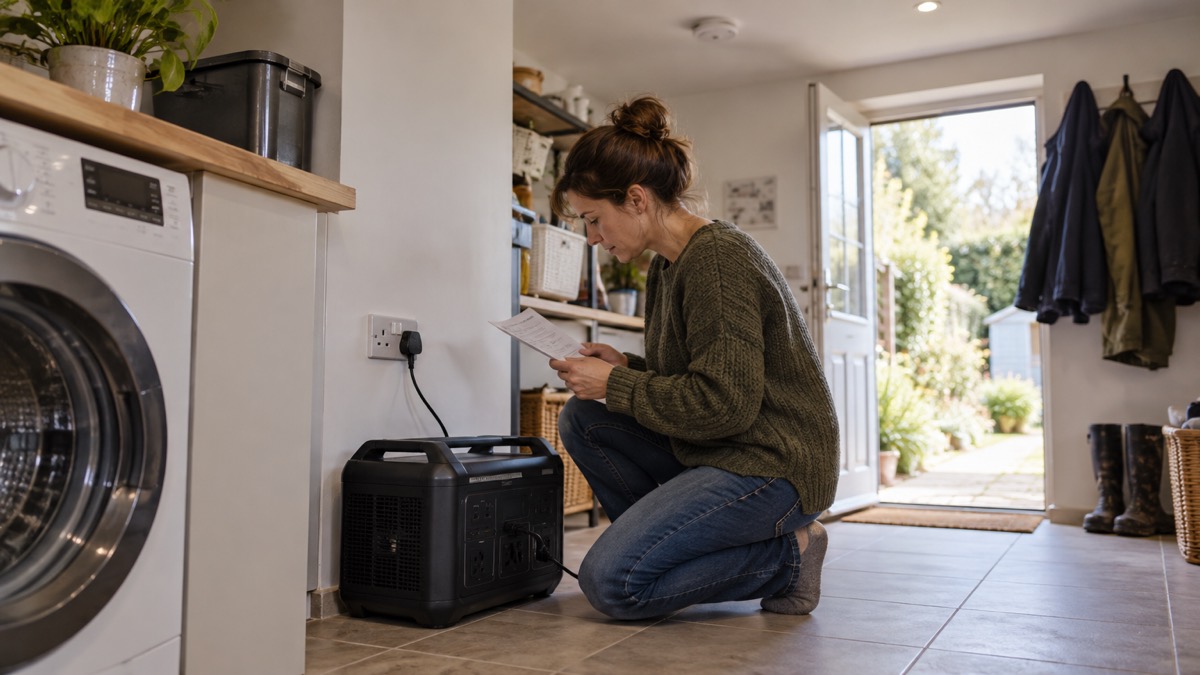
A failing lithium-ion battery usually gives warning signs before anything worse happens. Fire Scotland lists them: producing smoke, feeling extremely hot to touch, looking swollen or having any type of lump or leak, making a hissing or cracking sound, smelling unusual, or taking longer to charge or not fully charging5. The National Fire Chiefs Council adds swelling or deformation, where the battery appears swollen, misshapen or has developed a lump20.
If you notice any of these, stop using and charging the device immediately5. Do not remove the casing or tamper with the equipment5. Contact the manufacturer or a certified technician5. If the battery can be removed, Oxfordshire Fire and Rescue Service advises taking the battery and device out of your home and storing it outside, away from other items, preferably in a metal container16. Store it in a cool, dry place until disposal13.
"If you see flames or smoke coming from the battery or device, a fire has already started."
If a fire has started, get out, stay out and call 999. Fire Scotland warns that the ferocity of a fire caused by a lithium-ion battery can be significant and prevent you from escaping from your home5. The What to Do If a Battery Starts Swelling and What to Do If a Lithium Battery Catches Fire pages cover this in more detail.
Where a power station should not be relied on: medical equipment
Some equipment may stop working during a power cut, including ventilators, oxygen concentrators, electric wheelchairs, hoists, communication devices and feeding pumps11. If you or someone you care for uses medical equipment that requires a power supply, the government's Be Ready campaign advises making a plan with your care provider or clinical care team now about what will happen in a power cut, setting out what action you need to take and who to contact if there is an outage21.
A power bank can charge compatible medical devices, and the Be Ready checklist includes one for that purpose3. But a power station is not a guaranteed substitute for a mains supply for medical equipment. The plan you make with your care team should decide what backup is appropriate, not a general-purpose battery.
In Scotland, Ready Scotland has specific guidance for disabled people and carers on preparing for emergencies11. The Powering CPAP, Oxygen and Other Medical Devices From a Battery page covers the equipment side in more depth.
Registering your device and checking for recalls
Registering a power bank or power station with its maker means you can be contacted easily if there is a safety recall, and it is easier to return a faulty item or order a repair8. Fire and rescue services recommend registering electrical appliances for the same reason: so you can be made aware if a product is recalled22. The Register My Appliance service sends a notification if a product gets recalled23.
If you choose not to register your product, recalls can be checked through Electrical Safety First or the UK government website5. A recall notice can matter: one safety notice for two power bank models warned that the product presents a risk of fire as the lithium-ion batteries can overheat whilst in use, which can lead to localised smoking, melting or a risk of fire20.
- Register the product with the maker when you buy it8
- Check Electrical Safety First or the government website if you have not registered5
- Act on any recall notice promptly and stop using the product
Where to get help in a power cut
If the power goes off, most cuts are restored without any action from you, and most do not last very long1. Keep a charged power bank, a torch and spare batteries at home, and keep important telephone numbers written down somewhere accessible9. A battery or wind-up radio with spare batteries will keep you informed if there are updates by radio during a power cut21.
If you need extra support, ask your network operator about the Priority Services Register. Ofgem explains that if you are eligible for a power cut payment, you do not need to make a claim: your network operator will pay you automatically if they have your bank details, by cheque, cash or bank transfer24. They may also pay through your energy supplier, with the money added to your energy account or prepayment meter24.
For more on what to do when the lights go out, see Power Cuts: A Household Guide and Using Generators and Power Stations During an Outage.
Sources (24)
- How to buy the best generator, Which?, 2026-01-20
- 12 tips to prepare for a power cut, Horsted Keynes Parish Council, 2026
- Get prepared for emergencies, UK Government, 2026-10-21
- Personal resilience: yourself, Wiltshire and Swindon Prepared, 2026-10-25
- Lithium-ion batteries, Scottish Fire and Rescue Service, 2025-11-27
- Battery fires, Devon and Somerset Fire and Rescue Service, 2026
- Charge safely for your own safety, Northern Ireland Fire and Rescue Service, 2026-09-21
- Power banks, Electrical Safety First, 2026-10-26
- Be prepared for winter emergencies, NHS Norfolk and Suffolk, 2026
- Prepare an emergency kit, British Red Cross, 2026-10-25
- Disabled people and carers, Ready Scotland, 2026-10-25
- Strong winds weather warning: information and advice, nidirect, 2026-10-24
- Lithium battery fire safety, Mid and West Wales Fire and Rescue Service, 2026-10-26
- Your guide to fire safety, Scottish Fire and Rescue Service, 2023-11-03
- Batteries and chargers, London Fire Brigade, 2026-10-25
- Charging safety, Oxfordshire County Council, 2026
- Heat, cold and rain: how weather conditions affect e-bikes and e-scooters, London Fire Brigade, 2026-10-25
- Battery safety, Portsmouth City Council, 2026-10-26
- Charge Safe, National Fire Chiefs Council, 2026-10-09
- Product safety notice: Belkin and Playa power banks, London Borough of Bromley, 2025-12-08
- Be informed about hazards: power cuts, UK Government, 2026-10-21
- Electrical safety, North Yorkshire Fire and Rescue Service, 2026-09-14
- Fire safety checklist, Devon and Somerset Fire and Rescue Service, 2026
- Check if you can get a payment for a power cut, Ofgem, 2026
 Power Station vs Generator
 Inverter vs Open-Frame Generator
 LPG vs Petrol Generator