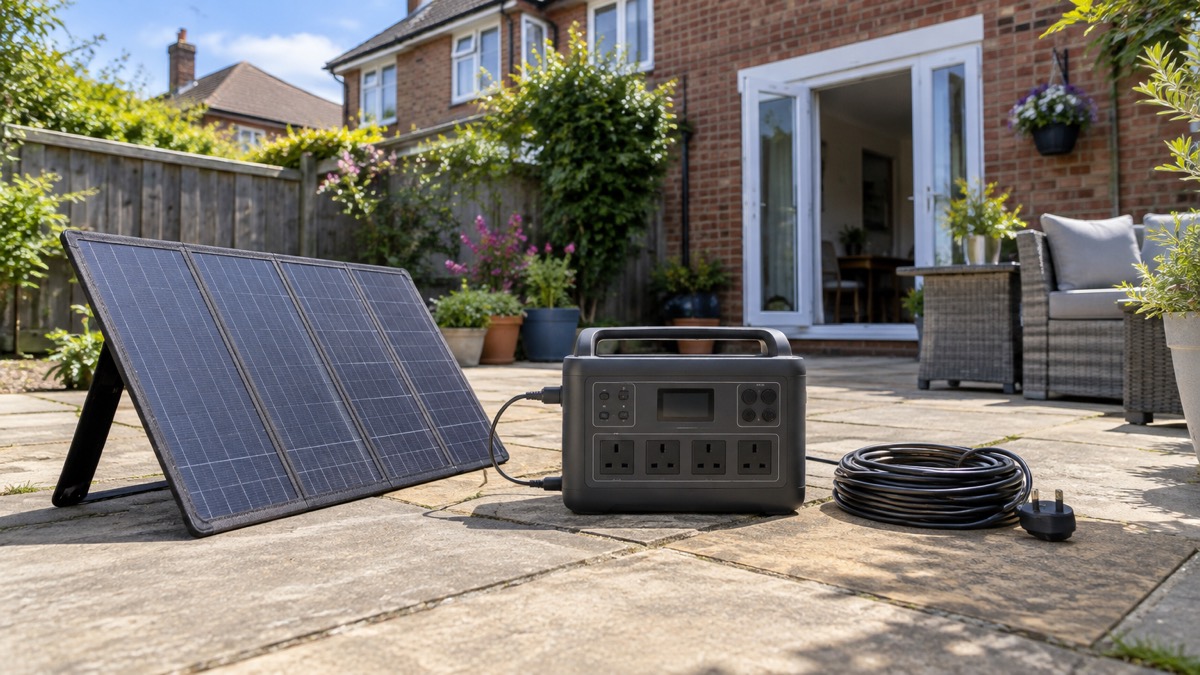
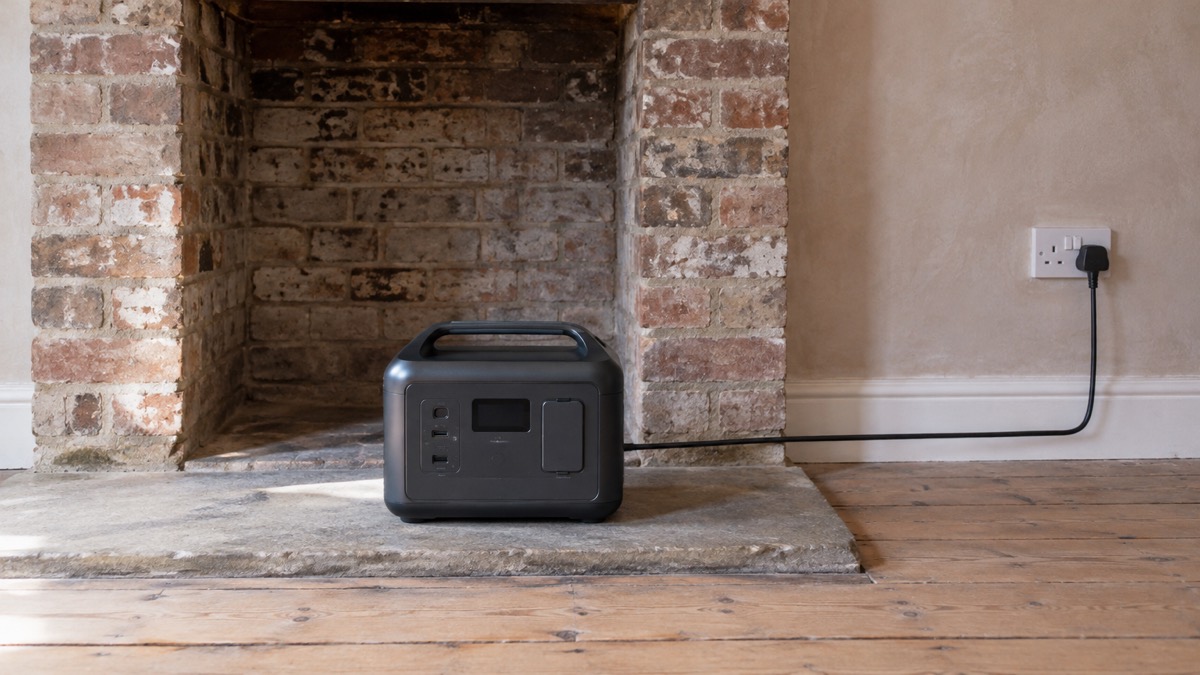
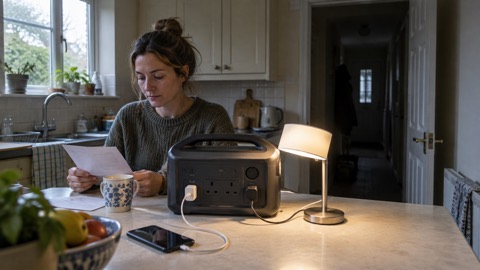
The EcoFlow DELTA 3 is a portable power station: a battery in a box with mains sockets on the front, which you charge from the wall and then use to run appliances when the power is off. The standard DELTA 3 holds 1024Wh, uses lithium iron phosphate (LFP) chemistry, and delivers 1800W across four sockets, with a 3600W surge for motors starting up1. It is the smallest of four versions, and the one SSEN Distribution chose for a scheme giving free home battery packs to Priority Services customers3.
For a household, the practical question is not what it is but what it will run and for how long. A 1024Wh battery is enough for phones, lights, a router and a laptop for a long time, and enough for a fridge or a small heater for a much shorter one. The maker quotes a full mains charge in 56 minutes at 1500W, and up to 5kWh of capacity if you add extra batteries1. This page sets out the four versions, what each can do, how to charge it, and how to use and store it safely.
What the DELTA 3 is and who it suits
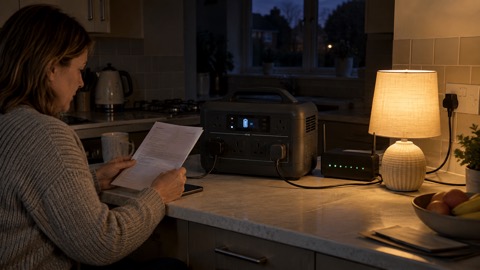
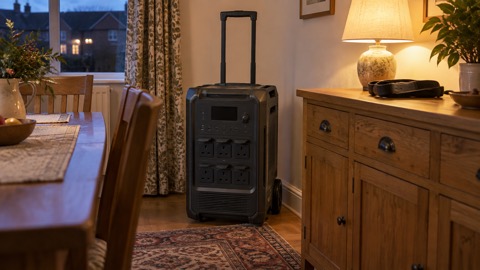
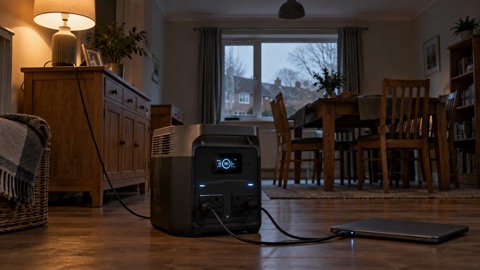
The DELTA 3 is a portable power station, which EcoFlow also markets as a solar generator when sold with panels2. Inside is an LFP battery, the chemistry now common in home storage because it is stable and long lived1. The standard model holds 1024Wh, which is roughly the energy a small fridge uses in a day, though how far it stretches depends entirely on what you plug in. The unit measures 398 by 200 by 284 mm and weighs 12.5 kg or less, so it fits in a cupboard and one adult can lift it1.
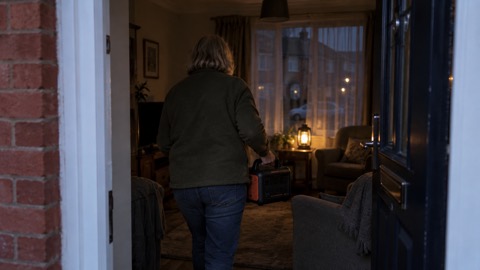
It suits a household that wants a quiet, fume-free source of power for a few essentials during a cut, and that is willing to plan what those essentials are in advance. It is not a whole-house backup: it cannot run an electric shower, an oven or a heat pump. If you are still deciding between a battery and a petrol generator, the guide to portable power stations and the comparison of a power station or petrol generator set out the trade-offs.
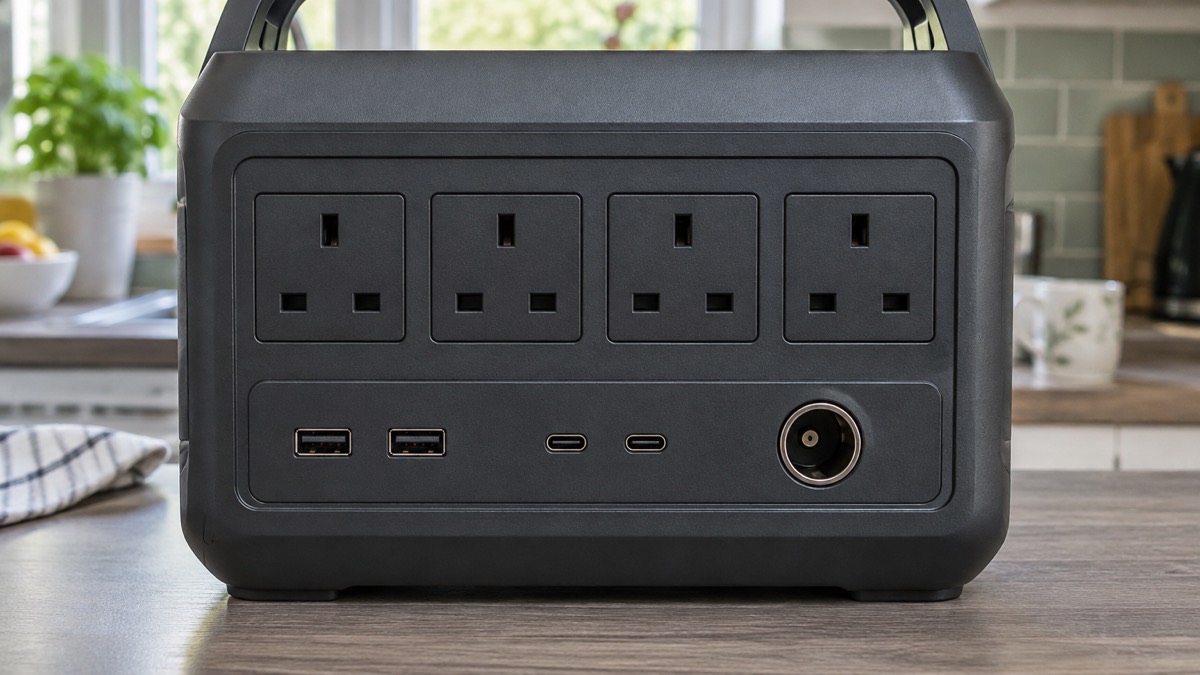
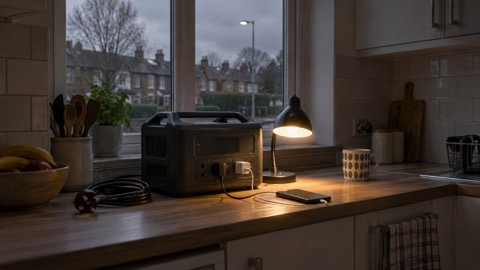
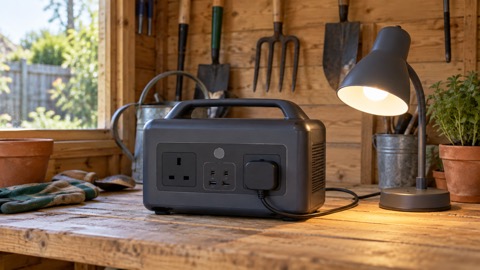
The DELTA 3 has 11 output ports in total on the standard model, including four mains sockets, USB-A and USB-C ports and a 12V car socket2. That spread matters more than the headline wattage for most homes: it lets you charge several phones and run a lamp and a router at once without an extension lead. If you need to run more than that, see the guide to extension leads and overloading.
The four versions and how they differ
EcoFlow sells the DELTA 3 in four forms, and the differences matter more than the name suggests. The standard DELTA 3 and the DELTA 3 Plus share a 1024Wh battery and 1800W output1. The DELTA 3 1500 steps up to a 1536Wh battery and can expand to 5500Wh8. The DELTA 3 Max has a 2048Wh battery and a 4800W surge7. The Classic sits alongside the standard model with a 1024Wh battery and a 2400W X-Boost ceiling6.
| Version | Battery | Output | Surge | Weight | Expandable to |
|---|---|---|---|---|---|
| DELTA 3 | 1024Wh | 1800W, 4 sockets | 3600W | 12.5 kg or less2 | 5kWh1 |
| DELTA 3 Plus | 1024Wh | 1800W, 4 sockets | 3600W | 12.5 kg or less2 | 5kWh1 |
| DELTA 3 Classic | 1024Wh | 1800W, 5 outlets | 3600W | 12.1 kg plus or minus 0.3 kg6 | 1 to 5kWh6 |
| DELTA 3 1500 | 1536Wh | 1800W, 4 sockets | 3600W | 16.5 kg or less8 | 5500Wh8 |
| DELTA 3 Max | 2048Wh | 4 sockets | 4800W | 20.3 kg7 | Not stated |
The standard DELTA 3 and the Plus are the lightest way into the range in capacity terms, and both take the same extra batteries. The 1500 is listed by EcoFlow for constantly running a refrigerator, fish tank or CPAP in case of emergencies8. The Max is the largest and heaviest of the range. The Classic has five outlets rather than four and a 1400W mains input, so it charges a little more slowly than the standard model's 1500W6.
If you want the detail on any one of them, there are separate pages for the DELTA 3 1500, the DELTA 3 Classic and the DELTA 3 Max.
Output: 1800W across four sockets, with a 3600W surge
The headline figure is 1800W of continuous output, split across four three-pin sockets, with a 3600W surge1. The surge matters because motors draw a burst of power when they start: a fridge compressor or a small pump can pull several times its running wattage for a second or two. A unit rated only at its continuous figure would trip out. The 3600W surge gives it headroom to start those loads.
EcoFlow also lists X-Boost, which the maker says supports high-demand devices up to 2400W, naming portable fridges, camping kettles, laptops and power tools9. X-Boost is not the same as raw output: it is a mode that lets the unit run some appliances rated above its continuous limit by managing the load. Treat 1800W as the honest ceiling for anything that runs for hours, and 2400W as a short-term allowance for devices the maker lists.
The practical rule is to add up the wattage of everything you want to run at once and keep it under 1800W. A lamp, a router, a phone charger and a laptop together are a few hundred watts. A kettle alone is usually well over 1800W and will not run. If you are unsure how the numbers work, the guide to watts, watt-hours and surge explains it in plain terms.
What it can run in a power cut, and for how long
How long the DELTA 3 lasts depends on the load, and the arithmetic is simple: a 1024Wh battery running a 100W load lasts roughly ten hours, and the same battery running a 500W load lasts roughly two. Those are sums from the stated capacity, not maker figures, and they assume perfect efficiency. In practice you lose some energy in conversion, so plan for less.
What that means in a cut:
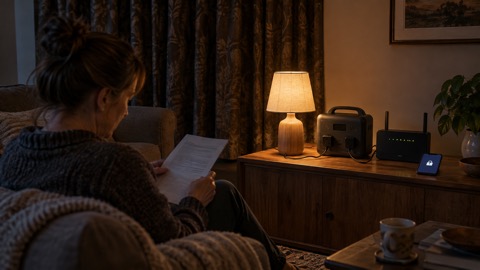
- Phones, a router and a lamp: a few tens of watts, so many hours or days from one charge.
- A laptop: typically under 100W, so most of a working day.
- A fridge: a modern fridge cycles on and off, so the average draw is lower than its rating, but a 1024Wh battery will not keep a full-size fridge going for long. The 1500 or the Max, or an extra battery, is the better fit.
- A CPAP machine or other medical device: possible for some devices, but check the device's own requirements and talk to its supplier first. The guide to powering medical devices covers this.
EcoFlow states that a 30-minute charge provides hours of emergency backup before a power outage1. That is the maker's own claim and worth treating as a top-up habit rather than a guarantee: keep the unit part charged through winter so a short warning is enough. For worked examples of run times, see how long a power station will run a fridge or laptop.
Charging from the mains, solar panels or a car
The DELTA 3 takes five charging methods according to EcoFlow: mains, solar, car, generator and mains plus solar together8. Each has a different speed and a different use.
- Mains: the standard DELTA 3 charges at 1500W and reaches full in 56 minutes1. The Classic charges at 1400W, reaching 80% in 45 minutes in fast mode and full in 60 minutes6. The 1500 charges at 1500W in about 1.5 hours8.
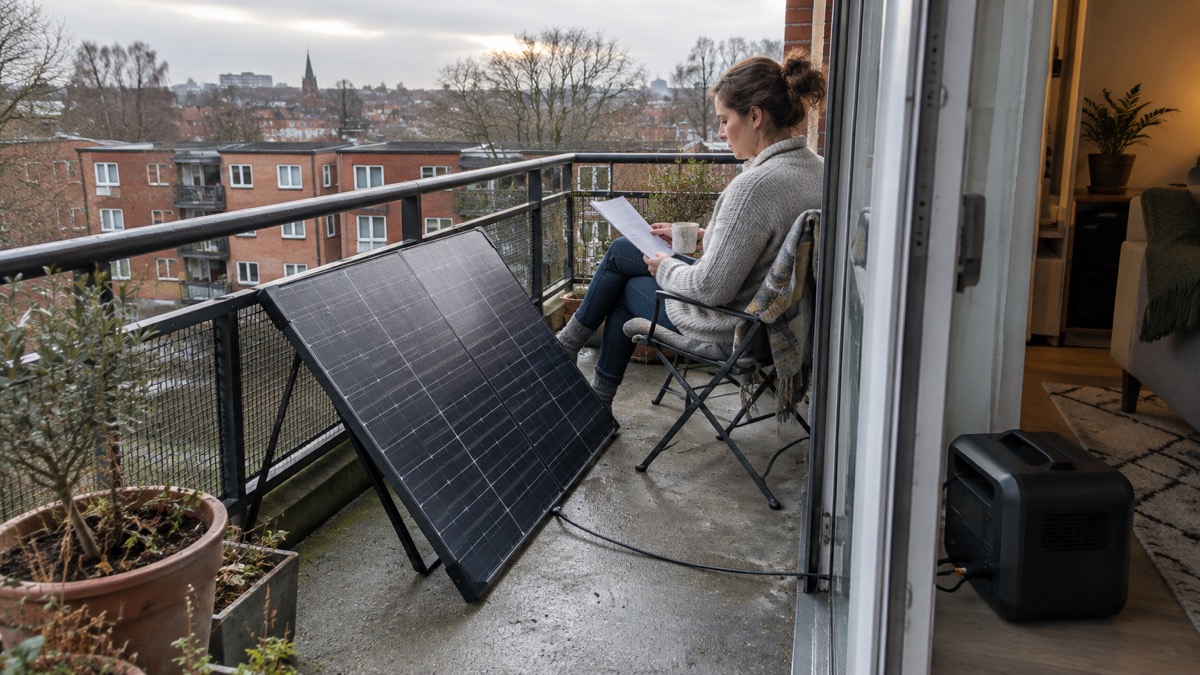
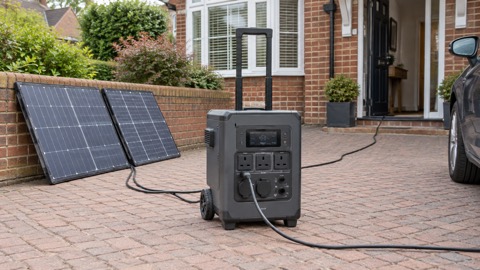
- Solar: the Classic accepts up to 500W of solar input6. EcoFlow states the DELTA 3 with a 500W MPPT controller recharges in about 2 hours, or 130 minutes1. Real output depends on the weather and the panel angle, so expect longer in a UK winter. See portable solar panels and how long solar charging takes in the UK.
- Car: the DELTA 3 charges at 800W from a suitable car power source in about 1.3 hours1. The Max and Max Series take 12V or 24V at 8A7. The 1500 is listed at 800W and 2.1 hours with an alternator charger8. Charging from a car's own socket is slow; see charging a power station from your car.
- Generator: the DELTA 3 can be charged from a generator, which is useful in a long outage when the mains is down8. Follow the generator's own safety instructions, including running it outdoors only.
Adding extra batteries: up to 5kWh
The standard DELTA 3 can be expanded to 5kWh with extra batteries, and EcoFlow lists compatibility with the DELTA 3 Extra Battery, the DELTA Pro 3 Extra Battery, the DELTA 2 Extra Battery and the DELTA 2 Max Extra Battery1. The DELTA 3 Extra Battery holds 1kWh, so one takes a standard unit to about 2kWh2. The 1500 expands to 5500Wh with the same family of batteries8.
| Unit | Base capacity | Maximum with extra batteries | Compatible batteries |
|---|---|---|---|
| DELTA 3 | 1024Wh | 5kWh1 | DELTA 3, DELTA Pro 3, DELTA 2, DELTA 2 Max2 |
| DELTA 3 Classic | 1024Wh | 1 to 5kWh6 | Not stated on the page |
| DELTA 3 1500 | 1536Wh | 5500Wh8 | DELTA 3, DELTA 2, DELTA 2 Max, DELTA Pro 38 |
The extra battery carries its own 5-year warranty and is rated for 4000 or more charging cycles to 80% of original capacity10. A bundle pairing the DELTA 3 with an extra battery gives 2kWh of capacity and 1800W output11. If you are buying an extra battery, check the cable: EcoFlow sells a dedicated DELTA 3 Extra Battery Cable and lists lifetime support with it12.
Adding capacity is a straightforward way to extend run time without buying a bigger unit, but it adds weight and bulk. If you mainly need to run a fridge through a long cut, a larger single unit may suit better than a small unit plus a battery. The guide to what capacity power station you need helps you size it.
Using it as backup power: under 10 ms switchover
The DELTA 3 can act as an uninterruptible power supply (UPS): you plug it into the mains, plug your equipment into it, and it passes mains power through until the supply fails, then switches to battery. EcoFlow lists a switchover of under 10 ms for the DELTA 3, 10 ms for the Classic and under 15 ms for the 15001. That is fast enough for most computers and routers to ride through without rebooting.
The Classic's page says the 10 ms switch keeps critical devices such as NAS systems and servers running6. The 1500's page names a fridge, a fish tank or a CPAP machine as things it can run constantly in an emergency8. Those are the maker's examples, and they are reasonable ones: a fridge and a CPAP are exactly the loads a household worries about.
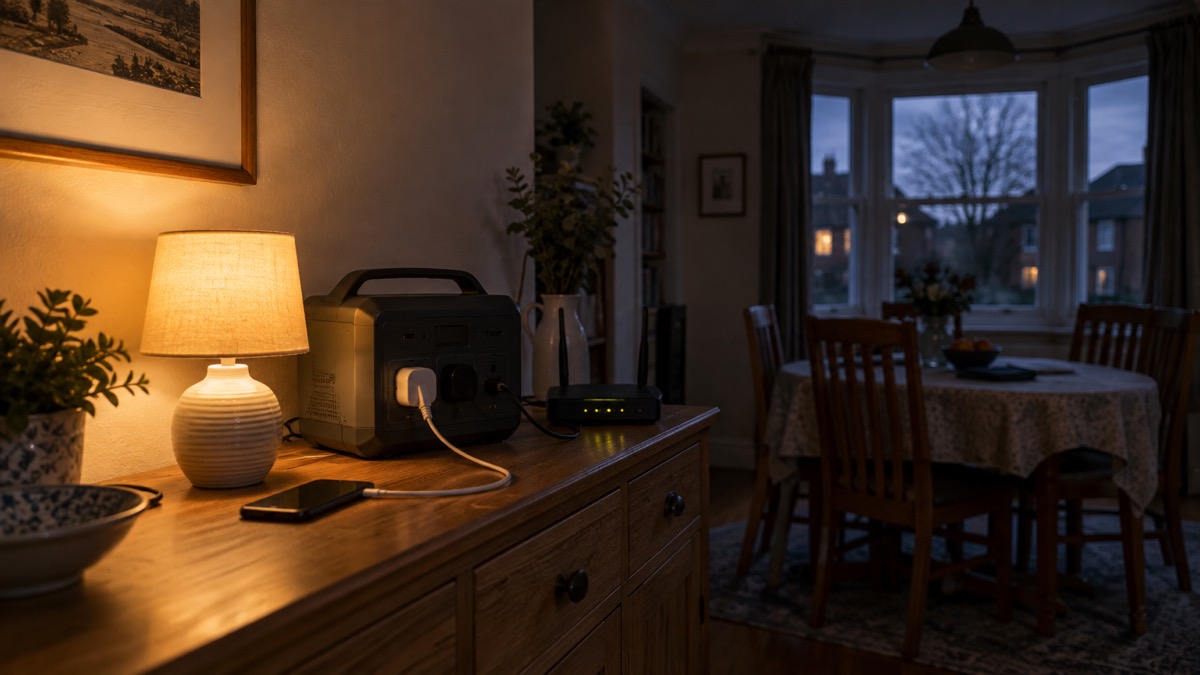
There are limits. UPS mode is not a substitute for a proper home backup system wired into your consumer unit, and it will not run high-power appliances. It also drains the battery whenever the mains fails, so the run time is the same as any other use. For the general principles, see using a power station as a UPS and connecting a generator or battery to your home's wiring.
Safe charging, use and storage
EcoFlow's own instructions set the safe operating envelope, and they are worth following closely. The charge temperature range is 0 to 45°C for the Classic and the Max6. The Classic's discharge range is -10 to 45°C6. The Classic is rated IP20 for the complete product, which means it is not protected against water, and the 1500's battery pack is IP546. The standard DELTA 3 and Plus list the battery pack at IP65, but that is the pack, not the whole unit1.
Other practical points from the maker's pages:
- Calibration: the Classic's page advises running the battery to 0%, charging to 100%, and repeating for one or two complete cycles, or updating the firmware through the EcoFlow app6.
- Storage: keep it indoors, dry and away from flammable surfaces. The guide to storing a power station and battery storage temperature covers this in more detail.
- Fire risk: LFP chemistry is more stable than older lithium chemistries, but any large battery deserves respect. See are portable power stations a fire risk and lithium battery safety at home.
- Charging overnight: if you charge while you sleep, follow the general guidance in is it safe to charge overnight.
Warranty, app and support
EcoFlow's warranty terms vary by model, and the pages do not all agree. The standard DELTA 3 and Plus are listed with a 5-year warranty on one page and 2 years on another1. The 1500 is listed at 5 years8. The Classic and the Max are listed at 3 plus 2 years, meaning a 3-year standard warranty and a 2-year extension available on registration in the EcoFlow app6. The extra battery carries a 5-year warranty10. Check the terms on the listing for the exact model you buy.
The app does more than register the warranty. EcoFlow lists app support with time-of-use and storm warning features for the DELTA 3 and Plus, and a Storm Guard Mode for the Classic1. The Max has Wi-Fi and Bluetooth app support7. The idea is that the unit can be set to charge at cheap times and to top itself up when bad weather is forecast, so it is full when a storm hits. Keep the app updated and the unit connected.
EcoFlow states that the DELTA 3 Plus's fast and safe charging performance was certified with a 5-star rating by SGS, with data current as of August 20241. That is the maker's statement about its own testing. For the general picture on safety markings, see UKCA, CE and battery safety markings.
EcoFlow lists a refurbished DELTA 3 Series Portable Power Station, rated at 1800W AC output with 2400W (3600W surge) using X-Boost5. The refurbished extra battery is listed as compatible with the DELTA 3 and Plus and carries a 4.73-star rating from 921 reviews on the maker's site13. Warranty and condition can differ from new stock, so read the listing.
Where to get help, including free units from SSEN
If you live in central southern England or the north of Scotland and you are on SSEN Distribution's Priority Services Register, you may be eligible for a free home battery pack. In February 2026 SSEN began delivering the first of 20,000 free EcoFlow Delta 3 home battery packs to eligible Priority Services customers4. SSEN says the model was chosen for its ease of use and functionality3. The pack has a 1,024Wh capacity and a range of USB-A, USB-C and three-pin sockets3.
The Priority Services Register is the route to help in a power cut for anyone who needs it: older people, those with medical equipment, families with young children and others who need extra support. Contact your electricity network operator to join. SSEN's scheme is specific to its own area; other network operators run their own arrangements, so check with yours.
For the wider picture, the backup power at home guide and the power cuts guide cover what to do before, during and after an outage. If you are building a kit, the power cut backup power checklist and the winter readiness checks are good places to start. EcoFlow's own range is described on the EcoFlow brand page.
Sources (13)
- DELTA 3 Series Portable Power Station, EcoFlow, 2026-10-25
- DELTA 3 Series Solar Generator (PV220W), EcoFlow, 2026-10-25
- Home Battery Packs, SSEN Distribution, 2026-10-25
- SSEN gives 20,000 home battery packs to customers who need the most support, SSEN Distribution, 2026-02
- DELTA 3 Series Portable Power Station (Refurbished), EcoFlow, 2026-10-25
- DELTA 3 Classic Portable Power Station, EcoFlow, 2026-10-25
- DELTA 3 Max Series Portable Power Station, EcoFlow, 2026-10-25
- DELTA 3 1500 Portable Power Station, EcoFlow, 2026-10-25
- Portable Power Station - EcoFlow UK, EcoFlow UK
- DELTA 3 Series Portable Power Station Collection, EcoFlow, 2026-10-25
- DELTA 3 Series Smart Extra Battery Bundle, EcoFlow, 2026-10-25
- DELTA 3 Extra Battery Cable, EcoFlow, 2026-10-25
- DELTA 3 Series Smart Extra Battery (Refurbished), EcoFlow, 2026-10-25

 BLUETTI Apex 300 Power Station
 BLUETTI Elite 100 V2
 Anker SOLIX C2000 Gen 2
 Anker SOLIX C1000 Power Station
 EcoFlow DELTA Pro
 BLUETTI Elite 400
 Anker SOLIX C300 Power Station
 EcoFlow DELTA 2 and DELTA 2 Max
 EcoFlow DELTA and DELTA Max
 EcoFlow RIVER 3 and RIVER 3 Plus
 EcoFlow RIVER 2 and RIVER 2 Max
 BLUETTI Elite 30 V2