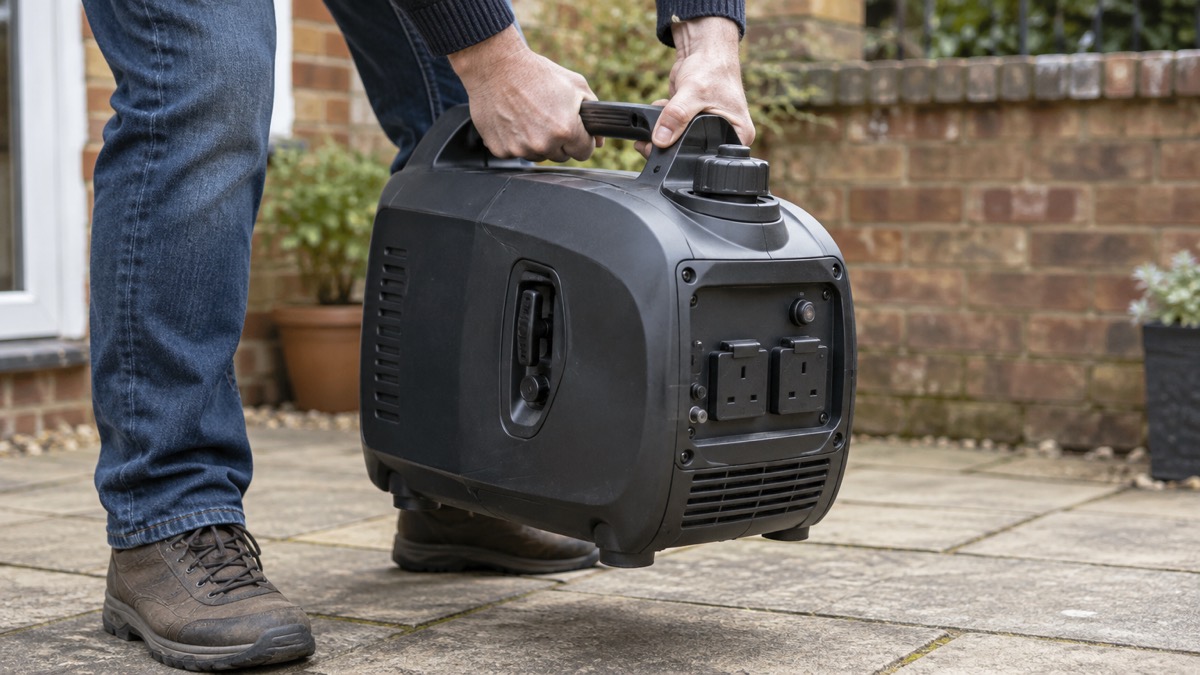
The Gorilla Power GP3500i is a petrol inverter suitcase generator: a portable unit you fill with petrol, start with a recoil pull, and plug appliances into directly. It is rated at 3000W running and 3500W peak, with a true sine wave inverter that the distributor says ensures clean, stable energy for sensitive electronics1. On a 6L tank it gives a 14-hour runtime at 25% load1.
That combination suits a household that wants to run a fridge, freezer, lights and a few electronics through a longer power cut, and is prepared to store and handle petrol and to run the unit outdoors. It is not a plug-in-and-forget battery. It is a small engine, and the safety rules that come with one matter more than any specification.
This page sets out what the GP3500i can do, what it weighs and sounds like, how to use it safely, and what support comes with it. For the wider picture, start with Backup Power at Home: A Household Guide.
What the GP3500i is and who it suits
The GP3500i is an inverter suitcase generator made by Gorilla Power and sold in the UK by Generators Direct1. "Suitcase" describes the format: a compact, enclosed unit with a carry handle, designed to be lifted and moved rather than wheeled. The distributor lists it for "home backup, outdoor power, and heavy-duty applications"1.
The inverter is the part that matters for a household. A conventional generator produces a rougher wave of electricity; an inverter generator converts the engine's output to a clean sine wave, which the distributor says ensures clean, stable energy for sensitive electronics1. In practice that means laptops, televisions and similar kit can be plugged in without the concerns that apply to older open-frame machines. If you are weighing up the two types, Inverter Generator or Open-Frame Generator sets out the differences.
Who it suits: a household with somewhere outdoors to run it, a way to store petrol safely, and a load that needs more than a battery can give for more than a few hours. Who it does not suit: a flat with no outdoor space, anyone who cannot lift 21.50kg safely, or a household that only needs to keep phones and a router going, where a battery unit is simpler. Portable Power Station or Petrol Generator for a Power Cut helps with that choice.
Specifications at a glance
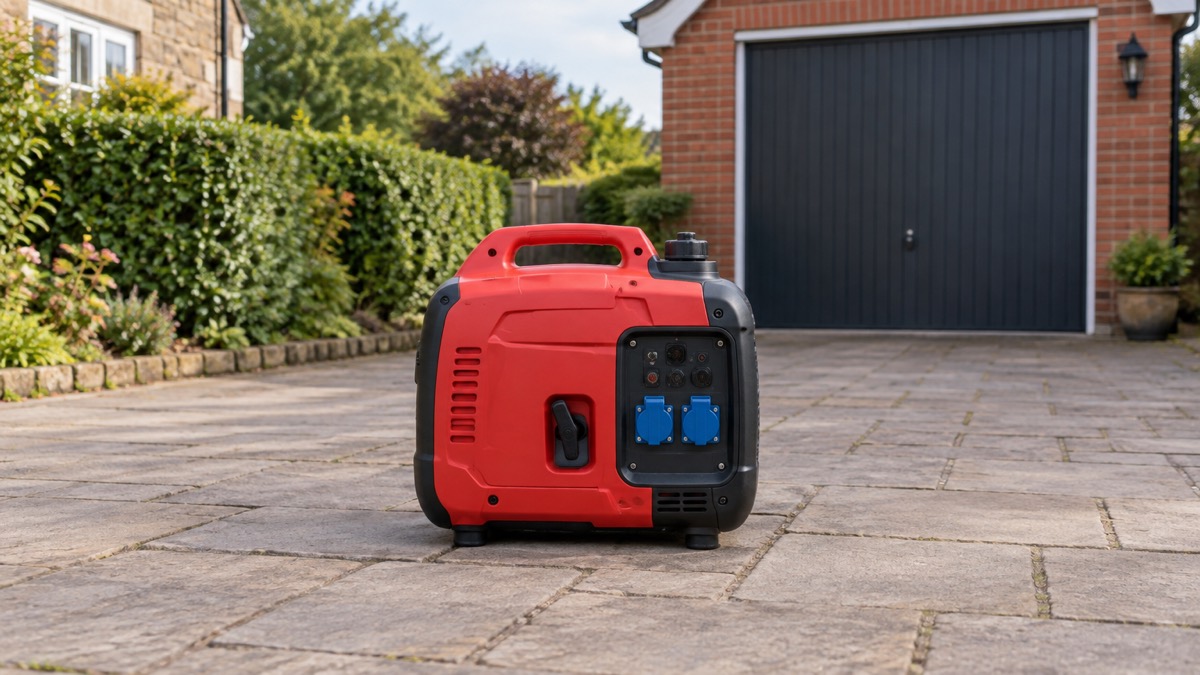
The figures below come from the distributor's product page, dated 10 July 20261. Where a specification decides whether the unit suits your household, the table notes why.
| Specification | Figure | What it means for you |
|---|---|---|
| Running output | 3000W (3.00 kW)1 | The load it can carry continuously |
| Peak output | 3500W (3.50 kW)1 | Short surges only, such as a motor starting |
| Maximum kVA | 3.50 kVA1 | Apparent power ceiling |
| Continuous kVA | 3.00 kVA1 | Apparent power for sustained loads |
| Inverter | True sine wave1 | Clean power for sensitive electronics |
| Fuel | Petrol1 | Needs safe storage and handling |
| Fuel tank | 6.00L1 | Sets the run time |
| Run time | 14 hours at 25% load1 | Real-world time falls as load rises |
| Oil tank | 600ml1 | Check before each use |
| Sockets | 2 x 240V 13A, 1 x USB, 1 x 12V DC1 | Two mains appliances at once, plus small devices |
| Starting method | Recoil1 | Pull cord, no electric start |
| Frequency | 50Hz1 | Matches UK mains |
| Noise | 63 dB(A) at 7m1 | Background noise for neighbours at that distance |
| Weight | 21.50kg1 | A two-person lift for most people |
| Dimensions | 365 x 490 x 540mm (WxHxL)1 | Check it fits your storage space |
| Parallel connectivity | Connect two units for increased power1 | More output from a pair |
| Warranty | 3 years1 | Cover period from the distributor |
If you are not sure how watts, peak watts and surge relate to the appliances in your home, Watts, Watt-Hours and Surge Explained covers the basics.
What it can power, and for how long
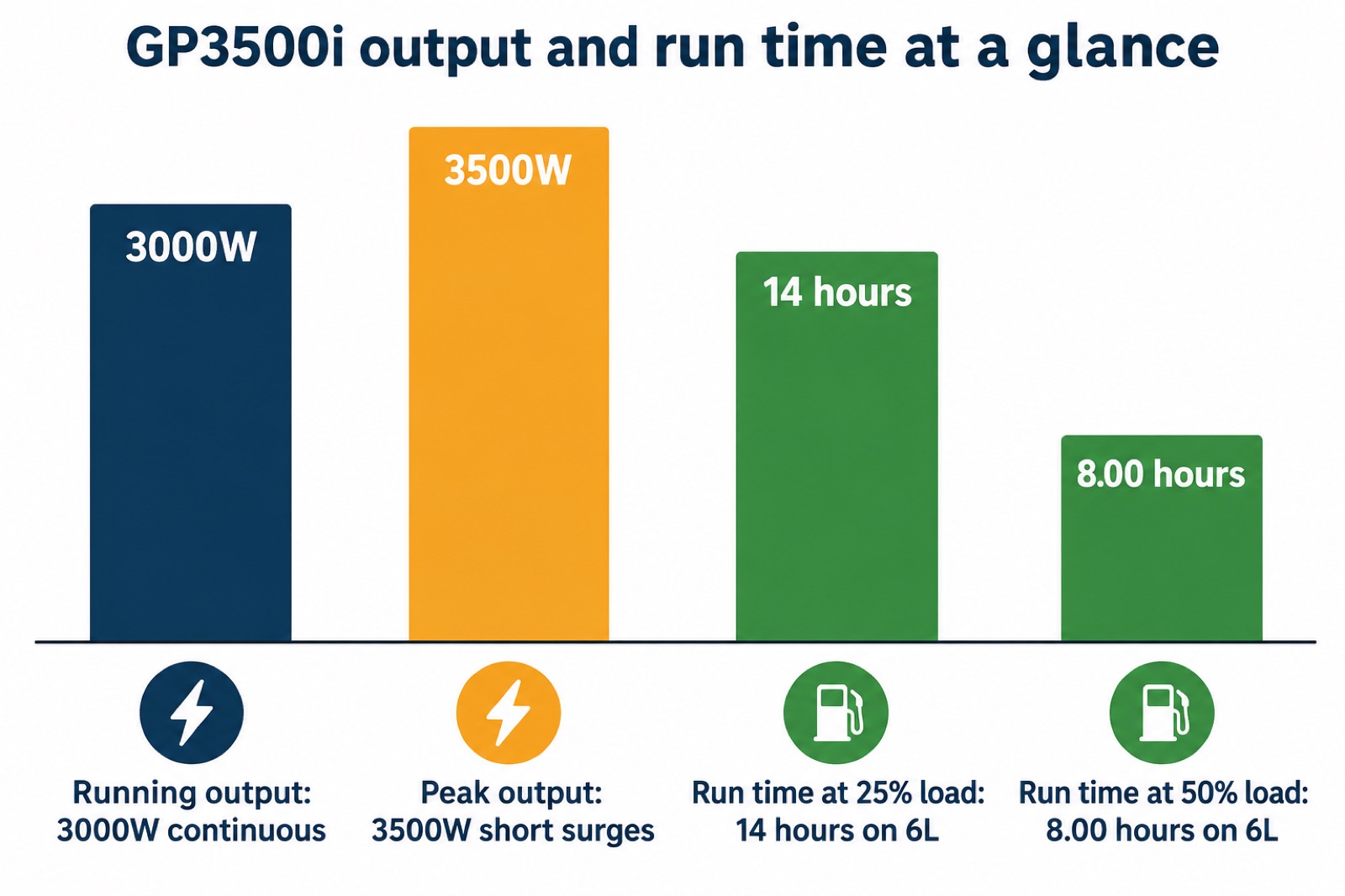
The headline run time is 14 hours on a 6L tank at 25% load1. That figure describes a light load: a fridge, a freezer, some lights and a router, rather than heating or cooking appliances. The same distributor page also gives a run time of 8.00 hours at 50% load, and the two figures are not reconciled on the page1. Treat the 14-hour figure as the best case at light load and plan on less as you add appliances.
For comparison, a maker's product page for a different fuel generator with a 5L tank states it runs about 6 hours at 500W2. That is a different machine with a smaller tank, but it shows how much run time depends on load and tank size. The GP3500i's 6L tank is larger, and its 14-hour figure is quoted at a light load.
What this means in practice:
- Keep the sustained load at or below 3000W. The 3500W figure is a peak for short surges, not a continuous rating1.
- Add up before you plug in. A fridge and freezer cycling on and off, a few lights and a router sit well inside the running figure. An electric heater or kettle will not.
- Expect less run time as load rises. The 14-hour figure is at 25% load1; heavier use burns fuel faster.
- Refuel only when the engine is off and cool. Petrol on a hot engine is a fire risk.
For a fuller method, see What Size Generator Do I Need for a Power Cut? and How Long Will a Generator Run on a Tank of Fuel?.
Sockets, home backup and running two units
The GP3500i has two 240V 13A sockets, one USB outlet and one 12V DC outlet1. That means two mains appliances at once, plus small devices such as a phone on the USB. For a fridge and a freezer, that is exactly two mains sockets; lights and a router would need an extension lead, and Extension Leads and Overloading With Backup Kit explains how to do that without overloading a lead.
The distributor lists the unit for home backup1. Connecting a generator to your home's wiring is a different job with its own rules and risks; Connecting a Generator or Battery to Your Home's Wiring covers what is involved and why it needs proper provision.
The GP3500i also has parallel connectivity, which the distributor describes as connecting two units for increased power1. Two units run together give more output than one, which suits a household with a larger load or a longer outage. Parallel operation needs the correct connecting kit and both units set up as the maker instructs. It does not change the safety rules: both units run outdoors, both need fuel, and the total load still has to be managed.
Noise, weight and size
At 63 dB(A) at 7m, the GP3500i is audible to neighbours at that distance1. That is roughly the level of a lively conversation or a busy road heard from across a garden; it is not silent, and in a quiet street at night it will be noticed. Site it as far from neighbouring windows as your space allows, and avoid running it late at night unless you have to. How Loud Is a Generator? Noise and Neighbours goes further.
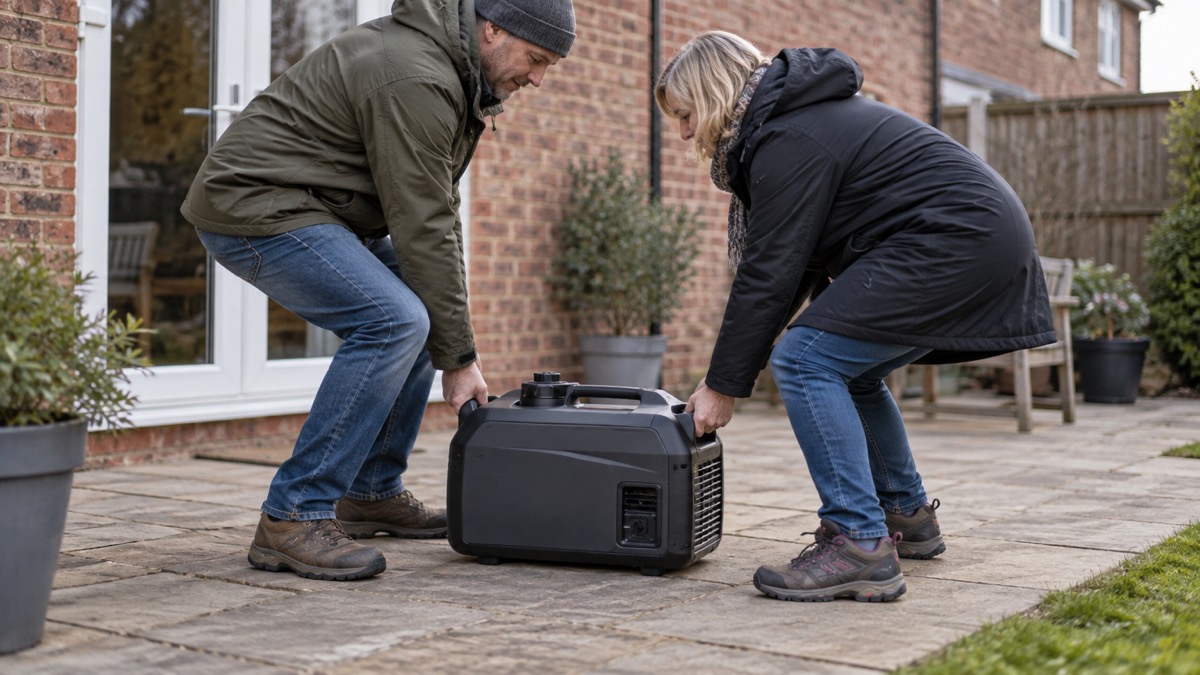
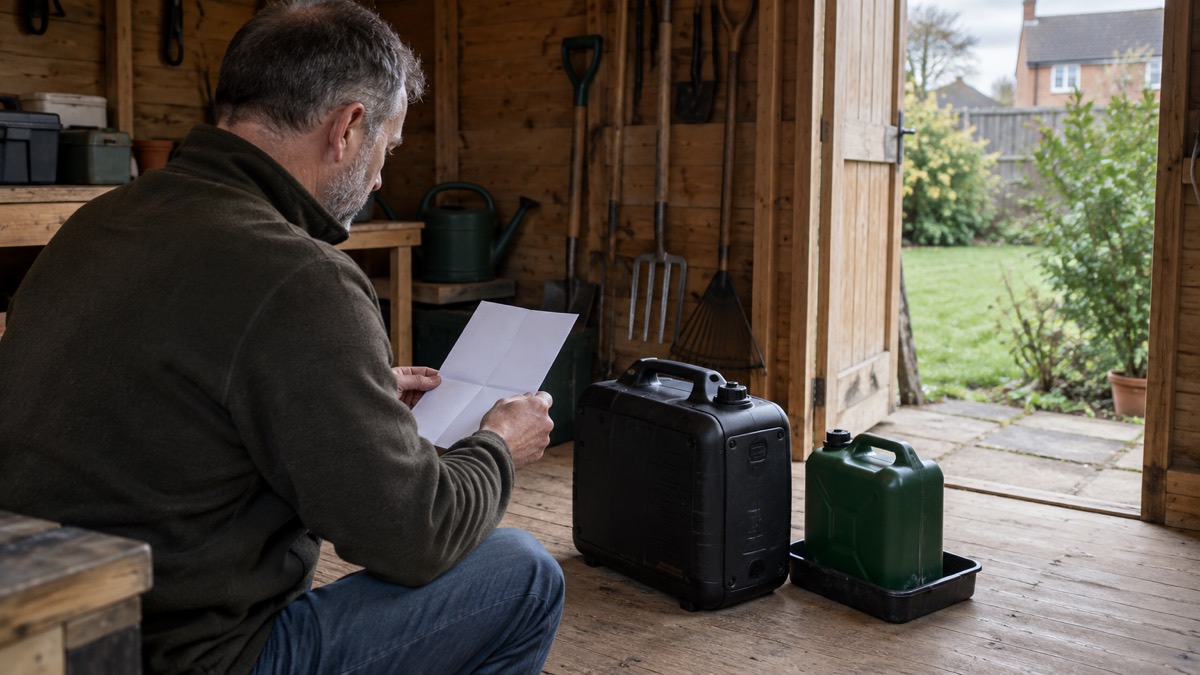
At 21.50kg, plan a two-person lift and decide in advance where it will live and where it will run, so you are not moving it in the dark during a power cut1. Its dimensions of 365 x 490 x 540mm (WxHxL) decide whether it fits a cupboard, shed or car boot1.
Using it safely: fuel, oil and carbon monoxide
The GP3500i runs on petrol and starts with a recoil pull1. Both bring safety duties that the specifications do not show.
- Run it outdoors only. Carbon monoxide is the main danger with any petrol generator. Keep it away from doors, windows and vents, and never in a garage even with the door open.
- Store petrol safely. Petrol is flammable and its vapour is explosive. Store it in a suitable container, away from living spaces and ignition sources, and never refuel a hot engine. How Much Petrol Can I Store at Home Safely? sets out the limits.
- Check the oil before each use. The oil tank holds 600ml1. The unit has a low oil sensor shut-off, which the distributor says prevents engine damage1: if the oil drops too far, the engine stops rather than running dry. If it cuts out unexpectedly, check the oil first.
- Keep the load within 3000W. The 3500W peak is for short surges1.
- Let it cool before storage and refuelling. A hot exhaust is a burn and fire risk.
For the full safety picture, including electric shock and fuel handling, read Generator Safety: Carbon Monoxide, Fuel and Electric Shock and Carbon Monoxide from Generators: Warning Signs.
Moving, storing and keeping it ready
Store the GP3500i upright, dry and out of living spaces, and follow the maker's instructions for fuel before any long period without use.
Before winter, check the unit over: oil level, fuel, air filter and the pull cord, and run it briefly outdoors to confirm it starts. Backup Power Checks Before Winter and How to Store a Generator After a Power Cut set out the routine. Cold weather can make starting harder; Will a Generator Start in Cold Weather? covers what to expect.
Warranty and UK availability
The GP3500i carries a 3-year warranty from the distributor1. It is listed as in stock in the UK, with an extended lead time possible1. The manufacturer is Gorilla Power1. If you are comparing it with the rest of the range, see Gorilla Power GP3800iE and Gorilla Power GP6500E-DF.
Sources (2)
- Gorilla Power GP3500i 3.50kW Inverter Suitcase Generator, Generators Direct, 10 July 2026
- BLUETTI Elite 400 Portable Power Station, BLUETTI, 25 October 2026
 EcoFlow Dual Fuel Generator
 Honda EU70iS Generator
 Honda EU32i Generator
 Honda EG3600 Generator
 Pramac P3500i Generator
 Senci SC6000-II Home Generator
 Senci SC10000-II Generator
 Senci SC6600iED Generator
 Gorilla Power GP3800iE
 Gorilla Power GP6500E-DF
 Hyundai HY2250Si Generator
 Hyundai HY1000Si Generator