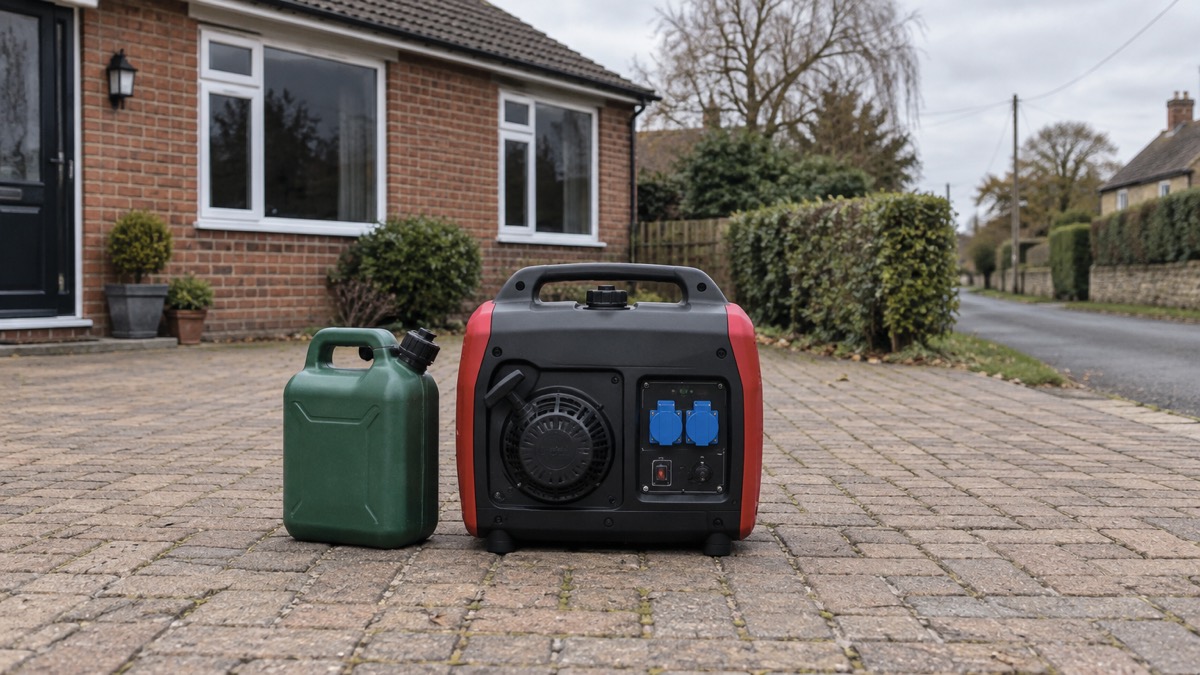
The Hyundai HY2250Si is a petrol inverter generator rated at 2,000W, with a maximum output of 2,200W and a pure sine wave output that Hyundai says suits sensitive electronics such as laptops and mobile devices1. It is built for standby use: Hyundai describes its inverter generators as designed for weekend getaways, holidays or emergency standby use, and states plainly that they are not suitable for continuous daily use or as an off-grid power supply1. For a household that wants something to run the fridge, the lights and a few devices during a power cut, that is the job it is meant for.
The headline figures are straightforward. A 6-litre tank gives a run time of 7.5 hours at 50% load, the noise level is 61 dB(A) at 7 metres, and the machine weighs 21.50 kg net1. It starts by recoil, has ECO mode and low oil shutdown, and carries two standard UK 3-pin 13A sockets plus a 12V DC outlet1. Hyundai's own product page listed it as sold out when checked on 25 October 2026, so availability is worth confirming before you plan around it1.
This page sets out what the HY2250Si can and cannot do, how to run it safely, and how to keep it ready between emergencies. It is a petrol generator, so the safety rules on carbon monoxide, fuel and electrical connections matter as much as the specifications.
What the HY2250Si is and who it suits
The HY2250Si is a single-phase inverter generator running on petrol, built around a Hyundai 4-stroke air-cooled IC80i engine of 79cc1. Inverter generators produce mains-style electricity electronically rather than straight from the alternator, and Hyundai says the HY2250Si's pure sine wave output provides clean electricity suitable for sensitive electronics such as laptops and mobile devices2. That is the practical difference for a household: it is the kind of machine you can plug a laptop or a router into without worrying about the shape of the wave.
Hyundai is clear about the role it is built for. Its inverter generators are, in the company's words, "specially designed for leisure use - for weekend getaways, holidays or emergency standby use", and the same page states they are not suitable for continuous daily use or as an off-grid power supply1. Read that as a limit on how you use it, not a criticism of the machine: it is a standby generator, meant to be started when the mains fails and stopped when power returns.
That makes it a fit for a household that wants a petrol generator to carry a few essential loads through an outage, and a poor fit for anyone hoping to run a home off-grid day after day. If you are still deciding between generator types, the guide to portable generators and inverter types sets out how they differ, and the comparison of an inverter generator or open-frame generator explains why the quieter inverter design suits a domestic setting.
Output: 2,000W rated, 2,200W maximum, pure sine wave
The HY2250Si is rated at 2,000W continuously, with a maximum output of 2,200W2. The rated figure is the one that matters for planning: it is the load the machine is built to carry for the length of a run. The maximum figure is headroom for a brief surge, the kind of short spike a fridge compressor draws when it starts. If you are working out what your own appliances draw, the guide to watts, watt-hours and surge explains the difference, and what size generator you need walks through the sums.
| Specification | Figure |
|---|---|
| Rated output | 2,000W2 |
| Maximum output | 2,200W2 |
| Output technology | Inverter, pure sine wave1 |
| Sockets | Two standard UK 3-pin 13A mains sockets1 |
| DC outlet | 12V DC1 |
| Phase | Single1 |
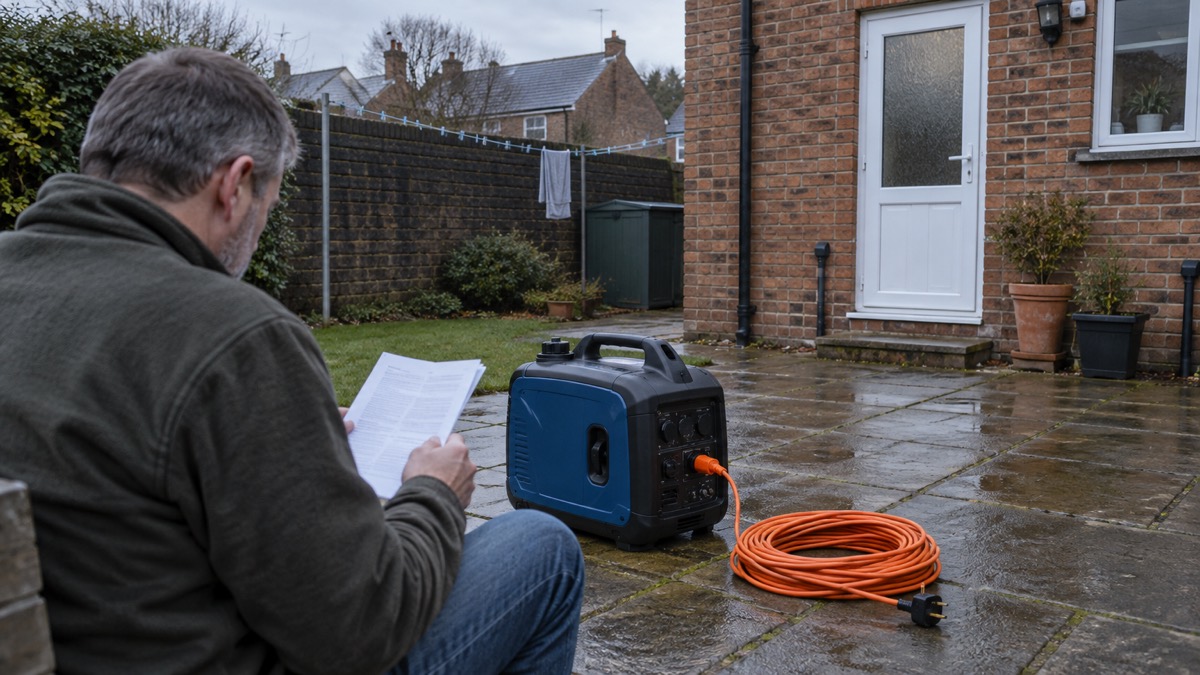
Two things protect the machine and what is plugged into it. Hyundai says the HY2250Si has digital overload protection, which shuts the generator down before it is overloaded1. It also has a built-in low oil shutdown system that turns the machine off should the oil level drop below the minimum1. Both are there to stop damage, and both mean a sudden stop is not necessarily a fault.
The 2,000W rating sets a realistic ceiling. It will carry a fridge, some lighting and a few small devices together, but not an electric shower, an immersion heater or a fan heater alongside them. Decide in advance which circuits and appliances matter, using the guide to deciding what to keep running when the mains fails, so you are not making that decision by torchlight.
Run time: 7.5 hours at half load on a 6-litre tank
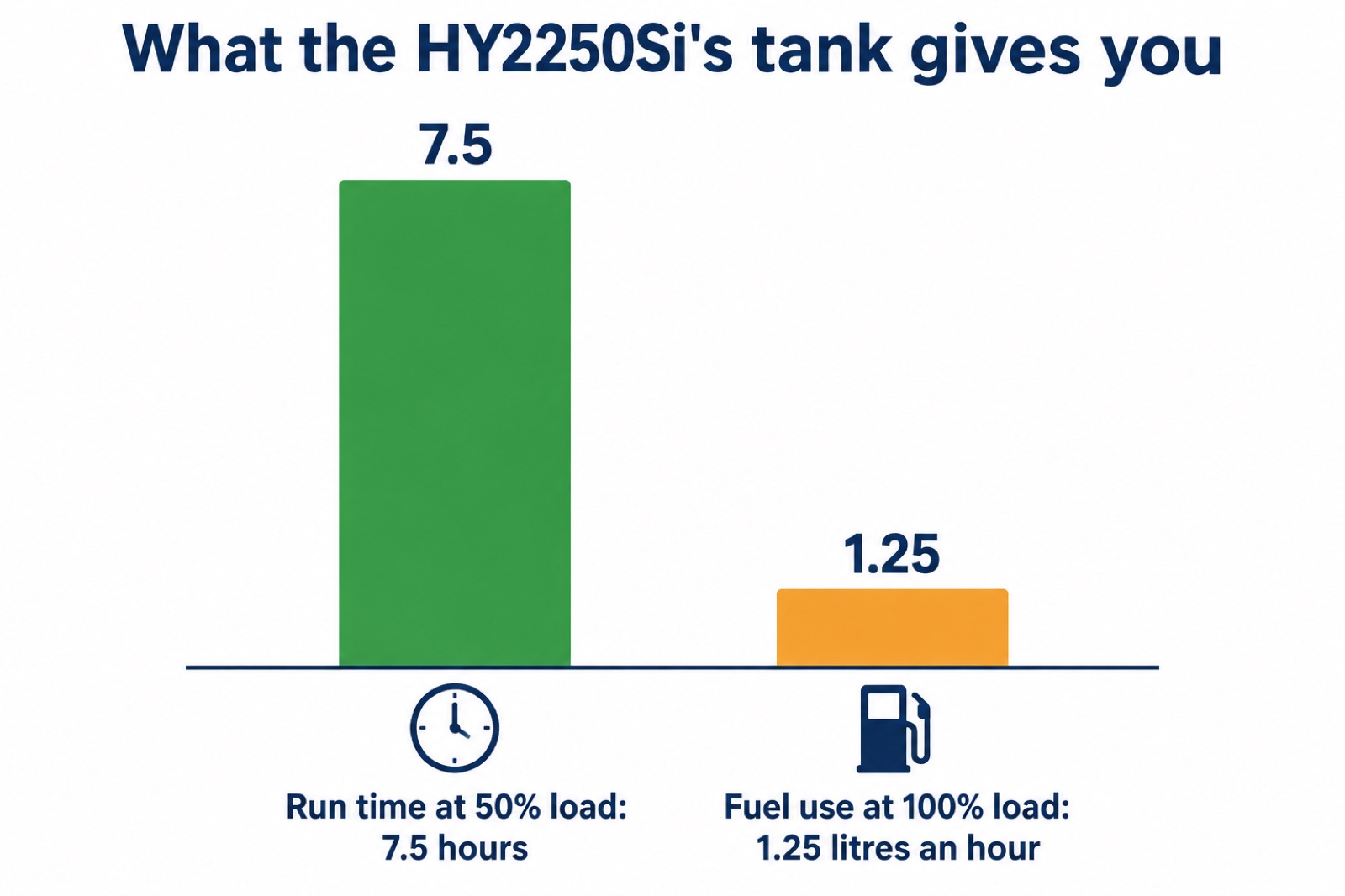
Hyundai gives the run time as 7.5 hours at 50% load1. Half load on this machine is around 1,000W, so the figure describes a modest set of appliances rather than everything at once. Fuel consumption is listed at 1.25 litres an hour at 100% load1. The two figures describe different running conditions, so plan on the basis of the load you actually expect to draw.
In practice, run time is the figure that shapes an outage. A 7.5-hour run at half load covers an evening and part of a night, or a working day, before refuelling. Running heavier loads shortens that, and running in ECO mode stretches it, because Hyundai says ECO lowers engine revs to match only the load being applied, reducing fuel usage and lowering noise levels1. The guide to how long a generator runs on a tank of fuel explains how load changes run time across machines.
Plan refuelling for daylight and for a cold engine where you can. Store petrol only as the safety guidance allows, which the guide to how much petrol you can store at home safely covers, and never refuel a hot or running generator.
Starting it and running it in ECO mode
The HY2250Si starts by recoil, the pull-cord method1. Hyundai's product page also describes an integrated electric start that brings the generator to life at the touch of a button within seconds1, while the retailer lists the starting method as recoil2. The two descriptions do not agree, so check the machine's own manual and control panel before relying on either. The manual is the authority for your unit.
Once running, ECO mode is the setting most households will want. Hyundai says it lowers engine revs to match only the load being applied, reducing fuel usage, lowering noise levels and extending engine lifespan1. The trade-off is that the engine note rises and falls as appliances switch on and off, which is normal for an inverter generator in ECO.
A safe routine looks like this:
- Site the generator outdoors, on firm level ground, away from doors, windows and air vents, and never in an enclosed space1.
- Check the oil level before starting, since the low oil shutdown will stop the machine if the level falls below the minimum1.
- Start it by recoil, following the manual for your unit2.
- Switch on ECO mode for lighter loads to cut fuel use and noise1.
- Plug appliances into the two UK 3-pin sockets or the 12V DC outlet, watching the LCD display for load and fuel1.
- Keep an eye on the display and refuel before the tank runs dry, with the engine off and cool.
Noise, weight and moving it safely
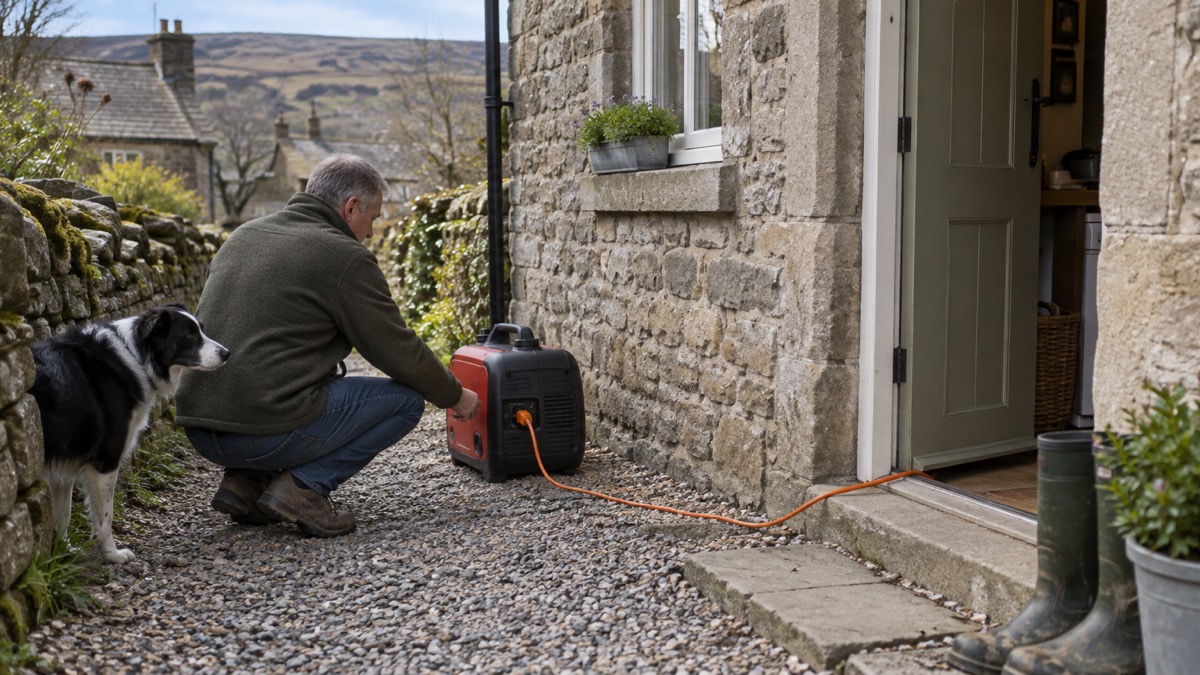
Hyundai lists the noise level at 61 dB(A) at 7 metres1. That is a working sound rather than a background hum, and it is the figure to think about when you choose where the generator will sit. ECO mode lowers noise as well as fuel use1, so a lighter load is also a quieter one. If neighbours are close, the guide to generator noise and neighbours covers what to expect and how to reduce the impact.
Hyundai says it has dual moulded handles and requires only one person for operation2. At that weight it is a two-handed lift for most adults, and lifting it badly is a real risk. Decide where it will live before an outage, keep the route clear, and lift with your legs rather than your back.
| Attribute | Figure |
|---|---|
| Net weight | 21.50 kg1 |
| Fully assembled dimensions (H x W x L) | 485 x 310 x 470 mm1 |
| Packaged dimensions (H x W x L) | 485 x 340 x 520 mm1 |
| Handles | Dual moulded handles2 |
The dimensions matter for storage. Hyundai describes the machine as compact enough to store in a car boot or a caravan cupboard2, and the assembled and packaged figures above let you check that against your own space. The retailer lists a packaged size of 485 x 340 x 520 mm, which matches Hyundai's packaged figure, while the assembled size differs between the two listings; use the assembled figure for the space it needs in use and the packaged figure for the box it arrives in1.
Engine oil, fuel and storage between emergencies
The HY2250Si runs on petrol and takes SAE 30 or 15w40 engine oil, with a capacity of 410 ml1. The engine is a 4-stroke air-cooled IC80i of 79cc1. Because it is a four-stroke, it needs oil in the sump as well as petrol in the tank, and the low oil shutdown will stop it if the level drops too far1. Check the oil before each season and top it up as the manual directs.
Between emergencies, storage is what keeps a generator ready. The guide to how to store a generator after a power cut covers the routine in full, and the backup power checks before winter checklist is a good prompt to run through each autumn. The essentials are to run the machine periodically so it starts when needed, to store fuel safely and only in the quantities the guidance allows, and to keep the machine dry and out of the weather.
The machine carries an EAN of 50596084155441, which helps identify it when you contact the retailer or Hyundai about warranty or parts. Keep the manual with the machine: it is the authority for starting, servicing and any model-specific instructions, and it is listed as part of what comes in the box1.
Where it fits among backup power options
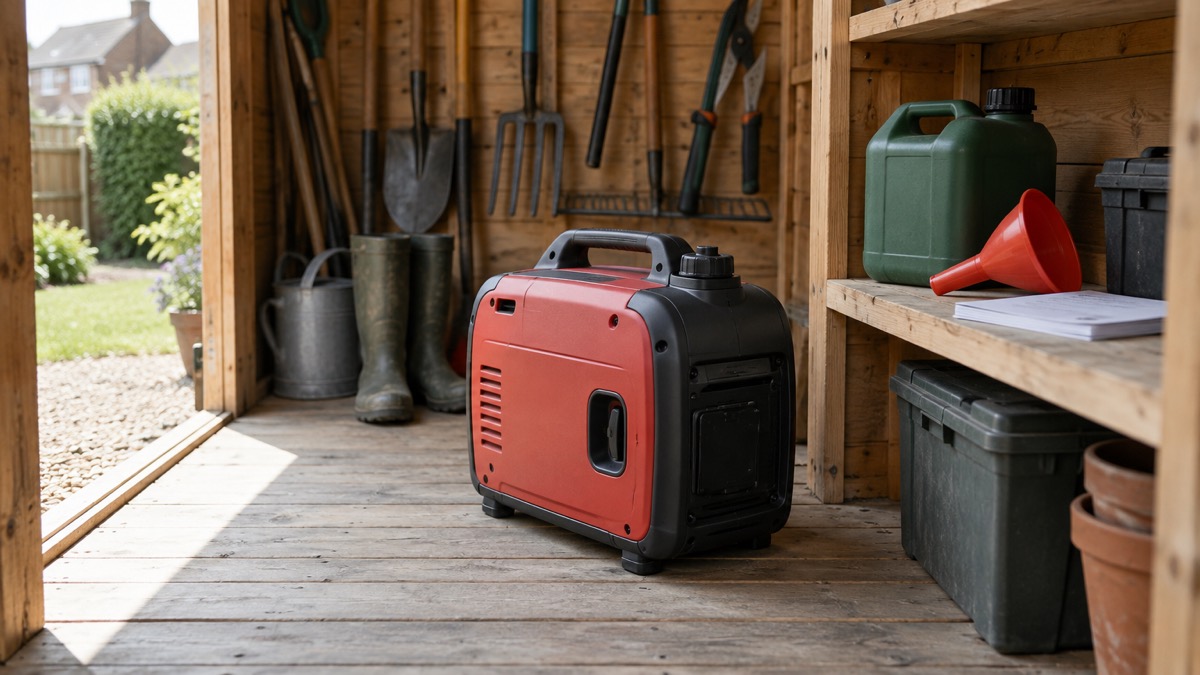
A petrol inverter generator like the HY2250Si is one answer to a power cut, and not the only one. A battery power station stores energy and runs silently with no fuel, but its run time is set by its capacity rather than a tank; the guide to portable power stations explains what they do, and the comparison of a portable power station or petrol generator for a power cut sets the two side by side. For phones and small devices alone, a power bank is simpler, as the guide to power banks explains.
The HY2250Si's strengths are its 2,000W rating, its pure sine wave output for sensitive electronics, and a 7.5-hour run at half load on a 6-litre tank1. Its limits are equally clear: it needs petrol, it makes noise at 61 dB(A) at 7 metres, it weighs 21.50 kg, and Hyundai says it is not for continuous daily or off-grid use1. If you want a related Hyundai model, the HY2250SEi is listed separately, and the wider backup power at home guide covers the full range of options.
Sources (2)
- Hyundai HY2250Si product page, Hyundai Power Equipment, 2026-10-25
- Hyundai HY2250Si petrol inverter generator, Just Generators, 2026-10-25
 EcoFlow Dual Fuel Generator
 Honda EU70iS Generator
 Honda EU32i Generator
 Honda EG3600 Generator
 Pramac P3500i Generator
 Senci SC6000-II Home Generator
 Senci SC10000-II Generator
 Senci SC6600iED Generator
 Gorilla Power GP3800iE
 Gorilla Power GP6500E-DF
 Gorilla Power GP3500i
 Hyundai HY1000Si Generator