
Hyundai's name reaches UK households through power equipment: petrol inverter generators, portable power stations and solar charging kit, sold through the official UK Hyundai distributor1. For a household preparing for a power cut, storm or flood, the question is not what the badge says but what each piece of kit can do when the mains fails, how long it lasts, and how to keep it safe and ready between emergencies.
The safety rules come first, because they decide where the kit can be used at all. A petrol generator must never run indoors or in a partly enclosed space, including a home, garage or crawl space, even with some ventilation2. It must never be plugged into a wall socket to feed the house wiring, because backfeeding puts neighbours and workers at severe risk3. Fuel belongs only in approved, labelled containers, sealed and kept away from any means of ignition4. Batteries are charged and stored in a safe, visible place, away from flammable materials and escape routes6.
Get those rules right and the kit earns its place. A generator or power station covers a fridge, a phone, a light or a router for the hours or days a cut lasts; solar panels top up a battery through daylight, though a 100W panel yields far less in winter than in summer7. This page sets out what Hyundai makes, what each type does for a household, and how to find your model number, check for recalls and claim on the warranty.
What Hyundai makes for UK households
Hyundai power equipment for the home falls into three groups, and each does a different job in an emergency. Inverter generators burn petrol to make mains power on the spot. Portable power stations store electricity in a lithium-ion battery and release it silently. Solar panels and charging kit put electricity back into a battery without fuel. The first is for longer cuts and heavier loads; the second for lights, phones and small appliances; the third for stretching a battery over several days.
| Kit type | What it does in an emergency | What it needs | Main limit |
|---|---|---|---|
| Petrol inverter generator | Makes mains power for appliances during a cut | Petrol, outdoor siting, safe fuel storage | Must never run indoors2 |
| Portable power station | Silent battery power for small loads | Charging before the event, safe battery storage | Limited by its battery capacity |
| Solar panel and charging kit | Recharges a battery from daylight | Daylight, correct connections | Output falls sharply in winter7 |
The household's own plan decides which of these matters most. A flat with no outdoor space cannot use a petrol generator safely at all, so a battery and a torch plan carry the load. A house with a garden and a garage can site a generator outdoors, but only if fuel is stored properly and the exhaust is kept away from windows and doors. The Backup Power at Home guide sets out how these choices fit together, and the Power Cuts guide covers what to do while the supply is off.
Hyundai generators
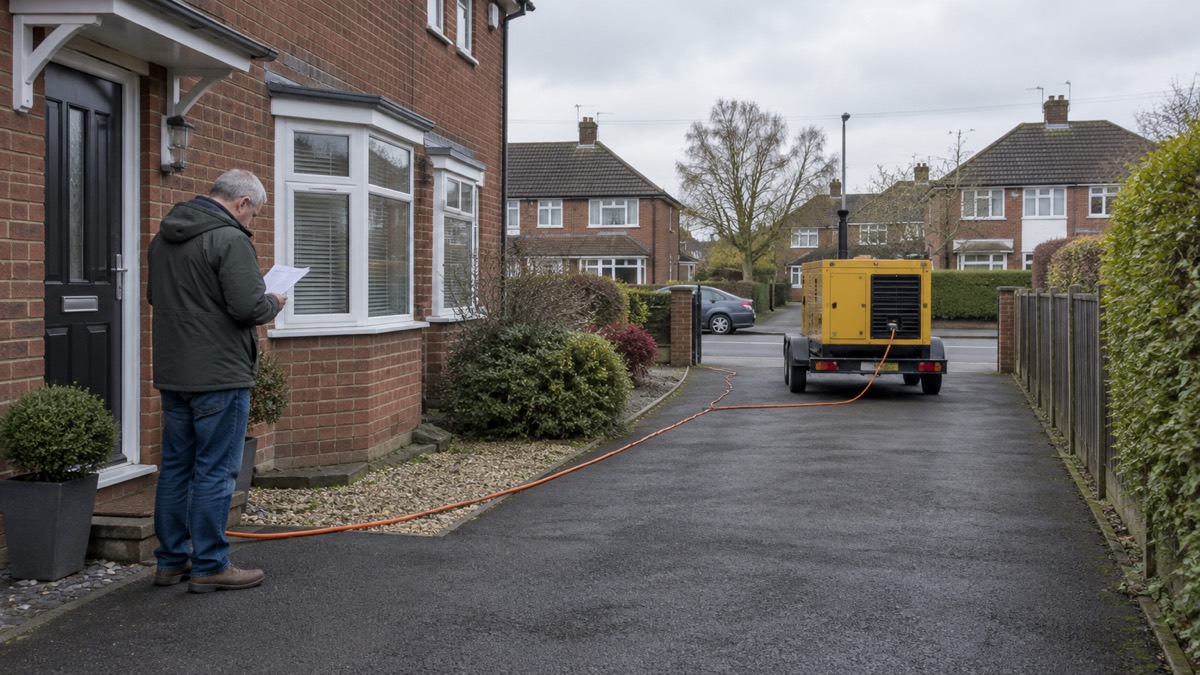
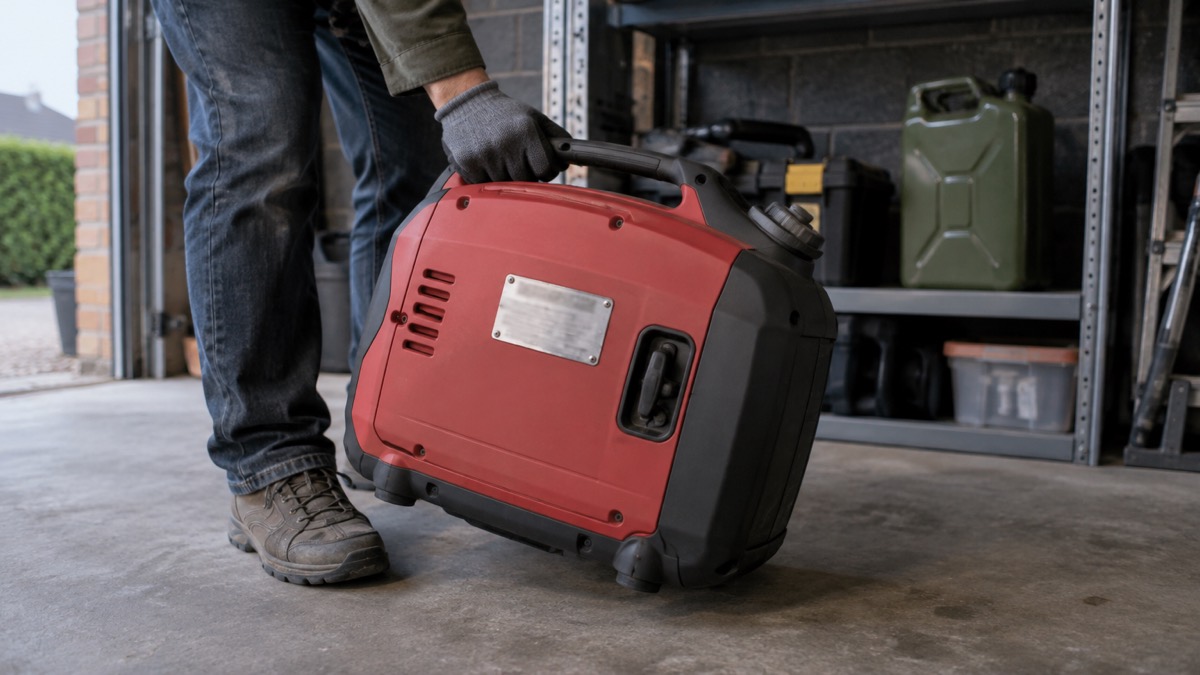
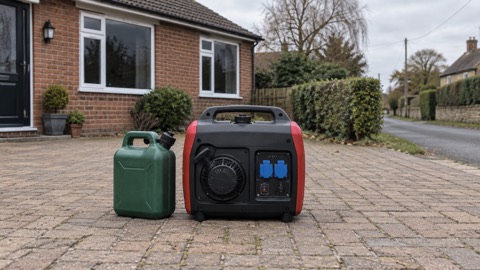
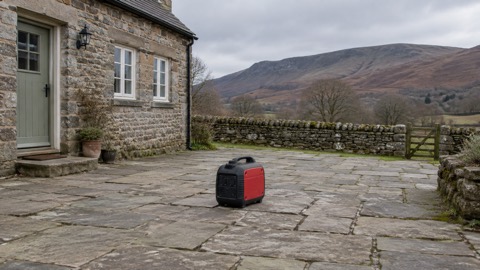
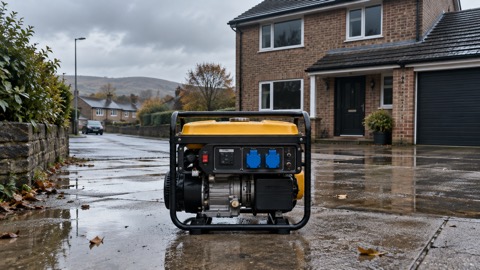
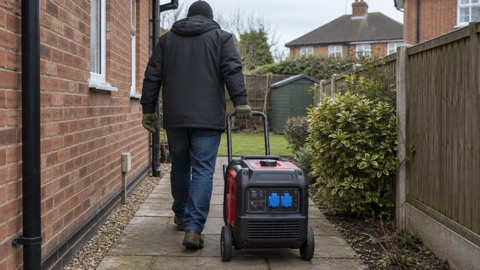
Hyundai's petrol inverter generators are leisure machines, commonly known as suitcase generators, and the range runs from 1kW up to 7.5kW1. They use pure sine wave technology, which the distributor says makes them safe to use with sensitive electronics1. All models can be modified to run off LPG as well as petrol, and half of the models now offer remote and electric key starting1. The distributor describes them as compact, portable and quiet, without giving a noise figure1.
For a household, the output figure is the one that decides what the machine can carry. A small suitcase unit suits lights, a phone charger and a router; a larger one is needed before a fridge or freezer enters the plan. Check the appliance's own rating against the generator's output before relying on it, and remember that a fridge or freezer draws a surge when its compressor starts. The Power Cuts guide explains what is worth running first when the power goes.
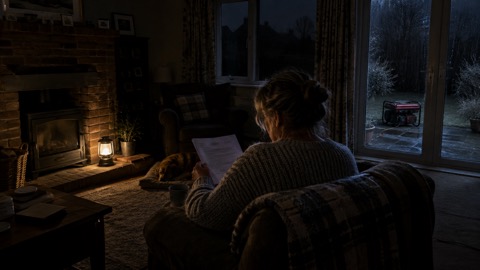
Running a generator is an outdoor job with a strict boundary. The Health and Safety Executive for Northern Ireland advises that a generator must not be used indoors or in partially enclosed spaces, including homes, garages and crawl spaces, even those areas with partial ventilation2. The same warning comes from fire and rescue services across England, Wales and Scotland, and from flood advice in the Scottish Borders: petrol or diesel generators and other fuel-driven equipment should never be brought indoors9. A generator kept in a garage during a storm is a carbon monoxide risk, not a convenience.
Hyundai portable power stations
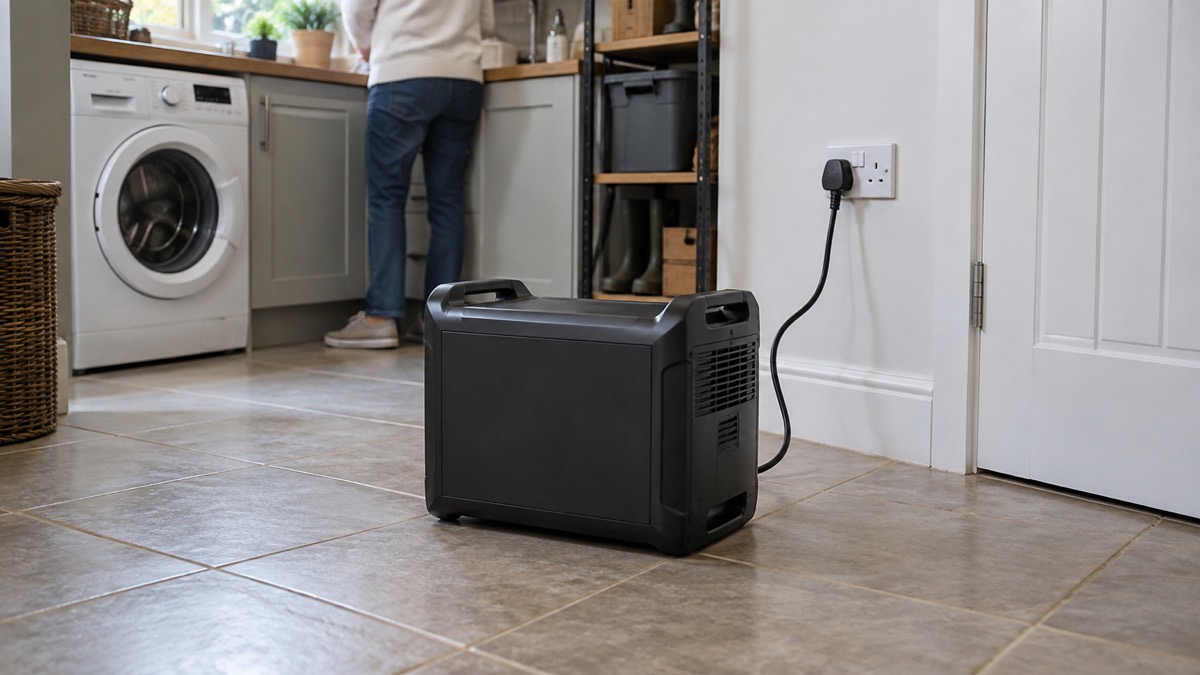
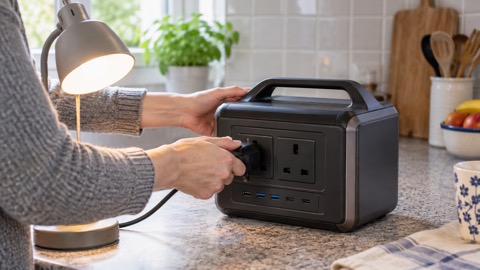
A portable power station is a battery in a box: it stores electricity from the mains before an emergency and gives it back through sockets when the power fails. It makes no exhaust fumes, so unlike a generator it can sit inside the home while it runs. That makes it the option for a flat, a bedroom or a household that cannot site a generator safely outdoors.
The trade-off is capacity. A power station runs for as long as its stored energy lasts, and then it needs recharging from the mains, a solar panel or a vehicle. Before a forecast storm, charge it fully; during a long cut, ration it to the loads that matter, such as a phone, a radio and a light. The Emergency Kit guide covers what a household should keep ready, and the Lighting guide covers torches and lanterns that draw very little.
Battery safety applies to every power station, whatever the badge. Fire and rescue services advise charging batteries in a safe, visible location, away from flammable materials or escape routes6. Charge on a hard, flat, heat-resistant surface, away from extreme heat, cold, direct sunlight and flammable materials8, and use the correct charger13. Never cover a device while it is charging, because that traps heat and increases fire risk14. The Backup Power at Home guide sets these choices out in full.
Hyundai solar panels and charging kit
Solar charging kit keeps a battery topped up without fuel or mains power, which matters in a cut that lasts several days. The figures to plan around come from independent guidance: a 100W solar panel generates 600 to 700Wh in summer, but only 90Wh in winter7. The same panel therefore does very different work depending on the season, and a household relying on solar through a winter storm should expect it to stretch a battery rather than refill it.
That has practical consequences. Size the panel to the battery and to the load, and treat winter output as a top-up rather than a supply. Angle the panel towards the sun and keep it clear of shade, since a partly shaded panel produces less. Store panels and cables with the rest of the kit so they are found in the dark, and check the connections before relying on them. The Self-Reliance at Home guide covers off-grid power more broadly, and the Storms, Snow and Ice guide covers preparing before a forecast storm.
Where a Hyundai generator must never go
The single most important instruction on this page is where a generator cannot go. A generator running in a garage, a shed, a porch or a partly enclosed space can put carbon monoxide into a home and endanger the people inside, even when a window is open. The Health and Safety Executive is blunt about it: petrol generators produce carbon monoxide and should never be operated indoors or in enclosed spaces15.
The same rule covers holidays. Humberside Fire and Rescue Service advises never running a gas, petrol or diesel-powered generator, or a heater not designed for the purpose, inside a caravan, motorhome, tent or awning10. A generator brought along for a camping trip or a caravan stay belongs outside, well away from the living space.
There is a second boundary inside the home's wiring. Armagh Banbridge Craigavon Borough Council advises never connecting a generator directly to your domestic electrical system by plugging it into a wall outlet, to prevent backfeeding, which puts neighbours and workers at severe risk3. A generator is for running appliances directly through its own sockets. Anything involving the fixed wiring of a house needs a qualified electrician, and the Home Emergencies guide covers what to do if carbon monoxide is suspected.
Safe fuel storage
Petrol for a generator is a fire risk that has to be managed before the emergency, not during it. Sussex Resilience Forum guidance is blunt: fuel should only be stored in approved containers, and fire service advice on safe storage should always be followed16. Manchester Fire and Rescue Service adds that containers must be labelled "PETROL" or "HIGHLY FLAMMABLE" and checked regularly to ensure they are in good condition and not leaking4.
- Store fuel only in approved containers, labelled and in good condition4.
- Make sure the container is tightly sealed17.
- Keep petrol away from any means of ignition5.
- Clear at least a three-metre space around any fuel tanks, and stand them on non-combustible material such as gravel or concrete18.
The last point comes from wildfire guidance for rural properties, and it applies to any stored fuel at home: a clear margin around the container means a leak or a fire has less to feed on. Store fuel in a cool, ventilated place away from the house's living areas, never in a hallway or under a stairs, and never decant petrol indoors. The Heating and Cooking Without Mains Power or Gas guide covers the alternatives to fuel-burning kit indoors.
Safe charging and battery storage
Every power station and solar battery in the home is a lithium-ion device, and fire and rescue services treat them with respect. South Wales Fire and Rescue Service notes that these batteries can be recharged and range from mobile phones and tablets to e-bikes and scooters19. The risk is real but manageable: if a lithium-ion battery is improperly charged, handled, stored or disposed of, there is a risk of overheating, catching fire or explosion6.
Portsmouth City Council's battery safety guidance is direct: not charging or storing devices with lithium-ion batteries properly can cause fires20. Keep batteries secure and any battery box vented21, and have a plan for what the household would do if a battery started smoking or burning6. Store power stations where you can see them, not under a bed or in a cupboard full of paperwork, and keep them out of escape routes so a fire cannot block the way out.
Support, spare parts and servicing
Keep the paperwork together: the instruction book, the proof of purchase, the model and serial number, and any servicing records. A warranty claim asks for all of these, and a household that has them to hand can deal with a fault in minutes rather than days. Hyundai Power Products UK sets its warranty at 1 year, subject to fair wear and tear on service items such as spark plugs, carburettors, gaskets, filters, recoil units, cables, clips, hoses, seals, pump valves, AVRs and 12v batteries1.
For households that need extra help during an emergency, the Extra Help in an Emergency guide covers the Priority Services Register and other support. The Hidden Disabilities Sunflower for your vehicle offers help with understanding instructions and communicating your needs, staying calm at a time of stress, getting to a place of safety, and moving and recovering an adapted vehicle22. RE:SOURCE offers help with second hand furniture and household appliances23, which matters if kit is lost to a flood.
Warranty cover and how to claim
Warranty terms vary by model, and the published terms disagree on some of them. For the HY2250Si, one distributor page gives 3 years domestic cover requiring registration and 1 year commercial, while another gives 3 years home use, 1 year commercial, 90 days hire and a maximum of 1,000 hours. For the HY9000LEK-2, one page gives 3 years home use, 1 year commercial, 90 days hire and a maximum of 1,000 hours, while another gives 3 years requiring registration. Check the terms for your own model with the company you bought from before you rely on them.
The claim process itself is straightforward. A maker's warranty notice asks the customer to contact the company from which the product was purchased, provide proof of purchase, provide the model and serial number, describe the fault, supply supporting images or videos if requested, and provide servicing records24. Keep the receipt and the servicing paperwork with the machine, and photograph the rating plate when the kit is new.
Safety notices and recalls
Check new and second-hand kit against the official recall lists before you rely on it. The Office for Product Safety and Standards issues recall and alert notices on its website25, and Electrical Safety First runs an online product checker for household appliances26. Fire services advise checking that a heater is not subject to a product alert or recall26, and that tumble dryers are checked periodically for recalls or safety notices27. If an appliance is not listed as recalled it should be safe to use, but if you have concerns about its safety, contact the retailer or manufacturer28.
Recalls are issued by name and model, so the model number is what you need. The Office for Product Safety and Standards issues recalls and alert notices on its website29, and the HAMAX Buddy Baby Seat recall, notified by Local Authority Trading Standards, shows the same pattern: a named product and a route to respond25. Register electrical items with the manufacturer so you can be contacted if there is a safety recall26, and check the Electrical Safety First website for recalls or safety notices on white goods27. Note the model and serial number of every piece of power kit in the home, and check them against the lists once a year.
Sources (29)
- Hyundai inverter generators collection, Hyundai Power Equipment, 2026-11-02
- Safety tips for using a portable generator in an emergency, Health and Safety Executive for Northern Ireland, 2025-01-26
- Safe use of heaters and generators, Armagh Banbridge Craigavon Borough Council, 2026-10-29
- Domestic and non-workplace storage of petroleum, Greater Manchester Fire and Rescue Service, 2026-10-29
- WM-LRF Community Risk Register, NHS Dorset and partners, 2024-03
- Lithium battery fire safety, Tandridge District Council, 2026-10-29
- Solar power, The Caravan Club, 2026-10-25
- Battery safety, Greater Manchester Fire and Rescue Service, 2026-10-29
- Carbon monoxide safety, Mid and West Wales Fire and Rescue Service, 2026-10-29
- Caravan, motorhome and campervan safety, Humberside Fire and Rescue Service, 2026-10-29
- Diogelwch carbon monocsid, Mid and West Wales Fire and Rescue Service, 2026-10-29
- Flooding advice, Scottish Borders Council, 2026-10-29
- Battery safety, Tower Hamlets Council, 2026-10-29
- Lithium battery fire safety, Mid and West Wales Fire and Rescue Service, 2026-10-26
- Carbon monoxide (CO), Public Health Wales
- Preparing for an emergency: be ready, stay safe, act now, Sussex Resilience Forum, 2025-10
- Storing fuel, Devon and Somerset Fire and Rescue Service, 2026
- Wildfires: rural safety, Devon and Somerset Fire and Rescue Service, 2026
- Lithium-ion batteries, South Wales Fire and Rescue Service, 2026-01-13
- Battery safety, Portsmouth City Council, 2026-10-26
- Fire and summer safety advice, nidirect, 2026-07-03
- Hidden Disabilities Sunflower for your vehicle, National Highways, 2026-10-29
- Emergency kit, Ready Scotland, 2026-10-22
- SENCI warranty, SENCI UK, 2026
- Product recall: HAMAX Buddy Baby Seat, Office for Product Safety and Standards, 2026-10-26
- Stay fire safe, Greater Manchester Fire and Rescue Service, 2026-10-29
- Electrical fire safety, Warwickshire County Council, 2026-10-29
- Electrical safety at home, Scottish Fire and Rescue Service, 2025-02-27
- Ring Automotive cordless tyre inflator recall, London Borough of Bromley, 2025-07-23
 Hyundai HPS
 Hyundai HY2250Si
 Hyundai HY1000Si
 Hyundai HY2000Si
 Hyundai HY3750i
 Hyundai HY2250SEi