

Honda's contribution to a household emergency plan is a small range of petrol inverter generators, plus the engine technology behind them. The models Honda lists for the UK run from the EU10i at 1000 Watts and 13kg, through the EU 22i at 2200 Watts and 20.7kg and the EU32i at 3200 Watts and 26.5kg, up to the EU70is at 7000 Watts and 118kg1. Each is a four stroke petrol engine with inverter technology, and the EU70is adds fuel injection and an electric start1.
The single most important thing to know before you buy or run one is where it can go. Every fire and rescue service and safety body in the material says the same: a petrol generator must never be used indoors, and that includes a garage, a caravan, a motorhome, a tent or an awning2. Carbon monoxide from a petrol engine is the danger, and it is the reason the rest of this page is arranged around placement, fuel and maintenance rather than around features.
If you are weighing up whether a generator belongs in your plan at all, the honest answer is that it is one option among several. A generator earns its place when an outage is long and you need to run something specific: a fridge, a heater, a phone charger or a piece of medical equipment. This page sets out what Honda makes for that job, how to use it without harm, and how to keep it working between emergencies.
What Honda makes for UK households
Honda's UK industrial range, as published on its own site, is built around inverter generators: portable petrol machines that produce mains-style electricity for appliances plugged into them1. The range covers four models with different power outputs and weights, all using four stroke engines and inverter technology, and the largest adds fuel injection and an electric start1.
That is a narrow but useful slice of what a household might need. Honda does not, in the material available here, sell a home battery, a solar setup or a standby generator wired into a house. What it sells is portable power you wheel or carry outdoors, start by hand or by button, and plug appliances into directly. For a household plan, that shapes everything: the generator is an outdoor appliance, and the planning question is what you will run from it and where you will put it.
| Model | Rated output | Engine | Start | Weight |
|---|---|---|---|---|
| EU10i | 1000 Watts | 4 stroke | Manual | 13kg |
| EU 22i | 2200 Watts | 4 stroke | Manual | 20.7kg |
| EU32i | 3200 Watts | 4 stroke | Manual | 26.5kg |
| EU70is | 7000 Watts | 4 stroke with fuel injection | Electric | 118kg |
All figures from Honda's generator overview page1.
The weight column matters more than it looks. A 118kg machine is not something one person lifts into a shed during a storm; it needs a permanent, ventilated outdoor home and probably two people to move. The 13kg EU10i can be carried by one adult, which makes it the easier machine to store and to position safely when the power goes. Match the model to who will move it and where it will stand, not just to the wattage.
For the wider picture of what backup power can and cannot do for a household, and how generators compare with batteries and other options, see Backup Power at Home: A Household Guide.
Honda as a company: more than 14 million engines a year
Honda's generator range is a small window onto a very large engine business. The company's own product pages describe a newly developed, high-performance engine with built-in fuel injection in the EU32i, and fuel injection used to optimise fuel use1. The same inverter technology and four stroke engine design runs across the range, from the 13kg EU10i to the 118kg EU70is1.
For a household, the practical meaning of that scale is parts and servicing: an engine built in large numbers and sold across many markets is one that dealers know and can maintain. It also means the model names are stable and recognisable, which helps when you are ordering a part or booking a service years after purchase.
The engineering choices show up in how the machines behave in an emergency. Inverter technology is what lets a small petrol engine produce power clean enough for sensitive electronics, which is why a generator can charge a phone or run a laptop rather than only powering a light. Fuel injection, on the models that have it, is there to optimise fuel use, which matters when you are running on stored fuel and cannot easily refill1. The EU32i is also described by Honda as delivering a good amount of power while keeping emissions low1, which is relevant outdoors but does not change the rule that it stays outdoors.
What the company scale does not do is change the safety position. A Honda engine burns petrol and produces carbon monoxide exactly as any other petrol engine does, and the Health and Safety Executive's guidance on petrol powered equipment applies to it in full: never use petrol powered equipment indoors or in enclosed spaces unless the ventilation needs have been fully assessed2.
Honda portable generators for power cuts
A power cut is the emergency a generator is bought for, and it is worth being clear about what one will and will not carry a household through. The official advice for a power cut is to have a torch and spare batteries, a wind-up or battery-powered radio tuned to local news, a power bank or solar charger, an analogue phone, warm clothes and blankets, and non-perishable food8. None of that needs a generator. A generator becomes useful when the outage is long enough that you need to run appliances, or when someone in the house depends on powered equipment.
Honda's range gives you a choice by size. The EU10i at 1000 Watts and 13kg is the smallest and lightest, suited to charging devices and running a light or a small appliance1. The EU 22i at 2200 Watts and 20.7kg and the EU32i at 3200 Watts and 26.5kg sit in the middle, still portable by hand1. The EU70is at 7000 Watts and 118kg is a different proposition: it has an electric start and fuel injection, and it is heavy enough that it needs a planned outdoor position rather than being moved at the last minute1.
The EU32i adds a smartphone app that uses Bluetooth to keep you connected, and Honda describes a partner app that lets you monitor, operate key functions and even stop the generator remotely, and switch between generators at the touch of a button so you can monitor several machines from your smartphone1. In an emergency that is a convenience rather than a necessity, but it is useful if the generator sits outside in bad weather and you would rather not keep going out to it.
Each model has its own page on this site with the detail that decides a purchase:
- Honda EU32i, the mid-range model with Bluetooth app control
- Honda EU70iS, the large electric-start model
- Honda EG3600, the other generator in the range
For the household side of an outage, including how long food keeps and what to switch off, see Power Cuts: A Household Guide.
Honda power equipment for emergency use
Honda's generators are the part of its range that maps directly onto an emergency kit, but they are not the whole of a household's power plan, and the official guidance is clear that a generator is a supplement rather than a substitute for basic preparations. The emergency kit lists published by councils and the Scottish and UK governments converge on the same short list: a torch and spare batteries, a wind-up or battery-powered radio, a charged power bank or solar charger, a phone charger, warm clothes and blankets, and spare batteries kept at home8.
A generator fits alongside that kit rather than replacing it. The things it does well are the things a battery cannot do for long: run a fridge, run a heater, or keep a piece of equipment going through a multi-day outage. The things it does badly are everything that needs to happen indoors, because it cannot go indoors at all.
Where a generator earns its keep in a household plan:
- Charging: phones, power banks and a radio, which the kit guidance says to include with spare chargers or power banks10
- Keeping food cold: running a fridge or freezer through a long outage, which is the main reason households buy one
- Heating a room: running an electric heater, though official guidance points to portable heaters as the alternative when central heating is down12
- Medical equipment: keeping powered equipment running for someone who depends on it, which is the strongest reason of all to plan the generator's position in advance
For the full list of what to keep ready, see Emergency Kit: What a UK Household Should Keep Ready. For heating and cooking without mains power, see Heating and Cooking Without Mains Power or Gas: A Household Guide.
Where a petrol generator must never go
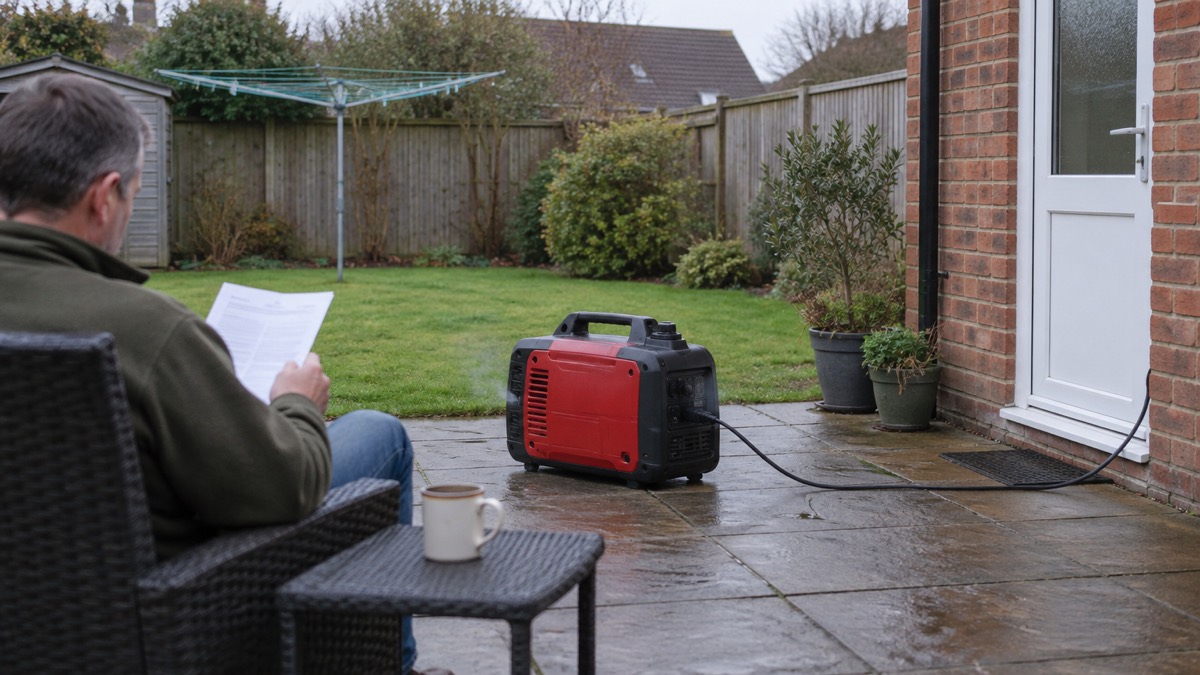
This is the section to read twice. A petrol generator produces carbon monoxide, an invisible, odourless gas, and the fire and rescue services, the Health and Safety Executive and the NHS in Wales all give the same instruction: it does not go indoors2. That includes a garage, a shed attached to the house, a caravan, a motorhome, a tent and an awning3.
The Health and Safety Executive's wording is the one to remember: locate petrol generators outside in well ventilated spaces so that fumes disperse and cannot gather or drift into building openings2. Note the second half. It is not enough to put the generator outside the back door if the exhaust points at an open window or a vent; fumes can drift in. Position it well away from doors, windows and air bricks, and check which way the wind is blowing.
The same rule applies in every part of the UK. Fire and rescue services in England, Wales, Scotland and Northern Ireland all publish it, and the wording does not vary: do not use any fuel-driven equipment, petrol and diesel generators or pumps, indoors3. If you are in a flat with no garden, a generator is not a safe option for you, and the battery-based alternatives in the backup power guide are the ones to look at instead.
Storing petrol and running an engine safely
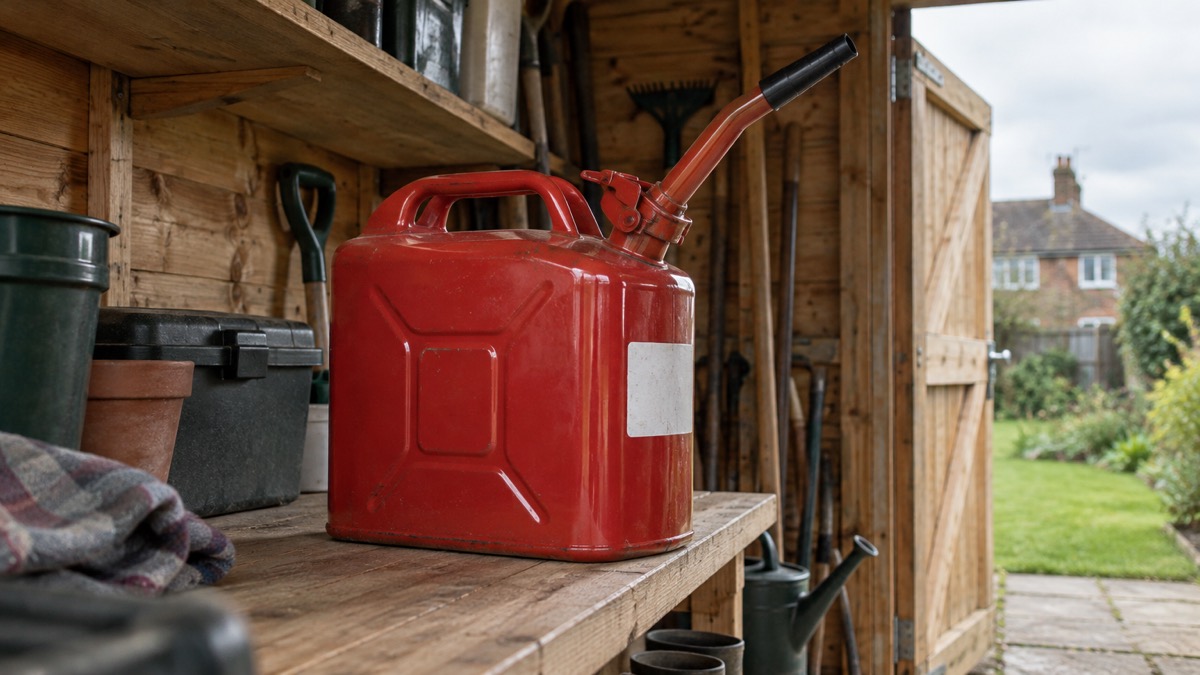
Petrol is the other half of the risk. The Health and Safety Executive's position is blunt: don't store petrol unless you have to, and if you do, store it safely9. Petrol is a dangerous substance, highly flammable, and when not handled safely it has the potential to cause a serious fire or explosion15. Petrol and diesel are extremely flammable and, if not stored correctly, could start a fire11.
The rules for storing it at home are specific. Containers should be stored in a garage or shed away from other buildings, in an area that is well ventilated and away from sources of ignition such as electrical equipment and naked flames15. Use a pouring spout or funnel16. Do not store fuel for your generator in your house: petrol and other flammable liquids should be stored outside living areas in properly labelled containers3. Take all reasonable precautions in your storage place to prevent any sources of ignition or heat that would be capable of igniting the petrol or its vapour5.
There are legal thresholds. Storing petrol safely is covered by the Petroleum (Consolidation) Regulations 20149. If you wish to store more than 30 litres of petrol, and up to a maximum of 275 litres at your home, you must advise the local Petroleum Enforcement Authority in writing with your name and address as occupier5. For larger amounts, the Health and Safety Executive's website has more information16. For most households the practical answer is to store as little as you can and to buy fresh rather than keep a large stock.
Running the engine safely has its own rules:
- Refuel only when cold. Ensure refuelling is only carried out when the generator has cooled down completely, and store fuel safely in properly labelled approved safety containers outside living spaces, away from ignition sources17.
- Keep it out of the rain and storms. A generator running in the open during a thunderstorm is a risk in itself; plan a covered but open-air position.
- Do not use petrol as a cleaner. You should not use petrol in the storage place other than in the fuel tank of an internal combustion engine, in quantities not exceeding 150 millilitres at any one time, for cleaning or as a solvent for repair purposes6.
- Follow the maker's instructions. Always follow the manufacturer's operating and maintenance instructions18.
Looking after a Honda engine between emergencies
A generator that has sat unused for two years is the classic emergency failure: it will not start when you need it. The official guidance that bears on this is simple but easy to skip. Always follow the manufacturer's operating and maintenance instructions18, and keep the machine and its fuel in a state where it can be used at short notice.
The maintenance routine that matters for a household:
- Run it periodically. Start the engine and let it run under a light load now and then, following the maker's instructions for your model, so that fuel and moving parts do not seize up.
- Keep fuel fresh. Petrol degrades in storage, so store only what you will use and replace it, rather than keeping a large stock for years.
- Check the machine before the season. Before winter, check the oil, the air filter and the spark plug, and make sure the starting method works: manual start on the EU10i, EU 22i and EU32i, electric start on the EU70is1.
- Keep the manual with the machine. The manual is the authority on starting, running and servicing your model.
- Plan who moves it. A 118kg machine needs a planned position and probably two people; decide now where it will stand and who will set it up1.
There is a community dimension too. Official guidance suggests planning with your neighbours or community about who could assist you during an outage, for example identifying someone who could drive you to get help in an emergency19. If your generator is the only one on the street, that conversation is worth having before the power goes, not after.
For the wider routine of keeping a household ready, see Getting Started: Preparing Your Household for an Emergency and Community Resilience: A Guide for Neighbours and Local Groups.
Honda support and warranty in the UK
Honda's UK industrial site is the starting point for support on its generators: it lists the model range, the specifications and the starting method for each machine1. When you contact a dealer or Honda, give the model name and the serial number, because that is how the right part and the right manual are identified.
Registration is the habit that keeps you covered. Official guidance on electrical products says to register your product with the manufacturer for safety updates, recalls and warranties20. That is how a recall notice reaches you rather than sitting unnoticed on a website. Keep the purchase date with the serial number, because that is the set of details typically needed to register an appliance21.
If you have concerns about a product's safety, contact the retailer or manufacturer21. If an appliance is not listed as recalled it should be safe to use, but that is a starting point rather than a guarantee, and a concern is always worth raising directly.
For households with additional needs, there is help beyond the manufacturer. The Hidden Disabilities Sunflower scheme is available for your vehicle if you may need additional support if you break down or need assistance on a motorway or major A-road in England22. For the wider question of who can help in an emergency, including the Priority Services Register, see Extra Help in an Emergency: Older, Disabled and Medically Dependent Households.
Honda safety notices and recalls
No recall affecting a Honda generator appears in the material available for this page. That is not the same as saying none exists, and the responsible habit is to check rather than assume.
The routine is straightforward. Register the product with the manufacturer for safety updates, recalls and warranties20. Check any products you have bought are not subject to a product recall, using the Electrical Safety First website or the government website20. If an appliance is not listed as recalled it should be safe to use, and if you have concerns about its safety, contact the retailer or manufacturer21.
Recall notices do reach households through local channels as well as national ones. Fire and rescue services publicise recalls directly, as Humberside Fire and Rescue Service did when alerting residents to a product recall affecting certain Ideal Heating Logic 2 Combi and System boilers, advising people to check against the official recall notice on GOV.UK23. The lesson for a generator owner is to read any notice that arrives and to check the model and serial number against it.
For the household side of fire and carbon monoxide safety, including alarms and what to do if one sounds, see Home Emergencies: Fire, Carbon Monoxide, Gas Leaks and Burst Pipes.
Sources (22)
- Honda inverter generators overview, Honda, 2026-10-25
- Carbon monoxide in construction, Health and Safety Executive, 2026
- Safety tips for using a portable generator in an emergency, Health and Safety Executive Northern Ireland, 2025-01-26
- Caravan, motorhome and campervan safety, Humberside Fire and Rescue Service, 2026-10-29
- Carbon monoxide safety, Mid and West Wales Fire and Rescue Service, 2026-10-29
- Looking after the electrics - At home - Keeping You Safe - North Wales Fire And Rescue Service, North Wales Fire and Rescue Service
- Power cuts, West Yorkshire Prepared, West Yorkshire Prepared
- Staying safe with fire and explosion risks, Health and Safety Executive, 2026
- Emergency kit, Ready Scotland, 2026-10-22
- Stay warm safely in winter, Devon and Somerset Fire and Rescue Service, 2026
- Stay safe in a thunderstorm, Met Office, 2026-10-25
- Carbon monoxide, Public Health Wales, 2025-12-08
- Carbon monoxide safety, North Wales Fire and Rescue Service, 2026-10-29
- Storing fuel, Devon and Somerset Fire and Rescue Service, 2026
- Domestic and non-workplace storage of petrol, Greater Manchester Fire and Rescue Service, 2026-10-29
- Safe use of heaters and generators, Armagh City, Banbridge and Craigavon Borough Council, 2026-10-29
- Portable heaters, Mid and West Wales Fire and Rescue Service, 2026-10-29
- Phone and broadband outages, Prepare, 2026-10-12
- E-bikes and e-scooters, Cheshire Fire and Rescue Service, 2026-09-30
- Electrical safety, Scottish Fire and Rescue Service, 2025-02-27
- Hidden Disabilities Sunflower for your vehicle, National Highways, 2026-10-29
- Check your boiler: important product recall, Molescroft Parish Council, 2025-12-02
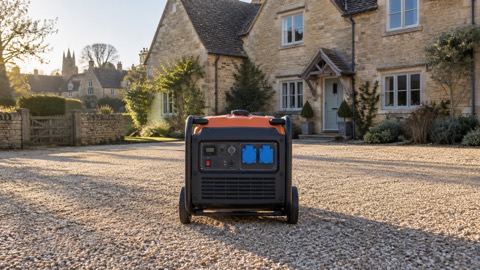 Honda EU70iS
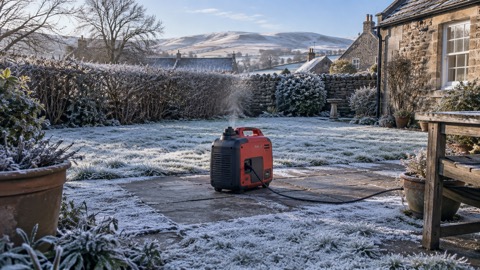 Honda EU32i
 Honda EG3600