

A Senci generator is a petrol-powered machine that can keep a few essentials running when the mains supply fails, and the maker sells several models to UK households through Senci UK. If you are thinking about one, the first thing to settle is what you want it to do: run a fridge and a few lights for an evening, or carry a larger load. The second is safety. Every fire and rescue service in the UK is clear that a fuel-driven generator must never be run indoors, and the maker's own warranty excludes enclosed or poorly ventilated places1.
The models most relevant to a household are the SC2000i, a small inverter generator with a 4L fuel tank and a recoil start, and the SC13000-II, a much larger petrol generator with a 30L tank and an electric start3. Both are listed at 50Hz, which matches the UK mains supply3. Before you buy, check the unit carries a CE, UKCA or UKNI mark, which official guidance says shows it meets all relevant safety requirements5.
This page sets out what Senci makes for UK households, how to check a model is UK ready, where a generator must never go, how to use and store one safely, and how warranty and support work if something goes wrong. It does not rank Senci against other makers; it explains what the kit does and how to keep it ready between emergencies.
Senci in the UK: a generator maker new to British households
Senci makes generators and sells them in more than 50 countries and regions, and its UK arm, Senci UK, publishes British product pages and a UK warranty document1. For a household, that matters in two ways. First, the models on sale here are listed for the UK supply: both the SC2000i and the SC13000-II are given as 50Hz machines, which is the frequency of the UK mains3. Second, the paperwork is British: the warranty document sets out how a UK owner claims, where to send a machine and what is excluded1.
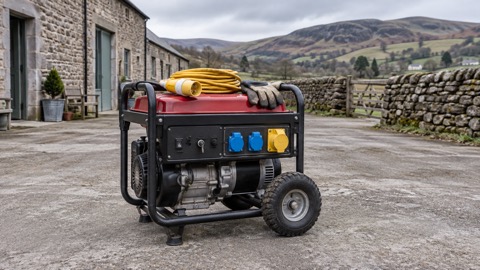
The range splits into two kinds of generator. Inverter generators, such as the SC2000i, are the smaller, quieter end of the range; the maker states that inverter generators are not intended for commercial use1. Frame-mounted petrol generators, such as the SC13000-II, are larger machines with a wheel kit supplied for moving them about3. The maker describes the SC13000-II as having a strong and rugged design, coupled with a Senci alternator, and a circuit breaker that cuts off the electricity system when overloaded3.
It helps to know where a generator sits in a household plan. It is not a replacement for the mains: Senci's warranty excludes use as a primary power source in place of mains electricity, and use as rental or hire equipment1. It is a backup for a limited period, run outdoors, to keep a few things going while the supply is restored. For the wider picture of what backup power can and cannot do, see Backup Power at Home: A Household Guide.
What Senci sells in the UK
Senci's UK range covers generators and pressure washers, and the warranty document sets out a different term for each type1. For emergency preparedness, the generators are the relevant kit; the pressure washer is a cleaning tool rather than backup power, and is included here only so you recognise the name on the warranty table.
| Kit type | What it does for a household | Warranty term (maker) |
|---|---|---|
| Inverter generators (e.g. SC2000i) | Smaller, quieter petrol generator for a limited backup load; not intended for commercial use1 | 3 years / 1000 hours, whichever comes first; parts, return to base labour and return carriage for the first year, parts only for the second and third year, leisure use1 |
| Petrol frame-mounted generators (e.g. SC13000-II) | Larger petrol generator with a wheel kit for moving it; circuit breaker cuts off when overloaded3 | 1 year (12 months) / 1000 hours, whichever comes first; parts, return to base labour and return carriage1 |
| 1500RPM diesel generators | Diesel generator; warranty coverage is continual from the initial date of purchase and does not restart under any circumstances1 | Continual from the initial date of purchase1 |
| Pressure washers | Cleaning equipment, not backup power | 1 year (12 months); parts, return to base labour and return carriage, leisure and commercial use1 |
The two generator models a household is most likely to meet are set out below. The SC2000i is the small inverter unit: a 79cc engine, a 4L fuel tank, a recoil start and a noise level the maker lists as 58dBA at 7 metres4. The SC13000-II is the large petrol unit: a 627cc engine, a 30L fuel tank, an electric start and a wheel kit3. Both run on petrol3.
The SC2000i inverter generator
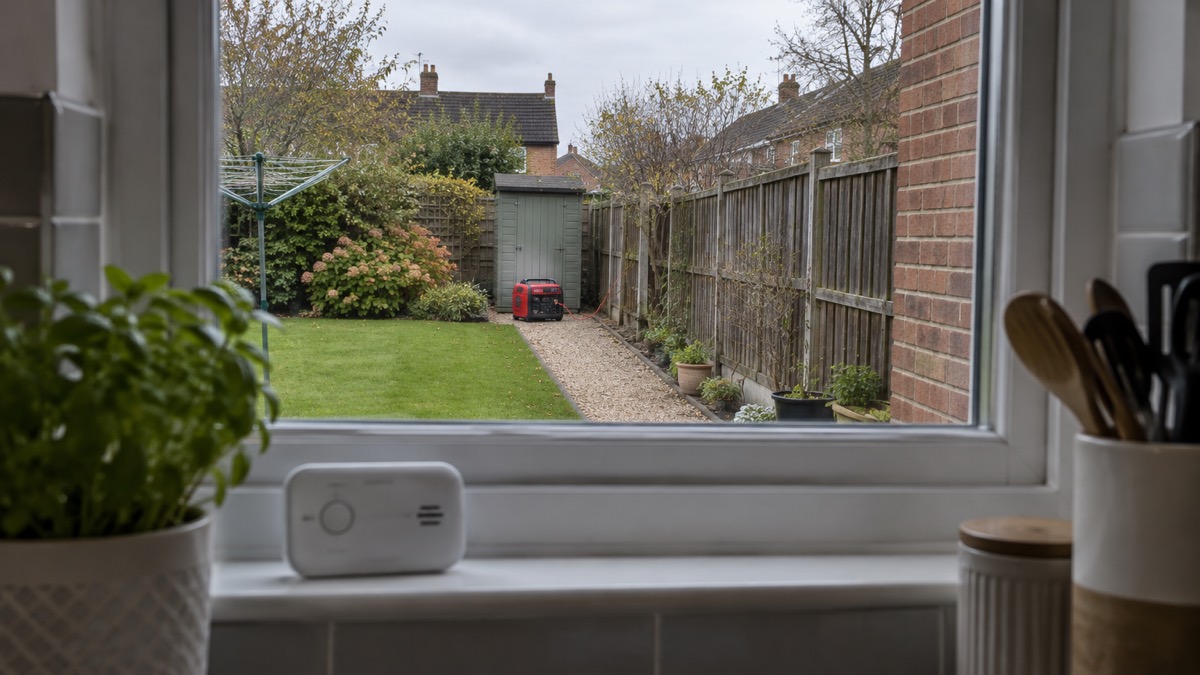
The SC2000i is built around a Yamaha MZ80 engine of 79cc, coupled with what the maker calls a superior quality Senci inverter alternator4. It has a 4L fuel tank and a recoil start, and the maker states it is super quiet, operating at 50 to 65dBA with a noise reduction system, with a listed noise level of 58dBA at 7 metres4. For a household, the small tank and quiet running suit short outages where you want a fridge, a light or a phone charger rather than the whole house. The maker's warranty for inverter generators runs 3 years or 1000 hours, whichever comes first, with parts, return to base labour and return carriage covered for the first year and parts only for the second and third year, for leisure use1.
The SC13000-II petrol generator
The SC13000-II is a petrol generator with a 627cc engine, a compression ratio of 8.5:1, a 30L fuel tank and an electric start3. The maker supplies a wheel kit for easy manoeuvrability, and describes a unique muffler with spark arrestor that is lower noise and more environmentally friendly3. A circuit breaker cuts off the electricity system when overloaded3. The larger tank and electric start suit a longer outage or a heavier load, but the machine is correspondingly bigger to move and store. Its warranty is 1 year or 1000 hours, whichever comes first, including parts, return to base labour and return carriage1.
UK ready generators: what the label should mean for your home
A generator sold to a UK household should carry a mark showing it meets the relevant safety requirements. Official guidance is direct: only use a generator with a CE mark or UKCA or UKNI mark to show it meets all relevant safety requirements5. The same principle runs through official advice on other electrical equipment: look for the UKCA or CE mark that indicates chargers comply with UK or European safety standards7, and electrical appliances in rented homes should be in good condition and carry the British or European marking8.
For a generator, the mark is only part of the check. The machine also has to suit the UK supply, which is why the 50Hz figure matters: Senci lists 50Hz for both the SC2000i and the SC13000-II3. A household should also keep the paperwork that proves where and when it was bought, because the maker asks for proof of purchase with every warranty claim1.
- Check the mark: CE, UKCA or UKNI, per official guidance5
- Check the frequency: 50Hz, as listed for the SC2000i and SC13000-II3
- Keep proof of purchase: required for a warranty claim1
- Register the unit: so you are told about any recall6
- Read the maker's instructions: official guidance says to be sure to read the manufacturer's instructions on how to use the generator9
Sold in more than 50 countries and regions
Senci sells in more than 50 countries and regions, and that reach has a practical consequence for a UK buyer: the same maker's name appears on machines built for different markets. The UK pages list 50Hz for the SC2000i and the SC13000-II, which is the figure to look for on a UK unit3. A machine built for a market with a different supply would not match the UK mains, so buy from a UK seller with UK paperwork rather than importing.
The warranty document is written for the UK owner and sets out where a machine goes if it needs repair. If the generator requires return to base for repair, a completed returns form must be submitted before any collection is arranged1. For Northern Ireland and the Channel Islands, the maker says it may be more cost-effective for the customer to send the unit to a mainland address, and Senci will collect and return it from there1. Highlands and Islands addresses may incur a surcharge1. These are the practical details that decide how quickly a household gets its backup power back, so read them before you need them.
Where a generator must never go
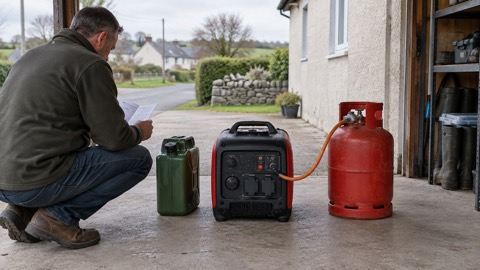
This is the section to read twice. A petrol generator produces carbon monoxide, a gas you cannot see, taste or smell, and official guidance warns households to be careful using generators for exactly that reason10. The fire and rescue services and public health bodies across the UK are unanimous: a fuel-driven generator must not be run indoors.
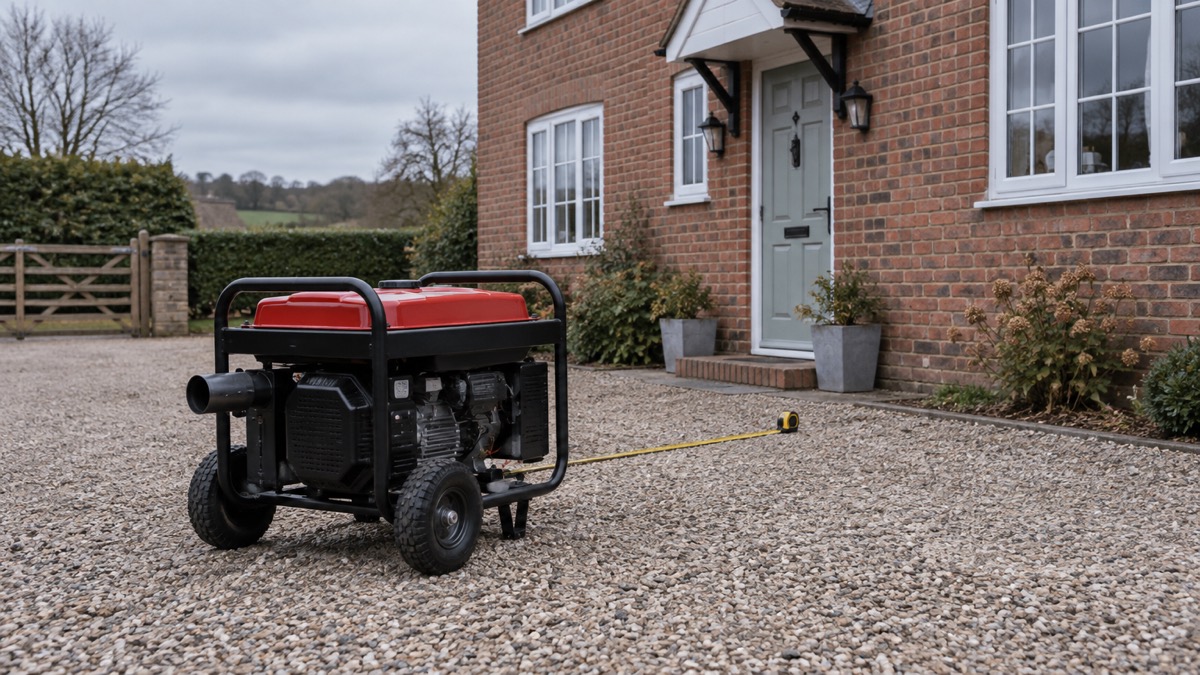
The official wording is worth keeping in mind. The Health and Safety Executive for Northern Ireland states: "Do not use a generator indoors or in partially enclosed spaces, including homes, garages, and crawl spaces, even those areas with partial ventilation"11. Public Health Wales says never use a generator indoors12. The Welsh fire and rescue services say do not use any fuel-driven equipment, generators or petrol and diesel pumps, indoors13. The Scottish flooding advice is the same: petrol or diesel generators and other fuel-driven equipment should never be brought indoors14.
The distance matters as much as the room. Official guidance says to operate generators outdoors at least 6 metres, or 20 feet, away from windows, doors and vents, and that partially open spaces, garages and sheds are unsuitable5. A caravan, motorhome, tent or awning is no exception: never run a gas, petrol or diesel-powered generator or a heater that is not designed for this purpose inside a caravan, motorhome, tent or awning15. If you are sheltering from a storm or a flood, the generator stays outside, whatever the weather.
Using a Senci generator safely during a power cut
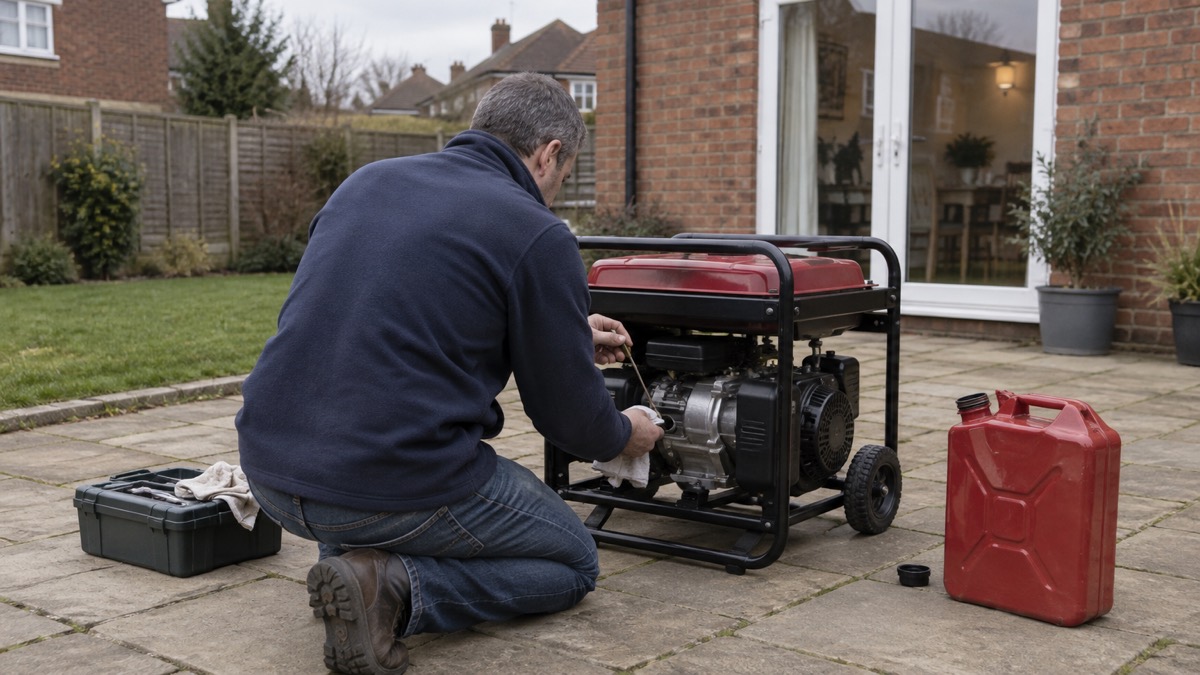
When the power goes, the generator is a stopgap, not a substitute supply. Senci's warranty excludes use as a primary power source in place of mains electricity, and any unauthorised modification or installation into vehicles, structures or third-party systems1. That means no wiring the generator into the house's circuits yourself. Run appliances from the generator's own outlets, outdoors, and keep the load within what the machine is built for; the SC13000-II has a circuit breaker that cuts off the electricity system when overloaded3.
A simple order of work helps:
- Set the generator outdoors, at least 6 metres from windows, doors and vents, on firm ground5.
- Check the machine before starting: the maker's instructions cover starting and running9.
- Run only the appliances you need, one at a time, and watch for the circuit breaker tripping on overload3.
- Keep the generator running only while it is needed, and switch it off before refuelling.
- Never bring it inside, into a garage or into a shed, even briefly5.
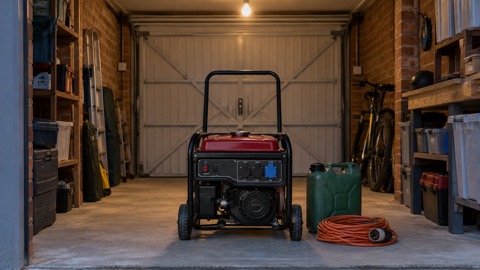
Senci's warranty also excludes use in enclosed or poorly ventilated environments, vehicle-mounted or mobile applications, temporary or confined structures, and high moisture or contaminated environments1. Those exclusions line up with the safety advice: the machine is designed to run outdoors, in the open, and a household that keeps to that is using it as intended.
Storing a generator and its fuel between emergencies
Most of a generator's life is spent stored, and that is where many faults begin. Senci's warranty exclusions include damage caused by a lack of maintenance, improper installation or storage, and fuel-related faults from stale or contaminated fuel1. A machine left with old petrol in the tank may not start when you need it, and the repair will not be covered.
- Store it dry and outdoors-ready: the warranty excludes water ingestion, submersion and external water damage1
- Keep fuel fresh: fuel-related faults from stale or contaminated fuel are excluded1
- Keep up the servicing: lack of maintenance is excluded, and servicing records are asked for with a claim1
- Check the wearing parts: recoil start units, brushes, bearings, hoses, seals, wheels and tyres, batteries and cables are listed as wearing parts1
- Run it periodically: a generator that has sat unused is the one most likely to fail when the power goes
Fuel storage deserves its own thought. Petrol is flammable, and a household storing it for a generator should keep it in a suitable container, away from the house and away from any heat source, and never refuel a hot generator. The maker's exclusions for fuel-related faults and for damage from improper storage are the commercial version of the same advice: a generator kept properly is a generator that works1.
For a wider look at keeping a household running without mains power, see Power Cuts: A Household Guide and Self-Reliance at Home: Rainwater, Off-Grid Power and Living Without Mains.
Support and warranty for UK owners
Senci's UK warranty document sets out the claim route in plain terms. In the event of a product failure, in the first instance, contact SENCI UK1. Have the paperwork ready: proof of purchase, model and serial number, a description of the fault, supporting images or videos if requested, and servicing records1. If the generator requires return to base for repair, a completed returns form must be submitted before any collection is arranged1.
| What to have ready | Why the maker asks for it |
|---|---|
| Proof of purchase | Confirms the warranty start and the seller1 |
| Model and serial number | Identifies the machine and its warranty term1 |
| Description of the fault | Directs the diagnosis1 |
| Images or videos if requested | Supports the claim1 |
| Servicing records | Shows the machine has been maintained1 |
Warranties are non-transferable, so a second-hand generator does not carry the original owner's cover1. Where a fault is confirmed as a valid warranty claim and can be rectified by the customer, SENCI UK will supply the necessary replacement part free of charge1. For a part sent out under warranty, the maker requires photographic proof that the old part has failed due to a manufacturing defect, and the old part returned, before the new part is sent1. A machine returned with a non-warranty fault is charged for carriage both ways, labour and parts used1.
The warranty terms differ by kit type, and one point is unresolved in the maker's own documents: the warranty document gives inverter generators a 3 year / 1000 hour limited warranty, while another Senci document gives a 1 month limited warranty1. Ask Senci UK to confirm the term that applies to your model when you register it, and keep the confirmation with your paperwork.
Safety notices and recalls
Registering a generator is the simplest way to hear about a recall. Official fire safety guidance says to register electrical items with the manufacturer to be informed of any safety recalls6, and the Fire Kills campaign says to register your appliances so you can be notified if your product is recalled16. The Office for Product Safety and Standards issues recalls and alert notices on its website17, and you can also check the Electrical Safety First website for recalls or safety notices18.
- Register with Senci UK when the generator arrives6
- Check the OPSS recalls and alerts page periodically17
- Check Electrical Safety First for product recalls and safety notices18
- Keep the paperwork so a claim is straightforward if a notice appears1
If a recall or safety notice does appear for your model, stop using the generator and follow the notice. The maker's own safety instructions, including the exclusion of enclosed or poorly ventilated environments, are there for the same reason as the official warnings: carbon monoxide from a generator is a serious hazard, and the machine is safe only when it is run as intended, outdoors1.
For help planning around a power cut, including the free support some network operators offer to households that need it, see Extra Help in an Emergency: Older, Disabled and Medically Dependent Households and Staying Informed and in Touch in an Emergency: A Household Guide.
Sources (18)
- Senci UK warranty document, Senci UK, 2026
- Senci SC2000i product page, Senci UK, 2026
- Senci SC13000-II product page, Senci UK, 2026
- Safe use of heaters and generators, Armagh City, Banbridge and Craigavon Borough Council, 2026
- Safety tips for using a portable generator in an emergency, Health and Safety Executive for Northern Ireland, 2025
- Electrical items, London Fire Brigade, 2026
- Electrical safety, North Yorkshire Fire and Rescue Service, 2026
- Fire safety in rented accommodation, Cornwall Council, 2026
- Carbon monoxide, Public Health Wales, 2026
- Loss of essential services, Lancashire Prepared, 2026
- Carbon monoxide safety, Mid and West Wales Fire and Rescue Service, 2026
- Flooding advice, Scottish Borders Council, 2026
- Caravan, motorhome and campervan safety, Humberside Fire and Rescue Service, 2026
- Electrical fire safety, Greater Manchester Fire and Rescue Service, 2026
- Fire prevention, Fire Kills, 2026
- White goods, Cheshire Fire and Rescue Service, 2026
- Plug-in solar panels safety advice, London Fire Brigade, 2026
- Shared and rented accommodation, Devon and Somerset Fire and Rescue Service, 2026
 Senci SC6000-II
 Senci SC10000-II
 Senci SC6600iED