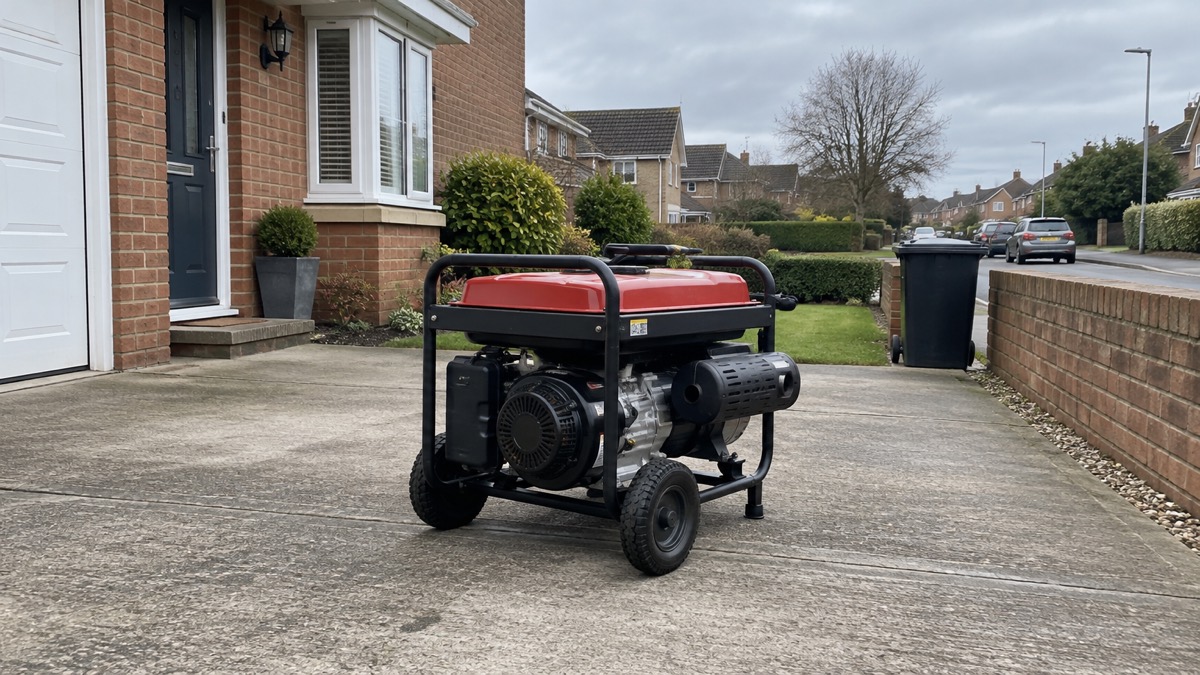
The Champion 5500W petrol generator with remote start is a large, wheeled, open-frame petrol generator. The maker lists it as producing 6250 starting watts and 5000 running watts, with a maximum of 5500 watts, from a 389 cc engine of 12.0 hp running at 3000 rpm1. The maker states a running time of up to 10 hours at 50% load1. It is a machine for running a house's essentials through a long outage, not something to lift into a cupboard.
Before you rely on one, three things decide whether it suits your household. It weighs 91.5 kg, so it is moved on its never-flat wheels and not carried1. It is loud: the maker states 74 dBA at 7 metres1. And it is a petrol engine, so it must never be run indoors or in a garage, because the exhaust fumes can kill. If your need is a few lights, a phone and a router for a few hours, a battery power station is the simpler answer; if you need to carry a freezer, a heating load or power tools for days, this class of generator is what does that work. The backup power section sets the two side by side.
What the Champion 5500W is, and who it suits
This is a dual voltage, single phase, open-frame generator. The maker lists two 120V 32 amp outlets and one 240V 32 amp outlet, with a socket rating of 32/32 amps, an automatic voltage regulator, a voltmeter, a fuel gauge, overload protection and an automatic low oil shutoff1. It is certified as E10 petrol compliant, EU Stage V and UKCA1. In plain terms: it is built to run mains equipment at 240V, it will hold voltage reasonably steady for sensitive kit, and it has the protective cutouts you want on a machine that will be left running unattended for hours.
Who it suits is a household with somewhere safe to stand it outdoors, away from windows and doors, with a firm path to wheel it along, and with a real job for 5000 watts. That means a freezer and a fridge, a heating load, a washing machine, power tools, or a combination. It does not suit a flat with no outdoor space, a household that cannot lift or wheel 91.5 kg, or anyone whose needs are met by a few hundred watts.
The machine is part of a wider range. Champion builds smaller inverter models, dual fuel models that run on LPG as well as petrol, and open-frame machines like this one. If you are weighing up the type rather than this model, the guide to portable generators explains petrol, diesel, dual-fuel and inverter types, and the comparison of an inverter or open-frame generator covers the trade-off in noise and power quality. Champion's own range is set out on the Champion brand page.
Specifications at a glance
The maker's figures are the ones to work from. Where a retailer lists something different, the maker's figure is the one to trust.
| Specification | Maker's figure |
|---|---|
| Starting output | 6250 watts1 |
| Running (rated) output | 5000 watts1 |
| Maximum output | 5500 watts1 |
| Engine | 389 cc, 12.0 hp, 3000 rpm1 |
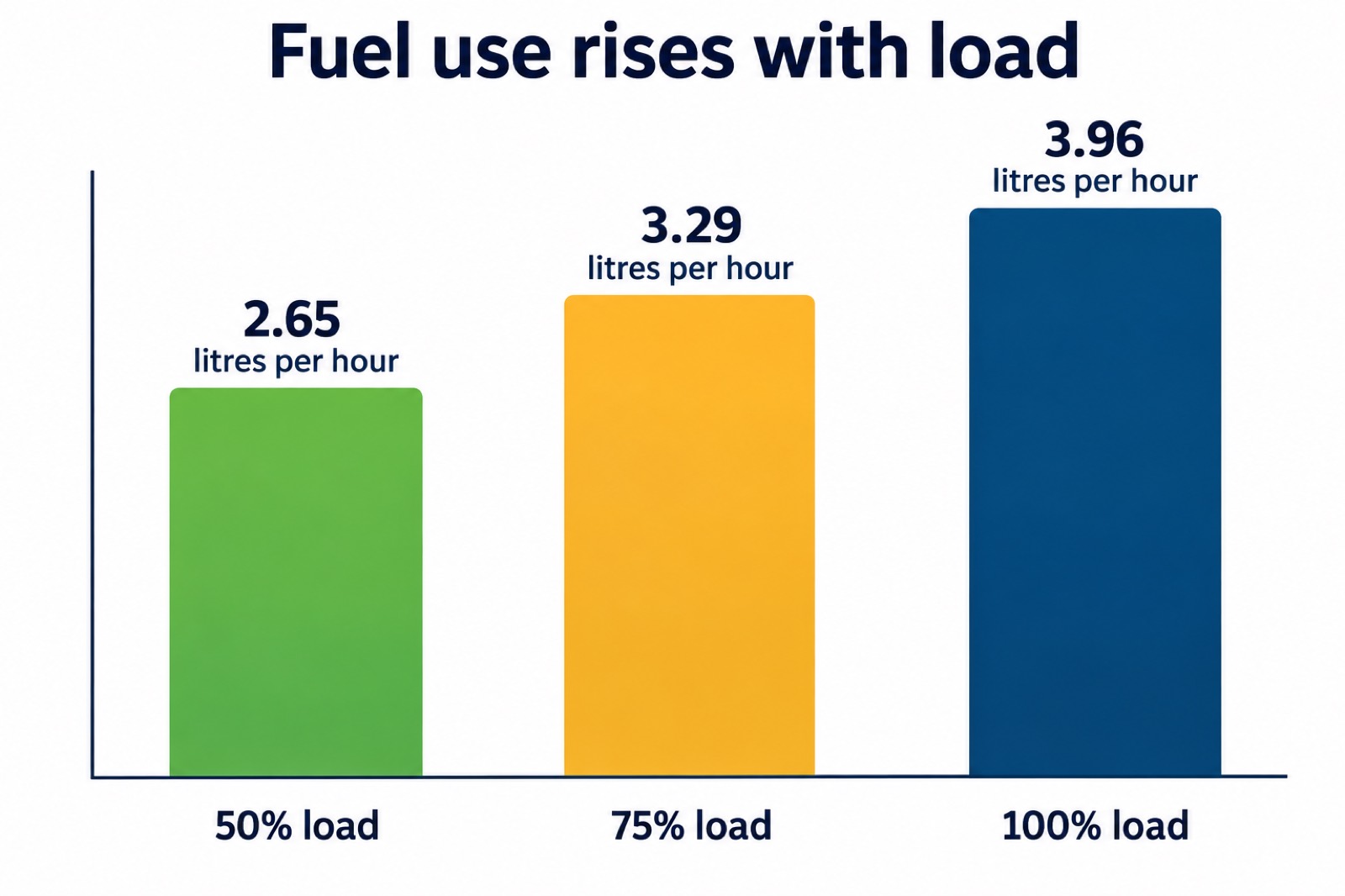
| Fuel consumption at 50% load | 2.65 litres per hour1 |
| Fuel consumption at 75% load | 3.29 litres per hour1 |
| Fuel consumption at 100% load | 3.96 litres per hour1 |
| Run time | up to 10 hours at 50% load1 |
| Oil capacity | 1100 ml1 |
| Outlets | 2 x 120V 32A, 1 x 240V 32A1 |
| Noise | 74 dBA at 7 metres1 |
| Weight | 91.5 kg1 |
| Dimensions | 630 x 1000 x 570 mm (H x L x W)1 |
| Ingress rating | IP23M1 |
| Start type | Recoil, electric, remote1 |
| Warranty | 3 years domestic1 |
Two of these figures deserve a second look. The fuel consumption rises steeply with load: at 50% the engine drinks 2.65 litres an hour, at 100% it drinks 3.961. Running everything at once empties the tank faster than the headline run time suggests. And the 5500 watt maximum is not the same as the 5000 watt rating; plan your loads against the rating, not the peak.
What it can power, and for how long
The maker publishes a wattage guide for common appliances, and it is the most useful planning tool on the product page. A refrigerator is listed at 50 to 250 watts with a starting coefficient of 3, a deep freeze at 90 to 400 watts with a starting coefficient of 3 or more, a microwave oven at 1200 to 1600 watts with a starting coefficient of 2, a washing machine at 2100 to 2400 watts with a starting coefficient of 1.5, and an oven at 1800 to 3000 watts1. Smaller loads are modest: a desk lamp at 50 to 150 watts, a TV at 100 to 350 watts, a drill at 500 to 1100 watts1.
The starting coefficient is the part people miss. A fridge or freezer motor draws several times its running wattage for a moment when it starts, which is why the generator's 6250 starting watts matter as much as its 5000 running watts1. Independent guidance from Electrical Safety First puts a freezer at 200 watts, which sits inside the maker's range2.
| Load | Maker's running range | Starting coefficient |
|---|---|---|
| Refrigerator | 50 to 250 watts | 31 |
| Deep freeze | 90 to 400 watts | 3+1 |
| Microwave oven | 1200 to 1600 watts | 21 |
| Washing machine | 2100 to 2400 watts | 1.51 |
| Oven | 1800 to 3000 watts | not stated1 |
| Heating | 1000 to 1800 watts | not stated1 |
| Kettle-type loads (steam iron) | 1400 to 2260 watts | not stated1 |
How long it lasts depends on what you run. The maker states up to 10 hours at 50% load1. At 50% load the engine uses 2.65 litres an hour, so the run time figure is the maker's stated maximum, and heavier loads shorten it. The practical approach is to run the big loads in bursts: the freezer for an hour or two, then off; the washing machine once; lights and router continuously. That keeps the load near half and the fuel use near the lower figure. The guide to how long a generator runs on a tank goes through the arithmetic for other machines, and watts, watt-hours and surge explains why starting loads catch people out.
The 120V sockets give only about half the rated output
This is the detail most likely to disappoint. The maker states plainly that dual voltage generators will only give approximately 50 to 60% of the rated output wattage on 120V per socket1. The machine has two 120V 32 amp outlets and one 240V 32 amp outlet1. If you plug UK appliances into the 120V side through adaptors, you will not get the full 5000 watts from that socket, and you should not try to.
For a UK household the 240V outlet is the one that matters. UK appliances run at 240V, and the 240V 32 amp outlet is where the machine's rated output is delivered. Treat the 120V outlets as being for equipment designed for them, not as a way to run more UK kit.
There is a second sizing point worth knowing. Which? explains that the kW figure, the usable power, is less than the kVA figure, at 80% of it, because no electrical system is 100% efficient3. That is a reminder that nameplate numbers and usable output are not the same thing, and it is why you leave headroom rather than loading a generator to its rating. The guide to what size generator you need works through the sums for a household.
Starting it: recoil, electric or remote key
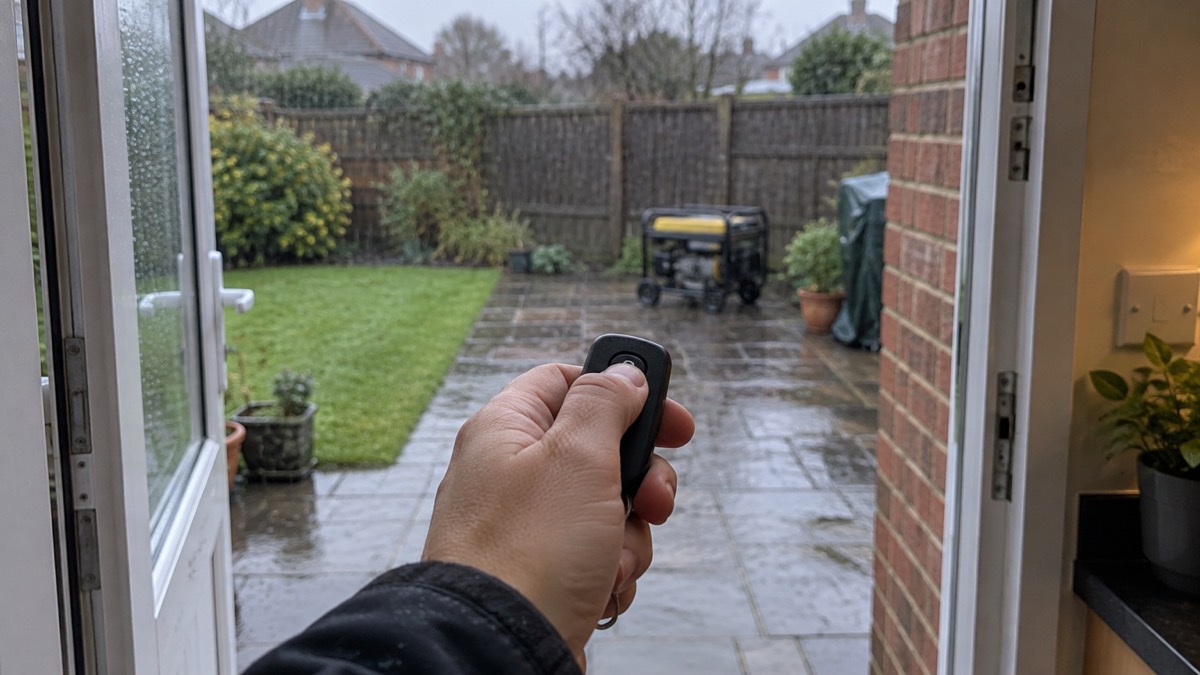
The maker lists three ways to start the machine: recoil, electric and remote1. The remote key comes in the box alongside the generator and the operating manual1. The maker also lists cold start technology, which is relevant if you are starting it in an unheated outbuilding in winter1.
The three methods suit different situations. Recoil is the pull cord, and it is the fallback that needs no battery. Electric start uses a key or switch, which makes a large engine easier to turn over, but as Clarke International explains, the battery must be kept charged and maintained, although some models retain a recoil starter as a backup4. The remote key lets you start and stop the machine without standing next to it, which is convenient when it is sited well away from the house for safety.
The remote start is a convenience, not a safety feature. It does not change where the machine may stand. Before you use it, walk the route from the house to the generator and check that the exhaust points away from the building and that no window or vent draws air from where it stands. The guide to generator safety covers siting, fuel and electric shock in full, and carbon monoxide from generators sets out the warning signs.
Servicing from the first five hours onwards
The maker publishes a service schedule, and the first entry is the one people miss: change the oil after the first 5 hours of running, as a break-in service1. The same first-5-hour oil change appears across Champion's generator documentation, so it is a firm instruction rather than a suggestion5.
After that, the schedule runs on hours or on the calendar, whichever comes first:
- Every 8 hours or before each use: check the oil level, and clean around the air intake and muffler1.
- Every 50 hours or annually: clean the air filter, and change the oil if running under heavy load or in hot conditions1.
- Every 100 hours or annually: clean and adjust the spark plug, clean the spark arrestor, and clean the fuel valve filter1.
- Every 250 hours: clean the combustion chamber and check or adjust valve clearance1.
- Every 3 years: replace the fuel line1.
The oil capacity is 1100 ml, so buy the right oil before you need it rather than during an outage1. Keep a note of the hours you run the machine; a generator used for a few days a year will hit the annual items long before the hourly ones, and a generator used heavily during a long outage can pass the 50 hour mark in a fortnight of continuous running.
Safety: siting, fuel, weather and the home's wiring
The dangers with a machine of this size are carbon monoxide, petrol, electric shock and noise, in that order of seriousness.
Carbon monoxide. Run it outdoors only, well away from windows, doors and vents, and never in a garage even with the door open. This is the advice of the fire and rescue service and the Health and Safety Executive, and it applies to every petrol generator regardless of its weather rating.
Petrol. Store petrol only in a suitable container, away from the house and from any source of ignition, and never refuel a hot engine. The guide to petrol storage at home covers how much is sensible and how to keep it.
Weather. The maker lists an IP23M ingress rating1. That is not a licence to run it in heavy rain or leave it out in it. Run it under cover with plenty of ventilation, keep it out of standing water, and never enclose it to keep the rain off. The guide to running a generator in the rain explains the balance.
The home's wiring. The maker states that any manual or automatic transfer switch not supplied by Champion or Warrior will not be considered suitable and will invalidate all warranties1. That is the maker's own condition on its own product. Connecting a generator to a house's wiring is a job for a qualified electrician, and doing it wrongly can put power back up the line and endanger the people working on the network. The guide to connecting a generator to your home's wiring explains the options, and extension leads and overloading covers running appliances from the outlets safely.
Noise. At 74 dBA at 7 metres the machine will be heard1. Site it away from boundaries and bedrooms, and think about your neighbours before running it overnight. The guide to generator noise covers the practicalities.
Moving, storing and keeping it ready
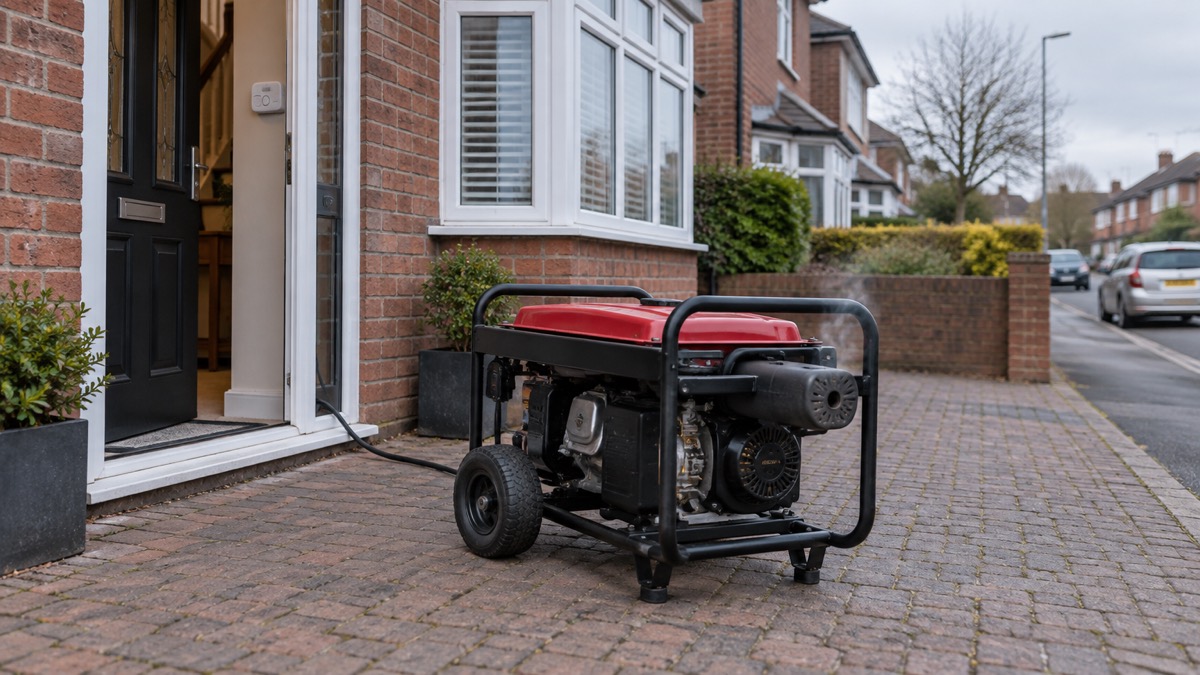
At 91.5 kg the machine is moved on its never-flat wheels, not carried1. Its dimensions are 630 x 1000 x 570 mm, so it needs a store with a firm floor and enough width to wheel it in and out1. Decide now where it will live and where it will run, and check that the route between the two is clear and level.
For storage, the priorities are fuel and oil. Petrol left in a machine for months is best avoided; run the tank down or follow the maker's storage instructions in the manual. Check the oil before each use, and keep the machine clean around the air intake and muffler1. If it lives in a cold outbuilding, the maker lists cold start technology, which helps in winter1; the guide to starting a generator in cold weather covers the rest. The guide to storing a generator after a power cut sets out the routine.
A short pre-season check pays for itself. Before winter, confirm the oil level, that the battery for the electric start is charged, that the remote key works, that you have fresh petrol, and that the machine starts and runs. The backup power checks before winter checklist covers this for the whole household kit.
Warranty and support
The maker states a three year warranty for domestic use: year one covers parts and labour, years two and three cover parts only, from the original purchase date or 1000 hours, whichever comes first1. Industrial and commercial use gets a shorter term, year one parts and labour and year two parts only, again or 1000 hours1. The same three year domestic terms appear across Champion's generator documentation5.
Two conditions matter in practice. Keep your proof of purchase, because the warranty runs from the original purchase date. And keep to the service schedule, because a machine that has not had its first 5 hour oil change is in a weaker position if something goes wrong. The maker's statement that non-Champion transfer switches invalidate the warranty is worth knowing before you have anything wired in1.
For support, start with the operating manual that comes in the box1. It covers starting, servicing and storage for this machine specifically. Champion's own service guidance for its generators is published on its site5, and the Champion brand page is the place to start for the wider range.
Sources (13)
- Champion 5500 Watt Petrol Generator With Remote Start, Champion Power Equipment, 2026-10-25
- Ratings of Electrical Appliances, Electrical Safety First, 2026-10-25
- How to Buy the Best Generator, Which?, 2026-01-20
- Generators, Clarke International, 2026-10-25
- Service Guide: Inverters, Champion Power Equipment, 2026-10-25
- Champion 3500 Watt Inverter Petrol Generator 73001i-E, Champion Power Equipment, 2026-10-25
- Champion 2200 Watt LPG Dual Fuel Inverter Generator 92001i-DF, Champion Power Equipment, 2026-10-25
- Champion 3750 Watt Frame Type Inverter CPG4000DHY, Champion Power Equipment, 2026-10-25
- Champion 3600 Watt Inverter Petrol Generator, Champion Power Equipment, 2026-10-25
- Champion 2200 Watt Inverter Petrol Generator 110V 92120i, Champion Power Equipment, 2026-10-25
- Champion 3200 Watt Petrol Generator, Champion Power Equipment, 2026-10-25
- Champion 2200 Watt Inverter Generator 92001i, Champion Power Equipment, 2026-10-25
- Champion 2000 Watt LPG Dual Fuel Inverter Generator 82001i-E-DF, Champion Power Equipment, 2026-10-25

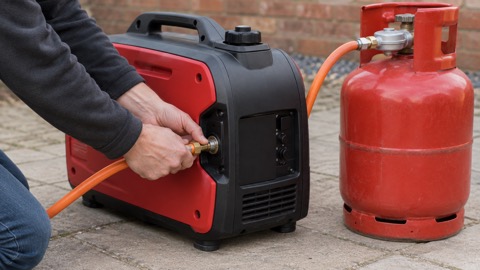 EcoFlow Dual Fuel Generator
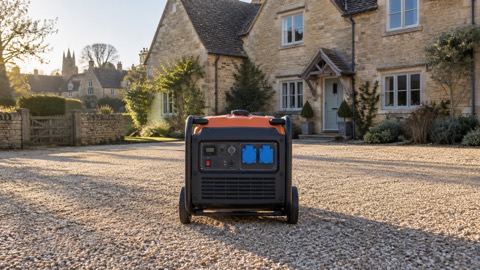 Honda EU70iS Generator
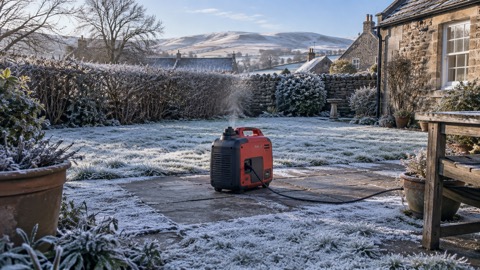 Honda EU32i Generator
 Honda EG3600 Generator
 Pramac P3500i Generator
 Senci SC6000-II Home Generator
 Senci SC10000-II Generator
 Senci SC6600iED Generator
 Gorilla Power GP3800iE
 Gorilla Power GP6500E-DF
 Gorilla Power GP3500i
 Hyundai HY2250Si Generator