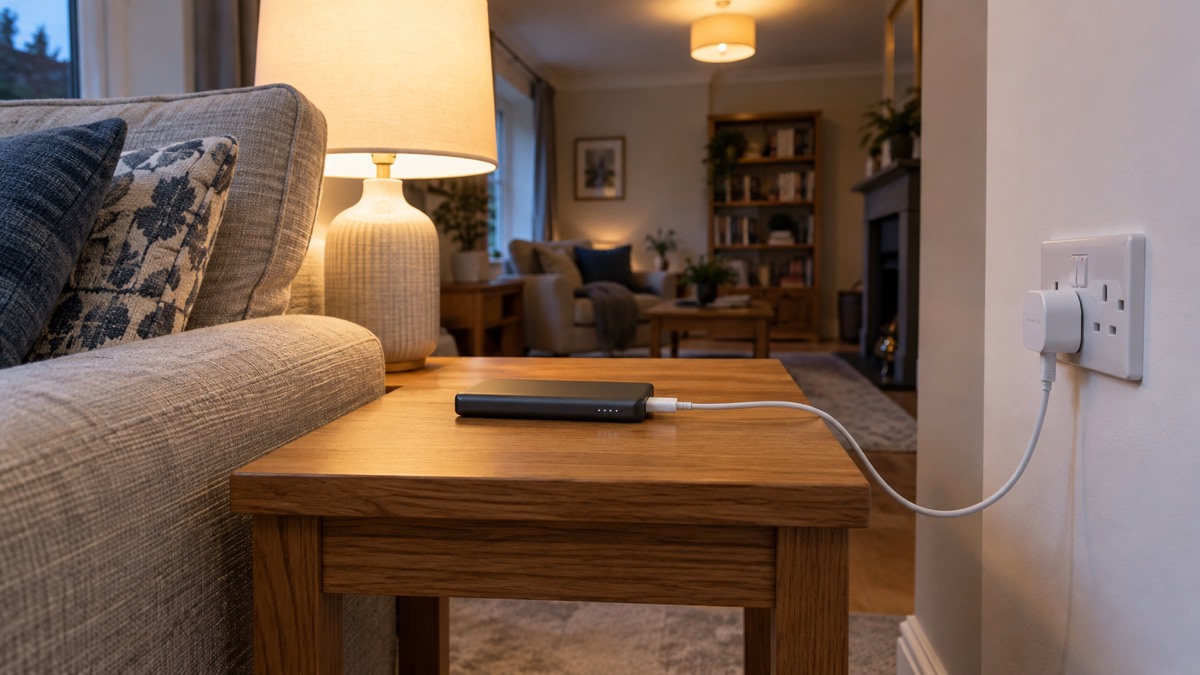
Buying a power bank or a charger from an online marketplace is quick and often cheap, but it carries a risk that a high street shop does not. Batteries bought online may not meet UK safety regulations and are more likely to fail, according to London Fire Brigade1. Electrical Safety First goes further: online marketplaces are not held to the same standards as high street shops, and you could be at risk from sub-standard products that pose a risk of electric shock and fire2. The practical answer is not to avoid online shopping altogether, but to buy from a reputable retailer or the original manufacturer, check for safety markings, and treat a battery that swells or overheats as a hazard rather than an inconvenience.
The clearest warning sign is physical. A battery that is bulging or swelling should be taken out of use at once: London Fire Brigade says to stop charging immediately and contact the manufacturer or a certified technician3. Beyond that, the rules are simple. Never charge a lithium-ion product overnight or while you are asleep or out of the house4. Register your power bank so a recall can reach you6. And keep it away from water, damage and extreme temperatures7.
This page sets out what to check before you buy, how to charge safely, why a damaged lithium-ion cell is a fire risk, and where to find out about recalls. It is written for an ordinary household keeping phones and a radio charged through a power cut, not for e-bike mechanics, though much of the official advice covers both.
What to check before you buy a battery or charger online
The single most useful rule is to buy from a source that will stand behind the product. Fire and rescue services advise buying e-bikes, e-scooters, chargers and batteries only from reputable retailers and manufacturers12. If you need a replacement charger or battery, get it from the original manufacturer, because fake or substandard chargers can cause fires4. South Wales Fire and Rescue Service is blunt about the alternative: avoid buying cheap chargers online, because there are a lot of fakes on the market and it can be difficult to spot the difference13. Dorset and Wiltshire Fire and Rescue Service warns specifically to beware of products that can be bought cheaply online such as chargers14.
Marketplaces are singled out because of who is responsible. Electrical Safety First advises avoiding buying your power bank from an online marketplace, as they have no legal responsibility for the safety of goods sold by third parties on their platforms, leaving you vulnerable to substandard products15. The same body warns against substandard or counterfeit USB chargers from third-party sellers, which may present a higher risk of exploding or catching fire and may damage your device, which could void your guarantee16. For hoverboards and similar boards, replacement batteries and chargers should not come from market stalls, social media or third-party sellers on online marketplaces8.
There are positive checks too. Look for the CE mark when buying electrical or battery items from a trusted or reputable seller17. Make sure the battery and charger meet UK safety standards18. Scotland's fire service adds that when purchasing products containing lithium-ion batteries you should buy from reputable retailers, especially online, and check that the devices meet British or European safety standards9. Our guide to UKCA, CE and battery safety markings explains what those marks mean in practice.
| Where you buy | What it means for safety |
|---|---|
| High street shop or known retailer | Held to the same standards as other shops2 |
| Original manufacturer (replacement charger or battery) | The route fire services recommend for replacements4 |
| Third-party seller on a marketplace | No legal responsibility on the platform for safety of goods sold by third parties15 |
| Market stall or social media seller | No guarantee the product has been through Product Safety testing4 |
Bulging or swelling is the clearest sign a battery is unsafe
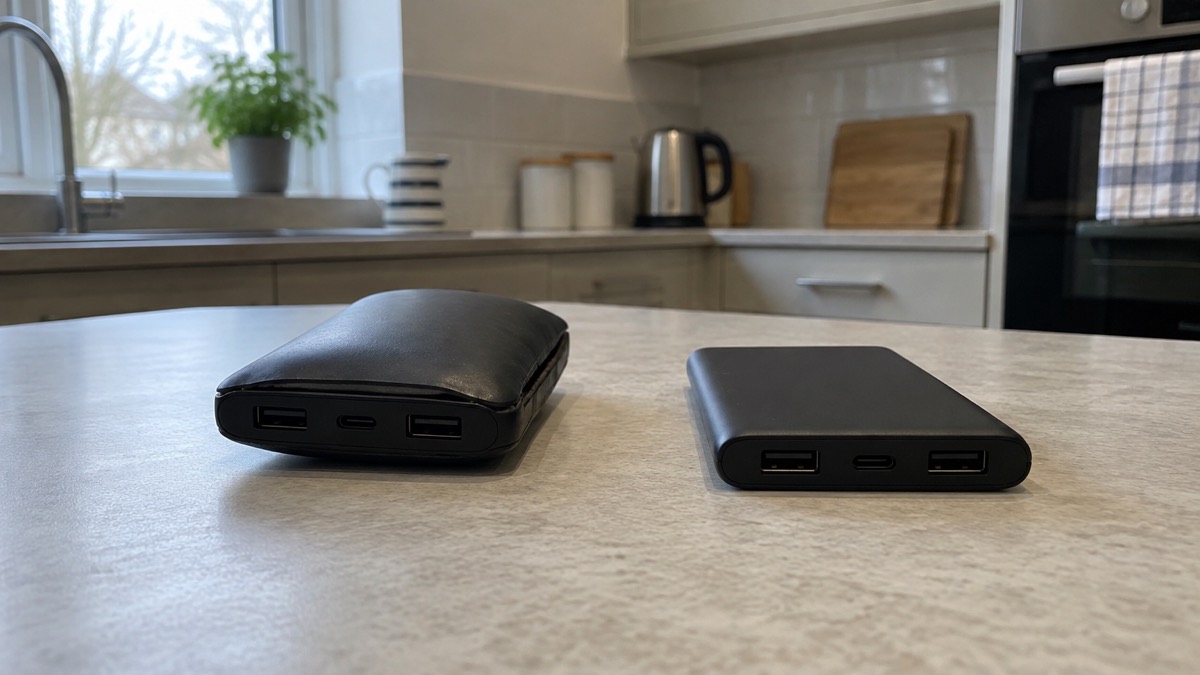
A swelling battery is not a cosmetic problem. Fire services list a bulging or swelling shape as a warning sign on lithium-ion batteries19. The National Fire Chiefs Council describes swelling or deformation as the battery appearing swollen, misshapen or having developed a lump20. London Fire Brigade lists the battery becoming unusually hot, swelling or bulging, unusual smells and significantly reduced performance among the signs to watch for21.
If you see swelling, act at once. London Fire Brigade's instruction is to stop charging immediately and contact the manufacturer or a certified technician3. Do not put a swollen battery back on charge to see if it settles, and do not carry on using the device. A damaged lithium-ion battery can fail unexpectedly and start a fire1. Scotland's fire service is equally clear: where a battery is damaged it can overheat and catch fire without warning and should be replaced, not used or charged5.
Disposal matters as much as use. Lithium-ion batteries, when punctured or crushed, can cause fires in bin lorries or landfill sites9. Do not put a swollen or damaged battery in the household bin. Check with your local authority for battery recycling arrangements22, and see our page on how to dispose of a damaged lithium battery for the steps in order.
Safe charging: never overnight or while you are out
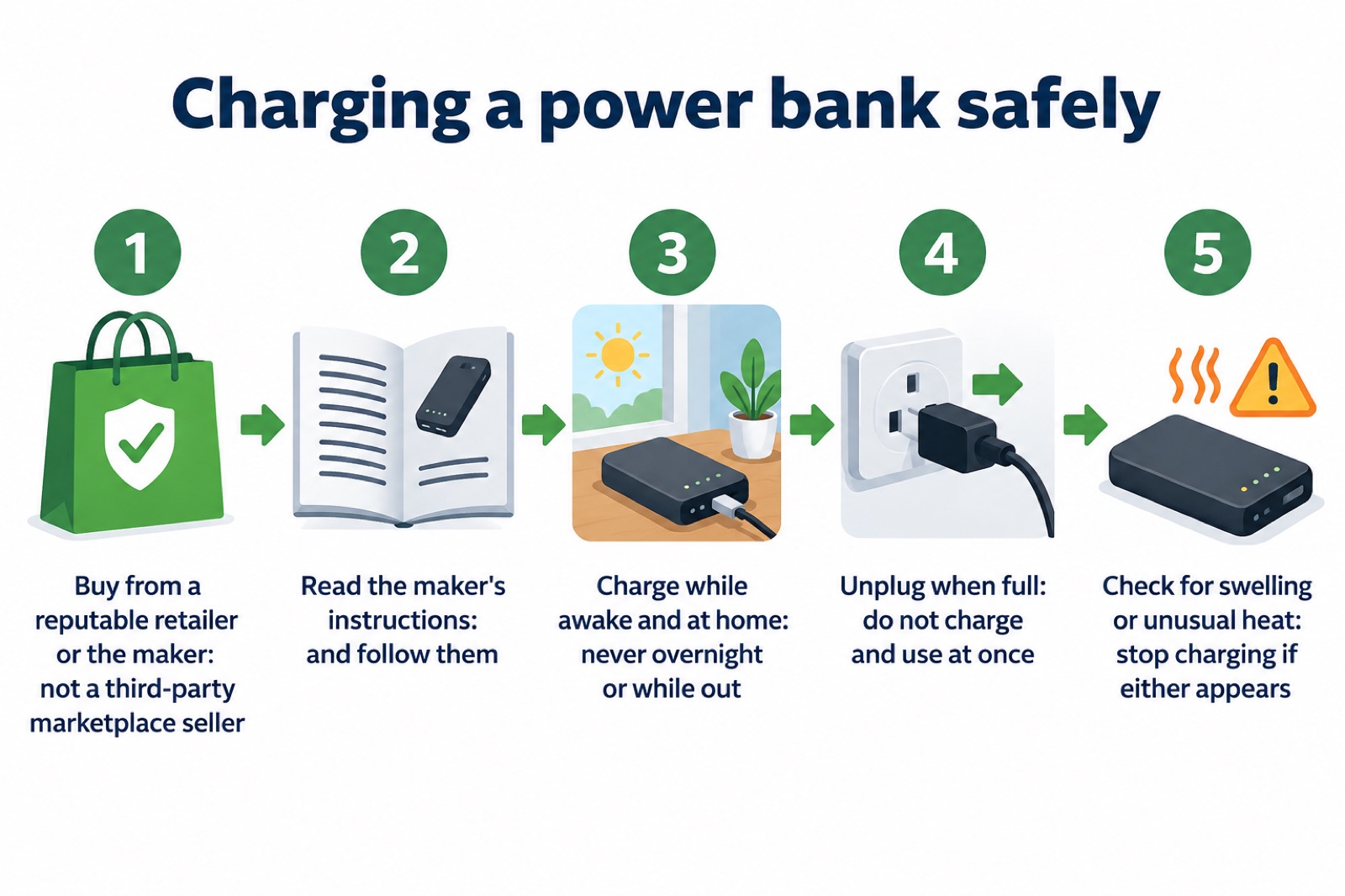
The most common way a good battery becomes a dangerous one is how it is charged. Dorset and Wiltshire Fire and Rescue Service states that it is never a good idea to charge an electrical product overnight, especially one containing lithium-ion batteries, because fires at night when people are sleeping are particularly dangerous as your reaction time is massively reduced4. Scotland's fire service says never charge batteries while you are asleep or away from the home, and only charge them while you are awake and alert, so that if something goes wrong you can react5.
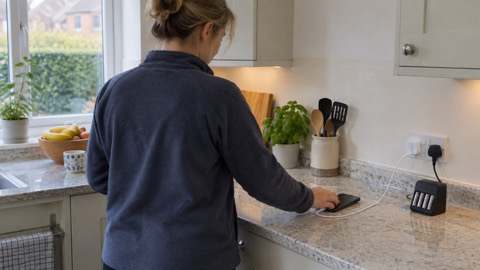
That advice applies to power banks and phone chargers as much as to e-bikes. Charge during the day, in a room where you are present, and unplug when the item is full. Keep the charger and the device on a hard, non-flammable surface rather than on a bed, sofa or carpet. Read the manufacturer's instructions carefully and always follow them7.
A few other habits reduce risk:
- Do not charge and use a power bank at the same time. Most portable battery packs do not support charging and discharging at the same time6.
- Do not leave a power bank in a parked car where it could get cold in winter or hot in summer7.
- Do not immerse it in water, and protect it from damage7.
- Keep chargers and cables in good condition, and replace frayed ones.
Our safe battery charging at home checklist sets these out as a list you can work through, and Is it safe to charge overnight? answers the question in more detail.
Why a damaged lithium-ion battery is a fire risk
A lithium-ion cell stores a lot of energy in a small space, and that energy can be released suddenly if the cell is damaged. A damaged battery may release flammable electrolytes, increasing the risk of fire4. The National Fire Chiefs Council warns that damaging a lithium-ion battery can cause fire, explosion or the release of hazardous substances23. South Wales Fire and Rescue Service says that when lithium-ion batteries are damaged they can overheat, catch on fire and even lead to explosions24. London Fire Brigade describes the batteries that power e-bikes and e-scooters as posing a serious fire risk if they become damaged, faulty or are charged incorrectly25.
Heat is the other trigger. Lithium-ion batteries in phones, vapes, e-bikes and e-scooters can become a fire risk when exposed to high temperatures or charged incorrectly26. When a battery is overcharged or overheated it can rapidly overheat, release toxic fumes and ignite, causing intense fires that are hard to extinguish22. The National Fire Chiefs Council position statement describes lithium-ion battery fires as particularly dangerous because they are instantaneous and explosive in nature, potentially compromising escape routes27.
That last point is why placement matters. A power bank charging in a hallway or by the only exit is a poor choice. Charge in a room where a fire would not block your way out, and keep the item away from soft furnishings. If a battery does catch fire, lithium-ion fires can spread rapidly and produce toxic smoke10. Get everyone out, stay out and call 999. Our page on what to do if a lithium battery catches fire covers the response step by step.
"Lithium-ion battery fires can spread rapidly and produce toxic smoke."
Keeping a power bank safe from damage and water
A power bank that is looked after is far less likely to fail. Electrical Safety First's guidance is to protect your power bank from damage and not immerse it in water7. That covers the obvious cases, such as dropping it on a hard floor or letting it get wet in a bag, and the less obvious ones, such as leaving it in a hot car or a cold shed. Do not leave it in a parked car where it could get cold in winter or hot in summer7.
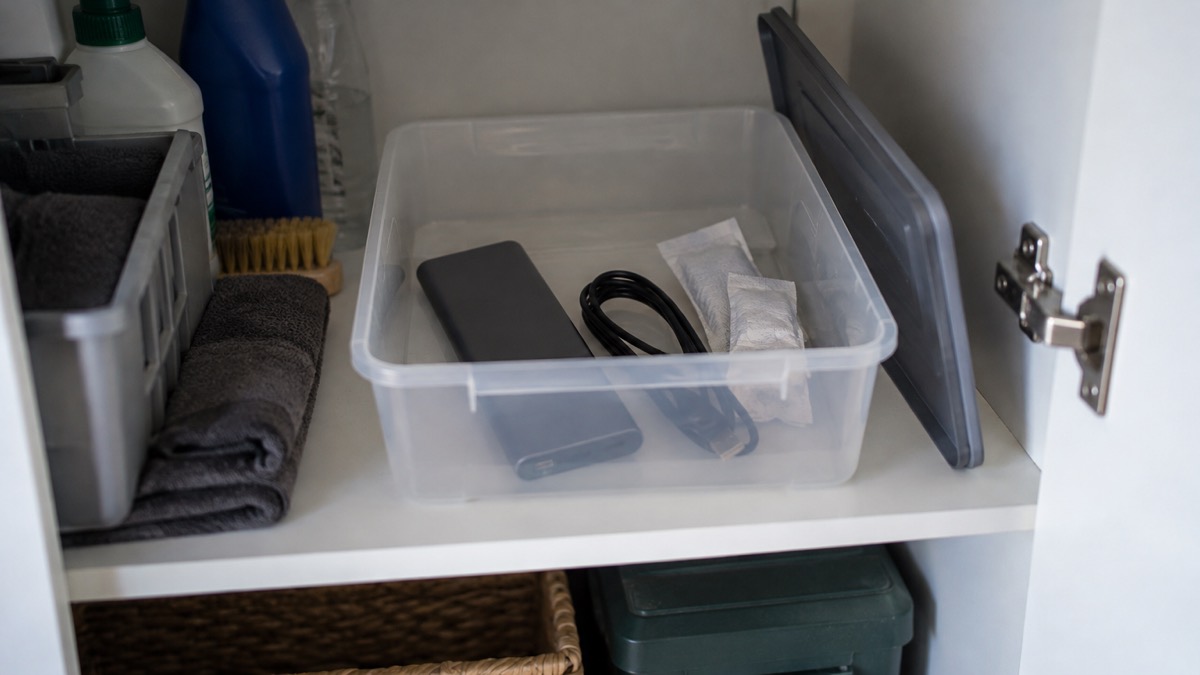
Storage temperature matters because the chemistry is sensitive. The manufacturer's instructions for your power bank should be read carefully and always followed26. Store power banks indoors, away from radiators and direct sun, and do not leave one in a parked car where it could get cold in winter or hot in summer26. Protect it from damage and do not immerse it in water26. If you keep a power bank in a power cut kit, check it every few months for swelling, damage to the case or a cable that has frayed. Our guide to what temperature batteries should be stored at goes into more detail.
Water damage is not always visible. A power bank that has been dropped in water or soaked should not be charged, even if it appears to work. The same applies to one that has been dropped hard enough to crack the case. If in doubt, stop using it and dispose of it through your local authority's battery recycling arrangements22.
Register your power bank so a recall can reach you
A recall only works if it can find you. Electrical Safety First advises registering your power bank so you can be contacted easily if there is a safety recall of your product, and notes that it is also much easier to return a faulty item or order a repair if it is registered6. Fire and rescue services give the same advice for e-bike and e-scooter batteries: register your product with the manufacturer to validate any warranties, because batteries are usually included in warranties, and registering makes it easier for manufacturers to contact you in the event of safety or recall information28.
If you choose not to register, or you have lost the paperwork, you can still check. Product recalls can be checked via Electrical Safety First or the UK government website9. Fire and rescue services repeat the same route: check any products you have bought are not subject to a product recall by checking Electrical Safety First's website or the government website5.
Recalls do happen, and they are specific. One safety notice covers the Belkin BoostCharge USB-C BPB002 and Playa USB-C PB0003 power banks, stating that the product presents a risk of fire as the lithium-ion batteries can overheat whilst in use, which can lead to localised smoking, melting and/or a risk of fire30. That is the kind of notice registration is designed to deliver to you directly.
- Register the product with the maker when you buy it6.
- Keep the receipt and the model number somewhere you can find them.
- Check Electrical Safety First and the government website if you are unsure9.
- Act on a recall notice straight away: stop using the item and follow the maker's instructions.
Where to get help and what to do next
If you are unsure whether an item is safe, the safest course is to stop using it and check. Electrical Safety First and the government website both list product recalls9. Your local fire and rescue service publishes home safety advice, and many offer a home fire safety visit; the National Fire Chiefs Council's home safety position statement sets out the wider approach27. If a battery fire starts, get out, stay out and call 99910.
For households building a power cut kit, the priority is a power bank from a reputable source, charged during the day and checked before winter. Our power banks guide covers capacity and choice, and the power cut backup power checklist sets out what to have ready. If you are choosing between a power bank and a larger unit, Power Bank or Portable Power Station explains the difference. For the wider picture on lithium batteries at home, see Lithium-Ion Battery Safety at Home.
Sources (30)
- E-bike conversion kits: fire risks and safety advice, London Fire Brigade, 2026-10-25
- Extreme weather summer guide, London Fire Brigade, 2024-05
- Batteries and chargers, London Fire Brigade, 2026-10-25
- Battery fires, Dorset and Wiltshire Fire and Rescue Service, 2026
- E-bikes and e-scooters, Scottish Fire and Rescue Service, 2026-10-25
- Power banks, Electrical Safety First, 2026-10-25
- Power banks product safety guidance, Electrical Safety First, 2026-10-26
- Hoverboards and self-balancing boards, Electrical Safety First, 2026-10-25
- Lithium-ion batteries, Scottish Fire and Rescue Service, 2025-11-27
- Spot the warning signs, London Fire Brigade, 2026-10-25
- What to do if there's a fire caused by an e-bike or e-scooter, London Fire Brigade, 2026-10-25
- Charge Safe campaign, North Yorkshire Fire and Rescue Service, 2026-08-18
- Lithium-ion batteries, South Wales Fire and Rescue Service, 2026-01-13
- Fire safety for carers, Dorset and Wiltshire Fire and Rescue Service, 2026
- Is your power bank a flight risk?, Electrical Safety First, 2026-10-25
- USB chargers, Electrical Safety First, 2026-10-25
- Staying safe this season, Dorset and Wiltshire Fire and Rescue Service, 2025-12-01
- Digital easy read fire safety booklet, London Fire Brigade, 2026
- Charging safety, Oxfordshire County Council, 2026
- E-bikes and e-scooters fire safety guidance, National Fire Chiefs Council, 2026-10-09
- Heat, cold and rain: how weather affects e-bikes and e-scooters, London Fire Brigade, 2026-10-25
- E-scooter, e-bike and mobility scooter fire safety advice, North Yorkshire Fire and Rescue Service, 2026-03-25
- Lithium-ion batteries campaign, National Fire Chiefs Council, 2026-10-09
- E-bikes and e-scooters, South Wales Fire and Rescue Service, 2026-07-29
- E-bikes and e-scooters, London Fire Brigade, 2026-10-25
- How to stay safe during a heatwave, Dorset and Wiltshire Fire and Rescue Service, 2026-06-23
- Home safety position statement, National Fire Chiefs Council, 2025-12
- Home Fire Safety - Northern Ireland Fire & Rescue Service, Northern Ireland Fire & Rescue Service
- How to dispose of batteries from your e-bike or e-scooter, London Fire Brigade, 2026-10-25
- Product safety notice: Belkin and Playa power banks, London Borough of Bromley, 2025-12-08
 Power Cut Backup Power Checklist
 Backup Power Before Winter
 Safe Battery Charging at Home
 Running a Generator Indoors
 Carbon Monoxide from Generators
 Generator Sizing for a Power Cut
 Generator Run Time on a Tank
 Storing Petrol at Home
 Diesel Storage at Home
 Storing a Generator
 Generators in Cold Weather
 Generator Noise and Neighbours
 Power Station Capacity Sizing
 Power Station Run Time
 Power Station for a Gas Boiler