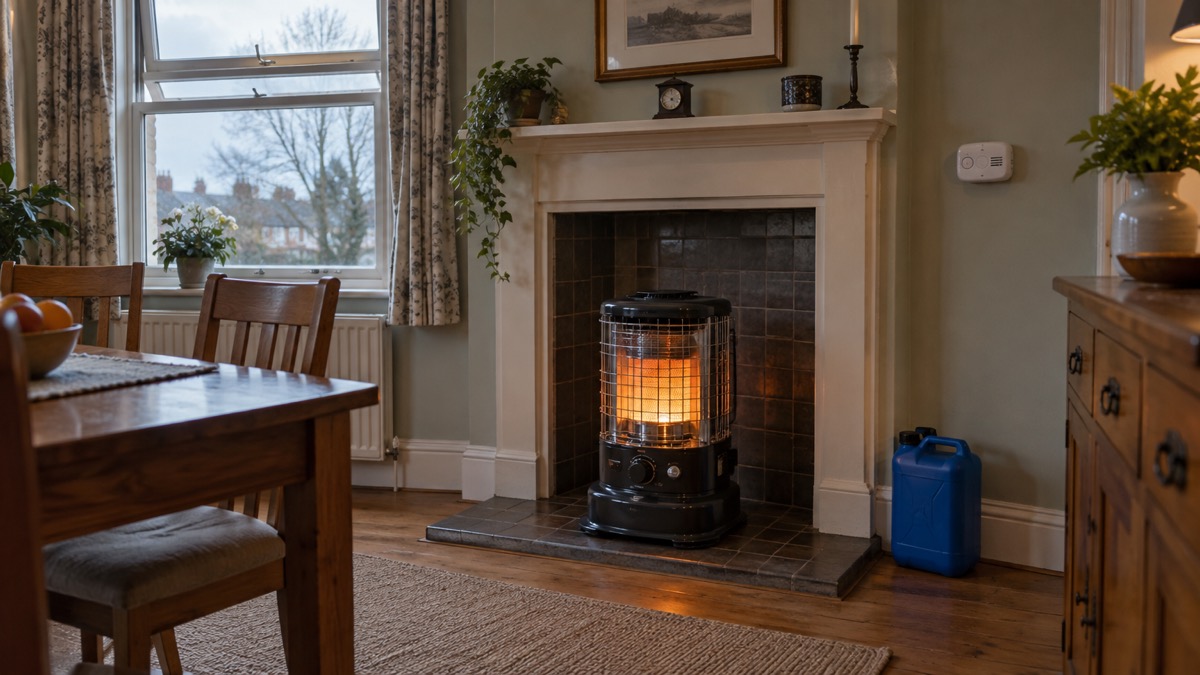
A paraffin heater and a bottled gas heater do the same job in different ways: both burn fuel in the room you are sitting in, and both need air and a clear escape route for fumes. Neither is a set-and-forget appliance. If you are choosing between them, the first thing to understand is that the fuel is not the main risk. The main risk is carbon monoxide, an invisible gas produced when any fuel burns without enough air, and the second is fire from a hot surface close to furniture, curtains or washing.
The practical rules are the same for both. Only use a heater in a well-ventilated room, keep a window slightly open, and never sleep in a room with an unflued paraffin heater or gas fire1. Fit a carbon monoxide alarm in every room that contains a gas or paraffin heater2. Keep at least 1 metre (3 feet) between a gas space heater and anything flammable3. Store fuel and cylinders outside the home, and change cylinders outdoors or in a well-ventilated space4.
Bottled gas heaters run on liquefied petroleum gas (LPG), such as butane or propane, and heat a room quickly, but you have to change the cylinders, which is a hassle and carries fire risk6. Paraffin heaters are a major cause of condensation, and every gallon of paraffin burnt produces 10 pints of water7. Both are an expensive way to heat rooms7. If you have mains electricity, an electric heater avoids the fuel and fume problems entirely; see our comparison of electric or gas portable heaters.
Paraffin or bottled gas: how each heater behaves
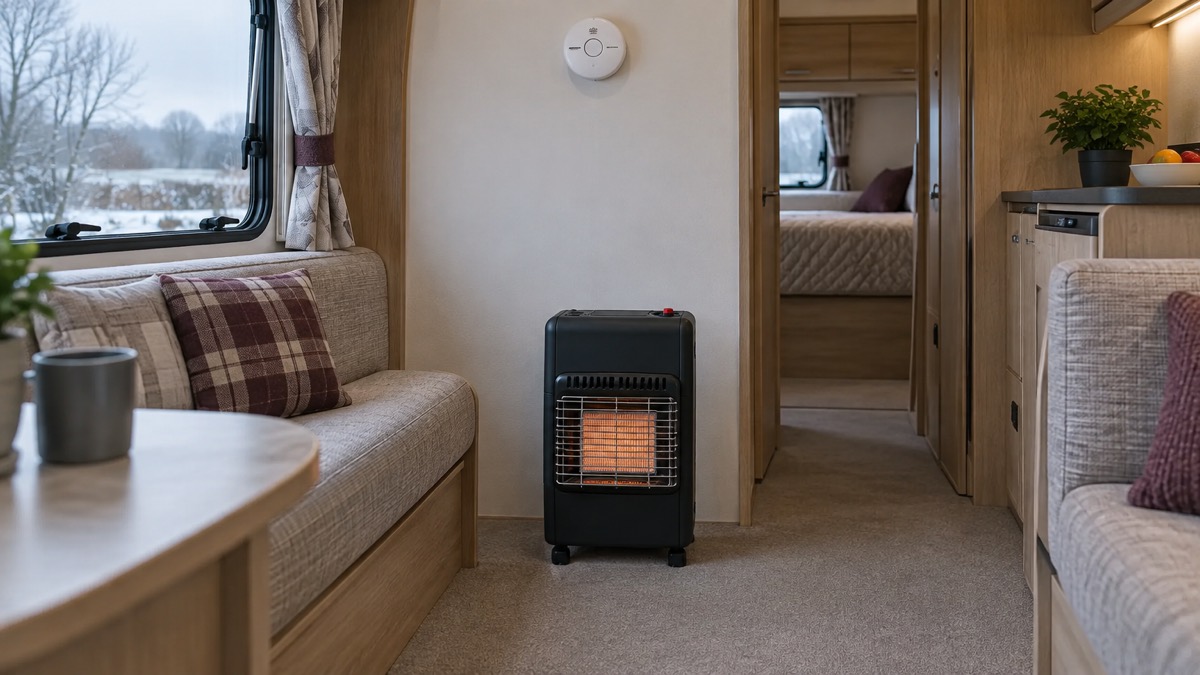
A portable gas heater uses LPG, either butane or propane, and can be moved anywhere in the room. It heats the space it is in quickly, but it requires you to change the gas cylinders, which can be a hassle and also poses fire risks10. The fuel comes in refillable cylinders, and the heater itself is usually a radiant or convector unit that sits on the floor. Because it burns gas in the room, it needs a steady supply of fresh air and a carbon monoxide alarm nearby.
A paraffin heater burns liquid paraffin, drawn up through a wick, and gives out a steady, gentle heat. It is quieter than a gas heater and needs no cylinder changes, but it must stand level, preferably on a non-combustible base, and away from draughts before you light it7. Paraffin is bought in containers and poured into the heater's tank, so refuelling is a routine job that has to be done outside.
Both types are an expensive way to heat rooms compared with mains gas or electricity7. That matters when you are deciding how much fuel to keep: a heater that is costly to run is best treated as a backup for one room during an outage, not as a way to heat a whole house through winter. For the wider picture of keeping warm without mains power, see Heating and Cooking Without Mains Power or Gas.
| Feature | Paraffin heater | Bottled gas heater |
|---|---|---|
| Fuel | Liquid paraffin, poured from a container | LPG, butane or propane, in refillable cylinders11 |
| Refuelling | Pour fuel into the tank, outside | Change the cylinder, outdoors or well ventilated5 |
| Heat | Steady, gentle warmth from a wick | Heats the room quickly6 |
| Condensation | Major cause; a gallon of paraffin produces 10 pints of water7 | Also a major cause of condensation7 |
| Running cost | Expensive way to heat rooms7 | Expensive way to heat rooms7 |
| Main risks | Carbon monoxide, fire, condensation | Carbon monoxide, fire, cylinder handling6 |
Some homes cannot use either. Highland Council tenants, for example, are told never to use paraffin or bottled gas heaters because they are not allowed in council homes12. If you rent, check your tenancy agreement before buying either type.
Carbon monoxide: the risk both heaters share
Carbon monoxide is produced when fuel burns without enough air, and it can kill. The risk rises in winter, when people use fuel-burning appliances such as gas heaters and boilers more13. Cold weather also pushes people towards malfunctioning or inappropriate appliances to heat their homes, which can increase the risk of carbon monoxide poisoning14. Using a gas cooker or oven to heat a room is one example: it is inefficient and could put you at risk of carbon monoxide poisoning15.
Gas heaters must only be used in well-ventilated areas, otherwise you could be at risk of carbon monoxide poisoning6. Using gas heaters carries that risk, so you should have a carbon monoxide alarm in the same room10. The same applies to paraffin: fit a carbon monoxide alarm in all rooms containing solid fuel, gas or paraffin heaters2. Fire services also recommend an alarm in rooms with a fixed combustion appliance such as a gas fire, gas boiler, log burner or open fireplace16.
If you have a portable gas heater that uses gas bottles and is approved for indoor use, make sure the room is well ventilated and follow all the instructions carefully, because the fumes can be dangerous19. If a heater is not approved for indoor use, do not bring it inside at all: never use outdoor heaters such as propane or kerosene indoors unless they are specifically approved for indoor use3.
Ventilation: keep air coming in while the heater runs
Every fuel-burning heater needs air, and a modern draught-proofed home can be too tight for one. Only use gas or paraffin heaters in well-ventilated areas, because you could suffocate if the room is not properly aired8. Keep a window slightly open to improve ventilation and reduce the build-up of condensation and damp11. Make sure rooms are well ventilated and do not block air vents; if your home is double-glazed or draught-proofed, ensure enough air circulates for the heaters in the room1.
Ventilation is not just about fumes. LPG and paraffin heaters are a major cause of condensation, so be sure the window is open a little, and remember that every gallon of paraffin burnt produces 10 pints of water7. That moisture has to go somewhere. If it condenses on cold walls and windows, you get damp, and damp makes a cold home colder. A slightly open window is the simplest fix, and it costs less heat than people fear because the heater is replacing it continuously.
When you change a gas cylinder, ventilation matters even more. Try to do it in the open air; otherwise, open windows and doors to increase ventilation20. Gas heater cylinders should be changed in the open air, and if you have to change them indoors, make sure all rooms are ventilated and open windows and doors2. Never change a cylinder on a stairway or other escape route7.
Where an indoor heater must never go
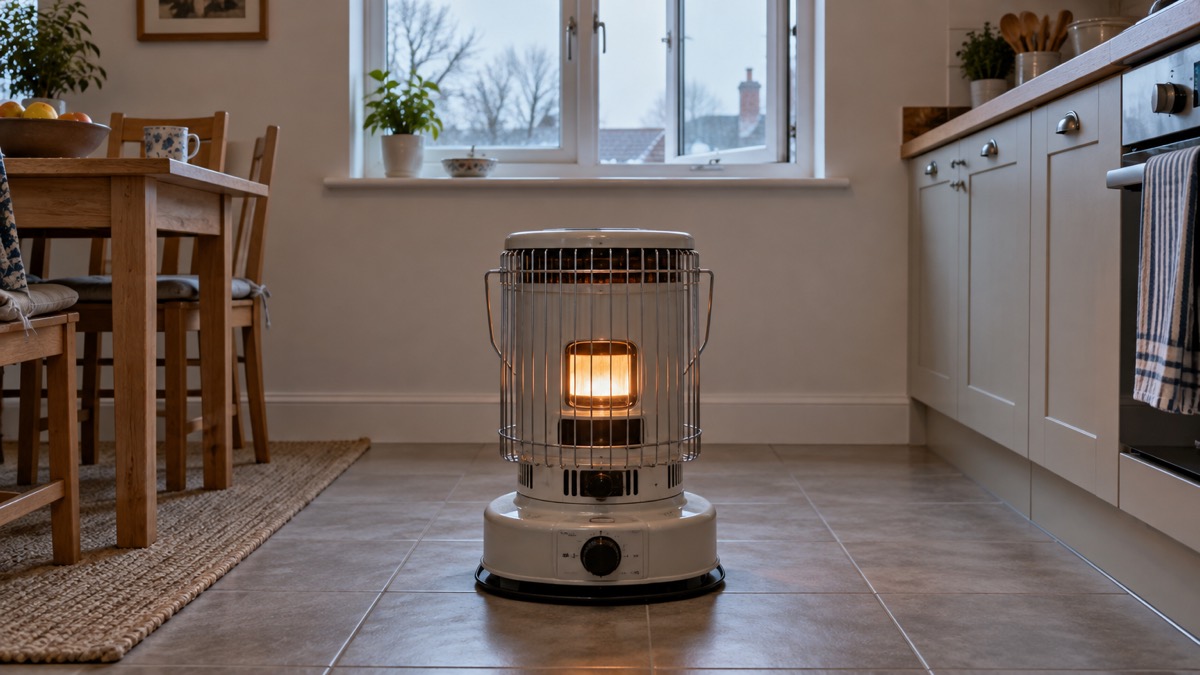
The bedroom is the first exclusion. Portable gas heaters must not be used in bedrooms and should only be used in well-ventilated rooms4. Do not sleep in a room that has an unflued gas fire or a paraffin heater1. The Health and Safety Executive sets limits for gas appliances in rooms converted to sleeping accommodation: since 31 October 1998, such a room should not contain a gas fire, gas space heater or gas water heater over 14 kilowatts gross input unless it is room sealed, and appliances of 14 kilowatts or less must be room sealed or have an atmosphere-sensing device21. Those rules are about fixed appliances, but they show why sleeping rooms are treated differently.
Bathrooms and shower rooms are out too. Standard portable heaters, gas and electric, must not be used in shower or bathroom areas4. Basements and other enclosed areas are unsuitable for fuel-burning heaters because fumes collect; fire services advise against using diesel space heaters in bedrooms, basements or other enclosed areas3.
Tents, caravans and cabins have their own rules. Never take a gas stove, light or heater into a tent, caravan or cabin unless it is a permanent fixture, installed and maintained correctly18. Never use barbecues or gas stoves inside tents, awnings, caravans or mobile homes, because this poses a serious carbon monoxide risk as well as a fire risk18. In a caravan or mobile home, make sure heaters work properly, use a Gas Safe engineer to check or fix gas heaters, and never dry clothes on or right next to the heater22. For more on this, see Keeping Warm and Cooking in Tents and Caravans.
Storing paraffin and gas cylinders safely at home
Store gas, paraffin and LPG cylinders safely outside the home and out of direct sunlight, and not on balconies4. Store fuel in approved containers and keep it away from heat sources; store fuel outside the home where possible and keep quantities to a minimum11. For gas heaters, store cylinders outside and away from direct sunlight and frost, and do not store more gas cylinders than you need6.
Paraffin has a specific limit. Keep spare fuel outside the home: no more than 23 litres (5 gallons), and preferably only 9 litres (2 gallons), should be kept, in purpose-made containers stored away from sources of heat9. That is a legal-style limit worth respecting, not a target to reach. Buy only what you will use in a season, and keep the container sealed and labelled.
Never buy a second-hand paraffin heater, as they can be dangerous9. A used heater may have a damaged wick, a leaking tank or a rusted body that you cannot see, and the saving is not worth the risk. For more detail, see Where to Store Gas Cylinders at Home.
Refuelling and changing cylinders without fire risk
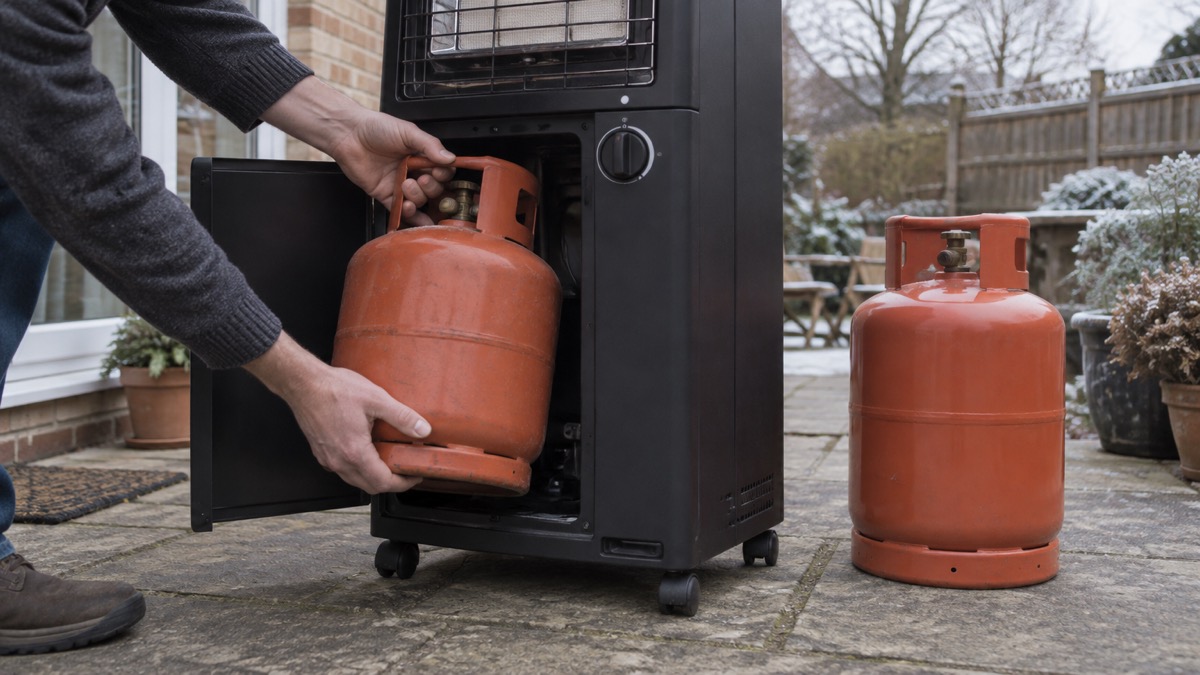
Refuelling is the moment when fuel vapour is most likely to be in the air, so do it outside. Maintain ventilation when using kerosene heaters to avoid a build-up of toxic fumes, and always refuel outside24. Before lighting a paraffin heater, ensure it is standing level, preferably on a non-combustible base, and away from draughts7. Let the heater cool before refilling it, and never fill it while it is lit.
For a gas heater, change the cylinder in a well-ventilated place and away from sources of heat and ignition4. Try to do it in the open air; if you must do it indoors, open windows and doors to increase ventilation20. Never change a cylinder on a stairway or other escape route7. Check that connections are secure and undamaged before use, and check gas and electrical equipment such as hobs, heaters and gas bottles before use18.
If you smell gas at any point, stop. Open doors and windows, avoid using naked flames, and do not smoke or strike matches25. Extinguish all naked flames, do not smoke or strike matches, and call the gas emergency service; immediate access will be required26. If the smell is paraffin rather than gas, stop using the heater, ventilate the room and have it checked before you light it again.
Signs of a fault and what to do straight away
A gas appliance that is burning badly gives warnings. Lazy yellow flames instead of crisp blue ones, black marks or stains on or around the appliance, and lots of condensation in the room are all signs of a fault16. If you see any of these, stop using the heater, ventilate the room and have it checked by a Gas Safe Register engineer16. The same engineer can check or fix gas heaters in caravans and mobile homes22.
For a paraffin heater, watch for a smoky flame, a smell of fuel, a leaking tank or a wick that will not stay alight. A strong or persistent smell indoors is a reason to stop using it and have it looked at. Never ignore fuel odours or visible smoke or fumes3.
If you smell gas, treat it as an emergency: open doors and windows, avoid naked flames, do not smoke or strike matches, and call the gas emergency number25. If you have a carbon monoxide alarm, fit it in every room with a fuel-burning heater and test it regularly27. For the wider picture of gas and heating failures, see Gas and Heating Failures.
Where to get help: gas emergencies, fire safety visits and alarms
For a gas appliance, get your heater checked by the Gas Safe Register16. Use a Gas Safe engineer to check or fix gas heaters, including in caravans and mobile homes22. If you smell gas, open doors and windows, avoid naked flames, and call the gas emergency service; immediate access will be required25.
Fire and rescue services offer home fire safety visits and advice, and many will fit or advise on smoke and carbon monoxide alarms. Contact your local fire and rescue service for a home safety check, and ask about carbon monoxide alarms if you use any fuel-burning heater2. If you are a carer or support someone who is, fire services publish specific guidance on keeping the person you care for safe28.
For help keeping warm, see Warm Spaces and Warm Hubs and Extra Help in an Emergency. If you are on a low income or have a health condition, ask your council about the Priority Services Register and cold weather support. For the full picture of preparing your home for winter, see our Before-Winter Checklist for Your Heating and Stove.
Sources (28)
- Carbon monoxide factsheet, Suffolk Fire and Rescue Service, 2014-01-09
- Stay warm safely this winter, Greater Manchester Fire and Rescue Service, 2026-10-29
- Safe use of heaters and generators, Armagh City, Banbridge and Craigavon Borough Council, 2026-10-29
- Heating your home, North Yorkshire Fire and Rescue Service, 2026-03-09
- Camping safety, Cheshire Fire and Rescue Service, 2025-07-26
- Heaters, Devon and Somerset Fire and Rescue Service, 2026
- Portable heaters, Mid and West Wales Fire and Rescue Service, 2026-10-29
- Seasonal winter, Suffolk Fire and Rescue Service, 2026
- Heating and gas, Scottish Fire and Rescue Service, 2024-11-21
- How fire safe is your heater? Different types and top tips | Devon and Somerset Fire and Rescue Service, Devon and Somerset Fire and Rescue Service
- Portable heaters, Cheshire Fire and Rescue Service, 2026-05-26
- Keeping home safe and secure, Highland Council, 2026-09-09
- Stay safe in cold weather, NHS Inform, 2026-09-21
- Cold health alert action card, GOV.UK, 2025-09-24
- Keeping warm, healthy and safe in cold weather, London Assembly, 2026-10-25
- Fire safety at home, Surrey County Council, 2026-10-15
- Stay warm safely this winter, Devon and Somerset Fire and Rescue Service, 2026
- Safety outdoors, Cumbria Fire and Rescue Service, 2026-10-29
- Keeping warm or cool in extreme weather, GOV.UK, 2025-12-16
- Portable heaters, Greater Manchester Fire and Rescue Service, 2026-10-29
- Gas appliances in sleeping accommodation, Health and Safety Executive, 2026
- Caravans and mobile homes, Devon and Somerset Fire and Rescue Service, 2026
- Fire and summer safety advice, nidirect, 2026-07-03
- Extreme weather, Flintshire County Council, 2026-10-29
- Gas supply issues, Buckinghamshire Council, 2026-10-29
- Action to take if you smell gas, Cornwall Council, 2021-05-10
- Safe home heating: Carbon Monoxide (CO) Alarms - Warwickshire County Council, Warwickshire County Council
- Fire safety for carers, Devon and Somerset Fire and Rescue Service, 2026
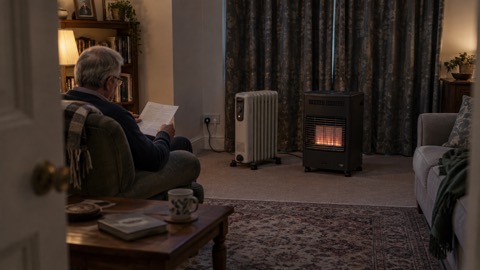 Electric or Gas Heaters
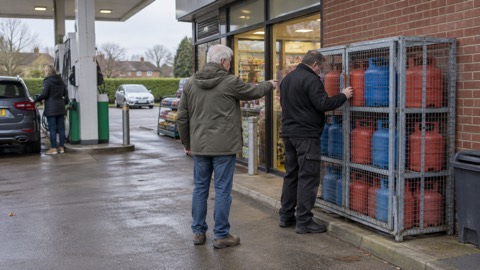 Butane or Propane Gas Bottles
 Gas or Spirit Stoves
 Hot Water Bottle or Wheat Bag
 Radiator vs Fan Heater
 Wood Burner vs Multi-Fuel Stove