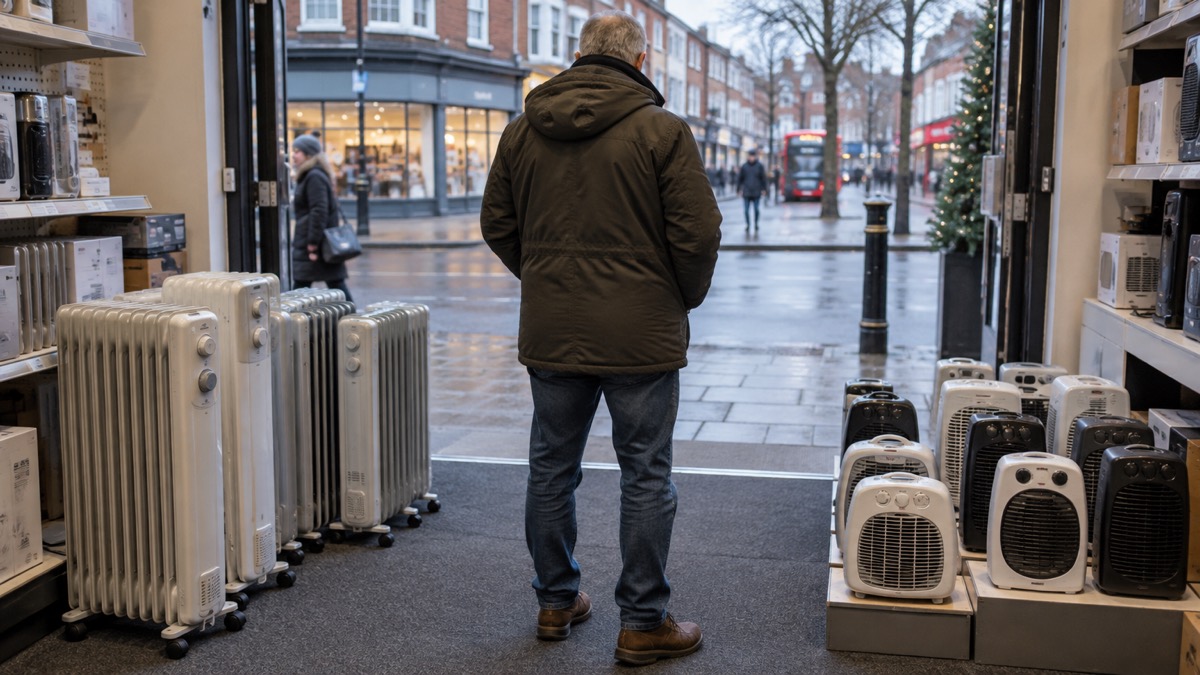
If your central heating has failed, or you want to warm one room without heating the whole house, the two electric heaters most households weigh up are the oil-filled radiator and the fan heater. Both run from a standard wall socket and both need the same basic safety rules. A fan heater warms a metal coil and blows air over it, driving heat into the room, and is easy to move and gives instant heat but is not the best at warming larger spaces1. An oil-filled radiator is the kind of electric radiator that official advice suggests as an alternative heat source when your usual heating is out2.
Whichever you choose, three rules decide whether it is safe. Plug it straight into a wall socket, never an extension lead or power strip, because heaters draw a lot of power and can cause cords to overheat and catch fire3. Keep at least one metre clear around it, away from curtains, bedding and furniture5. And check the model against the official recalls list before you use it, especially if it is second-hand or has been stored for years7.
This page explains how each heater works, what to look for when choosing one, and the safety checks that matter more than any feature on the box. If you are still deciding between electric and gas heating, the comparison of electric or gas portable heaters sets the two side by side.
| Oil-filled radiator | Fan heater | |
|---|---|---|
| How it heats | Oil warmed inside and circulated around fins; steady radiant and convected heat12 | Metal coil warmed, fan blows air over it11 |
| Speed | Takes longer to heat up2 | Instant heat11 |
| Noise | Silent | Noisier than oil-filled and convector heaters2 |
| Suits | A room you will sit in for hours; a bedroom | A quick warm-up in a small space11 |
| Weight | Quite heavy; choose one with wheels2 | Often small and portable2 |
| Fire risk from nearby items | Relatively low risk, no exposed element12 | Element and casing get hot; clearance essential5 |
Oil-filled radiator or fan heater: how each one heats a room
A fan heater works by warming a metal coil and blowing air over it, driving heat out into the room. That makes it easy to move around and gives instant heat, but it is not the best at warming larger spaces11. An oil-filled radiator works differently: it is a portable electric heater that looks like a fitted wall radiator, and inside it oil heats up and is pushed around the radiator's fins, so the surface warms and gives off heat steadily12.
That difference shapes what each is good for. A fan heater suits a quick burst of warmth in a small room, a bathroom before a shower, or a workspace you have just entered. It is noisier than convector and oil-filled electric heaters, which matters in a bedroom or in front of the television2. An oil-filled radiator is silent and gives a gentler, more even heat, but it takes longer to heat up and is quite heavy, so look for one with wheels if you need to move it between rooms2.
Fire and rescue services treat oil-filled radiators as the lower-risk choice of the two. Because they have no exposed heating elements, they are relatively low risk in terms of igniting nearby items, and are preferred over any other type of portable heater12. That does not make them risk-free: the surface still gets hot, the one metre rule still applies, and the plug and cable can still fail.
How an oil-filled radiator works, and what that means for your room
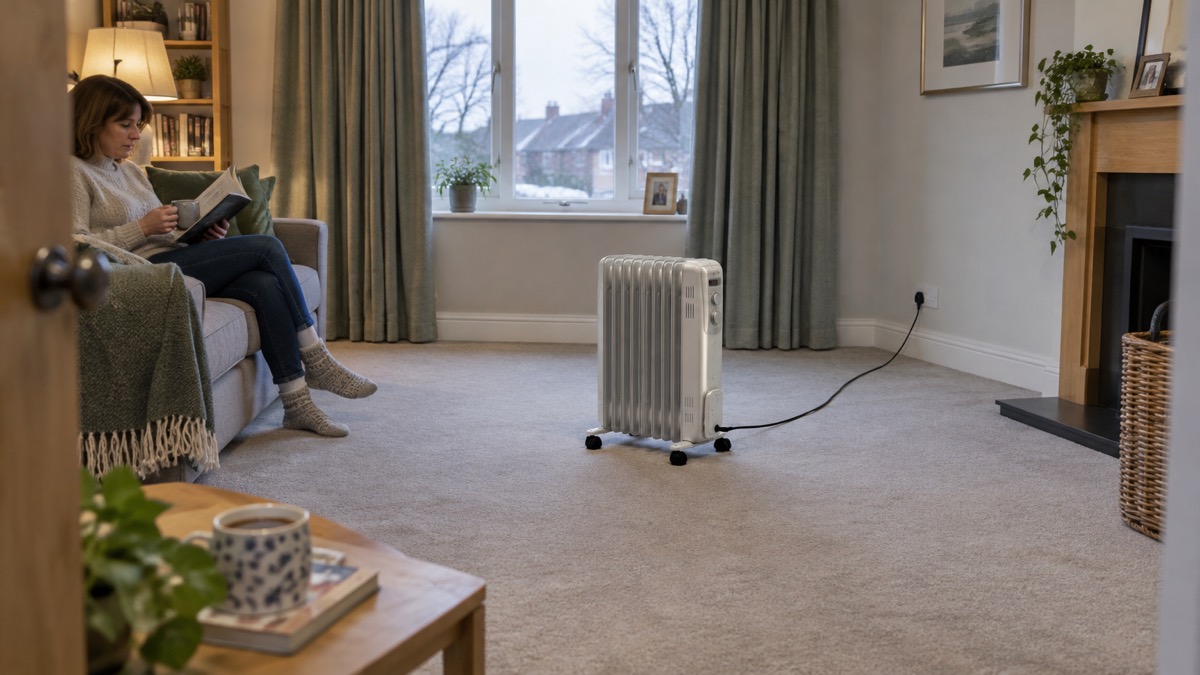
Inside an oil-filled radiator, the oil is heated by an element and pushed around the radiator's fins, so the whole casing warms and releases heat into the room12. Because the heat comes off the casing rather than a glowing element, the radiator is quiet and gives a steady warmth rather than a blast. It also keeps giving off heat for a while after it is switched off, which is why it suits a room you are sitting in for a long evening.
The trade-offs are real. Oil-filled heaters tend to be cheap to run and energy efficient, but they take longer to heat up and are quite heavy, so look for those with wheels2. Plan for the warm-up: switch it on half an hour before you need the room, rather than expecting instant comfort. Keep the top and sides clear, because the casing itself is the heat source, and never drape anything over it to dry.
If your boiler has failed and you are setting up one warm room for the evening, an oil-filled radiator is the kind of alternative heat source the NHS suggests for private properties, alongside an electric radiator13. Pair it with the measures on keeping one room warm when the heating fails so the heat you pay for stays in the room.
Check your heater is not subject to a recall
Before you use any heater, and especially one that has been stored for emergencies or not used for several years, check that it is not subject to a product recall or repair8. Fire and rescue services put this plainly: check that your heater isn't on a recall list7. The Office for Product Safety and Standards publishes alerts and recalls, and you can search by product8.
Recalls are not rare, and they affect heaters sold through mainstream channels as well as online marketplaces. The Kobe 2kw Oil-Filled 9 Fin Radiator (KBE8280200K), sold from January 2024 onwards, was recalled over a plug defect that may overheat and catch fire. A Valiant Radiator Fan, a white rechargeable radiator fan with a black settings control screen, was sold via Amazon, eBay, Temu, B&Q, Debenhams, The Range and TikTok Shop before being recalled from end users15. A rechargeable hand warmer sold via Amazon and eBay was withdrawn, with the listing removed by the marketplaces16. Check that your heater is not subject to a product recall or repair, and use the Office for Product Safety and Standards alerts and recalls page to check your appliances10.
If you search for a product you own and it is not listed, that means it has not been recalled and should be safe to use; if you have concerns, contact the retailer or manufacturer to alert them to a potential problem17. Fire services in Scotland give the same advice: if an appliance is not listed as recalled it should be safe to use, and if you have concerns about its safety, contact the retailer or manufacturer18.
Plug straight into a wall socket, never an extension lead
Electric heaters should be plugged into a wall socket, not an extension lead, because leads can be overloaded and cause fires3. The reason is current draw: heaters draw a lot of power and can cause cords to overheat, leading to fires, so plug directly into a wall outlet and do not use extension cords or power strips5. Northern Ireland Fire and Rescue Service gives the same instruction: plug the heater directly into a socket rather than an extension lead, and unplug it when not in use19.
The rule extends to how you use leads elsewhere in the room. Socket extenders and extension leads should only ever be attached to the wall plug, not to one another20. Block plug adapters should not be used21. Anything that produces heat, such as a toaster, air fryer or kettle, should have its own wall socket rather than sharing an extension lead, and the same logic applies to a heater22. Appliances such as washing machines and electric heaters are high powered and should be plugged directly into a wall socket23.
If you are running a heater from a generator or a backup power setup, the same caution applies in a different form: never connect a generator directly to your domestic electrical system by plugging it into a wall outlet, because backfeeding puts neighbours and workers at severe risk5. For the wider picture, see backup power at home.
Keep at least 1 metre clear around any heater
Most fires caused by heaters are caused by sitting too close to them, placing heaters near curtains and furniture, or using them to dry washing1. The fix is a simple distance: keep your heater at least one metre away from furniture and curtains1. The same figure appears across fire and rescue guidance: maintain at least 3 feet (1 metre) of clearance around the heater, away from curtains, bedding, furniture, paper and other flammables5. Keep electric heaters clear of curtains, fabrics and furniture, and sit at least three feet (one metre) away yourself6.
Washing is a particular trap. Always make sure that washing is kept at least one metre away from a heater or open fireplace9. Draping clothes or towels over a heater to dry blocks the heat and puts fabric directly against a hot surface, which is exactly the situation the guidance is written to prevent.
There is one group of households for whom the distance needs to be greater. If anyone in the home uses home oxygen therapy, keep oxygen at least 1.5 metres (5 feet) from heaters and electrical appliances24. The recommended distance for oxygen from fire is 3m (10ft), and from radiators and heaters 1.5m (5ft)25. If that applies to your household, the extra help in an emergency section covers medical equipment and power dependence in more detail.
Safety features to look for: tip-over switch and overheat protection
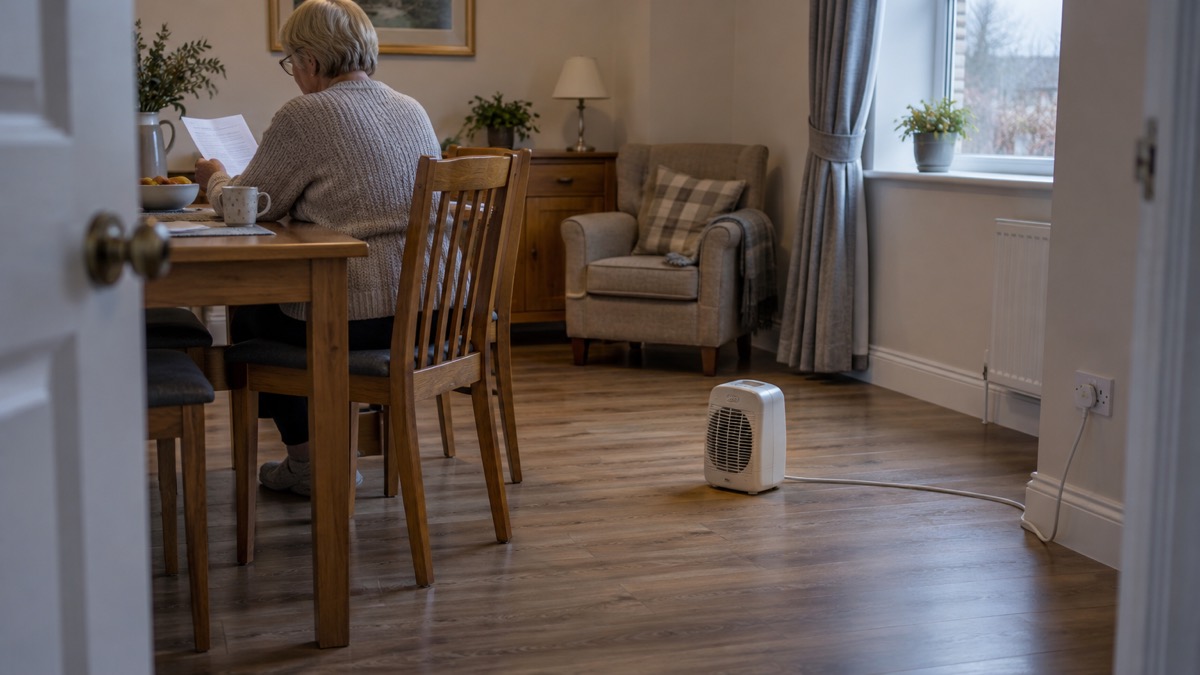
When you choose a heater, opt for one with essential safety features such as tip-over and overheating protection, which automatically switch the device off if these hazards are sensed10. A tip-over switch matters in a household with children, pets or a busy walkway: if the heater is knocked over, it cuts out rather than running on its side against carpet or furniture. Overheat protection cuts the power if the unit gets too hot, for example because something has been placed against it.
For gas heaters, make sure the heater carries the CE mark before purchasing, and look for a tip-over shutoff and overheat protection5. Buy heaters that conform to safety standards from reputable retailers19. Keep the instruction manual with the heater, because it tells you what the maker intends and what the safety cut-outs do.
A cool-to-the-touch casing is a useful extra, not a substitute for the rules above. Oil-filled radiators already have no exposed element, which is why they are relatively low risk for igniting nearby items12. But the casing still warms, the cable and plug can still fail, and the one metre rule still applies. If a heater has been flooded or damaged, have gas or oil central heating checked by a qualified person before switching on the gas or trying to light any appliance26.
Why second-hand heaters are best avoided
Avoid buying second-hand heaters, but if you need to buy one, check it closely for damage, and if in doubt, avoid it3. A second-hand heater may have been dropped, stored in a damp shed, or had its cable repaired badly, and none of that is visible from a photograph at a car boot sale. The instruction manual may be missing, so you cannot check what the safety features are meant to do.
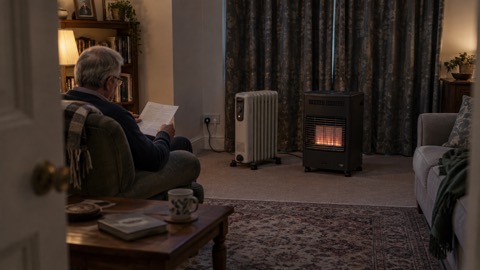
The advice is even firmer for fuel-burning heaters: never buy a second-hand paraffin heater, as they can be dangerous27. If you are weighing up a paraffin or bottled gas heater instead of an electric one, the comparison of paraffin or bottled gas heaters covers the ventilation and fuel rules that apply.
If you do take on a second-hand electric heater, treat it as unchecked until you have done three things: looked the model up against the recalls list8, inspected the plug and cable for damage, and confirmed it has tip-over and overheat protection10. If any of those checks fails, do not use it.
Leaving a heater on overnight, and other everyday risks
Make sure that heaters are turned off, or the fire is completely out, before going to bed9. That is the straightforward answer to the overnight question: a portable heater is not designed to be left running while you sleep and cannot be supervised. If you need warmth through the night, an electric blanket used to its own safety rules is the safer route, and it too should be switched off before you sleep.
Never leave a heater running unattended in a room you have left, and keep it away from children and pets5. Do not use fuel-burning heaters in bedrooms, basements or other enclosed areas, and do not ignore fuel odours or visible smoke or fumes5. Only use gas or paraffin heaters in well-ventilated areas, having checked that they are suitable for indoor use23.
If your heater has been out of use since a flood, do not simply plug it back in. Have your gas or oil central heating checked by a qualified person before switching on the gas or trying to light any appliance28. For the wider sequence of checks after a flood, see flooding.
Where to get help and what to do next
If a heater fails, smells of burning, or trips your electrics, stop using it and unplug it. Check the model against the Office for Product Safety and Standards recalls list8, and if it is listed, follow the recall instructions rather than repairing it yourself. If it is not listed but you are worried, contact the retailer or manufacturer17.
If your central heating has broken down and you are relying on a heater for one room, the heating and cooking without mains power or gas section covers the wider plan, including stopping draughts and hot water bottles as backup warmth. For the full set of heater types, including gas and paraffin, see portable heaters explained, and for the safety rules that apply to all of them, see using a portable heater safely at home.
A few practical steps before the cold arrives:
- Check that your heater is not subject to a product recall or repair10.
- Check the plug and cable for damage, and confirm the tip-over and overheat features work10.
- Clear one metre around wherever the heater will stand, and move furniture if needed5.
- Keep the instruction manual with the heater, and write the model number somewhere you can find it.
- Decide now which room you will heat, and read keeping one room warm before you need it.
Sources (28)
- Heater safety, Devon and Somerset Fire and Rescue Service, 2026
- How to cope if your boiler breaks down, Which?, 2019-02-08
- Stay fire safe, Greater Manchester Fire and Rescue Service, 2026-10-29
- Heating your home safely, North Yorkshire Fire and Rescue Service, 2026-03-09
- Safe use of heaters and generators, Armagh City, Banbridge and Craigavon Borough Council, 2026-10-29
- Electric blankets and portable heaters safety, Warwickshire County Council, 2026-10-29
- Stay warm safely this winter, Greater Manchester Fire and Rescue Service, 2026-10-29
- Maintain appliances and recalls, Greater Manchester Fire and Rescue Service, 2026-10-29
- Digital easy read fire safety booklet, London Fire Brigade, 2026
- Safe home heating, Warwickshire County Council, 2026-10-29
- Heater safety news, Devon and Somerset Fire and Rescue Service, 2024-11-20
- Equipment safety for carers, Devon and Somerset Fire and Rescue Service, 2026
- Sleeping in a room with a gas appliance, coal or log fire, Doncaster and Bassetlaw Teaching Hospitals NHS Foundation Trust, 2026-03-06
- Sleeping with a gas appliance on, Doncaster and Bassetlaw Teaching Hospitals NHS Foundation Trust, 2025-12
- Product recall: Valiant Radiator Fan, Office for Product Safety and Standards, 2025-11-07
- Product safety report: Electric Rechargeable Hand Warmer, Office for Product Safety and Standards, 2025-02-11
- Checking your electrical products, Gloucestershire Fire and Rescue Service, 2025-11-05
- Electrical safety, Scottish Fire and Rescue Service, 2025-02-27
- Home fire safety, Northern Ireland Fire and Rescue Service, 2026-10-14
- Fire safety advice for parents, Warwickshire County Council, 2026-10-29
- Fire safety checklist, Devon and Somerset Fire and Rescue Service, 2026
- Staying safe this season, Devon and Somerset Fire and Rescue Service, 2025-12-01
- Cost of living leaflet, Greater Manchester Fire and Rescue Service, 2022
- Medication and medical devices, West Yorkshire Fire and Rescue Service, 2026-10-29
- Medical equipment, North Yorkshire Fire and Rescue Service, 2026-03-09
- Clearing up after a flood | Oxford City Council, Oxford City Council
- Heating and gas, Scottish Fire and Rescue Service, 2024-11-21
- Flood recovery information, Devon County Council, 2026-01-29
 Electric or Gas Heaters
 Butane or Propane Gas Bottles
 Gas or Spirit Stoves
 Paraffin vs Gas Heaters
 Hot Water Bottle or Wheat Bag
 Wood Burner vs Multi-Fuel Stove