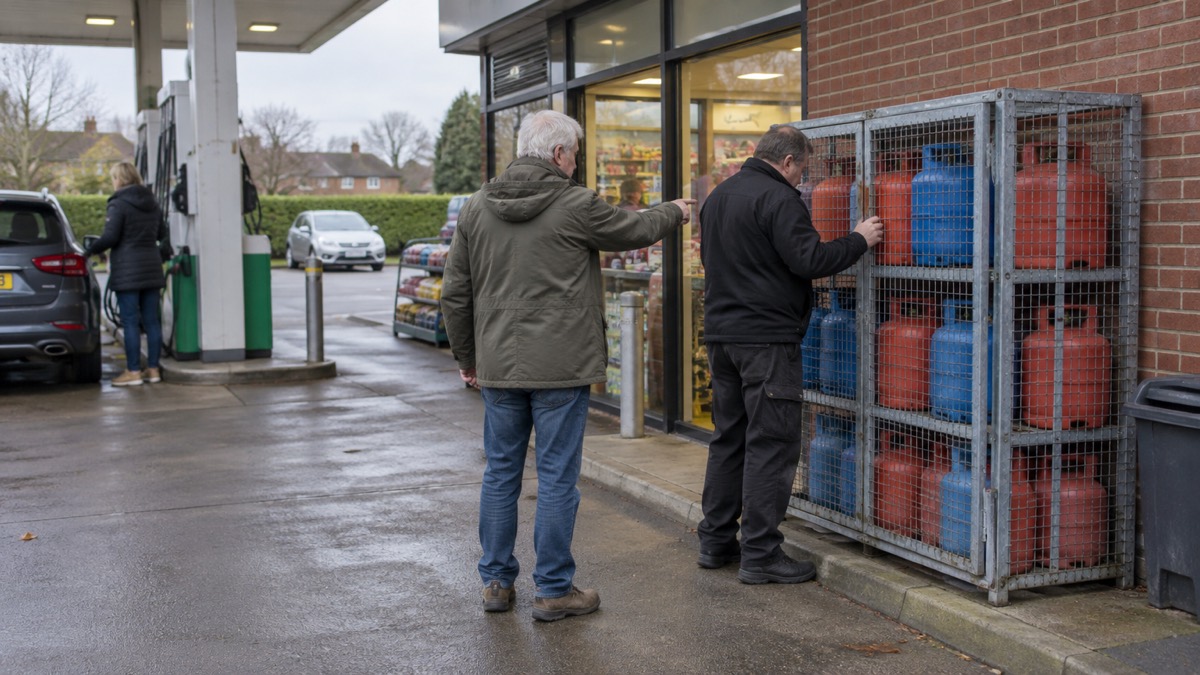
If you own a Flogas Gold butane cylinder, stop using it now. The Office for Product Safety and Standards recalled these bottles on 10 December 2024 because they were filled with a butane and propane mixture outside the parameters for commercial butane, which raises the pressure inside the cylinder and creates a fire risk1. The recall covers gold and red butane bottles in 4.5 kg, 7 kg and 13 kg sizes1. Do not connect the gas, and if a bottle is already connected, disconnect it immediately1.
For everyone else choosing between butane and propane, the decision comes down to how each behaves in the cold and where the bottle will be used. Both are forms of Liquefied Petroleum Gas (LPG), stored under pressure and highly flammable2. Butane is the common fuel for indoor cabinet heaters and small camping stoves in mild weather; propane is the usual choice for outdoor use and cold conditions. Whichever you use, the safety rules are the same: store bottles upright and outside, change them in the open air or with doors and windows open, and never bring a bottle indoors unless the appliance is designed to house it2.
This page sets out the two recalls that matter to UK households, how to check whether your bottle is affected, what to do with a faulty cylinder, and how to store and change bottles so that a heater keeps you warm without becoming a hazard.
| Butane | Propane | |
|---|---|---|
| Pressure at 15 degrees C | About 1.5 bar2 | Higher than butane at the same temperature2 |
| Cold weather | Pressure falls as temperature drops, so output drops2 | The usual choice for outdoor and cold-weather use2 |
| Indoor use | Only where the appliance is designed to house the cylinder, such as a cabinet heater2 | Not indoors except for necessary work processes and short periods by trades people2 |
| Typical use | Indoor cabinet heaters, small stoves in mild weather | Outdoor heaters, barbecues, cold-weather use |
Flogas Gold butane cylinders recalled: stop using them now
The Flogas Gold Butane Gas Cylinder was recalled from end users and withdrawn from the market on 10 December 20241. The bottles are gold and red, and were sold in 4.5 kg, 7 kg and 13 kg sizes, particularly through retailers such as B&Q, B&M, Homebase, another local seller or gas dealer1. The recall was notified by Local Authority Trading Standards under notification number 2411-01817.
The reason for the recall is specific. The cylinders were filled with a mixture of butane and propane outside the parameters for commercial butane defined in BS4250, which results in higher vapour pressure than usual1. In plain terms, the bottle is under more pressure than its fittings and regulator were designed for. The official notice states that the product does not meet the requirements of The Gas Appliances (Enforcement) and Miscellaneous Amendments Regulations 20181.
If you have one of these bottles, the instruction is unambiguous:
"stop using the butane gas bottles immediately. Do not connect the gas. If already connected, disconnect it immediately."
Do not use the bottle "just until it runs out". The hazard is present while the cylinder is connected and under pressure, not only when it is being changed. Treat the bottle as unfit for use from the moment you identify it, and arrange collection.
What owners of a recalled cylinder should do
The steps below follow the official recall notice1. Work through them in order.
- Stop using the bottle immediately. Do not connect it to a heater, stove or barbecue1.
- Disconnect it if it is already connected. Turn the appliance off first, then disconnect the cylinder1.
- Store it outdoors where possible. If you must store it indoors, keep it away from sources of heat until collection is arranged1.
- Contact Flogas on 0330 041 6629 or at cylinder.recall@flogas.co.uk to arrange collection and a free replacement1.
- Do not refill or dispose of it yourself. Refillable cylinders are the property of the gas supplier and must be returned to the distributor or dealer2.
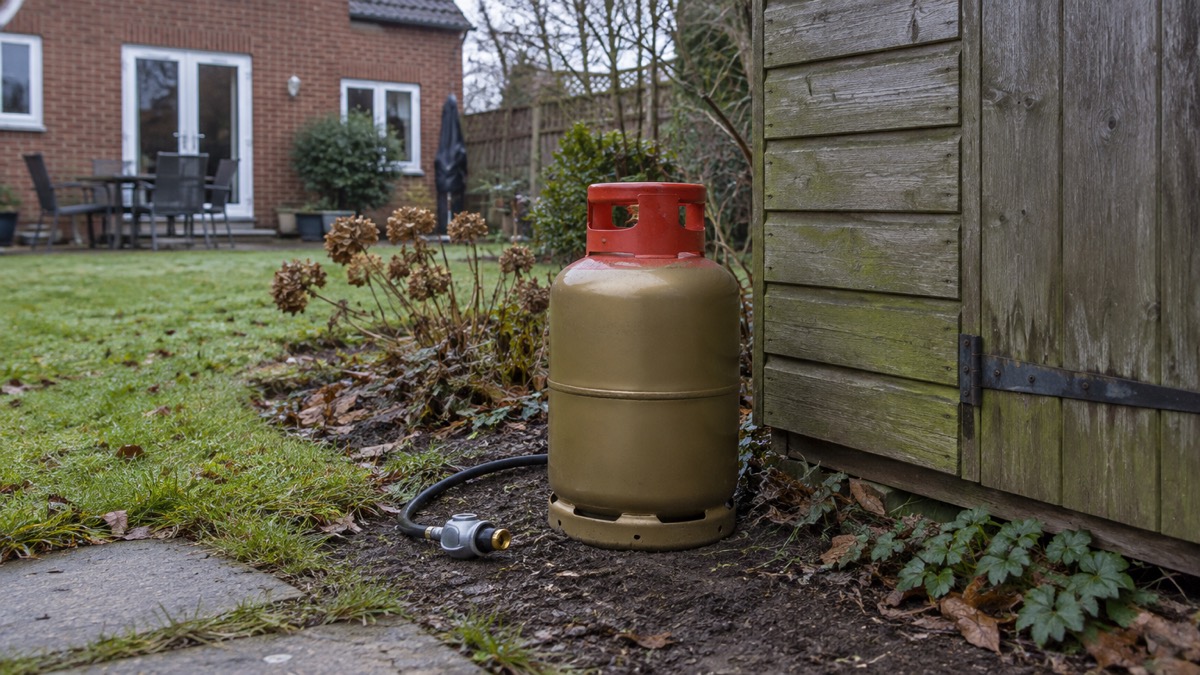
A few practical points help. Keep the bottle upright while you move it, and do not roll it or drag it by the valve. If you have more than one bottle, check every one against the description rather than assuming only the newest is affected. If you bought the bottle from a local dealer and cannot reach Flogas, the retailer is a sensible second contact, since recall notices are also publicised through the retailer where the product was purchased8.
The Calor 4.5kg butane cylinder recall
Calor issued a product recall with immediate effect in October 2021 on a limited number of 4.5 kg butane cylinders that can release gas from the valve when open and connected. The recall was issued by the company itself rather than through the government product safety database, so it is worth checking Calor's own recall information if you own a Calor 4.5 kg butane bottle of that age.
The hazard is different from the Flogas case. Where the Flogas bottles were over-pressured by a fuel mixture, the Calor issue is a valve that can release gas when the cylinder is open and connected. Both come down to the same practical advice: a cylinder that leaks gas is a fire risk, and a leaking bottle should be taken out of use and returned.
If you are unsure which recall applies to a bottle you own, the safest course is to stop using it, store it outdoors, and contact the supplier named on the cylinder. Do not attempt to test a suspect valve by opening it indoors.
How to check whether your gas bottle is affected
Checking a bottle takes a few minutes and needs no tools. Start with the label and the colour, then work through the notice.
- Match the make and colour. The Flogas recall covers gold and red butane bottles; the Calor recall covers a limited number of 4.5 kg butane cylinders1.
- Check the size. Flogas affected sizes are 4.5 kg, 7 kg and 13 kg1.
- Check when and where you bought it. The Flogas bottles were sold between 6 and 22 November 2024, particularly through B&Q, B&M, Homebase, another local seller or gas dealer1.
- Check the official recall notices. Product recall notices are issued by the Office for Product Safety and Standards, and the retailer where you purchased the product can also confirm8.
Recall notices are not only for gas. The same checking habit applies across the home: the Bauer Electric Hot Water Bottle was recalled in March 2025 over a fuse that could allow too much current to flow, with a warning notice issued and the option to return the item to the retailer for a refund9. Hunter Price licensed hot water bottles were recalled in November 2023 because certain batches may pose a burns risk due to a weak joint at the top seam10. MSR Trail Lite and Reactor camping cooking pots were recalled in March 202411. If you keep a folder or a phone note of the model numbers of the equipment you rely on, checking a recall notice becomes a two-minute job.
Over-pressure: why a faulty cylinder is a fire risk
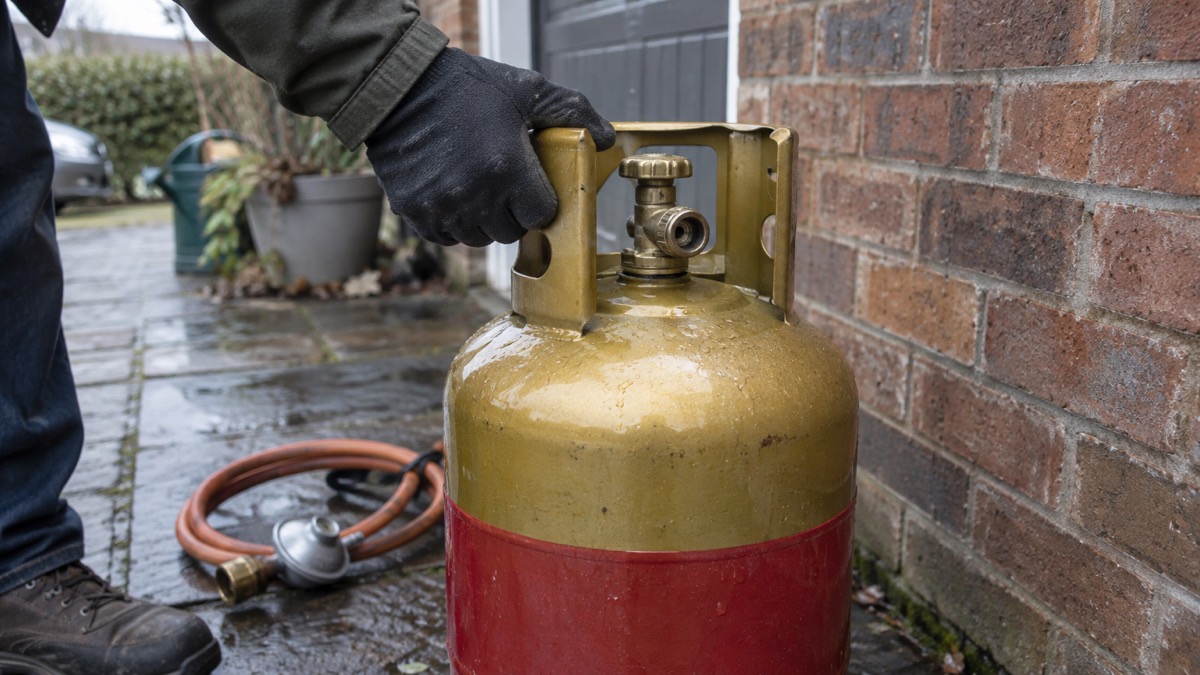
LPG is stored under pressure and is highly flammable3. A small leak can produce a large volume of highly flammable gas, and because the gas is heavier than air it collects near the floor or ground and can be ignited at a considerable distance from the source of the leak12. That is why a gas smell near the floor of a room matters even if you cannot see or hear anything wrong.
Over-pressure makes this worse in a specific way. Regulators are designed for a maximum inlet pressure of 7.5 bar; if that is exceeded, it could lead to leakage of joints, failure of components, or gas and flames being emitted from the appliance itself1. The Flogas notice puts the same point plainly: should the inlet pressure of the regulator exceed the design pressure, this could lead to leakage of joints, failure of components or gas or flames to be emitted from the appliance itself7.
Most portable heater accidents do not start with a faulty cylinder at all. They happen because gas leaks while people are assembling appliances or changing cylinders or cartridges12. That is the moment to be most careful: check the connection, test it with soapy water, and never lean over the regulator while opening the valve.
Butane or propane: how each bottle behaves in a UK home
Portable gas heaters use LPG, such as butane or propane3. The two fuels behave differently in the cold, and that difference decides which bottle suits which job.
The pressure figure is the one to remember. At 15 degrees C the pressure is about 1.5 bar for butane2. As the bottle cools, the pressure falls, and a butane appliance that worked well in September can become weak or fail altogether on a frosty morning. Propane holds up better in the cold, which is why it is the usual fuel for outdoor winter use.
There is also a placement rule that catches people out. Do not use butane cylinders indoors unless the appliance is specifically designed to house the cylinder, such as a cabinet heater, or a specific cylinder housing is provided2. Do not use propane cylinders indoors except when necessary for work processes, or for short periods when propane cylinders may be used inside by trades people such as plumbers2. A gas bottle in a living room is not a substitute for a proper heater.
For the wider choice between fuel types, see Portable Heaters: Electric, Gas and Paraffin Types Explained and Paraffin or Bottled Gas Heaters. If you are choosing a bottle and regulator from scratch, Bottled Gas for Heaters and Stoves: Butane, Propane and Regulators sets out the fittings.
Storing gas bottles safely
Storage is where most household gas incidents are prevented or caused. The fire and rescue services are consistent on the basics.
- Store upright and outside whenever possible6.
- Keep bottles out of direct sunlight and off balconies14.
- Never store them in basements, under stairs, or in cupboards containing electric meters or equipment6.
- Keep them away from sources of heat and ignition3.
- Turn the gas off at the bottle when it is not in use15.
- On a boat, store cylinders upright where any leaking gas will flow overboard, preferably in a suitable, vapour-tight, self-draining locker16.
The reason for the outdoor rule is the weight of the gas. A leak indoors collects at floor level and can reach an ignition source across the room12. Outdoors, or in a locker that drains overboard, the gas disperses.
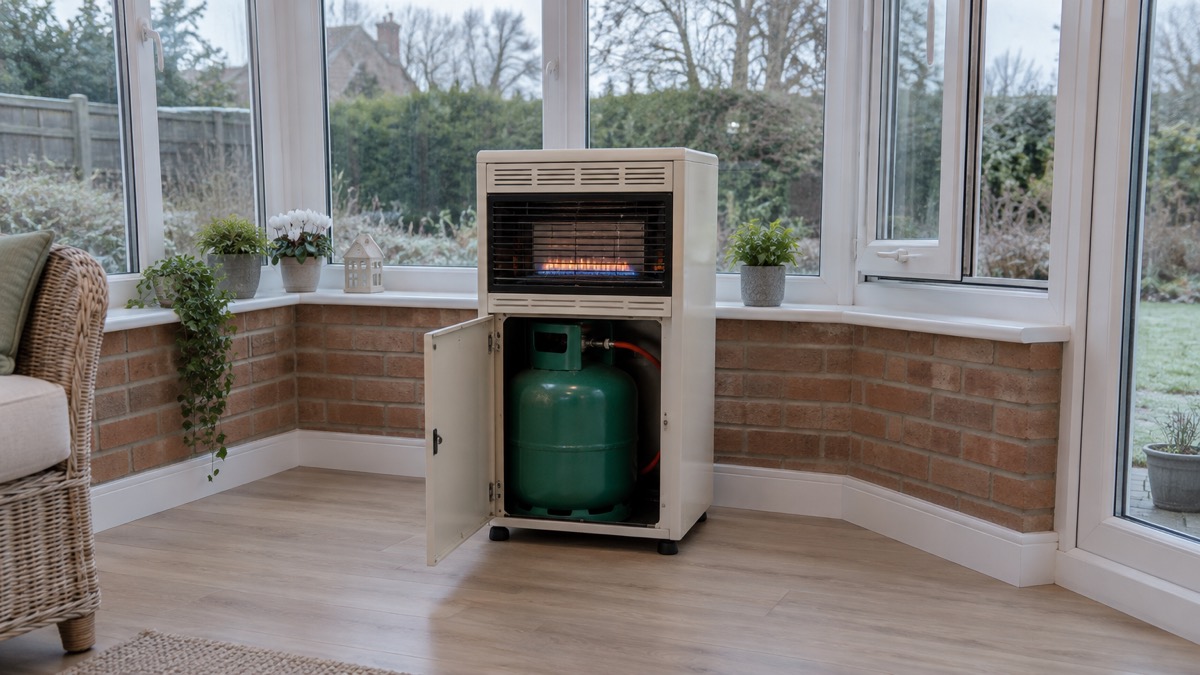
If you keep a spare bottle for a heater, treat it as you would any other pressurised fuel: upright, outdoors, secured so it cannot fall, and away from anything that could spark. For more detail, see Where to Store Gas Cylinders at Home.
Changing a bottle without creating a leak
Changing a cylinder is the single most common moment for a gas leak, so slow down and do it in the right place12.
- Turn the appliance off and the tap off before changing the cylinder17.
- Change the bottle outdoors where possible. If you must do it indoors, open windows and doors for ventilation3.
- Keep the change away from sources of heat and ignition14.
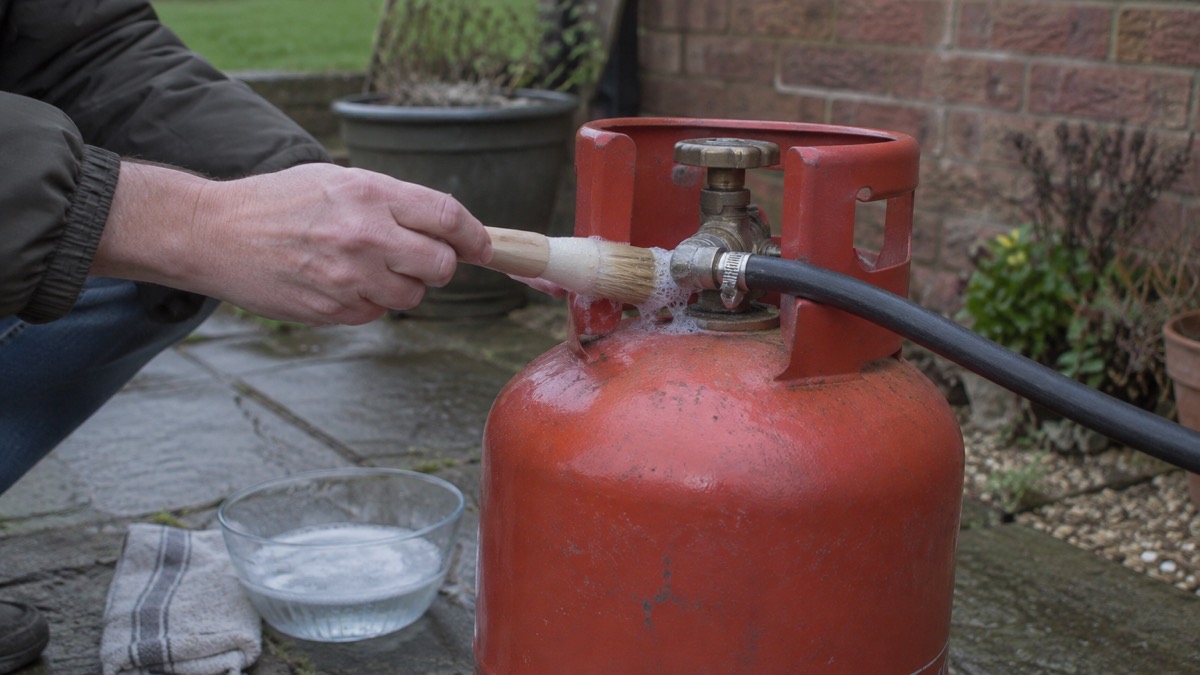
- Check the connection with soapy water. Brush soapy water around the joints and watch for bubbles; tighten to fix, but do not overtighten19.
- If you find a leak, take the heater and cylinder into open air and do not use them until the faulty part has been replaced12.
- Change gas bottles only when completely empty where the appliance guidance says so17.
A bubble tester or leak detection fluid does the same job on a boat or caravan installation16. The principle is the same everywhere: test the joint, do not rely on smell alone.
Where to report a faulty gas bottle and get help
If you smell gas or suspect a leak, the first call is the National Gas Emergency Service on 0800 111 9994. The same number covers a carbon monoxide emergency or a struck gas pipeline, even if there is no obvious leak5. If you think a gas appliance is leaking carbon monoxide, call the free National Gas Helpline immediately on 0800 111 99920.
For a faulty appliance rather than a leak, contact a Gas Safe registered engineer13. For a recalled cylinder, contact the supplier named in the notice: Flogas on 0330 041 6629 or cylinder.recall@flogas.co.uk1. For a product safety concern about a bottle you believe is faulty but not recalled, the Office for Product Safety and Standards and the retailer where you bought it are the routes to use8.
Keep the number somewhere you can find it in the dark, and make sure everyone in the household knows it. For the wider picture on gas and heating failures, see Gas and Heating Failures: A Household Guide and Home Emergencies: Fire, Carbon Monoxide, Gas Leaks and Burst Pipes.
Sources (20)
- Flogas Gold Butane Gas Cylinder recall, London Borough of Bromley, 2024-12-10
- LPG safety guidance, Liquid Gas UK, 2014-01
- Portable heaters, Cheshire Fire and Rescue Service, 2026-05-26
- Emergency advice, Basingstoke and Deane Borough Council, 2026-10-29
- Energy outages, National Energy System Operator, 2026
- Stay warm safely this winter, Greater Manchester Fire and Rescue Service, 2026-10-29
- Product recall: Flogas Gold butane gas cylinder 2411-0181, GOV.UK, 2024-12-03
- Registering your e-bike or e-scooter for safety alerts and product recalls, London Fire Brigade, 2026-10-25
- Product safety report: Bauer Electric Hot Water Bottle, GOV.UK, 2025-03-06
- Product recall: Hunter Price licensed hot water bottles, GOV.UK, 2023-11-24
- Product recall: MSR Trail Lite and Reactor camping cooking pots, GOV.UK, 2024-03-25
- Portable heaters, Mid and West Wales Fire and Rescue Service, 2026-10-29
- Safe home heating, Warwickshire County Council, 2026-10-29
- Heating your home, North Yorkshire Fire and Rescue Service, 2026-03-09
- Caravan, motorhome and campervan safety, Humberside Fire and Rescue Service, 2026-10-29
- Fire risk on boats, Devon and Somerset Fire and Rescue Service, 2022-05-24
- Caravan fire safety, Mid and West Wales Fire and Rescue Service, 2023
- Fire safety outdoors, GOV.UK, 2022-05-25
- Barbecue safety, Mid and West Wales Fire and Rescue Service, 2026-10-29
- Carbon monoxide information, Wakefield Yorkshire Smokefree, 2026-10-26
 Electric or Gas Heaters
 Gas or Spirit Stoves
 Paraffin vs Gas Heaters
 Hot Water Bottle or Wheat Bag
 Radiator vs Fan Heater
 Wood Burner vs Multi-Fuel Stove