
A hot water bottle and a wheat bag both keep you warm without mains power, and both can burn you or start a fire if used carelessly. The difference is in how they work and where the risk sits. A hot water bottle holds warm water, so the danger is scalding water and perished rubber; a wheat bag is heated in a microwave, so the danger is overheating and ignition. Whichever you choose, the rules are simple: warm water not boiling, a cover against the skin, and a wheat bag heated only for the time on its label.
If you own a Hunter Price licensed hot water bottle, stop using it now. The four designs were recalled in November 2023 because certain batches may pose a burns risk from a weak joint at the top seam, and Hunter Price advised affected consumers to stop using the item immediately and return it to their nearest store for a full refund1.
For everyone else, the safe habits are the same. Fill a bottle no more than two thirds full with warm water, never boiling, let the air out and screw the stopper on tightly, and always use a cover2. Heat a wheat bag only for the time on its label, let it cool fully before storing, and stop using it if it is damaged or smells unusual4.
| Hot water bottle | Wheat bag | |
|---|---|---|
| Heat source | Warm water from a kettle or tap6 | Microwave4 |
| Main risk | Scalds from hot water, perished rubber3 | Overheating, ignition, burns4 |
| Works in a power cut | Yes, if you can heat water | Only if you have a microwave with power |
| Warming a bed | Use under blankets or duvets, with a cover12 | Use only as a heat pack5 |
| Key rule | Warm water, two thirds full, always a cover6 | Follow the label heating time, cool before storing4 |
The Hunter Price hot water bottle recall: what owners should do
The recall covers four hot water bottles sold in black Hogwarts, grey print Hogwarts, pink Barbie patch and purple Gabby's Dollhouse designs1. They were notified by Local Authority Trading Standards under case number 2311-0157, and the product does not meet the requirements of the General Product Safety Regulations 20051. The hazard is specific: certain batches may pose a burns risk due to a weak joint at the top seam of the hot water bottle1.
The corrective action is straightforward. Hunter Price have advised affected consumers to stop using the item immediately and return it to their nearest store for a full refund, and the product has been recalled from end users1. If you are unsure whether a bottle you own is one of the affected batches, the safest course is to stop using it and take it back to the store where it was bought.
This is not the only hot water bottle safety notice in recent years. A separate product safety report covers the Bauer Electric Hot Water Bottle, a pink rechargeable electric bottle supplied in white cardboard packaging with an image of the product on the face, made in China under case number 2412-00848. The manufacturer issued a warning notice with instructions for the fuse to be replaced, or the option to return the item to the retailer for a refund8. If you own one, check the notice and follow the maker's instruction.
Which batches are affected and why they pose a burns risk
The recall notice does not list batch numbers in the summary; it identifies the affected products by design and by the weak joint at the top seam that creates the burns risk in certain batches1. In practice, that means the design is the identifier: if your bottle is one of the four licensed designs named in the notice, treat it as affected and return it.
Hot water bottles in general can cause serious burns, which is why the recall was treated as a precautionary safety measure rather than a minor fault3. The risk is not only manufacturing defects. Rubber perishes with age and use, and the things that affect a hot water bottle include regular use, filling it with boiling water, storing it near a heat source such as an airing cupboard or radiator, damage from something sharp, and storing it full of water, which can degrade the rubber2.
That is why checking matters. Always check a new bottle for damage before you use it: fill it with cold water, insert the stopper, turn it upside down to check the stopper fits, and give it a gentle squeeze to check for any leaks2. Check older bottles regularly too, as they can perish9. If a bottle is cracked, stiff, leaking or visibly worn, replace it rather than risk a split.
Stop using it and return it to your nearest store
If you own a recalled Hunter Price bottle, the action is the same as for any recalled product: stop using it and return it to where you bought it for a full refund1. Do not pass it on to a charity shop, a friend or a family member, and do not keep it as a spare.
The same principle applies to any hot water bottle or wheat bag that shows signs of damage. Stop using a heated wheat bag if you notice any damage or it has an unusual smell5. For a hot water bottle, look for cracks, a stiff or sticky surface, a leaking stopper or a perished feel, and replace it.
Hot water bottle or wheat bag: how each one keeps you warm
Both are ways of carrying heat to a person rather than heating a room, which makes them useful when the boiler fails or the power is off. A hot water bottle holds warm water and releases heat slowly through its rubber wall and cover. A wheat bag is filled with grain, heated in a microwave, and holds warmth in the grain. Each suits a different household and a different set of risks.
A hot water bottle is a good way of staying warm, and one council resilience guide recommends checking them regularly as they can perish9. Age UK suggests using one under blankets or duvets to keep warm while sleeping13. A wheat bag is best treated as a heat pack: use it only as a heat pack, and follow the heating times on the label to avoid overheating or fire4.
The choice often comes down to circumstance. If the power is off, a microwave cannot heat a wheat bag, so a hot water bottle and a kettle (or a flask of hot water) may be the more reliable option. If you have a microwave and want targeted warmth for a stiff shoulder or back, a wheat bag is convenient, provided you follow the label.
Filling a hot water bottle safely
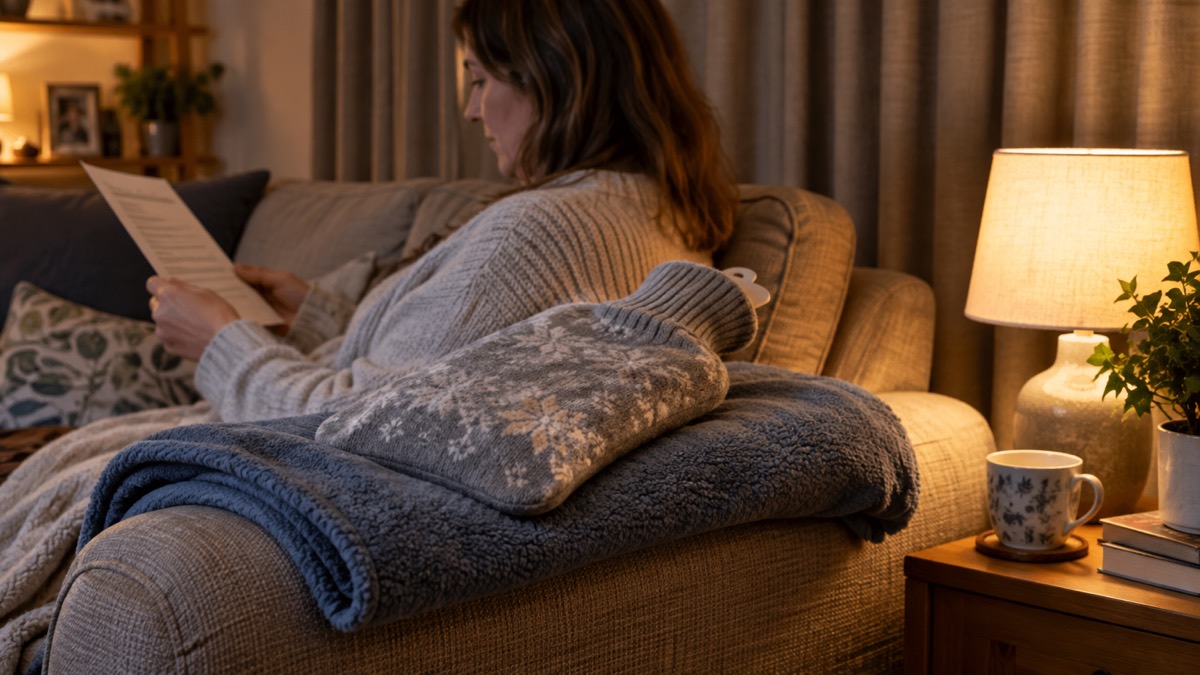
The single most important rule is the water temperature. Fill your hot water bottle with warm water, never boiling water, to prevent the risk of scalds or burns6. Boiling water can also degrade the edges of the bottle, shortening its life and increasing the risk of a split15.
Fill no more than two thirds full2. Before putting the stopper in, carefully let the air out of the bottle, then ensure the stopper is screwed on tightly3. Always use a cover, and avoid direct skin contact by placing the bottle inside that cover14.
- Check the bottle for damage before filling, using cold water first for a new bottle2.
- Fill no more than two thirds full with warm, not boiling, water2.
- Let the air out carefully, then screw the stopper on tightly3.
- Put the bottle inside a cover before it goes near skin14.
- Remove it from the bed before you get in if you have reduced feeling in your feet16.
"to prevent the risk of scalds or burns, make sure you fill your hot water bottles with warm water - never use boiling water"
Heating a wheat bag without a fire
Wheat bags carry a fire risk that hot water bottles do not. If used incorrectly, they can cause burns or fires4. The main cause is overheating in the microwave: follow the heating times on the label to avoid overheating or fire4. Repeated heating can dry out the contents and increase the risk of ignition5.
Homemade wheat bags are riskier than shop-bought ones. They can pose a greater fire and injury risk because the moisture content and volume are not known, and the proper heating time cannot be recommended11. Using a type of wheat other than buckwheat may increase the risks of overheating, fires and burns11.
After use, do not store the bag until it is fully cool5. Stop using it if you notice any damage or it has an unusual smell5. Keep the microwave itself clear: microwaves can overheat if you stack things on top of them, so keep some space around them17.
Keeping warm safely when the boiler fails in a cold snap
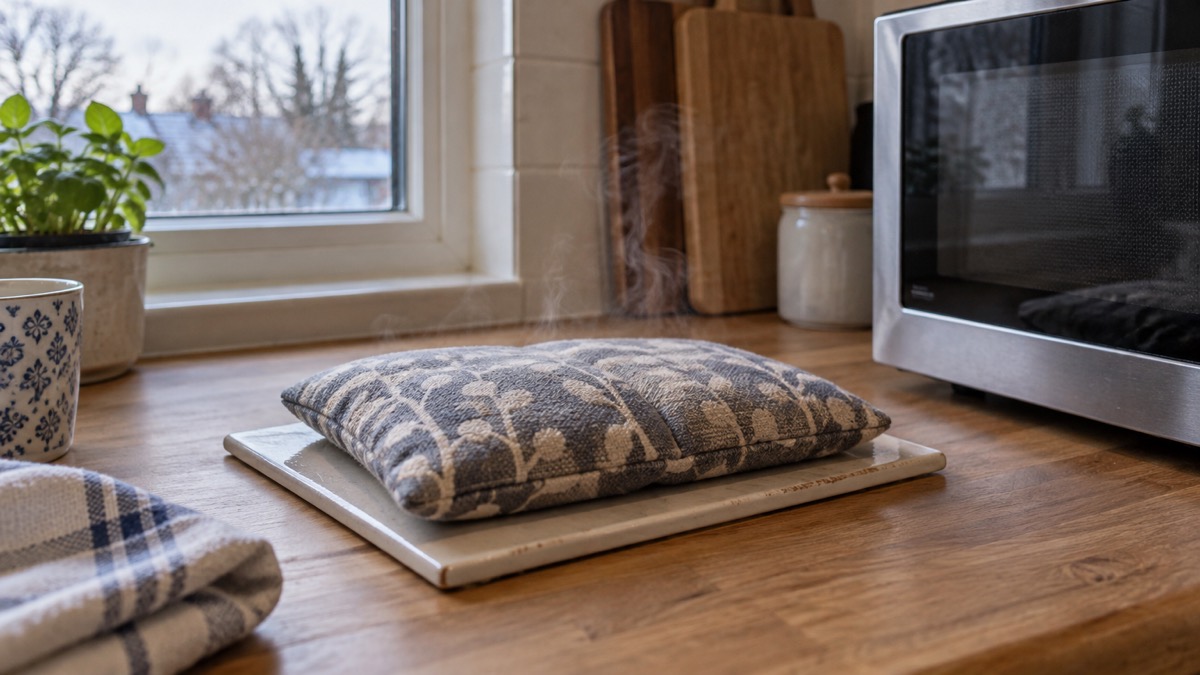
When the boiler fails, the instinct is to reach for whatever holds heat. Both a hot water bottle and a wheat bag help, but the safety rules tighten in a cold snap because people use them for longer and in bed.
In bed, a hot water bottle under the blankets can keep you warm while you sleep13. But never use a hot water bottle at the same time as an electric blanket: water and electricity together risk electrocution6. The fire and rescue service puts it plainly: never use a hot water bottle or drink fluids in bed when you have your electric blanket fitted to it, because if you spill your drink or the bottle leaks you will be mixing water and electricity12. Diabetes UK gives the same warning for anyone using a bottle: never use a hot water bottle at the same time as an electric blanket16.
If you have reduced sensation in your feet, take extra care. Fill the bottle with hot water, not boiling water, ensure it has a cover, and always remove it from the bed before getting in16. The same principle applies to anyone with neuropathy or reduced feeling: you may not feel a burn developing.
For the wider job of keeping warm, see our guides to keeping one room warm when the heating fails and clothing and bedding to stay warm in a cold home. If your boiler has failed, our gas and heating failures guide sets out what to check and who to call.
Children, older people and anyone at higher risk
Hot water bottles and wheat bags need more care around children and older people, for different reasons. Children have thinner skin and cannot always move away from heat; older people may have reduced sensation or thinner skin and may not notice a burn starting.
For children, use cooled boiled water that is around bath temperature2. Never put a hot water bottle directly on your child's skin; use a cover2. Remind older children not to sit or lie on hot water bottles18. And never put a hot water bottle in your baby's sleep space, as babies can overheat7.
For older people and anyone with reduced sensation, avoid placing a heating pad or hot water bottle directly against the skin: wrap it in a towel or use a cover19. Check the skin afterwards for redness or soreness. If you are supporting an older neighbour or relative, our extra help in an emergency guide covers the wider arrangements.
How long a hot water bottle lasts, and when to replace it
Guidance on replacement age varies between official NHS sources. One NHS winter health guide says it is best not to use hot water bottles older than 3 years15. A burns prevention booklet says not to use hot water bottles more than two years old19. Treat the shorter figure as the cautious choice and the longer as the outer limit.
Whichever you follow, the condition of the bottle matters more than its age. Check it regularly, as rubber perishes9. Replace any bottle that is cracked, stiff, leaking or smells of rubber. Store it empty, away from heat sources such as radiators and airing cupboards, and never store it full of water, which can degrade the rubber2.
For more on safe filling, checking and replacing, see our guide to hot water bottles, and for the fire risk and safe heating of grain bags, our guide to wheat bags.
Sources (19)
- Product Recall: Hunter Price licensed hot water bottles, GOV.UK, 24 November 2023
- Hot water bottle safety, Child Accident Prevention Trust, 13 July 2026
- Burns and scalds, NHS Just One Norfolk, 7 September 2026
- Wheat bags, Greater Manchester Fire and Rescue Service, 29 October 2026
- Heated wheat bags, Cheshire Fire and Rescue Service, 20 May 2026
- Staying warm in winter, Northern Ireland Direct, 6 October 2026
- Baby and toddler safety, NHS, 7 September 2026
- Product Safety Report: Bauer Electric Hot Water Bottle, GOV.UK, 6 March 2025
- Be more resilient in 30 simple ways in 30 days, Scottish Borders Council, 29 October 2026
- MOMA Foods recalls various porridge pots and sachets, Food Standards Scotland, 27 March 2026
- Wheat bags, Dorset and Wiltshire Fire and Rescue Service, 28 November 2022
- Electrical safety at home, Mid and West Wales Fire and Rescue Service, 29 October 2026
- Stay healthy in winter, Age UK, 26 August 2026
- Stay Warm Stay Safe leaflet, Ards and North Down Borough Council, 2025
- Your Health Guide Winter 2025, NHS Western Isles, December 2025
- Cold weather and diabetes, Diabetes UK, 12 October 2026
- Student Fire Safety - South Wales Fire and Rescue Service, South Wales Fire and Rescue Service
- Burns and scalds, Child Accident Prevention Trust, 7 September 2026
- Burns prevention booklet 2024, Salisbury NHS Foundation Trust, 2024
 Electric or Gas Heaters
 Butane or Propane Gas Bottles
 Gas or Spirit Stoves
 Paraffin vs Gas Heaters
 Radiator vs Fan Heater
 Wood Burner vs Multi-Fuel Stove