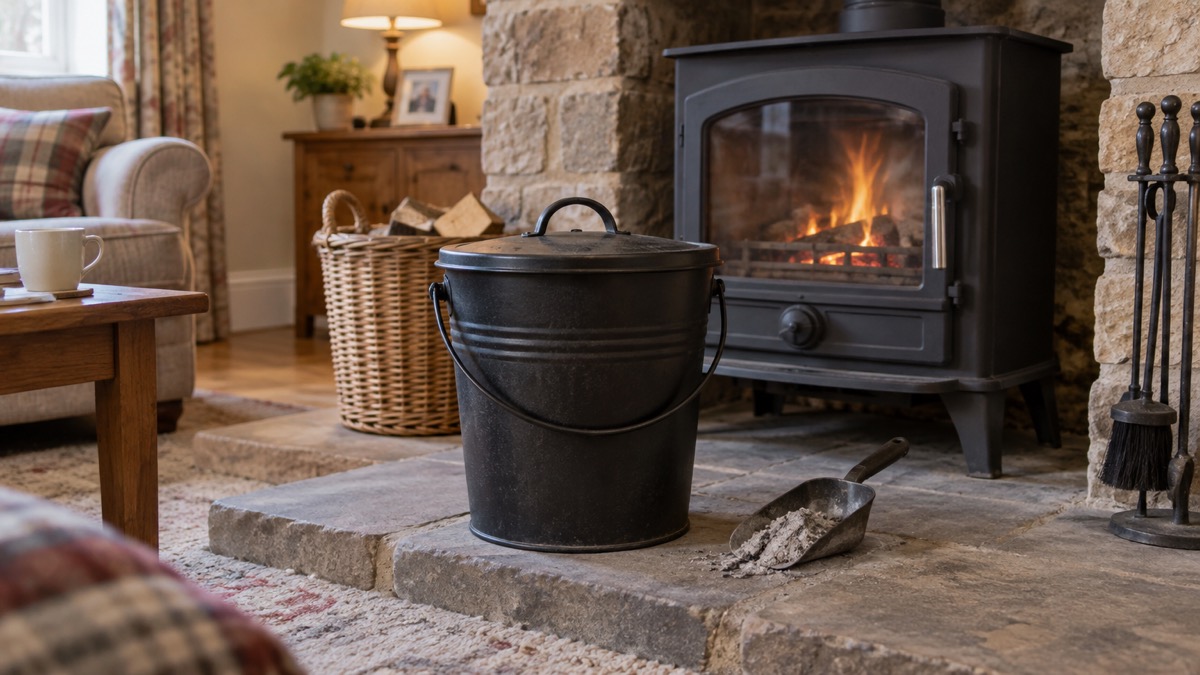
Ash from a log burner, an open fire or a barbecue can look dead and still be hot enough to start a fire hours later. Fire services across the UK give the same basic instruction: let the ash cool completely, then put it in a metal container with a tight metal lid, and keep that container away from anything that will burn1.
The most common mistake is tipping ash straight into a wheelie bin or a bin bag. Hot ash melts plastic, and a bin fire can spread to a house, a shed or a row of bins. Fire services say plainly: never put hot ashes into a bin4. Ash that has not fully cooled can smoulder and start a fire, so it should never be tipped into a bin inside the house either6.
This page sets out how long to wait, what to store ash in, where it must never go, how wood ash and coal ash differ, and what to do if ash starts to smoulder. It applies to stoves, open fires, chimineas and barbecues, and the same routine works whether you are in England, Scotland, Wales or Northern Ireland.
Let the ash cool completely before you touch it
The first rule is patience. Manchester Fire and Rescue Service says to always allow ash to cool before attempting to dispose of it1. Warwickshire Fire and Rescue Service gives the sequence: after the fire has burned out and the ashes have cooled, transfer them into a metal container specifically designed for ash disposal2. North Wales Fire and Rescue Service applies the same rule to barbecues: allow the barbecue and ashes to cool completely before moving or disposing of them4.
Cooling takes longer than people expect. Mid and West Wales Fire and Rescue Service advises leaving sufficient time after a fire to let the ash cool, and keeping the door to the stove closed in the meantime9. A closed door keeps embers contained and stops draughts stirring them up. Cheshire Fire and Rescue Service advises making sure ash and embers are cold before putting them into wheelie bins10.
For a disposable barbecue, the advice is more specific. Leave it to cool for several hours, and consider pouring water over it to make sure it is out before it goes in the bin5. If you are in any doubt about a fire, spray it with water to stop it restarting10.
A metal bucket with a lid is the safe way to store ash
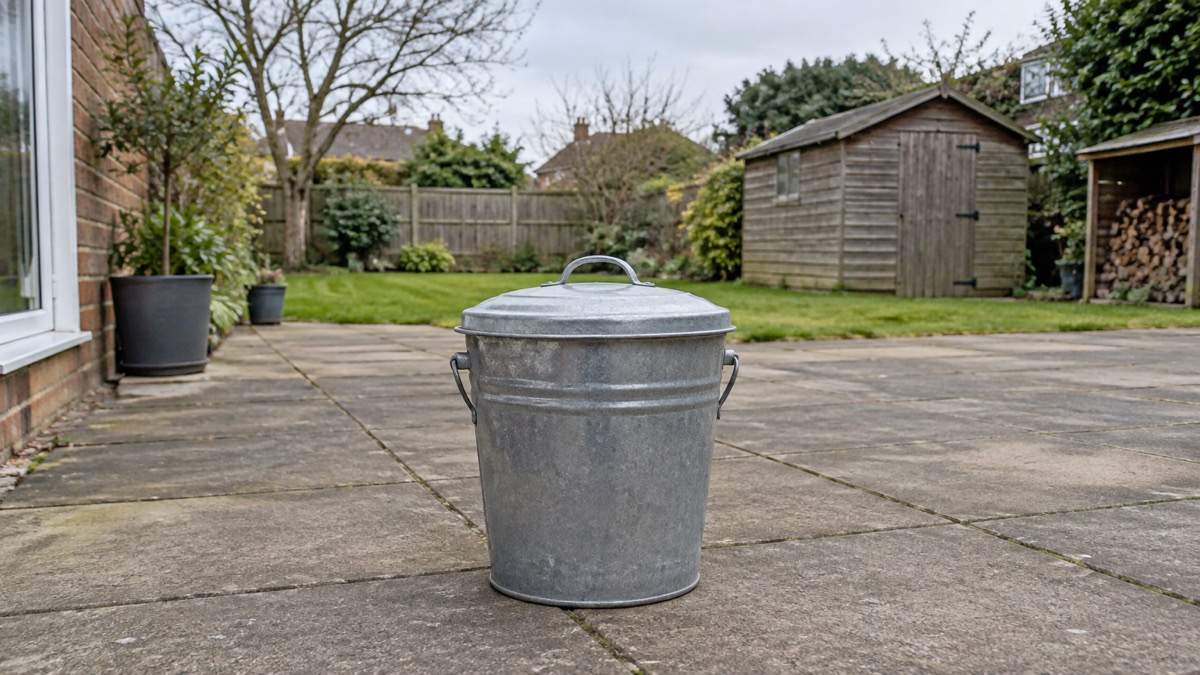
Once the ash is cold, it needs somewhere safe to sit until bin day or until you use it. Warwickshire Fire and Rescue Service says to dispose of ashes in a metal container and keep them away from combustible materials7. North Yorkshire Fire and Rescue Service is more precise: place cooled ash in a metal container with a lid and store it at least one metre away from buildings, sheds or other combustible materials3.
The container matters as much as the distance. Mid and West Wales Fire and Rescue Service says to store ash and hot coals in a metal container that can be tightly closed with a metal lid9. A lid does two jobs: it stops wind scattering ash, and it starves any remaining ember of air.
- Use: a metal bucket or ash can with a close-fitting metal lid3
- Site it: at least one metre from buildings, sheds and combustible materials3
- Keep it clear: away from logs, kindling and other fuel, which should themselves be stored away from heat and ignition sources11
- Empty it: regularly, and only when the contents are cold7
If you have a chiminea or fire pit, keep a means of putting the fire out to hand before you light it: a bucket of water, sand or a hosepipe nearby12. That same bucket is useful for dousing ash before it goes into the metal container.
Where hot ashes must never go
Fire services are unusually blunt about this, because bin fires are common and preventable. North Wales Fire and Rescue Service says never put hot ashes into a bin4. Manchester Fire and Rescue Service says never put ashes straight into a dustbin or wheelie bin, because if they are hot they could melt the plastic and cause a fire5. Cumbria Fire and Rescue Service and the government's own fire safety outdoors guidance give the same warning8.
The list of containers to avoid is longer than just bins. Mid and West Wales Fire and Rescue Service says never empty ashes into a paper or plastic bag, a cardboard box, or any other similar container9. Warwickshire Fire and Rescue Service says to avoid storing ashes in paper bags or plastic containers, as residual heat can ignite a fire2.
Inside the house, the same logic applies. Dorset and Wiltshire Fire and Rescue Service says to avoid tipping ash into a bin inside your house, because ash that has not fully cooled can smoulder and start a fire6. North Yorkshire Fire and Rescue Service says never tip ash straight into a bin containing other rubbish15.
Wood ash or coal ash: which bin each one goes in
Once ash is genuinely cold, what you do with it depends on what you burned. North Yorkshire Fire and Rescue Service says to always make sure ash and embers are cold before putting them into wheelie bins16. That is the minimum condition, not a recommendation to rush.
For coal ash, Mid and West Wales Fire and Rescue Service says coal ash should always be disposed of safely, and advises checking with your local council for specific guidance on disposal of fully cooled ash into general waste9. Councils differ, so the council's own waste pages are the place to check before the first cold load goes out.
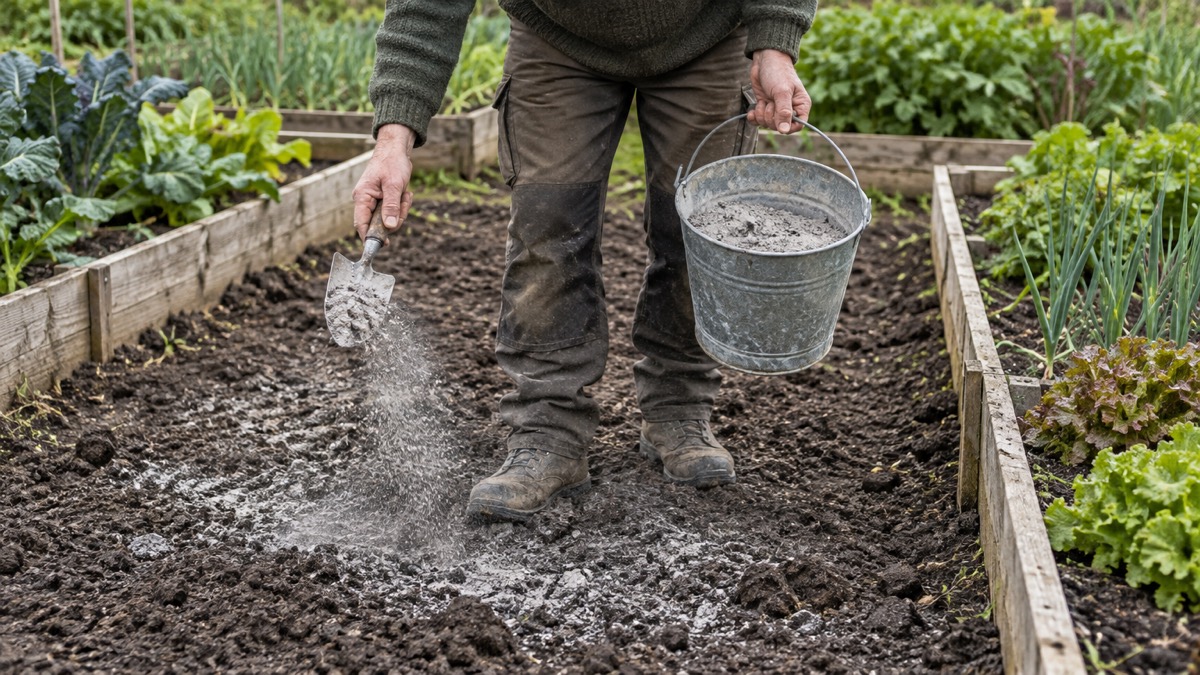
For wood ash, there is a simpler route. Several fire services suggest emptying cold ashes onto bare garden soil rather than into a plastic wheelie bin8. That avoids the bin entirely and puts the ash somewhere it cannot set anything alight.
| What you burned | Where cold ash can go | What to check first |
|---|---|---|
| Wood, in a stove or open fire | Bare garden soil, or general waste if your council allows it9 | That it is completely cold9 |
| Coal or smokeless fuel | General waste, following council guidance9 | Your council's specific advice9 |
| Barbecue charcoal | Bare garden soil, not a dustbin or wheelie bin8 | That coals were extinguished with water and cooled5 |
| Cigarette ash | A suitable bin outdoors, once cold18 | That contents are cold before emptying18 |
Cigarette ash follows the same principle. Manchester Fire and Rescue Service says to ensure ashtray contents are cold before emptying them into a suitable bin outdoors, and that putting water on ashes or butts is a good idea18. Warwickshire Fire and Rescue Service says to fully extinguish cigarette butts and ashes before discarding them19.
Using cold wood ash in the garden
Cold wood ash is not rubbish. Emptying it onto bare garden soil keeps it out of the bin and returns it to the ground8. The condition is that it must be cold, and that you are not simply moving a fire risk into a hedge or a pile of dry cuttings.
Garden safety advice is relevant here. Suffolk Fire and Rescue Service recommends clearing flammable debris such as dead leaves from the garden and guttering20. North Yorkshire Fire and Rescue Service gives the same advice for protecting your home from wildfires21. Do not throw cuttings onto adjacent land or let them dry out in your garden, because they are fuel in the event of a fire21.
If you have more garden waste than you can compost, Oxfordshire Fire and Rescue Service says to use a local recycling centre or composting instead of burning it22. That is the cleaner route, and it avoids the smoke and ember risk of a garden fire altogether.
If ashes start to smoulder or a fire takes hold
If you find ash smoking in a bin or container, act quickly and get everyone out if it spreads. For a conventional open fire, Cornwall Fire and Rescue Service says you can extinguish the fire by gently splashing water onto it23. For a bonfire that is finishing, Cheshire Fire and Rescue Service says to spray it with water to stop it restarting, and to make sure it is completely out before you leave it10.
If a bin or container fire has taken hold and cannot be put out safely, leave the building and call 999. South Wales Fire and Rescue Service advises never storing rubbish, recycling or anything that can ignite in corridors, common areas, stairwells or escape routes24.
Where to get help and further reading
Your local council is the authority on what goes in which bin, and for coal ash in particular the advice is to check with them9. For stove and chimney safety, see our guides to wood burners and multi-fuel stoves and chimney fires. If you are setting up a stove for winter, the before-winter checklist covers the checks that stop ash problems starting. For outdoor cooking, see barbecues in an emergency, and for the wider picture on heating without mains gas, start with heating and cooking without mains power or gas.
Sources (23)
- Chimney safety, Manchester Fire and Rescue Service, 2026
- Safe home heating, Warwickshire County Council, 2026
- Chimney fire safety week, North Yorkshire Fire and Rescue Service, 2026
- Barbeque safety, North Wales Fire and Rescue Service, 2026
- Barbecue safety, Manchester Fire and Rescue Service, 2026
- Smoking safety, Dorset and Wiltshire Fire and Rescue Service, 2026
- Bedtime fire safety checks, Warwickshire County Council, 2026
- Safety outdoors, Cumbria Fire and Rescue Service, 2026
- Bonfires and burning waste, Cheshire Fire and Rescue Service, 2026
- Stay warm safely this winter, Manchester Fire and Rescue Service, 2026
- Diogelwch tân chiminea, Mid and West Wales Fire and Rescue Service, 2026
- Extreme weather summer guide, London Fire Brigade, 2024
- Fire safety outdoors, GOV.UK, 2022
- Smoking, North Yorkshire Fire and Rescue Service, 2026
- Heating your home, North Yorkshire Fire and Rescue Service, 2026
- Barbeques, Northamptonshire Fire and Rescue Service, 2026
- Smoking and fire safety, Manchester Fire and Rescue Service, 2026
- Fire safety tips: smoking, vaping and e-cigarettes, Warwickshire County Council, 2026
- Warm weather safety, Suffolk County Council, 2026
- Protecting your home from wildfires, North Yorkshire Fire and Rescue Service, 2026
- Help prevent wildfires, Oxfordshire County Council, 2026
- Chimney fires, Cornwall Council, 2026
- High-rise living, South Wales Fire and Rescue Service, 2026
 Before-Winter Heating Checks
 Backup Stove Kit Checklist
 Wood Burner Lighting Kit
 Heating a Home with the Oven
 Paraffin Heater Indoors
 Changing an LPG Cylinder Safely
 Storing Gas Cylinders at Home
 Wood You Should Never Burn
 Open Fire in an Unused Chimney
 Oil Tank Leaks After a Storm
 Trangia Spirit Burner Fuel