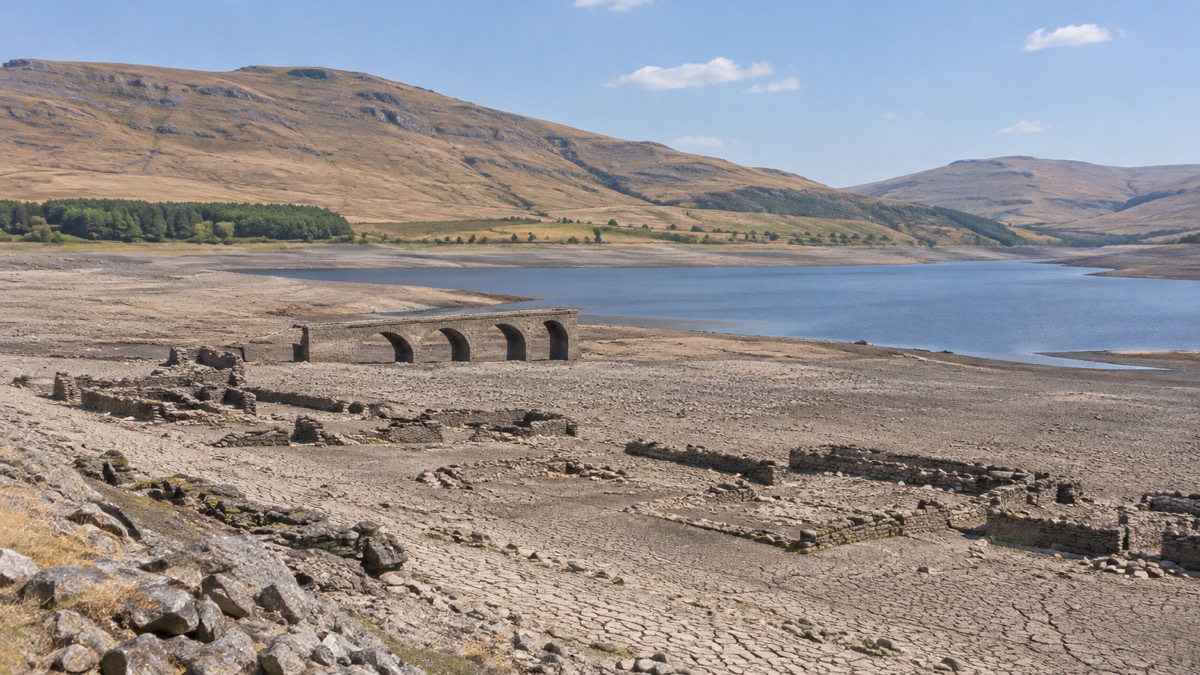
Between 2010 and 2012, much of England and Wales went through a drought that took nearly two years to build and one exceptional summer of rain to end. Across lowland England, only about 1,050 mm of rain fell in the 24 months from April 2010 to March 2012, against a long-term average of 1,404 mm: about 75 per cent of what the ground, rivers and aquifers needed, and a shortfall of 354 mm1. By April 2012, seven water companies in south and east England had imposed temporary use bans, the formal name for hosepipe bans, covering 20 million people2.
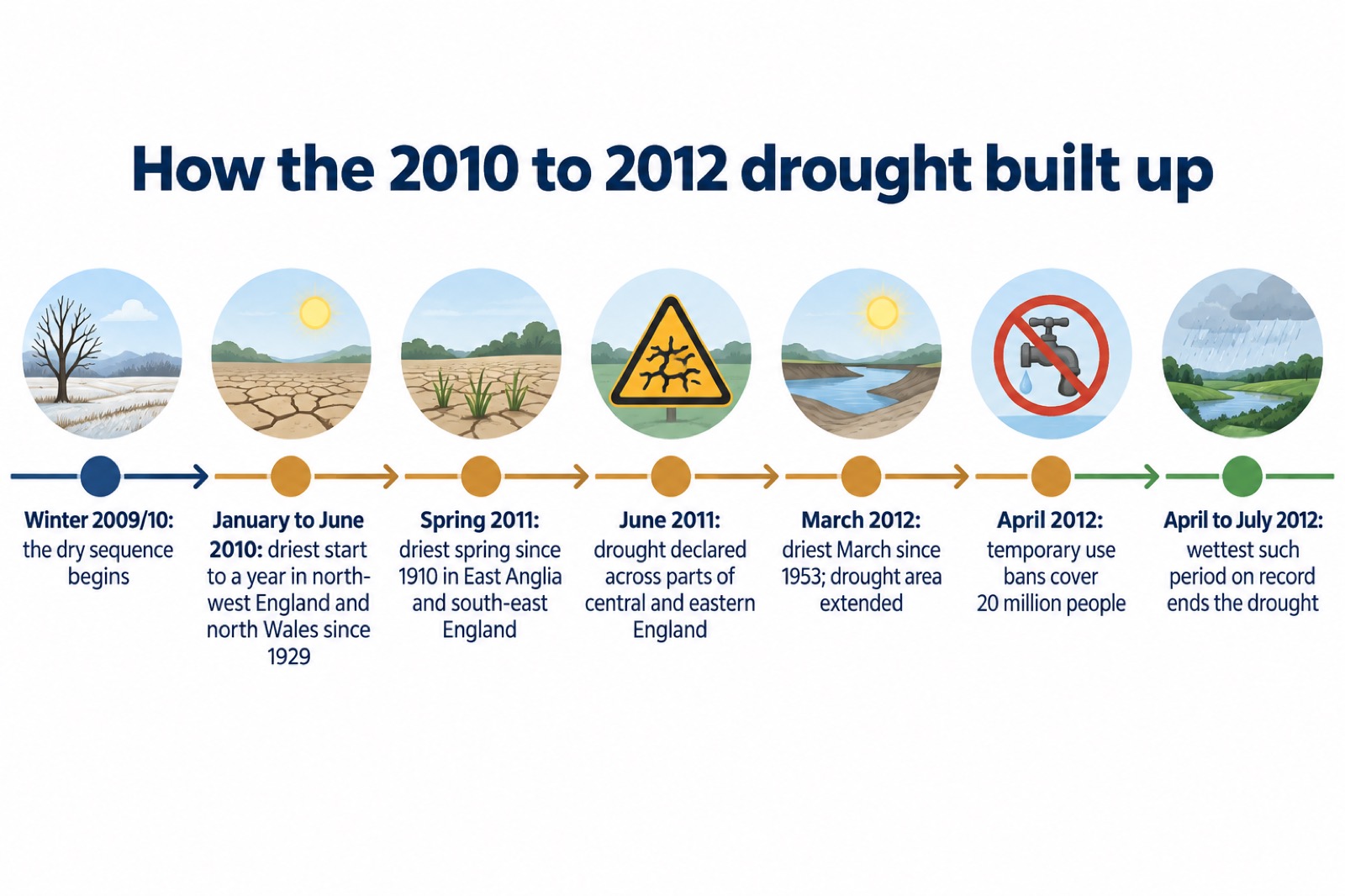
The drought did not arrive with a single hot summer. It crept up through a sequence of dry months from the winter of 2009/10 to March 2012, hitting hardest in the spring, autumn and winter, the seasons when reservoirs and groundwater normally refill1. Drought was declared across parts of central and eastern England in June 2011, and by March 2012 the declared area had spread to much of southern, central and south-east England1. Then, between April and July 2012, England and Wales recorded their highest rainfall for that period on record, ending the drought, in the Met Office's words, in "an abrupt and dramatic termination"1.
This page sets out how that drought built, where it bit hardest, and what it and the other great droughts of recent decades, 1976 and 2022 above all, mean for an ordinary household today. The pattern it revealed, dry winters that empty the store cupboard of water, is the same pattern behind the droughts England has experienced since, and it is the reason water companies and the Environment Agency plan the way they do.
How a two-year drought builds from a run of dry seasons
Droughts in the UK come in two shapes. Some are short and intense, caused by a hot, dry summer. Others are long, and take time to develop over multiple seasons of lower than average rainfall4. The 2010 to 2012 drought was firmly the second kind, and understanding that is the key to understanding why it caught so many people out.
The Met Office's account of the event traces it to a sequence of dry months running from the winter of 2009/10 through to March 2012, with the deficits concentrated in the spring, autumn and winter seasons rather than in high summer1. That matters because, as the government's drought management guidance explains, most groundwater and reservoir recharge usually occurs over the winter, from November to April. Successive dry winters deplete that stored water and can cause significant water resource issues2. A dry summer is visible and uncomfortable; a dry winter is quiet but far more damaging, because it is the winter rain that tops up the stores the following summer depends on.
The run of records tells the story. Overall, 2010 was a dry year, the driest since 2003 and the 11th driest in the series from 1910 for the UK as a whole1. The areas of principal concern at that stage were north-west England and north Wales, which experienced their driest January to June since 19291. Then came an exceptionally dry spring in 2011, the driest in the series from 1910 across East Anglia and south-east England1. March 2012 was the driest March since 1953 across the UK overall1. From September 2010 to March 2012, many parts of England experienced the driest 18 months for over 100 years2.
Across lowland England, 12 of the 24 months saw 60 per cent or less of average rainfall1. No single month was unusually severe on its own. It was the accumulation, season after season, that emptied the ground.
The rainfall figures: three-quarters of what England needed
The headline number for the 2010 to 2012 drought is 75 per cent. Over the 24 months from April 2010 to March 2012, most of England and Wales received less than 85 per cent of average rainfall, with a large area of the Midlands receiving less than 75 per cent1. Across lowland England specifically, the total was about 1,050 mm of rain, against a 1981 to 2010 long-term average of 702 mm a year, which makes 1,404 mm for any 24-month period1. The difference, 354 mm, is the deficit that built up over the drought's duration1.
Put plainly, roughly a quarter of the rain that should have fallen over two years never came. For comparison, the Met Office's table of historic droughts shows how that deficit stacks against earlier events1:
| Drought | Area | Duration | Rainfall deficit |
|---|---|---|---|
| 1920 to 1921 | Lowland England | 17 months | 401 mm |
| 1947 to 1949 | Lowland England | 26 months | 340 mm |
| 1975 to 1976 | Lowland England | 16 months | 381 mm |
| 1990 to 1992 | Lowland England | 24 months | 398 mm |
| 1995 to 1997 | Lowland England | 25 months | 451 mm |
| 2004 to 2006 | Lowland England | 18 months | 241 mm |
| 2010 to 2012 | Lowland England | 24 months | 354 mm |
The 1995 to 1997 drought produced the largest deficit in that table, 451 mm over 25 months, and the drought of 1995 to 1996 featured the third lowest rainfall figure over 18 months, June 1995 to November 1996, on record2. But the 2010 to 2012 event matched it for persistence: across southern England, the two-year period April 2010 to March 2012 was the equal-driest such period in records from 1910, shared with April 1995 to March 19971. For England and Wales as a whole, the Met Office ranks it as one of the ten most significant droughts of one to two years duration in the last 100 years1.
The 1976 benchmark stands apart. The 1975 to 1976 drought was the most significant drought for at least the last 150 years in the UK, and is usually regarded as the benchmark against which all other droughts are compared1. Much of England and Wales received less than 65 per cent of average rainfall from May 1975 to August 1976, with some parts of southern England receiving less than 55 per cent1. The most severe drought in living memory, as the government's guidance describes it, ran from May 1975 to August 19762.
Where drought was declared and how far it spread
Drought is not declared all at once. In the 2010 to 2012 event, the Environment Agency declared drought conditions across parts of central and eastern England in early June 2011, after the exceptionally dry spring1. The focus then moved south and east. Several water companies in southern, central and south-east England introduced hosepipe bans in early April 2012, and by March 2012 the area declared to be in drought had been extended to include much of southern, central and south-east England1.
The geography is not random, and it explains a lot about how drought works in this country. In the uplands of the north and west of England, water resources deplete relatively quickly after just 2 or 3 consecutive months of below average rainfall, because there is little groundwater base flow to support the rivers2. That is why the first hosepipe bans of the whole episode came in the north-west in 2010, after the driest January to June since 1929 left reservoirs low1. The south and east, by contrast, depend on groundwater held in aquifers, which drains slowly but also refills slowly, so their droughts arrive later and last longer.
The same geography has shaped every drought since. In the 2025 to 2026 drought, the Environment Agency's areas in drought and prolonged dry weather covered most of England except the north-west, the south-west and a small area of the south-east as of November 20255, before the pattern shifted again: by August 2026, the Agency had declared half of England, including the South West, in drought6, and by October 2026 a severe drought was officially declared across parts of Devon and Somerset7. If you want to follow how declarations work stage by stage, see how drought is declared in England and what each stage means.
Hosepipe bans reached 20 million customers
The most visible impact of the 2010 to 2012 drought on households was the hosepipe ban. Water companies can bring in hosepipe bans when water is in short supply, usually after a long dry or hot spell8. In April 2012, seven water companies in south and east England imposed temporary use bans on 20 million people2. Temporary hosepipe bans were applied to 20 million customers in total, and the environment and agricultural sectors were disrupted too3.
This was not the first time restrictions had reached that scale, and the government's guidance sets out the numbers for the major droughts of recent decades2:
| Drought | People covered by temporary use bans |
|---|---|
| 2005 to early 2007 | 15,637,900 |
| 2010 | 6,500,000 |
| 2012 | 20,000,000 to 20,277,881 |
| 2022 (August) | 19 million people, from five water companies |
| 2025 to February 2026 | 9,046,577 |
The 2004 to 2006 drought had seen hosepipe bans imposed by 8 water companies affecting over 15 million people at its height2. In August 2022, five water companies applied temporary use bans covering 19 million people2, and that drought also saw thirty drought permits issued to help water companies protect or improve public supply, more than in any other year2.
The 2010 figure of 6,500,000 people reflects the temporary use bans of that year2. For what a ban actually prohibits, and the exemptions that exist, see what you can and cannot do in a hosepipe ban and hosepipe ban exemptions.
Groundwater in the chalk aquifers fell exceptionally low
The quiet crisis of the 2010 to 2012 drought was underground. As a result of persistent below-average rainfall, particularly through two consecutive winter half-year periods, groundwater levels in the chalk aquifers of lowland England were exceptionally low for the time of year by March 20121. Chalk aquifers supply a large share of the public water in southern and eastern England, which is why the drought's centre of gravity sat there.
The same mechanism is still at work. In the Environment Agency's autumn 2026 drought report, of the river flow sites reported for the week of 9 to 15 October 2026, twenty-four sites, 44 per cent of the total, were classed as below normal, 10 sites, 18 per cent, were classed as notably low, and six sites, 11 per cent, were classed as exceptionally low9. Under an 80 per cent long-term average rainfall scenario, many aquifers would be or remain at notably low levels, and some might be exceptionally low for the time of year5. The Cambridgeshire and Bedfordshire area has the driest soils, and more than average rainfall is needed to sufficiently replenish rivers and groundwater resources there5. In eastern Scotland, below-average rainfall over autumn and winter 2024/2025 meant groundwater recharge was limited and there was an increased risk of drought10.
For households on private water supplies, groundwater is the whole story. NHS Inform in Scotland warns that private water supplies often rely on small water sources that can dry up quickly, making those households more vulnerable to drought11. Natural Resources Wales advises that when there is a lack of rainfall over a long period, groundwater levels can become exceptionally low, causing spring sources to dry up or pumps to run dry12. Cornwall Council describes the sequence plainly: prolonged dry weather can lead to reduced water levels in springs, wells, boreholes and streams, lower water pressure and reduced flow rates, complete loss of supply in some cases, and changes in water quality due to lower water volumes13. Scottish Borders Council advises finding out whether there is a history of your source drying out in earlier droughts such as 1976, 1990-92, 1995-6 and 2005-6, and what happened then14. If your supply fails, see what to do if your private water supply dries up.
Wildfires in a dry spring
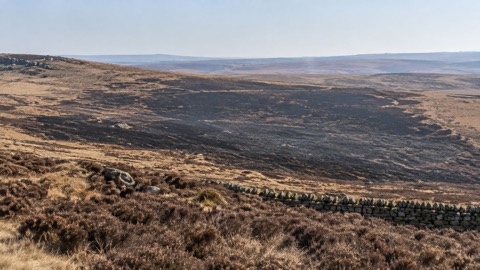
The 2010 to 2012 drought brought two serious wildfire episodes, both in spring. During May 2011, wild fires affected parts of Highland Scotland, Northern Ireland, mid-Wales, Lancashire and Berkshire1. The sustained warmth and dry weather of late March 2012 also resulted in wild fires in parts of south Wales, Surrey and the Scottish Borders1.
The pattern has repeated in every drought since, and fire and rescue services across the UK describe the mechanism consistently. Prolonged periods of dry weather or drought conditions make vegetation highly flammable15. Wildfires typically occur in areas with significant plant cover, including moors, heathlands, woodlands and grasslands, and can spread quickly over large areas due to dry conditions, wind, and the availability of flammable materials like grass, leaves and shrubs15. The Scottish Fire and Rescue Service notes that the combination of low humidity and strong winds can quickly dry out vegetation and fuel wildfires, and that cold, dry days with strong sunshine are also risky16. In early spring, a large volume of dead, bone-dry vegetation across large areas of countryside acts as fuel for fire17, and after a spring drought the effects can still be visible across the landscape months later, with dry, brown vegetation increasing the risk of fire18.
The scale of the risk in drought years is stark. Fire and rescue services in England and Wales recorded 994 wildfires in the drought of 2022, which was previously the worst year on record for wildfires2. The Scottish Fire and Rescue Service's warnings in dry periods are direct:
"In dry conditions, even a small fire from a discarded cigarette or an unattended campfire has the potential to quickly grow out of control."19
Dry conditions can allow fire to spread quickly, putting lives, wildlife and property at risk20. For practical steps, see wildfires and grass fires: risk and prevention, barbecues and wildfire risk in dry weather and what to do if you see or are near a wildfire.
Exceptional summer rain ended the drought
The end of the 2010 to 2012 drought came as suddenly as its beginning was slow. Rainfall totals for April to July 2012 were the highest on record across England and Wales, bringing the drought to what the Met Office called "an abrupt and dramatic termination"1. Further significant drought impacts through the summer of 2012 were only avoided as a result of that exceptional rainfall1.
Two lessons follow for households. The first is that the rain that ends a drought can arrive all at once: rainfall totals for April to July 2012 were the highest on record across England and Wales, bringing the drought to an abrupt and dramatic termination21. Exceptional rainfall of that kind is also the cause of groundwater flooding, as seen in the winter of 2000 to 2001, when groundwater flooding was associated with unusually high levels of rainfall22. The second lesson is the one in the note above: full recovery takes time, and only when rainfall has fully replenished groundwaters, reservoirs and rivers is a drought over2.
The 2025 to 2026 drought followed a similar shape. 2025 saw the driest spring since 1893, followed by the hottest summer on record for England2. As the Environment Agency notes, only when rainfall has fully replenished groundwaters, reservoirs and rivers would a drought be over, and this can sometimes take a long time2. For the current picture, see England's 2026 drought: where restrictions apply.
How often droughts like this happen
Drought is a recurring feature of the English climate, not a one-off. Over the past 40 years or so, England has experienced five long-duration droughts, lasting over 6 months, and two shorter periods of drought; drought in the other UK nations is rare3. The government's guidance lists the most notable droughts in England over the past 50 years as 1975 to 1976, 1989 to 1992, 1995 to 1996, 2004 to 2006, 2010 to 2012, 2016 to 2018, 2022 to 2023 and 2025 to 20262.
Earlier droughts followed the same building blocks. Large rainfall deficits in winter 1989 to 1990 led to a significant impact on groundwater and resulted in a drought in the east of England that continued to the end of summer 19922. The 2016 to 2018 drought saw 6 drought permits issued in the north west and Yorkshire, and one drought order granted to the Environment Agency in the north west2.
Drought is not a rare event in the national record. The National Risk Register records that the 2010 to 12 drought saw parts of south-east and eastern England record their lowest 18-month rainfall total in over 100 years3. For why the pattern may be tightening, see why UK summers are getting hotter and drier.
What the 2010 to 2012 drought means for your household now
The practical lessons of a two-year drought are about habits and preparation. The government's drought advice for households is straightforward: consider having a shower instead of a bath, and if disruptions or changes to water supplies occur, contact your water company to let them know4. Suffolk Fire and Rescue Service suggests keeping your garden maintained and watered in dry spells, and considering water from water butts or wastewater from the home if hosepipe bans are in place23.
The wider lesson from 2010 to 2012 is that restrictions arrive in stages and can last months. Wiltshire and Swindon's preparedness guidance notes that drought combines with hot weather to raise demand, because we all use more water when it is hot, with extra showers, paddling pools and garden watering, which water companies call supply and demand24. Reducing your use before restrictions are imposed makes the bans less likely and less severe. For practical steps, see how to save water at home when supplies are low and how temporary use bans work.
If your household relies on a private supply, the 2010 to 2012 drought is your case study. Argyll and Bute Council lists the causes of supply loss as periods of drought or severe cold weather, when the source dries up or freezes, but also undetected leaks, pipe bursts or pump failures25. Any of these can leave a private supply household without water while mains neighbours still have it, so it is worth knowing which of these failure modes applies to your own source and what you would do if it failed during a dry spell.
Finally, the wildfire lesson. Dry weather raises the risk of fires spreading outdoors. Be careful with any flame outdoors in dry weather, never leave a fire unattended, and check the fire risk in your area before lighting a barbecue or campfire15. The full range of household preparations for hot, dry weather is set out in the hot weather preparation checklist and the wider heatwaves and drought household guide.
Sources (25)
- England and Wales drought 2010 to 2012, Met Office, 2013
- Drought: how it is managed in England, Department for Environment, Food and Rural Affairs, 2026
- National Risk Register, Cabinet Office, 2020
- Droughts: be informed about hazards, Prepare campaign, 2026
- Drought prospects for spring 2026: rainfall scenarios, Environment Agency, 2025
- Stay safe this summer, Cornwall Council, 2026
- Help preserve water supplies in severe drought, Devon and Somerset Fire and Rescue Service, 2026
- Stay safe during hot weather, London Borough of Bexley, 2026
- Dry weather and drought in England: 9 to 15 October 2026, Environment Agency, 2026
- Autumn water situation report 2025, Scottish Environment Protection Agency, 2025
- How to stay safe during a drought, NHS Inform, 2026
- Drought planning and management, Natural Resources Wales, 2026
- Private water supplies, Cornwall Council, 2026
- Private water supplies, Scottish Borders Council, 2026
- Wildfire safety, Essex Prepared, 2026
- Understanding wildfires in Scotland, Scottish Fire and Rescue Service, 2026
- Extreme wildfire warning issued across Scotland, Scottish Fire and Rescue Service, 2025
- Wildfire warning for Aberdeenshire and East Lothian, Scottish Fire and Rescue Service, 2025
- Wildfire warning 22 to 26 August 2025, Scottish Fire and Rescue Service, 2025
- Stay safe this summer: essential tips from NIFRS, Northern Ireland Fire and Rescue Service, 2026
- Groundwater flood risk, Derbyshire County Council, 2026
- Community Risk Register 2026, Surrey Resilience Forum, 2026
- Warm weather safety advice, Suffolk Fire and Rescue Service, 2026
- Failure of water infrastructure or loss of drinking water, Wiltshire and Swindon Prepared, 2026
- Loss of supply: private water supply users, Argyll and Bute Council, 2026
 Flood Warning Checklist
 First Steps After a Flood
 Insurance Claim Records
 England 2026 Drought Areas
 Saving Water at Home
 Drought Stages in England
 Water Company Drought Plans
 Wildfires and Grass Fires