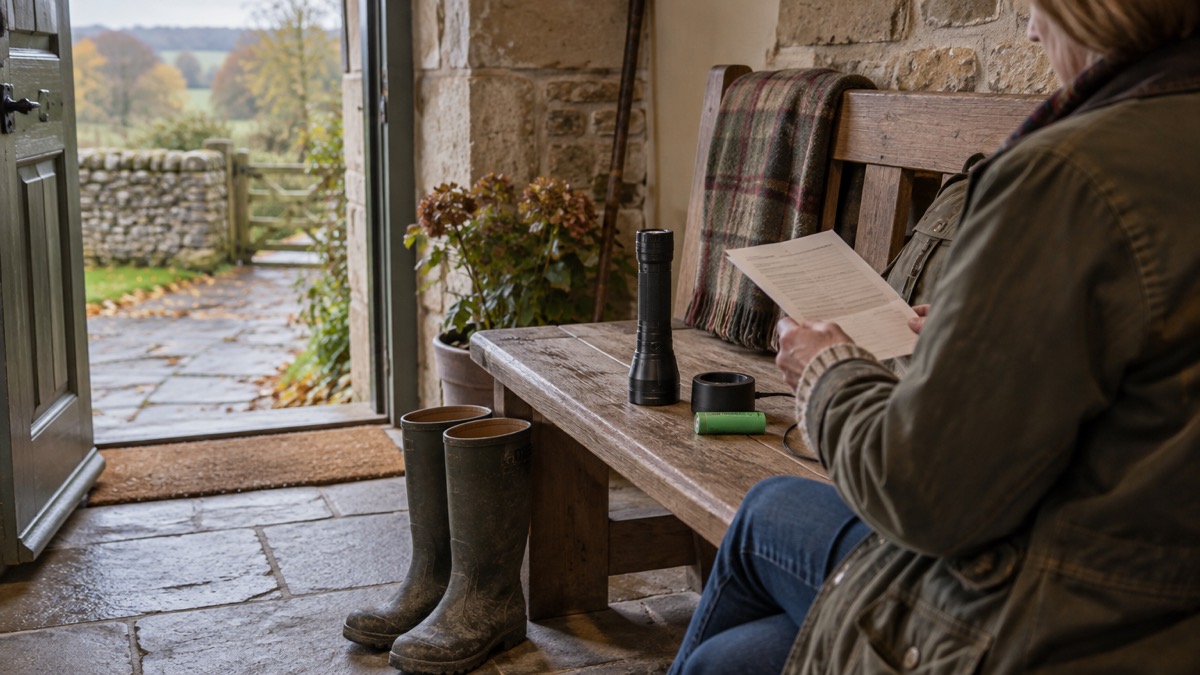
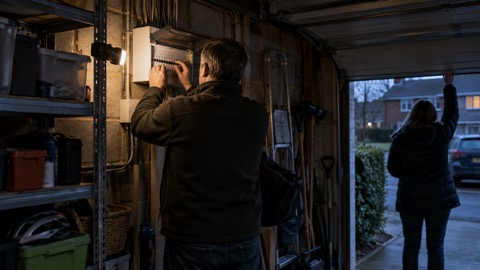
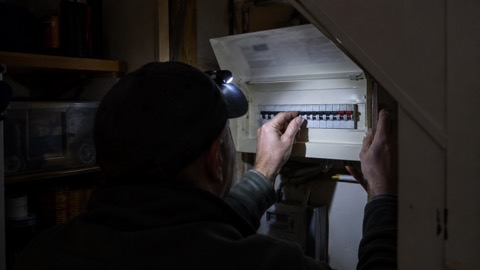
The Ledlenser P7R Work is a rechargeable hand torch that Ledlenser lists at 1200 lumens on Boost Mode, reaching 240 meters, with a Low Power setting of 15 lumens that runs for 60 hours1. For a household, that pairing is the point: a bright burst for checking outside after a storm or finding the consumer unit, and a long, dim setting that will light a hallway or a landing through an outage that lasts into a second night.
It is built to be knocked about. Ledlenser rates it IP68 for dust and water protection through what the maker calls Flex Sealing Technology, gives it a 3 meter drop test, and says it resists oil, diesel, brake fluid and solvents1. It runs on a single 21700 lithium-ion cell of 4800mAh, which the maker lists as replaceable, and it charges through a magnetic system with a dock and a USB adapter plug included1.
This page sets out what the torch does in an emergency, its specifications, how the light modes work, how the standard version differs from the UV version, and how to charge, store and look after it so it is ready when the power goes off. It is one torch among many that suit a household; if you are still deciding what kind of light you need, start with Torches: Types and How to Choose One for Home and Lumens, Beam Distance and Run Time Explained.
What the P7R Work is, and what it does in an emergency
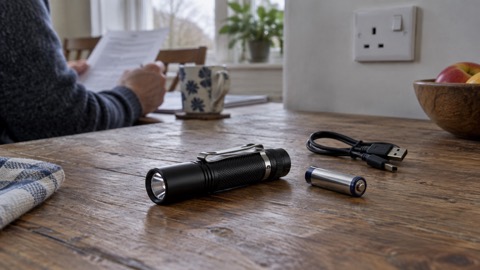
Ledlenser lists the P7R Work as a rechargeable torch, a 2020 model at 1200 lumens1. It is a work light rather than a keyring torch: 219g in the hand, a 45mm head and a 27mm tube, so it sits comfortably in a coat pocket or a kitchen drawer and can be held for a while without tiring1. The maker fits two LEDs and gives a colour rendering index of 90, which it describes as particularly natural colour reproduction1. In practice that means colours look close to how they look in daylight, which helps when you are reading a label by torchlight, judging whether water is clean or dirty, or checking a child's skin.
For emergency planning, three of its features matter more than the headline output.
- A long low setting. At 15 lumens for 60 hours, one charge covers several nights of dim, room-level light if you are careful1. That is the setting to default to in a power cut.
- Backup Mode. The maker states that the charge level is continuously monitored and that when it runs low the torch drops to low-power mode, giving about 1 hour of remaining light1. You get a warning in the form of dimming rather than sudden darkness.
- A replaceable cell. Because the torch takes a standard 21700 lithium-ion battery rather than a sealed pack, a household can keep a charged spare and swap it in1.
It is not a lantern and will not fill a room the way a diffused light does. If your plan is to light a living room for an evening, a battery or rechargeable lantern does that job better, and the comparison at Lantern or Torch: Which Lights a Room Better? sets out the difference. The P7R Work earns its place as the torch you carry, the one you check the garden with, and the one that lights a stairwell while you carry something else.
Specifications: size, weight and battery
The maker's figures give a compact torch with a substantial cell inside it. The table below sets out what decides whether it suits your household: how heavy it is to hold for a long time, how long a charge takes, and what the battery will do.
| Specification | Maker's figure |
|---|---|
| Model number | 5021871 |
| Length, focused | 176mm1 |
| Length, defocused | 170mm1 |
| Head diameter | 45mm1 |
| Tube diameter | 27mm1 |
| Weight | 219g1 |
| Battery | 1 x 21700 Li-ion rechargeable, 3.7v1 |
| Battery capacity | 4800mAh1 |
| Time to full charge | 270 minutes1 |
| Working temperature range | -20 to +40 degrees Celsius1 |
| IP class | IP681 |
| Drop test | 3 meters1 |
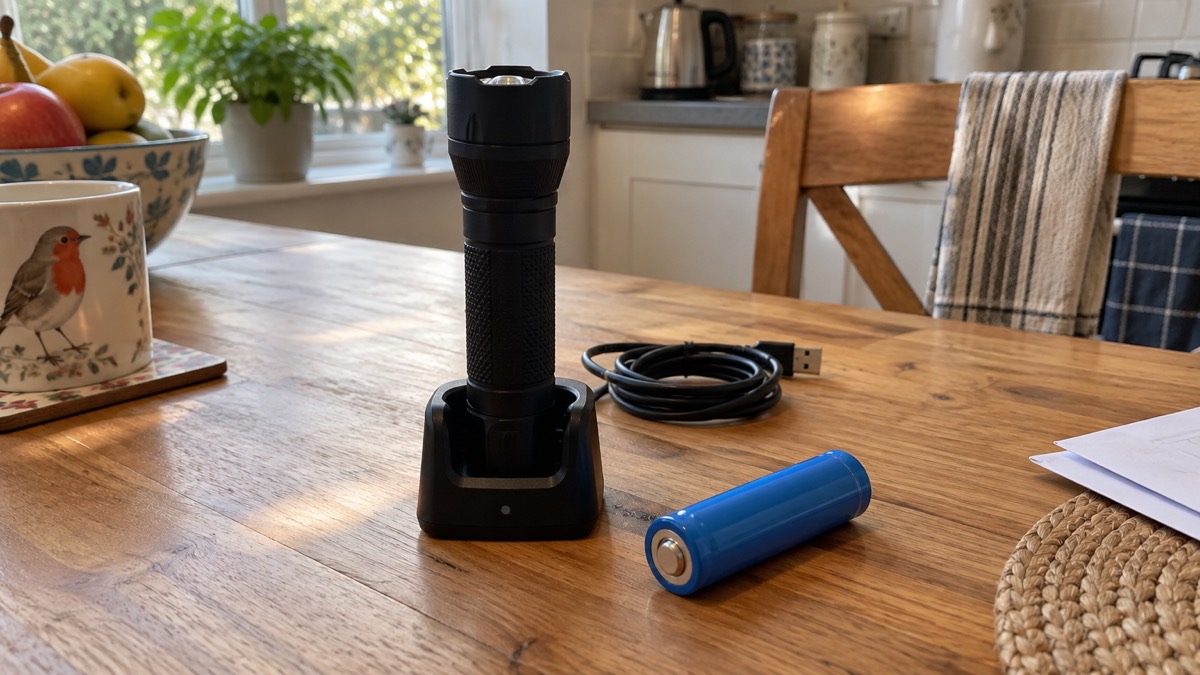
Two of those figures shape how you keep the torch ready. A full charge takes 270 minutes, so a torch left flat needs the best part of an afternoon on the dock before it is useful again; top it up before a forecast storm rather than during one1. And the working range of -20 to +40 degrees Celsius means the torch is specified to work in a hard frost, but charging is a separate matter, and the maker's charging instructions should be followed as given1.
The maker lists the P7R Work at 219g1. If you want your hands free while you work, a head torch is the better shape, and the site's comparison at Torch or Head Torch for a Power Cut? explains when each wins.
Light modes and the two colour settings
The P7R Work carries a full set of modes: Low Power, Mid Power, Standard Power, Boost Mode, Blink, Position, S.O.S, Strobe and Dimmable1. For a household, they fall into three groups.
- Everyday light. Low Power at 15 lumens for 60 hours is the setting for a power cut, a night light on a landing or moving around a dark house without waking anyone1. Mid and Standard Power step up the brightness for cooking, reading or checking a room.
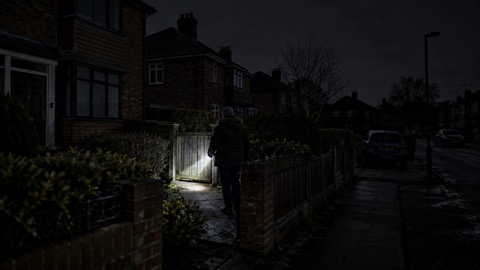
- Short bursts. Boost Mode gives 1200 lumens for 240 meters, which the maker describes as a short burst of maximum power for when you need it most1. Use it to see across a garden after a storm, check a fence line or signal, then drop back down. It is not a setting to leave running.
- Signalling. Blink, Position, S.O.S and Strobe are for being seen rather than for seeing1. The maker describes Blink as the automatic emission of light impulses at regular intervals2. The site's guide to SOS and strobe modes explains how to reach them and when to use them.
The maker also gives two colour temperature ranges, 3700k to 4400k and 5300k to 7500k, and a colour rendering index of 90 / 751. The warmer range is easier on the eye in a dark room; the cooler range throws a whiter light for detail work. Which you get depends on the setting, and the maker's own instructions are the place to check before you rely on it.
Built for rough use: IP68, 3 metre drop and chemical resistance
An emergency torch spends most of its life in a drawer and then gets used in the worst conditions of the year: in the rain, in a cold porch, dropped on a path in the dark. The P7R Work is specified for that.
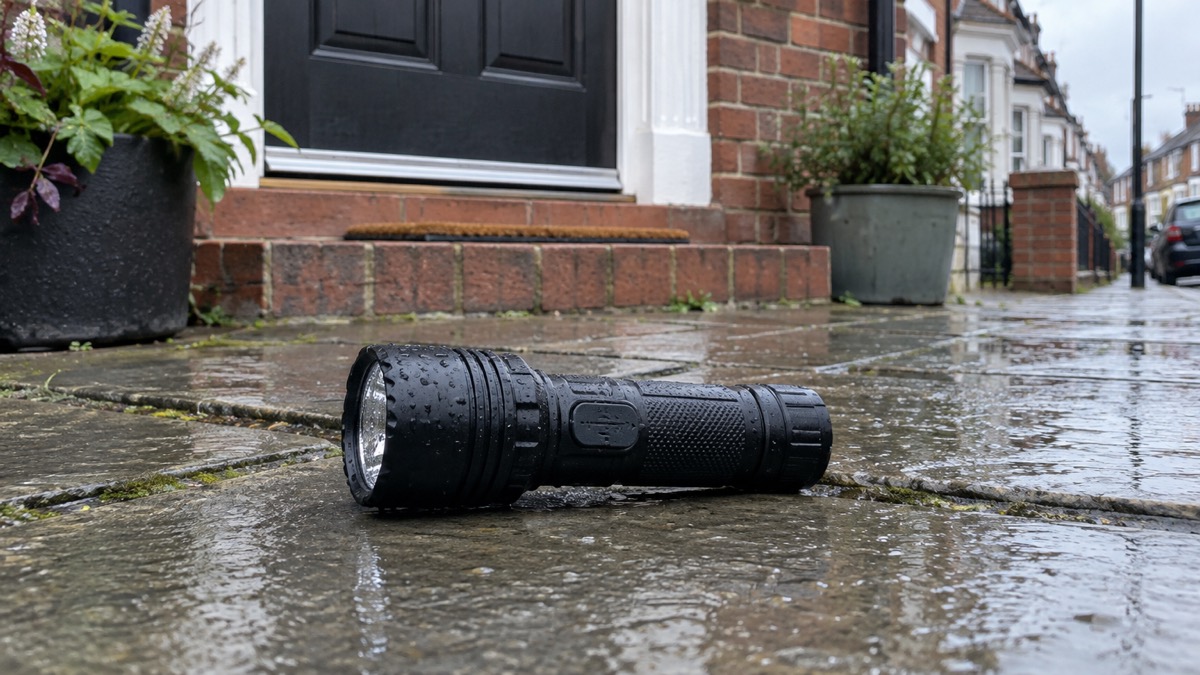
- Dust and water. The maker rates it IP68 and describes Flex Sealing Technology as providing superior protection against dust and water1. The UV version of the torch is described as offering protection for submersion in water up to 1.5m deep for up to 30 mins2. The site's guide to what IP ratings mean explains the scale.
- Drops. The maker gives a drop test of 3 meters1. That covers a fall from a shelf, a worktop or a hand in the dark.
- Chemicals. The maker states it is resistant to frequently occurring chemical influences such as oil, diesel, brake fluid or solvents1. That matters if the torch lives in a garage or a shed, or if you use it while dealing with a car or a boiler.
The wider P7R range is described by the maker as sealed against rain and dust for outdoor and on-site use, with the exact level of protection depending on the model and shown on each product page3. So if you are comparing P7R variants, check the IP rating on the page for the specific model rather than assuming they are all the same.
P7R Work or P7R Work UV: how the versions differ
Ledlenser makes two versions of this torch, and they are not interchangeable for every job. The standard P7R Work has a white LED and the full mode set described above1. The P7R Work UV adds a second, ultraviolet emitter: the maker lists an alternate UV LED at 365nm and a maximum working depth of 1.5 meters2. Its mode list includes a UV LED Light setting alongside the white-light modes2.
| P7R Work | P7R Work UV | |
|---|---|---|
| White light | Yes, white LED1 | Yes, white LED1 |
| UV light | No | UV LED at 365nm2 |
| Boost output | 1200 lumens, 240 meters1 | 1200 lumens, 240 meters2 |
| Low Power | 15 lumens, 15 meters, 60 hours1 | 15 lumens, 15 meters, 60 hours2 |
| Battery | 21700 Li-ion, 4800mAh1 | 21700 Li-ion, 4800mAh2 |
| IP rating | IP681 | IP68, submersion to 1.5m for up to 30 mins2 |
| Drop test | 3 meters1 | 3 meters2 |
| Working temperature | -20 to +40 degrees Celsius1 | -20 to +40 degrees Celsius2 |
| Availability | Listed by the maker1 | No longer in production, page for information only2 |
For most households the standard version is the one to plan around, because the UV emitter does not change how you light a room or a path. The UV version is for a specific need, such as checking a surface or a mark that shows up under ultraviolet light, and the maker states plainly that it is no longer in production and that its page is for information only2. If you want one, check what a retailer actually holds rather than assuming it can be ordered new.
The maker also notes that the P7R range offers higher output than the standard P73, which is useful context if you are choosing between models in the family. The site's pages on the P7R Core, the P7R Signature and the P7R 25th Anniversary Edition set out how those versions differ.
Charging, storing and using it safely
The P7R Work charges through what the maker calls a Magnetic Charge System, described as safe reliable charging that is quick and easy to use, and it comes with a magnetic charging cable, a charging dock and a USB adapter plug1. A full charge takes 270 minutes1. The maker's own instructions for charging, for the battery and for storage are the ones to follow; the notes below are about fitting the torch into a household routine.
- Charge before, not during. Top the torch up when a storm or a cold snap is forecast, so the 270 minute charge is done before you need the light1.
- Keep a charged spare cell. The torch takes a replaceable 21700 Li-ion cell at 3.7v and 4800mAh, so one can charge while the other is in use1. Store spare cells as the maker instructs, and keep them away from children.
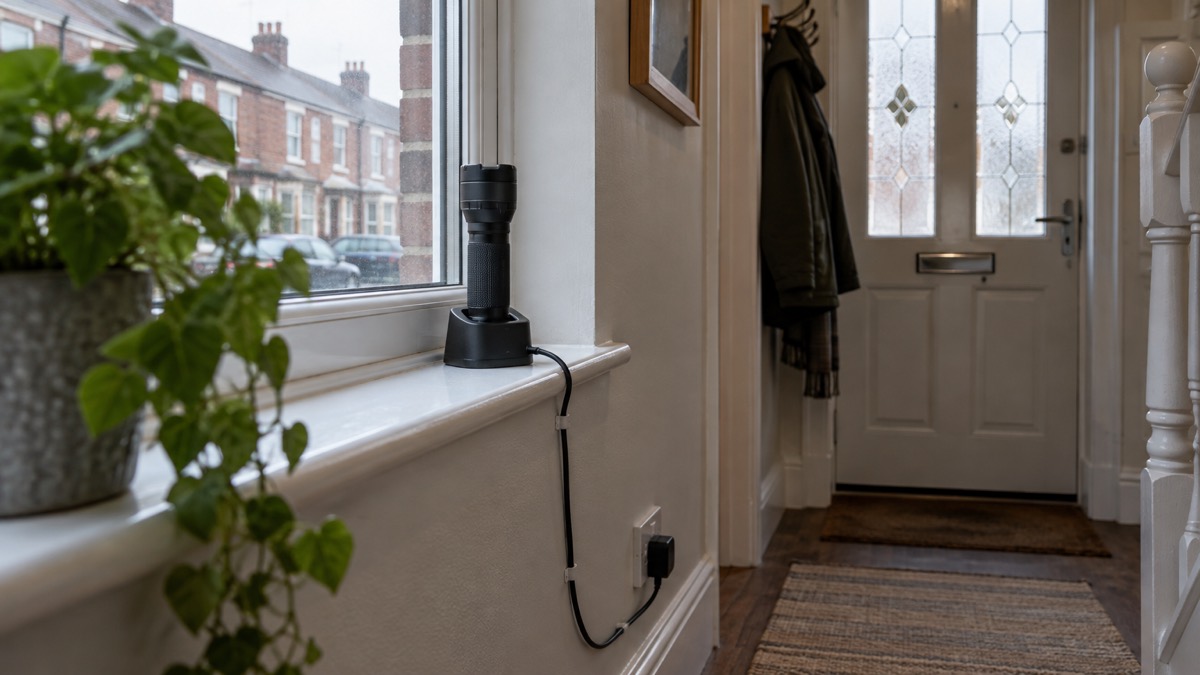
- Use the dock somewhere sensible. A dock on a hall table or a kitchen worktop means the torch has a home and is easy to find in the dark. The site's guide to where to keep torches so you can find them in the dark is worth reading alongside this.
- Watch the Backup Mode warning. When the charge runs low the torch drops to low-power mode and gives about 1 hour of remaining light1. Treat that hour as your cue to swap in the spare cell or start charging.
- Keep it dry and cool in storage. The maker gives a working range of -20 to +40 degrees Celsius1; a cupboard indoors is a better home than a shed that swings between damp and frost.
Warranty and support: 2 years, extendable to 7
Ledlenser gives the P7R Work a standard warranty period of 2 years, which can be extended by a further 5 years with online registration, up to 7 years1. The same terms are stated for the P7R Work UV2 and for Ledlenser lights more generally, where the maker describes the extension as covering defects in manufacturing4. The P7R range is described by the maker as coming with a 7-year warranty when you register it3.
For a household, the practical step is simple: register the torch when it arrives, and keep the model number, 502187, with the paperwork1. A torch that lives in a drawer for years and is then relied on in an emergency is exactly the kind of purchase where a long warranty earns its keep, and the extension costs nothing beyond the registration.
The site's brand page at Ledlenser gathers the maker's range in one place if you are looking at other models in the family.
Where it fits a household plan
A torch is one layer of a lighting plan, not the whole of it. The P7R Work suits a household that wants a single robust hand torch with a long low setting, a replaceable cell and a dock, kept charged and used for checking, carrying and signalling. It does not replace a lantern for lighting a room, a head torch for working with both hands free, or solar and wind-up lamps that need no charging at all.
A sensible arrangement is one of each: a hand torch for carrying, a lantern for the room you sit in, and a light that needs no battery as a backstop. The site's power cut checklist and lighting checks before winter turn that into a routine, and Lighting Your Home Safely When the Power Goes Off covers what to do on the night. For households with older or disabled residents, lights for older and disabled people in a power cut explains what to keep within reach, and Torches, Candles and Children covers keeping young children safe around lights.
Sources (4)
- P7R Work Rechargeable Torch, Ledlenser, 2026-10-25
- P7R Work UV Rechargeable Torch, Ledlenser, 2026-10-25
- P7R Collection, Ledlenser, 2026-11-02
- H7R Core Rechargeable Head Torch and K4R Keyring Torch Bundle, Ledlenser, 2026-10-25

 NEBO Galileo Tempest 350
 NEBO Newton 500 Torch
 NEBO Davinci 800L
 NEBO Luxtreme SL25R
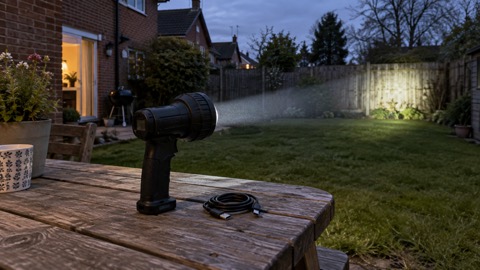 NEBO Master Series SL25
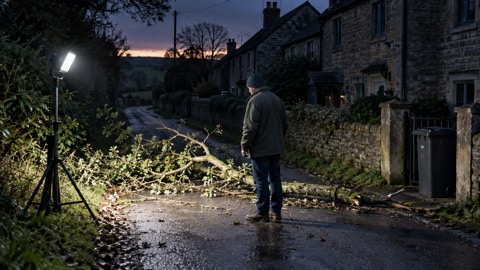 NEBO 8K Flood Light
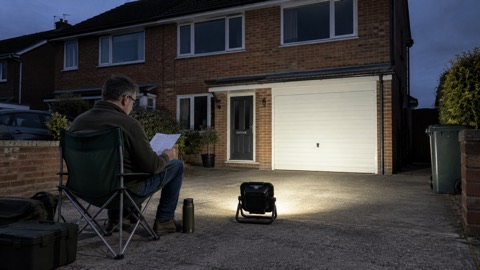 NEBO 5K Floodlight
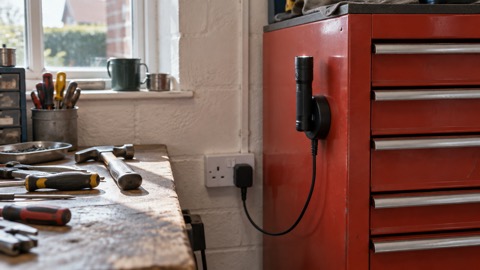 NEBO Torchy 2K Torch
 NEBO Torchy 600 Flex
 NEBO Tac Slyde Torch
 NEBO Slyde King 4K
 NEBO Mycro 900+ Headlamp