The Ledlenser P6R is a rechargeable torch that runs on a single 18650 lithium-ion cell, and that one detail is what makes it worth thinking about for a household preparing for power cuts. The cell is replaceable, so the torch is not tied to a built-in pack that ages out of use. The maker lists the P6R at 1,200 lumens on its boost setting with a 320-metre beam, and up to 65 hours of runtime at low power1.
For an emergency, the useful figure is not the brightest one. It is how long the torch keeps going at a setting you can actually read by. On the P6R that is 7.5 hours at 300 lumens on mid power, or 65 hours at 25 lumens on low power1. A torch that will light a room dimly for two and a half days is more use in a long outage than one that blazes for an hour and then needs a charger you cannot reach.
The P6R name covers several versions: the P6R, the P6R Core, the P6R Work and the P6R Signature. They share the same body size and the same 18650 battery approach, but they differ in output, run time, colour rendering and, in one case, water and dust protection. This page sets out what each does, how to keep one charged and ready, and how to use it safely. For the wider picture, see Emergency Lighting at Home: Torches, Lanterns and Candles.
What the P6R does for a household in a power cut
A power cut turns a familiar house into an unfamiliar one. The P6R is shaped for that: a single-cell torch with a 25mm tube and a 35mm head on the P6R, small enough to hold in one hand or stand on its tail while you work1. The maker describes the P6R as the most powerful single-battery torch in the core P-Series, with a body of aluminium alloy that is at least 75% recycled1.
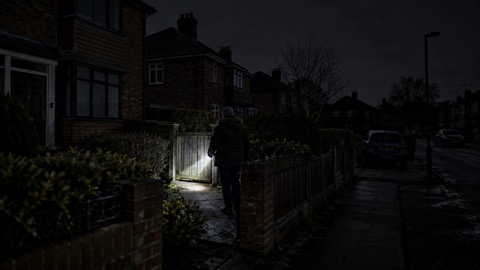
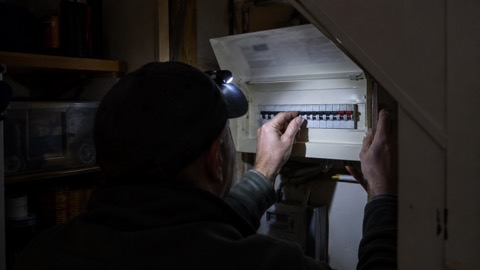
What it does in practice is give you a light you can point. The maker lists a 160-metre beam on mid power for the P6R1. That makes it the light you carry when you go to the fuse box, check on a neighbour, or look at the state of a roof after a storm. For lighting a room so a family can sit in it, a torch is the wrong tool and a lantern is the right one; the two do different jobs and a household benefits from having both.
The P6R's light modes are set out by the maker as follows1:
| Mode | Output | Beam | Run time |
|---|---|---|---|
| Boost | 1,200 lumens | 320m | short burst |
| Power | 700 lumens | 240m | 2.5 hours |
| Mid power | 300 lumens | 160m | 7.5 hours |
| Low power | 25 lumens | 45m | 65 hours |
The boost setting is described by the maker as a short burst of maximum power, not a setting to leave running1. In an emergency, plan on mid power for tasks and low power for sitting out a long evening. If you want to understand what those numbers mean in practice, see Lumens, Beam Distance and Run Time Explained.
P6R, Signature, Work and Core: how the versions differ
The four main versions share a family resemblance but are not the same torch. The table below sets out what the maker lists for each, so you can match one to what your household would actually do with it.
| P6R | P6R Core | P6R Work | P6R Signature | |
|---|---|---|---|---|
| Mid power | 300 lumens, 160m, 7.5 hrs1 | 240 lumens, 120m, 6 hrs2 | 300 lumens, 115m, 2.5 hrs4 | 450 lumens, 110m, 2.5 hrs3 |
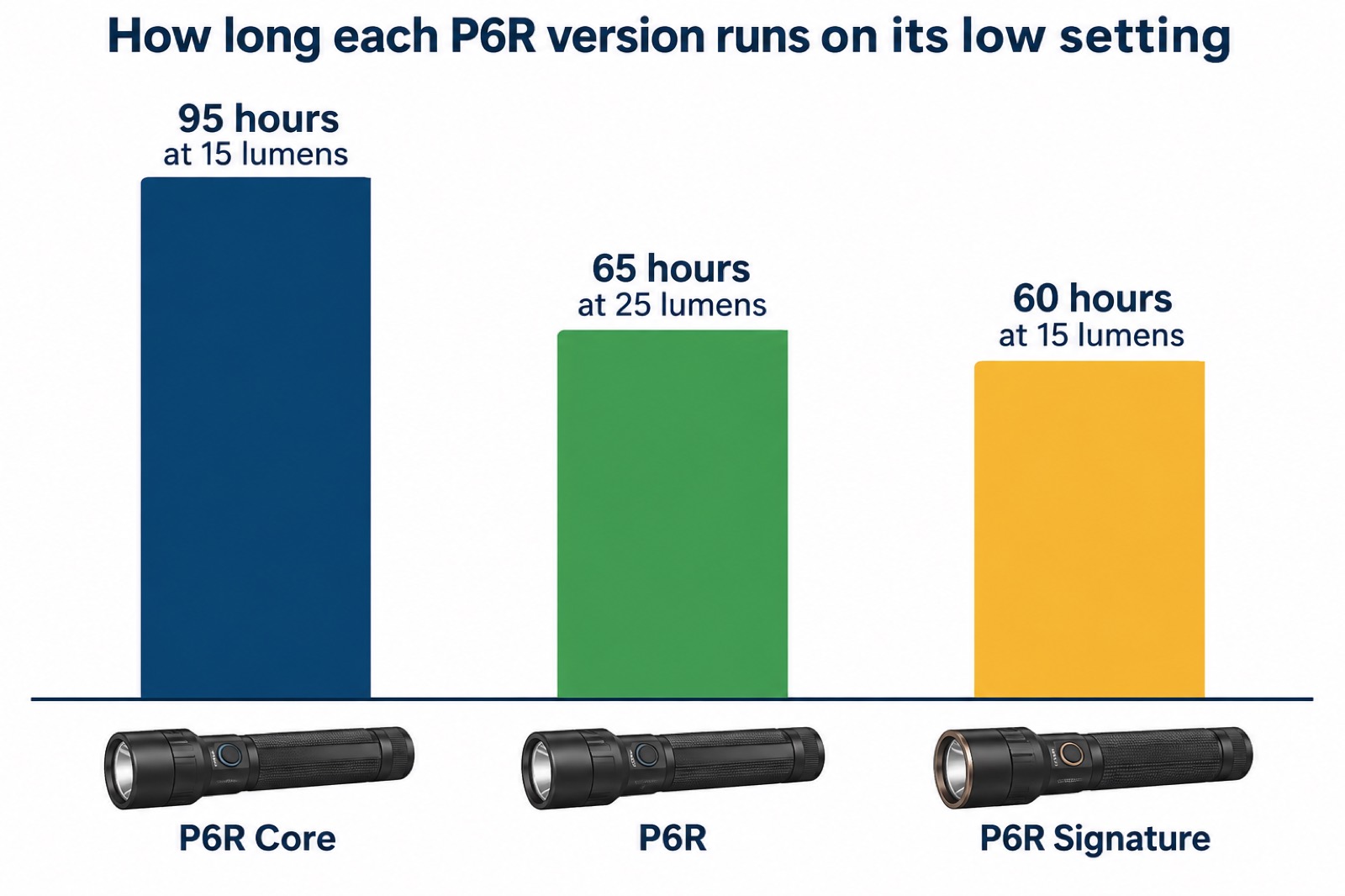
| Low power | 25 lumens, 45m, 65 hrs1 | 15 lumens, 25m, 95 hrs2 | not listed | 15 lumens, 20m, 60 hrs3 |
| CRI | 701 | 652 | 90 / 754 | 803 |
| IP rating | IP681 | IP682 | IP684 | IP683 |
| Battery | 18650, 3,000mAh1 | 18650, 2,500mAh2 | 18650, 3,000mAh4 | 18650, 3,000mAh3 |
The P6R Core is the one to look at if duration matters more than brightness: the maker lists 95 hours at 15 lumens on low power, the longest low setting in the range2. It also offers the widest set of light functions, with Low Power, Mid Power, Standard Power, Boost Mode, Blink, Position, S.O.S, Strobe and dimming available through the maker's Smart Light Technology2. For a household that wants a torch to sit in a drawer and still be useful on the third night of an outage, that low setting is the one that counts.
The P6R Work is the version aimed at trades, and its colour rendering reflects that. The maker lists a CRI of 90 / 754. It comes with a charging station, a magnetic charging cable, a USB adapter plug, an intelligent clip and a storage pouch4. If your emergency plan involves isolating circuits or reading a consumer unit by torchlight, a higher CRI is the figure to look at when you compare the versions.
The P6R Signature is the most configurable. The maker lists four assignable modes through a Mode Switch, plus Blink, Position, S.O.S, Strobe, dimming and focusing, and an additional red light on the side3. It also has a transport lock, which the maker says stops it turning on accidentally and using up the battery, and an Emergency Light feature: if the power goes out while the torch is charging, it turns itself on to give you light3. That last feature is worth knowing about if you leave the torch plugged in on a shelf.
Run time: 6 hours on Mid Power on the P6R Core
Run time is the figure that decides whether a torch gets you through a night or leaves you in the dark, and the maker's numbers vary widely across the range. On the P6R Core, mid power gives 240 lumens at 120 metres for 6 hours, standard power gives 600 lumens at 190 metres for 2 hours, and low power gives 15 lumens at 25 metres for 95 hours2. On the P6R Signature, mid power is 450 lumens at 110 metres for 2.5 hours, standard power is 1,100 lumens at 190 metres for 1.25 hours, and low power is 15 lumens at 20 metres for 60 hours3.
The pattern is consistent: the brighter the setting, the shorter the run. A household planning for a multi-day outage should think in terms of the low setting, not the headline output. Sixty to ninety-five hours of dim light is enough to move around a house, find things and get to bed for several nights running.
The P6R Core QC is listed differently again. The maker gives a 14-hour runtime on mid power at 120 lumens with a 220m beam, and a 5-hour runtime on power at 270 lumens with a 335m beam5. The same product page also lists a 110-hour runtime figure, which does not sit with the 14-hour mid power figure; the maker's page gives both and they are not reconciled, so treat the Core QC's run times as uncertain until you have the torch in hand. The P6R Work is listed at 300 lumens, 115 metres for 2.5 hours on mid power4, though the same page also gives a 190-metre beam distance for the Work, which conflicts with the 115-metre figure; the maker's page does not resolve it.
Beam and light output: 450 lumens at 110 metres on the Signature
Beam distance tells you how far the light will carry usefully, and it is the figure that separates a torch you can search a garden with from one you can only read a book by. The P6R Signature is listed at 450 lumens and 110 metres on mid power, 1,100 lumens and 190 metres on standard power, and 15 lumens and 20 metres on low power, with a boost mode of 1,400 lumens for 240 metres described by the maker as a short burst of maximum power for when you need it most3.
The P6R itself is listed at 1,200 lumens and a 320-metre beam on boost, 700 lumens and 240 metres on power, 300 lumens and 160 metres on mid power, and 25 lumens and 45 metres on low power1. The P6R Core is listed at 600 lumens and 190 metres on standard power, 240 lumens and 120 metres on mid power, and 15 lumens and 25 metres on low power2.
What this means for a household is that beam distance is a choice about how far you need to see, not a measure of quality. A 20-metre low setting is ample for moving around a house at night without waking anyone. A 190-metre beam is what you want if you are checking a fence line or a roof after a storm. The Signature's colour temperature is listed at 6000k to 7500k, a cool white light3.
Battery: one replaceable 18650 Li-ion cell
Every version in the range runs on a single 18650 lithium-ion cell, and the maker states that on the P6R the 18650 battery is replaceable1. That matters more in an emergency than it might seem. A torch with a sealed built-in pack becomes a paperweight once the cell stops holding charge; a torch that takes a standard cell can be kept going with a spare.
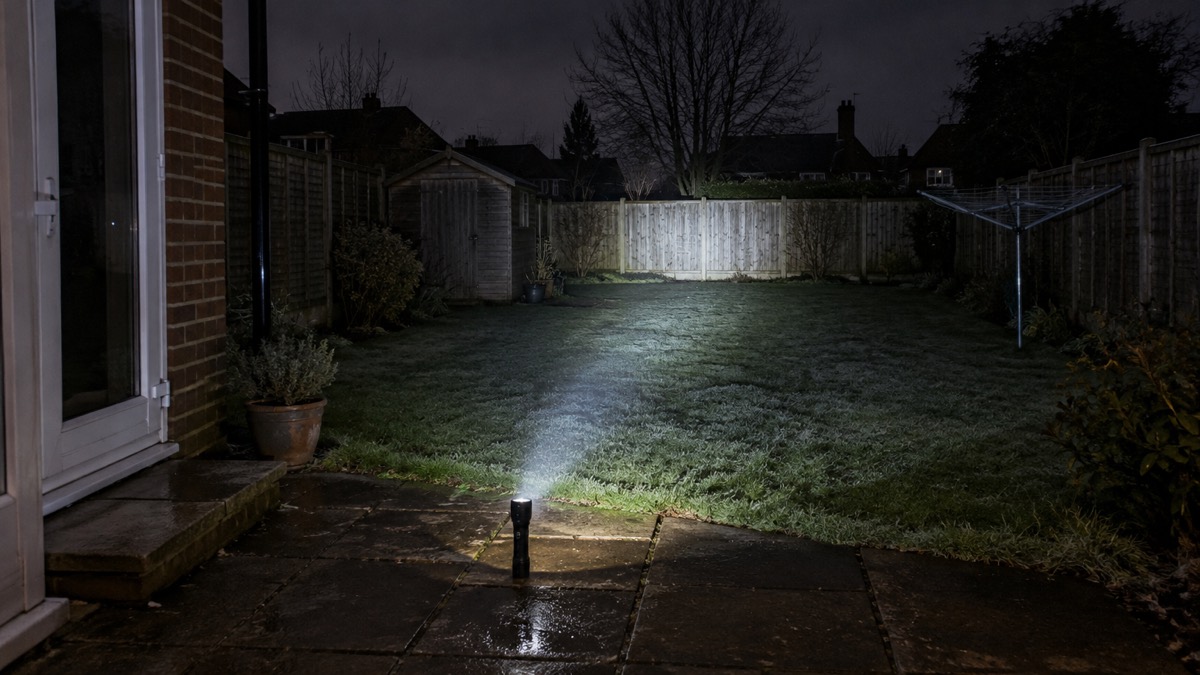
The capacities differ. The P6R is listed with an 18650 Li-ion cell of 3,000mAh at 3.6V, included and replaceable1. The P6R Signature is listed with a 1 x 18650 Li-ion rechargeable battery at 3.7V and a capacity of 3,000mAh3. The P6R Work is listed with a 1 x 18650 Li-ion rechargeable battery of 3,000mAh4. The P6R Core is listed with a 1 x 18650 Li-ion rechargeable battery of 2,500mAh2.
The P6R Core QC is the odd one out in a useful way. The maker lists it with a Li-ion 2,500mAh 3.7V battery, included and replaceable, and states that it is CR123A 3V compatible5. The maker describes CR123 3V cells as a direct alternative when recharging is not possible in the field, and says the 2,500mAh Li-ion battery charges via USB in 300 minutes5. For a household that wants a fallback when there is no power to charge from, that compatibility is the feature to note.
If you are building a stock of spares, see Torch Batteries: AA, AAA, 18650 and Built-In Packs and Spare Batteries to Keep for Your Lights.
IP68: protection against water and dust
The IP rating tells you what happens when a torch meets water or dust, and in a UK emergency that is not a theoretical question. A flood, a leak, a storm or a burst pipe can all put a torch in contact with water just when you need it.
The P6R, P6R Core, P6R Work and P6R Signature are all listed by the maker at IP681. The P6R is described as IP68 for full submersion, with Flex Sealing Technology1. The P6R Core's Flex Sealing Technology is described by the maker as providing superior protection against dust and water, and the maker says the torch can be used under water if necessary2. The Signature is described as having a hard-anodised surface and IP68 water and dust protection3.
The P6R Core QC is the exception: the maker lists it at IP54, water spray resistant5. That is a lower rating, and it means the Core QC is not the one to take into a flooded cellar or use in heavy rain without care. If your household plan includes a torch kept by the stopcock or in a garage that floods, that difference matters. For what the numbers mean, see What IPX Ratings Mean for Torches and Lanterns.
Size and handling: 151mm to 169mm long
The versions are close in size, which means the choice between them is about output and features rather than about whether the torch will fit your hand or a drawer. The P6R is listed at 150mm defocused and 157mm focused, with a 35mm head and a 25mm tube1. The P6R Signature is listed at 151mm defocused and 158mm focused, with a 35mm head and a 25mm tube3. The P6R Core is listed at 151mm defocused and 158mm focused2. The P6R Work is the largest, at 163mm defocused and 169mm focused, with a 45mm head and a 25mm tube4. The P6R Core QC is listed at 157mm defocused and 163mm focused, with a 42mm head and a 27mm tube5.
In the hand, a 25mm tube is about the width of a broom handle, which is comfortable to grip and easy to hold for a while. The focusing ring means the length changes slightly as you adjust the beam, which is why the maker gives two figures. A torch of this size will stand on its tail on a flat surface, which is how most people use one during a power cut: put it down, point it at the ceiling or the wall, and get on with the job.
Charging, storing and keeping it ready
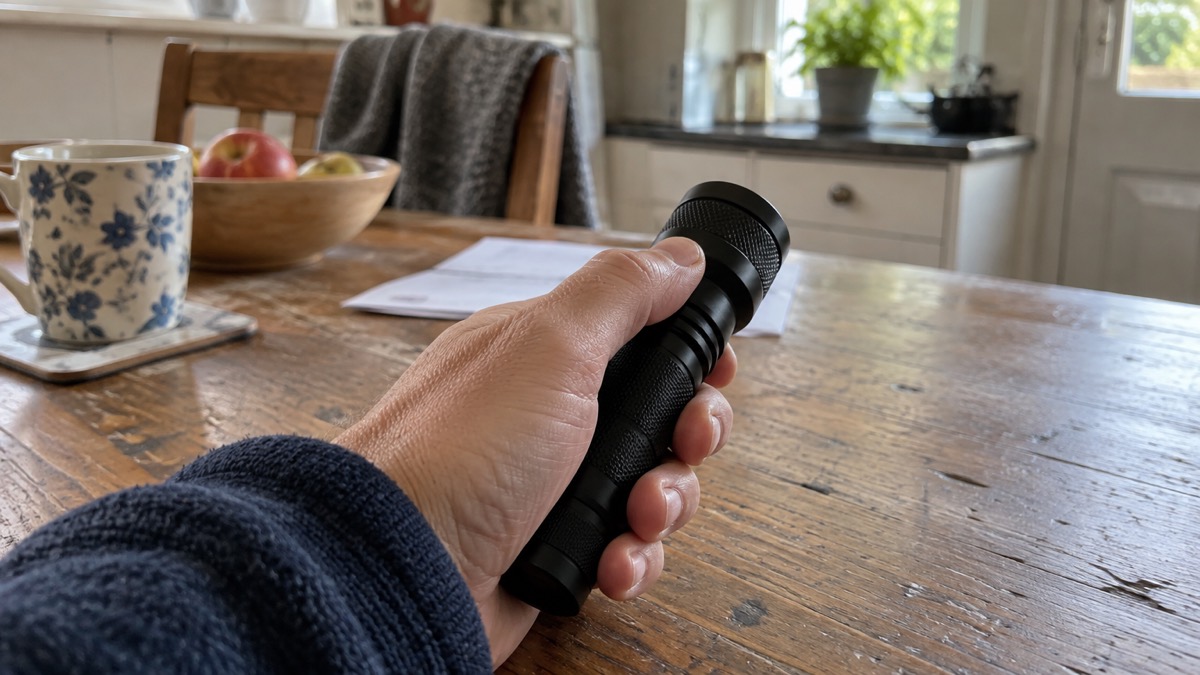
A torch is only part of a plan if it is charged when the power goes off. The maker's own instructions for each version are the ones to follow, and the charging arrangements differ.
The P6R Signature takes 225 minutes to reach a full charge3. The P6R Core QC charges via USB in 300 minutes5. The P6R Core QC box includes the rechargeable battery, a USB charging cable and a wrist strap5. The P6R Work comes with a charging station, a magnetic charging cable, a USB adapter plug, an intelligent clip and a storage pouch4. The P6R is supplied with its 18650 battery and an adjustable lanyard1.
The Signature's Emergency Light feature is worth setting up deliberately: the maker says that if the power goes out while your Ledlenser is charging, it will automatically turn on to give you light3. That turns a torch left on a charger into a small emergency lamp at the moment the power fails. The transport lock on the same model stops it switching on accidentally and using up the battery in a bag or drawer3.
For the wider routine, see Charging and Storing Rechargeable Torches Safely and Lighting Checks Before Winter. If you are unsure whether a charger is suitable, Can the Wrong USB Charger Damage a Torch Battery? covers the question.
Support and warranty
The maker lists a standard warranty period of 2 years on the P6R Signature, which can be extended by a further 5 years with online registration, up to 7 years, covering defects in manufacturing3. The Signature's product number is 502189, which is the reference to have to hand when you register it3.
Registration is worth doing when the torch arrives rather than when it fails. A torch that lives in a drawer for two years and then fails on the first night of a power cut is exactly the case the extended period is meant to cover, and the extension depends on registering within the standard period. Keep the product number and the registration confirmation somewhere you would look for household paperwork.
The P6R range sits within the wider Ledlenser line. If you are weighing a torch against other ways of lighting a room, Torches: Types and How to Choose One for Home and Rechargeable or Battery Torches for Emergencies set out the trade-offs. For the full power cut routine, see Lighting Your Home Safely When the Power Goes Off and the Power Cut Checklist.
Sources (5)
- Ledlenser P6R Rechargeable Torch, Ledlenser, 2026-10-26
- Ledlenser P6R Core, Ledlenser, 2026-10-25
- Ledlenser P6R Signature, Ledlenser, 2026-10-25
- Ledlenser P6R Work, Ledlenser, 2026-10-25
- Ledlenser P6R Core QC, Ledlenser, 2026-10-25

 NEBO Galileo Tempest 350
 NEBO Newton 500 Torch
 NEBO Davinci 800L
 NEBO Luxtreme SL25R
 NEBO Master Series SL25
 NEBO 8K Flood Light
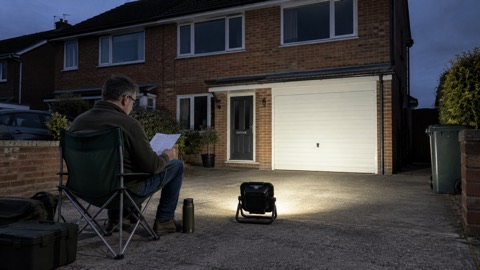 NEBO 5K Floodlight
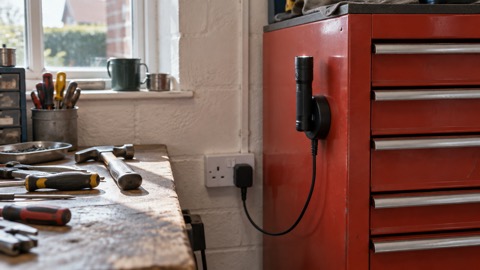 NEBO Torchy 2K Torch
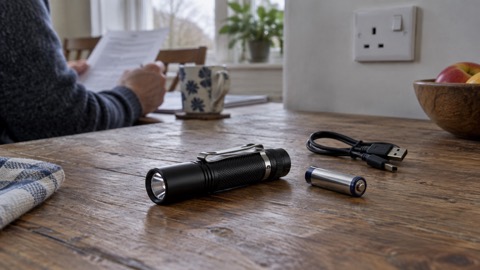 NEBO Torchy 600 Flex
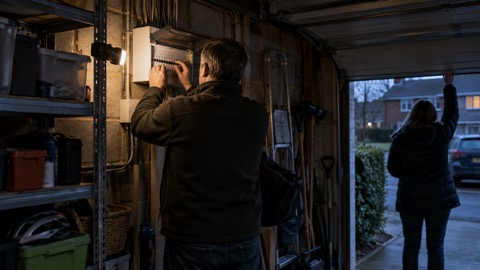 NEBO Tac Slyde Torch
 NEBO Slyde King 4K
 NEBO Mycro 900+ Headlamp