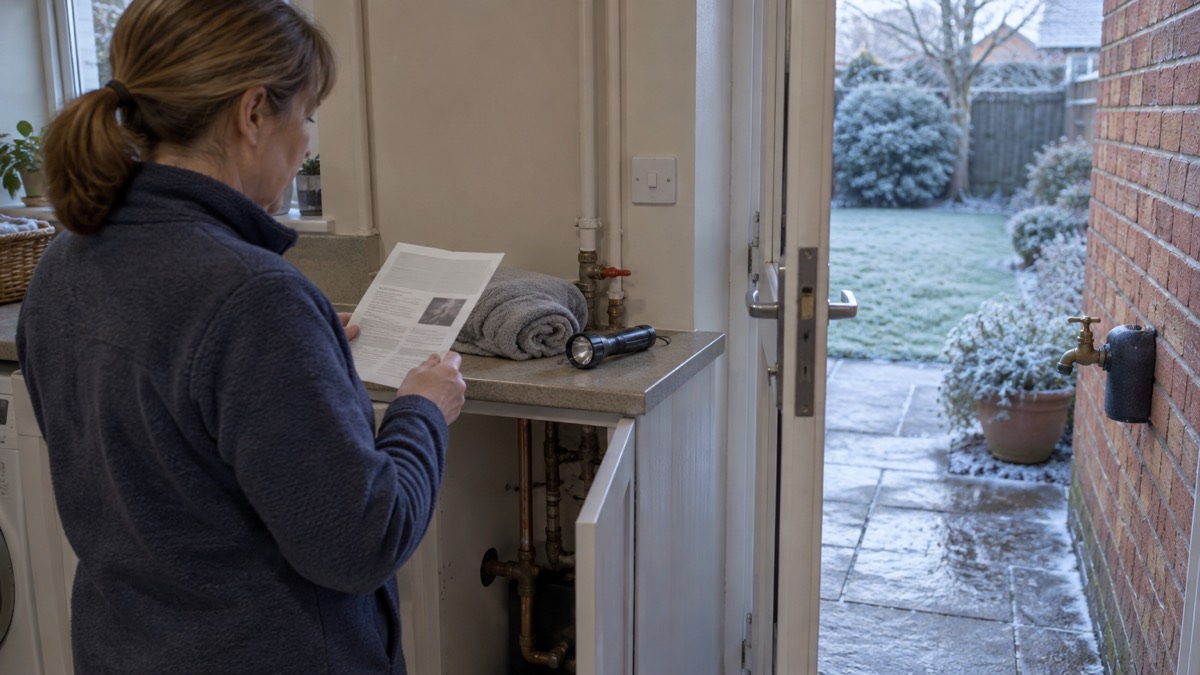
An outside tap is a short length of pipe that sits in the coldest part of the house, often on a north-facing wall, and it holds water all year unless you do something about it. When that water freezes it expands, and the pipe or the tap body can split. The leak often only shows when the thaw comes, and by then water is running down the wall or into the brickwork. The fix is simple and takes minutes: turn off the supply to the tap, open the tap to drain what is left, and leave it open until spring.
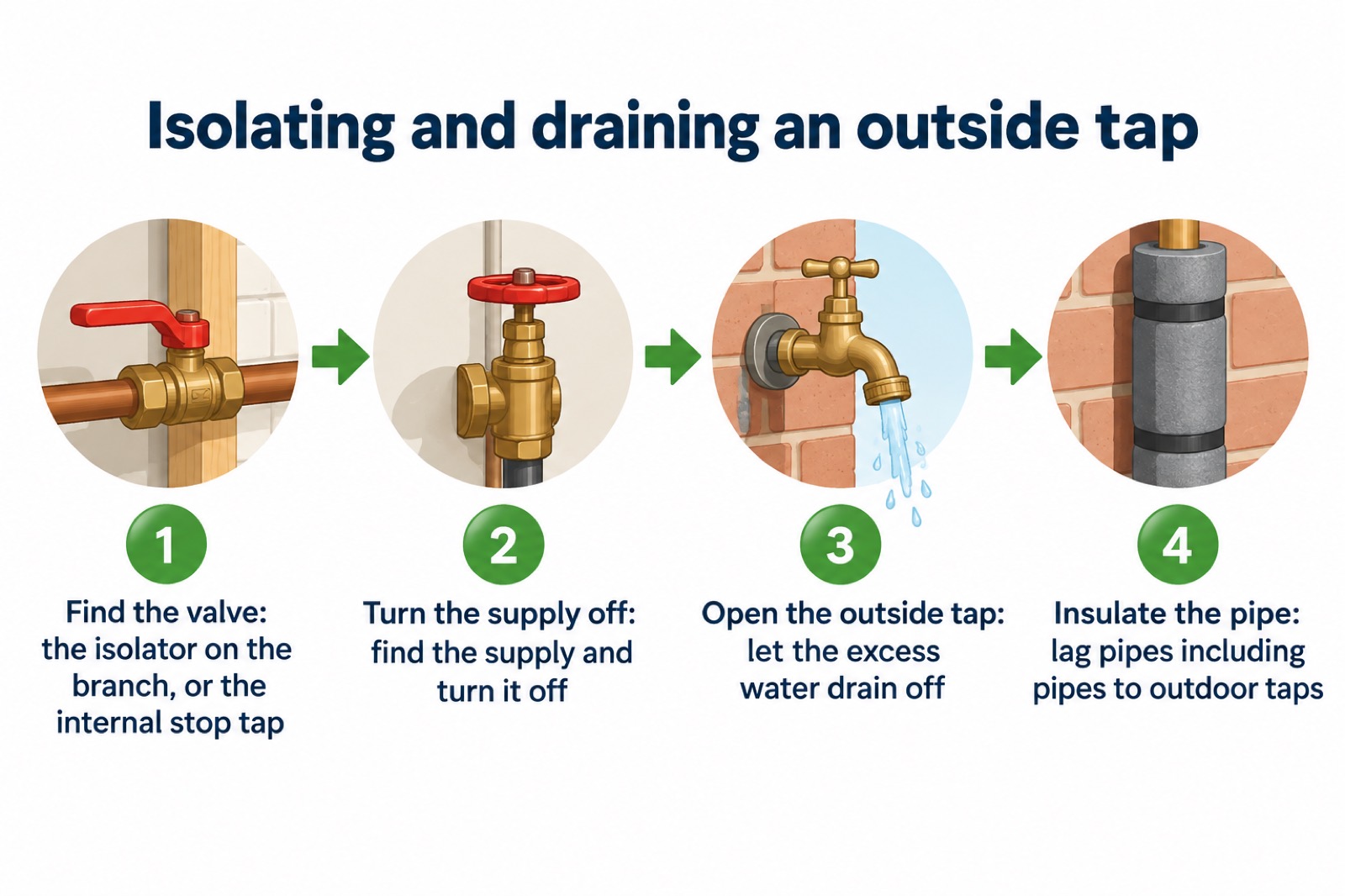
Do this before the first frost, not after. Find the valve that feeds the outside tap, which is often a small isolator inside the house near the tap or a branch off the main supply, and turn it off. Then open the outside tap and let it run until it stops. If there is no valve, lag the pipe and cover the tap instead. Affinity Water's guidance for taps in garages and outbuildings is to find the supply and turn it off, then go to the outside taps and open them to drain off the excess water1.
Turn off the outside tap before the first frost
The job has three parts and they take less time than filling a kettle. First, isolate: close the valve that feeds the outside tap. Second, drain: open the outside tap and let the water in the pipe run out. Third, leave it open. Affinity Water's guidance for taps in garages and outbuildings is to find the supply and turn it off, then go to the outside taps and open them to drain off the excess water1. The Met Office's WeatherReady advice is to insulate pipes including pipes to outdoor taps to reduce the risk of pipe bursts7.
Why does leaving the tap open matter? Because a closed tap traps water in the pipe between the valve and the outlet. An open tap gives any remaining water somewhere to expand, and lets you see at a glance that the supply is off. It also means that if the isolator weeps slightly over winter, the water runs outside rather than swelling the pipe.
If you are going away, the same logic applies to the whole house. Southern Water advises that for longer periods you can turn off the water at the stop tap and consider draining down the system so there is no water left in the pipes3. A community council's winter guidance is firmer still: in the event of a building not being used over the winter months, water supplies should be turned off and pipes drained8.
- Isolate the valve feeding the outside tap.
- Open the outside tap and let it drain.
- Disconnect and drain the hosepipe.
- Leave the outside tap open until spring.
- Check other exposed pipes, including any in unheated outbuildings9.
Finding the isolation valve for the outside tap
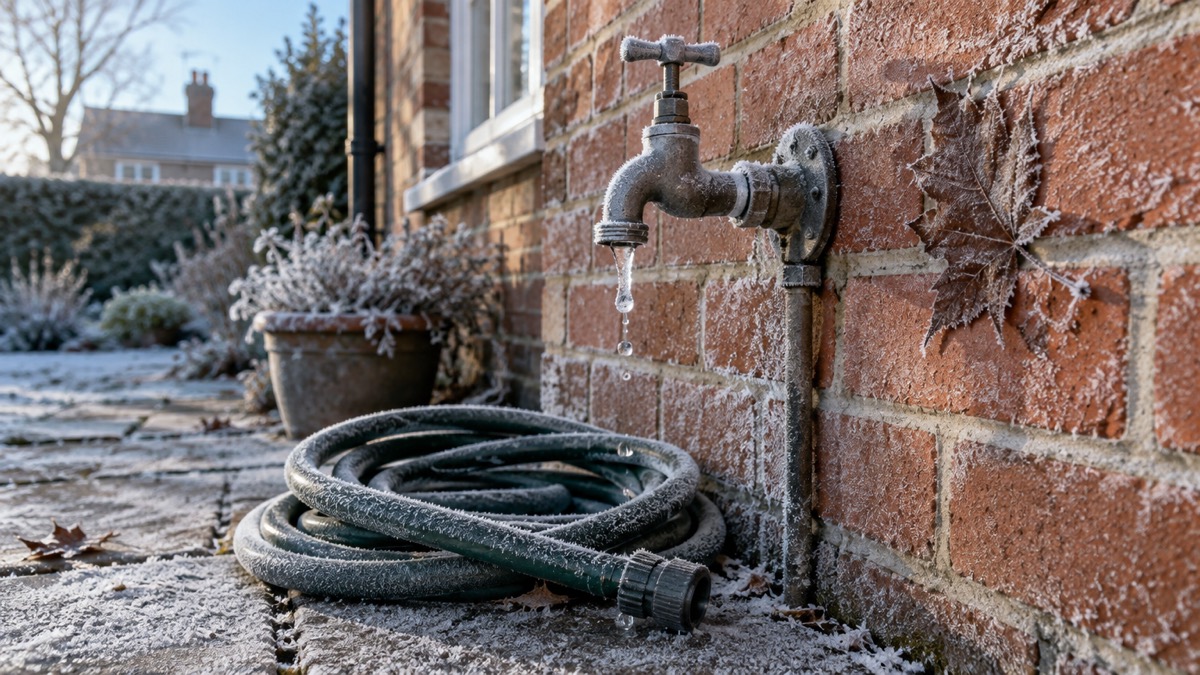
There are two valves in most homes and they do different jobs. The internal stop tap turns off all the water entering the house. The outside stop valve, in the pavement or road, is the water company's connection point. The valve that feeds an outside tap is usually a third, smaller isolator, fitted somewhere on the branch pipe that leads to the tap. Look close to where the pipe passes through the wall, under the kitchen sink if the tap is on that wall, or in a utility room, garage or cupboard on the route.
If you cannot find a dedicated isolator, the internal stop tap will do the same job for the whole house. Scottish Water says the stop valve is commonly located under a sink (kitchen or utility room), in a garage or close to the hot water system4. Northern Ireland guidance says the internal stop valve is usually under the kitchen sink and you should know how to turn it off10. The Met Office winter checklist simply says: find stop tap11.
| Valve | What it controls | Where to look |
|---|---|---|
| Isolator for the outside tap | The outside tap only | On the branch pipe near the tap, inside the wall |
| Internal stop tap | All water entering the house | Usually under the kitchen sink, or a utility room, garage or near the hot water system4 |
| Outside stop valve | The supply to the property | Under a cover on the path or road, sometimes a meter chamber or verge12 |
One caution about the outside stop valve: in older terraced properties, one outside stop tap can sometimes control the water supply of several properties13. If you turn it off, you may turn off a neighbour's water too. Use the internal stop tap or the tap's own isolator where you can.
Draining the tap and pipe once the water is off
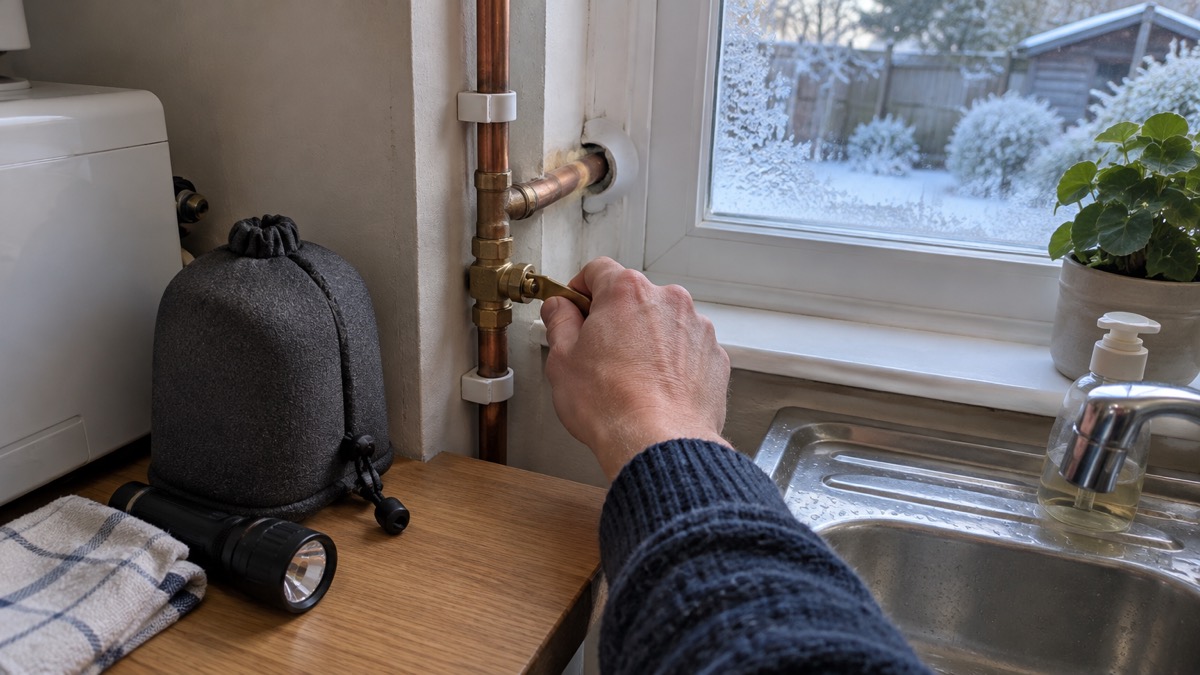
With the supply closed, open the outside tap fully and let it run until it stops. That is the whole drain for a simple tap. If the pipe runs a long way, or the tap is fed from a tank, give it longer and open any other tap on the same branch. Affinity Water's guidance is to find the supply and turn it off, then go to the outside taps and open them to drain off the excess water1. Once you have turned off your stop tap, you can also run cold taps and flush toilets to help drain your plumbing system more quickly2.
For a house left empty, drain down properly. Southern Water's advice for longer absences is to turn off the water at the stop tap and consider draining down the system so there is no water left in the pipes3. WaterSafe's guidance on exposed places goes further: insulate toilet cisterns, water tanks or pipes in exposed places or unheated outbuildings, and better still, if not in use, drain them for the winter9.
Insulating an outside tap that has no isolation valve
Plenty of homes have no separate valve for the outside tap, and some have no outside stop valve at all. WaterSafe notes that not all properties will have an outside stop valve fitted, which is quite common in older homes, or where the incoming supply serves your home and one or more neighbours14. In that case you cannot drain the tap, so you reduce the risk instead.
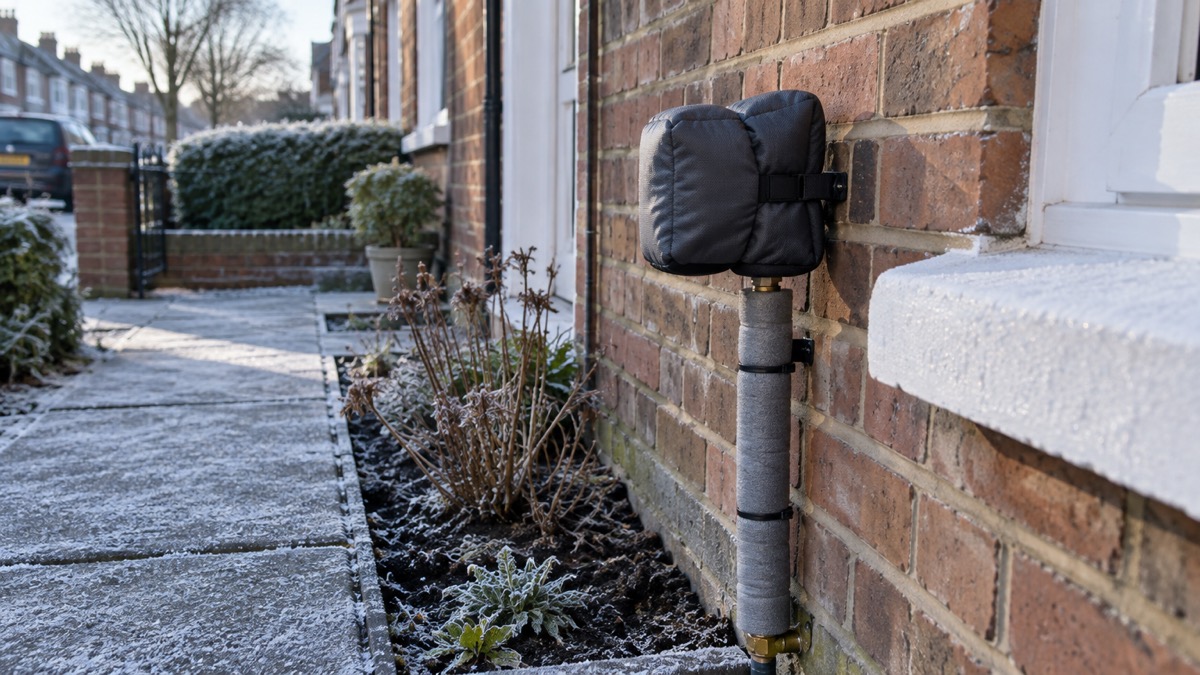
Lag the pipe that feeds the tap, and cover the tap itself. Southern Water suggests you can pop an insulating bag over any external taps when they are not in use3. WaterSafe advises insulating outside taps and pipes in unheated areas with foam insulation15. Insulate toilet cisterns, water tanks or pipes in exposed places or unheated outbuildings, and better still, if not in use, drain them for the winter16.
- Lag the pipe from where it leaves the heated house to the tap, using foam insulation15.
- Cover the tap with an insulated cover or bag when not in use3.
- Disconnect the hose so fittings do not freeze17.
- Keep the heat on low if you are away, rather than off18.
- Check exposed pipes in lofts and outbuildings, and lag them with thick material6.
Signs of a frozen or burst outside pipe and what to do
The first sign of a frozen pipe is usually at the tap: if it is cold outside and hardly any water comes out of your cold tap, you might have a frozen pipe, Wessex Water says19. A burst pipe may show as water running down a wall, damp patches, or water where it should not be. If you spot that one of your pipes might be frozen, turn off your inside stop tap immediately5. The number one step you can take to prevent damage from a burst or frozen pipe is to know how to find and operate your stop tap2.
Once the water is off, thaw gently. Turn off the water supply at the stopcock, check if the pipe has burst, open the affected tap and slowly thaw with hot water bottles or a towel soaked in hot water, starting at the end nearest the tap20. Humber Local Resilience Forum's guidance is to turn off your main stop tap, open the tap nearest the frozen pipe to allow the melted water to flow out, and thaw carefully20. Contact a plumber or, if it is safe, try to thaw the affected pipe using a hairdryer or hot water bottle, and do not use a naked flame to do this6.
If the tap runs but the water looks cloudy or milky, that is usually air in the pipes rather than a fault. WaterSafe suggests running the cold tap at the first point of entry into the property on a slow steady flow, then turning the internal stop tap on and off four to six times to release air from the pipes21.
Turning the outside tap back on in spring
Wait until the risk of a hard frost has passed, then close the outside tap and open the isolator slowly. Open the tap a little way first to let air and any discoloured water out, then run it clear. Check the pipe run and the wall around it for damp while the water is flowing, because a hairline split that stayed closed under frost may weep once pressure returns. If you find a leak, turn the supply off again and call a plumber.
If the valve will not turn, do not force it. Thames Water advises that if your inside and outside stop valves are not working, the quickest way to turn the water off is to contact a plumber12. Wessex Water asks you to contact them if you cannot find your outside stop tap or if it is not working correctly13. WaterSafe's general plumbing advice is to always isolate the water first and drain your pipes by opening a cold tap before attempting fixes22.
If you rent, the responsibility for inside pipework sits with your landlord. Northern Ireland's guidance states that if you own your home you are responsible for insulating and protecting all inside pipework, and in rented accommodation landlords are responsible10. The Health and Safety Executive notes that a landlord has responsibilities for parts of the associated installation and pipework but not for a tenant's own appliance16. Report a dripping or exposed outside tap to your landlord rather than altering pipework yourself.
For the wider job of getting a home through winter, see Getting Your Home Ready for Cold Weather and Ice and the Storms, Snow and Ice household guide. If a pipe bursts and water gets into the house, the Home Emergencies guide covers what to do next, and the Water in an Emergency guide explains why keeping a separate supply of drinking water is sensible18.
Sources (22)
- Lag your pipes, Affinity Water, 2026
- WeatherReady weather hacks, Met Office, 2026
- Prepare your home for winter, Southern Water, 2026
- Winter Wrapped Up, Scottish Water, 2026
- Frozen or burst pipes, Met Office, 2026
- Snow and ice in Cornwall, Cornwall Council, 2025
- WeatherReady winter partner toolkit, Met Office, 2026
- Adverse weather events, Llangattock Community Council, 2026
- How do I protect against frozen pipes?, WaterSafe, 2026
- Steps to reduce risk of burst pipes, nidirect, 2025
- WeatherReady winter poster, Met Office, 2026
- How to find and use your outside stop valve, Thames Water, 2026
- How to find your stop taps | Wessex Water, Wessex Water
- I can't find my external stop valve, WaterSafe, 2026
- Winter advice, WaterSafe, 2026
- Gas safety FAQs, Health and Safety Executive, 2026
- Snow, ice and winter ready advice, Cumberland Council, 2026
- Help for leaks, pressure and pipes, Portsmouth Water, 2026
- Thawing frozen pipes, Wessex Water, 2026
- Winter guidance, Humber Local Resilience Forum, 2024
- Why is my water cloudy or milky?, WaterSafe, 2026
- What should I do if my internal stop tap is leaking or broken?, WaterSafe, 2026
 Car Checks Before Winter
 Flood Warning Checklist
 First Steps After a Flood
 Bedroom Temperature at Night
 Hitting Black Ice
 Car Battery in Winter
 Car Stuck in Snow
 Clearing Snow and Ice Safely
 Clearing Snow from Pavements
 Using Fog Lights
 Signs of Frostbite
 Falling Through Ice
 De-Icing a Frozen Windscreen
 Request or Refill a Grit Bin
 Overtaking a Gritter