

Hotpoint is one of the appliance names most UK households will recognise, and its fridges, freezers, cookers, washing machines and tumble dryers sit in kitchens up and down the country. For an emergency preparedness site the question is narrower: what happens to those appliances when the power goes off, when floodwater gets in, or when a safety notice is issued, and what a household should do about it.
The short answer is that most Hotpoint appliances need very little from you in a power cut beyond leaving them alone. Keep fridge and freezer doors closed and food stays cold for several hours1, and in a disconnected freezer food should stay frozen for up to 24 hours with the doors kept closed2. Switch off anything that should not be left unattended, such as an oven or iron, so it cannot come back on while you are out or asleep3. After a flood, nothing that has been in contact with floodwater should be switched on until a qualified electrician has checked it4.
Who Hotpoint is, and why it matters for a household plan
Hotpoint is a domestic appliance maker whose products appear throughout the site's guides to power cuts and flooding, not as emergency kit but as the things already in your kitchen that an emergency acts on. A power cut turns a fridge into a cool box with a deadline. A flood turns a washing machine into a piece of electrical equipment that must not be touched until it is dry and checked.
That is why the fire and rescue services treat appliances as a safety subject rather than a shopping one. They advise registering your appliance so the manufacturer can contact you if a safety repair is needed6, and checking it against recall lists6. For a household, the practical steps are simple: know your model and serial number, keep the appliance registered, and know what to do with it when the supply fails.
Hotpoint fridges and freezers in a power cut
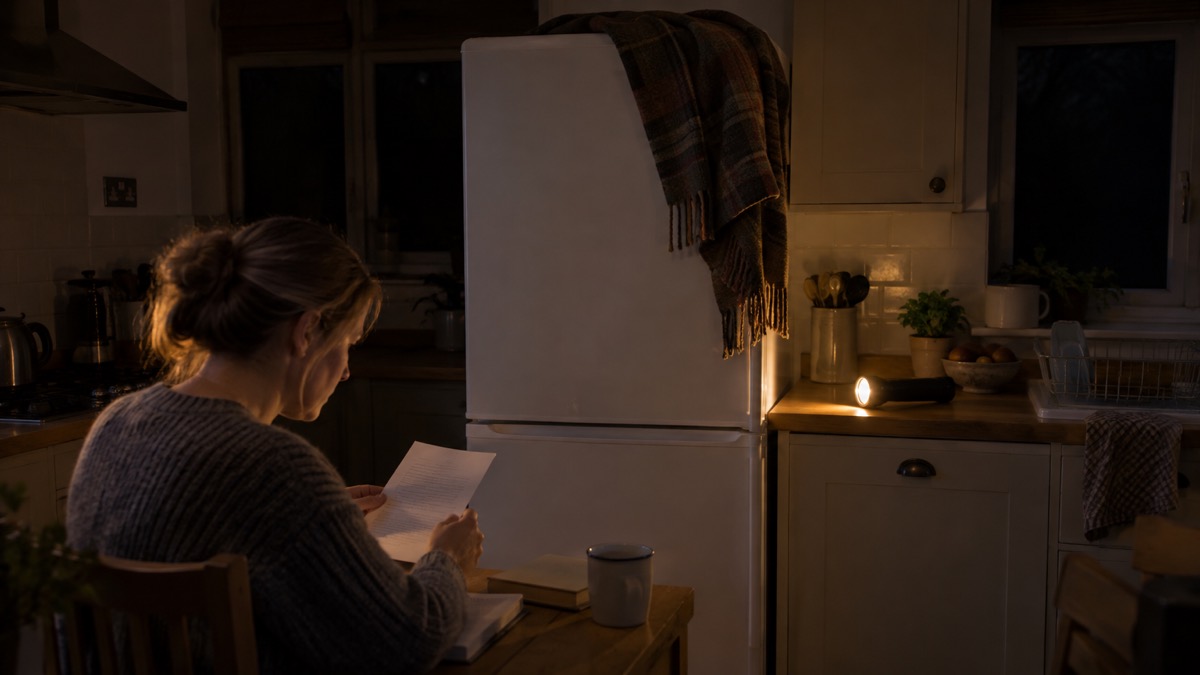
The fridge and freezer are where a power cut does most damage, and the advice is the same across the UK. Keep the doors closed. Greater Manchester's resilience guidance says this will ensure they stay cold for several hours1, and the Met Office suggests putting a blanket over them, as they will stay cold for many hours3. Leave the appliance switched on with the door shut to maintain a low temperature7.
How long the food lasts depends on the appliance and the outage. Food Standards Scotland advises keeping fridge and freezer doors closed as much as possible during a power cut8. For food businesses, official guidance is more specific: food should remain frozen in disconnected freezers for up to 24 hours with doors kept closed, and if the fridge has not been working for more than four hours, the food inside should be thrown away2.
If you have to move food, Food Standards Scotland advises defrosting it in the fridge so it does not get too warm, keeping defrosting meat, fish and poultry covered or in a sealed container on the bottom shelf so liquid cannot drip onto other food9. Only reheat food that has been frozen once9.
Cookers and hobs when the power or gas is off
An electric cooker simply stops when the power goes. A gas hob may keep working if the gas supply is unaffected, but the ignition will not, so you will need matches or a lighter, and you should never leave a lit hob unattended. Turn off and unplug any appliances that get hot, as you may forget they are switched on when power returns3.
Kitchen fires are a real risk in the hours after a supply returns. North Yorkshire Fire and Rescue Service advises always ensuring the cooker and hob are turned off after use, and being mindful of pets who may accidentally turn knobs or switches back on10. If you are buying or adapting a hob, induction models have a safety feature that automatically turns off the hob after a certain time if no pan is detected11, and a stove guard will cut the power if food has started to burn, a pan has boiled dry, the temperature is becoming dangerously high, or the hob has been left unattended12.
For cooking without mains power at all, see the site's guide to heating and cooking without mains power or gas.
Washing machines and dishwashers after a flood or water cut
During a flood, fire and rescue advice is to disconnect washing machines and dishwashers to prevent backflow13. After the water has gone, the appliance is the last thing to deal with. Official guidance is to avoid turning on devices that use gas or electricity, as there is a possibility they may have got wet, and to have a registered electrician assess the condition and damage14. The Northern Ireland guidance is the same: get any electrical appliances that have come into contact with floodwater checked by a qualified electrician before using them again4.
Cleaning comes before restarting. Clean all hard surfaces with hot soapy water and let them dry thoroughly, using heating and ventilation to help15. Food preparation surfaces, storage cupboards and refrigerators should be washed with a food safe disinfectant16, and a dishwasher that has been cleared by a qualified technician can be used again17. Discard wooden boards and utensils contaminated by floodwater17. If floodwater was contaminated with oil or diesel, use a detergent like washing up liquid4.
Restarting Hotpoint appliances when the power comes back
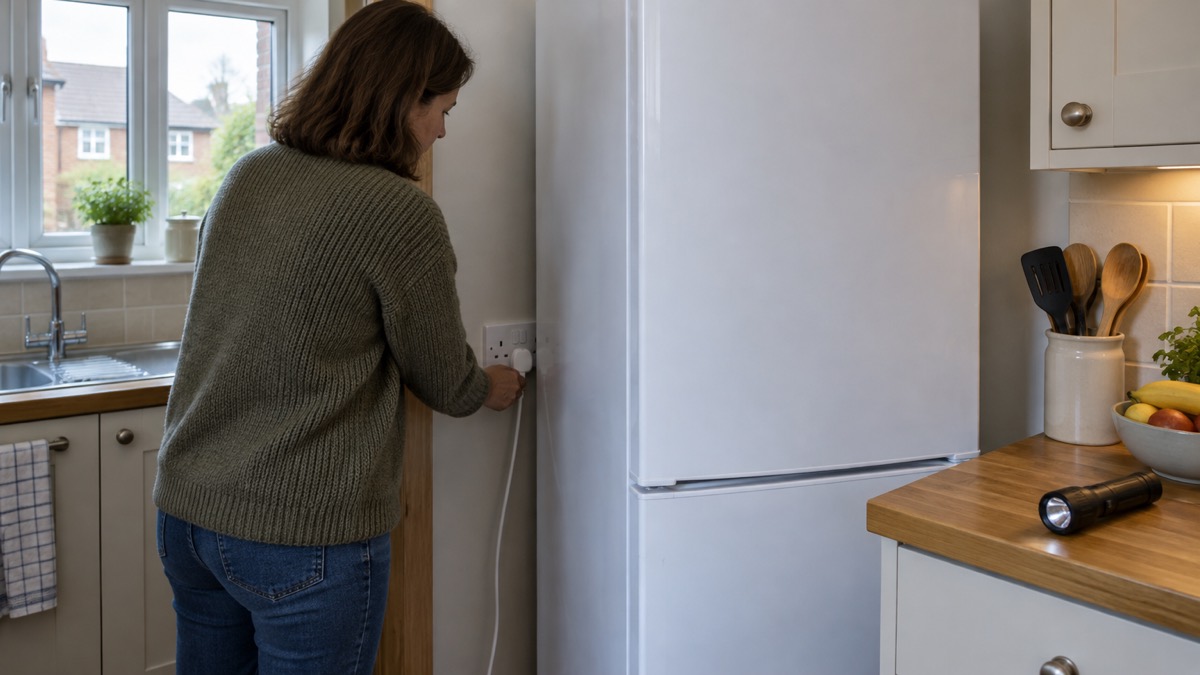
When the supply returns, resist the urge to switch everything on at once. Switch off and unplug appliances, especially items such as fires, cookers, irons and hair straighteners, in case you forget they are on when power is restored3. Wigan Council's advice after an outage is to reset the clocks on any electric timing devices and check that the timer on your thermostat is correct18. Keep a light on in one room so you know when power returns18.
If an appliance does not restart, or shows an error code, note the code and switch it off at the wall. Ofcom advises reporting a loss of service to your provider if you can, as this helps make sure any faults are fixed as soon as possible19. The same principle applies to an appliance fault: report it rather than repeatedly cycling the power.
Checking a Hotpoint appliance after flood water
Floodwater is not clean water, and the checks are the same whatever the maker. The Environment Agency's public advice is to have your electricity and gas checked by your supplier or qualified technician before switching them on13. Oxford City Council advises waiting for an electrician's approval before turning power back on, not using electrical equipment exposed to flood water until it has been checked, and properly switching off all electrical appliances before restoring supply15.
For appliances that burn gas or other fossil fuels, official recovery guidance is to have them installed and serviced at least annually by a qualified and registered engineer, and not to turn on appliances which may have got wet until checked by a qualified engineer14. Wear gloves and a disposable plastic apron when using cleaning products, and follow the manufacturer's instructions16.
Safety notices and recalls: how to check your appliance
Hotpoint tumble dryers are the subject of a specific safety notice. London Fire Brigade advises that if you own a Hotpoint, Indesit, Creda, Swan or Proline tumble dryer, you need to check whether it needs to be replaced or modified as part of a safety notice, and that this applies to dryers manufactured between April 2004 and September 20155.
Checking is straightforward. Fire and rescue services advise checking your appliances against the Office for Product Safety and Standards alerts and recalls page6, and using Electrical Safety First's online product checker to see if any of your appliances have been recalled20. Electrical Safety First's list explains what to do with a recalled appliance21.
Support, registration and warranty for Hotpoint owners
The single most useful thing a Hotpoint owner can do is register the appliance. Register My Appliance is provided by AMDEA, the Association of Manufacturers of Domestic Appliances, to enable manufacturers to act quickly in case of a recall6. You can register at Register My Appliance6, and you will typically need the model name or number, the serial number and the purchase date21. The rating plate is usually inside the door or on the back or side of the appliance.
For repairs, contact Hotpoint's own customer service using the details in your manual or on their website, quoting the model and serial number. For wider household planning around outages, see power cuts, backup power at home and emergency food.
Sources (22)
- Loss of essential services, Greater Manchester Combined Authority, 2026-10-29
- Flood advice for businesses, Northumberland County Council, 2026-05-21
- What to do in a power cut, Met Office, 2026-10-25
- After flood clearing, nidirect, 2026-05-06
- How to check if your tumble dryer is a fire risk, London Fire Brigade, 2026-10-25
- Maintain appliances and recalls, Greater Manchester Fire and Rescue Service, 2026-10-29
- Strong winds and heavy rain warning information and advice, nidirect, 2026-01-27
- Power cuts, Food Standards Scotland, 2026-10-25
- Chilling, Food Standards Scotland, 2026-10-25
- Stay safe in the kitchen this autumn, North Yorkshire Fire and Rescue Service, 2025-10-01
- Equipment, Devon and Somerset Fire and Rescue Service, 2026
- Cooking fire safety devices, Greater Manchester Fire and Rescue Service, 2026-10-29
- Flooding advice, Mid and West Wales Fire and Rescue Service, 2026-10-29
- How to recover from flooding, GOV.UK, 2023-12-19
- Clearing flood, Oxford City Council, 2026-10-29
- Cleaning up and returning home after flooding, Derbyshire County Council, 2026-10-29
- Flooding and health advice for the public, GOV.UK, 2024-03-13
- Power cuts, Wigan Council, 2026-10-29
- Stay connected in severe weather, Ofcom, 2026-10-13
- Stay fire safe, Greater Manchester Fire and Rescue Service, 2026-10-29
- Electrical safety, Scottish Fire and Rescue Service, 2025-02-27
- White goods, Mid and West Wales Fire and Rescue Service, 2026-10-29