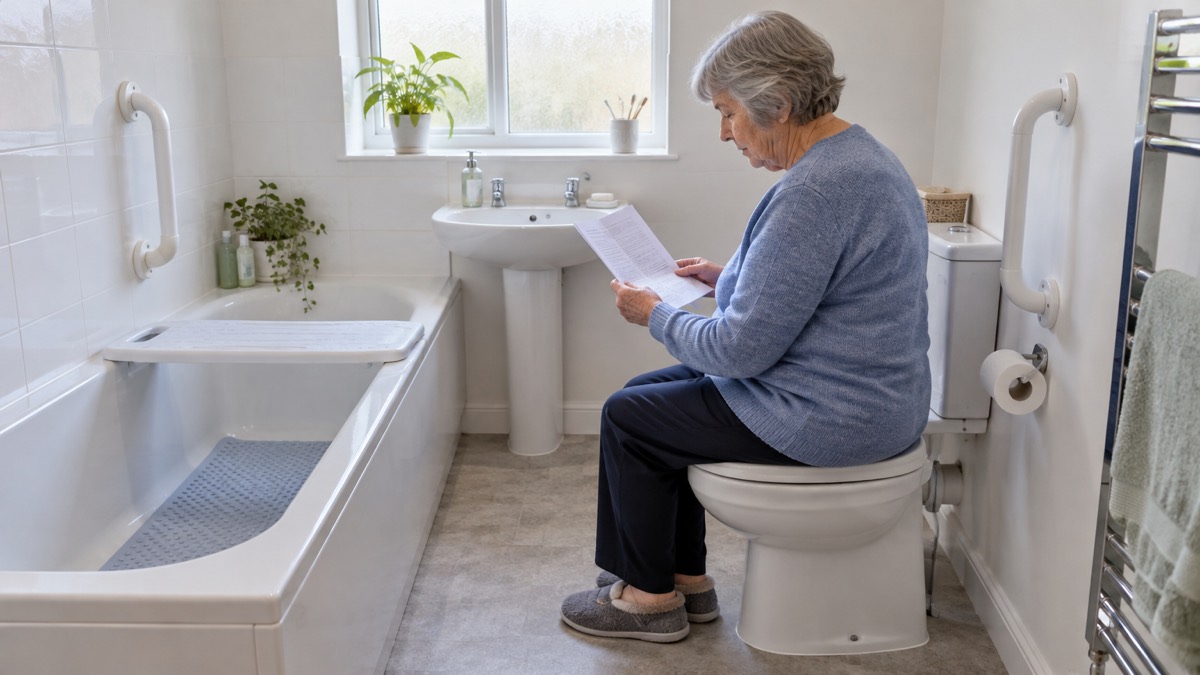
The bathroom is the room where a fall is most likely to catch you out, because it combines hard floors, water, hot surfaces and the movements that put you off balance: stepping over a bath side, lowering onto a low toilet, standing to shower. The good news is that most of what prevents a fall there is simple and cheap, and the rest can be arranged through your council or your GP.
Start with the floor. Fire and rescue services and councils across the UK all give the same first instruction: use non-slip mats and rugs, especially in bathrooms, and mop up spillages immediately1. Then look at what you hold on to. Do not use a towel rail, radiator or sink for support; use correctly positioned, securely fitted grab rails instead3. Add a night light for trips after dark2, and keep a way of calling for help within reach4.
If you are unsteady on your feet, ask for an assessment rather than guessing. An occupational therapist can advise on the full range of ways to make your home safer, and you can contact one through your doctor's surgery or through social services5. In Scotland, the Falls Assistant offers an NHS-approved self-assessment and advice6.
Start with the floor: non-slip mats and drying spills straight away
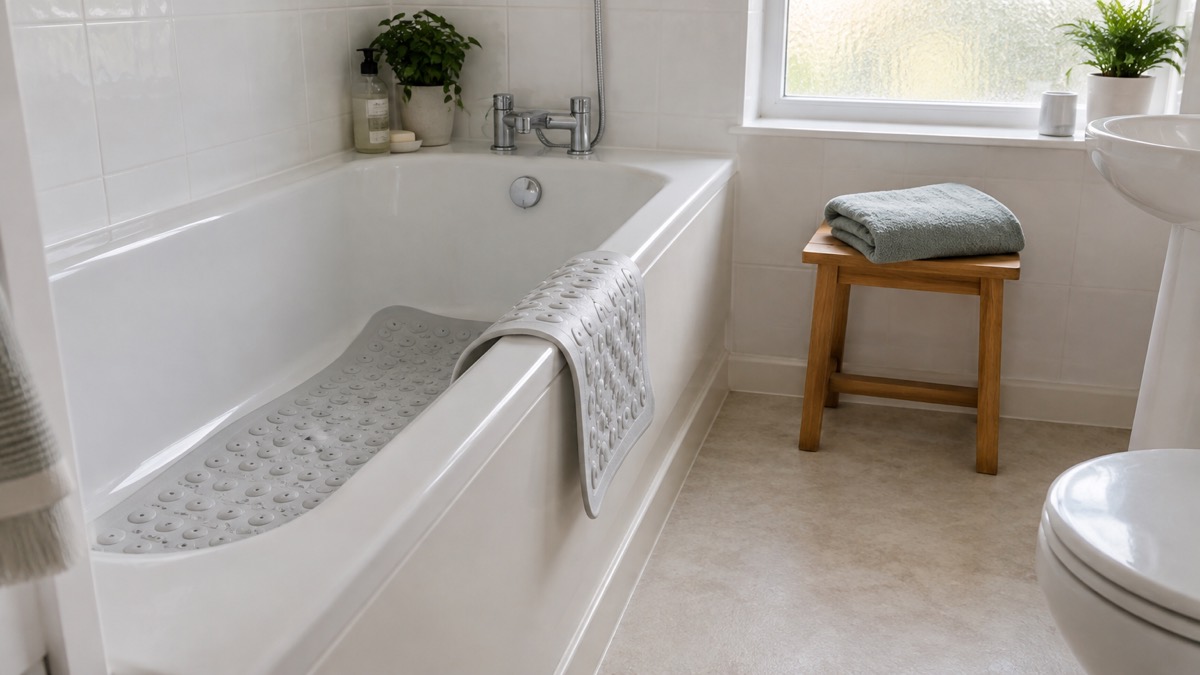
Wet bathroom floors are the obvious hazard, and the advice on them is consistent. Use non-slip mats and rugs, especially in bathrooms1. Use non-slip mats in baths and showers2. Use a bath mat that does not slip, and make sure the bath does not wobble and the floor under it is flat and strong8. If you have a bath, that last point matters: a bath that shifts under your weight as you step in is a fall waiting to happen.
Spills are the other half of the floor problem. Mop up spillages immediately rather than leaving them, and wipe up any spill in the bathroom area straight away3. Keep the floor clear too: remove clutter, trailing wires and frayed carpet, and do not walk on slippery floors in socks or tights9. Footwear matters more than people expect. Wear shoes or slippers that fit well, do not slip off and have a good grip10. Take care of your feet as well, trimming toenails regularly and seeing a GP or podiatrist about any foot problems9.
If you rent, you are not on your own with this. Tell your landlord if something is broken or unsafe8. A loose bath, a broken tile or a failing extractor fan are all things a landlord should put right.
Grab rails by the bath, shower and toilet
Grab rails are the single most useful fitting in a bathroom, but only if they are the right kind and in the right place. The Stay Steady and Safe checklist is blunt about what not to do: do not use a towel rail, radiator or sink for support3. Those fittings are not designed to take a person's weight, and they can pull away from the wall.
What to do instead is to have grab rails correctly positioned and securely fitted3. Position matters as much as the fixing. A rail by the bath helps you step in and out; one by the shower helps you stand; one by the toilet helps you lower and rise. Age UK's winter guidance makes the same point in general terms: consider installing handrails in useful places, such as by the bath11. The Salisbury burns prevention booklet names a grab rail alongside a non-slip mat and a shower chair as the way to prevent falls into hot water7.
A few practical points follow from the guidance:
- Fix to a solid wall. A securely fitted rail is fixed into the wall structure, not stuck on.
- Check the bath itself. Make sure the bath does not wobble and the floor under it is flat and strong before you rely on a rail beside it8.
- Do not lean on what is not a rail. Do not use a towel rail, radiator or sink for support; use correctly positioned, securely fitted grab rails instead7.
Getting in and out of the bath or shower safely
Getting in and out is where bathroom falls cluster. Falls associated with a bath, shower or similar facility most commonly cause cuts or lacerations, at 27% of injuries12. That figure is a picture of what happens, not a ranking of seriousness.
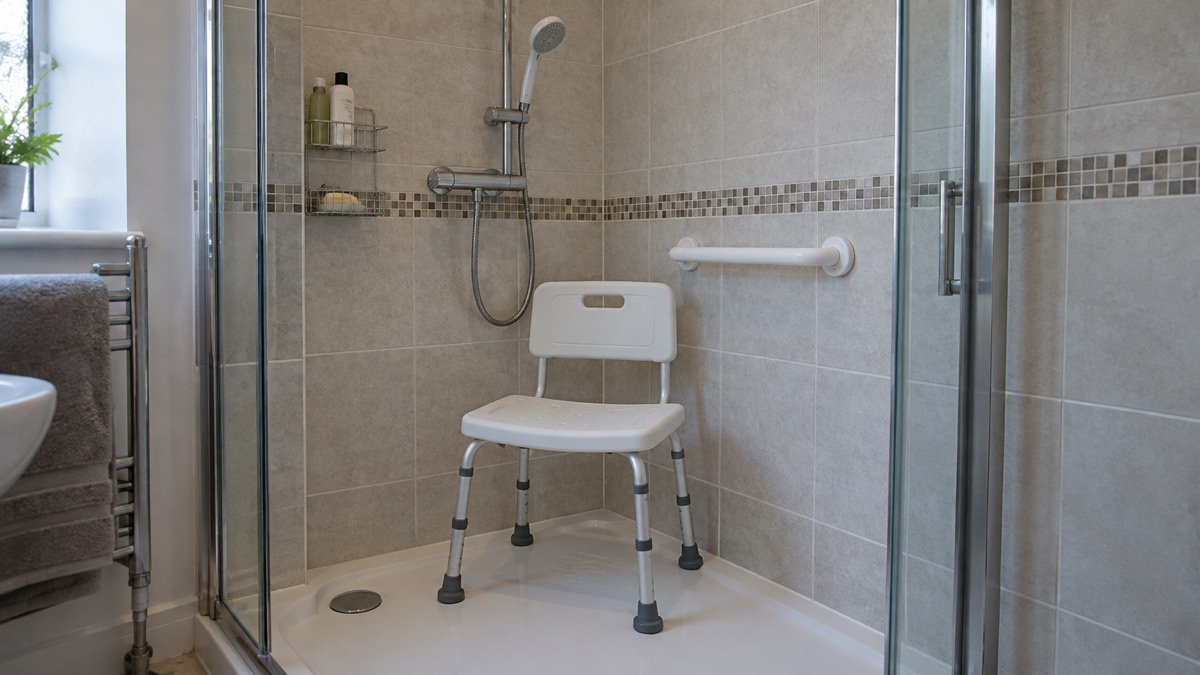
The equipment that helps is well established. To prevent falls into hot water, install a grab rail, non-slip mat and/or a shower chair7. Each does a different job:
| Aid | What it does | Who it tends to suit |
|---|---|---|
| Non-slip mat | Stops your feet sliding on a wet bath or shower floor2 | Everyone with a bath or shower |
| Grab rail | Gives you something solid to hold while stepping in, out or standing3 | Anyone unsteady on their feet |
| Shower chair | Lets you sit to wash instead of standing7 | People who tire standing, or feel unsteady in a shower |
| Bath board | Lets you sit at the bath edge and swing your legs over rather than stepping in | People who cannot safely step over a high bath side |
A shower chair and a bath board solve the same problem in different ways, and which suits you depends on your bathroom and your strength. To prevent falls into hot water, install a grab-rail, non-slip mat and/or a shower chair13.
Keep the bathroom itself in good order. Warm, damp rooms grow biofilm, so increase ventilation in bathrooms and wet rooms and use a squeegee to remove excess water from shower screens and tiles14. A drier bathroom is a less slippery one.
Lighting for night-time trips to the bathroom
Most bathroom falls at night happen on the way there, not in the room itself. The fix is lighting. Use night lights to help you find your way safely at night2. Make sure stairs, hallways and walkways are well lit during the darker months15. Make sure your lights work and change lightbulbs when needed8.
A night light in the hallway and one in the bathroom means you are not walking a dark route half awake. Keep the route clear as well: keep the stairs clear, and do not leave shoes, toys or other things on the floor8. If you use a walking aid, keep it where you can reach it from the bed.
If someone falls in the bathroom
If you fall and cannot get up, the priority is to get help without making an injury worse. NHS inform's guidance lists the ways to call for help: use a community alarm if you have one, use a phone to call a relative, friend or neighbour, ask your smart speaker to call someone who can help, or try shouting or banging on a wall to attract your neighbour's attention4.
That list is worth reading before you need it, because it tells you what to have within reach. If you have mobility issues, ensure mobility aids and methods of calling for help, like emergency pendants, are close to hand16. A phone left in the bedroom is no use once the bathroom door is shut behind you.
It also helps to have practised. It is a good idea to practise getting up from a fall in different rooms of your house and using different types of sturdy furniture for support, and to ask a friend or relative to be with you when you practise4. Practising in the bathroom is harder than in a living room, which is exactly why the equipment in this guide matters: a grab rail and a shower chair give you something to work with.
If you have had a fall, tell your GP. In Northern Ireland, the fire and rescue service advises speaking to your GP if you wish to be referred to the Falls Prevention Team within your local Health Trust17. In Scotland, you can assess your own risk of falling and make a personalised falls prevention plan using the Falls Assistant6.
Where to get help with aids and adaptations
You do not have to work out what you need alone, and in most of the UK you do not have to pay for the assessment that tells you. An occupational therapist can advise on the full range of ways to make your home safer, and you can contact one through your doctor's surgery or through social services5. That is the route to grab rails, seating, and changes to the bathroom that are fitted properly.
There are several ways in:
- Through your GP. Ask for a referral, and mention any falls, even ones that did not injure you. In Northern Ireland, ask about the Falls Prevention Team within your local Health Trust17.
- Through social services. Your council's adult social care team can arrange an assessment. Ask what support is available for home adaptations where you live.
- Self-assessment in Scotland. The Falls Assistant offers an NHS-approved self-assessment and advice, and you can use it to build a personalised falls prevention plan6.
- Fire and rescue safe and well visits. Several fire and rescue services offer home visits that cover preventing slips, trips and falls alongside fire safety18. Ask your local service whether it offers one.
Keep a first aid kit where you can reach it. Consider mounting it on a wall or in a cabinet so it is visible and easy to access by any person19. And keep bathroom cleaning products high up out of reach, including those for the toilet, or fit safety catches to low cupboard doors13. A bottle left on the floor beside the toilet is a trip hazard as well as a poisoning risk.
For more on getting up safely, calling for help and preventing falls elsewhere at home, see Falls at Home: Getting Up, Getting Help and Prevention. If you live alone, Living Alone: Staying Safe When No One Is Nearby covers what to arrange before you need it, and Personal Alarms: Types and How to Choose One explains the options for calling for help from the bathroom.
Sources (20)
- Slips, trips and falls, Cheshire Fire and Rescue Service, 2026-05-20
- Falls prevention, Staffordshire County Council, 2026-10-14
- Stay Steady and Safe Home Safety Checklist, NHS Norfolk and Suffolk Integrated Care Board, 2026
- What to do if you fall, NHS inform, 2026-04-30
- Dementia fire safety guidance, North Wales Fire and Rescue Service, 2026-10-29
- Falls response, Scottish Ambulance Service, 2026-10-29
- Burns prevention booklet, Salisbury NHS Foundation Trust, 2024-12
- Slips, trips and falls, Cornwall Council, 2025-06-19
- Winter Preparedness - NHS South East Coast Ambulance Service, NHS South East Coast Ambulance Service
- Falls, NHS, 2025-03-06
- Stay Well this Winter, NHS England, 2025
- Accident hazards, Somerset Council, 2026-10-28
- Safety for medicines and poisons, NHS West Yorkshire Healthier Together, 2026-10-29
- Water appearance, Dwr Cymru Welsh Water, 2026-10-28
- Falls guidance at home, Oxford Health NHS Foundation Trust, 2026-09-15
- Living alone, Staffordshire Fire and Rescue Service, 2026-10-26
- Home fire safety, Northern Ireland Fire and Rescue Service, 2026-10-14
- Apply for a Safe and Well visit, Warwickshire County Council, 2026-10-29
- First aid provisions, ProtectUK, 2026-06-01
- Poisoning, NHS South Yorkshire and Bassetlaw Healthier Together, 2026-10-29
 Carer's Emergency Plan
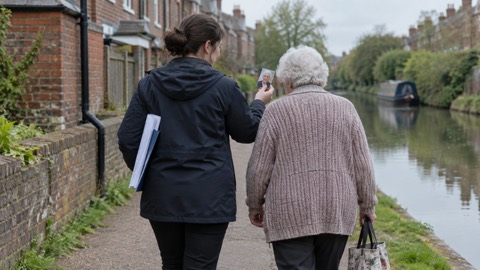 Herbert Protocol Form
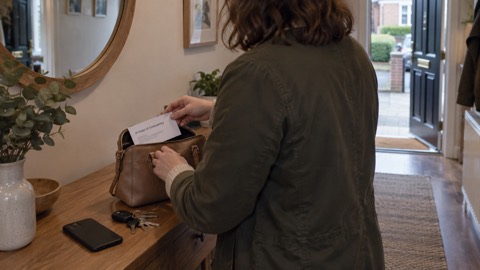 In Case of Emergency Card
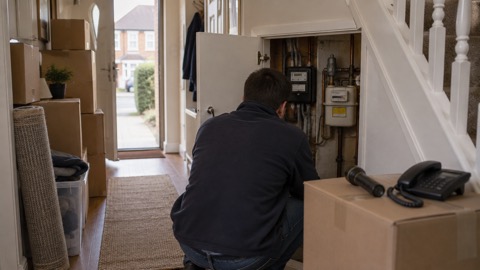 PSR After Moving House
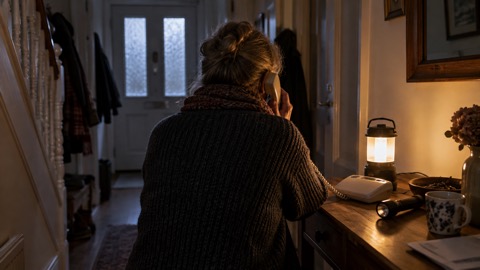 Telecare Alarm in a Power Cut
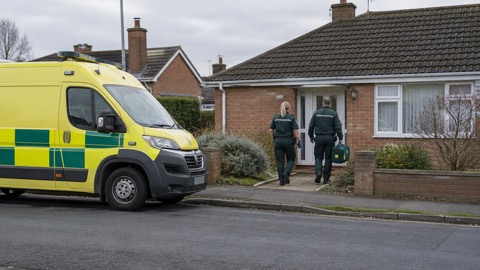 Pressing Alarm but Cannot Speak
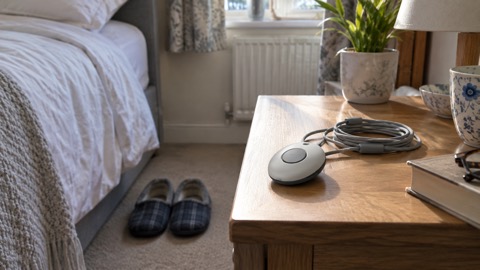 Falls a Fall Detector May Miss
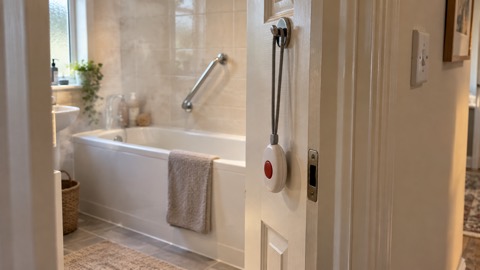 Alarm Pendant in Bath or Shower
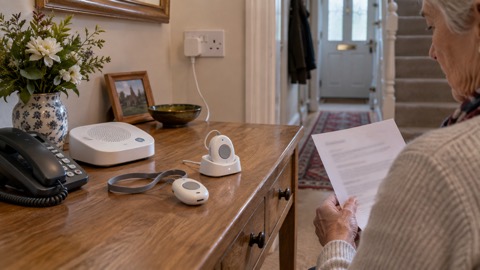 Pendant Battery Life
 Free Locking Cooker Valves
 Herbert Protocol
 Cared-For Person Missing
 Refer for a Fire Safety Check
 Testing Alarms With Mobility
 Electric Blankets and Dementia