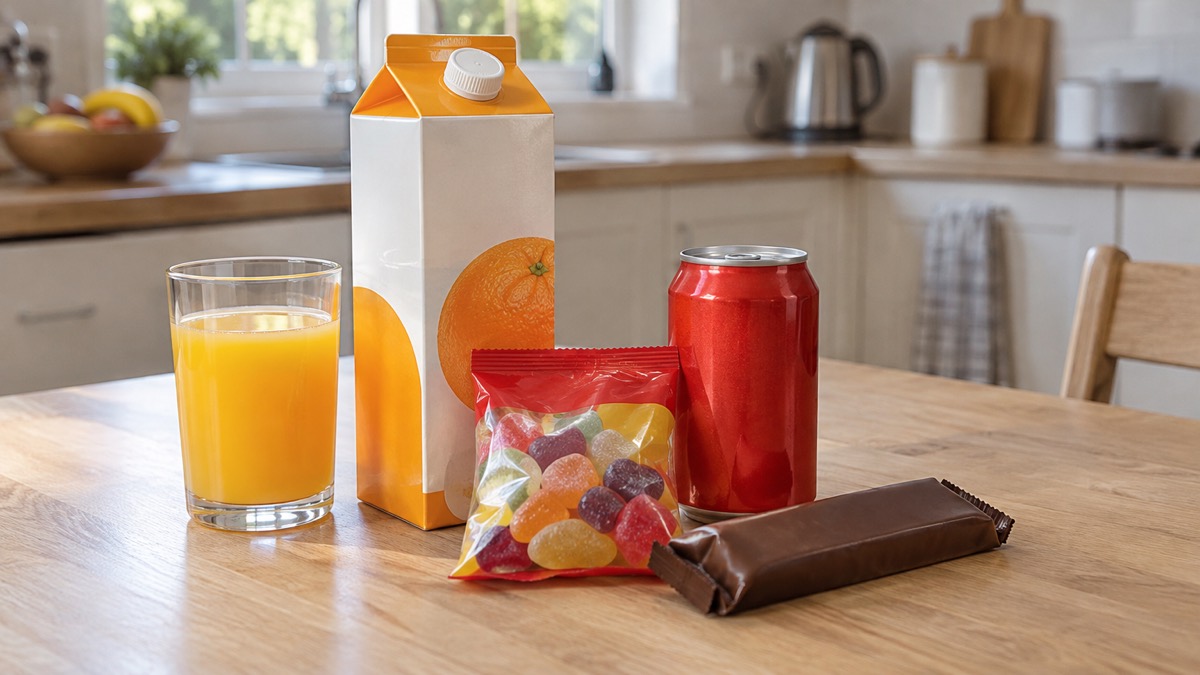
If someone with diabetes becomes shaky, sweaty, pale or confused, they may be having a hypo (low blood sugar). The first thing to do is give them something sugary to eat or a non-diet drink, help them rest while the sugar takes effect, and stay with them. Do not give diet or sugar-free drinks, because they will not raise their blood sugar.
Most hypos respond quickly to sugar. Stay calm, keep the person comfortable and supported, and reassure them that help is on the way if you have called for it1. If they become unconscious, are not breathing, or get worse rather than better, call 9993.
This page sets out what to give, what to avoid, the signs to look for, and when a hypo becomes an emergency that needs an ambulance. It is for ordinary households, whether you live with someone with diabetes or simply want to know what to do if a neighbour or visitor is taken ill.
Give them something sugary to eat or a non-diet drink
The aim is to get sugar into the person quickly. Give them something sugary to eat or a non-diet drink: a normal soft drink, fruit juice, sugar lumps, sweets or chocolate. NHS guidance for someone who is fully awake and needs warming gives the example of "a warm non-alcoholic drink and some sugary food like chocolate"5. The same principle applies to a hypo: quick sugar, swallowed easily.
What counts as something sugary:
- Sugary drinks: ordinary (non-diet) soft drinks and fruit juice.
- Sugary foods: sugar lumps, sweets, chocolate.
- Anything labelled diet, light or sugar-free is not suitable. These do not contain the sugar needed to raise blood glucose.
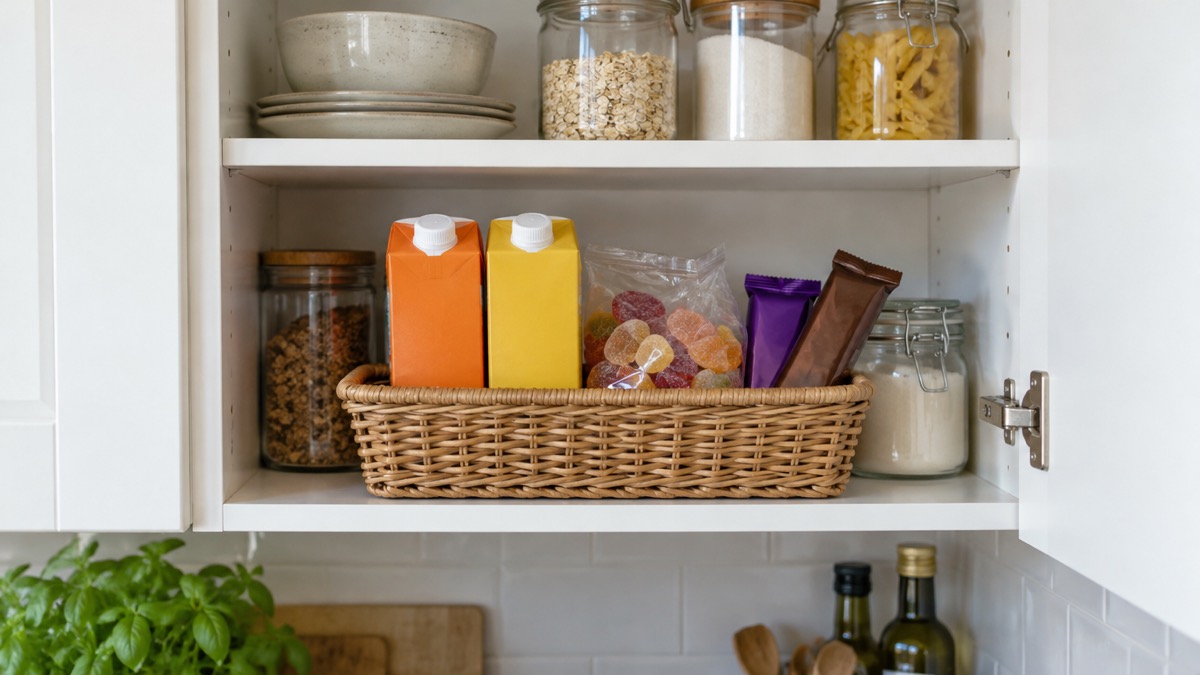
It helps to understand why diet drinks are the wrong choice. The NHS advises people with diabetes to drink plenty of water and sugar-free soft drinks in hot weather, because "becoming dehydrated increases the risk of dangerously high blood sugar levels in both type 1 and type 2 diabetics"6. That is advice for keeping blood sugar stable day to day, not for treating a hypo. In a hypo you want sugar, so reach for the ordinary drink, not the diet one.
Help them rest while the sugar takes effect
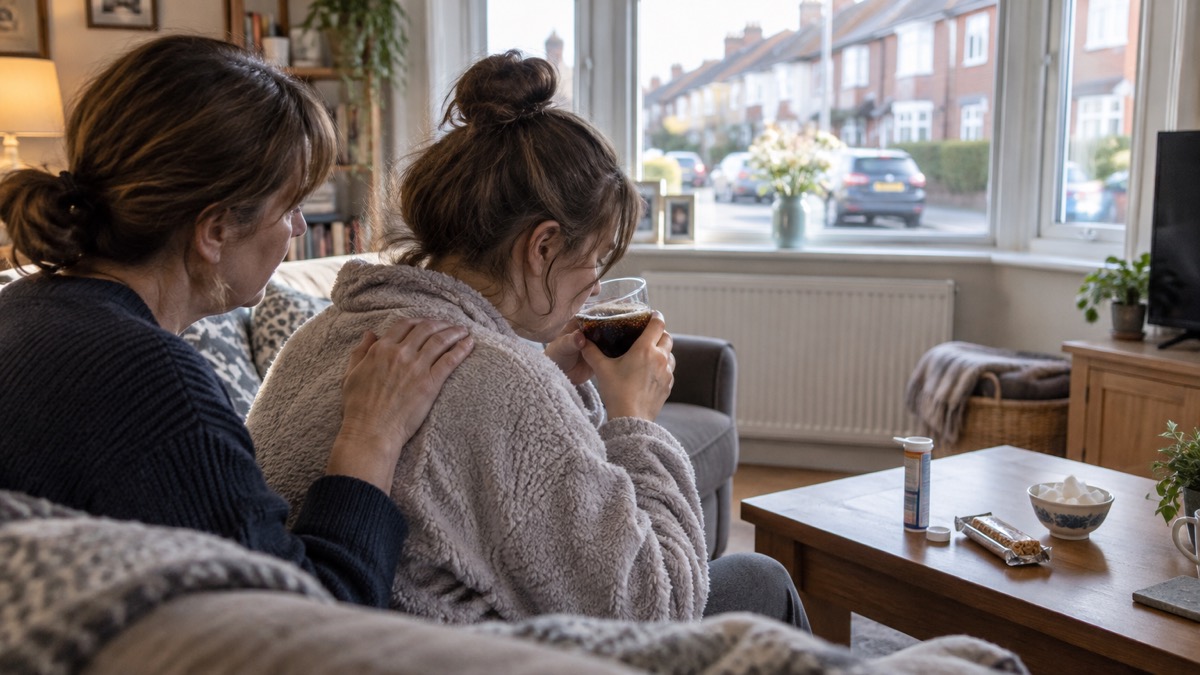
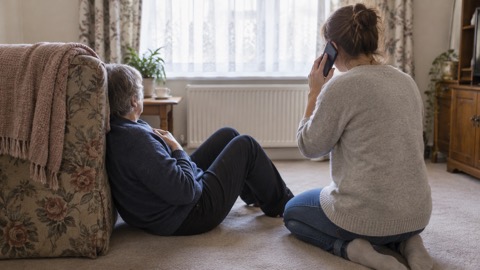
Once they have taken some sugar, help them rest. Keep the casualty comfortable and supported while you wait for help to arrive; if the casualty is responding, you could help them lie down and reassure them that help is on the way1. Ambulance services put it simply: stay calm2.
Rest matters because the sugar needs a few minutes to work, and moving about or panicking can make the person feel worse. Sit them down somewhere safe, loosen anything tight, and keep talking to them calmly. If you are outside, stay with the patient until help arrives7.
A diabetic emergency is one of the situations a community first responder may attend9, so if you have called 999, someone trained may arrive before the ambulance. While you wait:
- Keep them sitting or lying down and comfortable.
- Stay calm and reassure them.
- Watch for any change: if they become drowsy, confused or unresponsive, call 999 if you have not already.
- Do not leave them alone.
Signs that someone may be having a hypo
A hypo can come on quickly. Watch for someone who becomes shaky, sweaty, pale, confused, irritable or drowsy, especially if you know they have diabetes. The signs can be easy to miss or put down to tiredness, so if someone with diabetes seems unwell and you are unsure, treat it as a possible hypo and give sugar.
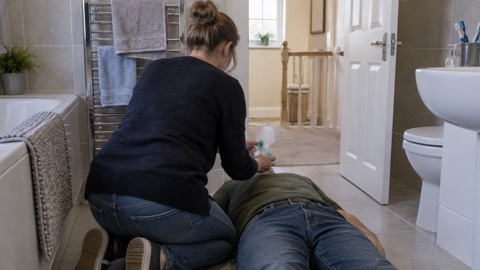
Some signs mean the situation is more serious and you should call 999. Ambulance services advise calling 999 when someone is seriously ill or has life-threatening injuries, for example a traumatic head injury, severe blood loss, chest pains or loss of consciousness3. Difficulty breathing is another reason to call10. If someone is unconscious, having difficulty breathing, or showing signs of a serious illness, that is an emergency11.
| What you see | What it may mean | What to do |
|---|---|---|
| Shaky, sweaty, pale, confused | Possible hypo | Give something sugary, help them rest, stay with them5 |
| Drowsy or unresponsive | Serious | Call 9993 |
| Not breathing | Cardiac arrest | Phone 999 and start CPR immediately4 |
| Difficulty breathing | Serious illness | Call 99910 |
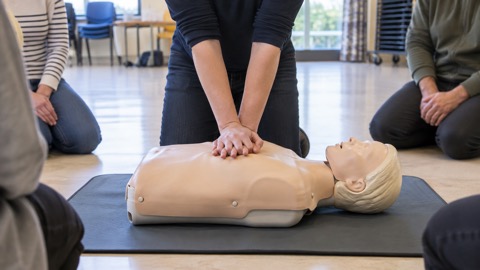
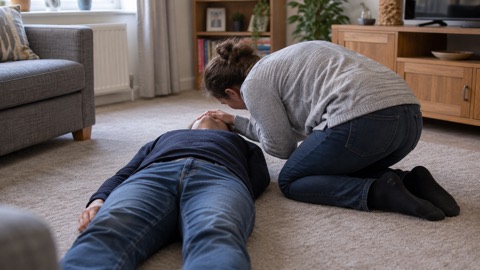
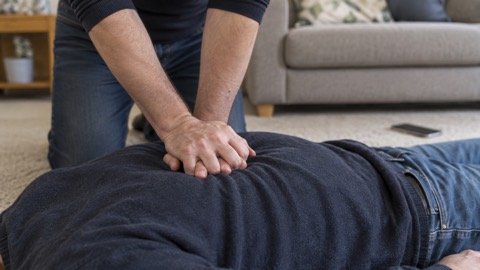
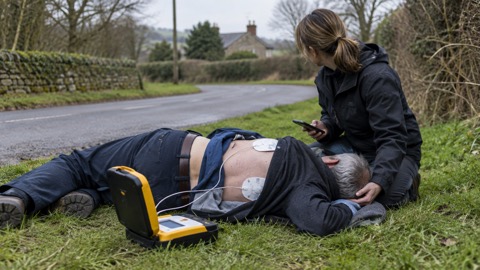
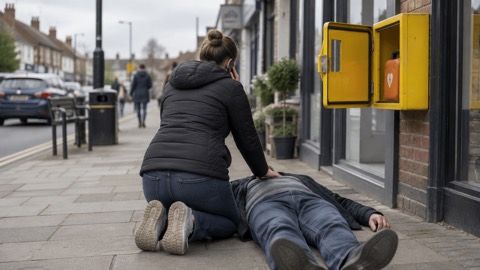
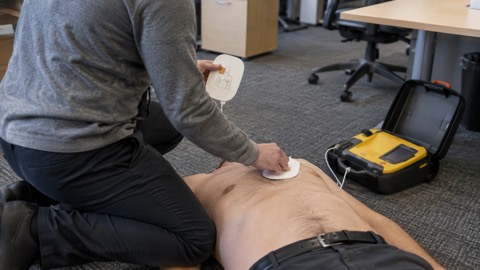
If the person is not breathing, phone 999 and start CPR immediately, and ask someone nearby to get a defibrillator4. Our guide to the primary survey walks through danger, response, airway and breathing step by step, and how to do CPR covers the compressions.
When to call 999
Call 999 when someone is seriously ill or has life-threatening injuries3. For a hypo, that means calling if the person becomes unconscious, stops breathing, has difficulty breathing, or does not improve after sugar. Do not wait to see if they come round on their own.
The emergency number is 999 across the UK12. When you call, the call handler will ask what has happened and talk you through what to do. Stay on the line and follow their instructions. If the person is not breathing, phone 999 and start CPR immediately, and ask someone nearby to get a defibrillator4.
If you are unsure whether it is an emergency, it is safer to call. Ambulance services would rather hear from you than have you wait. For guidance on what happens after you call, see how ambulance services prioritise 999 calls.
Sugary supplies to keep at home
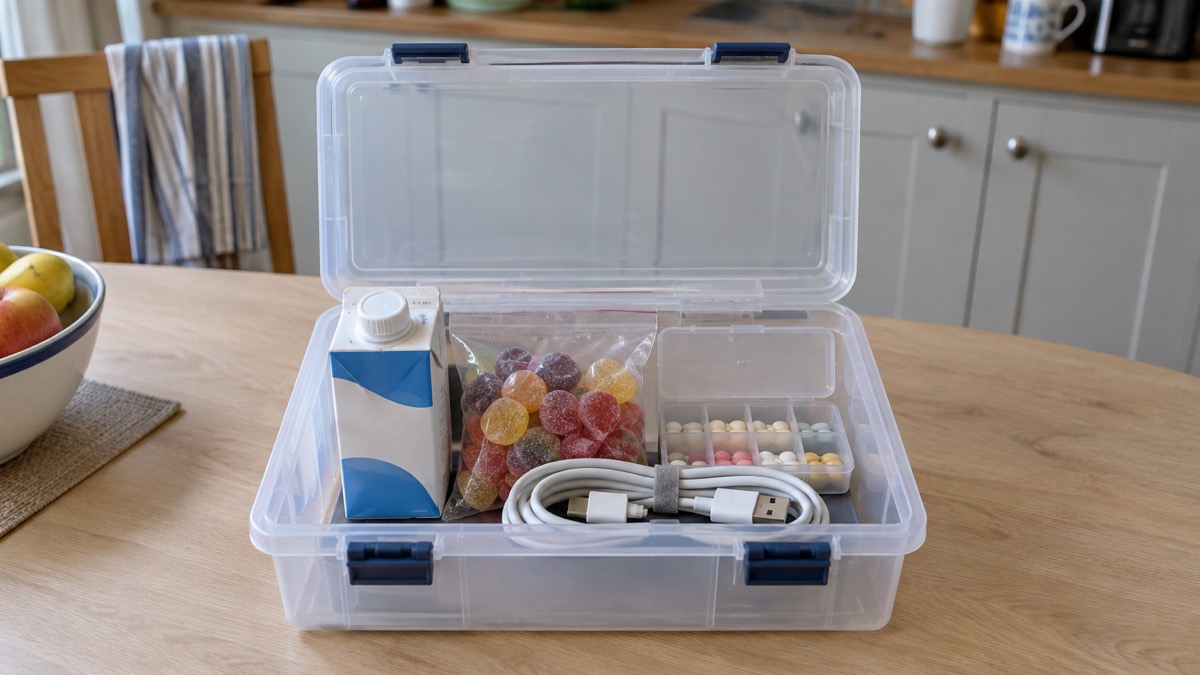
A household with someone who has diabetes should keep a small store of quick sugar ready, alongside their medication. Emergency kit checklists from councils across the UK advise including medication and spare medication in a household emergency pack14. Keep your sugary supplies with it, so they are easy to find in a power cut, a flood or at night.
What to keep ready:
- Sugary drinks: ordinary soft drinks or fruit juice, not diet versions6.
- Sugary foods: sugar lumps, sweets or chocolate5.
- Medication: keep medication and spare medication with your emergency supplies14.
- A phone charger: so you can call for help if the power is out17.
Store these where everyone in the household knows to look. Check them now and then and replace anything past its date. If you support an older or disabled neighbour, you could pick up extra food, water, toiletries or medications for them when you shop18.
Where to get help and what to do next
If someone is having a hypo and you are unsure what to do, call 999 and follow the call handler's advice3. If the person recovers, stay with them until they are back to normal, and encourage them to tell their diabetes team or GP about the episode.
For more general first aid, our first aid at home guide covers the situations a household is most likely to face. If you are building up supplies, the emergency kit guide explains what to keep ready, and the health emergencies guide covers medicine supplies and looking after someone who is medically dependent. Households with an older or disabled person may find extra help in an emergency useful.
Sources (18)
- Stroke first aid, NHS Inform, 2026-07-24
- What to do when the ambulance is coming, South Western Ambulance Service NHS Foundation Trust
- 999, North East Ambulance Service NHS Foundation Trust
- How to do a primary survey, NHS Inform
- Hypothermia, NHS 111 Wales, 2025-05-14
- Advice for vulnerable people, NHS Norfolk and Suffolk ICB, 2026-05-29
- What to do in a heart emergency, NHS Inform, 2026-07-15
- Epilepsy, NHS Inform
- What types of emergencies does a Community First Responder attend?, Scottish Ambulance Service
- When to call 999, Northern Ireland Ambulance Service
- Summer safety advice, North East Ambulance Service NHS Foundation Trust
- When should you call 999?, Scottish Ambulance Service
- What to do in an emergency, Oxfordshire County Council
- Create a household emergency lifesaving plan, Dumfries and Galloway Council
- Planning for an emergency kit, Wiltshire Council
- Preparing for a flood, nidirect, 2025-09-11
- Emergency kit, Ready Scotland
- Cold, snow and ice, Ready Scotland, 2026-03-25
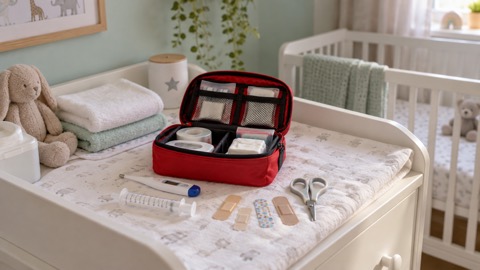 Baby and Child Kit Checklist
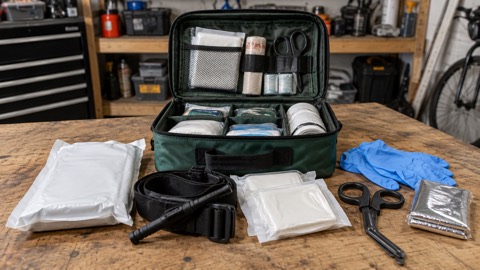 Bleeding Control Kit Checklist
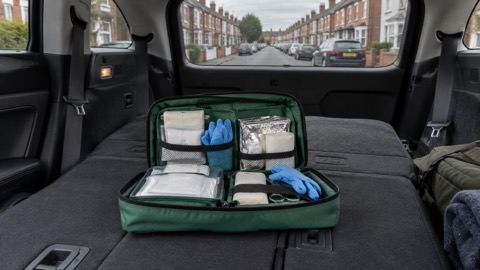 Car Kit Checklist
 CPR on a Baby
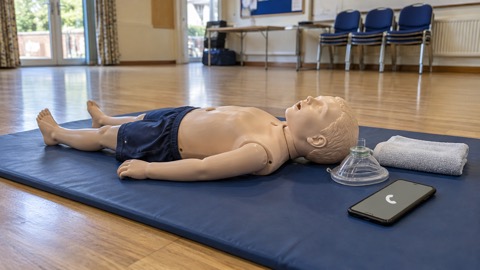 CPR on a Child
 Chest Compression Rate and Depth
 Rescue Breaths or Hands-Only CPR
 Checking Breathing
 Agonal Breathing and CPR
 Breathing During CPR
 Recovery Position and Spine
 Cardiac Arrest vs Heart Attack
 Heart Attack First Aid
 Defibrillator Pad Placement
 Defibrillator on a Child