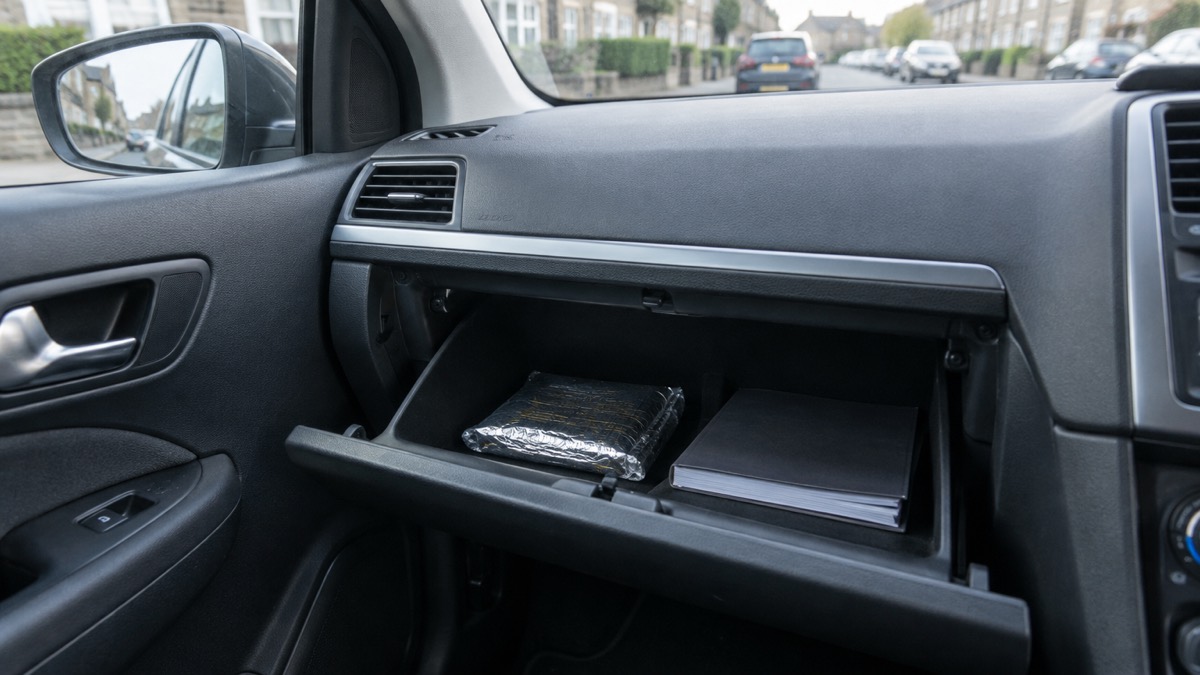
An emergency foil blanket is a thin, silvered sheet that blocks the wind and helps hold your body heat in. The NHS lists an aluminium blanket as retaining body heat in emergencies, essential for first aid and survival1. It weighs almost nothing, folds to the size of a small wallet and costs little, which is why official advice across the UK puts blankets in the home emergency kit, the grab bag and the car2.
For a household, the practical answer is simple: have one for each person, keep them where you would actually reach for them, and treat them as a layer that buys you time rather than as heating. The Lomo Emergency Foil Blanket Silver Bulk 100 Pack is one way to buy them in quantity. It comes as 100 blankets, each 140cm by 210cm unfolded and 7.5cm by 11.5cm folded, weighing 50 grams5.
What an emergency foil blanket does, and what it cannot do
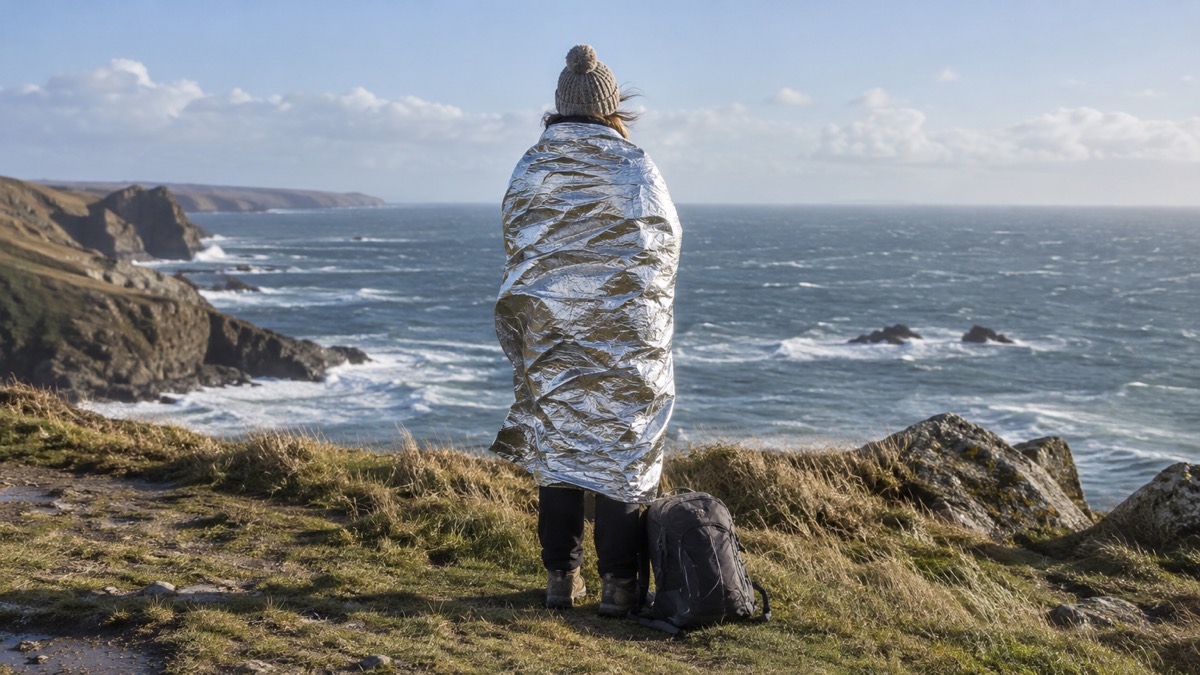
A foil blanket works by reflecting heat back towards you and by stopping wind stripping warmth from your skin. The NHS first aid list describes an aluminium blanket as retaining body heat in emergencies and calls it essential for first aid and survival1. The Scottish Ambulance Service includes an emergency foil blanket in its bleed control kits, describing it as keeping the patient warm and protected from the elements6. That is the core of it: warmth and shelter from wind and rain while you wait.
It cannot warm a room, dry wet clothing or replace a proper sleeping bag. Flintshire Council's extreme weather advice, for people stranded in a vehicle, is to exercise to maintain body heat but avoid over-exertion, huddle with passengers and use your coat as a blanket7. A foil blanket does the same job as that coat, and better if you are dry, but it is a supplement to warm layers, not a substitute.
The maker notes that these foil blankets are sometimes referred to as space blankets5, so if you already own something sold under that name, you have the same item. For a fuller explanation of how the material works and how to wrap one properly, see Foil Blankets: How They Keep You Warm and How to Use One.
Where to keep one: first aid kit, rucksack or car
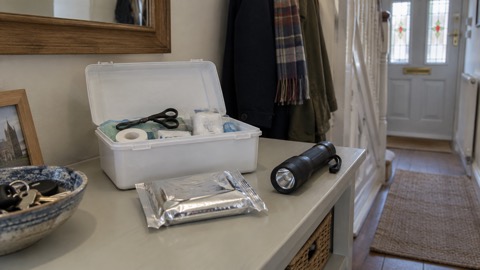
The maker's own advice is that because of their light weight, emergency foil blankets are easy to carry as part of a first aid kit or in a rucksack5. Official household guidance agrees and goes further, placing blankets in every kit a household is likely to need.
| Place | What official advice says | Source |
|---|---|---|
| Home emergency kit | Include a foil blanket in the emergency kit | 2 |
| Grab bag | Include a foil blanket in the emergency kit checklist | 3 |
| Car | Keep a blanket and warm clothes in your car | 4 |
| Household plan | Keep blankets, sleeping bags and warm clothing | 4 |
| First aid kit | An aluminium blanket retains body heat in emergencies | 1 |
A few practical points follow from that. Denbighshire Council advises using plastic boxes or backpacks to keep supplies together and keeping the kit in a designated place that all household members know8. Keep it in a safe place at home where you can reach it easily, and keep the kit in a waterproof bag9. A foil blanket is thin and punctures easily, so a waterproof bag or pouch protects it as well as keeping it dry.
If you are building a kit from scratch, the household emergency pack at home and the grab bag pages set out what else goes alongside it. For the car, see what to keep in your car.
Pack sizes: single blanket, 10, 100 and 200
The Lomo product covered here is a bulk pack of 100 blankets5. That is far more than most households need in one go, and it is aimed at a different buyer.
- Single blanket: enough for one person or one kit. Many ready-made first aid kits already include foil blankets; a flood warden's first aid kit list, for example, includes two10.
- Small multipacks: useful for a household that wants one in each bag and each car.
- 100 pack: the Lomo pack, described by the maker as ideal for companies who require large quantities and might use them for emergency planning, fire evacuations in cold weather and race events such as triathlons or marathons5.
- 200 pack: larger again, for organisations rather than homes.
For a household, the sensible approach is to count the places you would want one and buy to that number. Add one for each vehicle and one for the first aid kit, and a family of four is looking at six or more. A bulk pack then becomes a way of supplying a street, a workplace, a school or a community group rather than a single home. The household preparedness checklist helps you work through the places a kit should live.
Fire evacuations in cold weather and race events
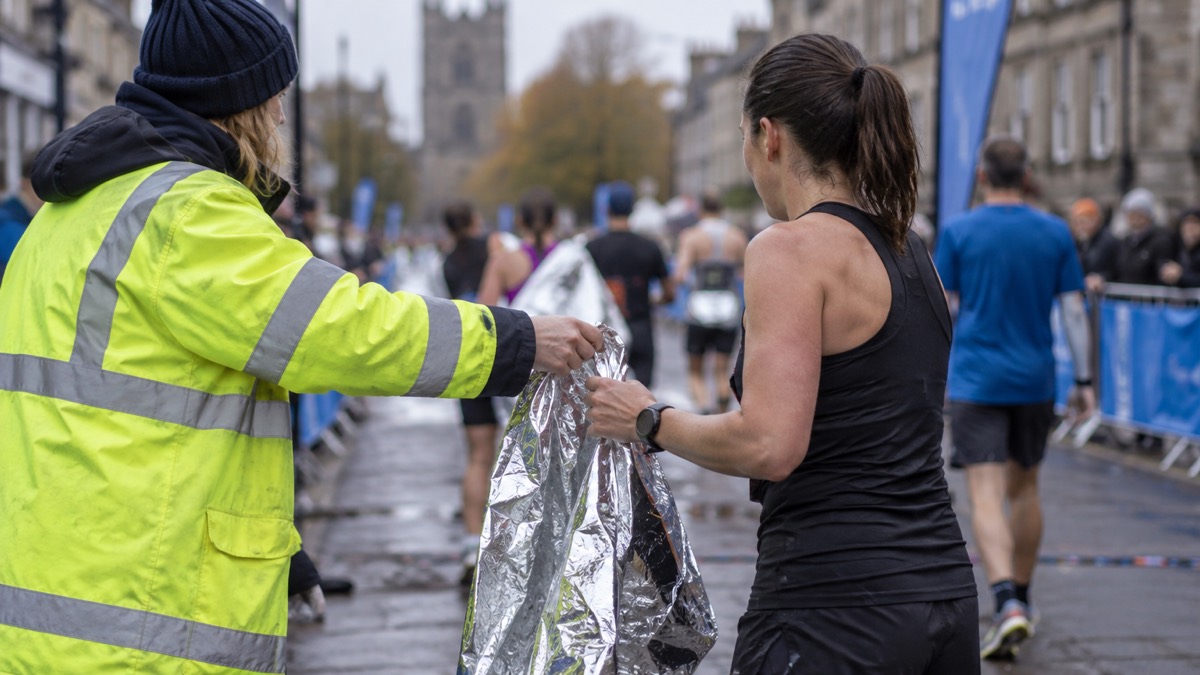
The maker lists three situations the bulk pack suits: emergency planning, fire evacuations in cold weather, and race events such as triathlons or marathons5. Each tells you something about how a foil blanket is used.
In a fire evacuation, people often leave home with nothing and stand outside for hours, sometimes in the cold and rain. A foil blanket in the grab bag, or handed out by whoever is managing the evacuation, gives immediate protection from wind and cold. The same logic applies to any evacuation where you may be waiting outdoors.
At race events, the maker states that carrying an emergency foil blanket is compulsory in some trail racing type events5. Organisers hand them out at the finish because a runner who has stopped moving cools quickly.
For a household, the lesson is that the blanket belongs wherever you might end up waiting in the cold: the bag by the door, the boot of the car, the first aid kit. If you are responsible for others, such as a workplace, a sports club or a community group, a bulk pack is the practical way to have enough to hand out.
Barcodes for each Lomo pack
If you are ordering for a workplace or a group, the barcode helps you check you have the right pack.
| Product | Barcode |
|---|---|
| Lomo Emergency Foil Blanket Silver Bulk 100 Pack | 50606697764375 |
Check the barcode against the pack when it arrives, particularly if you are buying several packs for different sites. Keep a note of it with your stock records so that reordering is straightforward.
Keeping one in an emergency kit, and using it safely
A foil blanket is simple, but a few habits keep it useful.
- Keep it dry and intact. Store it in a waterproof bag or pouch, as part of a kit kept together and reachable9. A torn or crumpled blanket still works but reflects less heat.
- Wrap, do not just drape. Open it fully, wrap it around the body and shoulders over dry clothing, and tuck the edges in. It works by trapping a layer of warm air.
- Put a layer underneath if you are on the ground. Cold ground draws heat away quickly; a mat or folded coat under you makes the blanket far more effective.
- Do not rely on it alone. Combine it with warm clothes, a hat and a hot drink. Keep warm by using blankets and layered clothing, keep doors of unused rooms closed and close curtains to keep the heat in11.
- Check it when you restock. Fold it back neatly, check for tears and replace it if damaged. The checking and restocking page covers how to keep a kit current.
If the heating has failed, Cheshire Fire and Rescue Service advises maintaining a temperature between 18 and 21°C where possible, citing the Energy Saving Trust13. A foil blanket helps you personally when that is not achievable, but it does not warm the room. For more on keeping warm at home, see Heating and Cooking Without Mains Power or Gas.
Foil blanket or survival bag?
A foil blanket and a survival bag do different jobs. A foil blanket wraps around you and suits sitting, waiting or treating a casualty. A survival bag is a large bag you climb into, which offers more protection from wind and rain but is harder to use while moving. The maker describes the foil blanket as light and easy to carry as part of a first aid kit or in a rucksack5. For a comparison of the two, see Survival Bag or Foil Blanket: Which to Carry.
Where to get help and further advice
If you are preparing for a specific hazard, check the guidance for that hazard: blankets belong in the home kit, the grab bag and the car2. The devolved administrations publish their own versions, and the Scotland, Wales and Northern Ireland page sets out how the advice differs.
For households that need extra support, such as older or disabled people or those with medical dependencies, the Extra Help in an Emergency page explains what is available. If you are building a kit for the first time, start with Getting Started and the Emergency Kit section.
Sources (13)
- What should I keep in my first aid kit?, NHS
- Emergency Kit, Ready Scotland
- Emergency Kit Checklist, NPT Prepared
- Household Emergency Plan, Be Ready
- Emergency Foil Blanket Silver Bulk 100 Pack, Lomo, 2026
- Bleed Control Kits Could Help Save Lives, Scottish Ambulance Service, 2023
- Extreme Weather, Flintshire Council
- Emergency Supplies Kit, Denbighshire Council
- Get Prepared - Carmarthenshire County Council, Carmarthenshire County Council
- Be Flood Ready: Guidance for Flood Wardens, Harrow Borough Council
- What Advice Can You Give Me for Driving?, Argyll and Bute Council
- Winter Preparedness, NHS Lanarkshire
- Staying Warm, Cheshire Fire and Rescue Service
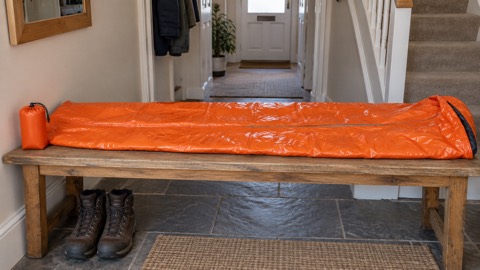 Lifesystems Survival Bag
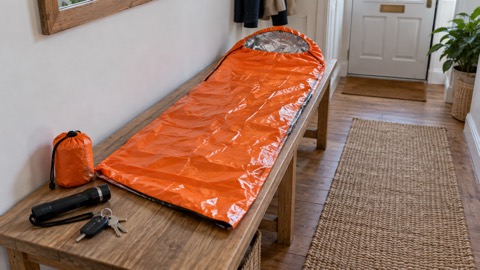 Blizzard 3 Layer Survival Bag
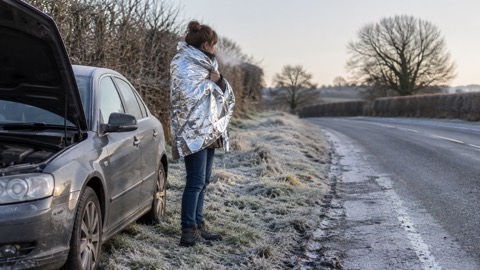 Blizzard EMS Survival Blanket
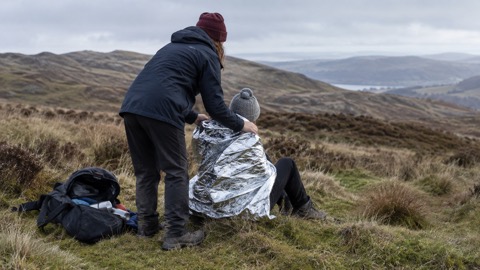 Heatshield Thermal Blanket
 Steroplast Foil Blanket
 NEBO Assist Air Jump Starter
 Ring Ultraboost 500
 Ring Ultraboost 1000
 Ring Ultraboost 1500
 Ring RPPL260 Jump Starter
 Ring RTC6000 Tyre Inflator