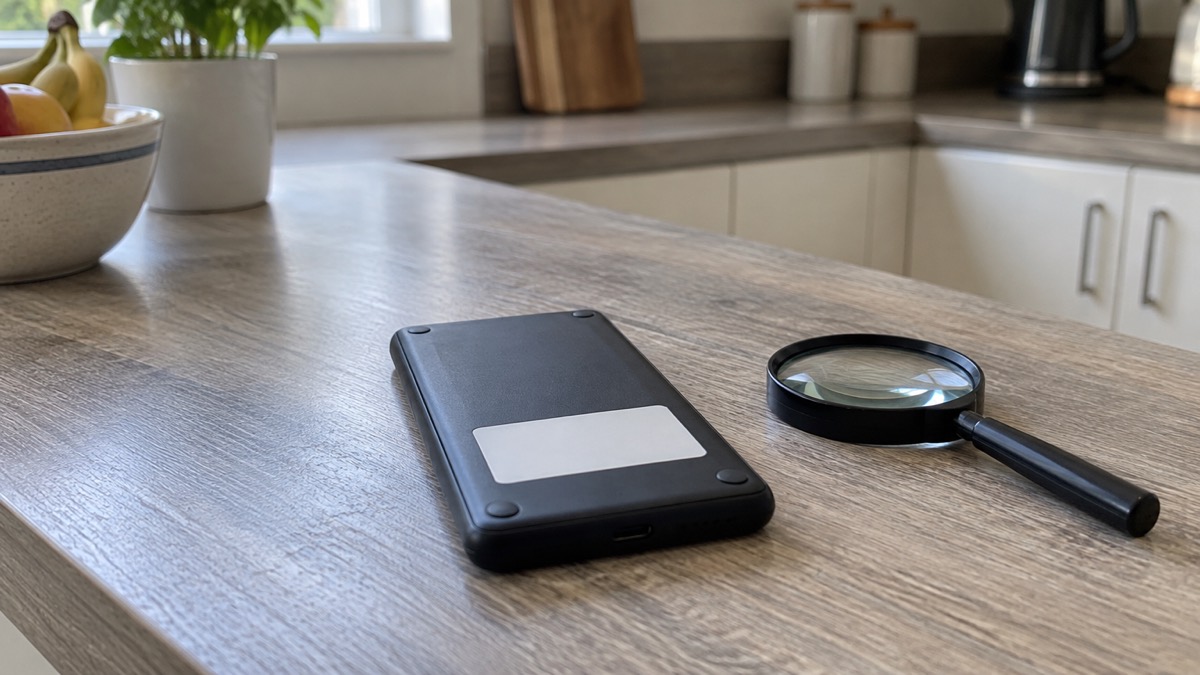
An ESR HaloLock wireless power bank is a magnetic battery pack that clips onto the back of a phone and charges it without a cable. For a household getting ready for a power cut, that is its appeal: a charged pack in a drawer means a working phone for a day or more when the mains goes off. But before you buy one, or reach for one you already own, check the recall. Three HaloLock models were withdrawn from the UK market because their batteries can overheat and catch fire1.
The recall covers models 2G520, 2G505B and 2G512B, sold via Amazon in the UK between October 2023 and August 2024. The Office for Product Safety and Standards advises owners to stop using the product immediately and visit the ESR website for more details1. ESR's own recall notice says the same: consumers should immediately stop using the wireless power banks2.
If your unit is not one of those three models, the rest of this page is about what the current HaloLock range does for a household in an emergency, what its specifications mean in practice, and how to charge, store and look after it so it is ready when you need it.
The recall: stop using these HaloLock power banks now
The recall notice was notified by the Office for Product Safety and Standards and states that the product does not meet the requirements of the General Product Safety Regulations 20051. The hazard is specific and serious. The official notice says the product presents a risk of fire as it may overheat during use, and that the lithium-ion powered batteries can overheat during use, causing the power bank to enter into thermal runaway, causing a fire1. ESR's notice describes the same failure in its own words: the lithium-ion battery in the recalled power banks can overheat and ignite, posing fire and burn hazards to consumers, and affected units may pose a risk of overheating, melting, smoking, or catching fire2.
That matters more in a prepping context than it might first appear. A power bank kept ready for an emergency is often left on a shelf, in a bag or beside a bed, charged and waiting. A unit that can enter thermal runaway while in use is not a standby item; it is a fire risk sitting in your home. The fire and rescue services treat lithium-ion batteries as a distinct hazard for exactly this reason, and advise that if a battery or charger becomes unusually hot, swollen or damaged, you should stop using it immediately4.
The recall is defined by model number and barcode, not by the name on the box. The next section explains how to check yours.
Recalled models and how to check yours
The three affected models are 2G520, 2G505B and 2G512B1. ESR's notice pairs each model number with a capacity, which helps you narrow it down before you find the label: the HaloLock Kickstand Wireless Power Bank at 6,000 mAh is model 2G520, the HaloLock Kickstand Wireless Power Bank at 10,000 mAh is model 2G505B, and the HaloLock Wireless Power Bank at 10,000 mAh is model 2G512B2.
| Model number | Product as described by ESR | Capacity |
|---|---|---|
| 2G520 | ESR HaloLock Kickstand Wireless Power Bank | 6,000 mAh2 |
| 2G505B | ESR HaloLock Kickstand Wireless Power Bank | 10,000 mAh2 |
| 2G512B | ESR HaloLock Wireless Power Bank | 10,000 mAh2 |
To check a unit, find the model number and barcode on the product or its packaging and compare them with the recall notice. The official notice lists eleven affected barcodes: 4894240179031, 4894240168479, 4894240168462, 4894240132579, 4894240179024, 4894240132586, 4894240201022, 4894240201015, 4894240201657, 4894240201039 and 48942401325551. If either the model number or the barcode matches, treat the unit as recalled.
Checking is worth doing even if you are confident. The Office for Product Safety and Standards publishes alerts and recalls for electrical appliances, and the fire and rescue services point households to it as the place to check whether an appliance has been recalled5. Electrical Safety First makes the same point from the other direction: register your power bank so you can be contacted easily if there is a safety recall of your product, and if you choose not to register, check recalls through Electrical Safety First or the UK government website6. London Fire Brigade's advice is blunt: the most important thing you can do is to regularly check if your appliances have been recalled8.
What the HaloLock range offers a household
The current HaloLock range is a set of magnetic power banks in different capacities, all built around the same idea: a pack that attaches to the back of a compatible phone and charges it without a cable. ESR lists a MagSlim Wireless Power Bank at 5,000 mAh with 15W wireless charging output and a kickstand, and a MagSlim at 10,000 mAh with the same 15W output and kickstand9. The recalled models included 6,000 mAh and 10,000 mAh units2.
For emergency planning, capacity is the figure that decides how useful a pack is. A 5,000 mAh pack is a top-up for a phone during a short outage; a 10,000 mAh pack is the one you would keep in a household emergency pack for a longer cut. That makes it a stored reserve, like a torch battery, not a substitute for mains power.
Where it fits in a household plan:
- In the home kit: a charged pack and a short cable, so a phone can be topped up during a power cut without hunting for a socket6.
- In a grab bag: a pack is light enough to carry if you have to leave home, and keeps a phone alive for maps, contacts and updates.
- At the router: if you rely on a landline phone, check with your phone or broadband provider whether a backup battery is available for your router, because the digital landline switchover means a cordless phone may not work in a power cut without one10.
If you are building a kit around one, the wider emergency kit guide sets out what else a household should keep ready, and the backup power guide covers the larger options.
HaloLock MagSlim specifications
The MagSlim is the model ESR currently lists in most detail. Its specifications are worth reading as a set, because each one decides something about how you would use it in an emergency.
| Specification | Figure or feature | What it means for a household |
|---|---|---|
| Battery capacity | 10,000 mAh3 | A stored reserve for topping up a phone over a longer outage |
| Wireless output | 15W3 | Fast wireless charging when the phone is clipped on |
| Certification | Qi2 Certified3 | Meets the Qi2 wireless charging standard |
| Charging | Two-Way Rapid Charging3 | Charges a phone and is recharged itself |
| Magnet | Stronger Magnetic Lock3 | Holds the phone in place while charging |
| Software | Compatible with All iOS Updates3 | Designed to keep working as iPhone software changes |
| Warranty | Member-only offer Extended 24-Month Warranty3 | Longer cover than a standard guarantee |
| Support | Lifetime Customer Support3 | A route to help if something goes wrong |
| Guarantee | 30-Day Money-Back Guarantee3 | A returns window if the product is not right |
| Availability | Available in the UK market3 | Sold in Great Britain |
Two of these deserve a plain reading. The 10,000 mAh figure is a capacity, not a promise of a number of phone charges; how far it goes depends on the phone.
The MagSlim is listed as available in the UK market, with GB among its market countries3. Its model number is not among the three recalled models1, but check the label on your own unit rather than the product name, because the recall is defined by model number and barcode.
Compatibility: which phones and cases work
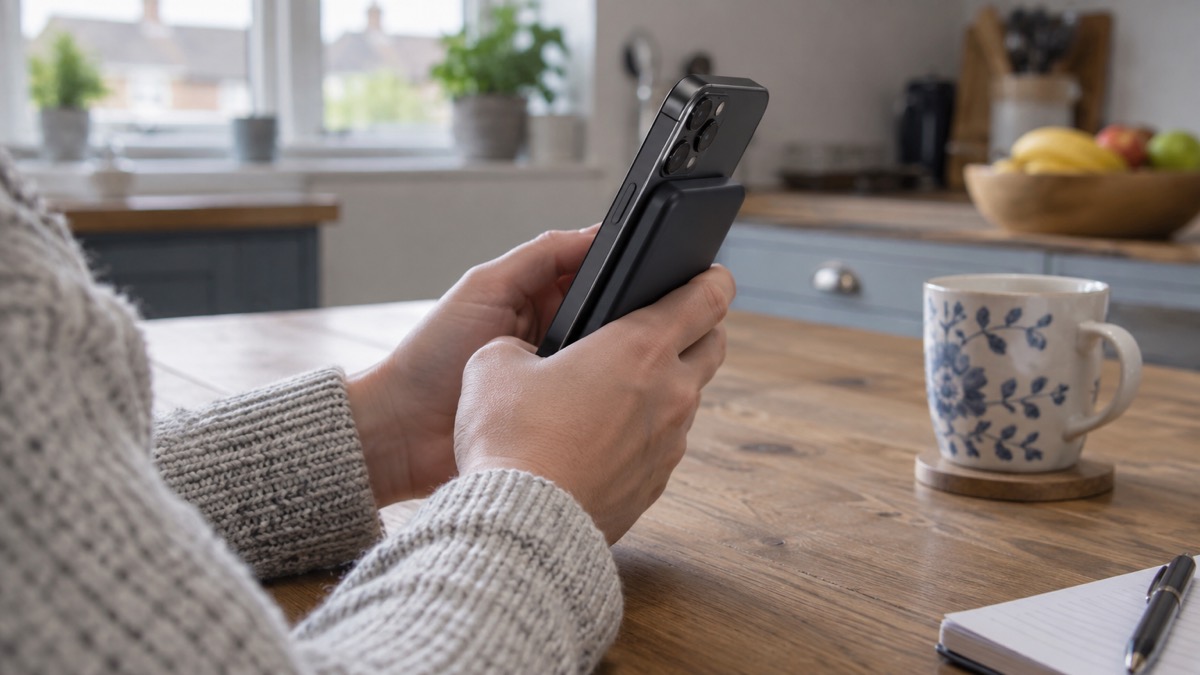
The MagSlim is not a universal power bank. ESR lists it as compatible only with iPhones with MagSafe from the 12 series or later, phones with official MagSafe cases, ESR magnetic cases, ESR Universal Rings, and AirPods Pro, 3 and 23.
Cases are the usual sticking point. ESR states that a magnetic slim power bank will work provided the case is MagSafe- or Qi2-compatible and does not interfere with the magnetic connection11.
If one household member has a MagSafe iPhone and another does not, one pack will serve one phone. That is worth knowing before you build a kit around it, because a power bank that only works with one handset is a single point of failure for the household's communications.
Charging, storing and using it safely
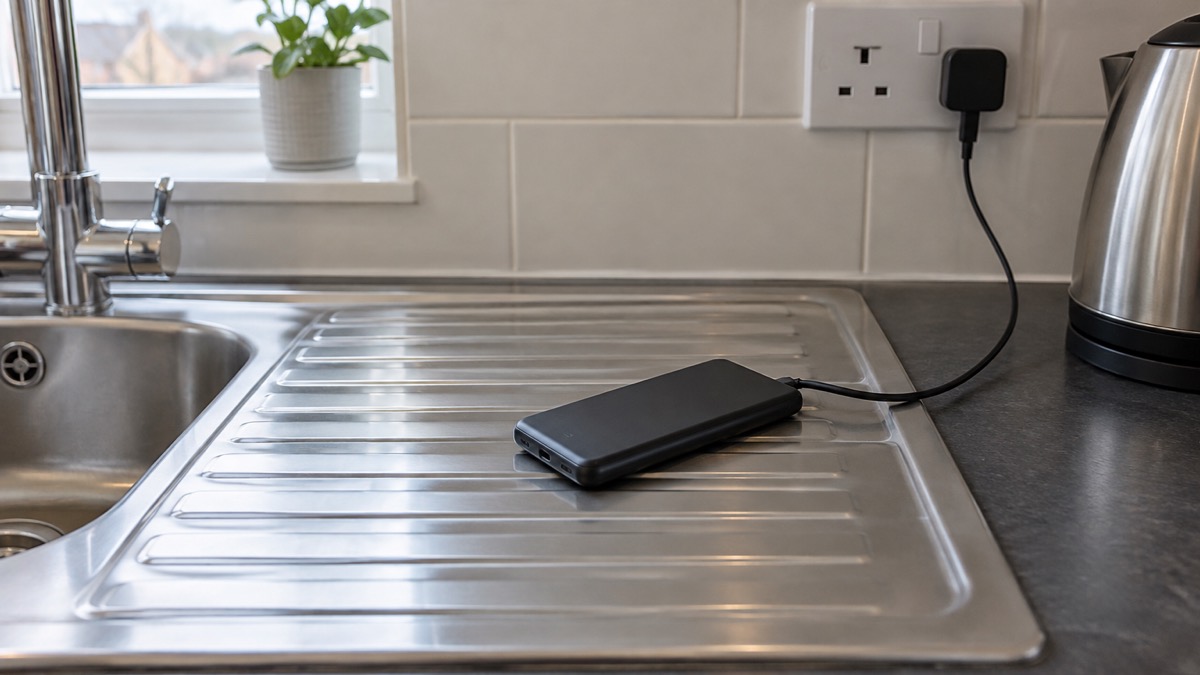
The maker's own instructions and the fire services' advice on lithium-ion batteries point the same way: charge deliberately, watch for heat, and stop at the first sign of trouble.
- Charge it before you need it. A power bank is only useful if it is full when the power goes off. Top it up on a routine, the same way you would check a torch.
- Use the cables supplied. Electrical Safety First advises using only the connecting cables provided with the battery pack and your mobile device6.
- Watch for heat. If a power bank is too hot to handle, stop using it, unplug it from the charger if it is charging, and seek advice from the manufacturer12. If a battery or charger becomes unusually hot, swollen or damaged, stop using it immediately4.
- Do not overload the socket you charge from. Warwickshire Fire and Rescue Service warns that overloading outlets by connecting too many appliances to a single socket can cause overheating and potentially spark a fire13, and North Yorkshire Fire and Rescue Service says that if too many electrical items draw power from one socket it can overheat and catch fire14.
- Supervise children. Electrical Safety First advises supervising children if they are using battery packs6.
- Store it cool and dry, away from the rest of your kit. A pack that fails should not be able to take your other supplies with it.
The same caution applies to any power bank you keep for emergencies, not only to recalled units.
Support, warranty and what to do if you own one
If your unit is one of the three recalled models, the recall comes first. Stop using it, photograph it, and send the photo to support@esrtech.com as ESR's notice asks2. The official notice directs owners to the ESR website for more details1. Keep a record of what you sent and when.
If your unit is not recalled, the support route is the ordinary one. ESR lists Lifetime Customer Support and a 30-Day Money-Back Guarantee with the MagSlim, plus a member-only offer of an Extended 24-Month Warranty3. Keep your order confirmation, because proof of purchase is what any support team asks for first.
Registration is the step that makes all of this easier. Electrical Safety First advises registering your power bank so you can be contacted easily if there is a safety recall of your product, and notes that it is also much easier to return a faulty item or order a repair if it is registered12. The same principle sits behind appliance registration schemes more widely: registering ensures manufacturers can contact you if a safety repair is needed15.
To keep a HaloLock pack ready as part of a household plan:
- Check the model number and barcode against the recall notice1.
- If it is clear, register it so you hear about any future recall12.
- Charge it on a routine and store it cool and dry.
- Keep the cable with it, and keep it in the home emergency pack rather than loose in a drawer.
- Check it again whenever you restock your kit, alongside the other items in your checking and restocking routine.
For the wider picture on keeping devices alive in an outage, see staying informed and in touch and power cuts. ESR's own product pages are the place to confirm current specifications before you buy.
Sources (15)
- Product recall: ESR HaloLock Wireless Power Banks sold via Amazon (2511-0217), GOV.UK, 2025-11-26
- ESR Wireless Power Banks recall, ESR, 2026-11-02
- HaloLock MagSlim Wireless Power Bank (15W, 10,000 mAh, Kickstand) - Black, ESR, 2026-11-02
- Charge safely for your own safety, Northern Ireland Fire and Rescue Service, 2026-09-21
- Maintain appliances and recalls, Greater Manchester Fire and Rescue Service, 2026-10-29
- Power banks, Electrical Safety First, 2026-10-25
- Lithium-ion batteries, Scottish Fire and Rescue Service, 2025-11-27
- Total recalls: making white goods safer, London Fire Brigade, 2026-10-25
- MagSafe Power Banks, ESR, 2026-11-02
- The landline switchover, National Grid, 2026-10-25
- Slim power bank collection, UGREEN, 2026-10-25
- Power banks: product safety guidance, Electrical Safety First, 2026-10-26
- Electrical fire safety, Warwickshire Fire and Rescue Service, 2026-10-29
- Electrical safety, North Yorkshire Fire and Rescue Service, 2026-09-14
- Maintain appliances and recalls, Greater Manchester Fire and Rescue Service, 2026-10-29

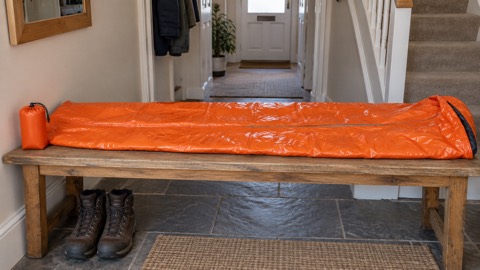 Lifesystems Survival Bag
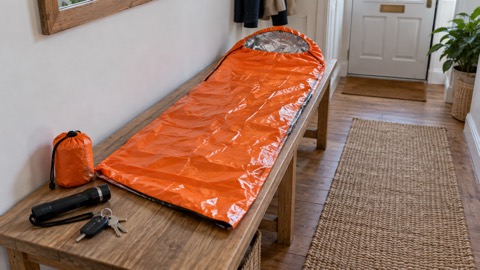 Blizzard 3 Layer Survival Bag
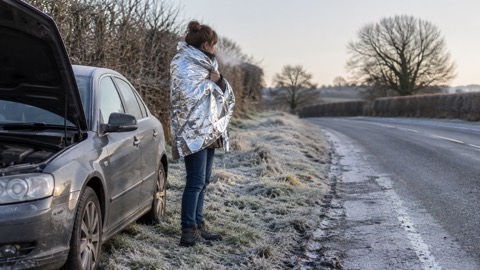 Blizzard EMS Survival Blanket
 Heatshield Thermal Blanket
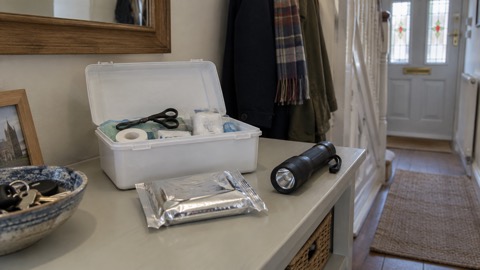 Steroplast Foil Blanket
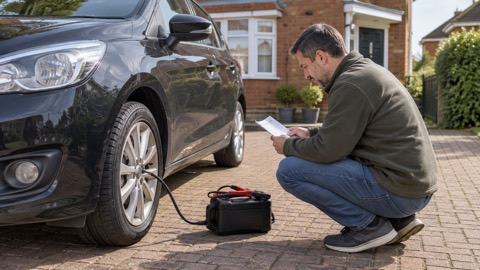 NEBO Assist Air Jump Starter
 Ring Ultraboost 500
 Ring Ultraboost 1000
 Ring Ultraboost 1500
 Ring RPPL260 Jump Starter
 Ring RTC6000 Tyre Inflator