Sizing an off-grid solar system is arithmetic, not guesswork. Start with one number: the watt-hours your household or shed uses in a day. A 50W light running for 10 hours uses 500 watt-hours (50 x 10). Add up every load the same way, allow for losses and for the weak winter sun, and the panel and battery sizes follow from that total. The rule that ties it together comes from solar kit guidance: the average daily power your panel generates should equal or exceed the average daily consumption of your appliances1.
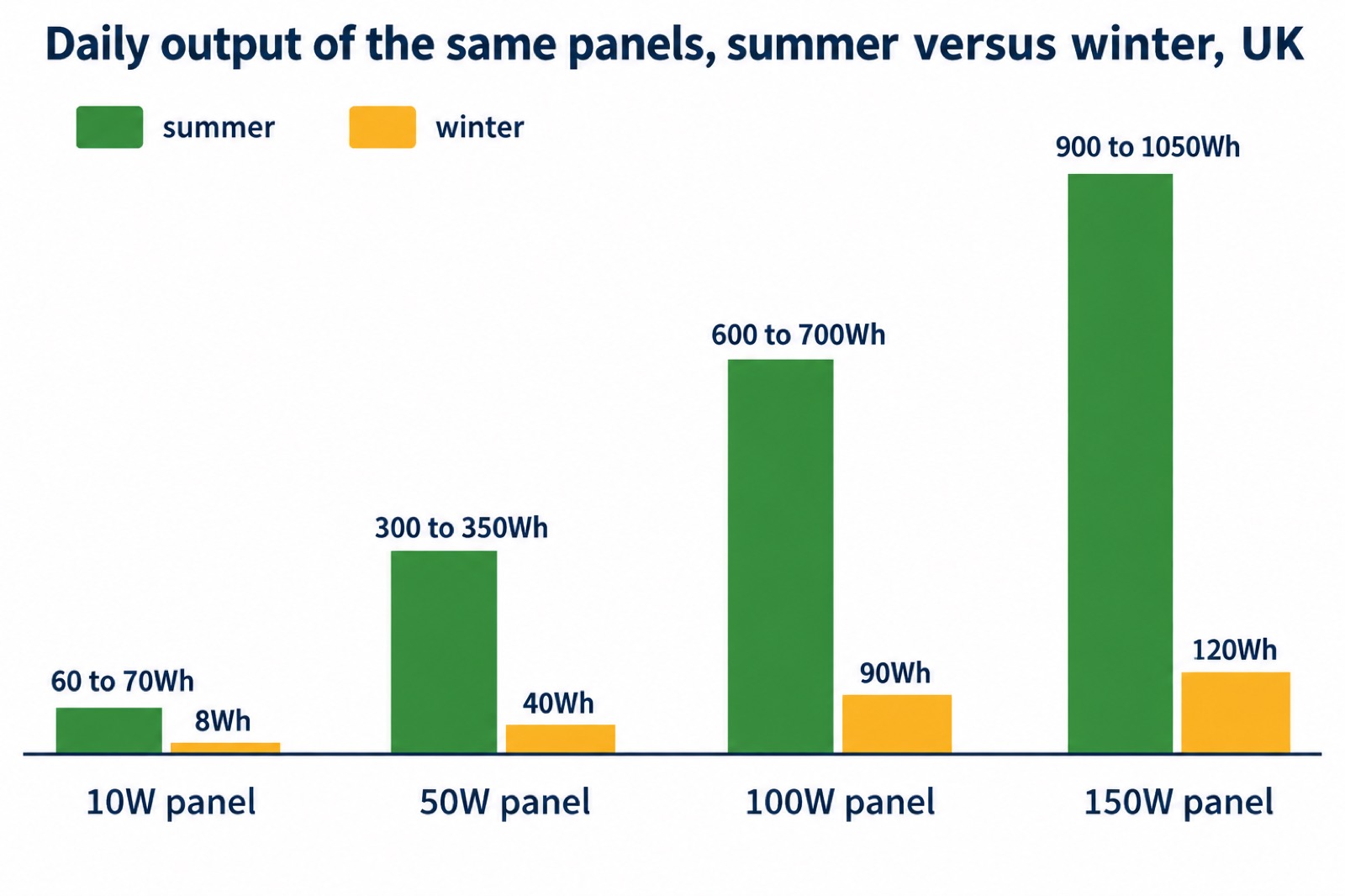
The catch is that a panel's rating is not what it delivers. Independent testing for caravans and motorhomes shows a 100W panel producing 600 to 700Wh a day in a British summer but only 90Wh a day in winter2. So the same panel can be generous in July and nearly useless in December. This page walks through the sizing method step by step: list your loads, total the watt-hours, choose a system voltage, size the inverter, then check the answer against winter.
Step one: work out your daily watt-hours
Everything in off-grid sizing flows from one total, so it is worth doing carefully. For each appliance, multiply its wattage by the hours per day it runs, then add the results together. A worked example from solar kit guidance shows the method: four 10W LED lights for 3 hours a day, a 40W LCD TV for 2 hours, and a 20W water pump for half an hour comes to (4 x 10W x 3) + (40W x 2) + (20W / 2) = 210 watt-hours per day1.
Write the list out before you buy anything. Makers' own off-grid calculators use typical device figures such as a laptop at 65W5, and a fridge at 150W5, but your own appliances will have their ratings on a label or plug. Be honest about hours: a laptop used all working day is a very different load from one used for an hour of an evening.
Two adjustments then apply to your total. First, if any of it runs through an inverter (anything needing a normal 230V three-pin plug), the maker's guidance is to increase the daily consumption figure by approximately 10 to 15% to cover the inverter's own losses1. Second, the panel itself should be sized with headroom: the same guidance recommends choosing a panel whose daily power rate is approximately 20% higher than the daily consumption you require1. A 210Wh load through an inverter therefore sizes towards a panel delivering comfortably more than 210Wh a day in the season you care about.
Watts, watt-hours and surge: three numbers, three jobs
The three electrical numbers on appliance labels each size a different part of the system, and mixing them up is the most common sizing mistake.
Watts measure instantaneous power: how hard an appliance is pulling right now. Watts size your inverter, because the inverter has to supply everything that is on at the same moment. Watt-hours measure energy: watts multiplied by time. Watt-hours size your panels and your battery, because they tell you how much you need to generate and store across a whole day. Surge is the brief spike some appliances draw when starting, above their running watts, and it is why inverters are rated well above the sum of running watts.
A 50W light for 10 hours is 500Wh of energy but only 50W of instantaneous load. A microwave might run at a modest wattage for a few minutes a day, contributing almost nothing to your watt-hour total, yet its start-up draw still has to fit inside the inverter's capacity. For more on how these units apply to backup power generally, see our backup power guide.
| Number | What it measures | What it sizes |
|---|---|---|
| Watts | Power drawn at an instant | Inverter capacity |
| Watt-hours | Energy used over time (watts x hours) | Panel size and battery capacity |
| Surge | Brief start-up spike above running watts | Inverter headroom |
List what you will run each day
The load list is where the sizing becomes real, and it is worth doing for the actual season you need the system. Start with the essentials and be sceptical about anything with a heating element: kettles, heaters and hair dryers draw so much that they usually rule themselves out of small off-grid systems.
Typical figures from makers' off-grid calculators give a starting point: a laptop at 65W and a fridge at 150W5. Lighting, phone charging, a radio and a water pump are the classic small loads, and it is these, rather than the big appliances, that a small solar set-up is best suited to covering. Work out the wattage of each item you actually want to run, then how many hours a day you need it, before you look at panels or batteries at all.
For each item, note:
- Wattage from the appliance label
- Hours per day it genuinely runs
- Whether it needs 230V AC (and so an inverter, adding 10 to 15% to its share)1
- Whether it is seasonal (a shed office used in summer only, or year-round)
The seasonal question matters more than any other. A system sized for summer evening use in a garden room can be half or a third the size of one that must work in January, because winter output is so much lower, as the next sections show.
The three parts every off-grid system needs
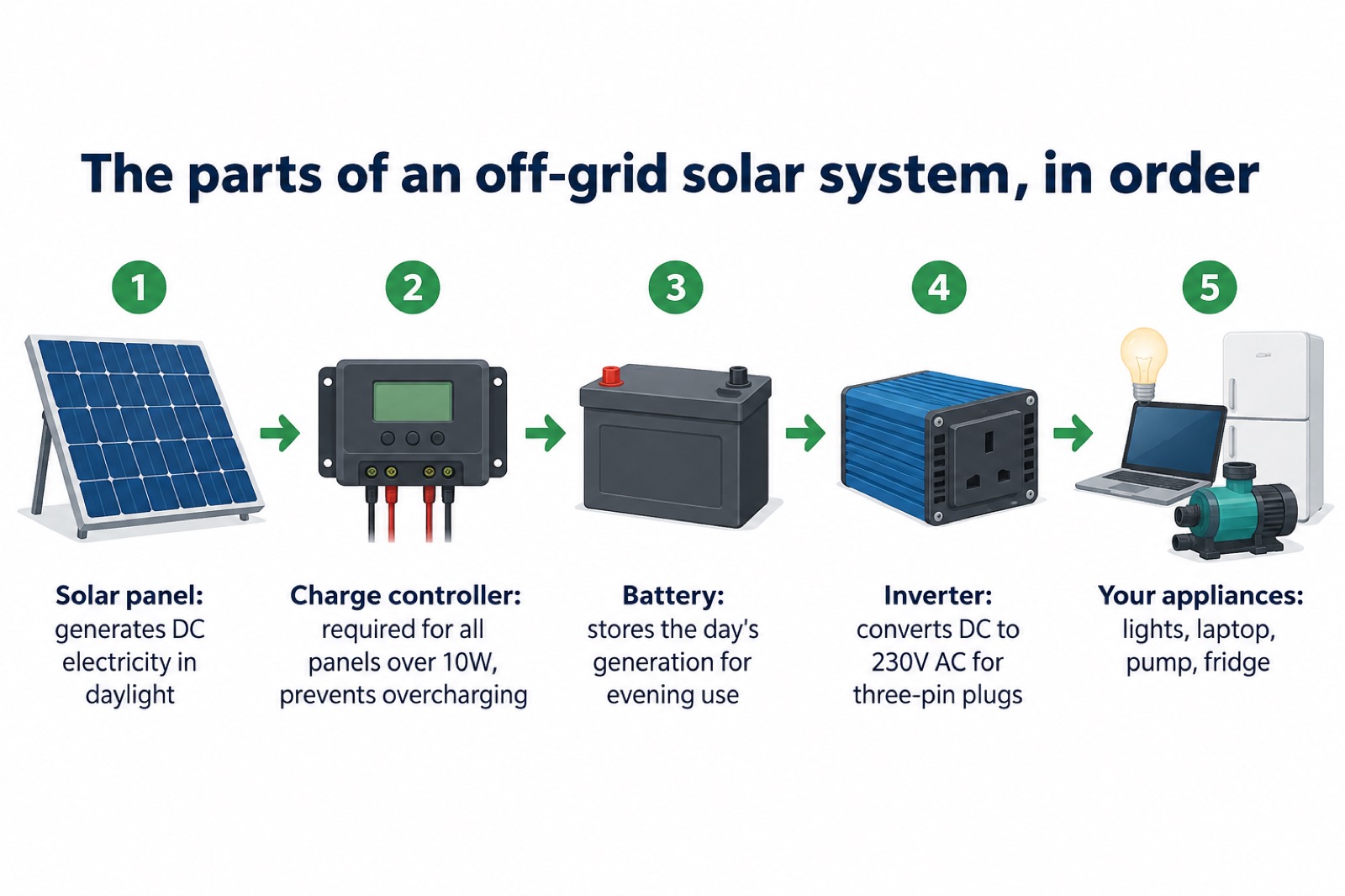
Every off-grid solar system, from a caravan trickle-charger to a shed office, is built from the same three parts: panels to generate, a battery to store, and a charge controller between them. If you want to run ordinary 230V appliances you add a fourth, an inverter, because as the Caravan and Motorhome Club's technical advice explains, a solar panel's output is direct current (DC), so an inverter is needed to power anything that uses a three-pin 230V socket2.
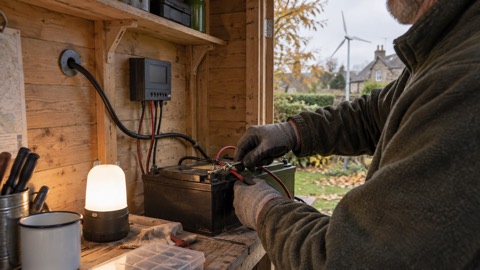
Panels convert sunlight to electricity. Single panels are available in sizes from 5 Watts to 170 Watts6, and larger arrays are built from several in combination. The charge controller sits between panel and battery, and it is not optional above a trivial size: a solar charge controller (or regulator) is required for all solar panels over 10W, because it controls the voltage and current between the panel and the battery, preventing overcharging and reverse current flow4. Controllers are chosen to match the panel wattage: for panels up to 60W a 5A or 10A controller is standard, with a 10A MPPT version for maximum efficiency; up to 160W takes a 20A controller; up to 260W a 20A MPPT7. The battery stores the day's generation for the evening and overnight, and its capacity must be adequate to the panel: maker guidance says to think about whether your battery capacity is adequate to the size of the solar panel and how quickly it will charge the battery to 100%1.
A portable power station bundles the controller, battery and inverter into one box, which is why many households start there. The trade-off is that the sizing decisions are fixed for you: you choose the box, not the parts. If a single box cannot meet your needs, some models allow expansion battery packs to increase total capacity. Our off-grid solar systems guide explains the options in more depth.
Inverter size: add up everything that runs at once
The inverter has to cope with the total wattage of everything switched on at the same time, plus start-up surge, not with your daily total. Add up the running watts of your simultaneous loads, then allow headroom above that for surge.
If your loads are mostly 12V DC (LED lighting, a phone charger, a pump), you may not need an inverter at all, which removes its 10 to 15% loss from your daily total1. Every load you move to DC makes the system smaller and cheaper to size. Where you do need 230V, keep the AC list short: a laptop, a router, perhaps a small TV.
Portable power stations make the inverter rating explicit, and each maker publishes the output figure for every model in its range. Match the rating to your simultaneous-watts figure with room to spare: distributor guidance gives the example of a 1200W blender running while a 200W TV is watched, which requires an inverter capable of 1.4kW (1400W) output continuously. If your added-up total is close to a station's rating, choose the next size up rather than hoping the numbers work out on the day.
12V, 24V or 48V: matching the system to the job
System voltage is about how much power moves through the wires without wasting energy or needing copper the thickness of your thumb. The current of 12V solar panels or charging kits is typically proportionate to their wattage1, which means bigger arrays at 12V mean bigger currents, thicker cables and more loss.
Distributor guidance on matching panels to voltage follows a ladder. Under 1kW of PV is best in a 12V system, and 24V systems are generally used in smallholdings and larger domestic boats, with 48V reserved for larger properties, including battery storage systems connected to the grid8. In practice the boundary sits around 1kW: below it, 12V; above it, 24V or more. For a household shed or motorhome, you will almost always be in 12V territory anyway, since 12V systems are generally used in sheds, motorhomes and boats8.
Charge controllers show the same ladder. One maker's regulator range lists maximum panel ratings on a 24V system of 240W or 10A for the smallest model, 480W or 20A for the next, and 1080W or 45A for the largest7. Some panels themselves are built for higher-voltage use: one maker's 400W panel lists an operating voltage of 48V9. If you are using a portable power station rather than building a bank, the voltage matching is done for you, but you must still respect the panel input limits, which the next section covers.
Under 1kW of panels belongs in a 12V system
For the small systems most UK households actually build, a shed light and socket, a motorhome, a boat, a garden office, 12V is the practical choice, and the panel side of the system stays modest. Single panels top out at 170W6, so an array under 1kW is a handful of panels at most.
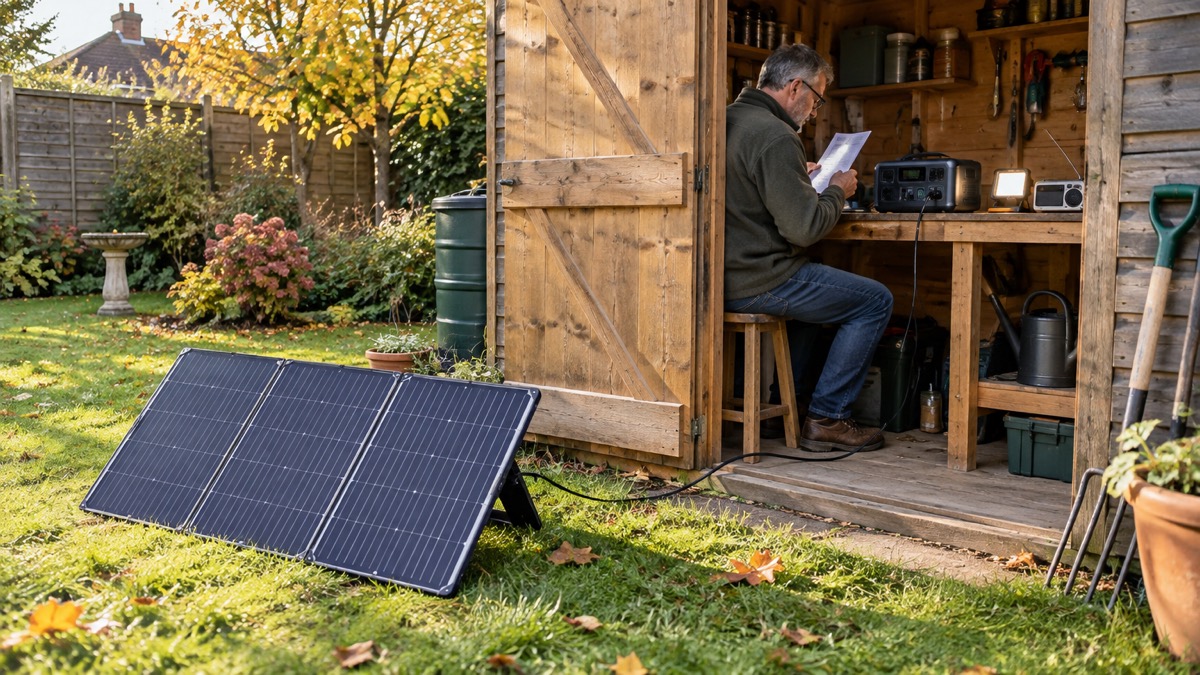
What catches people out is how little the small panels deliver. A 100W panel normally produces 4 to 5A per hour in bright sunshine1, and on a 100Ah battery that means roughly 20 to 25 hours of sunshine to charge it from 0% to 100%1. A smaller 50W panel takes twice as long to charge the same battery as a 100W one1. First-hand reports on one maker's smallest power station are blunt: a small mobile panel under 100W "gave nothing in charge", and the advice is that "you definitely need a solar panel over 100w"10. Another owner of a 40W folding panel reported it never charged faster than 25W under the summer sun, and that a Y lead to run two panels "works well and speeds things up"11.
*Caption: a 100W-class panel is the practical floor for charging a power station; smaller folding panels may barely register.
Panel matching matters too. Power stations specify which panels they accept and how many: one 300W-class unit takes its maker's 45W, 80W, 100W or 200W panels12; a 1,000W-class unit takes a maximum of 400W of solar across two ports, and both inputs must use the same panel model and count, so two 200W panels13; a 3,000W-class unit takes 1, 2 or 4 panels, which must all share the same maximum output power14. Mixing panel types or exceeding the input limit wastes money at best. Our panel types and mounting and wiring pages cover the choosing and fitting in detail.
Winter output can drop by up to 90%
This is the section that decides whether your system works in January. Independent figures for the UK show the same panels delivering a fraction in winter of their summer output2:
| Panel | Summer, per day | Winter, per day |
|---|---|---|
| 10W | 60 to 70Wh | 8Wh |
| 25W | 150 to 175Wh | 20Wh |
| 50W | 300 to 350Wh | 40Wh |
| 90W | 480Wh | 64Wh |
| 100W | 600 to 700Wh | 90Wh |
| 150W | 900 to 1050Wh | 120Wh |
A 100W panel loses roughly 85 to 90% of its output between summer and winter on these figures2. If your shed office must work year-round, size the panels on the winter column, not the summer one, or accept that winter days will need backup charging.
Location shifts the numbers too. Maker data for modules mounted at optimum tilt facing south shows a 10W module yielding 3.51Ah per day in a London summer but 0.41Ah per day in a London winter, and a 60W module 20.9Ah per summer day in London against 19.1Ah per summer day in Edinburgh6. Scotland's summer yields run close to London's; it is the winter figures that bite everywhere.
Shade and heat take further tolls. One owner reports that "if just 10% of the panels is in shade, you lose 90% of the solar power"3. Heat works the other way: one maker states that above 65°C its panels' efficiency decreases by 1% for every additional degree Celsius11, and its folding panels are specified to operate between -10 and 65 degrees Celsius15. Site panels where nothing casts a shadow across them during the day, and check on them after storms and heavy leaf fall.
For year-round off-grid living, the Centre for Alternative Technology notes that wind and solar complement each other well, as there is more wind in winter and more sun in summer16; our small wind turbine page covers that option.
What a solar calculator can and cannot tell you
Online solar calculators, including the ones on makers' and distributors' sites, do the arithmetic above for you: you enter devices, wattages and hours, and they total the watt-hours and suggest a system. They are genuinely useful for the first pass, and the load examples they use (such as lights running set hours, or a 100W TV for 2 hours a day) push you towards the honest list-making this page describes.
What they cannot do is know your winter. A calculator that sizes on average sun will produce a system that fails in December, because the summer-to-winter collapse shown above is a UK fact, not a setting in a form. They also cannot judge your tolerance: a system that covers most days is much smaller than one that covers every day, and only you can decide which you are buying.
Treat a calculator's answer as the starting point, then apply three checks yourself: re-run the numbers against winter output2, add the inverter's 10 to 15% if you run AC loads1, and confirm the panel input limits of whatever you are charging13. One further reality check from official guidance: plug-in solar panels "don't generate enough energy to power your home entirely, but they could save you some money"17. Off-grid sizing is about defined loads, not about running a house.
Sheds, motorhomes, boats and garden offices
The sizing method is identical everywhere; only the scale changes. For caravans and motorhomes, the Caravan and Motorhome Club advises that at least a 40W panel is needed to keep the battery topped up while on site2. Maker guidance fills in the ladder: 5W to 10W for pure trickle charging against battery self-discharge in a caravan, 40W to 50W for small loads, 80W to 100W for larger loads1. Boats follow the same logic, with the panel sized to the daily watt-hours of the cabin loads and the battery bank it must keep charged.
A garden office with a grid connection is a different animal, and the grid connection changes the sizing. One maker's wall-mounted battery system takes up to 800W of solar during standard grid-connected operation, with 2,500W possible via professional installers where local policies permit18. Because the mains tops the battery up in a dull spell, you can size the solar for typical daily use rather than for the worst winter week, which shrinks the array considerably.
Cable sizing matters once you run more than a panel or two. One maker recommends 4 mm² cable for 1 to 4 panels and 6 mm² for 5 or more19, with 5 m lengths suggested for balcony installations and 10 m for roofs20. And if any part of the system plugs into the house, safety rules apply: London Fire Brigade advises that if you are plugging a solar panel into an outdoor socket, "ensure it's a minimum IP65-rated installation fitted by a competent person"21. Our plug-in solar safety page covers this in full.
Telling the network operator, and what counts as off-grid
A genuinely off-grid system, panels, controller, battery, inverter, no connection to the mains, does not export anything and so does not involve the network operator at all. The moment a system can export to the grid, the rules switch on. Electrical Safety First sets them out: systems with the ability to export up to 3.68kWp can be notified to the distribution network operator (DNO) within 28 days of installation under the 'connect and notify' arrangement using G98, while systems with an export capacity greater than 3.68kWp need pre-approval via the 'apply to connect' process (G99) before connection, to ensure there is capacity in the network22. Our G98 explained page walks through the notification itself.
Note that a grid-connected home with panels is not off-grid, even with a battery. The Centre for Sustainable Energy notes that a household with a 3.5kW solar array and no battery might use only 30% of what it generates, exporting the rest24. Off-grid means the system stands alone: your panels, your battery, your backup, and the watt-hour total you calculated at the top of this page.
Backup when the batteries run low
Even a well-sized winter system has a bad fortnight eventually, so plan the backup before you need it. Which? advises that for power-cut backup, most households will be well served by a temporary portable generator small enough to carry around and store away, though it will not power the whole home as normal; battery generators are smaller and more portable than fuel-tank types but only really useful if you have low power demand, and can sometimes be charged with solar panels25.
A solar generator (a power station plus panels) can serve as both the system and the backup. One maker's 2,000Wh-class unit is stated to provide over 1 day of emergency needs, with a switchover to battery power of 20 milliseconds or less for computers, network devices, refrigerators and lighting26. The same maker's guidance is to choose a capacity that exceeds your minimum requirements27. Charging speed matters as much as capacity in winter: one 1,000Wh-class power station recharges fully in 1.8 hours from 600W of solar28; a 1,600Wh unit with a 400W panel takes 6 to 12 hours of sunlight29; smaller setups take proportionally longer, with one bundle listing solar charge times from 4 to 46.5 hours depending on the panel and battery chosen30. For an emergency radio that needs no system at all, one with a solar panel and hand crank offers off-grid charging31.
Sources (31)
- Choosing a 12V solar panel, Photonic Universe
- Solar power technical advice, The Caravan and Motorhome Club
- Jackery Explorer 240 v2 with accessories, Jackery
- Solar panels for caravans and motorhomes, Photonic Universe
- Off-grid solar power, Bluetti
- Solar power explained, Marlec
- Steca solar regulators, Marlec
- OFF GRID GUIDE, Bimble Solar
- PS400 400W solar panel, Anker SOLIX
- Explorer 240 v2 portable power station, Jackery
- Jackery solar panels, Jackery
- Explorer 300 Plus portable power station, Jackery
- Solar Generator 1000 Plus v2, Jackery
- Explorer 3000 v2 portable power station, Jackery
- Jackery Solar Generator 240 v2, refurbished, Jackery
- Battery storage, free information service, Centre for Alternative Technology
- Plug-in solar panels, London Fire Brigade
- Jackery SolarVault 3 Series, Jackery
- Anker SOLIX solar panel extension cable, Anker SOLIX
- Anker SOLIX extension cable, 10 m, 4 mm², Anker SOLIX
- Plug-in solar panels: safety advice for residents and homeowners, London Fire Brigade
- Solar panels safety advice, heating and cooling, Electrical Safety First
- Solar panels safety advice, green energy, Electrical Safety First
- Battery storage advice, Centre for Sustainable Energy
- How to buy the best generator, Which?
- Solar Generator 2000 v2 (100 Mini), Jackery
- Small generators, Jackery
- Anker SOLIX C1000 Gen 2, Anker SOLIX
- Balcony solar generators, EcoFlow
- EcoFlow power bundle, EcoFlow
- Resilience at home this winter, SP Energy Networks
 Off-Grid Solar Kit Checklist
 Hydroponic System Parts List
 Year-Round Sowing Calendar
 Off-Grid Battery Banks
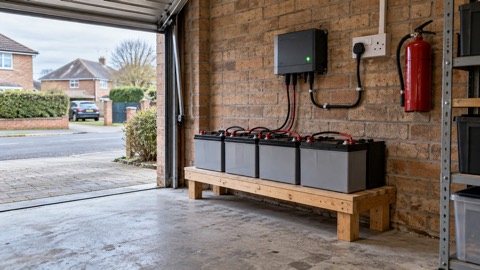 Off-Grid Battery Care
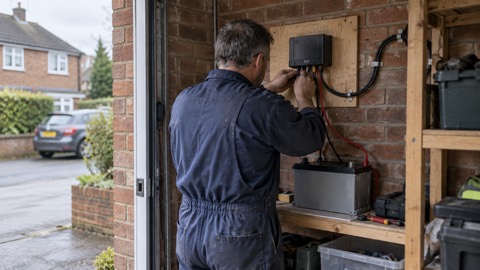 Solar Charge Controllers
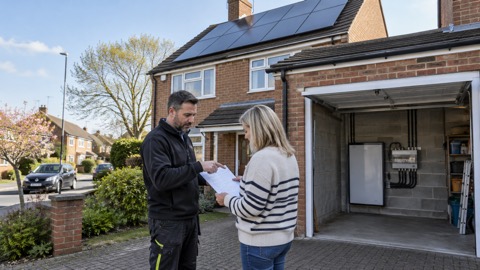 G98 DNO Notification
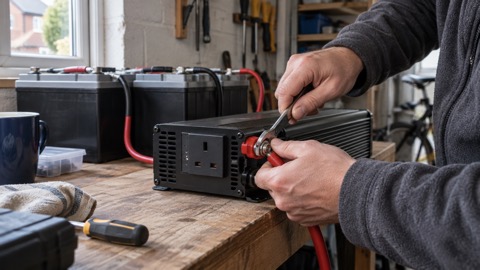 Off-Grid Inverters
 Mounting and Wiring Solar Panels
 Solar Panel Types
 Solar Water Pumping
 Off-Grid System Types
 Small Wind Turbines