

Marlec is a British renewable energy firm based in Corby, Northamptonshire, which designs, develops and manufactures Rutland windchargers in the UK and supplies solar mounting kits for small panels1. For a household thinking about a bit of power that does not depend on the mains, that makes it one of the few UK makers you can ring directly: its windcharger page gives +44 (0) 1536 201588 for purchases and information1.
What Marlec sells is small scale by design. A Rutland windcharger is a pole-mounted turbine for charging a battery, and Marlec says it often recommends combining wind and solar charging to smooth out the daily energy yield, because the two sources peak at different times1. The solar side is served by mounting kits built to take a single BP Solar framed module, in powder coated and plated steel, for surface or pole mounting, with tilt adjustment2.
Be realistic about output. Independent guidance for caravan and motorhome users puts a 25W panel at 150 to 175Wh over 24 hours in summer and just 20Wh over 24 hours in winter3. That is a useful trickle for a battery, not a substitute for a mains supply. If you are planning backup power for a household, read this page alongside our guide to backup power at home, which sets out the wider options.
Marlec: a solar and wind power specialist in Corby
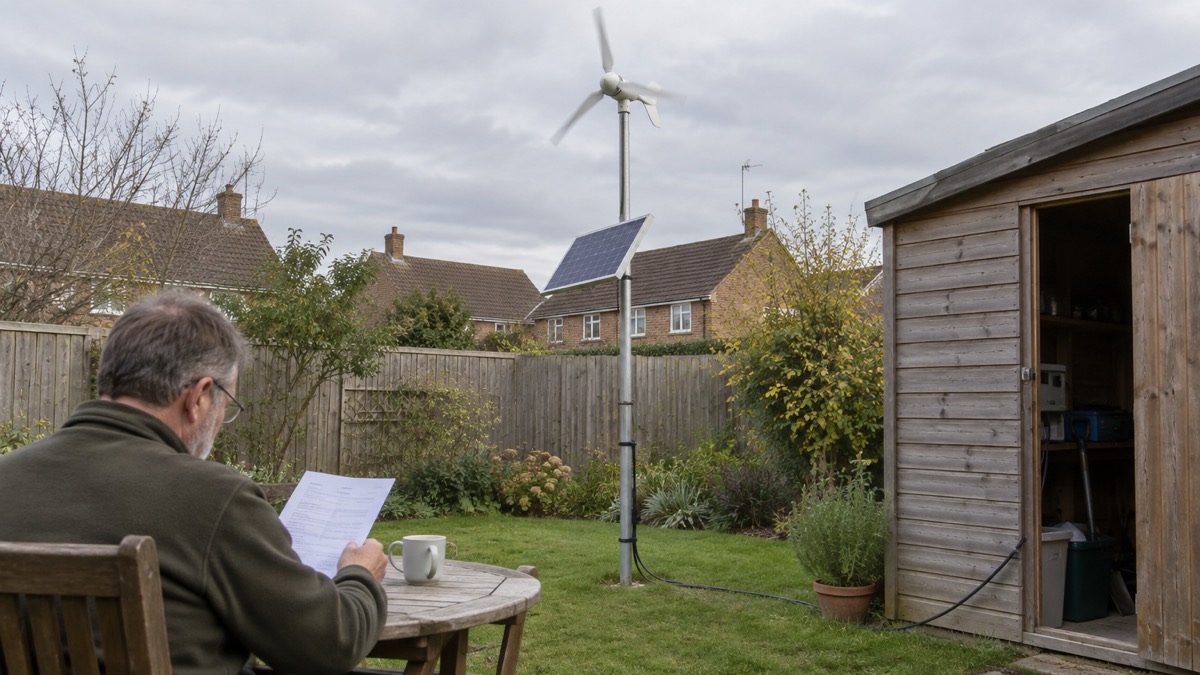
Marlec's own description of itself is modest and specific: a firm with over 35 years of experience in its field, with sales and engineering teams in Corby, UK4. Its Rutland Windchargers are designed, developed and manufactured in the UK by Marlec1. A separate Marlec page goes further, calling the company the UK's longest established renewable energy company, with over 35 years of experience and a first Rutland model dated to 1978. The two pages do not agree on the starting point, so the safe reading is a long-established British firm rather than a precise founding year.
That British manufacturing base is the practical point for a household. Small wind and solar kit needs advice before purchase, spares afterwards and someone to talk to when a mounting bracket or a regulator does not behave. A Corby sales and engineering team is reachable on a UK number during UK hours, and the windcharger page invites buyers to call for more information before ordering1.
It also matters because the kit is designed for British conditions. Marlec's windchargers are sold as UK-made machines for battery charging, and the solar mounting kits are built from powder coated and plated steel giving protection against weathering, with stainless steel fasteners provided for assembly and panel mounting2. Those are small details that decide whether a bracket survives a decade on a shed wall or a pole in an exposed garden.
What Marlec supplies to UK households
Marlec's household range is narrow and purposeful. It falls into two kit types, and each does a different job.
| Kit type | What it does | Key specifications | Suits |
|---|---|---|---|
| Rutland windcharger (FM910-4 Furlmatic) | Charges a battery from wind; pole-mounted turbine | Designed, developed and manufactured in the UK by Marlec; sold direct on +44 (0) 1536 2015881 | Exposed sites with steady wind and a battery to charge |
| Solar mounting kits | Fixes a single BP Solar framed module to a surface or a pole | Powder coated and plated steel for weather protection; stainless steel fasteners supplied; horizontal mounting with tilt angle adjustment; surface or pole mounting2 | Households adding a small panel to a battery system or outbuilding |
The windcharger is the more demanding of the two. A turbine needs a mounting point clear of turbulence, a battery to charge and a regulator between the two. Marlec's own recommendation is to pair wind with solar, which is where the mounting kits come in1.
The solar mounting kits are specifically designed to facilitate installation of single BP Solar framed modules2. If you have a different make of panel, check the frame dimensions and fixing points with Marlec before ordering, because the kit is built around that module family. The panels are mounted horizontally and allow for tilt angle adjustment for optimal solar panel performance, and the kit allows either surface or pole mounting, so the same bracket can go on a garage roof or on the same pole as a windcharger2.
For the wider picture of what a household needs when the mains fails, from torches to battery banks, see our emergency kit guide and the section on self-reliance at home.
Regulators for wind, solar or hybrid systems
Every small windcharger and solar panel needs a regulator between it and the battery. The regulator's job is to stop the battery overcharging and, on better units, to manage two sources at once. Marlec makes a range of regulators designed for use with wind, solar or hybrid systems (combined wind and solar), so a single unit can sit between a turbine, a panel and the battery1.
The choice comes down to three arrangements:
- Wind only. A regulator sized for the windcharger alone. Simplest, but output depends entirely on wind, and calm spells leave the battery idle.
- Solar only. A regulator sized for the panel. Predictable in summer, very weak in winter: a 25W panel gives 20Wh over 24 hours in winter against 150 to 175Wh in summer3.
- Hybrid. One regulator taking both windcharger and panel, which is the arrangement Marlec says it often recommends to smooth out the daily energy yield1.
Whichever you choose, buy the electrical items from a reputable seller and check they display a UKCA or CE safety mark5. Fire and rescue services give the same advice for electrical gifts and for anything with a lithium ion battery: buy from retailers that mark the product with CE or UKCA6. A regulator that fails can overheat a battery, so the safety mark is not a formality.
Combined wind and solar: what a hybrid regulator is for
A hybrid regulator exists because wind and sun rarely deliver at the same time. Marlec says plainly that it often recommends the combination of wind and solar charging to smooth out the daily energy yield1. In practice that means a windy night can put charge into the battery when a panel is doing nothing, and a bright still afternoon can do the same when the turbine is idle.
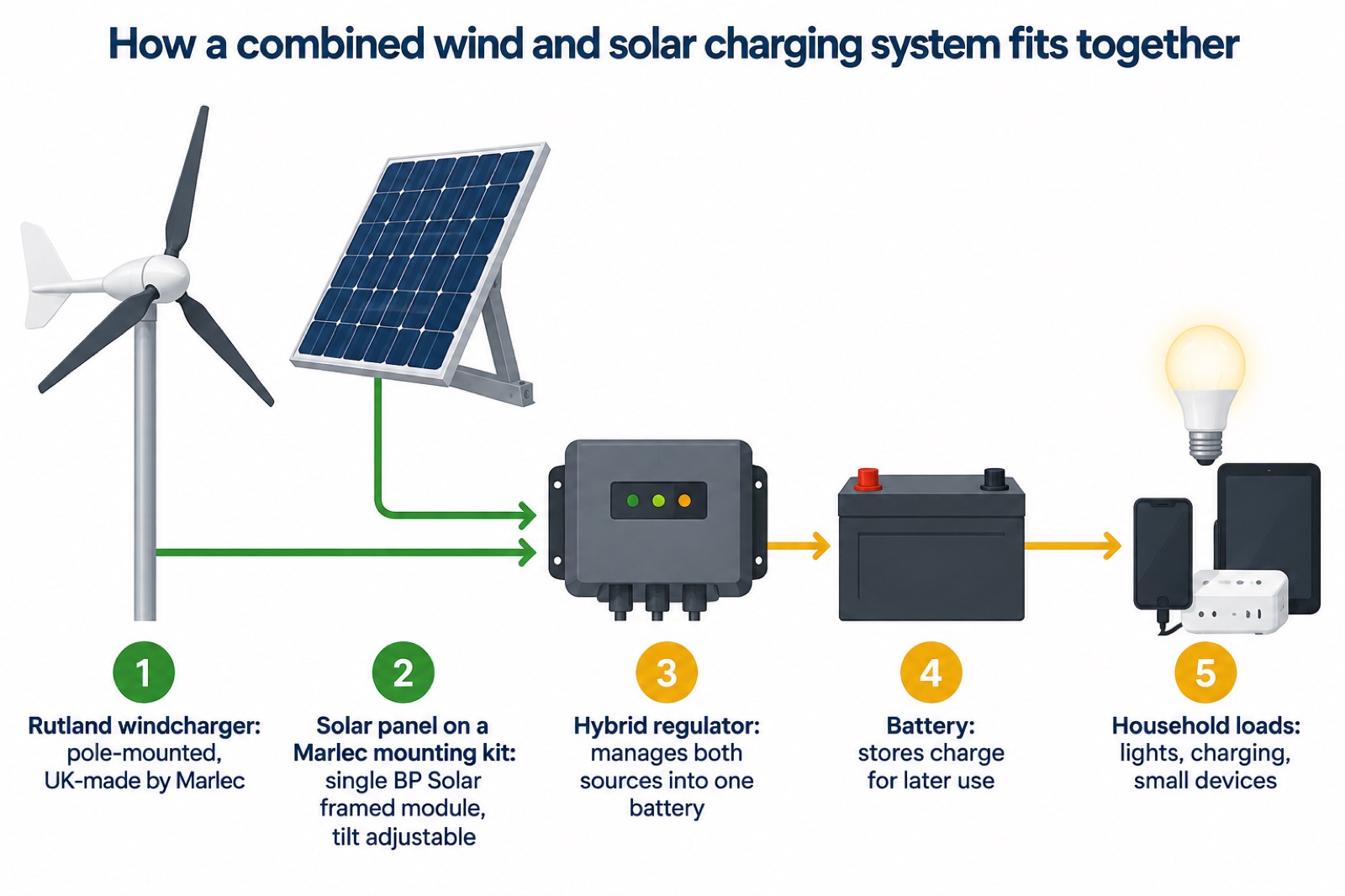
The case for combining is strongest where a household wants a small, steady trickle of charge rather than a large instantaneous output. A 25W panel's summer yield of 150 to 175Wh over 24 hours is a modest daily budget, and its winter yield of 20Wh over 24 hours is smaller still3. Adding wind to that budget is what stops the winter months from being a near-total gap, provided the site is exposed enough for a turbine to spin.
The case against is siting. A windcharger needs clean air and a secure pole; a solar panel needs an unshaded aspect and a tilt that suits the season. If your only sensible panel position is shaded or your only pole position is sheltered, a hybrid system will underperform and the money is better spent on a larger battery or a different approach. Our guide to backup power at home sets out the alternatives, and the storms and snow guide explains why exposed kit needs checking after gales.
Solar specialists since 1985
Marlec's solar side is the mounting hardware rather than the panels themselves. Its kits are specifically designed to facilitate installation of single BP Solar framed modules, manufactured from powder coated and plated steel giving protection against weathering, with stainless steel fasteners provided for assembly and panel mounting2. The panels are mounted horizontally and allow for tilt angle adjustment for optimal solar panel performance, and the kit allows either surface or pole mounting2.
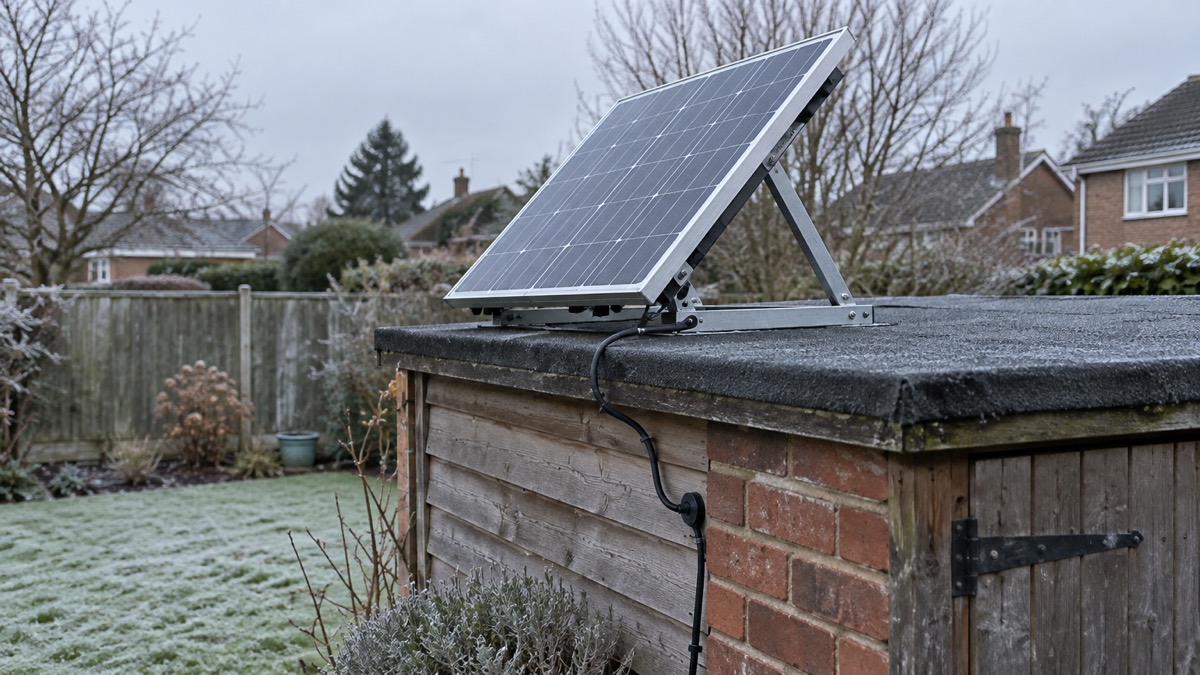
That tilt adjustment matters more than it sounds. A fixed horizontal panel collects far less in a British winter than one angled towards the low sun, and the ability to change the angle seasonally is the difference between a panel that earns its place and one that does not. The steel and stainless fixings are the other half of the story: a bracket that rusts through in a coastal garden is a hazard as well as a waste.
Independent guidance for caravan and motorhome users gives a clear sense of what a small panel can do, and it is worth reading before you size anything3:
| Panel | Summer output over 24 hours | Winter output over 24 hours |
|---|---|---|
| 25W | 150 to 175Wh | 20Wh |
The same guidance suggests speaking to an expert first, such as your local dealer, before fitting or buying a solar panel for a vehicle3. The same caution applies to a household system: the panel is the cheap part, and the mounting, regulator and battery are where the planning goes.
Marlec's work with BP Solar and Ameresco
Marlec's solar mounting kits are built around BP Solar framed modules, which is the clearest documented link between the firm and a panel maker2. The kits take a single module, which suits a household adding one panel to a battery system rather than covering a roof.
On the wider question of domestic battery storage, the government's review of domestic battery energy storage systems used desk research supplemented by 1:1 interviews and a discussion meeting with sector experts8. That review is the reference point for anyone weighing a home battery alongside a small wind or solar source, because it sets out the safety questions a household should ask before installing storage indoors.
Marlec's own materials do not describe work with Ameresco, and no figure or date for such work appears in the available material, so this page does not give one. What is documented is the BP Solar module compatibility of the mounting kits and the UK manufacture of the Rutland windchargers1.
Steca products through a UK distributor
Regulators and charge controllers for small wind and solar systems are often sold under specialist brands through UK distributors. Wherever you buy, the safety rules are the same, and they are given by fire and rescue services and by the NHS:
- Only buy electrical items from reputable sellers and check they display a UKCA or CE safety mark5.
- Buy electrical gifts from reputable retailers and check for the UKCA or CE safety mark6.
- Buy lithium ion batteries from retailers that mark the product with CE or UKCA7.
- Only buy food, spices and medicines from reputable UK suppliers, and be cautious with imported products that may not meet UK standards9.
Lithium ion batteries are the ones to watch in any home power setup: they range from mobile phones, vaping devices, e-bikes and scooters, vacuum cleaners, tablets, iPads and ear pods11. When you buy anything powered by one, buy from retailers that mark the product with CE or UKCA (UK safety standards)11.
Support: speak to a sales engineer in Corby
Marlec's support route is direct: call +44 (0) 1536 201588 for purchases or more information, and its sales and engineering teams are in Corby1. That is the number to use for questions about which windcharger suits your site, what regulator to pair with it, and whether a solar mounting kit will take the panel you have.
Before you ring, have these ready:
- Your site: how exposed it is, what pole or surface you can use, and any shading.
- Your load: what you want to run and for how long each day.
- Your battery: its type, voltage and capacity.
- Your panel, if you have one: its make and frame dimensions, since Marlec's solar mounting kits are designed to take a single BP Solar framed module2.
If you are also thinking about how a household keeps warm and lit through a winter outage, local council and charity services can help. Community Energy Plus runs a helpline on Freephone 0800 954 1956, or email enquiries@cep.org.uk, for Cornwall residents12. Warm and Well Cornwall gives practical advice on understanding and reducing your energy bills and on combatting condensation and damp13. In Warwickshire, Act on Energy helps vulnerable and older people keep warm and well in winter14.
For the wider picture of how households prepare, from water storage to staying in touch, start with our guide to getting started and the section on power cuts.
Sources (14)
- Rutland FM910-4 Furlmatic Windcharger, Marlec, 2026-08-07
- Solar mounting kits, Marlec, 2016-04-12
- Solar power, Caravan Club, 2026-10-25
- 12V Rutland 504 Windcharger - Marlec, Marlec
- Electrical safety, Manchester Fire, 2026-10-29
- Christmas safety advice, North Yorkshire Fire and Rescue Service, 2025-12-15
- Battery safety flyer, Portsmouth City Council, 2026-01
- Domestic battery energy storage systems, GOV.UK, 2020-10-02
- Lead poisoning, NHS Inform, 2026-09-07
- Product recall: ESR HaloLock Wireless Power Banks, GOV.UK, 2025-11-26
- Lithium-ion batteries, South Wales Fire and Rescue Service, 2026-01-13
- Snow and ice in Cornwall, Cornwall Council, 2025-10-01
- Warm and Well Cornwall, Cornwall Council, 2022-06-09
- Keeping warm in winter, Warwickshire County Council, 2026-10-29