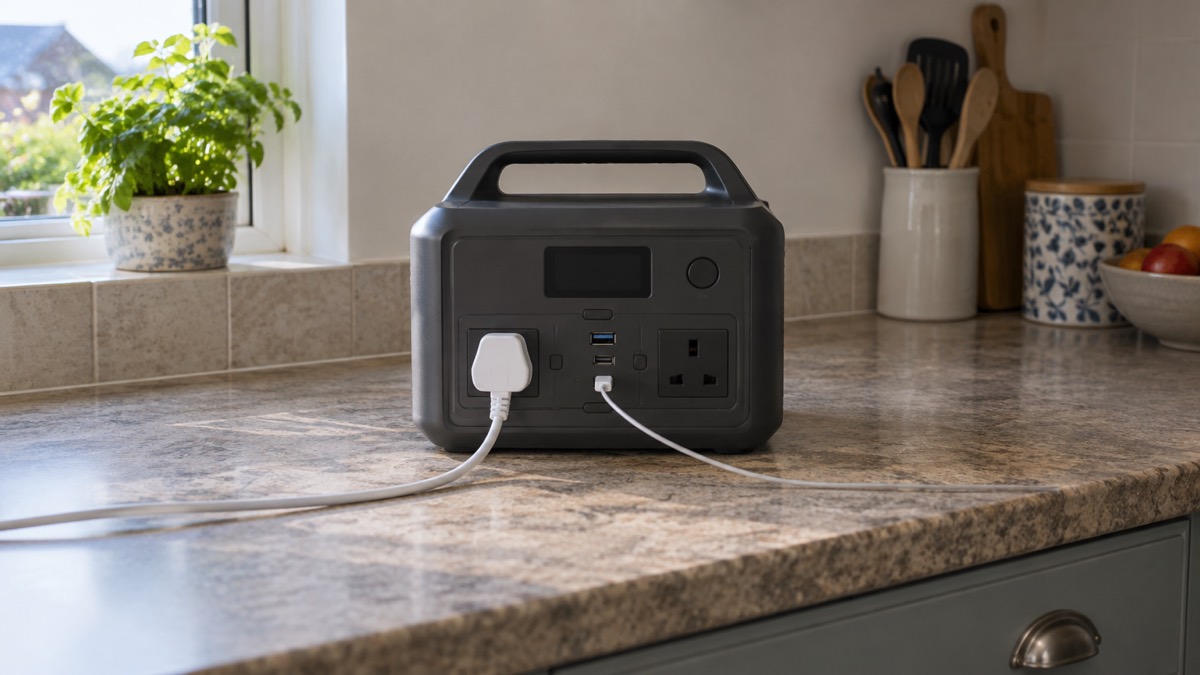
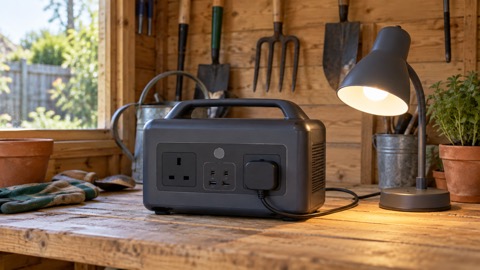
The BLUETTI AC180 is a portable power station: a battery in a box with mains sockets on the front, which you charge from the wall and then use to run appliances when the mains fails or when you are away from it. BLUETTI gives it a capacity of 1,152Wh and a continuous output of 1,800W from two 230V sockets, with a 2,700W surge for motors and heating elements starting up1. The battery is lithium iron phosphate (LiFePO₄), which the maker rates at 3,500+ cycles to 80% of original capacity1.
For a household, that means a unit that will run a laptop, a phone, a lamp, a router or a small fridge, and will run a coffee maker for about an hour, but will not run an air conditioner or a washing machine: BLUETTI says plainly not to use it for those1. It weighs about 16kg, so it is movable but not something you carry far1.
This page sets out what the maker says the AC180 can do, how long it takes to charge by each method, how to use it as a short-term backup supply, and the safety and storage rules that keep a lithium battery in good order. Every figure here is the maker's own published specification for this model.
What the AC180 is and who it suits
The AC180 sits in the middle of the portable power station market: big enough to run real household appliances for a while, small enough to move between rooms or load into a car. Its 1,152Wh capacity and 1,800W output are the two numbers that decide what it can do1. Capacity sets how long it runs something; output sets what it can start at all.
The LiFePO₄ chemistry matters for a household buying once and keeping the unit for years. BLUETTI says it was one of the first to adopt LiFePO₄ in portable power stations2, and rates the AC180's cells at 3,500+ cycles to 80% of original capacity1. A cycle is a full charge and discharge; partial cycles count proportionally. In practice the battery degrades slowly rather than failing suddenly, and the 80% figure is a milestone, not a cliff edge.
The unit has a pure sine wave inverter, which means the mains power it produces is the same shape as the grid's, so sensitive electronics such as laptops and routers run normally1. BLUETTI also states a depth of discharge of 90% and an inverter efficiency of 85%, and a self-consumption of about 15W when the unit is on but not powering anything1. That last figure is worth knowing: left switched on with nothing plugged in, the AC180 will slowly drain itself.
It suits a household that wants one unit to cover phones, lighting, a router and a laptop through a power cut, and to take camping or to a caravan. It does not suit anyone expecting to run heavy appliances: the maker's own instruction is not to use it for an air conditioner or a washing machine1.
Specifications at a glance
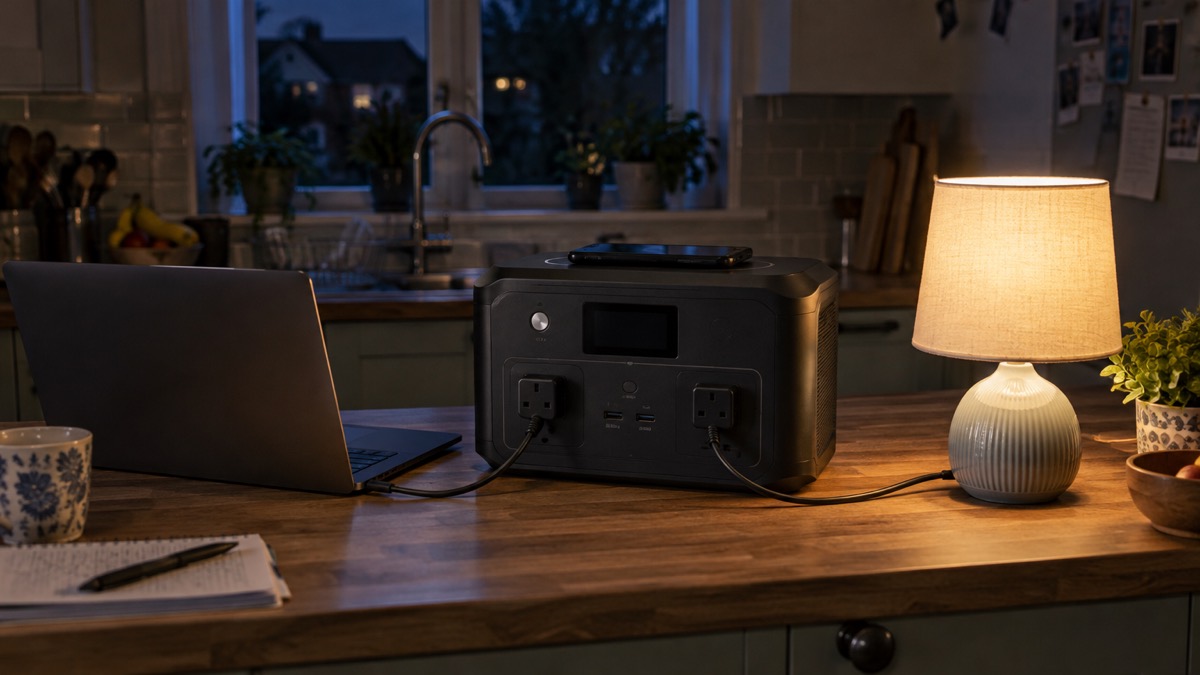
All figures below are the maker's published specifications for the AC1801.
| Specification | Figure |
|---|---|
| Battery capacity | 1,152Wh (36Ah) |
| Battery type | LiFePO₄ (lithium iron phosphate) |
| AC output | 2 × 230V/7.8A, 1,800W total |
| Surge power | 2,700W |
| Power Lifting Mode | Up to 2,700W for pure-resistive heating devices |
| USB outputs | 2 × USB-A, 5VDC/3A, 15W total |
| Car outlet | 1 × 12V/10A, regulated |
| Wireless charging pad | 1 × 15W max |
| AC input | 1,440W max |
| Solar input | 500W max, VOC 12 to 60VDC, 10A |
| Car input | 12V or 24V from a cigarette lighter port |
| Inverter type | Pure sine wave |
| Weight | About 35.27 lbs / 16kg |
| Dimensions | 340mm × 247mm × 317mm |
| Certifications | UKCA, PSE, TELEC, RCM, CE, CA65, UL Standard |
Two rows deserve a second look.
What it can run, and for how long
These are the maker's own estimates and depend on the appliance, so treat them as a guide to scale rather than a promise.
The arithmetic behind them is simple. That is why the maker's figures are the ones to plan from: they already account for the losses.
What the AC180 will comfortably cover in a power cut:
- Phones and small devices: the two USB-A ports deliver 15W in total, and the wireless pad 15W, so phones charge slowly but steadily1. For faster phone charging, a separate power bank may be simpler.
- A laptop: about 17 full charges, per the maker1.
- Lighting: LED lamps draw very little, so a few lamps for an evening is well within its reach.
- A router: low draw, which keeps broadband alive if the line itself is still working.
- Small kitchen appliances: a coffee maker for about an hour1.
What it will not do is run the heavy loads: the maker rules out air conditioners and washing machines1. If you are unsure whether an appliance is within reach, the guide to watts, watt-hours and surge explains how to add up the load, and what capacity power station you need helps size a unit to a household.
The AC180's inverter produces a pure sine wave output1, the same shape of supply as the mains, which suits sensitive electronics. The maker's own guidance is that the unit should work if the load does not exceed its rated 1,800W1. Keep within that figure: the maker states plainly that the unit should not be used to run an air conditioner or washing machine1.
Using it as a short-term backup supply
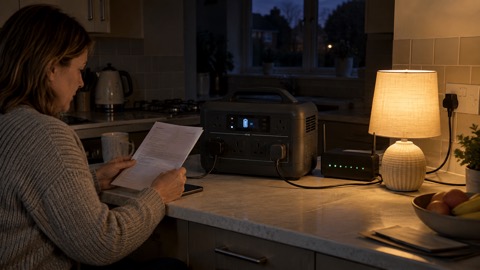
The AC180 can sit plugged into a wall socket and pass power through to whatever is connected to it, charging its own battery at the same time. BLUETTI confirms pass-through charging is supported, and that the unit can charge and discharge at the same time1. If the mains then fails, the maker says the unit switches over in just 20ms1.
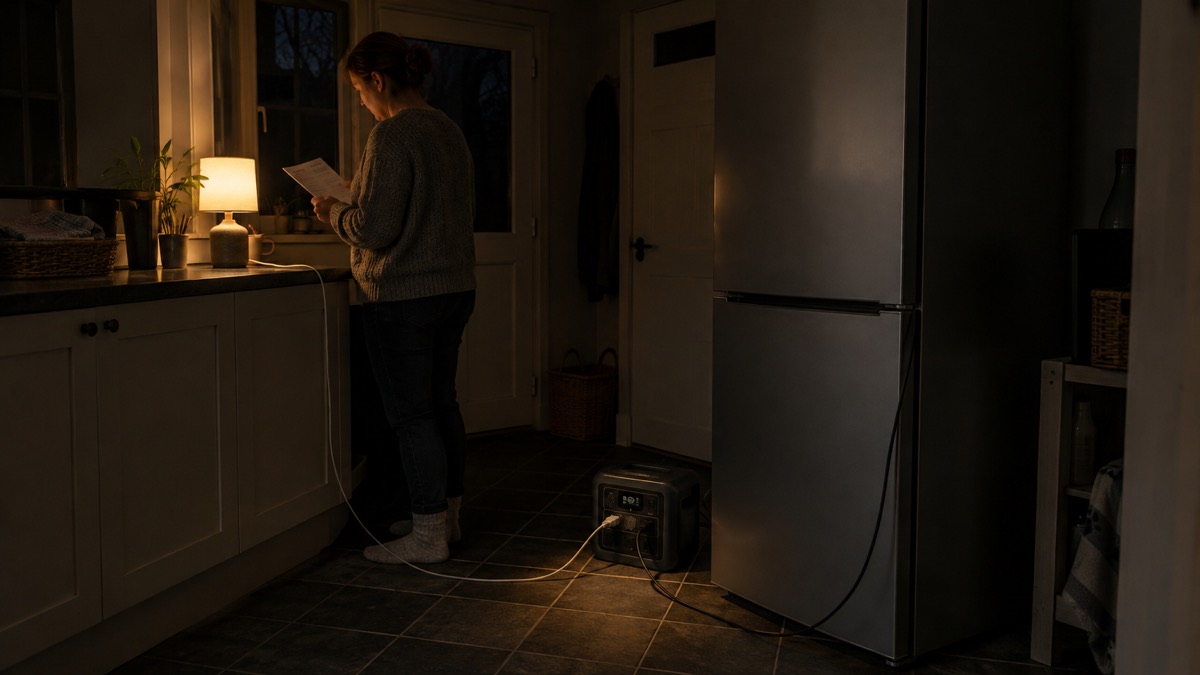
That is fast enough that most equipment will not notice: a desktop computer or a router will typically ride through a 20ms gap. It is not the same as a dedicated uninterruptible power supply. If a device must not lose power at all, check with the equipment's maker rather than relying on the power station's figure. The guide to using a power station as a UPS explains what switchover time means in practice.
To set it up as a standby:
- Charge the AC180 fully from the mains before you expect trouble, such as a forecast storm1.
- Plug it into a wall socket and switch on pass-through charging1.
- Plug the equipment you want protected into the AC180's 230V sockets, keeping the total below 1,800W1.
- Check the total load: the maker says the unit should work if the load does not exceed its rated 1,800W1.
- Keep the unit where you can see and reach it, not buried behind furniture.
For a wider view of what to keep running and in what order, see deciding what to keep running when the mains fails and the guide to using generators and power stations during an outage.
Charging it: mains, car and solar
The AC180 charges quickly from the mains and more slowly from a car or solar panels. BLUETTI publishes a charge time for each method1:
| Method | Input | Charge time |
|---|---|---|
| Turbo AC charging | Around 1,440W | 1.3 to 1.8 hours |
| Standard AC charging | Around 1,000W | 1.7 to 2.2 hours |
| Silent charging mode | Around 260W | 4.9 to 5.4 hours |
| Car charging, 12V | 12V cigarette lighter port | 12 to 12.5 hours |
| Car charging, 24V | 24V cigarette lighter port | 6.3 to 6.8 hours |
The AC180 accepts up to 1,440W from the mains1, and the maker states that it can charge and discharge at the same time1. It can also be charged from a car's 12V or 24V cigarette lighter port1, and BLUETTI's range is designed to charge from both a car and solar panels, powering your main storage and leisure battery while driving with no drain on your reserve2. Plan your charging around the maker's own figures for your unit rather than a single headline time.
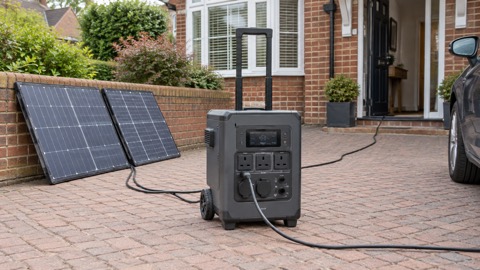
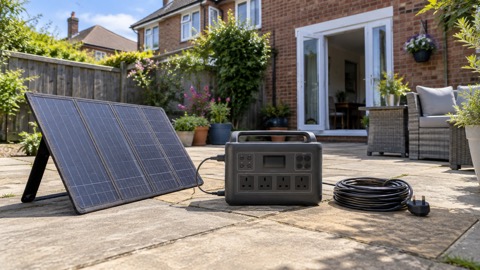
For solar, the maker specifies a maximum input of 500W, a total open circuit voltage of 12 to 60V, a maximum current of 10A, and standard MC4 connectors1. BLUETTI's solar panel page confirms its panels connect exclusively via standard MC4 connectors, which pair with BLUETTI or other solar generators3. Check the open circuit voltage on the panel label before connecting: panels wired in series add their voltages together, and going above 60V is outside the maker's specification1. The guide to portable solar panels for charging in a power cut covers sizing and UK conditions, and what size solar panel you need helps match panels to the unit.
Car charging is slow but useful on the move: 12 to 12.5 hours on a 12V socket, or 6.3 to 6.8 hours on 24V1. The guide to charging a power station from your car explains what to check first.
Safe use and storage
The AC180 is a sealed unit, but it is still a large lithium battery, and the maker's instructions and general battery safety advice both apply.
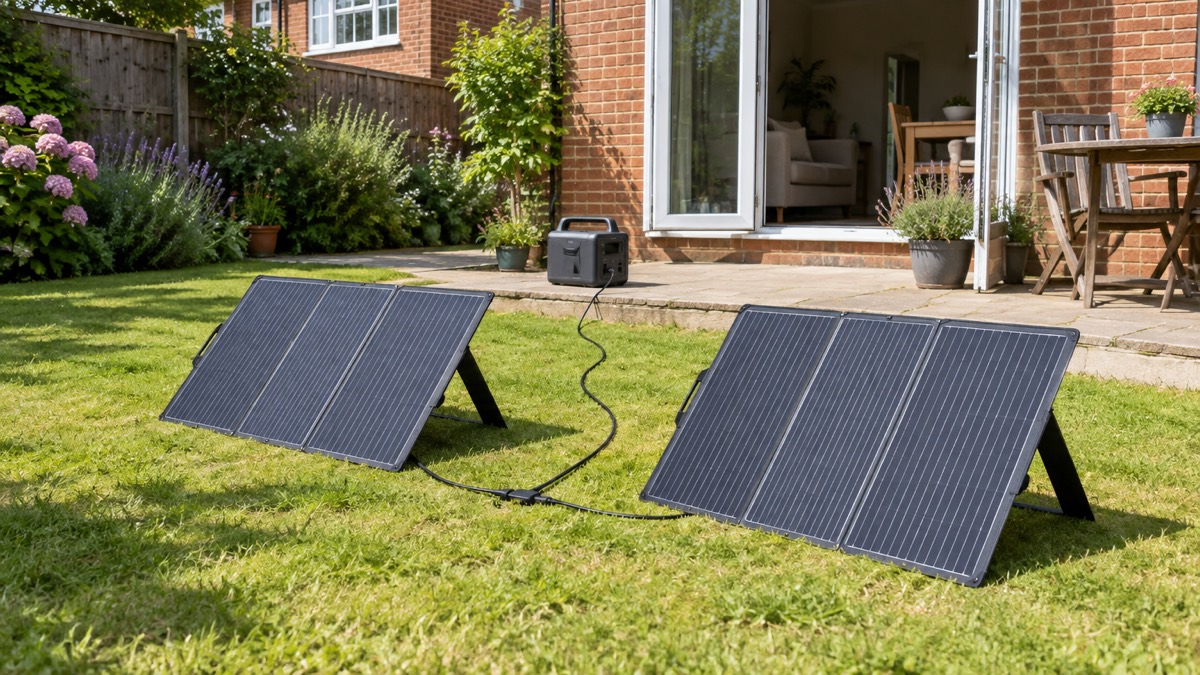
Water and dust. BLUETTI says the AC180 is IP65 rated to resist water splashes and dust1. That is protection against splashes, not immersion: do not leave it out in the rain or use it near a bath or a leaking roof.
A shed that freezes in winter is outside the charging range, and a sunny windowsill in summer can push towards the top of the storage range.
Recharging in storage. BLUETTI's shelf-life instruction is to recharge to 80% every 3 to 6 months1. The Caravan and Motorhome Club's guidance on leisure batteries makes the same point in different words: check the battery every two months and re-charge if necessary to ensure long and trouble-free battery life4. Set a reminder; a battery left flat for a long period is the most common way a stored power station is ruined.
Warning signs. If the AC180 becomes hot, swollen, smells unusual or makes a noise, stop using it and move it away from anything flammable. The guide to warning signs a lithium battery is dangerous sets out what to look for, and what to do if a lithium battery catches fire covers the emergency.
Expansion. The AC180 supports capacity expansion only with B80 expansion batteries in Power Bank mode, connected with an Aviation to DC7909 cable1. If expansion matters to you, confirm compatibility with BLUETTI before buying anything.
Support, warranty and certification
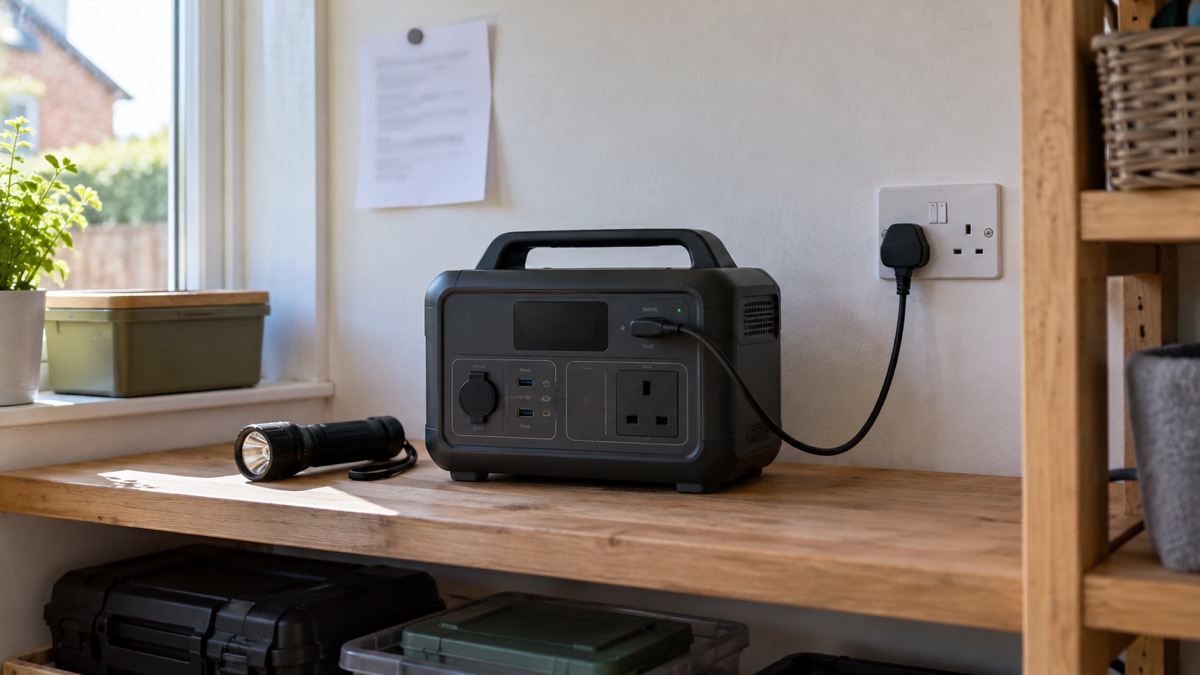
BLUETTI states a 5 year warranty on the AC180 product page1. Its wider portable power station page says all new BLUETTI units come with a 2 year warranty, while refurbished units have a 6 month warranty5. The two documents disagree on the headline figure, so check the warranty terms that come with the unit you buy and keep the receipt.
The battery is not user replaceable. BLUETTI says that if the internal battery pack malfunctions or is dead, you should contact BLUETTI Customer Service1. That is the route for any fault, not a DIY swap.
On certification, BLUETTI lists UKCA among the AC180's markings, alongside PSE, TELEC, RCM, CE, CA65 and UL Standard1. UKCA is the marking for goods placed on the Great Britain market. The guide to UKCA, CE and battery safety markings explains what to look for on the box and the unit.
The AC180 supports app control over Bluetooth1, which lets you check the unit from a phone without wifi or a mobile signal. The management system includes an MPPT controller and a battery management system1, which handle solar charging and cell protection respectively.
For the wider picture of how a power station fits into a household plan, see portable power stations: what they do and how to choose, the backup power at home guide, and the BLUETTI brand page. If you are weighing a battery against a fuel generator, the comparison of a portable power station or a petrol generator for a power cut sets out the trade-offs.
Sources (5)
- BLUETTI AC180 product page, BLUETTI, 2026-10-25
- Home backup, BLUETTI, 2026-10-25
- BLUETTI solar panels, BLUETTI, 2026-10-25
- Batteries, Caravan and Motorhome Club, 2026-10-25
- BLUETTI portable power station, BLUETTI, 2026-10-25

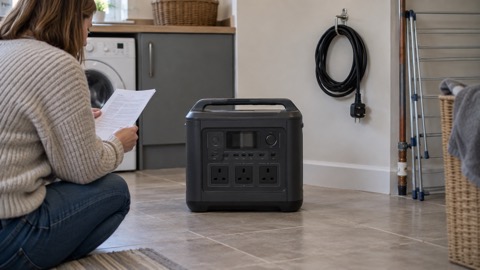 BLUETTI Apex 300 Power Station
 BLUETTI Elite 100 V2
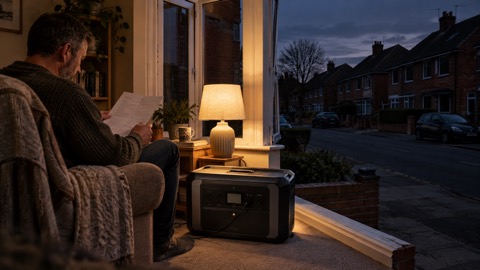 Anker SOLIX C2000 Gen 2
 Anker SOLIX C1000 Power Station
 EcoFlow DELTA Pro
 BLUETTI Elite 400
 Anker SOLIX C300 Power Station
 EcoFlow DELTA 3
 EcoFlow DELTA 2 and DELTA 2 Max
 EcoFlow DELTA and DELTA Max
 EcoFlow RIVER 3 and RIVER 3 Plus
 EcoFlow RIVER 2 and RIVER 2 Max