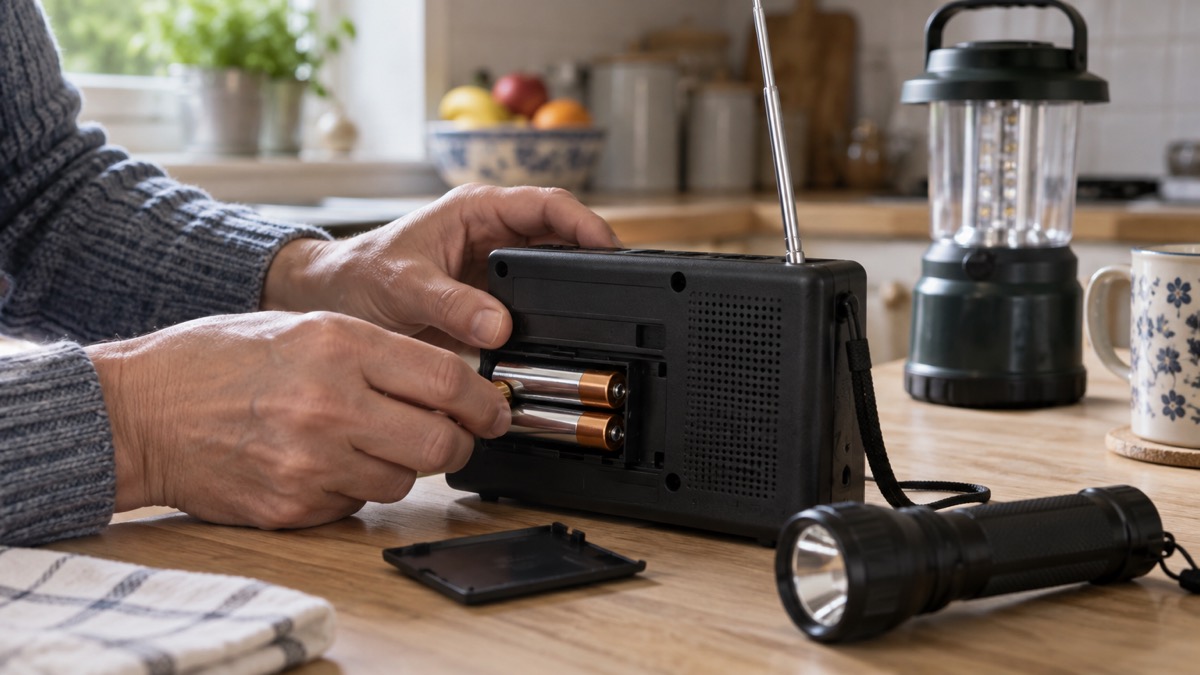
AA alkaline batteries are the ordinary cells that keep a torch, a radio and a battery-powered lantern working when the mains goes off. They are the simplest piece of emergency kit a household can hold, and the one most often forgotten until the night it is needed. Official emergency kit lists for UK households include spare batteries as a standard item, alongside a torch and a battery or dynamo powered torch1.
What matters for a household is not the brand on the wrapper but three things: how long the cells keep, how you store them so they are still good when you reach for them, and how you use them without creating a fire or a poisoning risk. A standard alkaline cell is not rechargeable, must never go in a fire, and must be kept away from metal objects and small children3.
What AA alkaline batteries do in a household emergency kit
An AA alkaline cell is a single-use power source for small devices. In an emergency it runs the things that keep a household informed, lit and in contact: a torch, a portable radio, a lantern, a small fan or a battery-powered clock. Official guidance for a household emergency pack says to include spare batteries, and Scottish emergency kit advice adds spare hearing aids with batteries1.
The point of holding them is that they work when nothing else does. A power cut takes out the lights, the broadband router and the phone charger at the same moment, and a torch and a radio running on AA cells carry on regardless. That is why they belong in the same box as the first aid kit, the bottled water and the paper maps, not in a drawer in the kitchen2.
They are not a substitute for a power station or a generator. An AA cell powers a torch or a radio; it will not run a fridge, a boiler or a phone for long. Think of them as the bottom layer of a household's backup power: the cheap, quiet, always-ready layer that covers lighting and information while the larger kit covers everything else. If you are building that larger layer, the guide to backup power at home sets out the options, and the emergency kit section covers what else belongs in the box.
A household that holds a pack of AA cells, checks them once a year and knows where the torch is has covered the most common emergency need in the country: a few hours without mains power. The rest of this page is about choosing, storing and handling them so they are ready when that happens.
Battery names explained: EN91, E91, Max AA and LR6
The letters and numbers on a battery wrapper describe its size and chemistry, not its quality. LR6 is the international code for a standard AA alkaline cell, and the same cell may be sold as EN91, E91 or under a maker's own name such as Energizer MAX. Energizer lists MAX in AA and AAA sizes, and states that its alkaline batteries are available in a wide variety of sizes to fit most applications6.
For a household, the practical rule is simple: if the device takes AA cells, any standard AA alkaline cell of the right size will fit and work. What differs between products is how long they hold their charge and how they behave in heat or cold, not whether they will power a torch tonight.
| Name on the label | What it means | What to check |
|---|---|---|
| LR6 | International code for an AA alkaline cell | Size and chemistry match the device |
| EN91, E91 | Alternative codes used for the same AA size | Same cell, different label |
| MAX AA | A maker's product name for its AA alkaline range | Maker's stated shelf life |
| Rechargeable AA | A different chemistry, marked rechargeable | Only these may be recharged |
The one distinction that matters for safety is between a standard alkaline cell and a rechargeable one. They look alike and fit the same devices, but only a cell marked "rechargeable" may go into a charger3. Everything else on the wrapper is a name.
Which emergency kit runs on AA alkaline batteries
AA cells are the most common size in small household devices, which is why they turn up across an emergency kit rather than in one place. The table below sets out where they earn their place, and what each device does for a household during a power cut, flood or storm.
| Device | What it does in an emergency | What to keep ready |
|---|---|---|
| Torch or lantern | Lights a room, a stairwell or a route out when the mains fails | Spare cells and a known place for the torch |
| Portable radio | Receives local news and official updates when broadband and mobile fail | Spare cells, and a note of local frequencies |
| Hearing aids | Keeps a hearing aid user connected to the household | Spare hearing aids with batteries10 |
| Small fan or clock | Comfort and routine in a hot spell or a long outage | Fresh cells, checked yearly |
| Car kit | Jump leads and a torch for a breakdown or a stranded journey | Battery jump leads10 |
Official kit lists also include a charged portable power bank and charging cables11. The two work together: the power bank keeps the phone alive, and the AA cells keep the torch and radio alive when the power bank is flat. A household that plans for both is not dependent on a single source of power.
For a fuller picture of what to hold, the emergency kit section sets out a complete household list, and the guide to staying informed and in touch explains how a radio fits a household's plan for news. The lighting section covers torches, lanterns and candles, and why a torch is safer than a flame.
Storing spare batteries safely
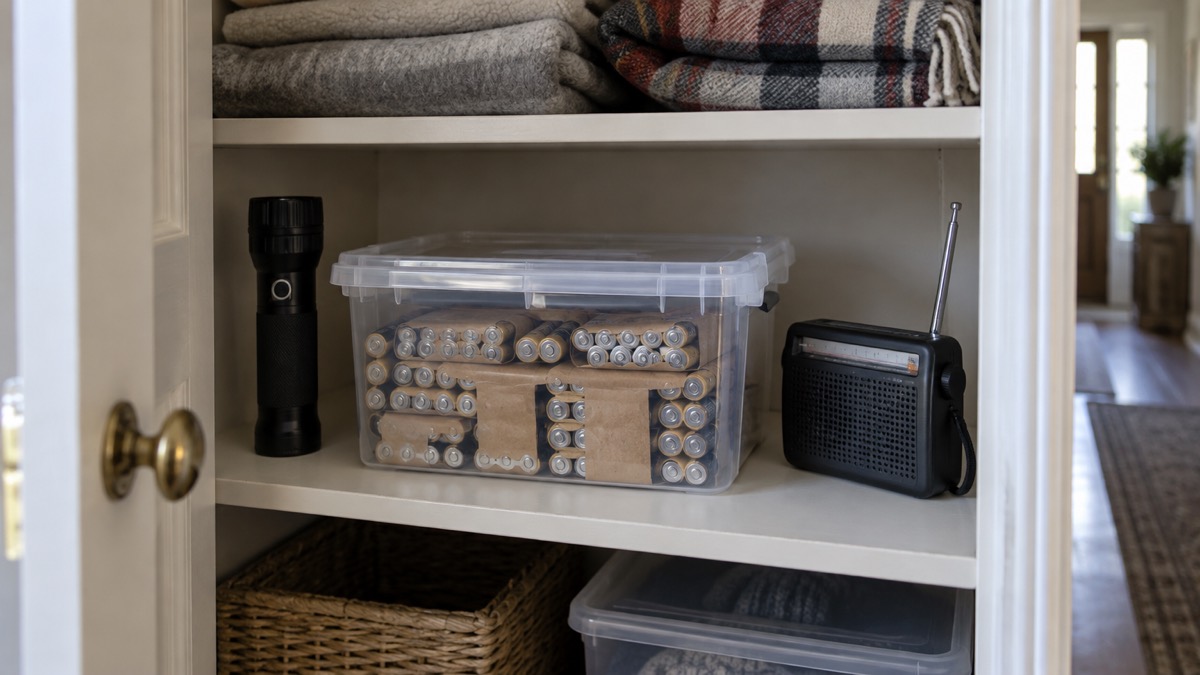
A spare battery that has leaked, swollen or shorted is worse than no battery at all. Fire and rescue services are consistent on how to store them: in a cool, dry place, away from metal objects such as keys or coins, and ideally in the original packaging, because contact with metal can cause overheating and a fire7. Loose cells rattling in a drawer with a bunch of keys are the classic mistake.
The same guidance appears across official sources. Store single-use batteries in their original packaging and away from metal objects8. Keep batteries in a cool, dry place away from heat, moisture and combustible materials, and do not allow loose batteries to come into contact with metal objects12. Store spare batteries safely to avoid contact with other metal objects that may cause a short circuit13.
- Keep cells in their original packaging, or in a sealed plastic box, so the terminals cannot touch each other or anything metal.
- Choose a cool, dry cupboard at normal room temperature, not a shed, a garage or a windowsill.
- Keep the box away from heat, moisture and anything flammable12.
- Store all spare batteries in a sealed container out of reach of children, and make sure battery compartments on toys and devices are securely closed5.
- Check the box each time you use it for swelling, leaks or a strange smell, and stop using any damaged cell immediately7.
Leaking batteries: how to prevent and clean up leaks
Alkaline cells can leak a white, crusty deposit if they are left flat in a device for a long time, stored somewhere damp or hot, or mixed with cells of a different age. The maker's advice for extending life is straightforward: turn off battery-operated radios and appliances when they are not in use, remove batteries from devices that will not be used for a while, and store them in a dry place at normal room temperature without the contacts touching14.
If a cell does leak, Duracell's own guidance for cleaning up is to work in a well-ventilated area, wear household gloves and glasses, and remove the leakage from the contacts with a toothbrush or cotton swab. Make sure the device is completely dry before trying a new battery. For alkaline leakage the maker suggests one tablespoon of boric acid in one gallon of water, or a 50/50 mix of diluted vinegar or lemon juice with water14.
Prevention is easier than the clean-up. Take cells out of anything stored for the season, check the kit box once a year, and replace a full set at the same time rather than one cell at a time. A cell that has leaked should not be used again, and should be taken to a household recycling centre rather than put in the bin15.
Never recharge a standard alkaline battery
A standard AA alkaline cell is not rechargeable, and putting one in a charger is dangerous. Duracell states that only batteries specifically labelled "rechargeable" should be recharged, and that any attempt to recharge a non-rechargeable battery could result in rupture or leakage3. Energizer's own datasheet says the same: do not recharge a battery unless it is specifically marked "rechargeable", because attempting to recharge a primary battery could result in rupture or leakage4.
"Only batteries that are specifically labeled “rechargeable” should be recharged. Any attempt to recharge a non-rechargeable battery could result in rupture or leakage."
The same caution runs through fire and rescue advice on batteries more generally. Never charge a battery that has been damaged, dropped or struck16. Never cover chargers or charging devices15. Avoid storing, using or charging batteries in extremes of high or low temperatures17. And never light or dispose of batteries in a fire, because they may explode, rupture and cause safety risks14.
For a household, the practical answer is to keep the two types apart. If you use rechargeable cells for everyday devices, store them in a different box from the single-use alkaline spares, and label the boxes. The guide to e-bikes and e-scooters explains why larger lithium batteries need their own charging rules, and the electrical fires section covers what to do if a charger or a battery does catch fire.
Disposing of used AA batteries
Used cells do not belong in the general waste or the normal recycling. Electrical Safety First advises that you do not put any batteries, appliances, or appliances with batteries, even AA or AAA ones, in the general waste or normal recycling18. Household batteries, including AA, AAA, button and rechargeable batteries, can be recycled at most leading supermarkets and household recycling centres19.
Most large stores that sell batteries, such as supermarkets and hardware stores, have in-store collection bins for regular household batteries including AA, AAA, C and D sizes18. A damaged battery should be disposed of safely at designated recycling facilities rather than kept at home13.
- Take used AA cells to a supermarket collection point or a household recycling centre19.
- Do not put them in the bin or the kerbside recycling18.
- Tape the terminals of a damaged or swollen cell, keep it away from other metal, and take it to a designated recycling facility13.
- Recycle used batteries promptly so they are out of reach of children5.
A household that recycles its spent cells as it replaces them never builds up a drawer of unknown, half-flat batteries, which is where leaks and confusion start.
Cold weather, smoke alarms and swallowed batteries
Three questions come up again and again with AA cells, and each has a clear answer.
Cold weather. Duracell states that premium alkaline batteries are recommended for equipment used periodically in extreme temperatures, and perform much better than zinc carbon batteries under such conditions14. In a winter power cut, keep the spares you are likely to need inside the house rather than in a cold garage or shed.
Smoke alarms. Basic smoke alarms run off nine volt batteries, not AA, and these should be replaced on a regular basis20. Never take the batteries out of your alarm to use in another electrical item, because an alarm without batteries cannot warn you if a fire starts21. Test the batteries in your smoke detector every week22. Duracell also advises that standard rechargeable batteries are not recommended in smoke alarms, because they discharge with time and die quickly without warning beeps14. The smoke alarms section explains the types, and the guide to sealed or replaceable battery alarms covers the choice between them.
Swallowed batteries. Any battery small enough to swallow is a medical emergency, and button batteries are the most dangerous. Button batteries can kill a small child if they swallow one23. If your child swallows a button battery or magnet, or you think they may have swallowed one, call 999 or take them to A&E straight away24.
The same advice comes from NHS sources across the UK: take the child to A&E straight away or call 999 for an ambulance9. Store spare batteries in a sealed container out of reach, make sure battery compartments on toys and devices are securely closed, and recycle used batteries safely so they are out of reach of children5. Do not leave them loose in drawers or on surfaces, and watch for cells falling out when you open a multipack27. The first aid at home section covers what to do while help is on its way.
Keeping a household's AA cells ready
A small routine keeps a household's AA cells dependable without any fuss. Once a year, open the kit box and check every cell for signs of damage like swelling, leaks or a strange smell, and stop using any damaged battery immediately7. Keep the torch and radio in a known place, with the spares beside them, and test them at the same time.
If someone in the household depends on a hearing aid, keep spare hearing aids with batteries in the kit, as Scottish emergency kit guidance advises10. If someone is older, disabled or medically dependent, the extra help in an emergency section explains the Priority Services Register and other support. For the wider picture of how a household gets ready, the getting started section sets out a plan, and the power cuts section covers what to do when the lights go out.
Energizer's own guidance for keeping cells in good order is to store them in a cool, dry place at normal room temperature and to remove batteries from devices that will be stored for extended periods4. Duracell adds the everyday habits: turn off battery-operated radios and appliances when they are not in use, remove batteries from devices that will not be used for a while, and store them in a dry place at normal room temperature without the contacts touching14. Follow the maker's instructions for the cells you buy, and the kit will be ready when it is needed.
Sources (27)
- Prepare for emergencies, Dumfries and Galloway Council, 2026
- Preparing for emergencies, North Hertfordshire District Council, 2015-01-12
- Can alkaline batteries be recharged?, Duracell, 2026-10-26
- Alkaline application manual, Energizer, 2018
- Child safety, Berkshire Healthcare NHS Foundation Trust, 2026-10-29
- Compare batteries, Energizer, 2026-03-12
- Battery safety, West Yorkshire Fire and Rescue Service, 2026-10-29
- Battery safety, Greater Manchester Fire and Rescue Service, 2026-10-29
- Button batteries: top tips, Child Accident Prevention Trust, 2023-10-18
- Emergency kit, Ready Scotland, 2026-10-22
- Be prepared for emergencies, North Devon Council, 2026-10-29
- Lithium-ion batteries, National Fire Chiefs Council, 2026-10-09
- Fire safety tips: smoking, vaping and e-cigarettes, Warwickshire County Council, 2026-10-29
- Batteries affected by temperature, Duracell, 2026-10-26
- Electrical safety, Lincolnshire County Council, 2026-10-29
- E-cigarettes, Cheshire Fire and Rescue Service, 2026-05-20
- Fire safety in the home, Westminster City Council, 2017-01
- Recycling electricals and batteries, Electrical Safety First, 2026-10-28
- Batteries: causes of fires, Devon and Somerset Fire and Rescue Service, 2025-08-07
- Smoke alarms, Devon and Somerset Fire and Rescue Service, 2026-02-17
- Smoke and heat alarms, Greater Manchester Fire and Rescue Service, 2026-10-29
- Home safety advice, Essex County Fire and Rescue Service, 2026-10-29
- Unique collaboration on button batteries, Child Accident Prevention Trust, 2024-06-12
- Button battery factsheet, City of London Corporation, 2024
- Baby accidents: what to do, NHS 111 Wales, 2023-05-17
- NHS surgeons' safety plea after surge in kids swallowing dangerous objects, NHS England, 2022-12-24
- Button battery safety notice, Child Accident Prevention Trust, 2021

 FireAngel FA3313 CO Alarm
 FireAngel FA3322 CO Alarm
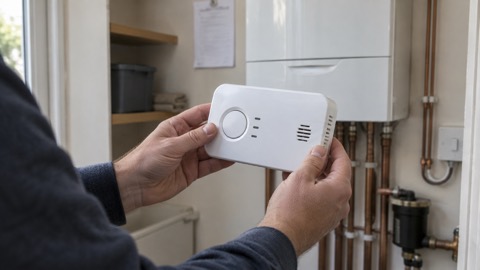 FireAngel FA3820 CO Alarm
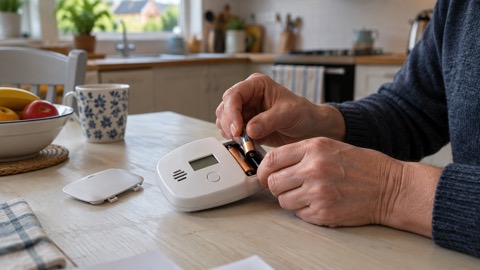 FireAngel FA6812 CO Alarm
 FireAngel FA6813 CO Alarm
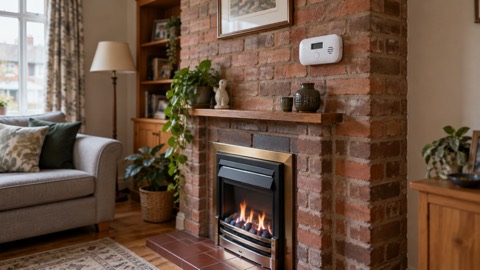 FireAngel FA6829S CO Alarm
 FireAngel CW1-PF CO Alarm
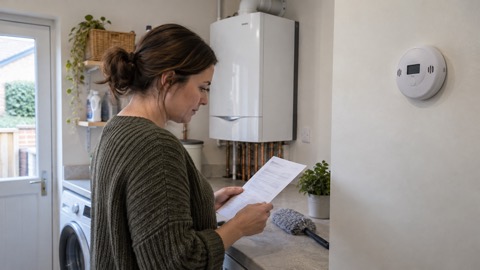 FireAngel W2-CO-10X CO Alarm
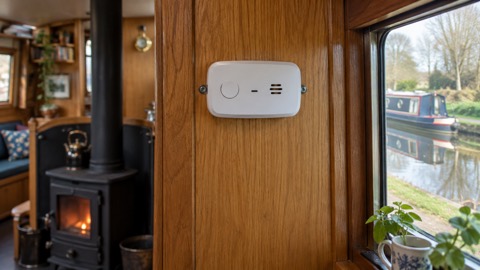 FireAngel FP1820W2-R CO Alarm
 FireAngel FP2620W2-R Alarm
 FireAngel ST-632 Smoke Alarm
 FireAngel ST-750 Smoke Alarm