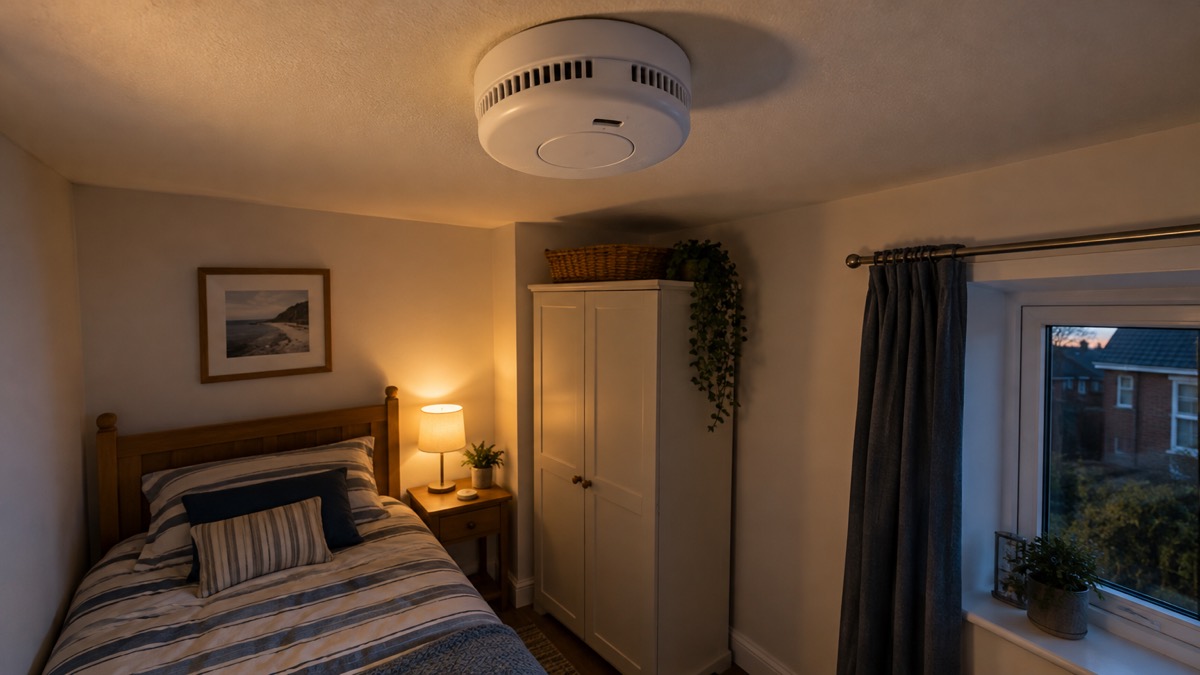
The FireAngel FP2620W2-R is a battery powered wireless interlink smoke alarm: a ceiling-mounted unit with a sealed 10-year Panasonic lithium battery, an 85dB sounder and Thermoptek multi-sensor technology that responds to both slow-smouldering and fast-flaming fires1. It works on its own or links wirelessly with up to 50 Pro Connected or Wi-Safe 2 devices, so when one alarm sounds, every alarm in the home sounds too2.
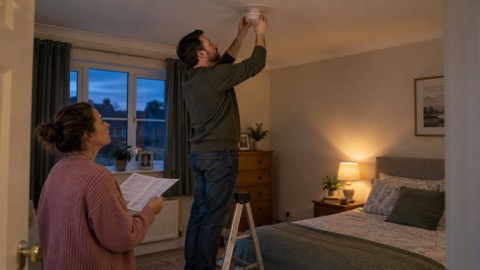
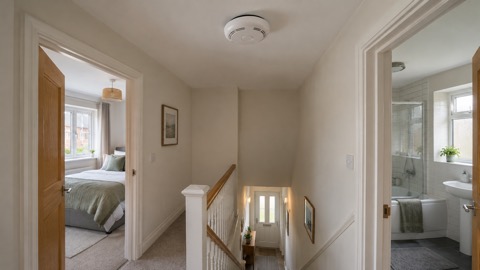
If you are fitting one, the maker's placement rules are simple: put it on the ceiling of every storey, including hallways, landings and bedrooms, at least 300mm from any wall or light fitting and at least 500mm from any corner2. Keep it out of bathrooms, garages and directly above a cooker2. Test it at least once a month and vacuum around the sensor every six months2.
The alarm is currently listed as out of stock on FireAngel's own product page, which suggests checking back later or exploring similar products2. It carries a 5-year warranty according to the maker's datasheet1. This page sets out what the FP2620W2-R does, where it goes, how the interlinking works, what each beep means and how to look after it.
What the FP2620W2-R is and what it suits
The FP2620W2-R is a battery powered wireless interlink smoke alarm, built around two FireAngel technologies: Thermoptek and Wi-Safe 21. Thermoptek combines optical sensing with thermal enhancement, and FireAngel states it responds to both slow-smouldering and fast-flaming fires in under half the time of single-sensor alarms2. The alarm carries BS EN 14604:2005+AC:2008, BSI Kitemark and LPCB approval2.
Because it is battery powered and links by radio rather than cable, it suits households that want whole-home coverage without rewiring, including rented homes and older properties where running mains cable between alarms is impractical. FireAngel states that the Pro Connected range allows you to create an interlinked network using mains-powered devices, battery-powered devices, or a combination of both3. The alarm is backwards compatible with the FireAngel Wi-Safe 2 range, so it can join an existing Wi-Safe 2 network2.
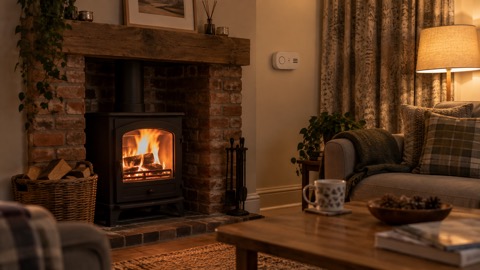
It is a smoke alarm, not a carbon monoxide alarm. For CO protection, FireAngel recommends a dedicated CO alarm such as the FA6829S, or a combination smoke and CO alarm for combined protection4. A Pro Connected network can include smoke, heat and CO alarms together, and the maker gives an example network of 7 smoke alarms, 3 heat alarms, 3 carbon monoxide alarms and a Gateway as one that will be completely secure and protect your whole home2.
If you are still deciding what type of alarm you need, the guide to smoke alarms and how to choose one sets out the options, and the comparison of battery or mains smoke alarms covers the trade-offs.
Specifications
| Specification | Detail |
|---|---|
| Product type | Battery powered wireless interlink smoke alarm1 |
| Sensor | Thermoptek thermally enhanced optical1 |
| Sound level | 85dB(A) at 3m (minimum)1 |
| Battery | 10-year sealed Panasonic lithium2 |
| Supply voltage | 3V DC1 |
| Operating frequency | 868 MHz1 |
| Range | 35m (over 200m in clear air)1 |
| Maximum connected units | 50 Wi-Safe 2 units1 |
| Dimensions | 132mm diameter x 40.50mm depth1 |
| Weight | 210g1 |
| Operating temperature | +4°C to +38°C1 |
| Operating humidity | Up to 90% RH non-condensing1 |
| Storage humidity | Up to 93% RH non-condensing1 |
| Plastic material | ABS, UL94 VO fire retardant1 |
| Installation positions | Wall or ceiling1 |
| Warranty | 5 years1 |
Where to fit it: every storey, 300mm from walls and lights
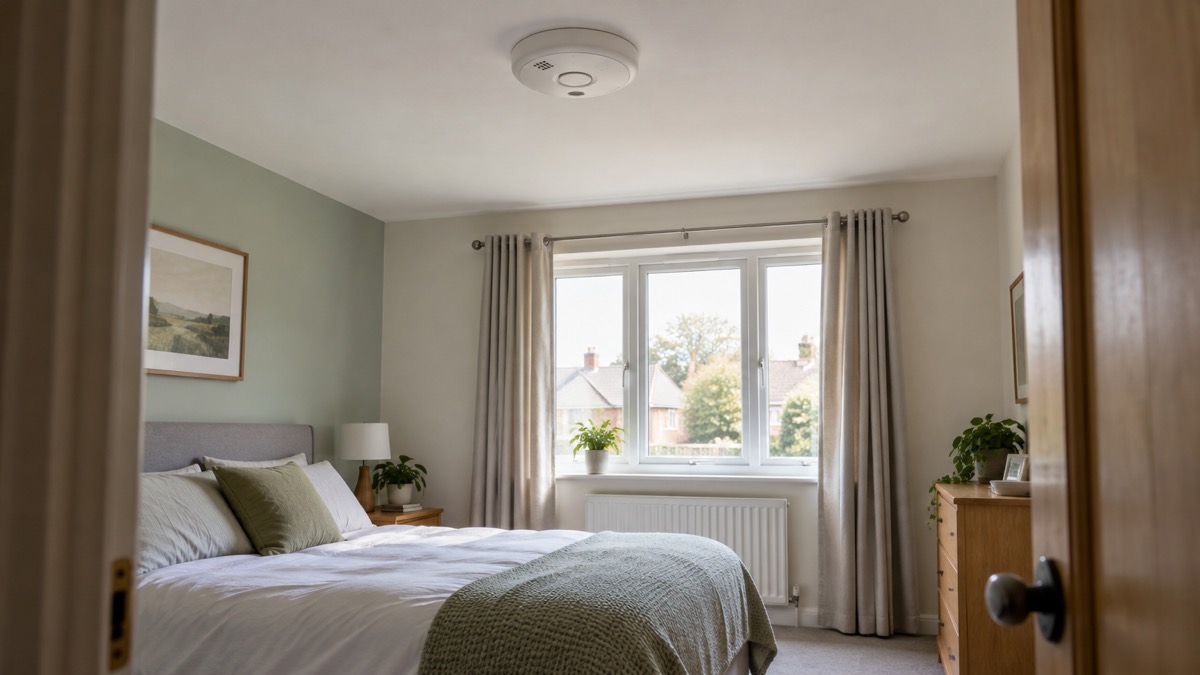
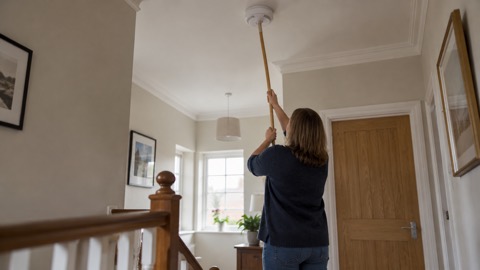
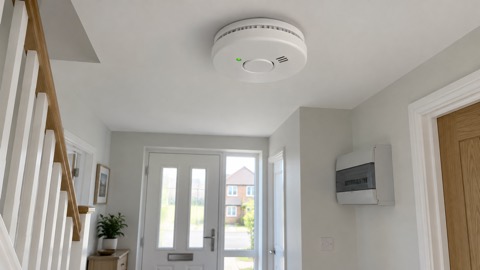
FireAngel's placement advice is to install a smoke alarm on the ceiling of every storey in your home, including hallways, landings and bedrooms2. The alarm is ceiling-mounted using the supplied lockable backplate2, though the datasheet also lists wall mounting as an installation position1.
Position it at least 300mm from any wall or light fitting and at least 500mm from any corner2. Keep alarms at least 500mm from air vents and fans2. These distances matter because smoke needs to reach the sensor freely: too close to a wall or corner and the alarm sits in a dead air space, too close to a vent and draughts can push smoke away or trigger nuisance alarms.
The maker's do-not list is short and firm: do not install a smoke alarm directly above a cooker, inside a bathroom, or in a garage2. Steam from a bathroom and fumes from a garage can trigger false alarms, and a unit directly above a cooker will be exposed to cooking smoke at close range.
For a fuller treatment of siting, including how many alarms a house or flat needs, see where to fit smoke alarms and how many smoke alarms a house or flat needs. If you are planning a whole-home network, the guide to interlinked alarms and how linking works explains the principles.
Where a smoke alarm must never go
The FP2620W2-R's own instructions name three places to avoid: directly above a cooker, inside a bathroom, and in a garage2. Each has a practical reason. A unit above a cooker sits in the path of steam, smoke and spitting fat. A bathroom produces steam that optical sensors can read as smoke. A garage produces exhaust fumes and dust.
There is a fourth place worth thinking about: anywhere you cannot reach to test it. The maker's routine is to test at least once a month and vacuum around the sensor every six months2, and an alarm you cannot reach safely will not get that attention.
If you want protection in a kitchen, a heat alarm is the usual choice rather than a smoke alarm. FireAngel's kitchen heat alarm and the guide to heat alarms and where they go explain the difference. The comparison of heat alarm or smoke alarm covers which goes where.
Linking up to 50 alarms so every one sounds together
The FP2620W2-R can wirelessly interlink up to 50 Pro Connected or Wi-Safe 2 devices, so every alarm in your home sounds together when one detects danger2. The Wi-Safe 2 protocol connects Pro Connected smoke, heat and CO alarms so every unit sounds together when one triggers2. The connection is a protected radio frequency, with no need to run cables between the alarms4.
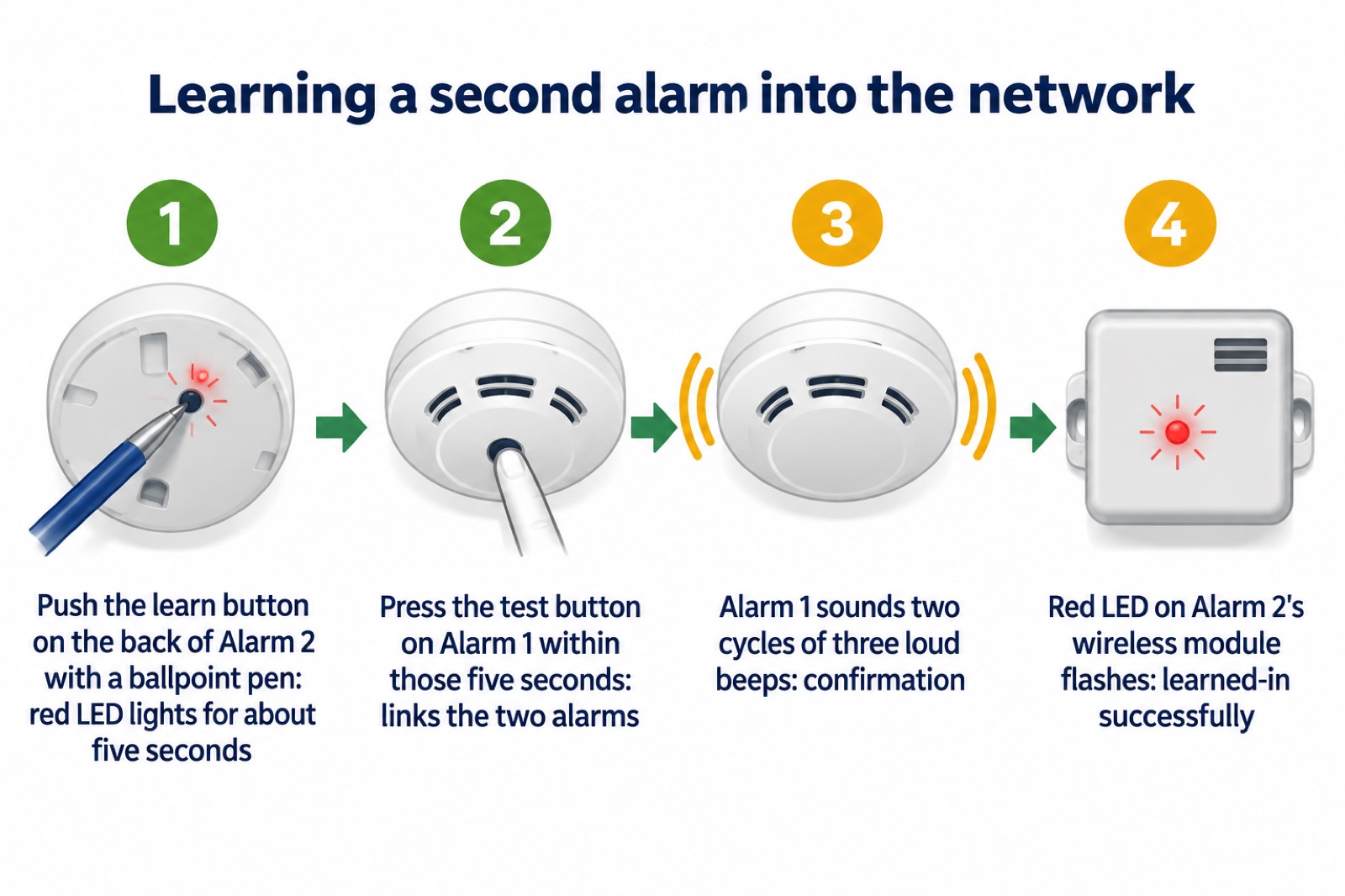
Setting up a network uses a "learn-in" process. FireAngel's instructions describe using a ballpoint pen to briefly push and release the learn button on the back of the second alarm; the red LED next to the learn button will flash briefly then light up for approximately five seconds3. During those five seconds you need to briefly press the test button on the first alarm to wirelessly interlink the two alarms3. The first alarm will give an audible sound consisting of two cycles of three loud beeps, and the red LED on the wireless module of the second alarm will flash to indicate that it has been learned-in successfully3. If the test button is not pressed quickly enough, the learn-in process will fail, and you should repeat it3.
Any alarm already in the network can be used as the first alarm, and you do not have to learn-in to every alarm in the network3. If you are mixing hardwired and wireless alarms, make sure there is only one wireless connection into each wired network3. For example, if you have a hardwired network upstairs and a wireless network downstairs, only one of the hardwired products should be linked into the wireless network, connecting both systems3.
Pressing the test button on any alarm will test the entire network3. When alarms are interlinked they will all mirror the alert of the device which detects the danger or requires attention6.
Smart Silence, Locate and what each beep pattern means
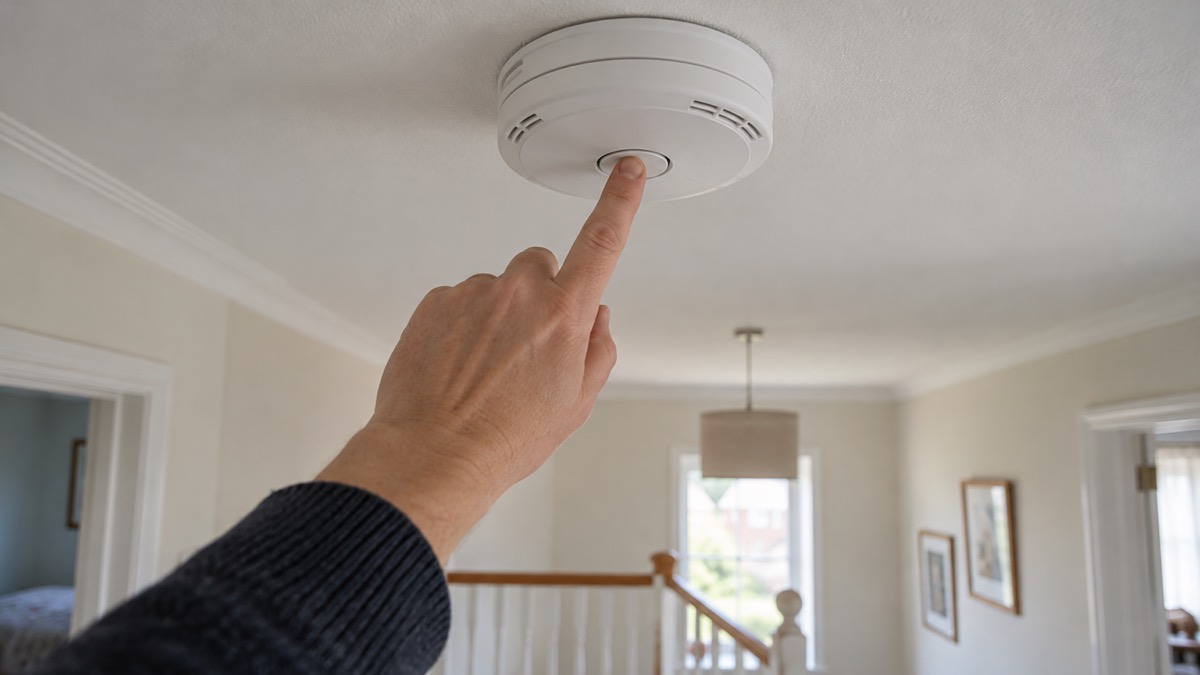
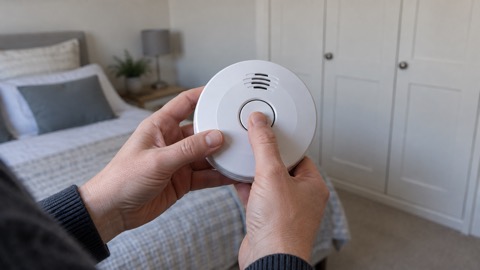
The FP2620W2-R has a single central button that handles Test, Smart Silence and Locate functions1. The sounder is rated at 85dB, and FireAngel describes the Smart Silence locate feature as giving clear, actionable alerts2.
Smart Silence allows the alarm to be silenced for up to 10 minutes in the event of a known false alarm1. During those 10 minutes, if additional smoke is detected the alarm will sound1. The product page puts the same hush period at up to 10 minutes and says to press the central button if it triggers accidentally2.
The Locate feature works across a network: when the network goes into alarm, pressing the test button of any alarm will silence all but the initiating alarm1. That lets you find which unit detected the danger without the noise of every alarm in the house. FireAngel describes the same behaviour for the Pro Connected range: pressing the central test button on any of the alarms in the system silences all alarms, except the alarm which has detected danger or needs further investigation4.
Beep patterns carry meaning:
- Three beeps (beep, beep, beep) for smoke or fire detection4.
- Four beeps (beep, beep, beep, beep) if carbon monoxide is detected, in networks that include CO alarms4.
- A single beep every 40 seconds typically means the battery is reaching end of life and the alarm needs replacing2.
- A repeated pattern of beeps indicates a fault2.
The alarm also has intelligent status monitoring without an intrusive standby indicator LED1. If you want to understand chirping in more detail, see why your smoke alarm keeps chirping and how often to test smoke and CO alarms.
Sleep Easy mode and living with a low battery
A single beep every 40 seconds typically means the battery is reaching end of life and the alarm needs replacing2. Because the FP2620W2-R uses a sealed 10-year Panasonic lithium battery2, there is no battery to swap: the alarm itself is replaced at end of life.
Sleep Easy mode silences low-battery beeps overnight without affecting smoke detection2. It is a way to get a night's sleep when a chirp starts at an awkward hour, not a fix. The maker's own datasheet for a related model describes Sleep Easy as allowing a low battery chirp to be silenced for 8 hours, usable up to 10 times7. Treat Sleep Easy as a short bridge to replacement, not a long-term setting.
The maker's maintenance routine is to test at least once a month and vacuum around the sensor every six months2. The alarm's operating temperature range is +4°C to +38°C, so it is designed for normal indoor conditions rather than unheated outbuildings1.
If you are unsure whether an alarm is due for replacement, the guide to when to replace a smoke, heat or CO alarm sets out the signs.
Working without the internet, and the DrayTek router limit
The FP2620W2-R works as a standalone or wirelessly interlinked alarm without the Gateway2. The Gateway is only needed if you want real-time smartphone notifications through the FireAngel Pro Connected app2. The datasheet notes that the alarm connects directly to the FireAngel Connect Gateway, providing enhanced diagnostic capabilities and real-time notifications to mobile devices1.
If your internet connection fails or cuts out, FireAngel states that the alarms will still continue to work and protect property, but there will be no push notifications while the internet is not working8. The alarm's core job does not depend on the internet, the app or the router.
There is one compatibility limit to know about if you do use the Gateway: FireAngel states that all FireAngel ProConnected products are not compatible with DrayTek routers9. If you have a DrayTek router and want app notifications, that is the point at which you would need to look at your network setup or ask the maker's support team.
The maker's UK-based customer support specialists can help with product advice, installation queries and troubleshooting by phone, email or live chat10. Manchester Fire and Rescue Service's advice page also lists a FireAngel freephone support number, 0800 141 2561, for alarms fitted by Greater Manchester Fire and Rescue Service and still covered by guarantee11.
Mixing with other makers' alarms and adding CO protection
FireAngel advises against mixing alarms from different manufacturers, because they may not be compatible in terms of interconnectivity or performance12. The maker's support guidance is firmer still: you should never mix other manufacturer smoke, heat and CO alarms within any single network, because the products will not function correctly and this will affect the levels of fire and CO protection9.
The practical rule is to build one network from one maker's compatible range. The FP2620W2-R is designed to interlink with up to 50 Pro Connected or Wi-Safe 2 devices2, and it is backwards compatible with the FireAngel Wi-Safe 2 range2. If you already have Wi-Safe 2 alarms, the FP2620W2-R can join them.
On carbon monoxide, the FP2620W2-R is a smoke alarm only. FireAngel recommends a dedicated CO alarm such as the FA6829S, or a combination smoke and CO alarm for combined protection4. A Pro Connected network can include CO alarms, and if CO is detected the system sounds four beeps rather than the three used for smoke or fire4. For more on CO alarms, see carbon monoxide alarms and how to choose one and do I need a carbon monoxide alarm.
Out of stock, warranty and where to get help
FireAngel's product page currently states that the item is out of stock, and suggests checking back later or exploring similar products2. The alarm carries a 5-year warranty according to the maker's datasheet1. FireAngel's wider range includes a 3 to 5 year replacement eligibility on some Pro Connected products13, and the maker's brand page sets out the full range.
If you need protection now, the FireAngel brand page lists the maker's other alarms, and the guide to smoke alarms and how to choose one helps you compare types. The comparison of sealed 10-year or replaceable battery alarms covers the battery question, and wireless or wired interlinked alarms covers the linking question.
For support, FireAngel's UK-based customer support specialists can help with product advice, installation queries and troubleshooting by phone, email or live chat10. Manchester Fire and Rescue Service lists a FireAngel freephone number, 0800 141 2561, for alarms fitted by Greater Manchester Fire and Rescue Service and still covered by guarantee11.
Sources (13)
- FP2620W2-R Data Sheet, FireAngel, 2024-09
- FP2620W2-R Smart Smoke Alarm, FireAngel, 2026-10-28
- Interlinking Multiple Smoke and Heat Alarms in the FireAngel Pro Connected Range, FireAngel, 2024-10-15
- FP1640W2-R Smart Smoke Alarm, FireAngel, 2026-10-28
- Ipswich Man Escapes Blaze With Family Thanks to Life Saving Smoke Alarm, Electrical Safety First, 2026-10-25
- Pro Connected Smart Accessible Control Unit, FireAngel, 2026-10-28
- SP510 FA4250BW Spec Datasheet, FireAngel, 2026-06
- FP1720W2-R Pro Connected Kitchen Heat Alarm, Battery Powered, FireAngel
- FireAngel Product FAQs, FireAngel, 2026-10-29
- Carbon Monoxide Safety, FireAngel, 2026-07-31
- Problem With Your Smoke or Heat Alarm, Manchester Fire and Rescue Service, 2026-10-29
- CW1-PF-T Carbon Monoxide Alarm, FireAngel, 2026-08-20
- Our Solutions, FireAngel, 2026-07-27
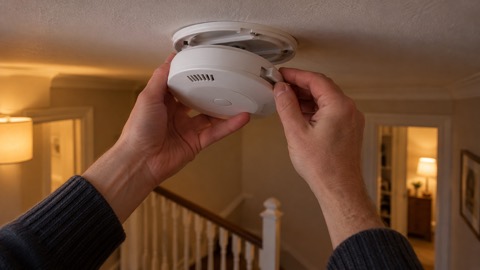 FireAngel ST-632 Smoke Alarm
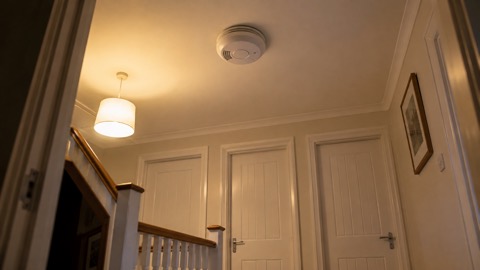 FireAngel ST-750 Smoke Alarm
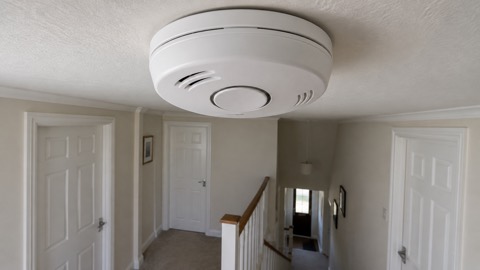 FireAngel SW1 Smoke Alarm
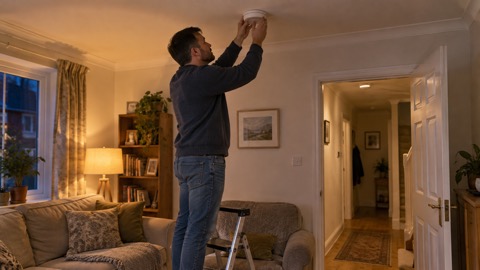 FireAngel SW10 Smoke Alarm
 FireAngel SB1 Smoke Alarm
 FireAngel SM-SN-1 Smoke Alarm
 FireAngel FA6611 Smoke Alarm
 FireAngel FA6615 Smoke Alarm
 FireAngel FA8620BW Alarm
 Kidde 2030-DSR Smoke Alarm
 Kidde 2030-DCR CO Alarm
 Kidde 10Y29 Smoke Alarm