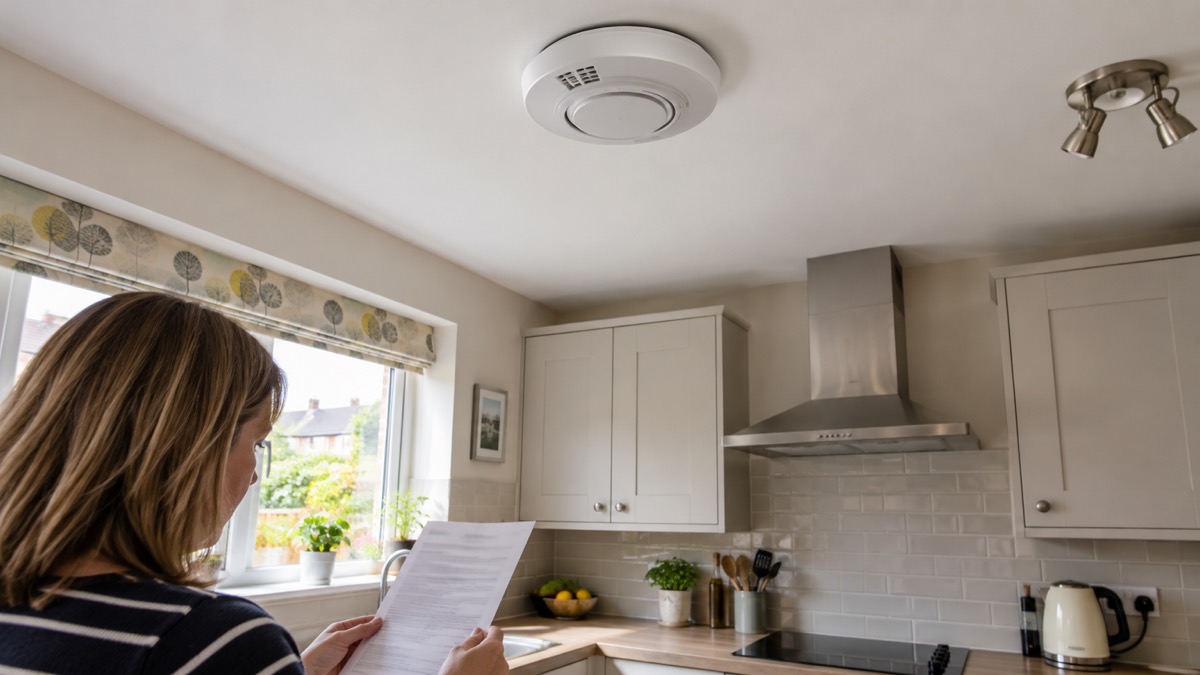
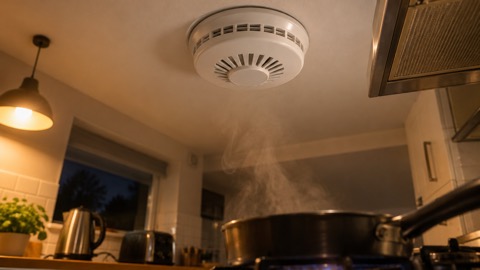
The FireAngel FA6720-R is a battery-powered heat alarm for the kitchen, garage, utility room or loft: the places where a smoke alarm would keep going off every time you cook or park the car. It does not look for smoke. It uses a thermistor sensor and sounds when the air around it rises to between 54 and 65 degrees Celsius1. That is hot enough to mean a real fire and too hot to be triggered by steam, toast or a frying pan.
If you are fitting one, the essentials are simple. Put it on the ceiling, ideally centrally in the kitchen, at least 300mm from any wall or light fitting1. Test it at least once a month by pressing the test button1. It runs on a sealed lithium battery rated for 10 years that you cannot change, so when the battery reaches the end of its life you replace the whole alarm1.
This page covers what the FA6720-R does and does not do, where to fit it, how to test it, what the chirp means, and how to get support from FireAngel. It is one alarm in a wider picture: for the full set of choices, see Heat Alarms: What They Do and Where They Go and Smoke Alarms: Types and How to Choose One.
What the FA6720-R does, and the rooms it is made for
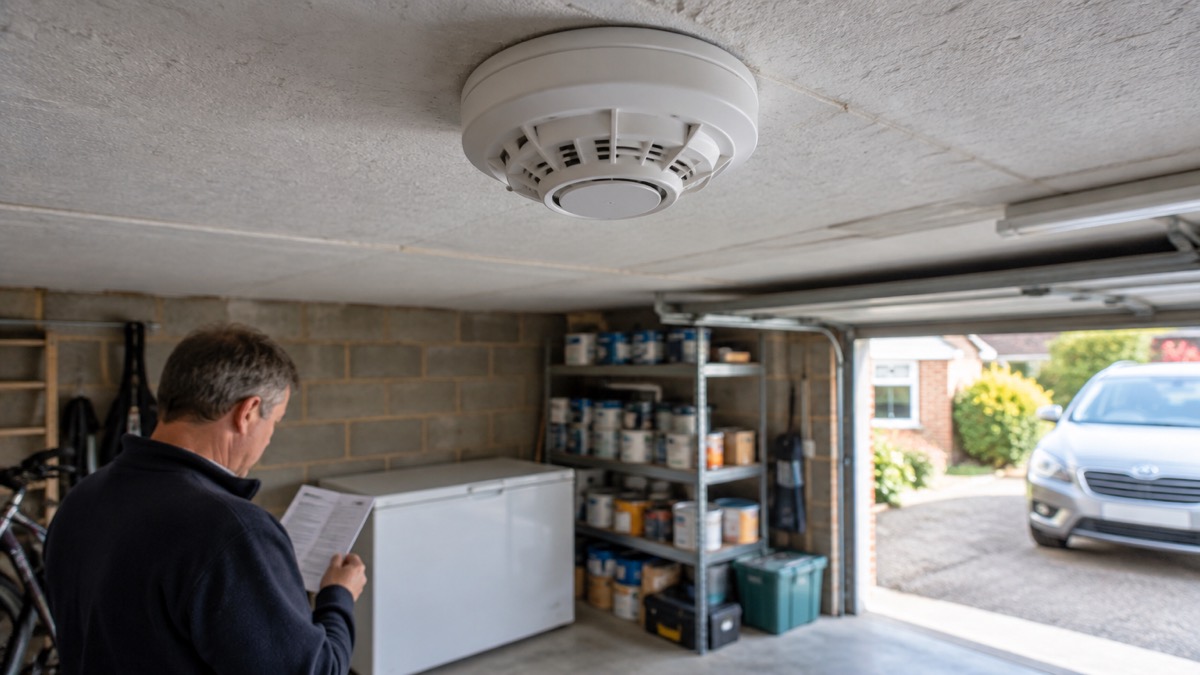
A heat alarm is the right answer for a room where a smoke alarm is the wrong tool. FireAngel describes the FA6720-R as a kitchen heat alarm with thermistor sensor technology, designed for rooms where smoke alarms should not be fitted1. The company's own advice is direct: for kitchen protection, use a dedicated heat alarm such as the FA6720-R rather than a smoke alarm5.
The rooms it suits are set out by the maker: kitchens, garages, utility rooms, unconverted loft spaces, boiler rooms, and leisure vehicles including caravans, campervans and motorhomes1. The manual puts it more briefly: the FA6720 is suitable for the kitchen, garage and loft3. The logic is the same in each case. These are spaces where smoke, steam, dust or exhaust fumes are part of normal use, and an alarm that reacts to them would be silenced so often that it would stop being useful.
What it will not do is give you the early warning a smoke alarm gives in a living area or a bedroom. A heat alarm waits for a temperature rise, which means it responds later than a smoke alarm would. That is why FireAngel advises that in open-plan kitchen and living areas you pair the heat alarm with a smoke alarm in the living space, and that smoke alarms are still needed in bedrooms, hallways and landings1. The two types are complementary, not alternatives.
The unit itself is compact: 42mm deep and 118mm in diameter, which FireAngel describes as mounting discreetly on any ceiling1. It is certified to BS 5446-2:2003, the British standard for heat detection in domestic premises, and carries CE, UKCA and BSI Kitemark marks1. FireAngel states it is suitable for BS 5839-6:2019 Grade F1 installations1. If you want to understand what those grades mean for your home, see Alarm Standards: BS 5839-6, BS EN 50291 and System Grades.
It sounds at 54 to 65 degrees Celsius
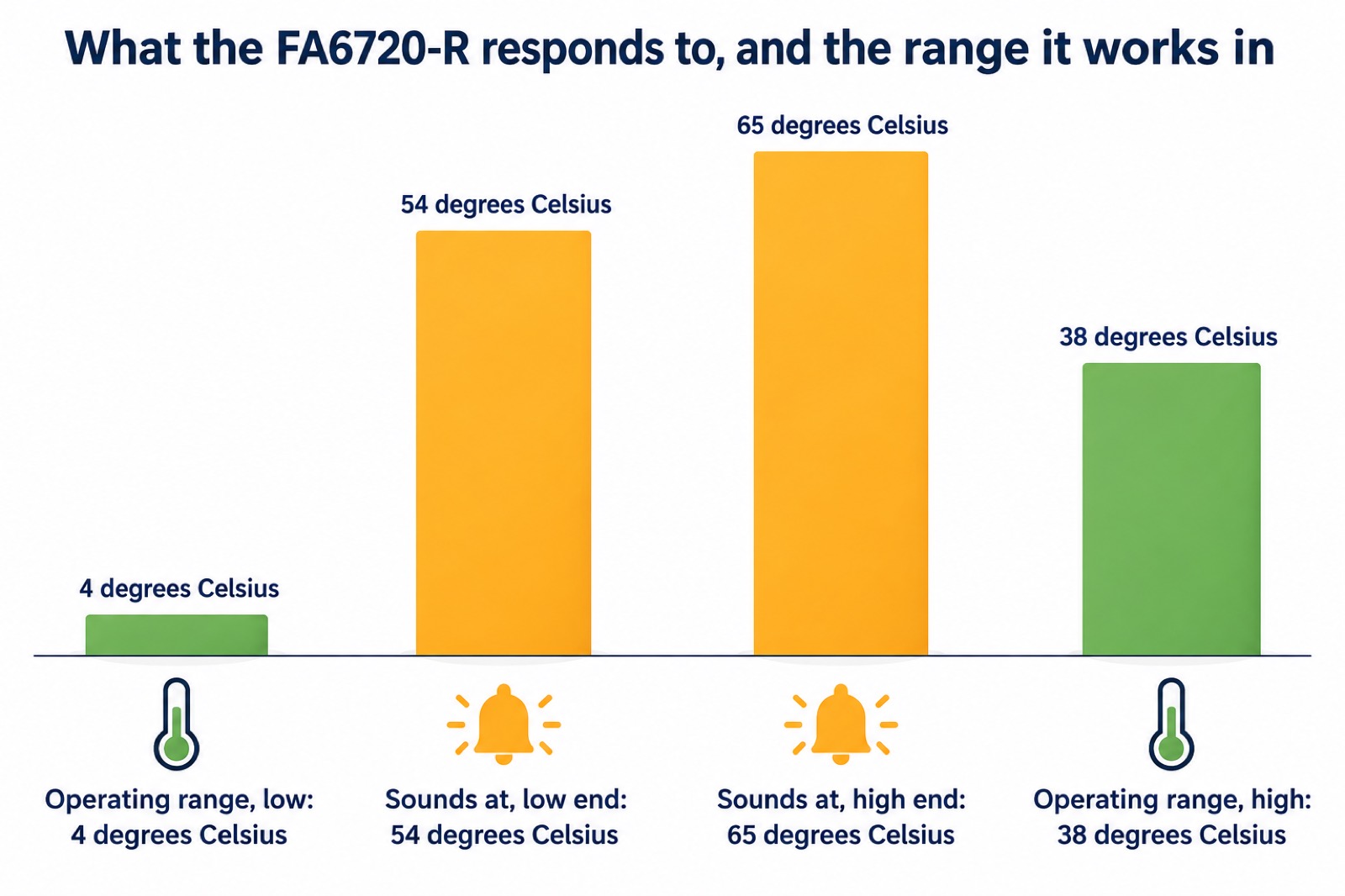
The trigger is the whole point of a heat alarm, so it is worth knowing exactly what it responds to. The thermistor sensor triggers when the ambient temperature rises to between 54 and 65 degrees Celsius1. The manual says the same in plainer words: your heat alarm will sound a warning when the ambient temperature in a room is between 54°C and 65°C3. The datasheet describes this as Class A1 fire detection4.
That range is deliberately high. Normal cooking produces heat, steam and smoke, but the air around a hob does not usually reach 54 degrees Celsius at ceiling height unless something is burning. A heat alarm therefore tolerates the everyday business of a kitchen in a way a smoke alarm cannot.
There is a second temperature range that matters just as much: the conditions the alarm itself can work in. FireAngel states that the alarm operates in temperatures from 4 to 38 degrees Celsius, so it is suitable for unheated spaces that do not freeze1. The datasheet gives the same figure as +4°C to +38°C4. The maker's instruction is explicit: do not install a heat alarm where temperatures regularly exceed 38°C or drop below 4°C1. A garage that bakes in summer or a loft that freezes in winter may fall outside that, and the alarm may not work reliably there.
One behaviour worth knowing if a fire is already well developed: the manual states that for FA6720 heat alarms, after sounding for 30 minutes the audible alarm signal will increase the pause between alerts by approximately 12 seconds to save power, with the LED continuing to flash once every second3. In other words, a long-running alarm becomes less continuous over time. That is a power-saving feature, not a sign that the danger has passed.
Fitting it on the ceiling, at least 300mm from walls and lights
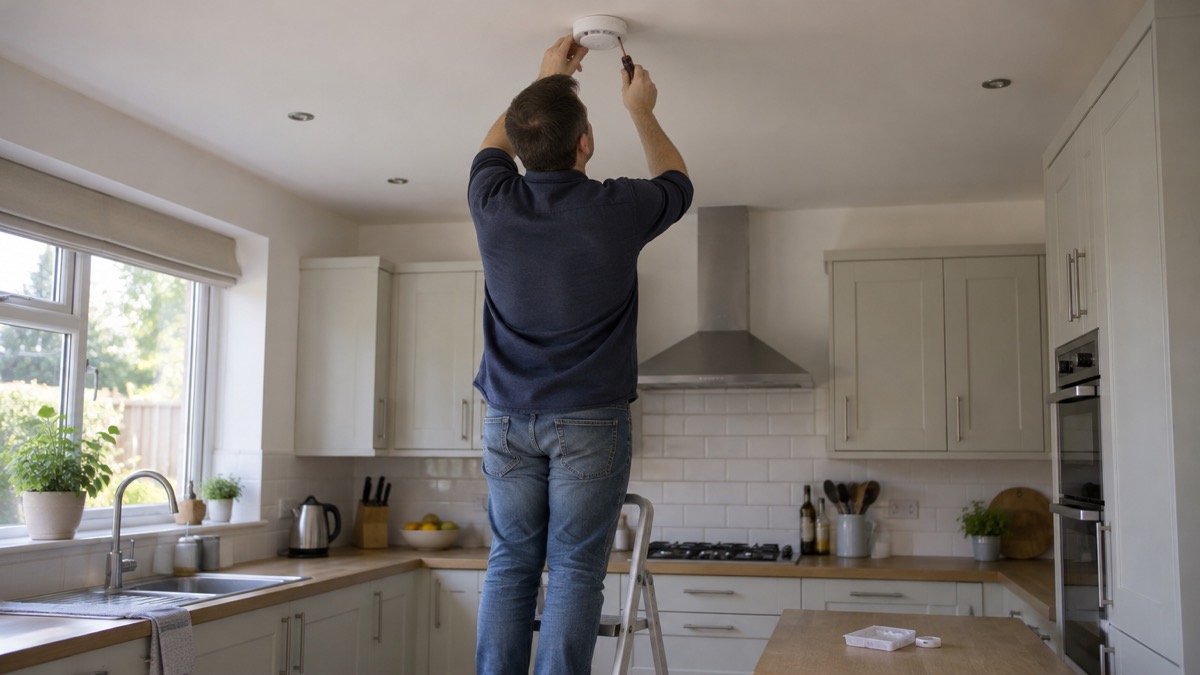
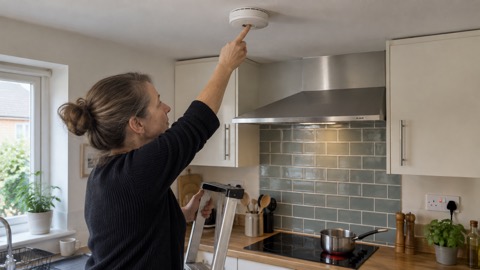
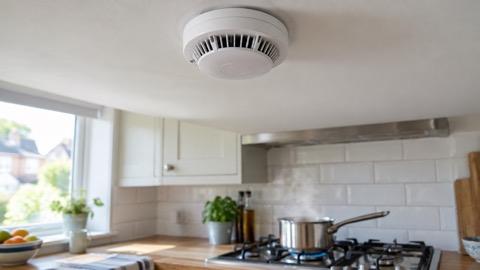
The FA6720-R is a ceiling alarm. The datasheet lists ceiling as the installation position4, and the manual is blunt about the alternative: heat alarms should not be fitted on a wall3. FireAngel's fitting advice is to install it on the ceiling of your kitchen, ideally centrally positioned, at least 300mm from any wall or light fitting1. The manual repeats the distance: heat alarms should be sited at least 300mm from light fittings and walls3.
There is a second clearance to observe. FireAngel advises keeping alarms at least 500mm from air vents, fans and light fittings1. Vents and fans move air around, and a heat alarm sitting in a draught may not sense the room's temperature accurately.
Fixings are supplied with the alarm, and FireAngel describes installation as easy4. The unit has a large central test button, which makes the monthly check straightforward from the floor with a broom handle or a step4.
If you are replacing an older alarm, this may be simpler than you expect. FireAngel states that the FA6720-R is the direct replacement for the discontinued HT-630 heat alarm, and that it uses the same baseplate, so you can swap it without drilling new holes1. Twist the old unit off, fit the new one to the existing base and test it. If you are not sure the baseplate is sound, or you did not fit the original, have it checked.
Testing it at least once a month
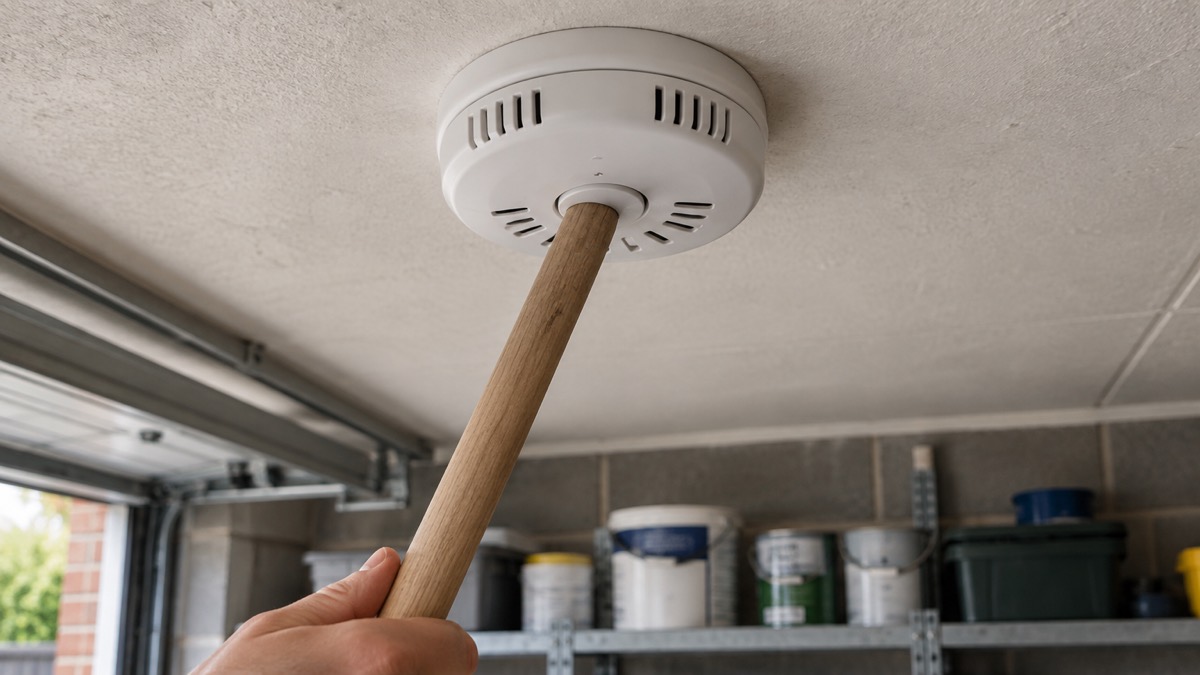
FireAngel's instruction is short: test at least once a month1. The alarm has two test modes, and knowing which is which matters if you test it while people are asleep or nearby.
A single press of the test/hush button runs a quiet self-test at reduced volume, at least 10dB below the full alarm1. A double-press runs a full-volume test at the alarm's 85dB1. The quiet test lets you check the unit works without the whole house hearing it; the full test confirms the sounder itself. Doing both from time to time is sensible, and the monthly check is the habit to keep.
Testing is not just a formality. It confirms the sensor responds, the sounder works and the battery has charge. If the alarm does not respond when you press the button, treat it as a fault rather than an inconvenience. For the wider routine, including how often to test other alarms in the house, see How Often to Test Smoke and CO Alarms.
A sealed 10-year battery: chirps, Sleep Easy and replacing the whole alarm
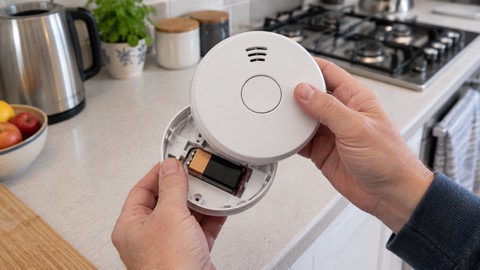
The FA6720-R is powered by a 10-year sealed tamperproof lithium battery that never needs changing1. The datasheet describes it as a 10 year sealed for life lithium battery4. That is a real convenience, but it comes with a consequence: when the battery is done, the alarm is done.
FireAngel explains what the sound means. A single chirp from the FA6720-R typically means the sealed battery is reaching end of life1. Because the battery is sealed and tamperproof, it cannot be replaced2. When the alarm reaches end of life after 10 years, you replace the entire unit2.
A chirp at two in the morning is the moment most people meet this. The alarm has a feature for exactly that. Sleep Easy silences low-battery chirps for up to 8 hours overnight without affecting heat detection1. The support article puts it as: use the Sleep Easy function to silence low-battery chirps for 8 hours overnight2. The datasheet lists the same feature as silencing the low battery chirp for 8 hours4.
The 10-year figure is the battery's rated life, and FireAngel's advice is to replace the whole unit at that point2. If you have lost track of when the alarm was fitted, the chirp is your signal, and the date you fitted it is worth writing on the base or in your household file. For the general rule on when alarms of any type should be replaced, see When to Replace a Smoke, Heat or CO Alarm.
When it goes off and there is no fire
A heat alarm that keeps triggering in a kitchen usually has a siting problem rather than a fault. FireAngel's advice is to check that it is not positioned directly above a hob, oven or toaster where concentrated heat rises, and to reposition the alarm further from the heat source while keeping it on the ceiling1. If it continues to trigger without an obvious heat source, it may be faulty and should be replaced1.
That sequence is worth following in order. Move it first, because a ceiling position directly over a hob will collect rising heat in a way the rest of the room does not. Keep it on the ceiling when you move it, because the maker's manual says heat alarms should not be fitted on a wall3. If a repositioned alarm still sounds with nothing hot beneath it, replacement is the answer rather than repeated silencing.
FireAngel's product description makes the promise plainly: the alarm is there so you can be alerted to fires without the false reactions to cooking fumes7. If yours is not living up to that, the siting check is the first thing to try. For smoke alarms that keep sounding, the causes are different, and How to Stop Smoke Alarm False Alarms covers them.
Support, warranty and where it fits in a wider alarm plan
FireAngel's technical support can be reached on 0330 094 5830, by email at technicalsupport@fireangeltech.com, or online at www.fireangeltech.com/support8. The company's address is Vanguard Centre, Coventry CV4 7EZ8. FireAngel states that its customer support specialists are based in the UK and can help with product advice, installation queries and troubleshooting by phone, email or live chat9. For alarms fitted by Greater Manchester Fire and Rescue Service and still covered by its guarantee, call freephone 0800 141 2561 for support10.
The warranty on the FA6720 is 5 years, according to FireAngel's datasheet4. Keep your proof of purchase. Note that the warranty period and the battery life are different things: the battery is rated for 10 years and the unit is replaced at end of life, while the warranty covers a shorter period1.
The FA6720-R is one part of a household alarm plan, not the whole of it. FireAngel recommends getting full home protection and sells a variety of carbon monoxide alarms, water leak and temperature and humidity sensors alongside its smoke alarms11. If you are working out what your home needs, start with How Many Smoke Alarms Does a House or Flat Need? and Where to Fit Smoke Alarms, then decide whether a heat alarm belongs in the kitchen, garage or loft.
For the wider FireAngel range, see the FireAngel brand page. For the fire safety picture across the UK, including where the rules differ in Wales and Northern Ireland, see Wales and Northern Ireland: Alarm Rules and Fire Services.
Sources (11)
- FA6720-R Kitchen Heat Alarm, FireAngel, 2026-10-28
- FireAngel Product FAQs, FireAngel, 2026-10-29
- FA6611, FA6615, FA6620 and FA6720-R Smoke and Heat Alarm Manual, FireAngel, 2024-09
- FA6720 Datasheet, FireAngel, 2024-09
- FA6620-R Optical Smoke Alarm, FireAngel, 2026-10-28
- FA6615-R Optical Smoke Alarm, FireAngel, 2026-10-28
- HT-630 Kitchen Heat Alarm, FireAngel, 2026-08-21
- HW1-R Manual, FireAngel, 2024-09
- Carbon Monoxide Safety, FireAngel, 2026-07-31
- Problem with your smoke or heat alarm, Greater Manchester Fire and Rescue Service, 2026-10-29
- FA7312-EUX4 Temp & Humidity Sensor | FireAngel, FireAngel
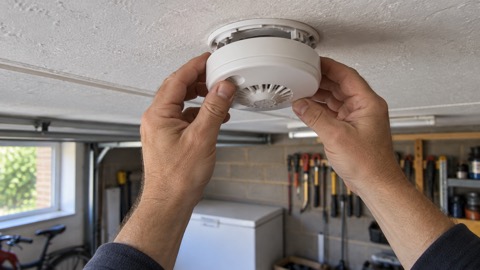 FireAngel HW1 Heat Alarm
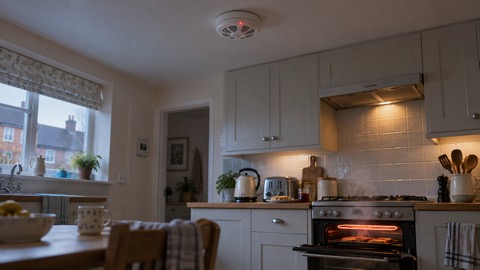 FireAngel HW10 Heat Alarm
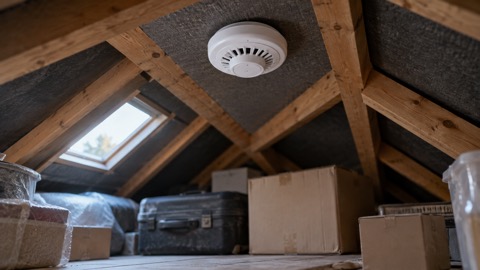 FireAngel HM-SN-1 Heat Alarm
 Kidde Firex KF30 Heat Alarm
 Firehawk FHH10 Heat Alarm
 Aico Ei144e Heat Alarm
 FireAngel FA8720BW Heat Alarm