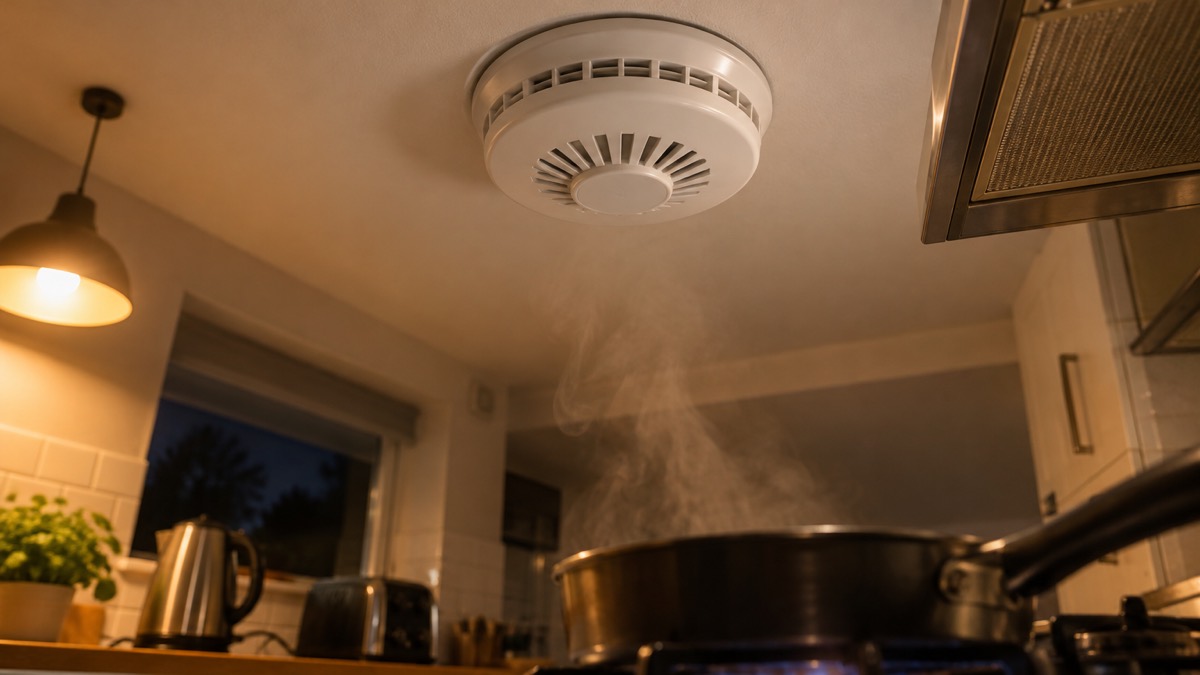
The Firehawk FHH10 is a heat alarm with a sealed-in 10-year lithium battery, made for the rooms where a smoke alarm would keep going off: kitchens, garages and unconverted lofts1. It senses heat rather than smoke, so steam from a kettle or dust in a loft does not set it off, and it runs for its whole life on a battery you never change2. It is fixed to the ceiling, and the battery only switches on when the alarm is clipped onto its mounting plate, so it is not draining on a shelf before you fit it1.
If you are deciding what to put in a kitchen or a garage, the choice is usually between a heat alarm and a smoke alarm. Official guidance is clear that heat alarms suit rooms where steam, fumes or moisture would cause nuisance alarms in smoke alarms3. The FHH10 is the battery-powered option in the Firehawk range, for households that do not want to wire an alarm into the mains1.
This page sets out what the FHH10 does, where it belongs, its specifications, how to fit and test it, and what its beeps mean. It does not cover smoke alarms for hallways and landings, which are a separate job: see Smoke Alarms: Types and How to Choose One for those.
What the FHH10 is and what it does
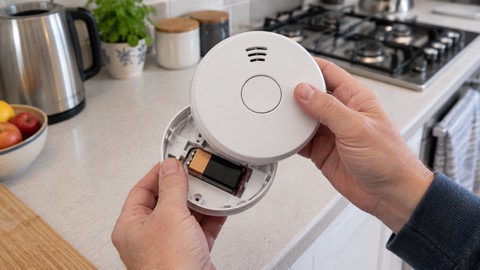
The FHH10 is a long-life heat alarm with a sealed-in 10-year battery1. Firehawk describes the range as long-life 10-year heat alarms designed for applications where smoke alarms are unsuitable4. The battery is lithium and sealed in, so there is no battery compartment to open and nothing to replace during the alarm's life1. The supplier gives the alarm a 10-year life and the maker gives a 10-year warranty2.
It detects fire by heat, using what the maker calls advanced thermistor detection controlled by bespoke software1. A thermistor is a sensor whose electrical resistance changes with temperature, and the alarm's electronics watch for the fast rise that a fire causes. The supplier describes the same sensor as advanced thermistor detection for improved fire identification2. This is why the alarm is not fooled by cooking steam or loft dust in the way a smoke alarm can be.
Two controls matter day to day. There is an extra large test button, for ease of use, and an alarm silence button for nuisance alarms, which the maker describes as ideal in non-emergency situations1. The silence button is for a false alarm you have checked, not for a real fire.
The FHH10 is the stand-alone version. Firehawk also makes the FHH10-RF, a radio-interlinked heat alarm with the same sealed 10-year battery, which can be linked with the rest of the Firehawk RF-Link range: smoke alarms, heat alarms, carbon monoxide alarms, a module for mains alarms and the hard of hearing alarm5. If you want one alarm to set off the others in the house, that is the version to look at, and Interlinked Alarms: How Linking Works explains how linking works.
Where to fit it: kitchens, garages and unconverted lofts
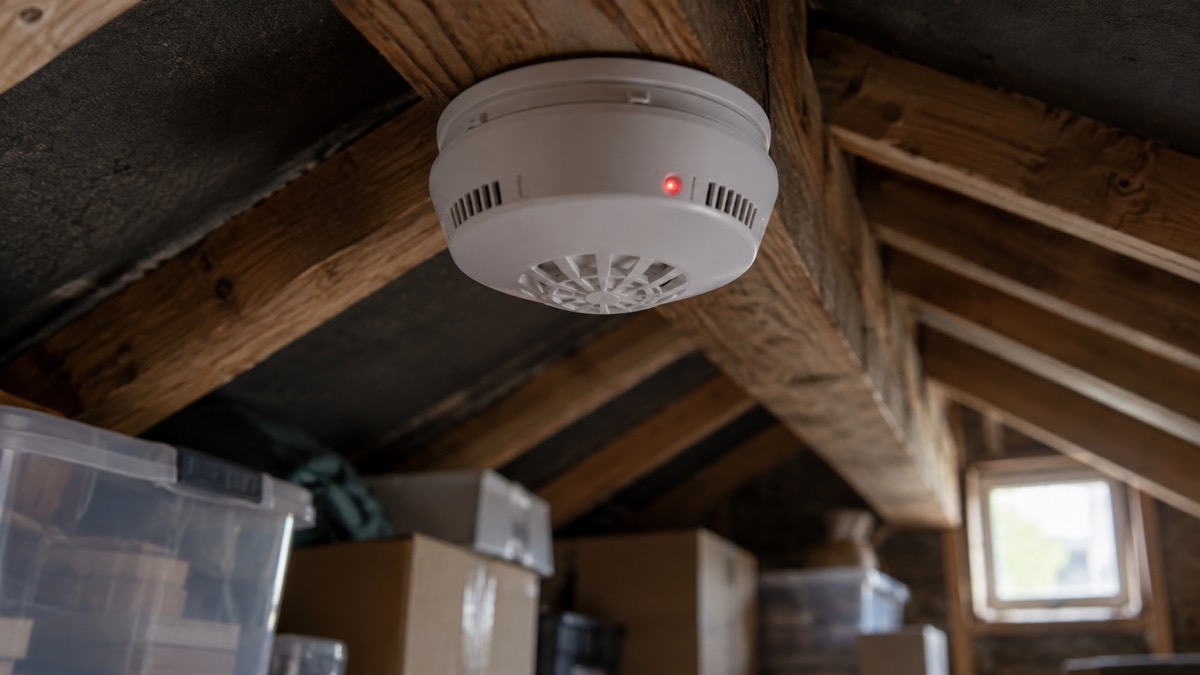
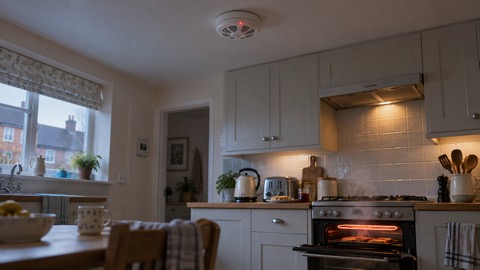
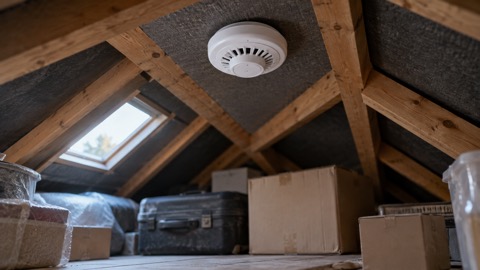
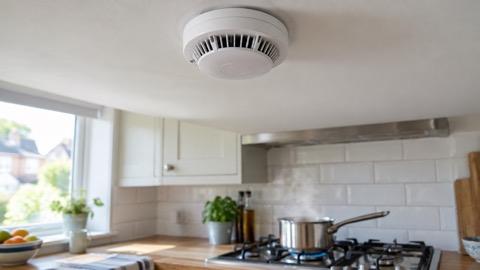
Firehawk tags the FHH10 for garages, kitchens and lofts1. The supplier lists it as ideal for kitchens, garages and unconverted loft spaces2. Those three rooms share a problem: they are the places where a smoke alarm is most likely to cry wolf. A kitchen fills with steam, a garage with exhaust fumes and dust, and an unconverted loft with dust and draughts. A heat alarm ignores all of that and waits for a real rise in temperature.
Official guidance from Manchester Fire and Rescue Service makes the same point: heat alarms are more suitable for detecting fires in kitchens or other rooms where steam, fumes or moisture could cause nuisance alarms in smoke alarms3. FireAngel, another alarm maker, gives the same list of suitable places, kitchens, garages or unconverted lofts, where fumes or dust reduce the likelihood of false alarms being an issue6. Its installation guidance adds that heat alarms are best suited to areas where dust, fumes and moisture can cause nuisance alarms in smoke alarms7.
A heat alarm is not a substitute for a smoke alarm everywhere. It responds to heat, so it is slower to react to a smouldering fire that gives off smoke before it gives off much heat. The usual arrangement is a heat alarm in the kitchen and smoke alarms in the hallway, landing and living areas, so that each room gets the sensor that suits it. Heat Alarms: What They Do and Where They Go sets out the full picture, and Heat Alarm or Smoke Alarm: Which Goes Where compares the two directly.
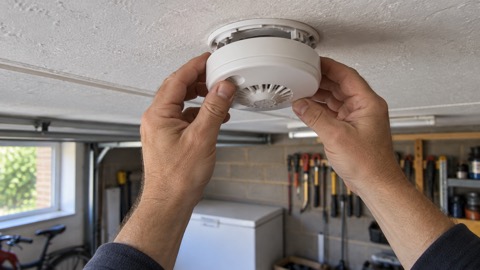
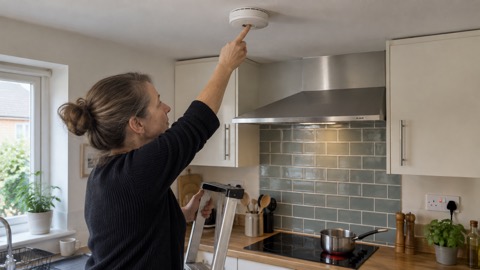
The FHH10 is fixed to the ceiling, which is the position the supplier gives for it2. FireAngel's fitting instructions for its own battery heat alarm describe the first step as fitting the mounting plate to the ceiling using the screws provided7. The FHH10 comes with its screws2. Before you drill, check what is above the ceiling: a cable or a pipe is easy to hit in a kitchen or a loft.
Heat alarm or smoke alarm: why the FHH10 suits dusty or steamy rooms
The case for a heat alarm in a steamy or dusty room is about false alarms, and false alarms have a cost beyond the noise. An alarm that goes off every time someone boils a pan is an alarm someone eventually takes down or silences for good. The FHH10 is built to avoid that cycle. The supplier describes it as giving reliable fire detection in areas where dust or fumes could cause false alarms in traditional smoke detectors2.
The same logic runs through the Firehawk range. The maker says its mains heat alarms are specifically designed for applications where smoke alarms would be unsuitable, such as kitchens and dusty areas8, and that its heat alarms are used where smoke alarms are unsuitable, such as kitchens, garages and lofts4. FireAngel's kitchen heat alarm pages make the same case for its own products, that heat alarms are ideal for kitchens, garages or unconverted lofts because fumes or dust are less likely to cause false alarms9.
| Room | What goes wrong with a smoke alarm | Why a heat alarm suits it |
|---|---|---|
| Kitchen | Steam from cooking, smoke from frying | Heat alarms suit rooms where steam, fumes or moisture cause nuisance alarms3 |
| Garage | Exhaust fumes, dust, draughts | Heat alarms suit dusty areas where smoke alarms are unsuitable8 |
| Unconverted loft | Dust, draughts, temperature swings | Heat alarms are suited to lofts where dust causes false alarms6 |
There is a limit to this. A heat alarm is not a smoke alarm with the sensitivity turned down; it is watching a different thing. In a bedroom or a hallway, where you want the earliest possible warning of a smouldering fire while people are asleep, a smoke alarm is the right sensor. The FHH10 earns its place in the rooms where smoke alarms struggle, not as a replacement for them. If you are weighing up which alarm to put where across a whole house, Smoke Alarms: Types and How to Choose One and Heat Alarms: What They Do and Where They Go cover the room-by-room decisions.
Specifications: 84mm by 50mm, 85dB, 0°C to +40°C
The FHH10 is a compact ceiling unit. The supplier gives it as 84mm in diameter and 50mm deep, with an 85dB sound level2. The maker gives the dimensions as 8.4 by 5 cm, which is the same measurement in different units1. The maker gives the weight as 0.076 kg, and the supplier gives 80g1. The alarm is sold in master packs of 10, with a master pack weight of 1.306kg and master pack dimensions of 31.5 by 11 by 19.5 cm1.
| Specification | Figure | Source |
|---|---|---|
| Type | Heat alarm, battery powered | 1 |
| Battery | Sealed-in 10-year lithium | 1 |
| Diameter | 84mm | 2 |
| Depth | 50mm | 2 |
| Sound level | 85dB | 2 |
| Operating temperature | 0°C to +40°C | 2 |
| Relative humidity | Less than 85% | 2 |
| Weight | 0.076 kg (maker), 80g (supplier) | 1 |
| Fixing | Screws, included | 2 |
| Standard | BS5446-2: 2003 | 1 |
| Warranty | 10 years | 1 |
The temperature range is the figure to check against where you plan to put it. A garage that drops below freezing in a cold snap is outside the 0°C to +40°C range2. An unconverted loft can get very hot in summer, and the top of the range matters there too. The humidity limit of less than 85 per cent rules out the bathroom and anywhere else that stays wet2.
The 85dB sound level is the same order as a smoke alarm, and it is loud enough to wake most people in a nearby room5. It is a heat alarm, not a smoke alarm, and it is not designed for someone with significant hearing loss: Smoke and CO Alarms for Deaf and Hard of Hearing People explains the options.
Fitting it to the ceiling: the battery switches on at the mounting plate
The FHH10 has an Auto Switch Mounting Plate. The maker says power is automatically switched on when the alarm is attached to its mounting plate and off when removed1. The supplier describes the same feature: the sealed, tamper-proof lithium battery activates automatically when the alarm is fitted to the mounting plate, and the alarm automatically powers on and off when attached to or removed from the base plate2. This is the single most important thing to understand about fitting it. Until the alarm is clipped onto its plate, the battery is dormant, and the 10-year clock has not started.
To fit it:
- Choose the ceiling position in the kitchen, garage or loft, clear of cables and pipes.
- Fix the mounting plate to the ceiling with the screws provided7.
- Clip the alarm onto the plate and twist until it seats. The battery switches on at this point1.
- Press the test button to confirm it sounds1.
The maker's Auto Switch Mounting Plate also means the alarm can be taken down for decorating or cleaning without flattening the battery, because the power goes off when it is removed and comes back on when it is refitted1. The supplier notes that the alarm is fixed with screws, which are included2.
Testing, silencing and reading the red LED
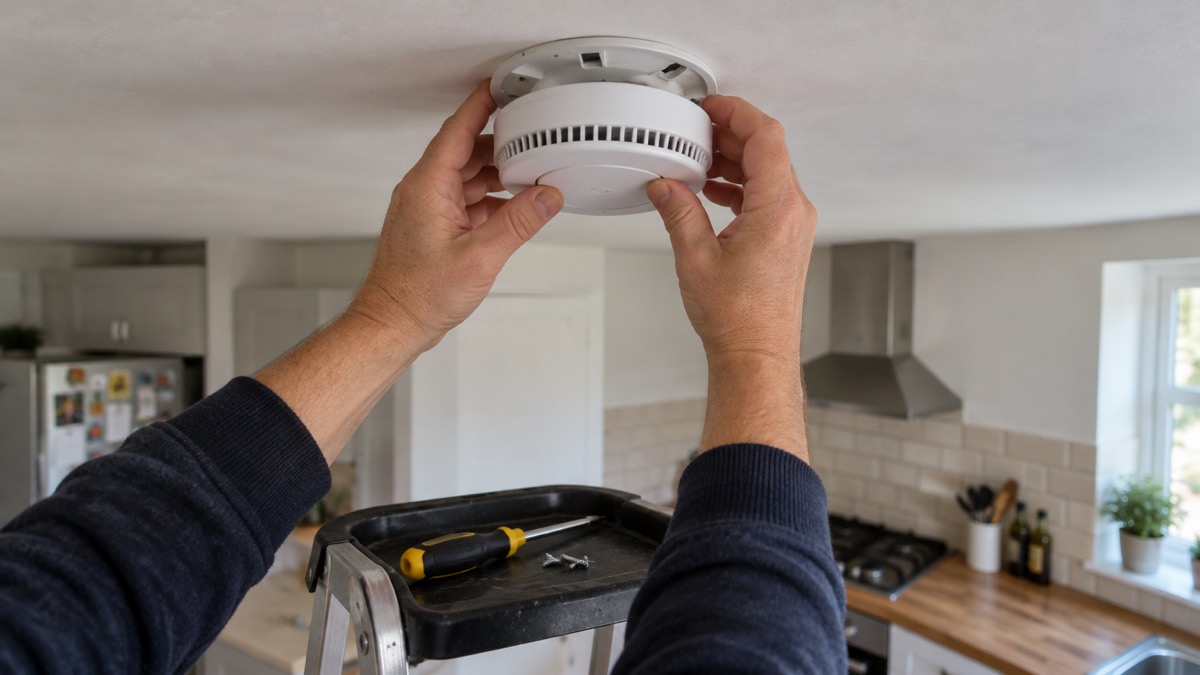
The FHH10 has a red LED that flashes once a minute to show it has power, and flashes constantly to show an alarm condition1. That slow once-a-minute flash is the sign the alarm is alive and working. If you look up and see no flash at all, the alarm is not powered, and you should check it is seated properly on its plate.
The maker provides an extra large test button for ease of use1. Press it to check the alarm sounds. The alarm also has an alarm silence button, which the maker describes as ideal in non-emergency situations, meaning nuisance alarms1. Use it only after you have checked there is no fire. If the alarm is sounding because there is smoke or heat, get out and call 999.
The low battery warning can be silenced for up to 10 hours, and the maker says this maintains continuous protection during sleeping hours1. That is the feature that matters at 3am: you can stop the chirp without taking the alarm down, and deal with it in daylight. The supplier adds that the end-of-life warning can also be silenced for up to 10 hours2. That buys you a night, not a new alarm: an end-of-life warning means the 10 years are up and the unit needs replacing.
| What you see or hear | What it means | What to do |
|---|---|---|
| Red LED flashes once a minute | Alarm has power and is working1 | Nothing; this is normal |
| Red LED flashes constantly | Alarm condition1 | Check for fire; get out and call 999 if there is one |
| Chirping at night | Low battery warning1 | Silence for up to 10 hours, deal with it in daylight1 |
| Chirping that returns after silencing | End-of-life warning2 | Replace the alarm; the 10 years are up |
If the alarm keeps chirping after you have silenced it and it is not at end of life, the alarm may not be seated properly on its plate. Take it off and clip it back on firmly, then test it. If it still misbehaves, contact Firehawk support.
Standards and UK legislation it meets
The FHH10 is approved to BS5446-2: 2003, the British standard for heat alarms1. It is UKCA marked, and the supplier lists it as suitable for installations meeting BS 5839-6 Grade F12. Grade F1 is the grade for a system of battery-powered alarms, which is what a household fitting the FHH10 without wiring is building. Alarm Standards: BS 5839-6, BS EN 50291 and System Grades explains what the grades mean in practice.
The supplier also lists the FHH10 as compliant with Scottish legislation from 2022 and Northern Ireland legislation from 20242. Those are the dates of the alarm rules in those two nations, and they differ from England's. The maker lists the FHH10 as suitable for installations meeting BS 5839-6 Grade F1 and as UKCA marked5. In Wales and Northern Ireland the rules and the fire services differ again, and Wales and Northern Ireland: Alarm Rules and Fire Services sets out the detail. If you are in Scotland, check what your installation needs before you buy a stand-alone alarm.
The FHH10 is approved to BS5446-2: 2003 and is UKCA marked2. That does not change what the alarm does, but it tells you it has been tested to a recognised standard for heat alarms.
Support, warranty and getting help
The FHH10 carries a 10-year warranty from the maker, matching its 10-year battery and 10-year life1. Keep your fitting date, because that is when the warranty period starts.
For help, Firehawk support is on freephone 0800 008 6568, and you can text 07885 831239 if you are unable to call10. The maker's technical helpline is also 0800 008 656811. Fireblitz, which supplies the Firehawk range, can be reached at www.fireblitz.co.uk, by email at sales@fireblitz.co.uk and on 01322 342238, and it publishes data sheets for the range12.
If your alarm was fitted by your fire and rescue service on a home fire safety visit, contact them first if something goes wrong. Ask your local service about a visit if you have not had one. Arrangements differ between England, Scotland, Wales and Northern Ireland.
When the alarm reaches the end of its life, dispose of it properly. The supplier lists the FHH10 as covered by Valpak's WEEE Distributor Take-back Scheme, so ask where you bought it about taking the old unit back2. When to Replace a Smoke, Heat or CO Alarm covers the replacement decision, and How Often to Test Smoke and CO Alarms covers the testing routine.
Sources (12)
- FireHawk FHH10 Battery Powered Heat Alarm, Fireblitz, 2026-08-17
- Firehawk FHH10 10 Year Sealed Lithium Battery Heat Alarm, Safelincs, 2026-10-29
- Smoke and Heat Alarms, Manchester Fire and Rescue Service, 2026-10-29
- FireHawk Alarms, Fireblitz, 2026-08-28
- FireHawk FHH10-RF Radio Interlinked Heat Alarm, Fireblitz, 2026-10-14
- HM-SN-1 Specification Kitchen Heat Alarm, FireAngel, 2026-08-21
- Installing Your Battery Powered Heat Alarm, FireAngel, 2024-10-17
- FireHawk Mains Heat Alarms, Fireblitz, 2026-10-14
- FS1226-T Specification Kitchen Heat Alarm, FireAngel, 2026-08-20
- Problem With Your Smoke or Heat Alarm, Manchester Fire and Rescue Service, 2026-10-29
- CO10-RF Troubleshooting, Fireblitz, 2025-03-19
- Firehawk Alarms Guidance, CO-Gas Safety, 2024-02-18
 FireAngel FA6720-R Heat Alarm
 FireAngel HW1 Heat Alarm
 FireAngel HW10 Heat Alarm
 FireAngel HM-SN-1 Heat Alarm
 Kidde Firex KF30 Heat Alarm
 Aico Ei144e Heat Alarm
 FireAngel FA8720BW Heat Alarm