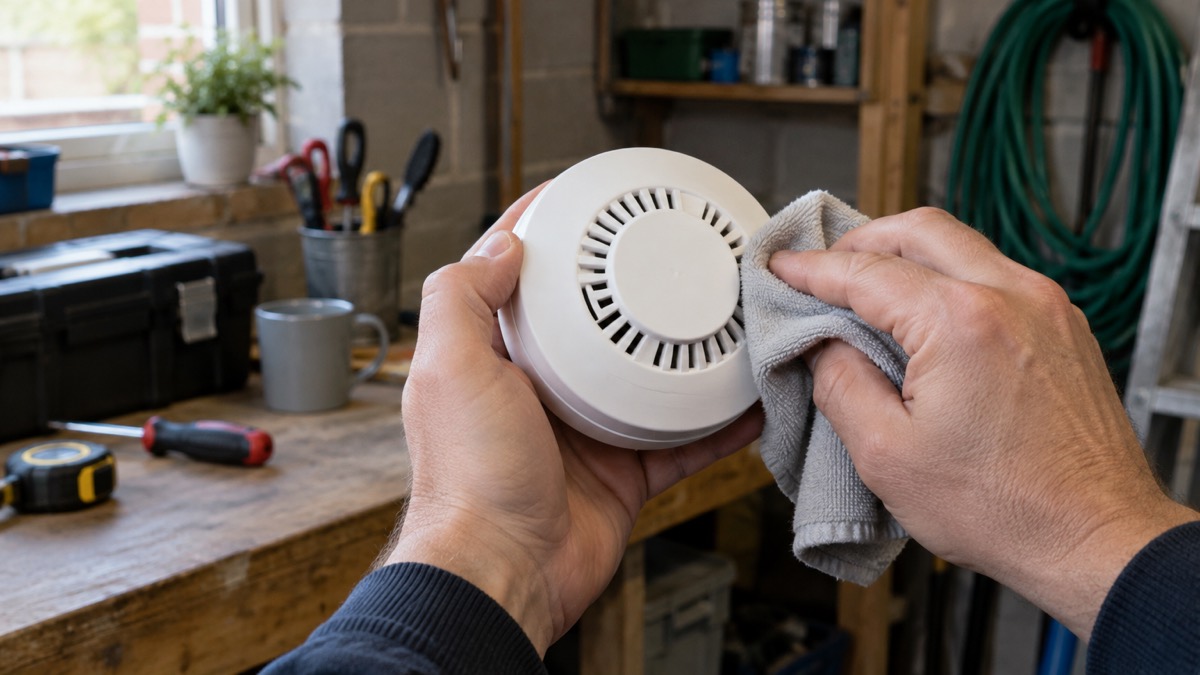
The FireAngel HT-630 is a battery-powered heat alarm built for the rooms where a smoke alarm would keep going off: kitchens, garages and unconverted lofts. It listens for heat rather than smoke, sounds at 85 decibels at 3 metres, and runs on a sealed lithium battery that lasts the life of the unit1. It is also discontinued. FireAngel now directs owners of an HT-630 to the FireAngel FA6720-R Heat Alarm as the replacement2.
If you already have one on the ceiling, the practical answer is simple: keep testing it monthly, vacuum it every three months, and replace it when it starts chirping continuously, because that means it has reached the end of its life3. If you are buying for a kitchen now, the HT-630 is no longer the model to look for.
For a household getting ready for power cuts, storms and other disruptions, a heat alarm earns its place because it keeps working when the mains does not. It has no wiring to fail and no battery to remember. What it cannot do is warn you early enough to escape from a bedroom or a hallway, and it cannot be linked to the rest of your alarms. Both limits matter when you plan a route out of the house.
The HT-630 is discontinued: what to do with an end-of-life alarm
FireAngel's product page for the HT-630 now carries the replacement instruction directly: "Replace your end of life HT-630 alarm with a FireAngel FA6720-R Heat Alarm with 10 year sealed for life battery"2. The same wording appears across FireAngel's support answers, with the added reason that the FA6720-R alerts you to fires "without the false reactions to cooking fumes"7.
The trigger for replacement is the sound, not the calendar. FireAngel states that if your HT-630 is chirping continuously, it has reached end of life and should be replaced with the FA6720-R9. A single chirp every 45 seconds with a flashing yellow light is a different signal: that is the low battery warning, and the manual says to replace the unit within 30 days3. Because the battery is sealed, there is no cell to swap, so a low battery warning on this model is effectively an end-of-life warning with a deadline attached.
That deadline is worth writing down. Thirty days is short enough to forget, and a heat alarm that has stopped working gives no sign of it. Put the date in a diary or on the fridge, and treat the alarm as out of service from that point.
For the wider question of when any alarm should be retired, FireAngel notes that it designs smoke, heat and carbon monoxide alarms with 10-year lifespans10. Our guide to when to replace a smoke, heat or CO alarm sets out the general rules, and the FireAngel brand page lists the current range.
What the HT-630 does: a Class A1 fixed-point heat alarm with Thermistek detection
A heat alarm is a different instrument from a smoke alarm, and understanding the difference tells you whether it suits your household. The HT-630 is a fixed-point heat alarm, Class A1, with an alarm point temperature of 56°C to 64°C3. It uses a thermistor heat sensing element, which FireAngel describes as being for accuracy, reliability and stability, and Thermistek technology that activates the alarm sooner if it predicts a significant rate of rise in temperature3. In plain terms, it responds both to a room getting very hot and to a fire heating the room quickly.
The datasheet describes the sensor as Thermistek Class A1 heat detection, incorporating a unique radiant heat dish1. FireAngel developed the Thermistek heat alarm, in its own words, "to give a rapid alert to danger"2.
What it does for a household in an emergency is narrow but valuable. It covers the rooms where a fire is most likely to start and where a smoke alarm would be a nuisance: FireAngel says heat alarms are ideal for kitchens, garages or unconverted lofts8, and its product page names the kitchen, attic or garage as the places it keeps you alerted2. In a power cut, it keeps watching those rooms when mains-powered equipment is dead.
What it does not do is detect smouldering fires or slow smoke, because it is not looking for smoke at all. That is why it belongs alongside smoke alarms, not instead of them.
Specifications: 85 decibel sounder and sealed 10-year battery
The figures below are the ones that decide whether the alarm suits a room and how you keep it ready.
| Specification | HT-630 |
|---|---|
| Type | Battery powered heat alarm, fixed point, Class A11 |
| Sensor | Thermistek Class A1 heat detection with radiant heat dish1 |
| Alarm point temperature | 56°C to 64°C3 |
| Alarms at temperature range | +54°C to +62°C1 |
| Operating temperature | +4°C to +38°C1 |
| Sound level | 85dB(A) at 3m, minimum1 |
| Battery | 10 year sealed for life lithium, tamper proof2 |
| Controls | Large central button, test or silence1 |
| Standards | BS 5446-2:2003, KM 6770573 |
| Warranty | 5 years1 |
Two of these rows bear directly on emergency planning. The operating temperature range of +4°C to +38°C means the alarm is specified for normal indoor conditions, so an unheated garage in a hard frost or a loft that bakes in summer sits outside what the maker states1. If your garage is your chosen location, that is worth knowing before you rely on it there through a cold snap. The sealed battery is the other: it removes the commonest cause of a dead alarm, a cell that was never replaced, but it also means the whole unit is a consumable with a fixed life.
Where a heat alarm must not replace a smoke alarm
This is the safety point that matters most, and every official and maker source in this area agrees on it. FireAngel's manual states: "Heat alarms should not be installed in escape routes instead of smoke alarms"3. Its guidance for battery-powered heat alarms says they "should not be used in escape routes instead of smoke alarms"11, and its guidance for mains-powered heat alarms says the same9.
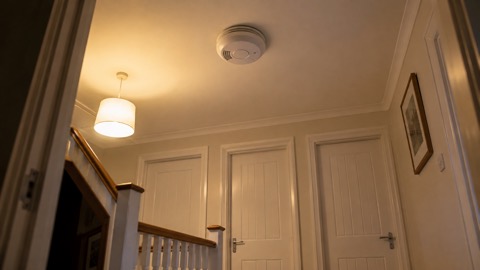
The reason is in what the device senses. Heat alarms are designed for rooms where smoke may not be a reliable indicator of fire, such as kitchens, garages and utility rooms where fumes may create false alarms10. A hallway or landing needs to raise the alarm while a fire is still small and the route is clear. A heat alarm waiting for 56°C will not do that in time.
Scotland's official guidance goes further and sets the standard for kitchens. The Tolerable Standard guidance cites BS 5839-6:2019, Clause 12.2(f), which states that only heat alarms should be used in kitchens, while an existing smoke alarm in a kitchen need not be replaced until the end of its manufacturer's recommended lifespan12. The same guidance requires all smoke and heat alarms to be interlinked12. That last requirement is one the HT-630 cannot meet, because it cannot be interlinked at all.
For the full picture of which device goes in which room, see Heat Alarm or Smoke Alarm: Which Goes Where and Heat Alarms: What They Do and Where They Go.
Fitting the alarm to its ceiling base plate
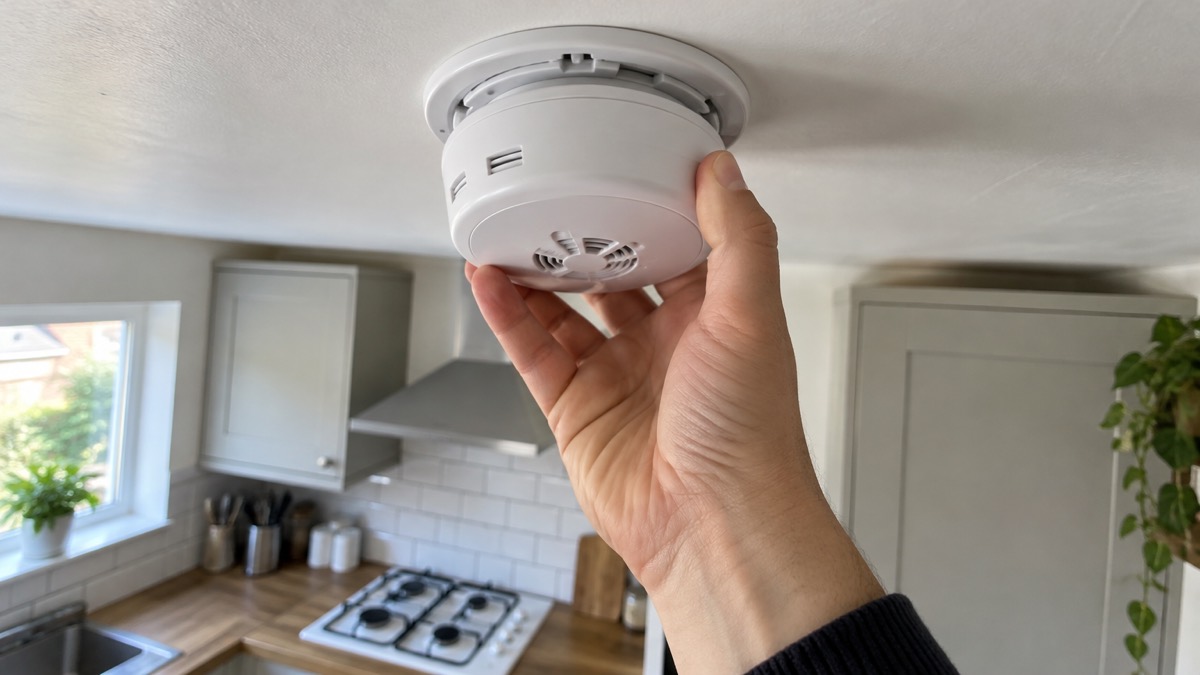
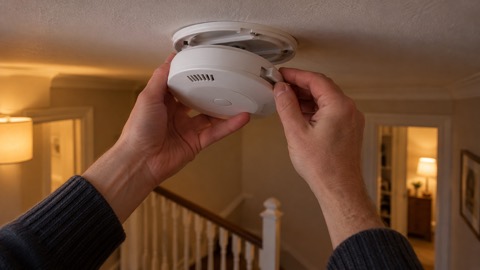
Fitting is a screwdriver job, done on a ceiling. FireAngel's manual for the HT-630 sets out the sequence: "Fit the base plate to the ceiling using the screws provided", then position the alarm on the plate and turn clockwise until it is locked into position3. The general battery-powered heat alarm guidance is the same: fit the mounting plate to the ceiling using the screws provided11.
The step people get wrong is the last quarter turn. FireAngel's guidance on its push-fit base is explicit that when fixing an alarm to the baseplate, "it's important to turn it as far as possible to ensure it is engaged and secure", and that a snug baseplate needs extra force5. Fire service advice gives the same point from the other side: if the alarm has a base plate, ensure that the unit is attached firmly to the baseplate14.
You will know it has worked. The manual says the red LED on the front of the alarm should flash once, approximately every 45 seconds to show that it is active3. If that light is not flashing, the alarm is not properly seated.
A few practical points for a household plan:
- Fit it before you need it, not during a storm warning, so you are not up a ladder in bad conditions.
- Check the seating after any decorating or loft work, since a knocked alarm can sit loose.
- Do not remove the alarm from its base to silence it. FireAngel warns that removing the alarm from its base plate will deactivate the unit and prevent it from detecting a fire11.
What the red and amber lights and chirps mean
The HT-630 communicates almost entirely through one light and one sounder, so learning the code saves a lot of guesswork. The manual describes an operating red LED that flashes once approximately every 45 seconds, and a fault indication where the amber LED flashes to show a low battery condition or alarm fault3.
| Signal | What it means | What to do |
|---|---|---|
| Red flash about every 45 seconds | Alarm is active and working3 | Nothing |
| Chirp every 45 seconds with yellow LED flashing | Battery is low3 | Replace the unit within 30 days3 |
| Continuous chirping | Reached end of life9 | Replace with the FA6720-R2 |
| Amber LED flashing | Low battery condition or alarm fault3 | Check the manual and replace if due |
| Full alarm | Heat at the sensor | Assume fire and follow your escape plan3 |
FireAngel's wider alarm guidance uses a similar language across its range: one chirp with a red flash every 40 to 60 seconds means low battery, and on a sealed-battery model that means replacing the alarm rather than the battery15. An amber LED flashing, sometimes with a chirp on mains alarms, means the alarm is not fitted to the base plate correctly17. If your alarm is beeping and you are not sure which of these you are hearing, our guide to why a smoke alarm keeps chirping walks through the possibilities.
The most important line in the manual is about doubt. In its own words: "IF THERE IS ANY QUESTION AS TO THE CAUSE OF THE ALARM, ALWAYS ASSUME THAT THIS IS AN ACTUAL FIRE AND FOLLOW YOUR FIRE EMERGENCY PLANS"3. A heat alarm in a kitchen can be triggered by a hot oven door or a pan left on, but the cost of being wrong in the other direction is far higher. Get out, and call the fire and rescue service.
Monthly testing, three-monthly vacuuming and safe disposal
Keeping the HT-630 ready is a two-part routine, and both parts are quick.
Testing. The manual says to test your heat alarm every month3. FireAngel's support guidance for heat alarms recommends testing weekly to be most safe, and at least once a month to be sure18. The HT-630 has a quiet test: press the test/hush button once for a self-test at reduced volume, at least 10dB below the full alarm, or double-press for the full-volume 85dB test5. The quiet option is useful if there are sleeping children or a shift worker in the house, but run the full test sometimes so you know the sounder really works.
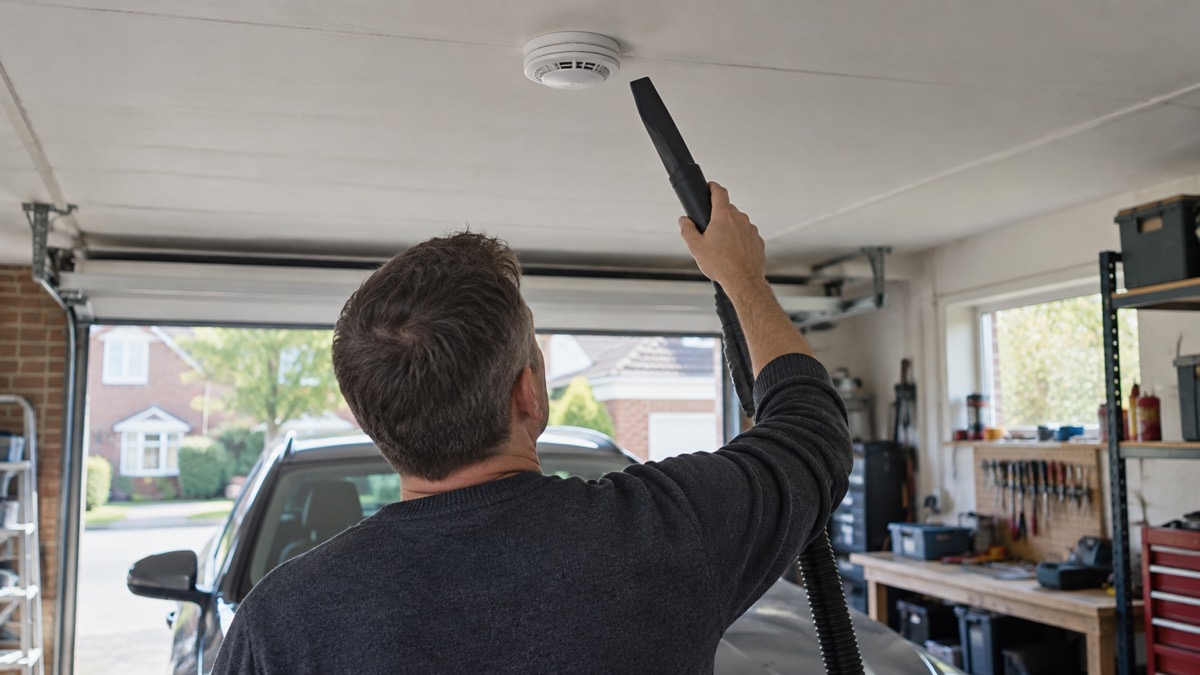
Cleaning. The manual says to vacuum every three months to help keep the unit working efficiently, vacuuming the exterior and keeping the vacuum from touching the unit3. FireAngel's support article gives the same interval, every 3 months or more often if suitable19. Dust and cooking grease are the enemies of a heat sensor, and a kitchen alarm collects both.
Disposal. The HT-630 is a sealed unit, and the manual is clear that you must never attempt to open or damage the battery3. Once the alarm is removed from the base plate the internal battery is deactivated, and the unit is ready for disposal3. Waste electrical products should not go in the household bin; the alarm is ideally suited for disposal within the waste electronic and electrical equipment (WEEE) recycling scheme3. Most council tips accept small electrical items, and many retailers take them back in store.
Support, warranty and getting help
The HT-630 carries a 5 year warranty, according to both the datasheet and the manual, with the manual specifying 5 years from the date of purchase1. The manual adds a condition that matters if you sell the house or inherit an alarm with a new home: the warranty applies to the original retail purchaser from the date of original retail purchase and is not transferable3. FireAngel's general guidance notes that warranty periods on smoke and heat alarms are usually between 3 and 5 years, and advises checking the packaging and manual for current information8.
If you need the instructions in another form, the HT-630 manual says the user guide is also available in large text and other formats, with the number 0330 094 5830 for further information3. FireAngel's newer manuals give the email technicalsupport@fireangeltech.com and the number 0800 141 2561 for the same purpose20. For a household where someone is deaf or hard of hearing, a standard sounder may not be enough on its own; our guide to smoke and CO alarms for deaf and hard of hearing people covers the alternatives.
If the alarm does not sound when it is not being tested, FireAngel advises consulting the manual, because the battery could be running low or the alarm could be coming to the end of its life and need replacing22. One quirk to know before you worry: if the unit has been silenced and is in low sensitivity mode, it may not sound when tested, so wait 15 minutes and try again3.
For the wider job of getting a household ready, the Fire Safety Checklist for Your Home and How to Make a Fire Escape Plan are the natural next steps, and the Home Emergencies section covers fire, carbon monoxide, gas leaks and burst pipes together.
Sources (22)
- HT-630 Data Sheet, FireAngel, 2024-09
- HT-630 Kitchen Heat Alarm product page, FireAngel, 2026-08-21
- HT-630 User Manual, FireAngel, 2019-05
- How to stop a FireAngel alarm beeping, FireAngel, 2024-08-27
- RF-BW-T interlink push fit base, FireAngel, 2026-08-21
- General FAQs, FireAngel, 2026-11-02
- Product FAQs, FireAngel, 2026-10-29
- Homeowner FAQs, FireAngel, 2026-11-02
- FA6720-R Kitchen Heat Alarm product page, FireAngel, 2026-10-28
- FireAngel FAQs, FireAngel, 2026-11-02
- Installing your battery powered heat alarm, FireAngel, 2024-10-17
- Tolerable Standard guidance, Chapter 16: satisfactory fire detection, Scottish Government, 2023-06
- Hair straighteners and tongs, Electrical Safety First, 2026-10-25
- Problem with your smoke or heat alarm, Manchester Fire and Rescue Service, 2026-10-29
- How do I stop my smoke alarm from beeping?, FireAngel, 2024-08-27
- Replacement cycle: when should you upgrade your fire alarms?, FireAngel, 2026-05-13
- Why is my FireAngel smoke alarm beeping?, FireAngel, 2026-10-26
- Maintaining and Testing Your FireAngel CO Alarm, FireAngel Safety Technology
- Maintaining and testing your FireAngel heat alarm, FireAngel, 2026-02-16
- FA7312 temperature and humidity manual, FireAngel, 2026
- SCB10-R user manual, FireAngel, 2024-09
- Maintaining and testing your FireAngel smoke alarm, FireAngel, 2024-08-27

 FireAngel FA3313 CO Alarm
 FireAngel FA3322 CO Alarm
 FireAngel FA3820 CO Alarm
 FireAngel FA6812 CO Alarm
 FireAngel FA6813 CO Alarm
 FireAngel FA6829S CO Alarm
 FireAngel CW1-PF CO Alarm
 FireAngel W2-CO-10X CO Alarm
 FireAngel FP1820W2-R CO Alarm
 FireAngel FP2620W2-R Alarm
 FireAngel ST-632 Smoke Alarm
 FireAngel ST-750 Smoke Alarm