The FireAngel W2-CO-10X is a sealed, ten-year carbon monoxide alarm that can be linked wirelessly to other alarms in the same FireAngel range. It is designed to sound within 3 minutes when exposed to 300ppm or more of carbon monoxide, and between 10 and 40 minutes at 100ppm1. If it goes off, open the doors and windows, turn off and stop using every fuel-burning appliance, get everyone out leaving the doors and windows open, and ring your gas or fuel supplier on their emergency number. Do not go back in until the alarm has stopped1.
This page sets out what the alarm does, how quickly it responds at different levels of carbon monoxide, how the wireless linking works, what each light and chirp means, and how to test, clean and replace it. It is written for a household that already owns one, or is deciding whether it suits their home, and it sticks to the maker's own instructions for this model.
Carbon monoxide is a gas you cannot see, taste or smell, so an alarm is the only way to know it is there before symptoms start. The W2-CO-10X is certified to the European carbon monoxide alarm standards EN 50291-1: 2010 + A1:2012 and EN 50291-2: 2010, and the maker gives it a sensor life of 10 years1. It is a domestic alarm, suitable for houses and flats as well as caravans, motor caravans and boats1.
What to do when the alarm sounds
Treat a sounding alarm as real. The maker's instruction is to keep calm and open the doors and windows to ventilate the property, then stop using all fuel-burning appliances and make sure, if possible, that they are turned off. Evacuate the property leaving the doors and windows open, ring your gas or other fuel supplier on their emergency number, and do not re-enter the property until the alarm has stopped1. The UK Gas Emergency Service Helpline is 0800 111 9991.
A carbon monoxide alarm tells you about the air at the sensor, not the whole house. The maker warns that the alarm will only indicate the presence of carbon monoxide gas at the sensor, and that carbon monoxide gas may be present in other areas1. That is why you leave the building rather than move from room to room looking for the source.
If anyone has symptoms such as a headache, dizziness, nausea or confusion, get them into fresh air and seek medical help. Our page on what to do if your CO alarm sounds or you suspect carbon monoxide walks through the steps in order, and the page on carbon monoxide poisoning symptoms explains what to look for.
Once the alarm has stopped, it can take up to 10 minutes for the sensor to clear when exposed to fresh air, depending on the level of carbon monoxide it has seen1. Do not take a silent alarm as proof the problem has gone: have the appliance checked by a competent person before you use it again.
What the W2-CO-10X is: a 10-year wireless carbon monoxide alarm
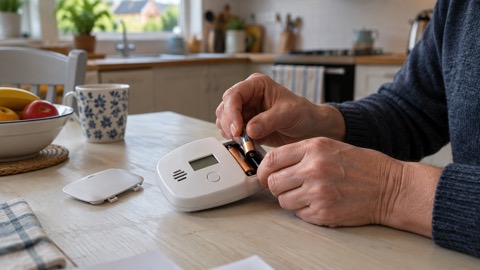
The W2-CO-10X is a carbon monoxide alarm with a 10 year life, built around an advanced electrochemical sensor designed to accurately measure levels of carbon monoxide1. It is a sealed unit: the power pack is not a battery you change, and the maker's answer to a low battery is to replace the whole alarm1. That shapes how you own it. You fit it, test it weekly, keep it clean, and plan to replace it ten years from installation.
| Specification | Detail |
|---|---|
| Type | Carbon monoxide alarm, 10 year life1 |
| Sensor | Advanced electrochemical sensor1 |
| Sensor life | 10 years1 |
| Replacement interval | 10 years from the date of installation1 |
| Alarm sound level | 85dB at 3 m1 |
| Standards | EN 50291-1: 2010 + A1:2012 and EN 50291-2: 20101 |
| Radio frequency | 868MHz1 |
| Maximum RF power | +10dBm1 |
| Linking capacity | Up to 50 products within the Wi-Safe 2 range1 |
| Warranty | 5 years from the date of purchase1 |
| Suitable premises | Domestic premises, caravans, motor caravans and boats1 |
The maker's warranty runs for 5 years from the date of purchase and applies to the original retail purchaser; it is not transferable1. That is shorter than the alarm's ten-year life, so keep your proof and date of purchase somewhere you will find it. If a replacement is supplied under warranty, the warranty on the replacement lasts for the remainder of the original period, counted from the original purchase date rather than the date the replacement arrived1.
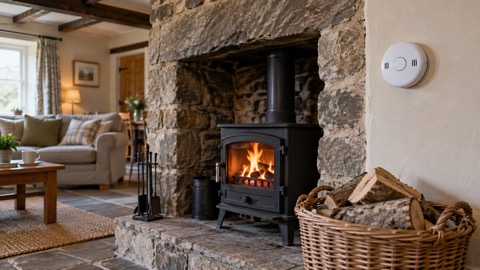
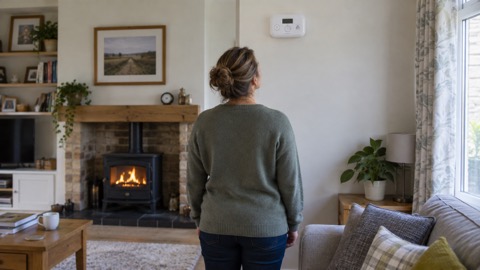
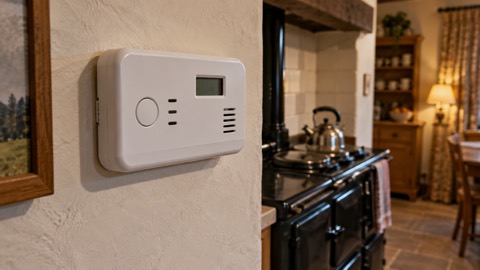
Where to put it matters as much as what it does. The maker advises an alarm in every room containing a fuel-burning appliance and every sleeping room, and in any room a flue passes through, even if the flue is fully enclosed or concealed1. In the same room as a fuel-burning appliance, site it at a horizontal distance of between 1 m and 3 m from the potential source1. On a ceiling, keep it at least 300 mm from any wall and from ceiling obstructions such as light fittings1. Our guide to where to put a carbon monoxide alarm covers the awkward rooms.
How quickly it alarms: within 3 minutes at 300ppm
The alarm's response time depends on how much carbon monoxide is in the air. The maker gives three figures for this model, and they are worth knowing because they explain why a low, slow leak can take an hour or more to trigger the alarm.
| Carbon monoxide level | Alarm response |
|---|---|
| 300ppm or more | Within 3 minutes1 |
| 100ppm | Between 10 and 40 minutes1 |
| 50ppm | Between 60 and 90 minutes1 |
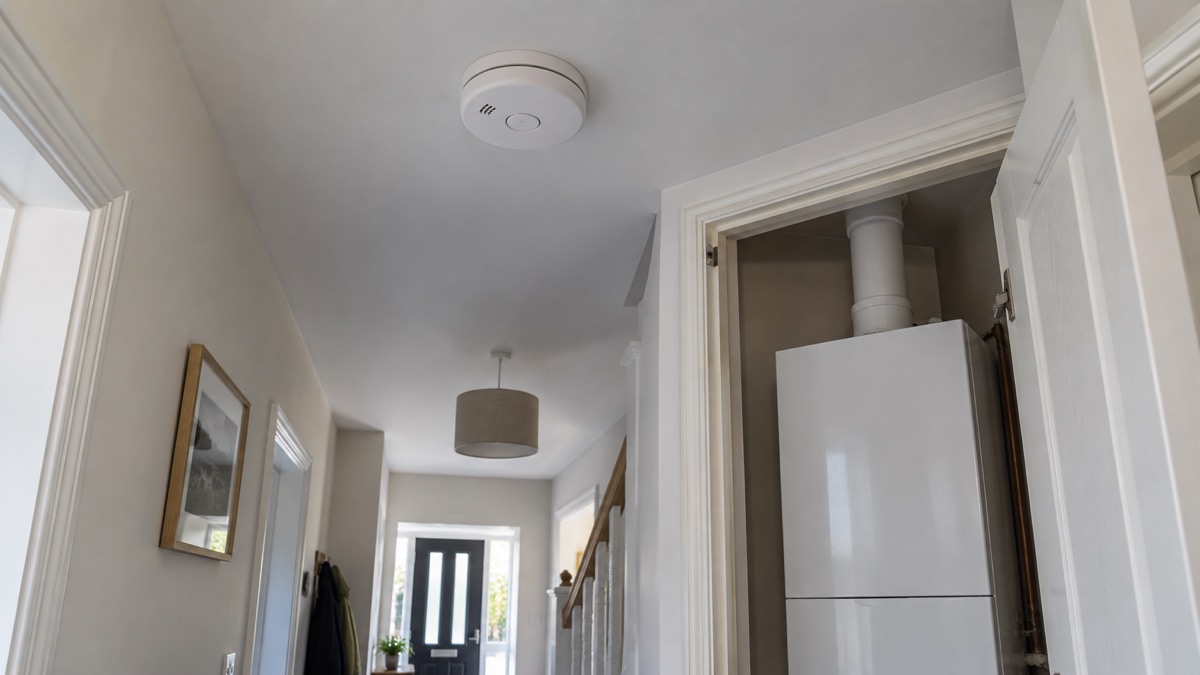
A high level from a blocked flue or a faulty appliance should set the alarm off within minutes. A low-level leak, the kind that builds up slowly in a poorly ventilated room, may take an hour or more. That is not a fault: it is how the alarm is designed, so that it does not cry wolf over trivial traces. It does mean you should never assume a quiet alarm means clean air, particularly if people in the house are getting headaches or feeling sick.
The alarm sounds at 85dB at 3 m1, which is loud enough to wake most people in a nearby room. If the alarm is in a room you do not sleep near, the maker advises putting it just outside the room so that it may be heard more easily1. In a bedsit, put it as far from the cooking appliances as possible and near to where the person sleeps1.
Linking alarms: up to 50 Wi-Safe 2 products
The W2-CO-10X is designed to be wirelessly interlinked with up to 50 products within the Wi-Safe 2 product range1. When one alarm senses carbon monoxide, the others on the network sound too, so a leak in the kitchen is heard in the bedrooms. That is the point of linking: it buys you time at night, when a single alarm in a distant room might not wake you.
The limit is the range, not the brand. The maker states that the W2-CO-10X is not designed to communicate with wireless alarms from other ranges or manufacturers1. If you already have alarms from another make, they will not join this network, and you should not expect them to. Plan a network from one range instead of mixing.
FireAngel's own product pages show how a linked system is put together. The Pro Connected range is described as backwards compatible with the FireAngel Wi-Safe2 range, with an example network of 7 smoke alarms, 3 heat alarms, 3 carbon monoxide alarms and a Gateway2. The Spec+ range uses a different wireless method, with up to 50 alarms interconnected and kept separate from devices outside the network3. The W2-CO-10X sits in the Wi-Safe 2 family, so check compatibility before adding alarms from a different FireAngel range.
The maker's manual for the CW1 mains carbon monoxide alarm gives a different limit for that product: up to 12 FireAngel mains smoke, heat or carbon monoxide alarms can be interconnected on a single network4. That is a mains-wired system, not the wireless Wi-Safe 2 one, and the two should not be confused. If you are extending an existing system, our page on how interlinked alarms work explains the difference between wireless and wired networks.
Reading the lights and chirps
The W2-CO-10X communicates through a small set of light and sound patterns. Learn them before you need them, because in the middle of the night you will not want to be reading a manual.
| What you see and hear | What it means | What to do |
|---|---|---|
| Green Power LED flashes once a minute | Fully operational1 | Nothing |
| Red LED flashes every second and the alarm sounds | Carbon monoxide detected1 | Ventilate, turn off appliances, evacuate, ring your fuel supplier1 |
| Red LED flashes once every five seconds, four audible chirps repeated | Alarm mode indication1 | Treat as an alarm |
| Chirps once a minute at the same time as the amber LED flashes once a minute | Low battery1 | Replace the alarm within 30 days1 |
| Amber LED double flashes, chirping at a different time to the flashes | Sensor fault1 | Replace the alarm immediately1 |
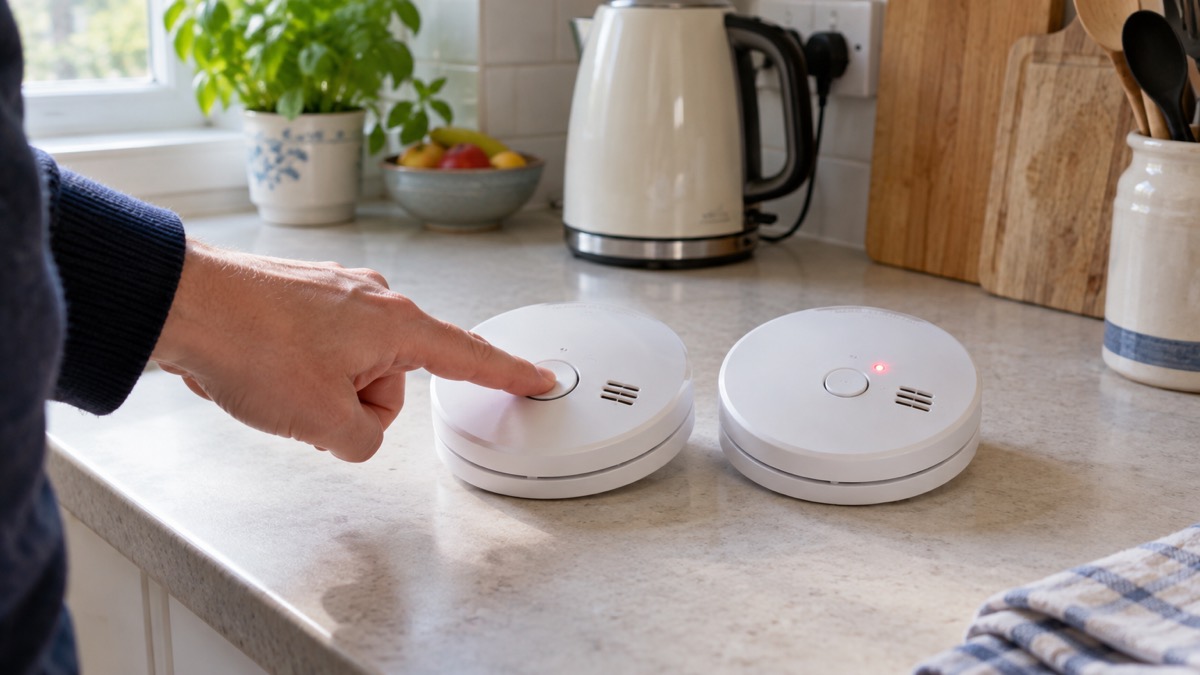
The distinction between a low battery and a fault is the timing. A low battery chirps and flashes together, once a minute. A fault chirps at a different time to the amber LED flashes, and the LED double flashes1. If you hear a chirp that does not line up with the flash, the maker's instruction is that the alarm should be replaced immediately1. Our page on why your carbon monoxide alarm is beeping helps if you are not sure which pattern you are hearing.
The low battery chirp is designed to be hard to ignore, and it usually starts at night. The maker allows you to silence it for a period of eight hours by pressing the test button, a function it calls Sleep Easy, and this process can be repeated for a maximum of 10 times1. The same feature appears on other FireAngel models: the SP510 datasheet describes Sleep Easy as silencing a low battery chirp for 8 hours, usable up to 10 times5. Silencing buys you a night's sleep, not a reprieve: the alarm still needs replacing, and the maker says within 30 days1.
Weekly testing, cleaning and when to replace it
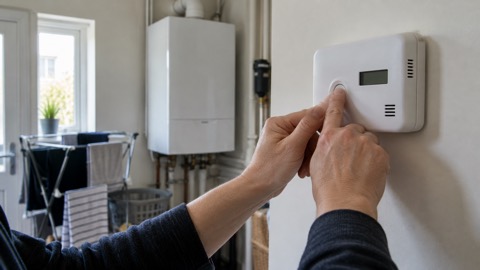
Test the alarm on a weekly basis1. Press the test button and listen: the alarm LED will illuminate red, indicating that the sounder is working and the power pack is providing power to the unit1. If nothing happens, check the disabling clip has been removed, then treat the alarm as faulty.
Keep the alarm free from dust by gently vacuuming the case with a soft brush attachment every 3 months1. Beyond that, the maker's cleaning rules are strict: never use cleaning solutions, simply wipe with a slightly damp cloth, do not paint the alarm, do not spray aerosols on or near it, do not use solvent-based products near it, do not attempt to repair it, do not remove any screws or open the main casing, and do not burn it or dispose of it in fire1.
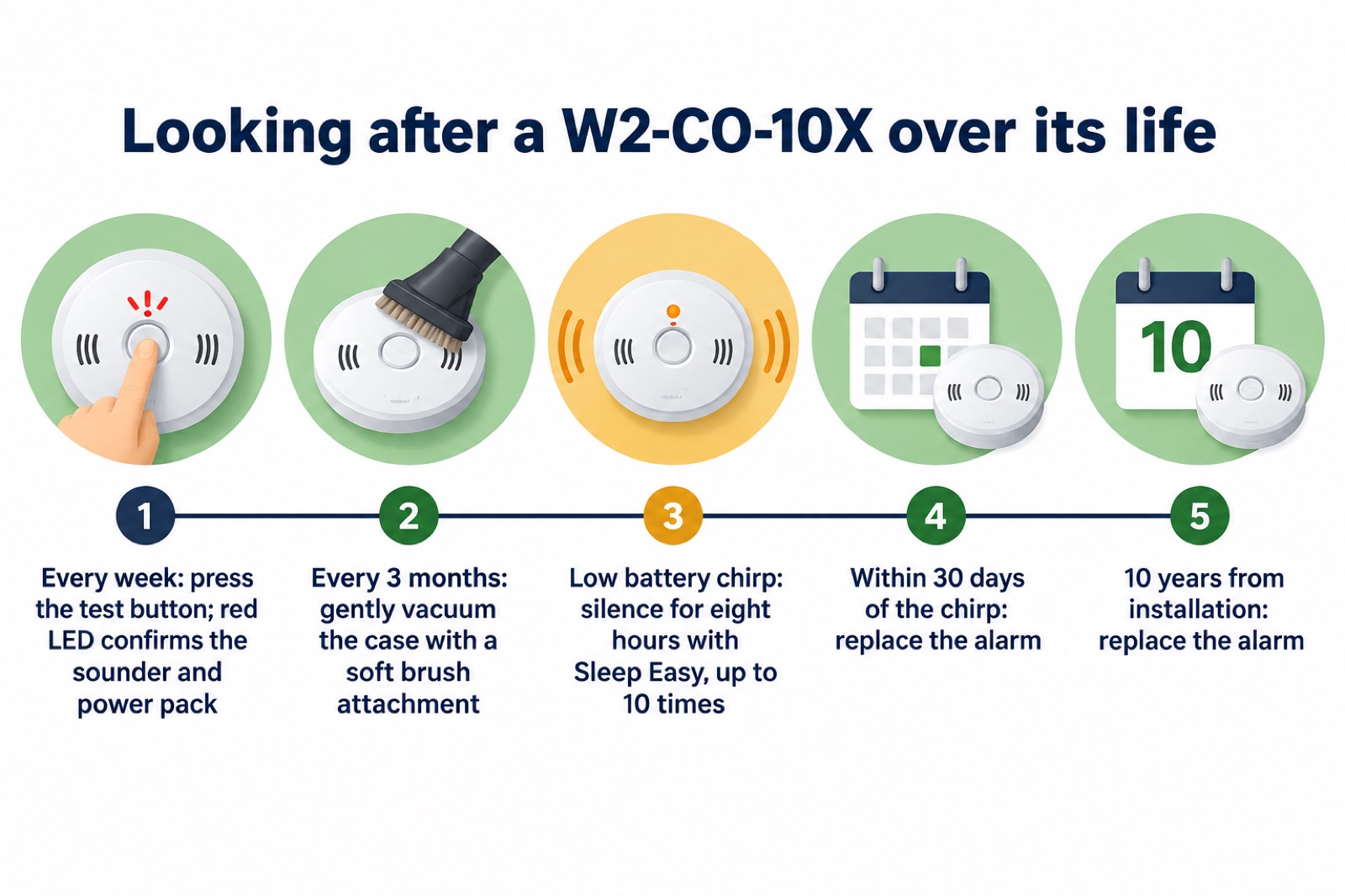
Replacement is the one maintenance task you cannot skip. The maker states that the alarm should be replaced after 10 years from the date of installation1, and the sensor life is 10 years1. Write the installation date on the alarm or in your household file so the ten-year mark does not pass unnoticed. Our page on when to replace a smoke, heat or CO alarm covers the wider timetable across a house.
If the alarm is dropped or damaged, the maker's instruction is that, as a precaution, it should be removed from the building1. Do not try to repair it: the manual says not to attempt repairs, remove screws or open the main casing1. The warranty does not cover damage resulting from accident, misuse, disassembly, abuse or lack of reasonable care, or applications not in accordance with the user guide, and it does not cover Acts of God such as fire or severe weather1.
When the time comes to get rid of it, the maker says the alarm is ideally suited for disposal within the waste electronic and electrical equipment (WEEE) recycling scheme1. Take it to a household waste recycling centre that accepts small electrical items rather than putting it in the general waste, and never burn it1.
Fitting it, standing it and taking it with you
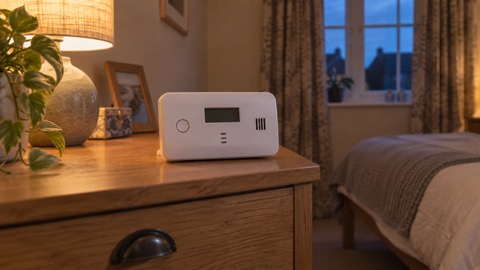
The W2-CO-10X can be fixed to a wall or ceiling, or simply stood on a shelf. The base of the alarm has been designed to allow it to stand freely on a shelf1, which suits a rented flat where you would rather not drill, or a caravan where you want to move the alarm between trips. If you do fix it, the maker advises locating it close to the ceiling, at a height greater than the height of any door or window, and at least 150 mm from the ceiling1.
A few room shapes need special handling. If there is a partition in a room, the alarm should be located on the same side of the partition as the potential source1. In a room with a sloped ceiling, it should be located at the high side of the room1. In a bedsit, put it as far from the cooking appliances as possible and near to where the person sleeps1.
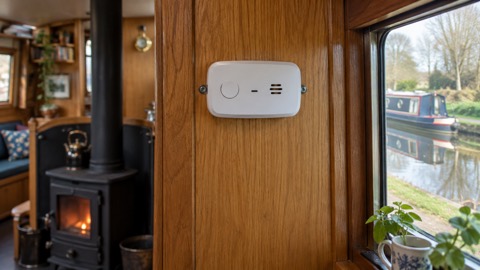
Caravans and boats have their own rules. Fit an alarm in the same room as any combustion appliance; a single living space that incorporates sleeping accommodation can be treated as equivalent to a bedsit, where a single alarm is sufficient; separate sleeping accommodation should also contain an alarm1. Do not mount it directly above a source of heat or steam, and keep it 1 m to 3 m from the nearest edge of the potential source1.
The maker advises that the alarm is installed by a competent person who feels able to install it according to the instructions, and warns against tampering with it for risk of electric shock or malfunction1. For most households, fitting a sealed battery alarm is a job you can do yourself with the manual in hand; if you are unsure, ask.
If you need to store a spare or take the alarm out of a caravan for the winter, the maker gives storage and transportation conditions of -20°C to +60°C and 30 to 90% relative humidity, non-condensing1. A cupboard inside the house meets that easily. A damp shed or a garage that swings between extremes is a poorer choice.
Support, warranty and where to get help
FireAngel's customer support specialists are based in the UK and can help with product advice, installation queries and troubleshooting by phone, email or live chat6. The maker's technical support number is 0330 094 5830, with a separate line for Ireland on 1-800 5231711. There is also a dedicated number for Fire & Rescue customers, 0800 141 25611.
If your alarm was fitted by Greater Manchester Fire and Rescue Service and is still covered by its guarantee, the service directs owners to FireAngel on freephone 0800 141 2561 for support7. Other fire and rescue services run their own home safety visits; our page on how fire and rescue services respond to a call explains what happens when you contact them.
The warranty is 5 years from the date of purchase and covers defects in materials and workmanship for the original purchaser1. FireAngel agrees to replace the unit free of charge at its discretion during the 5 year period, provided the product is sent back with proof and date of purchase1. Keep the receipt. The warranty does not cover accidental damage, misuse, disassembly or lack of reasonable care1.
FireAngel is a UK brand established since 1998, with support based in Coventry8. Its alarms carry the BSI Kitemark and are independently certified, and the maker describes its range as compliant for England, Wales and Scotland8. The company also makes carbon monoxide alarms with visual alerts as well as sound, so that people are alerted regardless of hearing level9; if that matters in your household, our page on smoke and CO alarms for deaf and hard of hearing people sets out the options.
For the wider picture, the FireAngel brand page lists the models in the range, and our guide to carbon monoxide alarms and how to choose one explains what to look for across makes. If you are weighing up whether a combined smoke and carbon monoxide alarm would suit you better than separate units, the comparison on combined or separate alarms sets the two side by side.
Sources (9)
- FireAngel W2-CO-10X Carbon Monoxide Alarm manual, FireAngel, 2019
- FP1740W2-R Pro Connected heat alarm, FireAngel, 2026
- Spec+ multi-sensor smoke and heat alarm, FireAngel, 2026
- CW1 carbon monoxide alarm user manual, FireAngel, 2026
- SP510 FA4250BW specification datasheet, FireAngel, 2026
- Carbon monoxide safety, FireAngel, 2026
- Problem with your smoke or heat alarm, Greater Manchester Fire and Rescue Service, 2026
- Smoke alarm guide, FireAngel, 2026
- Our solutions, FireAngel, 2026
 FireAngel FA3313 CO Alarm
 FireAngel FA3322 CO Alarm
 FireAngel FA3820 CO Alarm
 FireAngel FA6812 CO Alarm
 FireAngel FA6813 CO Alarm
 FireAngel FA6829S CO Alarm
 FireAngel CW1-PF CO Alarm
 FireAngel FP1820W2-R CO Alarm
 Kidde K7DCO CO Alarm
 Kidde K5DCO CO Alarm
 Kidde K10LLDCO CO Alarm
 Kidde K10LLCO CO Alarm