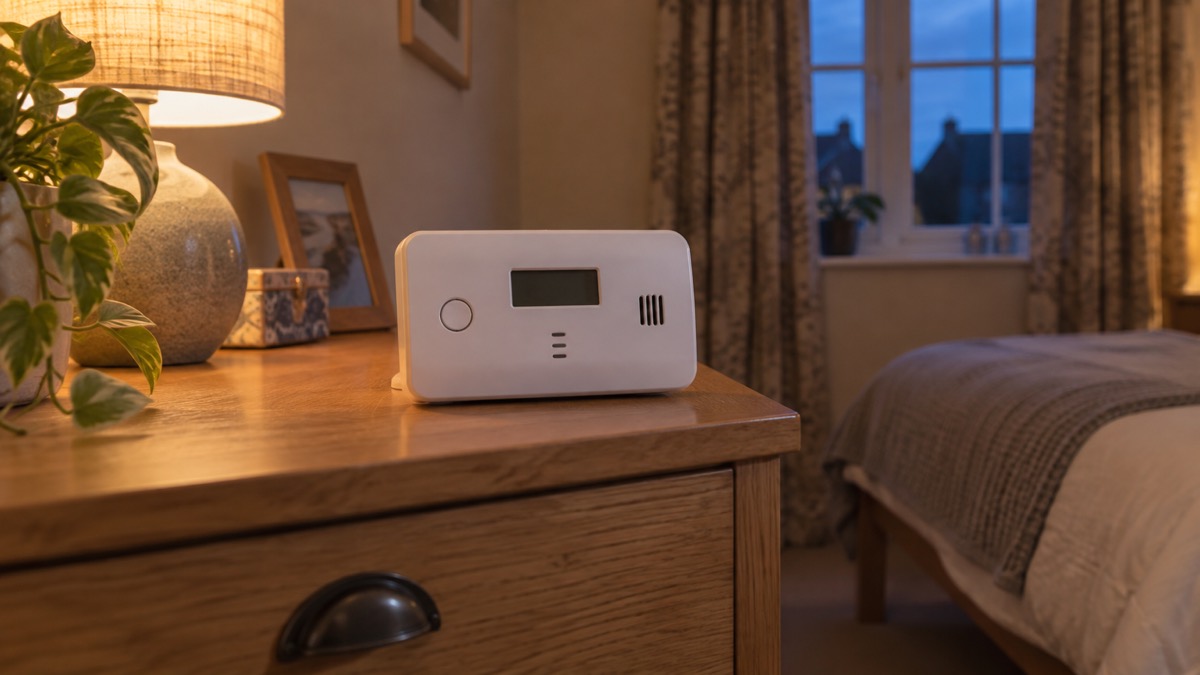
The Kidde K10LLDCO is a digital carbon monoxide alarm with a sealed lithium battery that lasts the full 10-year life of the unit. It shows current CO levels on a display from 11ppm, sounds its alarm from 50ppm, and is rated at 85dB1. It is a standalone alarm: it cannot be linked to other alarms, so it protects the room it sits in rather than the whole house2.
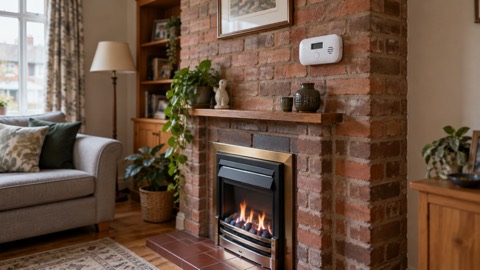
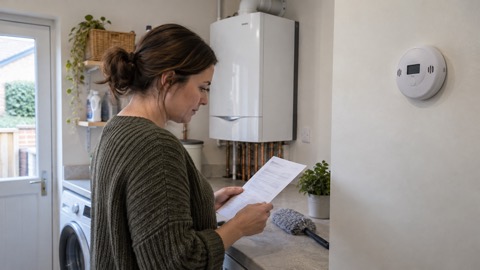
That makes it a straightforward choice for the room with a boiler, fire or wood burner, where a CO alarm is the thing that gives you warning before a leak becomes dangerous. It is Kitemarked to EN 50291-1: 2018 and carries CE and UKCA marks1. The battery is sealed in and the unit is tamper proof, which suits rented homes where batteries can go missing1.
What it cannot do is tell the rest of the house. If you want every alarm to sound together, that is a different job, and one for a qualified electrician3. Below is what the alarm does, how to read it, how to test it, and what the end-of-life warning means.
What the K10LLDCO is and who it suits
The K10LLDCO is a battery-powered, freestanding or wall-mounted CO alarm with an electro-chemical sensor and a digital display1. It is designed for indoor home use, with an operating range of 0°C to +40°C and relative humidity of 0% to 90%1. It weighs 138g and measures 119mm wide, 72mm high and 39mm deep, in a plastic case1.
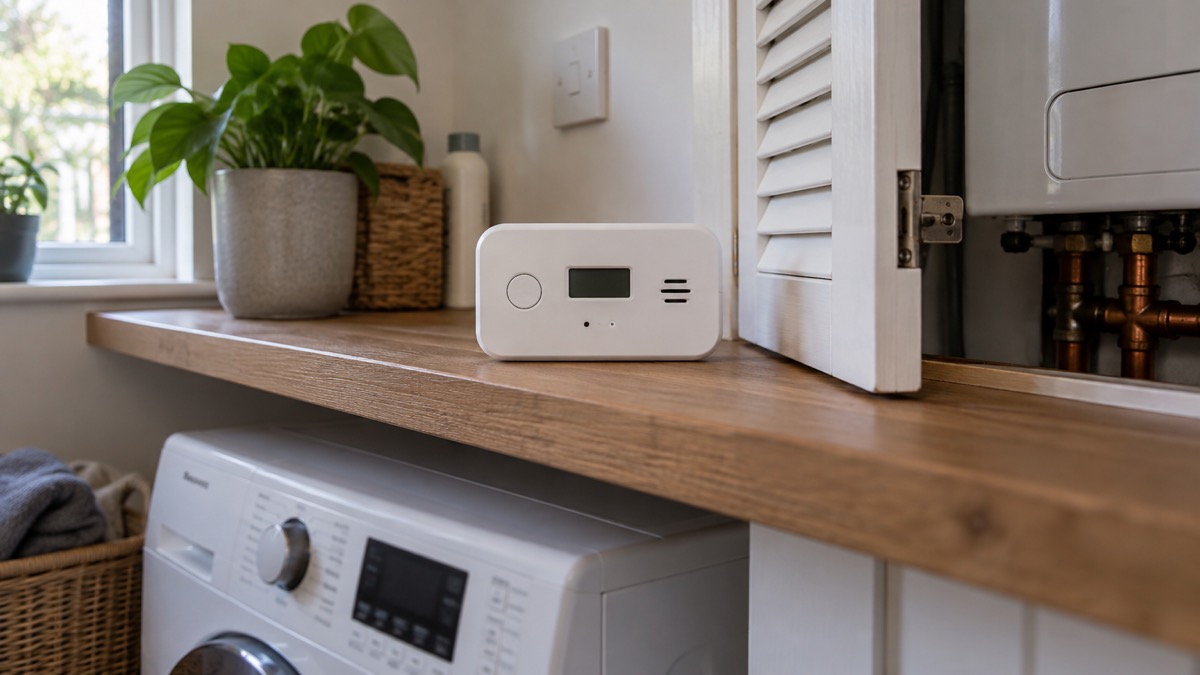
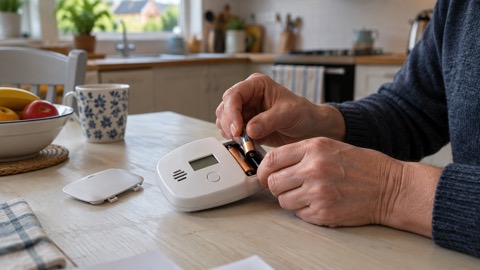
It suits a household that wants a self-contained alarm in a specific room, particularly one with a fuel-burning appliance. The sealed battery means no annual battery swap and no chirping for a flat cell; the trade-off is that when the battery or sensor reaches the end of its life, the whole unit is replaced. The maker lists the product life as 10 years and backs it with a 10-year warranty1.
It does not suit a household that wants all alarms to sound together. The K10LLDCO cannot be linked to other alarms2. Some alarms can link with other CO and smoke alarms so that all sound at once, but this is not one of them4. If interlinking matters, ask a qualified electrician to fit linked alarms3, or read Interlinked Alarms: How Linking Works.
Specifications at a glance
| Feature | Detail |
|---|---|
| Type | Digital carbon monoxide alarm, battery powered1 |
| Sensor | Electro-chemical1 |
| Alarm level | From 50ppm1 |
| Detection level | From 30ppm1 |
| Display | Digital, shows current CO levels from 11ppm1 |
| Sound level | 85dB1 |
| Battery | Sealed lithium, 10-year life1 |
| Product life | 10 years1 |
| Linking | Standalone, cannot be linked2 |
| Fixing | Freestanding or wall mounted, fixings included1 |
| Installation position | Mount at head height1 |
| Operating temperature | 0°C to +40°C1 |
| Relative humidity | 0% to 90%1 |
| Dimensions | 119mm wide, 72mm high, 39mm deep1 |
| Weight | 138g1 |
| Certification | Kitemarked to EN 50291-1: 2018, CE and UKCA marked1 |
| End of life | Audio and visual notification after 10 years1 |
The maker's figures are the ones to rely on. Where a retailer lists a specification differently, the maker's figure is the one that counts.
Alarm levels: sounds from 50ppm, display reads from 11ppm
The K10LLDCO has two thresholds that matter to a household. The display begins showing a reading from 11ppm, so you can see low levels of CO building up before the alarm sounds1. The alarm itself sounds from 50ppm1. The detection level is listed separately as from 30ppm, and the sensor sensitivity as 30ppm1.
That gap is useful. A low reading on the display is a prompt to ventilate the room and check the appliance. A sounding alarm is a reason to act: turn off the appliance, open windows and doors, get everyone out and call the gas emergency number. The Health and Safety Executive advises that a CO alarm should comply with British Standard EN 50291 and carry a British or European approval mark such as a Kitemark5. The K10LLDCO is Kitemarked to EN 50291-1: 2018 and is CE and UKCA marked1.
If your alarm sounds, do not assume it is faulty. Follow the steps in What to Do If Your CO Alarm Sounds or You Suspect Carbon Monoxide. Symptoms of CO poisoning include headaches, dizziness, nausea and tiredness, and they can come on gradually6. If anyone in the household feels unwell, get fresh air and seek medical advice.
Reading the display, LEDs and peak level memory
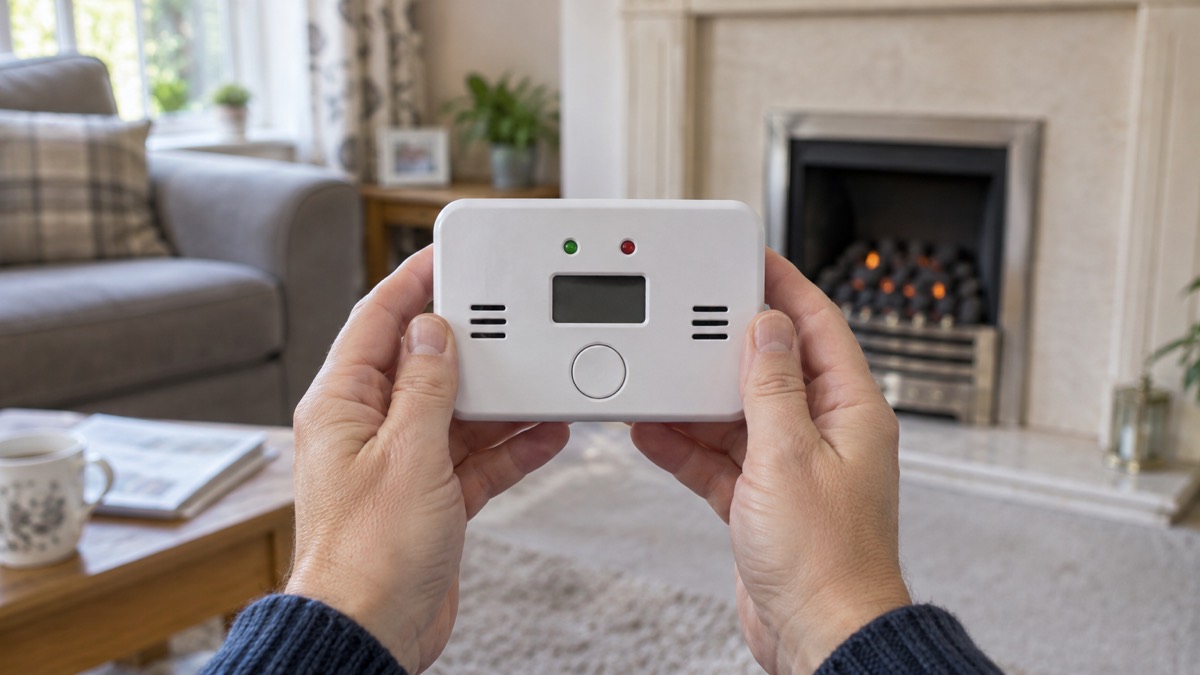
The K10LLDCO has a digital display, LED indicators and a peak level memory feature1. The LEDs show whether the unit is in normal operation, alarm state or fault1. The peak level memory records the highest CO level the alarm has seen, which is useful if you come home to a reading that has since fallen.
Read the display as a live CO concentration in parts per million. A reading that appears and then clears may mean a brief burst from a cooker or boiler; a reading that keeps returning means something needs checking. The peak level memory lets you see what happened while you were out, so you can tell a gas engineer what the alarm recorded.
If the LEDs show a fault, do not ignore it. A faulty alarm cannot warn you. Check the unit is within its operating temperature and humidity range, then follow the maker's instructions for a fault indication. If the fault persists, replace the alarm.
Sealed lithium battery: 10 years with no battery changes
The K10LLDCO runs on a sealed lithium battery that lasts the full 10-year life of the unit1. The maker lists a 10-year battery life and warranty2. The Scottish Government notes that long-life lithium batteries in alarms can last up to 10 years7. Kidde's own range includes the 10LLCO and 10LLDCO models with sealed-in lithium batteries that last the full 10-year life8.
The sealed battery has two practical effects. First, there is no annual battery change and no low-battery chirp from a flat cell. Second, the unit is tamper proof, which the maker describes as ideal for rented properties because there are no batteries to borrow1. In rented properties in the UK and Jersey, CO detectors must be fitted in any room used as living accommodation that contains an appliance9.
The trade-off is that you cannot extend the life of the alarm by fitting a new battery. Plan to replace the unit at the 10-year mark, and note the date you installed it.
Testing the alarm and what the end-of-life warning means
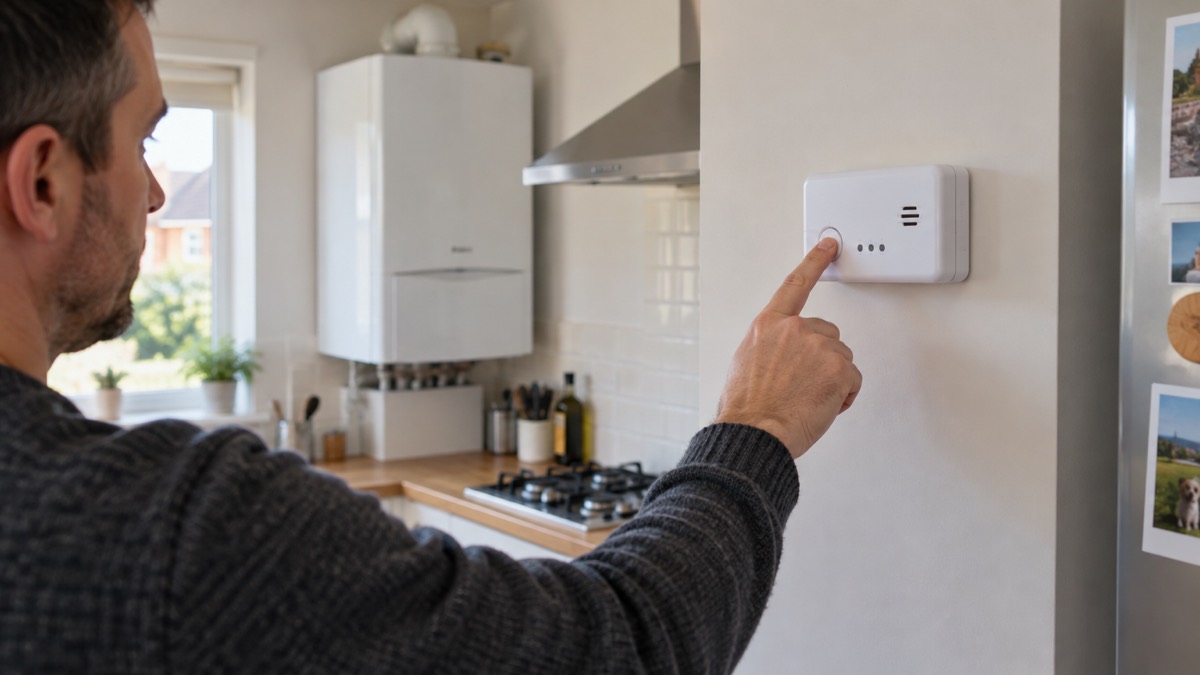
The K10LLDCO has a test and reset button1. Test the alarm regularly, following the maker's instructions, and check that the LEDs show normal operation afterwards. Testing confirms the sounder and circuitry work; it does not calibrate the sensor.
All CO detectors have a set lifetime, which can be as long as 10 years, and chirping every 30 seconds is the sign that your alarm is ready to be replaced2. The K10LLDCO gives an audio and visual end-of-life notification after 10 years1. When that happens, replace the whole unit.
If the alarm chirps before 10 years, do not assume it is end of life. Check the display and LEDs for a fault indication, and check the unit is within its temperature and humidity limits. If the chirping continues, treat it as a fault and replace the alarm. For more on chirping, read Why Is My Carbon Monoxide Alarm Beeping? and When to Replace a Smoke, Heat or CO Alarm.
Certification and UK alarm rules in Scotland, Wales and Northern Ireland
The K10LLDCO is Kitemarked to EN 50291-1: 2018 and carries CE and UKCA marks1. The Health and Safety Executive advises that a CO alarm should comply with British Standard EN 50291 and carry a British or European approval mark such as a Kitemark5. Bedfordshire Fire and Rescue Service advises buying alarms marked with BS EN 50291-1 and looking for the BSI Kitemark logo11. The Gas Safe Register notes that regulations differ across England, Northern Ireland, Scotland and Wales12.
| Nation | What the rules require |
|---|---|
| England | A CO alarm is legally required in any room with a fixed combustion appliance, excluding gas cookers, under the Smoke and Carbon Monoxide Alarm (England) Regulations 2015, amended 202213 |
| Scotland | A CO alarm where there are fixed combustion appliances such as boilers and wood burners14; alarms must meet EN 50291-115 |
| Wales | Similar requirements to England, with Welsh legislation dating from 202213 |
| Northern Ireland | Northern Ireland legislation from 20241; new builds require at least category LD2 and grade D2 fire alarm systems16 |
Scotland and Wales have differing legislation that requires interlinked alarms17. The K10LLDCO is a standalone alarm, so it cannot be linked to others3. For the full picture, read Alarm Standards: BS 5839-6, BS EN 50291 and System Grades and Wales and Northern Ireland: Alarm Rules and Fire Services.
Where to fit it and how to look after it
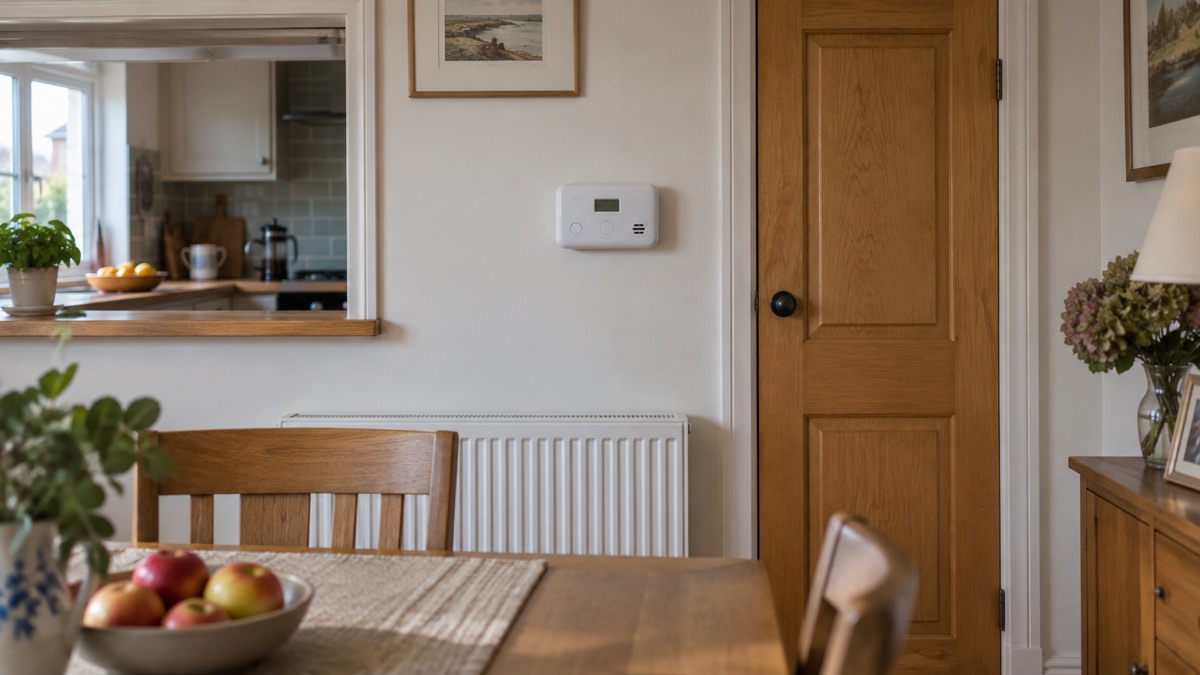
The maker advises mounting the alarm at head height, and it can be freestanding or wall mounted with the fixings supplied1. Keep it within its operating range of 0°C to +40°C and 0% to 90% relative humidity1. Do not put it in a damp outbuilding or anywhere it could get wet.
For advice on placement, read Where to Put a Carbon Monoxide Alarm. The general principle is to site it near the appliance and where you will hear it, not behind furniture or in a cupboard. If you have a boiler, fire or wood burner, the room it serves is the priority.
If someone in the household is deaf or hard of hearing, specialist alarms such as strobe or vibrating models should be fitted in addition to ordinary smoke, heat and CO alarms18. Read Smoke and CO Alarms for Deaf and Hard of Hearing People.
The Kidde valve recall and what it means for owners
On 12 February 2024, Kidde recalled the CO2 Klem Valve over a risk of detachment and CO2 discharge. Affected batches, made between 01/2022 and 05/2023, were withdrawn from the market, UK customers were sent a safety notice, and a retrofit safety guard was made available19.
This recall concerns the Klem Valve, not carbon monoxide alarms. If you own a Klem Valve, check the product safety report and follow the safety notice. If you are unsure whether a product has been recalled, read How to Check If an Electrical Product Has Been Recalled.
Support, warranty and where to get help
Kidde's CO alarms are fully certified by BSI to EN 50291-Part 1 and guaranteed for 10 years8. The K10LLDCO is Kitemarked to EN 50291-1: 2018 and is CE and UKCA marked2. Kidde alarms can be found online and in leading independent stores and national retailers including Argos, Homebase, Asda, Amazon and Costco; the maker's contact details are at www.kiddesafetyeurope.co.uk or on 01753 76639220.
If your alarm sounds or you suspect CO, follow the steps in What to Do If Your CO Alarm Sounds or You Suspect Carbon Monoxide. For the wider picture on choosing an alarm, read Carbon Monoxide Alarms: What They Do and How to Choose and Do I Need a Carbon Monoxide Alarm?. For the section as a whole, start at Home Emergencies: Fire, Carbon Monoxide, Gas Leaks and Burst Pipes.
Sources (20)
- Kidde K10LLDCO product page, Safelincs, 2026-10-29
- How to install and test carbon monoxide detectors, Which?, 2026-07-14
- Fire safety for people with hearing difficulties, Devon and Somerset Fire and Rescue Service, 2026
- CO awareness, FireBlitz, 2025-11-18
- Gas safety FAQs, Health and Safety Executive, 2026
- Carbon monoxide symptoms, Which?, 2026-07-14
- Fire and smoke alarms in Scottish homes: where and what to buy, Scottish Government, 2024-08-14
- CO alarms, CO-Gas Safety, 2024-02-18
- Guide to carbon monoxide safety, OFTEC, 2026-10-29
- Unbranded carbon monoxide alarm review, Which?, 2026-07-14
- Carbon monoxide leaflet, Bedfordshire Fire and Rescue Service, 2026
- Carbon monoxide alarms, Gas Safe Register, 2026-10-29
- Kidde FireAngel FA3820 product page, FireAngel, 2026-10-28
- Home fire safety, Scottish Government, 2026-10-29
- Statement of support for CO alarms to EN 50291, CO-Gas Safety, 2022-07-11
- Fire alarm installation, NICEIC, 2025-09
- NFCC reminds people to replace smoke alarms every 10 years, National Fire Chiefs Council, 2024-06-18
- Fire and smoke alarms in Scottish homes, Scottish Government, 2024-08-14
- Product safety report: Kidde CO2 Klem Valve, GOV.UK, 2024-02-12
- CO alarms, CO-Gas Safety, 2024-02-18
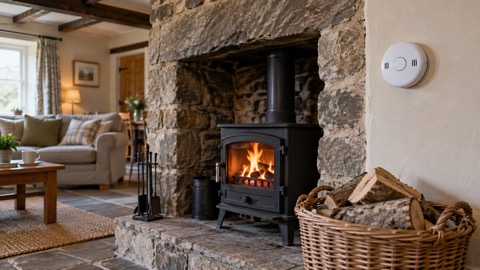 FireAngel FA3313 CO Alarm
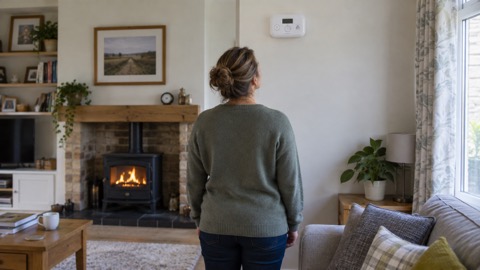 FireAngel FA3322 CO Alarm
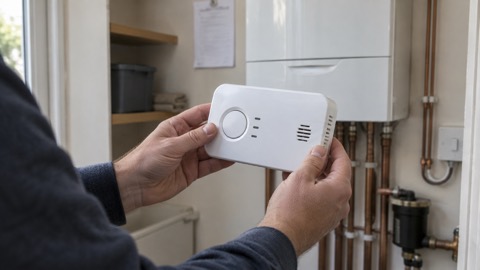 FireAngel FA3820 CO Alarm
 FireAngel FA6812 CO Alarm
 FireAngel FA6813 CO Alarm
 FireAngel FA6829S CO Alarm
 FireAngel CW1-PF CO Alarm
 FireAngel W2-CO-10X CO Alarm
 FireAngel FP1820W2-R CO Alarm
 Kidde K7DCO CO Alarm
 Kidde K5DCO CO Alarm
 Kidde K10LLCO CO Alarm